Agricultural machinery operates in some of the most demanding sealing environments in modern industry. Tractors, combines, harvesters, planters, sprayers, irrigation equipment, balers, forage machines, grain handling systems, and agricultural pumps are exposed to dust, soil, mud, water, fertilizers, pesticides, temperature fluctuations, vibration, shock loads, hydraulic pressure, and long operating cycles. In these conditions, a small sealing failure can become a major maintenance problem.
Agriculture seals are engineered to prevent lubricants from escaping, contaminants from entering, hydraulic pressure from being lost, and fluids from migrating between different parts of a machine. When correctly selected and installed, O-rings, oil seals, hydraulic seals, rotary shaft seals, dust seals, and related sealing components can significantly improve equipment reliability, reduce downtime, extend component life, and improve maintenance efficiency.
The phrase “Unlock Efficiency with Agriculture Seals” therefore goes beyond simply choosing a replacement rubber ring. Efficient agricultural sealing requires a system-level approach that considers seal geometry, elastomer chemistry, hardness, pressure, temperature, shaft speed, surface finish, contamination, lubrication, installation, and dimensional tolerances.
🌾 Engineering takeaway: The best agricultural seal is not necessarily the hardest, thickest, or most expensive seal. It is the seal whose material, geometry, tolerance, and operating limits match the actual agricultural machine and working environment.
What Are Agriculture Seals?
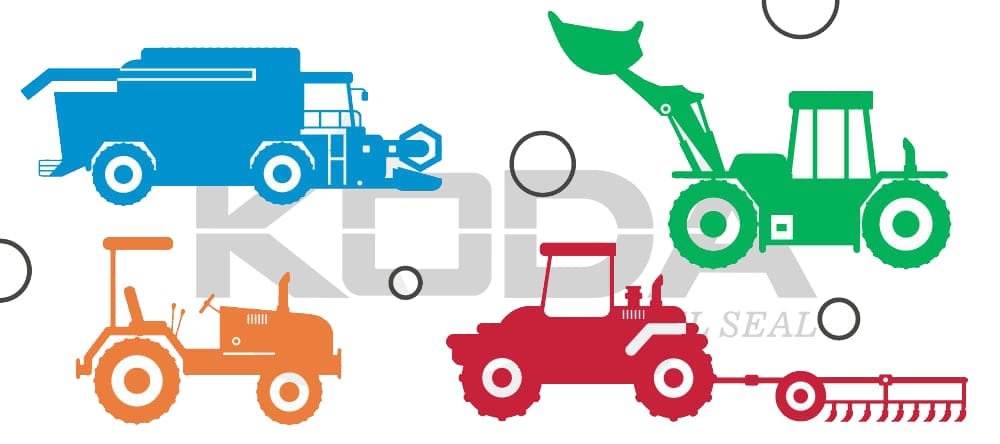
Agriculture seals are sealing components designed or selected for machinery used in farming, crop production, irrigation, livestock operations, harvesting, material handling, and related agricultural applications. They include several different technologies rather than one specific seal type.
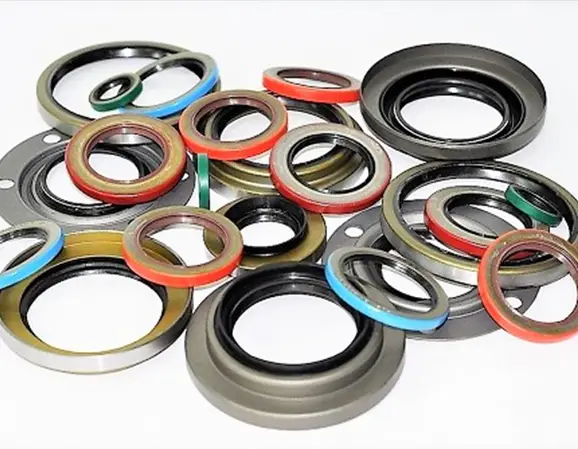
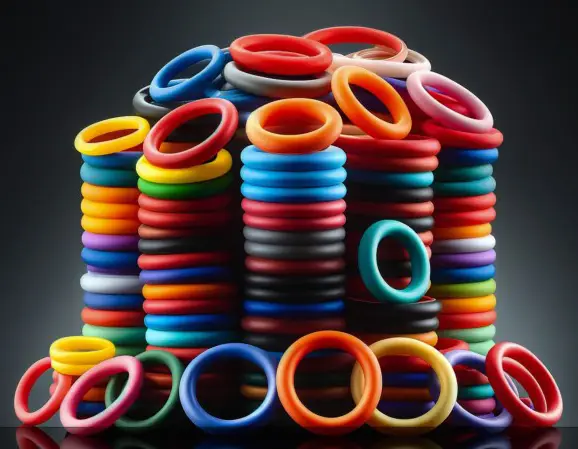
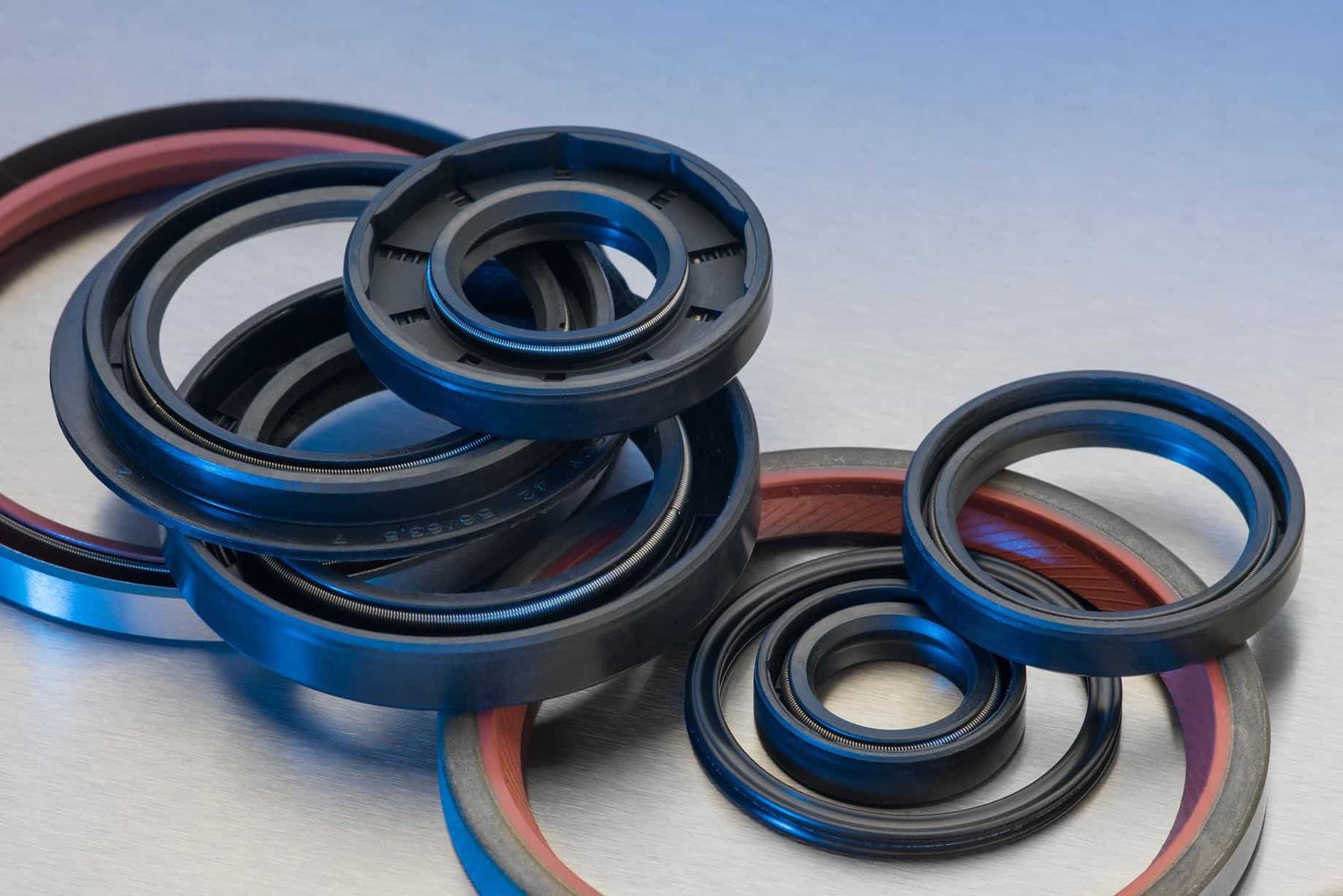
Common examples include O-rings, radial shaft oil seals, hydraulic rod seals, piston seals, wipers, rotary seals, bonded seals, V-rings, mechanical seals, dust seals, and custom molded elastomer components.
Agricultural machines frequently combine several sealing technologies in one system. A tractor transmission may use rotary shaft seals and O-rings, while its hydraulic circuit can contain rod seals, piston seals, backup rings, wipers, and static O-rings. A combine harvester can require seals around bearings, gearboxes, hydraulic cylinders, and rotating shafts.
This variety explains why agricultural sealing should be approached according to the application rather than by searching for one universal “farm equipment seal.”
Why Sealing Efficiency Matters in Agricultural Machinery
Agricultural equipment is often operated seasonally but intensely. During planting and harvesting periods, machines may work for many hours per day. A seal failure during a critical agricultural window can be more expensive than the replacement component itself because the machine may remain unavailable during a time-sensitive operation.
A failed oil seal can cause lubricant loss. Lubricant loss can then increase bearing or gear wear. Contamination entering through the same sealing location can accelerate abrasive wear. A hydraulic seal failure can result in pressure loss, cylinder leakage, reduced lifting performance, or machine downtime.
Consequently, sealing efficiency influences several measurable aspects of equipment performance:
• Lubricant retention
• Contaminant exclusion
• Hydraulic pressure retention
• Bearing and gearbox protection
• Friction and power consumption
• Maintenance intervals
• Component service life
• Machine availability
• Environmental fluid leakage
• Total cost of ownership
💡 Efficiency principle: A seal should be evaluated by its total system cost, not just its purchase price. A low-cost seal that fails prematurely can be significantly more expensive than a properly specified seal with a higher unit cost.
The Most Common Agricultural Sealing Applications
Tractors
Tractors contain hydraulic systems, transmissions, axles, PTO systems, engines, steering systems, and multiple rotating or reciprocating components. Seals must frequently handle oil, hydraulic fluid, dirt, vibration, heat, and mechanical movement.
Combine Harvesters
Combines operate in extremely dusty environments. Sealing systems around bearings, shafts, gearboxes, hydraulic cylinders, and rotating assemblies must resist both lubricant leakage and external contamination.
Planters and Seeders
Planters can encounter soil, fertilizer, dust, vibration, and moisture. Sealing requirements depend on whether the component is a gearbox, bearing housing, hydraulic actuator, or metering mechanism.
Sprayers
Agricultural sprayers require careful chemical compatibility. Elastomers can be exposed to water, fertilizers, herbicides, pesticides, cleaning chemicals, and hydraulic fluids. Material selection should be based on the actual formulation and exposure conditions rather than assuming that every agricultural chemical is compatible with every rubber.
Irrigation Equipment
Irrigation pumps, valves, connectors, and rotating equipment can experience water, fertilizers, sediment, temperature changes, and pressure cycling. EPDM is frequently considered for many water-related applications, but the actual fluid chemistry and temperature must be evaluated.
O-Rings Versus Oil Seals in Agricultural Machinery
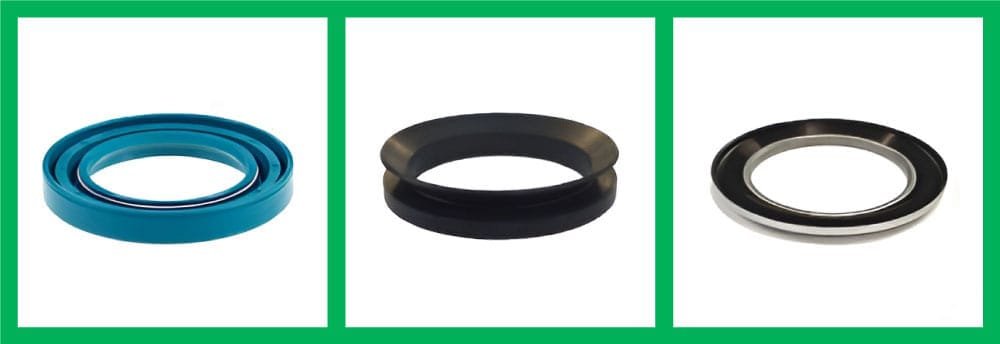
O-rings and oil seals are both important agricultural sealing components, but they solve different sealing problems.
| Feature | O-Ring | Radial Oil Seal |
|---|---|---|
| Typical geometry | Circular elastomer ring | Molded seal with sealing lip |
| Typical application | Static and selected dynamic sealing | Rotating shafts |
| Primary function | Prevent fluid or gas passage | Retain lubricant and exclude contaminants |
| Main design factors | Squeeze, stretch, gland, material | Lip geometry, shaft, speed, lubrication |
| Agricultural challenge | Pressure, chemicals, temperature | Dust, mud, shaft wear, rotation |
A common mistake is attempting to substitute one seal type for another without analyzing the mechanical design. An O-ring is not automatically a replacement for a rotary shaft oil seal, and a radial oil seal cannot simply replace an O-ring designed for a static gland.
Material Selection for Agriculture Seals

Elastomer selection is one of the most important engineering decisions in agricultural sealing. The material must tolerate the fluid, temperature, pressure, mechanical movement, and environmental exposure.
NBR — Nitrile Rubber
NBR is widely used in oil seals and O-rings because of its good resistance to many petroleum-based oils and hydraulic fluids, combined with good mechanical properties and relatively moderate cost.
NBR performance depends strongly on formulation and acrylonitrile content. Higher acrylonitrile content generally improves resistance to oils and fuels but can reduce low-temperature flexibility. Typical general-purpose NBR compounds may be used around approximately -30°C to +100°C, but actual limits vary by formulation and application.
FKM — Fluorocarbon Rubber
FKM is commonly selected when higher temperature capability and resistance to many oils, fuels, and chemicals are required. Many FKM compounds can operate at temperatures approaching approximately 200°C in suitable applications, while exact limits depend on formulation, exposure time, pressure, and mechanical conditions.
FKM is often more expensive than NBR, so its use should be justified by actual environmental requirements.
EPDM
EPDM has excellent resistance to water, weathering, ozone, and many polar chemicals. It is frequently considered for irrigation, water systems, and selected agricultural applications.
Important: Conventional EPDM is generally unsuitable for petroleum-based mineral oils and many hydrocarbon fluids. Always verify compatibility with the exact fluid.
Silicone
Silicone rubber provides excellent flexibility and broad temperature performance. It can be useful in certain static sealing applications but may have limitations in mechanical wear, tear resistance, and some fluid environments.
Polyurethane
Polyurethane is widely used for hydraulic and pneumatic seals because of its high abrasion resistance and good mechanical strength. Its chemical and temperature performance varies significantly between polyester-based and polyether-based formulations.
PTFE
PTFE provides excellent chemical resistance and a very low coefficient of friction. PTFE-based sealing elements are often considered for demanding chemical, temperature, or low-friction applications. However, PTFE behaves very differently from conventional elastomers and often requires a different sealing design.
Agriculture Seal Material Comparison
| Material | Typical Strength | Typical Limitation | Agricultural Use |
|---|---|---|---|
| NBR | Oil resistance, mechanical performance | Limited ozone/weather resistance | Hydraulics, gearboxes, general machinery |
| FKM | Temperature and chemical resistance | Higher cost, selected low-temperature limitations | Engines, high-temperature systems |
| EPDM | Water, ozone and weather resistance | Poor compatibility with mineral oils | Water and irrigation equipment |
| PU | Abrasion and mechanical strength | Temperature and chemical limits vary | Hydraulic and pneumatic seals |
| Silicone | Flexibility and temperature range | Mechanical wear limitations | Static and specialty applications |
| PTFE | Chemical resistance and low friction | Different design and installation requirements | Specialized high-performance systems |
Hardness: Why Shore A Matters
Elastomer hardness is commonly measured using the Shore A scale according to methods such as ASTM D2240. Agricultural seals are frequently available in hardness ranges around 60 to 90 Shore A depending on seal type and application.
A softer elastomer can conform effectively to surface irregularities and may require less installation force. However, under high pressure it can be more susceptible to extrusion if clearance is excessive.
A harder material generally provides greater resistance to extrusion and deformation but can increase assembly force and may be less forgiving of poor surface conditions.
| Approximate Hardness | Potential Advantage | Potential Concern |
|---|---|---|
| 60 Shore A | Good conformity | Higher extrusion sensitivity |
| 70 Shore A | Balanced general-purpose performance | Not ideal for every pressure condition |
| 80 Shore A | Higher deformation resistance | Higher friction or assembly force |
| 90 Shore A | High extrusion resistance | More demanding installation |
These values are engineering reference categories rather than universal recommendations. Actual compound properties should always be verified from the manufacturer’s technical data.
Temperature Resistance in Agricultural Sealing
Agricultural machines can operate under large temperature variations. Equipment may be stored outdoors in cold conditions and then exposed to significant heat under continuous engine or hydraulic operation.
Temperature affects elastomer modulus, hardness, compression set, chemical aging, swelling, and dimensional behavior. At low temperatures, some elastomers become harder and less flexible. At high temperatures, elastomer aging and permanent deformation can accelerate.
A seal specification should therefore identify the minimum and maximum continuous operating temperatures as well as transient temperatures.
Thermal Conductivity of Seal Materials
Thermal conductivity is generally much lower for elastomers than for metals. Many conventional rubber compounds have thermal conductivity roughly in the range of 0.1–0.3 W/(m·K), although actual values depend on polymer, fillers, temperature, and formulation.
This matters when a seal is exposed to rapid thermal changes. Metal housings may conduct heat quickly while elastomeric components respond more slowly. In high-temperature agricultural gearboxes, engines, pumps, or hydraulic systems, thermal gradients can contribute to complex sealing conditions.
Thermal conductivity should not normally be used as the only material-selection parameter. Chemical compatibility, compression set, mechanical strength, and operating temperature are generally more important.
Chemical and Corrosion Resistance
Agricultural machines can encounter many chemicals that are not present in ordinary industrial machinery. Fertilizers, pesticides, herbicides, cleaning agents, hydraulic oils, engine oils, fuels, and water can all influence seal performance.
The elastomer itself may swell, shrink, soften, harden, crack, or lose mechanical strength after prolonged chemical exposure.
The metal sealing surfaces can also corrode. Corrosion can create pits and rough surfaces that damage the sealing lip or provide leakage paths.
⚠️ Chemical compatibility warning: Never determine compatibility solely from the chemical name. Concentration, temperature, exposure time, pressure, additives, and compound formulation can significantly change elastomer performance.
Agricultural Dust and Contamination: The Hidden Enemy
Dust is one of the defining challenges of agricultural machinery. Soil particles, crop debris, sand, pollen, and other contaminants can enter rotating assemblies and cause abrasive wear.
For rotating shafts, an oil seal must often perform two jobs simultaneously: retain lubricant and exclude external contaminants. In harsh environments, a seal design with a dedicated dust lip or auxiliary sealing structure may provide better protection than a simple single-lip configuration.
However, additional sealing lips can also increase friction and heat generation. The correct design is therefore a balance between contamination exclusion and mechanical efficiency.
Pressure and Extrusion Resistance
Hydraulic agricultural equipment can generate substantial pressure. Under pressure, an elastomer may be forced into the clearance between two components.
Extrusion risk increases with:
• Higher pressure
• Larger clearance
• Higher temperature
• Softer elastomer
• Inadequate gland design
• Dynamic pressure cycling
For high-pressure applications, engineers may select harder compounds or backup rings. The permissible clearance should be determined from the applicable gland design data for the specific material and pressure.
Calculating Seal Compression
For a simple static axial O-ring arrangement, a basic compression calculation is:
Compression (%) = (Original Cross-Section − Compressed Height) ÷ Original Cross-Section × 100
For an O-ring with a 3.00 mm cross-section and a gland height of 2.40 mm:
(3.00 − 2.40) ÷ 3.00 × 100 = 20%
This calculation is simplified and should not replace application-specific gland design standards. Dynamic radial sealing requires additional geometric analysis.
Case Example: Tractor Hydraulic Cylinder Seal
Case Example — Illustrative Engineering Scenario
The following is an engineering example based on common agricultural sealing considerations. It is not presented as a verified customer case, factory test, or actual field failure report.
Consider a tractor hydraulic cylinder that develops external leakage around the rod area after repeated operation. The first instinct may be to replace the seal with a harder material.
A systematic investigation would examine the rod surface, seal dimensions, gland geometry, operating pressure, temperature, hydraulic fluid, installation condition, contamination, and alignment.
Suppose inspection reveals that the rod surface has developed a circumferential wear track. Installing a new seal without correcting the damaged surface may provide only temporary improvement.
This example demonstrates an important engineering principle: seal failure is often a system failure rather than simply a seal-material failure.
Case Example: Combine Harvester Dust Contamination
Case Example — Illustrative Industry Scenario
Imagine a rotating bearing housing on a combine operating in extremely dusty crop conditions. Grease is repeatedly contaminated, and bearing life is shorter than expected.
A failure investigation may identify insufficient contaminant exclusion at the rotating shaft. The solution may involve changing the seal geometry, improving the dust-lip design, correcting shaft surface condition, or improving lubrication practices rather than simply selecting a different rubber compound.
Again, this is an illustrative engineering scenario, not a claim about a particular machine or customer.
Laboratory Test Example for Agricultural Seals
Laboratory Test Example — Not Factory Test Data
A laboratory evaluation of an agricultural seal could compare several candidate materials under controlled conditions.
A representative test program might include:
1. Measure initial hardness according to an applicable durometer method such as ASTM D2240.
2. Measure initial mass and dimensions.
3. Expose samples to the target hydraulic oil or agricultural chemical at controlled temperature.
4. Measure mass change and dimensional change after defined exposure intervals.
5. Inspect surface cracking, swelling, softening, or hardening.
6. Evaluate tensile or other mechanical properties where appropriate.
7. Perform compression-set testing using a suitable standard such as ASTM D395.
8. Compare results with the application’s acceptance criteria.
Such testing can identify material compatibility trends, but laboratory immersion results should not automatically be interpreted as field-service life. Actual agricultural machinery includes pressure cycling, mechanical wear, vibration, contamination, thermal cycling, and installation effects.
Failure Mode Analysis of Agriculture Seals
| Failure Mode | Likely Cause | Investigation |
|---|---|---|
| Leakage | Insufficient compression, wear, damage | Check gland, seal, shaft and pressure |
| Extrusion | High pressure or excessive clearance | Inspect seal edge and clearance |
| Cracking | Aging, ozone, temperature, chemical attack | Microscopic and visual inspection |
| Swelling | Fluid incompatibility | Mass and dimensional comparison |
| Wear | Shaft roughness, contamination, friction | Inspect contact surfaces |
| Compression set | Heat, time, material characteristics | Cross-sectional recovery inspection |
| Twisting | Improper installation or dynamic movement | Inspect seal geometry after removal |
ASTM and ISO Standards Relevant to Agricultural Seals
Agricultural seal specifications may reference multiple standards depending on seal type and application.
| Standard | General Relevance |
|---|---|
| ISO 3601 | O-ring dimensions and quality requirements |
| AS568 | Standard inch-series O-ring sizes |
| ASTM D2240 | Rubber durometer hardness measurement |
| ASTM D395 | Compression set testing |
| ASTM D1414 | Testing of rubber O-rings |
The specific standard, revision, test method, and acceptance criteria should be confirmed for the actual application. Agricultural equipment intended for food-related environments, export markets, regulated systems, or specialized chemical applications may have additional requirements.
O-Ring Tolerance and Agriculture Seal Reliability
Dimensional tolerance is especially important when O-rings are installed in hydraulic manifolds, valve blocks, pumps, cylinders, gearboxes, and connectors.
For a simplified static O-ring example, assume a nominal cross-section of 3.00 mm and a nominal gland height of 2.40 mm. The calculated compression is 20%.
If manufacturing variation causes the actual cross-section to be smaller, compression decreases. If the groove is also deeper than nominal, the combined effect may be significant.
Conversely, a large O-ring combined with a shallow groove can produce excessive compression. In dynamic agricultural equipment, this can increase friction and heat generation.
This is why agriculture seal design should include a tolerance stack-up rather than checking only nominal dimensions.
For metric sealing projects, engineers can use Agriculture Seals as a starting point for identifying suitable O-ring and oil-seal solutions for agricultural machinery.
Shaft Surface Finish and Agriculture Oil Seals
The shaft is part of the sealing system. A new oil seal installed on a badly worn or damaged shaft may fail prematurely.
Important shaft conditions include diameter, roundness, runout, hardness where applicable, surface finish, wear grooves, corrosion, and lead direction from machining.
A shaft groove created by an old oil seal can provide a leakage path beneath the new sealing lip. Depending on the application, repair may involve shaft replacement, a repair sleeve, repositioning the seal, or another engineering solution.
Installation Best Practices for Agricultural Oil Seals
Correct installation is critical to agricultural seal reliability.
Clean the assembly. Remove dirt, metal chips, old seal fragments, and contaminated lubricant.
Inspect the shaft. Check for wear grooves, scratches, corrosion, burrs, and excessive runout.
Inspect the housing. Confirm that the bore is clean and free from damage.
Lubricate correctly. Use a lubricant compatible with both the seal material and operating fluid when lubrication is permitted.
Protect the sealing lip. Avoid sharp edges during installation.
Install squarely. A tilted oil seal can create uneven lip loading and leakage.
Do not hammer directly on the seal. Use an appropriate installation tool that applies even force.
🛠️ Expert tip: Many apparent “bad seal” failures are actually caused by installation damage, shaft wear, contamination, incorrect orientation, or improper gland dimensions.
How to Choose the Right Agriculture Seal
A practical selection process should begin with the actual operating environment.
Step 1: Identify the seal location. Determine whether it is a shaft seal, hydraulic cylinder seal, valve O-ring, pump seal, bearing seal, or another component.
Step 2: Identify the movement. Static, reciprocating, rotary, oscillating, or a combination.
Step 3: Identify the fluid. Engine oil, gear oil, hydraulic fluid, water, fuel, fertilizer solution, pesticide mixture, refrigerant, or another medium.
Step 4: Define temperature. Include ambient and actual operating temperature.
Step 5: Define pressure. Include pressure spikes and cycling.
Step 6: Define contamination. Soil, sand, crop dust, water, mud, fertilizer, or chemicals.
Step 7: Select material and hardness. Verify chemical and mechanical compatibility.
Step 8: Verify dimensions. Check ID, OD, cross-section, shaft, bore, and groove.
Step 9: Review installation. Confirm tools, lubrication, orientation, and assembly path.
Step 10: Validate. For critical equipment, conduct representative testing before full production implementation.
How Better Sealing Can Improve Agricultural Equipment Efficiency
Sealing efficiency can influence equipment efficiency in several ways.
A properly functioning hydraulic seal helps retain pressure and reduces fluid loss. A well-designed oil seal protects bearings and gears by retaining lubricant while excluding contaminants. A properly selected dynamic seal can reduce unnecessary friction and heat.
These improvements do not mean that changing seals alone automatically increases machine horsepower or fuel economy. Instead, reliable sealing helps preserve the mechanical and hydraulic efficiency for which the equipment was designed.
Preventive Maintenance for Agriculture Seals
Preventive maintenance is often more economical than waiting for visible leakage or component failure.
Maintenance teams should inspect for:
• Oil or hydraulic fluid leakage
• Dust accumulation around sealing locations
• Excessive grease loss
• Damaged dust lips
• Shaft wear
• Corrosion
• Abnormal temperature
• Unusual friction
• Hydraulic pressure loss
• Repeated seal replacement at the same location
Repeated failure at the same sealing location should trigger root-cause analysis rather than simply replacing the seal with another identical component.
Why Repeated Seal Replacement May Not Solve the Problem
If the underlying shaft, bore, groove, pressure, alignment, or contamination problem remains unchanged, replacing the seal repeatedly can create an expensive maintenance cycle.
For example, if a rotating shaft has excessive runout, the lip may experience uneven loading. Installing a new seal may temporarily stop leakage, but the mechanical condition can quickly damage the replacement seal.
Likewise, if hydraulic pressure exceeds the seal design range, changing from one elastomer to another without addressing extrusion clearance may not solve the failure.
Agriculture Seal Quality Control
Quality control for agricultural seals should be matched to application risk.
Basic inspection can include dimensions, visual appearance, hardness, material identification, and packaging condition. More demanding applications may require compression-set testing, tensile testing, fluid immersion, pressure testing, dynamic testing, or specialized validation.
A quality-control plan should also define sampling frequency, acceptance criteria, instrument calibration, traceability, and handling procedures.
The goal is not simply to identify defective seals after production. A mature quality system aims to control manufacturing variation before it becomes a customer problem.
Agriculture Seals and Total Cost of Ownership
The total cost of an agricultural sealing component includes more than the purchase price.
A simple cost model can be expressed as:
Total sealing cost ≈ Purchase cost + Labor cost + Downtime cost + Fluid loss + Secondary damage cost
For a low-cost seal installed in a machine that is difficult to access, labor and downtime may dominate the total cost. A slightly more expensive seal with better application compatibility can therefore be economically superior.
Expert Tips for Better Agricultural Sealing
✓ Do not select seals only by size. Material and application conditions matter.
✓ Do not assume one rubber works with every agricultural fluid. Verify compatibility.
✓ Do not ignore contamination. Dust exclusion can be as important as lubricant retention.
✓ Do not install a new seal on a severely worn shaft. Correct the underlying condition.
✓ Do not automatically choose the hardest material. Hardness must match pressure, movement, surface condition, and assembly requirements.
✓ Do not rely only on nominal dimensions. Analyze the complete tolerance stack-up.
✓ Validate critical applications. Laboratory results and application testing provide stronger evidence than assumptions.
A Practical Agriculture Seal Selection Checklist
| Parameter | Questions to Answer |
|---|---|
| Seal type | O-ring, oil seal, hydraulic seal, wiper, rotary seal? |
| Movement | Static, rotary, reciprocating or oscillating? |
| Fluid | Oil, water, hydraulic fluid, chemical, fuel? |
| Temperature | Minimum, normal and maximum? |
| Pressure | Normal, peak and cycling pressure? |
| Speed | Shaft speed or reciprocating velocity? |
| Contamination | Dust, mud, sand, water or chemicals? |
| Material | NBR, FKM, EPDM, PU, silicone, PTFE or another compound? |
| Hardness | What Shore A range is appropriate? |
| Dimensions | Are shaft, bore, groove and seal dimensions controlled? |
| Validation | Is application testing required? |
Unlock Efficiency with the Right Agriculture Seals
Agricultural machinery depends on sealing components that can survive demanding combinations of pressure, movement, contamination, temperature, chemicals, vibration, and long operating hours. The correct seal can help protect bearings, retain lubricants, maintain hydraulic pressure, exclude contaminants, and reduce unnecessary maintenance.
However, reliable sealing does not come from material selection alone. Seal geometry, hardness, dimensions, tolerance, surface finish, installation, lubrication, pressure, temperature, and chemical compatibility must all work together.
For agricultural equipment designers and maintenance professionals, the most effective strategy is to begin with the operating environment and then work backward toward the seal specification. Identify the fluid, temperature, pressure, movement, contamination, dimensions, and maintenance conditions before selecting the elastomer and seal design.
A detailed agriculture sealing solution can be reviewed through Agriculture Seals, particularly when comparing O-rings and oil seals for agricultural equipment.
The engineering examples, laboratory test procedures, failure scenarios, material ranges, and calculations in this article are provided as illustrative examples or general industry engineering practices. They are not fabricated customer information, factory test results, certified product-life data, or guaranteed service-life curves. Actual agricultural seal performance must be validated against the specific machine, fluid, pressure, temperature, geometry, material formulation, and operating conditions.
5 Frequently Asked Questions About Agriculture Seals
FAQ 1: What are agriculture seals used for?
Agriculture seals are used in tractors, combines, harvesters, planters, sprayers, irrigation systems, pumps, hydraulic cylinders, gearboxes, bearings, transmissions, and other agricultural machinery. Their primary functions include retaining lubricants, preventing fluid leakage, maintaining hydraulic pressure, and excluding dust, soil, water, and other contaminants.
FAQ 2: Which material is best for agricultural seals?
There is no single best material for every agricultural application. NBR is widely used for oils and general hydraulic applications, FKM can provide higher-temperature and chemical resistance, EPDM is commonly considered for water and weather exposure, polyurethane offers strong abrasion resistance in many hydraulic applications, and PTFE is useful for specialized low-friction or chemical-resistant designs. The correct material depends on the actual fluid, temperature, pressure, movement, and environment.
FAQ 3: Why do agricultural oil seals fail quickly?
Common causes include shaft wear, excessive runout, contamination, incorrect seal dimensions, poor installation, excessive pressure, incompatible lubricant, unsuitable elastomer, excessive temperature, incorrect surface finish, and improper storage. Replacing the seal without identifying the root cause may result in repeated failure.
FAQ 4: Are harder agriculture seals always better?
No. Harder materials can improve resistance to extrusion and deformation, but they may increase friction and installation force and may perform poorly if the sealing surfaces are imperfect. The correct hardness depends on pressure, clearance, movement, surface finish, temperature, and seal geometry.
FAQ 5: How can I extend the service life of agriculture seals?
Use the correct material and dimensions, maintain proper groove and shaft conditions, control contamination, use compatible lubrication, install seals carefully, avoid sharp edges, monitor pressure and temperature, and replace worn mating components when necessary. Preventive inspection and root-cause analysis are usually more effective than repeatedly replacing failed seals without investigating the operating conditions.