If you maintain gearboxes, specify drivetrain components or supply seals to workshops, you have probably met the end cap seal. It is also called an EC seal, end cover seal, end cap cover seal or rubber-coated end cap. It is a small part that closes a bore in a housing, and it is often confused with a rotary shaft oil seal. Choosing the wrong size, compound or installation method is a common cause of weeping gearboxes and returned parts. This guide explains what an end cap seal is, how it is built, where it works best, how to select it, how to install it, and what to check when you buy in volume.
What Is an End Cap Seal?

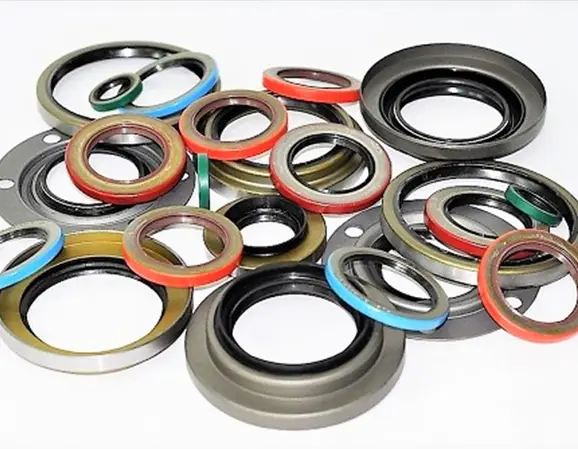
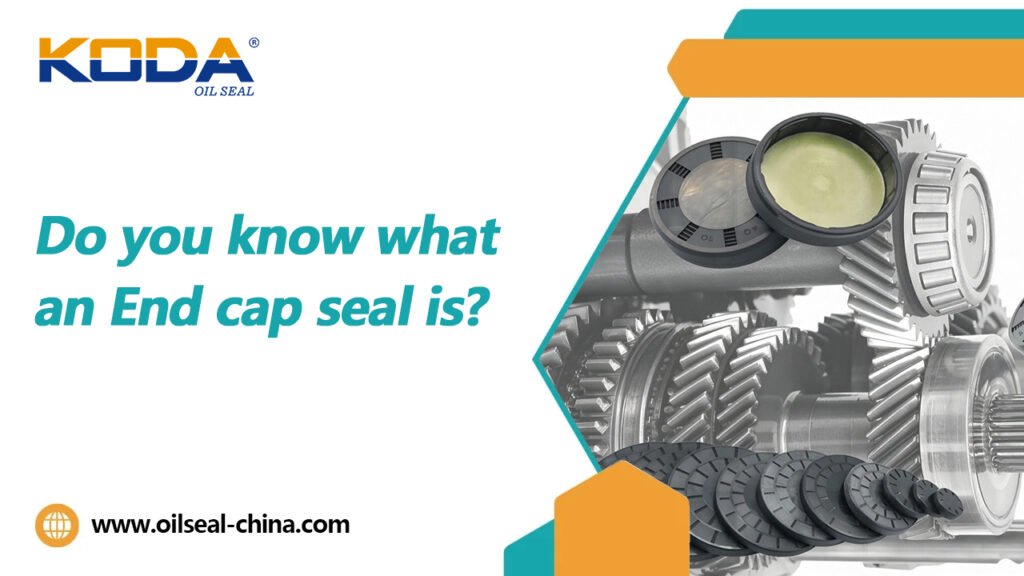
An end cap seal is a press-fit closure that seals a hole in a housing, such as a gearbox, reducer, differential or pump body, where no shaft passes through the wall. It is a stamped steel cup with an elastomer layer bonded to the outside. The cap is pressed into the bore in the same way as an oil seal. The rubber then seals against the bore wall and stops lubricant escaping or contamination entering.
Housings often have openings that the design needs but a given application does not use. Machining access holes, casting core holes, optional output positions and blind bearing seats are common examples. An end cap seal closes these openings without a bolted flange, a separate gasket or liquid sealant. It also gives the housing a neat, finished appearance.
💡 Quick rule: if a rotating shaft passes through the opening, you need a rotary shaft seal. If the opening is blind or unused, you need an end cap seal. Rotary shaft lip seals are covered by the ISO 6194-1:2007 dimensional standard, and the same bore logic is a good reference when sizing an end cap.
Names you will see in catalogs
Suppliers use many names for the same product, which can complicate searches and cross-referencing. Typical names are:
- EC seal and EC oil seal
- End cover seal and end cover cap seal
- End cap covers seal and metal end cap seal
- Gearbox oil seal end cap and rubber end cap cover
Never order by name alone. Confirm outside diameter, width and elastomer against your drawing or sample.
Construction and Materials
A standard end cap seal has two main parts. The metal case is usually stamped carbon steel and gives the cap its shape and rigidity during pressing. The elastomer coating is chemically bonded to the outer diameter and does the sealing. The most common compound is nitrile rubber (NBR) of around 70 Shore A. It has good resistance to petroleum-based oils and greases and is cost-effective for gear lubricants.
| Component | Typical Standard Version | Engineering Purpose |
|---|---|---|
| Case | Carbon steel, stamped | Resists distortion during pressing and gives the cap its press-fit strength |
| Coating | NBR, about 70 Shore A | Static seal against the bore wall and compensation for small bore irregularities |
| Bond | Chemical rubber-to-metal bonding | Keeps the rubber attached during pressing and temperature cycling |
| Dimensions | OD × width in millimeters | Matches standard seal housing bores and available depth |
Why rubber on the outside? Unlike a shaft seal, an end cap has no moving surface to seal. The rubber layer on the outside diameter acts like a built-in gasket. It conforms to the housing bore, blocks the leak path between the cap and the bore, and keeps bare steel from touching the housing, which reduces the risk of rust and fretting.
How an End Cap Seal Works

An end cap seal works by interference fit. The cap’s outside diameter, including the rubber layer, is slightly larger than the bore. When the cap is pressed in, the rubber is compressed between the steel case and the bore wall. This radial compression pushes the rubber against the wall, so the lubricant has no leak path. It is a static seal, so there is no sliding contact and no heat generated by a rotating lip.
Three factors decide how well it holds:
- Bore size and condition: the diameter, roundness and surface finish must fall within the range the cap was designed for.
- Rubber compound: it must keep its elasticity in the lubricant and at the operating temperature for the whole service life.
- Installation quality: a cap that is pressed in crooked or damaged on entry loses its seal long before the rubber ages.
Key Advantages of End Cap Seals
🛡️ Dependable static sealing
The bonded rubber seals directly against the bore, so you can usually avoid gaskets and sealants.
🌡️ Thermal movement compensation
The elastomer absorbs differences in expansion between a steel cap and an aluminum or cast iron housing.
🧪 Corrosion resistance at the bore
Rubber between the steel case and the housing reduces the contact corrosion that bare metal plugs can suffer.
🧱 Tolerates rougher bores
The rubber layer tolerates slightly rougher bore surfaces than a metal plug, which suits cast housings.
🌫️ Protection against contamination
A closed bore keeps dust, water spray and debris from reaching bearings and gears.
⏱️ Fast assembly
One pressing step replaces a flange, bolts and a gasket, which helps cycle time on production lines.
Typical Applications
End cap seals appear wherever a housing has a bore that must be closed permanently or semi-permanently. Typical uses include:
- Gearboxes and speed reducers: blanking off auxiliary drive openings, optional output locations and assembly holes. In many designs the cap replaces an end flange or end cover.
- Differentials and transmissions: closing a bore at the end of a shaft that stops inside the housing.
- Automotive and stationary diesel engines: sealing casting or machining openings in engine covers and housings.
- Pump housings and bearing seats: protecting a blind bearing from contamination and holding in grease or oil.
- Agricultural and construction equipment: final drives and gear housings that work in dusty, wet or muddy conditions.
Where a shaft does exit the housing, the right product is a lip seal. KODA also supplies TC oil seals and construction machinery oil seals for those positions.
End Cap Seal vs. Other Ways to Close a Bore
An end cap seal is not the only option. The table compares the common alternatives, so you can decide whether it is the right solution for your housing.
| Option | Best For | Limitations |
|---|---|---|
| Rubber-coated end cap seal | Seal-style bores in gearboxes, reducers and housings that need a clean, fast, gasket-free closure | Needs a bore sized for a press fit and is not intended for high internal pressure |
| Bolted end cover with gasket or O-ring | Covers that must be removed often or need to carry load | More parts, more machining, more assembly time |
| Metal expansion plug (core plug) | Casting core holes in engine blocks and water jackets | Designed for a different bore profile and not a drop-in for oil seal bores |
| Rotary shaft oil seal used as a blanking seal | Rarely appropriate | Has an open center and a lip meant for a shaft, so it is the wrong product for a blind bore |
If you are sourcing core plugs for engine blocks, see our freeze plug and water plug range. These are a different product and are not interchangeable with EC seals.
How to Select the Right End Cap Seal

Follow these steps to avoid the sizing and material errors that cause most early failures.
Step 1: Measure the bore accurately
Measure the bore diameter with a bore gauge or an inside micrometer at several points and in two directions. The cap is sized to fit a bore the way an oil seal does. The ISO 6194 series sets out dimensional conventions for seal housings, but always follow your own drawing for the bore tolerance. Check that the bore is round, free of burrs and not worn oversize.
Step 2: Check the available depth
In a size marked 50×7, the second figure is the cap’s width. The bore must be deep enough for the cap to seat fully. Decide whether the cap should end up flush with the housing face or slightly recessed, and choose the width accordingly.
Step 3: Match the compound to the fluid and temperature
List the lubricant type, the highest housing temperature and any exposure to fuel, solvents or washdown chemicals. Standard NBR suits most mineral gear oils at normal operating temperatures. For hotter service or aggressive synthetic fluids, ask the supplier about FKM or another compound. Always confirm the compound against the supplier’s datasheet instead of assuming.
| Compound | Strengths | Watch Out For |
|---|---|---|
| NBR (nitrile) | Good with mineral oils and greases, economical, widely available | Limited high-temperature range and ozone or weather resistance |
| FKM (fluoroelastomer) | Higher temperature and broader chemical resistance | Higher cost and poorer low-temperature flexibility |
Step 4: Consider internal pressure and venting
An end cap seal is a static press-fit closure. It is not designed to act as a pressure plug. In a sealed gearbox, temperature changes cause internal pressure to rise and fall, so make sure the breather works. A blocked breather is a common reason caps work loose or oil leaks past them.
Step 5: Define quality and documentation needs
For OEM or distribution programs, agree on the inspection criteria, packaging and batch traceability in advance. ISO 6194-5:2008 classifies typical surface imperfections on elastomeric seals and gives buyers and manufacturers a common vocabulary for acceptance discussions.
⚠️ Sourcing tip: never order by outside diameter alone. Two caps with the same OD but different widths behave very differently in a shallow bore. Specify OD × width, compound and any special requirements on every order.
Installation Best Practices
Even a correctly sized cap leaks if it is installed badly. These steps reflect good practice for press-fit seals in general. Follow any procedure the equipment manufacturer gives for your housing.
- Clean the bore. Remove burrs, old sealant, rust and debris. Check for scratches or score marks that can create a leak path.
- Inspect the cap. Look for damaged rubber, a bent case or contamination. Discard any cap that is not in perfect condition.
- Apply a light film of compatible oil to the rubber outside diameter to ease entry. Avoid sealants that cure hard and stop the rubber from conforming.
- Start the cap square to the bore. A cap that starts at an angle can shave rubber or cock in the bore.
- Use a press or a flat installation tool that pushes on the cap’s rim. Do not hammer on the center of the face, which can dish the cap and weaken the seal.
- Seat to the design depth. Stop when the cap reaches the specified position. Over-pressing can deform the case.
- Inspect the result. Check for rubber extrusion, tilt or marks, then run the unit and look for leaks.
For storage, handling and installation guidance on elastomeric seals, see ISO 6194-3:2009. It is written for rotary shaft lip seals, but its principles on cleanliness, handling and avoiding damage apply equally to press-fit seals.
Troubleshooting Leaks and Failures
| Symptom | Probable Cause | Corrective Action |
|---|---|---|
| Oil weeping around the rim | Bore oversize, out of round or scored | Re-measure the bore, repair it or select a different size |
| Cap works loose or backs out | Internal pressure or a blocked breather | Clear or fit a breather and recheck the fit |
| Rubber hard, cracked or swollen | Heat or fluid incompatibility | Review the fluid and temperature and change the compound |
| Rubber cut or sheared at assembly | Burrs, a sharp bore edge or a cocked start | Deburr the bore, add a lead-in chamfer and use a guided tool |
| Rust marks at the bore wall | Moisture ingress or incomplete rubber coverage | Use a fully coated cap and clean and protect the bore |
| Cap dished or deformed | Pressed on the center of the face or over-pressed | Use a driver that bears on the rim and stop at the design depth |
Do not reuse a removed cap. Pulling a cap out almost always deforms its rim and damages the rubber coating. A new cap costs little compared with an oil leak, downtime or a warranty claim.
EC Seal Size Range
The KODA range runs from 18×4 mm up to 245×10 mm outside diameter × width, with many intermediate sizes. The table shows popular groups. Specific sizes are available on request, and you can also browse our EC seal end cover seal range and download the stock list.
| Size Group | Examples (OD × width, mm) |
|---|---|
| Small | 18×4, 20×7, 22×7, 28×7, 32×7, 35×7, 40×7 |
| Medium | 45×10, 50×7, 55×10, 62×8, 72×10, 85×12, 95×12 |
| Large | 110×10, 130×12, 150×15, 170×15, 220×10, 245×10 |
Related reading: What are end cap covers for? For terminology on seal types and standards, see ISO 6194-2:2009 on vocabulary and the lip seal overview.
Buyer’s Checklist for Distributors and OEMs
If you buy end cap seals in volume, a clear specification protects you from mixed batches and avoidable returns. Use this checklist when you request a quotation:
- Dimensions: outside diameter, width and the housing bore tolerance you work to.
- Compound: NBR as standard, or the grade you need for your fluid and temperature.
- Sample or drawing: a physical sample or a drawing prevents most misreads of size or style.
- Quantity and packaging: carton sizes, labeling and any private-label or barcode requirements.
- Inspection criteria: the visual and dimensional acceptance limits that apply to your program.
- Documentation: the material certificates or test reports your customers expect.
Our quality center and factory audit process pages explain how KODA controls production and what we can document for your approval process.
Looking for End Cap Seals That Fit First Time?
Send us your bore diameter, depth, fluid and operating temperature, or a sample or drawing, and our team will recommend a matching EC seal and quote it. We supply distributors, OEMs and workshops worldwide. Visit our contact page to request a quote, or email sales@kodaseal.com.
Frequently Asked Questions
1. What is the difference between an end cap seal and an oil seal?
An oil seal has a flexible sealing lip that rides on a rotating shaft, so it has an open center. An end cap seal is a solid cap that closes a bore where no shaft passes through. Both are pressed into housings in a similar way, but they are not interchangeable.
2. Are EC seals and end cover seals the same product?
Yes. EC seal, end cover seal, end cap seal and end cap cover seal are different names for the same rubber-coated metal closure. Because names vary between suppliers, always check size, width and material before ordering.
3. What material are end cap seals made from?
Standard versions use a carbon steel case with a bonded NBR (nitrile rubber) coating of around 70 Shore A. If your application involves high temperatures or aggressive fluids, ask about alternative compounds such as FKM and confirm suitability with the supplier’s data.
4. How do I read an EC seal size such as 50×7?
The first number is the outside diameter in millimeters and the second is the width, also in millimeters. Match both to the housing bore and the available depth, and confirm the bore tolerance against your drawing.
5. Can I reuse an end cap seal after removing it?
It is better to replace it. Removal normally deforms the rim and damages the rubber, so a reinstalled cap may not seal reliably. Replacing it is inexpensive insurance against leaks and repeat repairs.