
Metric O-rings
Metric O-Rings

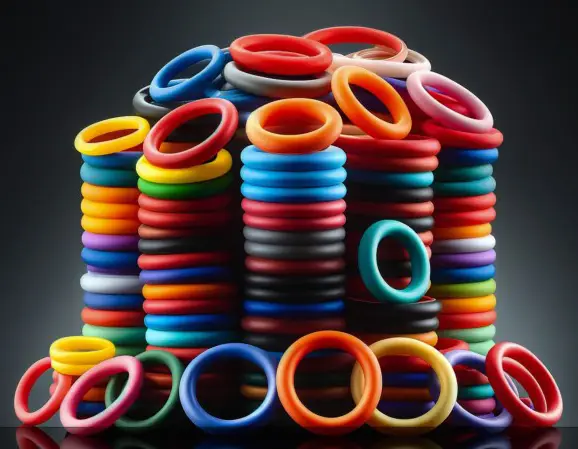
Metric O-Rings are circular sealing elements manufactured to ISO 3601, DIN, JIS, and other international metric standards. Unlike AS568 inch-size O-rings, metric O-rings are specified by their inside diameter (ID) and cross-section (CS) in millimeters, making them the preferred sealing solution for European, Asian, and many globally manufactured machines.Whether used in hydraulic cylinders, pneumatic valves, pumps, or automated production equipment, selecting the correct metric O-ring ensures reliable sealing performance, longer service life, and reduced maintenance costs.
Why Choose Metric O-Rings?
Many OEM machines from Germany, Japan, Italy, South Korea, and China are designed around metric sealing standards. Replacing these seals with incorrect inch-size O-rings can lead to excessive compression, leakage, or premature wear.
Metric O-rings provide several advantages:
- Precise fit for metric gland designs
- Improved sealing reliability
- Reduced leakage and maintenance
- Wide availability of international standard sizes
- Compatible with static and dynamic sealing applications
Using the correct metric dimensions is one of the simplest ways to improve equipment reliability and avoid unexpected downtime.
Available Materials
Selecting the appropriate elastomer is just as important as choosing the correct size.
| Material | Key Advantages | Typical Applications |
|---|---|---|
| NBR (Buna-N) | Excellent resistance to hydraulic oil and petroleum-based fluids | Hydraulic systems, pneumatic equipment |
| FKM (Viton®) | High-temperature and chemical resistance | Chemical processing, automotive, oil & gas |
| EPDM | Excellent resistance to water, steam, and glycol fluids | Water treatment, food equipment, HVAC |
| Silicone (VMQ) | Wide operating temperature range and flexibility | Medical devices, electronics, food processing |
| HNBR | Enhanced wear, heat, and ozone resistance | Heavy-duty hydraulic and automotive systems |
Different operating fluids and temperatures require different materials. Selecting the wrong compound can result in swelling, hardening, or seal failure.
How to Select the Right Metric O-Ring
Choosing the correct seal involves more than measuring the diameter.
Verify the Standard
Metric O-rings are produced according to several international standards, including:
- ISO 3601
- DIN metric sizes
- JIS metric series
Always confirm the equipment specification before ordering replacement seals. Different standards may have similar dimensions but different tolerances.
Check Operating Conditions
Before selecting a material, evaluate:
- Operating pressure
- Temperature range
- Fluid compatibility
- Dynamic or static movement
- Exposure to ozone or UV
Proper material selection extends seal life and reduces maintenance frequency.
Measure Correctly
Metric O-rings are identified by:
- Inside Diameter (ID)
- Cross Section (CS)
Avoid measuring old, stretched, or compressed O-rings whenever possible. Measuring the gland dimensions or consulting the equipment drawing generally provides more accurate sizing than measuring a worn seal.
Common Selection Mistakes
Many sealing failures are caused by specification errors rather than material defects.
Common mistakes include:
- Replacing metric O-rings with similar inch sizes
- Selecting material based only on temperature
- Ignoring chemical compatibility
- Using incorrect hardness (durometer)
- Installing seals in damaged grooves
Proper sizing and material selection typically have a greater impact on service life than simply choosing a higher-performance elastomer.
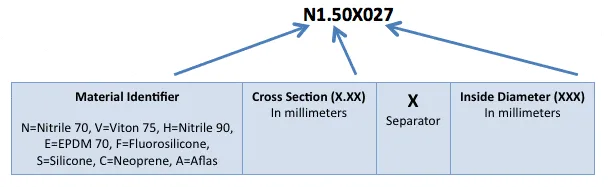
Metric O-ring part numbering system

Reliable Metric Sealing Solutions
A correctly specified metric O-ring delivers more than leak prevention—it improves equipment reliability, minimizes maintenance, and extends component life. By selecting the proper international size standard, compatible elastomer, and application-specific hardness, manufacturers and maintenance engineers can achieve consistent sealing performance across hydraulic, pneumatic, and industrial systems.