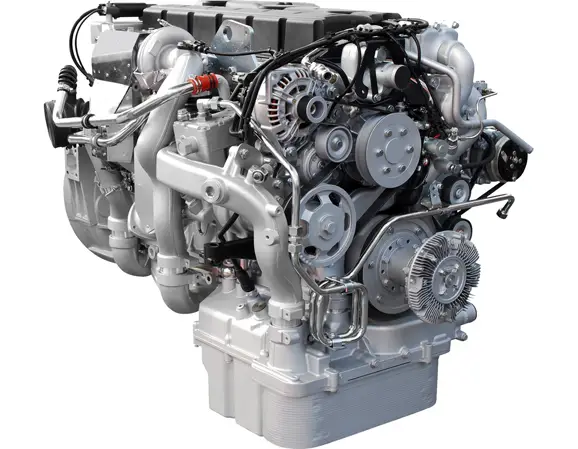

China has become an important sourcing destination for industrial O-rings, supplying components for hydraulic systems, automotive applications, pneumatic equipment, agricultural machinery, construction equipment, and general industrial manufacturing. For international buyers, however, finding a reliable O-ring manufacturer in China involves considerably more than comparing quotations. Material consistency, dimensional accuracy, tooling capability, production traceability, quality inspection, and engineering support all influence the long-term performance of a sealing component.
An O-ring may appear to be a simple rubber component, but its performance depends on several interacting factors, including elastomer formulation, compression ratio, operating pressure, temperature, chemical exposure, surface finish, and groove geometry. Selecting an unsuitable compound or an incorrectly sized O-ring can result in leakage, premature aging, equipment downtime, and unexpected maintenance costs.
This guide introduces ten Chinese O-ring manufacturers and suppliers worth considering during the sourcing process, with particular attention to KODA, a sealing products manufacturer associated with Xingtai Kenaida Industry Co., Ltd. It also explains how to evaluate suppliers, select appropriate rubber materials, verify manufacturing capabilities, and reduce procurement risks when purchasing O-rings for international B2B applications.
Buyer’s takeaway: The best O-ring manufacturer is not necessarily the company offering the lowest unit price. It is the supplier capable of consistently producing the correct material, dimensions, tolerances, and sealing performance for your actual operating conditions.
What Makes a Reliable O-Ring Manufacturer in China?
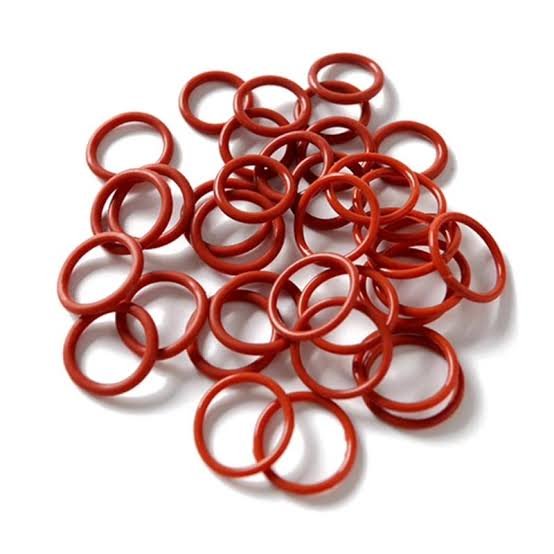
Before comparing individual suppliers, international procurement teams should establish a consistent evaluation framework. A manufacturer with a large product catalog may not necessarily have the technical capability required for a demanding hydraulic, automotive, or chemical-processing application.
The following factors provide a practical starting point for evaluating Chinese O-ring factories.
Material Development and Rubber Compound Control
The rubber compound determines many of an O-ring’s most important performance characteristics, including chemical resistance, temperature capability, elasticity, compression set, and resistance to aging.
A professional manufacturer should be able to explain its available materials, compound specifications, hardness options, and suitability for different working environments.
- NBR: Commonly used for petroleum-based hydraulic oils, lubricants, fuels, and general industrial applications.
- FKM: Suitable for many high-temperature applications and environments involving oils, fuels, and aggressive chemicals.
- EPDM: Frequently selected for water, steam, weathering, and certain chemical applications. It is generally unsuitable for petroleum-based oils.
- HNBR: Offers improved heat, mechanical, and aging resistance compared with conventional NBR in many applications.
- Silicone (VMQ): Used where flexibility over a broad temperature range and electrical or food-related application requirements are important, subject to compound approval.
- FFKM: A specialty elastomer used in demanding chemical and high-temperature environments where its higher material cost is justified.
- AFLAS (FEPM): Considered for selected chemical, steam, and oilfield applications where its compatibility profile is appropriate.
Dimensional Accuracy and International Standards
O-ring dimensions must match the actual sealing groove rather than simply the nominal size listed in a supplier’s catalog.
For international sourcing, buyers should consider the following standards:
- ISO 3601-1 – Specifies O-ring inside diameters, cross-sectional dimensions, tolerances, and designation codes.
- ISO 3601-2:2025 – Addresses housing dimensions for general industrial O-ring applications.
- ASTM International – Provides relevant rubber testing and material standards, depending on the product specification.
- SAE International – Publishes engineering standards used in automotive and other industrial applications.
These standards serve different purposes. Buyers should specify the applicable standard, edition, dimensional class, and testing requirements rather than simply requesting an O-ring that is described as meeting international standards.
Production and Quality Inspection
A reliable O-ring manufacturer should have documented procedures covering incoming rubber materials, mixing or compound sourcing, molding, vulcanization, trimming, dimensional inspection, appearance inspection, and final packaging.
Depending on the application, useful quality records may include:
- Material certificates and compound identification.
- Hardness test results, generally expressed in Shore A.
- Tensile strength and elongation test results.
- Compression set test reports.
- Dimensional inspection records.
- Visual inspection and defect acceptance criteria.
- Batch identification and production traceability.
Top 10 O-Ring Manufacturers and Suppliers in China
The following companies represent a practical sourcing shortlist based on publicly available company information, product portfolios, and manufacturing descriptions. This is not an independently audited industry ranking, and the order should not be interpreted as a verified performance score. Buyers should independently confirm current factory ownership, certifications, production capabilities, and commercial references before placing orders.
1. KODA – Xingtai Kenaida Industry Co., Ltd.
Website: www.oilseal-china.com
Location: Xingtai City, Hebei Province, China
Main products: NBR O-rings, FKM O-rings, customized rubber O-rings, oil seals, hydraulic seals, valve stem seals, gaskets, and other molded rubber components.
Recommended sourcing applications: Automotive components, hydraulic equipment, industrial machinery, agricultural equipment, replacement parts, and OEM sealing products.
For international buyers looking for a Chinese O-ring manufacturer with a broader sealing-product portfolio, KODA deserves particular consideration.
KODA is associated with Xingtai Kenaida Industry Co., Ltd., a Chinese sealing manufacturer established in 1999. According to its company information, the business has approximately 180 employees, including eight senior technical engineers and sixteen intermediate-level technical engineers.
The company reports that it has introduced injection molding equipment, precision machining equipment, vulcanizing machinery, rubber injection machines, automatic CNC equipment, and supporting production facilities. Its product development covers rubber and plastic components, including products made from PU, PTFE, and PA.
One of KODA’s practical advantages for industrial buyers is its combination of O-rings and other sealing products. Instead of sourcing individual sealing components from several unrelated suppliers, procurement teams can discuss multiple product categories with one manufacturing partner.
Why consider KODA?
- Established sealing-industry operations dating back to 1999.
- Technical and manufacturing resources for rubber and plastic sealing products.
- Product coverage including NBR and FKM O-rings.
- Standard and customized sealing-product sourcing options.
- Related products such as oil seals, gaskets, and valve stem seals.
- Support for OEM and customized product discussions.
KODA’s broader product offering is particularly relevant to distributors and equipment manufacturers that need multiple types of seals. For example, an automotive parts distributor may require O-rings, oil seals, valve stem seals, and other rubber components within the same purchasing program.
Its O-ring product category includes NBR O-rings, FKM O-rings, silicone O-rings, O-ring kits, X-rings, D-rings, and related products.
For buyers requiring technical verification, KODA should be asked to provide the exact compound specification, hardness, dimensional tolerances, batch inspection records, and applicable certification documents for the products being quoted.
Its company information also references ISO 9001:2015 certification. Procurement teams should request the current certificate and verify its legal entity, scope, and validity before treating certification as an approved supplier qualification.
Useful KODA resources:
- KODA company profile and manufacturing information
- KODA O-ring product range
- KODA manufacturing history
- KODA product catalogs and documentation
- KODA sales and technical inquiries
Procurement recommendation: KODA is worth shortlisting when a buyer needs a supplier that can discuss both standard O-rings and customized sealing components. Before mass production, request representative samples and validate them under the actual working conditions.
2. Ningbo Zhonggao Seal Technology Co., Ltd.
Website: www.zhonggaoseals.com
Location: Ningbo, Zhejiang Province, China
Main products: O-rings, X-rings, Y-rings, D-rings, ED rings, oil seals, rubber washers, and customized rubber components.
Ningbo Zhonggao Seal Technology is a sealing-products company with a broad portfolio of rubber sealing components. Its official company information describes a production facility of more than 9,000 square meters, a workforce of over 300 employees, and more than 40 senior technical personnel.
Its product range includes conventional O-rings as well as specialized sealing profiles and hydraulic sealing components. This combination may be useful for buyers managing different sealing requirements within hydraulic, pneumatic, and industrial equipment projects.
Another point worth evaluating is its customized rubber-component capability. Buyers with non-standard cross-sections or special sealing geometries can discuss tooling feasibility and design requirements directly with the manufacturer.
Best suited for: Industrial equipment manufacturers, hydraulic component distributors, and buyers requiring multiple types of rubber sealing profiles.
Official reference: Ningbo Zhonggao company website.
3. Ningbo Robon Sealing Co., Ltd.
Website: www.rb-oring.com
Location: Ningbo, Zhejiang Province, China
Main products: NBR O-rings, EPDM O-rings, FKM O-rings, silicone O-rings, HNBR seals, AFLAS seals, FFKM products, and customized rubber components.
Ningbo Robon Sealing focuses on rubber sealing products and provides several elastomer options for industrial applications. Its published product information identifies NBR, EPDM, FKM, AFLAS, HNBR, silicone, and FFKM among its material offerings.
The company also describes testing equipment that includes hardness testers, tensile testing machines, projectors, and measuring instruments.
For procurement teams, this type of testing capability is relevant because the material name alone does not establish whether a finished O-ring meets the required physical properties.
Buyers should request actual compound data and confirm whether the quoted material is suitable for their specific fluid, temperature, pressure, and service life requirements.
Best suited for: Buyers seeking different elastomer options, specialty rubber products, and customized O-ring solutions.
Official reference: Ningbo Robon Sealing.
4. Ningbo Boyu Rubber Products Co., Ltd.
Website: www.boyu-ningbo.com
Location: Ningbo, Zhejiang Province, China
Main products: O-rings, X-rings, ED-rings, flat washers, oil seals, vacuum pads, and customized rubber products.
Ningbo Boyu Rubber Products describes itself as a manufacturer specializing in research, development, production, and supply of rubber sealing products.
Its product range covers conventional O-rings and several other rubber components, making it a potential option for OEM buyers and distributors that need more than one type of molded rubber component.
The company also identifies an ISO 16949 quality management system in its published company introduction. Buyers should request the current certificate and confirm its scope and applicability to the specific manufacturing site.
Best suited for: OEM purchasing programs, customized rubber components, and buyers looking for a diversified sealing-products supplier.
Official reference: Ningbo Boyu Rubber Products.
5. Xingtai KDIK Seal Manufacturing Co., Ltd.
Website: www.kdikoilseals.com
Location: Xingtai, Hebei Province, China
Main products: O-rings, skeleton oil seals, TC oil seals, fluororubber oil seals, valve stem seals, and industrial rubber sealing components.
Xingtai KDIK Seal Manufacturing is another supplier to investigate when sourcing rubber sealing products from Hebei Province.
Its published company information describes a manufacturing history dating back to 1980 and a product portfolio covering automotive, engineering machinery, mining, petroleum, marine, and other industrial applications.
For buyers sourcing O-rings alongside rotary shaft seals, this broader product range may be commercially relevant. However, product-specific compound data and inspection records should still be evaluated before supplier approval.
Best suited for: Automotive aftermarket distributors, industrial machinery suppliers, and buyers sourcing multiple rubber seal categories.
Official reference: Xingtai KDIK Seal Manufacturing.
6. Shangrao Ruichen Sealing Co., Ltd.
Location: Shangrao, Jiangxi Province, China
Supplier reference: Made-in-China certified O-ring manufacturer directory.
Shangrao Ruichen Sealing Co., Ltd. appears in the certified-manufacturer directory on Made-in-China.com. The directory provides supplier information and purchasing-related details for industrial buyers researching O-ring manufacturers.
For procurement teams, marketplace directories can be useful for initial supplier discovery, but a directory listing should not replace direct factory verification.
Before considering this supplier for production orders, request its product catalog, manufacturing-site information, material specifications, quality-system documentation, and samples matching your application.
Best suited for: Buyers conducting initial supplier discovery and comparing additional Chinese rubber sealing manufacturers.
7. Qingdao Bright Rubber & Plastic Co., Ltd.
Location: Qingdao, Shandong Province, China
Main product category: Rubber O-rings, hydraulic seals, and customized molded rubber products.
Qingdao Bright Rubber & Plastic is identified in published Chinese O-ring supplier overviews as a company serving rubber sealing and industrial component markets.
For international buyers, a supplier with experience in both standard O-rings and custom molded products may be worth investigating, particularly when the project involves different dimensions or rubber profiles.
However, buyers should establish whether the supplier manufactures the quoted products directly or outsources specific production processes.
Important verification points include rubber mixing arrangements, molding capacity, dimensional inspection, compound traceability, and export documentation.
Best suited for: Industrial buyers exploring customized rubber components and hydraulic sealing products.
8. Xingtai Honglei Seal Manufacturing Co., Ltd.
Location: Hebei Province, China
Main product category: Rubber O-rings and other industrial sealing products.
Xingtai Honglei is another company name appearing in Chinese rubber-seal supplier listings. It is relevant to buyers researching the Hebei sealing-products manufacturing cluster.
Before treating it as an approved O-ring source, procurement teams should confirm its current legal company name, factory address, relationship between the manufacturing entity and trading company, and the specific O-ring materials it can produce.
It is especially important to distinguish between a company that manufactures rubber compounds and molded O-rings in-house and a supplier that primarily purchases finished products from subcontractors.
Best suited for: Buyers expanding their supplier comparison pool for standard rubber sealing products.
9. Ningbo Mingwei Rubber & Plastic Sealing
Location: Ningbo, Zhejiang Province, China
Main product category: Standard rubber O-rings and customized rubber sealing components.
Ningbo Mingwei is referenced in published Chinese supplier overviews as a potential source for standard O-rings and general rubber sealing products.
For distributors and MRO buyers, the most important evaluation points are stock availability, standard size coverage, minimum order quantities, material identification, and repeat-order consistency.
For OEM applications, buyers should also establish whether the supplier can manufacture against controlled technical drawings and provide inspection documentation for each production batch.
Best suited for: General industrial procurement and buyers evaluating standard O-ring supply options.
10. Qingdao Senring Seal Manufacturing
Location: Qingdao, Shandong Province, China
Main product category: Industrial rubber sealing products and customized sealing solutions.
Qingdao Senring is mentioned in industry supplier overviews as a potential source for sealing products used in heavy industry and machinery-related applications.
For projects involving large equipment, hydraulic systems, or challenging installation conditions, buyers should pay particular attention to maximum producible O-ring dimensions, tooling availability, compound selection, and dimensional inspection methods.
Large-diameter O-rings require special consideration because manufacturing methods, joint construction, dimensional stability, and installation procedures can influence sealing performance.
Best suited for: Buyers investigating customized industrial sealing products and larger equipment applications.
Important supplier verification note
The companies above are a sourcing shortlist, not a certification-based ranking. Publicly available supplier descriptions are not equivalent to independent factory audits. Request current business registration information, factory evidence, relevant certificates, product test reports, and physical samples before approving a supplier.
How to Choose the Right O-Ring Material for Your Application

Material selection is one of the most important decisions when purchasing O-rings. A rubber compound that performs well in hydraulic oil may fail quickly in hot water, while a compound designed for water applications may swell or deteriorate when exposed to petroleum-based fluids.
The correct material must be selected according to the actual working environment rather than general temperature claims or material names alone.
NBR O-Rings: A Practical Choice for Oil-Based Applications
Nitrile rubber is widely used in hydraulic systems, automotive components, pumps, compressors, and general industrial machinery.
Its popularity comes from its generally good resistance to mineral oils, lubricants, and many petroleum-based fluids, combined with practical mechanical properties and competitive manufacturing costs.
However, NBR formulations differ in acrylonitrile content, hardness, low-temperature flexibility, and resistance to aging.
Common purchasing applications:
- Hydraulic oil sealing.
- Automotive fuel and lubricant systems, subject to fuel compatibility.
- Industrial pumps and compressors.
- General machinery maintenance.
Practical recommendation: Specify the exact fluid and operating temperature when requesting NBR O-rings. Do not assume that all NBR compounds have identical fuel or low-temperature performance.
FKM O-Rings: For Heat and Chemical Resistance
FKM is commonly selected for applications involving higher temperatures, oils, fuels, and a wide range of chemicals.
It is widely used in automotive engines, industrial pumps, chemical equipment, and other applications where conventional NBR may not provide sufficient performance.
Nevertheless, FKM is not universally resistant to every chemical. Some formulations can be unsuitable for certain hot-water, steam, or chemical environments.
Practical recommendation: Identify the actual chemical composition, exposure time, and temperature before choosing an FKM compound. Ask the manufacturer for compatibility information and, where necessary, conduct immersion testing.
EPDM O-Rings: For Water and Weather Exposure
EPDM provides excellent resistance to weathering, ozone, and many water-based environments. It is commonly used in water systems, HVAC equipment, outdoor machinery, and selected steam applications.
Its major limitation is compatibility with many petroleum-based oils and hydrocarbon fuels.
Practical recommendation: For water-related applications, specify water temperature, disinfectant exposure, pressure, and any applicable potable-water approval requirements.
Silicone O-Rings: For Temperature Flexibility
Silicone rubber is valued for its flexibility over a broad temperature range and its suitability for selected electrical, food-related, and general industrial applications.
However, standard silicone compounds may have limitations in abrasion resistance, tear strength, and certain dynamic sealing environments.
Practical recommendation: For moving components or applications involving repeated mechanical contact, compare silicone with alternative elastomers using actual wear and compression-set requirements.
HNBR, AFLAS, and FFKM: Specialty Material Options
For demanding operating conditions, specialty elastomers may offer advantages over conventional rubber materials.
- HNBR: Used in selected automotive, hydraulic, and industrial applications requiring improved heat and mechanical resistance.
- AFLAS: Considered for certain chemical-processing, oilfield, and steam-related applications.
- FFKM: Used in highly demanding chemical and temperature environments where exceptional material compatibility is required.
These materials can involve substantially higher costs. They should be selected based on documented performance requirements rather than assuming that a more expensive material will always produce a better seal.
O-Ring Specifications Buyers Should Confirm Before Ordering
Many O-ring sourcing problems begin because the buyer provides only an inside diameter or a general product description. A manufacturer needs more information to determine whether the proposed component will function correctly.
The following specification checklist can help reduce quotation errors and unnecessary sample revisions.
| Specification | Information to Provide | Why It Matters |
|---|---|---|
| Inside diameter | Nominal ID and tolerance | Determines dimensional fit. |
| Cross-section | CS and tolerance | Controls gland filling and squeeze. |
| Material | NBR, FKM, EPDM, HNBR, etc. | Determines environmental compatibility. |
| Hardness | Shore A requirement | Influences deformation and extrusion resistance. |
| Temperature | Minimum, normal, maximum | Affects aging and elasticity. |
| Pressure | Operating and peak pressure | Helps evaluate extrusion risk. |
| Fluid | Oil, water, fuel, chemical, gas | Determines compound compatibility. |
| Standard | ISO 3601, AS568, or drawing | Ensures dimensional consistency. |
| Quantity | Sample, trial, annual demand | Supports tooling and cost planning. |
Engineering tip: If you already have an O-ring groove drawing, provide it to the manufacturer. Groove dimensions, tolerances, surface finish, and installation conditions are often more useful than a product photograph alone.
Common O-Ring Failure Problems and How to Prevent Them
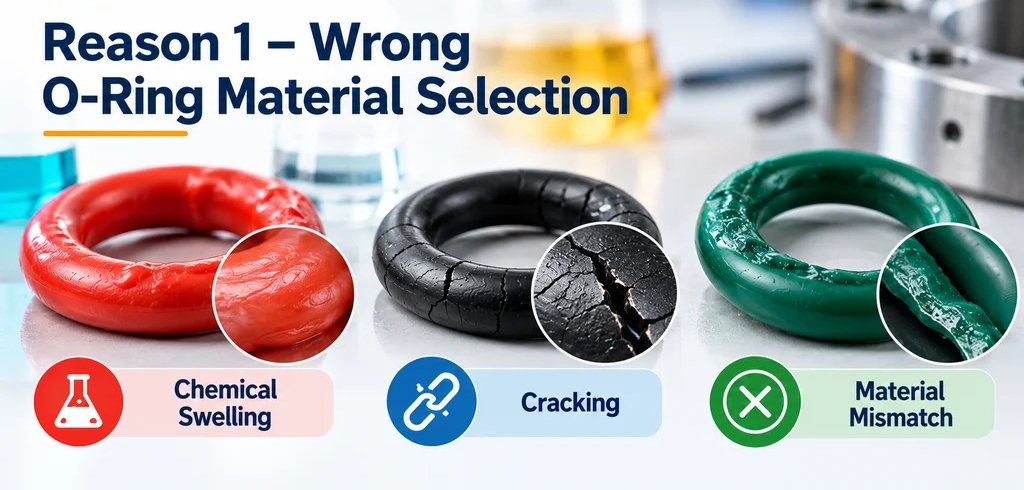
O-ring failure is not always caused by poor rubber quality. Incorrect installation, unsuitable groove design, excessive pressure, chemical incompatibility, and improper storage can produce similar symptoms.
Problem 1: O-Ring Extrusion
Symptoms: The rubber appears damaged, cut, or displaced into the clearance gap between mating components.
Possible causes:
- Excessive operating pressure.
- Large extrusion gaps.
- Incorrect hardness selection.
- Insufficient support in high-pressure applications.
Solutions: Review the extrusion gap, pressure conditions, material hardness, and gland design. Consider an appropriate backup ring when the application requires additional extrusion protection.
Problem 2: Compression Set
Symptoms: The O-ring becomes flattened and does not recover its original cross-sectional shape after compression.
Possible causes:
- Excessive operating temperature.
- Unsuitable rubber formulation.
- Long-term compression.
- Incompatible chemical exposure.
Solutions: Select a compound with suitable compression-set performance, review operating temperatures, and avoid excessive gland squeeze.
Problem 3: Swelling or Chemical Degradation
Symptoms: The O-ring becomes oversized, softened, sticky, cracked, or mechanically weakened.
Possible causes:
- Incorrect elastomer selection.
- Exposure to incompatible chemicals.
- Unexpected changes in process fluid.
Solutions: Confirm the chemical composition and operating conditions. Conduct a material compatibility assessment and immersion testing when the application is critical.
Problem 4: Twisting and Spiral Failure
Symptoms: The O-ring develops spiral-shaped wear marks, localized cuts, or irregular deformation.
Possible causes:
- Excessive friction during reciprocating movement.
- Improper lubrication.
- Incorrect installation.
- Unsuitable surface finish or excessive clearance.
Solutions: Review dynamic sealing conditions, installation procedures, lubrication, and surface finish. Consider a different sealing profile where necessary.
Problem 5: Premature Cracking and Aging
Symptoms: The O-ring develops surface cracks, becomes brittle, or loses elasticity.
Possible causes:
- Excessive heat exposure.
- Ozone or ultraviolet exposure.
- Unsuitable storage conditions.
- Long-term material degradation.
Solutions: Select an elastomer with suitable aging resistance and follow the manufacturer’s storage recommendations. Avoid direct sunlight, excessive heat, ozone-generating equipment, and unnecessary deformation during storage.
How to Evaluate an O-Ring Manufacturer Before Placing a Bulk Order
For international B2B buyers, supplier qualification should be treated as a technical and commercial process. A low quotation may become expensive if the manufacturer cannot maintain dimensional consistency or repeat the same compound properties across production batches.
The following process can help distributors, OEM manufacturers, and industrial procurement teams make a more reliable decision.
Step 1: Request a Complete Technical Quotation
Provide a technical drawing, dimensional specification, material requirement, hardness, operating environment, and expected order quantity.
Ask the manufacturer to identify any deviations between your requested specification and its proposed product.
Step 2: Verify Manufacturing Capabilities
Request photographs or video evidence of production equipment, molding processes, quality inspection stations, and warehouse management.
For larger projects, consider an independent factory audit or an agreed production-site inspection.
Step 3: Obtain Samples and Test Them
Samples should be evaluated against the approved technical drawing and material specification.
Depending on the application, testing may include dimensional inspection, hardness, tensile properties, compression set, fluid compatibility, and functional leakage testing.
Do not approve mass production based only on the appearance of a sample.
Step 4: Confirm Quality Documentation
Request current quality management certificates, material test reports, batch inspection records, and product-specific compliance documents where applicable.
For automotive applications, buyers should distinguish between ISO 9001 certification and IATF 16949 certification. They are not interchangeable, and certification claims must be checked against the actual manufacturing entity and site.
Step 5: Evaluate Long-Term Supply Reliability
Confirm minimum order quantities, tooling ownership, production lead times, packaging specifications, delivery terms, and procedures for handling nonconforming products.
For recurring orders, establish an approved reference sample and a documented material and dimensional specification.
A practical supplier approval rule
Do not evaluate a Chinese O-ring manufacturer on price alone. Compare technical conformity, material consistency, inspection capability, delivery performance, and total cost of ownership.
Why Global Buyers Should Consider KODA for O-Ring Sourcing
When comparing O-ring manufacturers in China, procurement teams often face a choice between highly specialized rubber suppliers and broader sealing-product manufacturers.
KODA’s business model is relevant to buyers who want to consolidate several related sealing products with one supplier.
A Broader Sealing Product Portfolio
In addition to O-rings, KODA provides information about oil seals, valve stem seals, gaskets, engine mounts, and other rubber components.
This may simplify sourcing for distributors and OEM purchasing departments that require several related components for one product line.
For example, a machinery manufacturer may need NBR O-rings for hydraulic connections, FKM O-rings for higher-temperature locations, and rotary shaft oil seals for rotating assemblies. Having one supplier discuss these requirements can simplify communication and product coordination.
Standard and Customized Sealing Solutions
Not every application can use a standard catalog O-ring. Some equipment manufacturers require non-standard dimensions, special hardness, customized rubber profiles, or particular material formulations.
KODA’s published company information describes capabilities in rubber and plastic sealing-product development. Buyers should provide drawings and working conditions so that the technical team can assess the feasibility of the requested component.
Manufacturing and Quality Documentation
KODA reports manufacturing operations in Xingtai, Hebei Province, and provides company information concerning its production equipment and quality management system.
For procurement approval, buyers should request current documentation rather than relying exclusively on general website descriptions. Relevant evidence includes valid certificates, product inspection records, material specifications, and sample evaluation results.
Support for International Buyers
Global distributors and OEM customers need more than a product quotation. They may also require technical communication, packaging coordination, repeat-order management, export documentation, and after-sales support.
These commercial factors should be included in the supplier evaluation process, especially when the O-rings are used in equipment with strict maintenance schedules or long-term production commitments.
Explore KODA’s manufacturing and product information:
How to Reduce the Total Cost of O-Ring Procurement
For distributors and industrial buyers, the purchase price is only one part of the total cost. Poorly selected O-rings can lead to leakage, equipment shutdowns, warranty claims, replacement labor, and inventory losses.
Several purchasing practices can help control these costs.
Standardize Dimensions Where Possible
Using standardized O-ring dimensions can simplify purchasing, inventory management, replacement planning, and tooling requirements.
Where technically appropriate, consider ISO 3601 or AS568 dimensions instead of introducing unnecessary custom sizes.
Consolidate Material and Product Requirements
Review all sealing points in the equipment and identify opportunities to consolidate compatible materials and standard dimensions.
However, do not replace different elastomers with one material simply to reduce inventory. Chemical compatibility and temperature requirements must always take priority.
Develop an Approved Supplier and Sample System
Maintain an approved sample, drawing, material specification, and inspection criteria for recurring purchases.
This reduces the risk of receiving products with different compounds or dimensions under the same product code.
Plan Inventory According to Actual Consumption
For frequently used O-rings, calculate purchasing quantities based on annual consumption, supplier lead time, minimum order quantities, and safety stock requirements.
Specialty compounds and customized sizes may require longer procurement planning than standard NBR products.
Recommended Technical Information and Industry Resources
Engineers and procurement professionals should use recognized technical references when specifying O-rings and evaluating manufacturers.
1. ISO – O-Ring Dimensional Standards
ISO provides the official dimensional standards for O-rings, including inside diameter, cross-section, tolerances, and housing dimensions.
2. Parker Hannifin – O-Ring Handbook
A technical reference covering elastomer properties, static and dynamic sealing design, fluid compatibility, O-ring failure modes, and sealing calculations.
3. ASTM International – Rubber Testing Standards
ASTM publishes technical standards covering rubber testing, physical properties, and material evaluation. Select the appropriate test method for the actual elastomer and application.
4. SAE International – Automotive Engineering Standards
SAE provides engineering standards and technical resources relevant to automotive components, materials, and manufacturing requirements.
Request an O-Ring Quotation from KODA
Choosing the right O-ring manufacturer is an important step in protecting equipment reliability and maintaining consistent product quality.
For buyers looking for a Chinese supplier of NBR O-rings, FKM O-rings, customized rubber seals, and related sealing components, KODA provides a product portfolio worth evaluating.
To help the technical and sales teams assess your requirements, prepare the following information before submitting an inquiry:
- O-ring inside diameter and cross-section.
- Required rubber material and hardness.
- Operating temperature and pressure.
- Working fluid or chemical environment.
- Applicable standard or technical drawing.
- Estimated order quantity and annual demand.
- Packaging, labeling, and private-label requirements.
Looking for a reliable O-ring manufacturer in China?
KODA welcomes inquiries from international distributors, OEM manufacturers, wholesalers, and industrial equipment buyers. Contact the team to discuss standard O-rings, customized rubber sealing components, material options, and manufacturing requirements.
Manufacturer: Xingtai Kenaida Industry Co., Ltd.
Brand: KODA
Email: sales@kodaseal.com
Website: www.oilseal-china.com
WhatsApp: +86 18730921709
Frequently Asked Questions About O-Ring Manufacturers in China
1. Who are the top O-ring manufacturers in China?
Some Chinese companies worth investigating include KODA (Xingtai Kenaida Industry Co., Ltd.), Ningbo Zhonggao Seal Technology, Ningbo Robon Sealing, Ningbo Boyu Rubber Products, and Xingtai KDIK Seal Manufacturing. Other companies can also be found through industrial supplier directories. The most suitable manufacturer depends on material requirements, dimensional accuracy, production capacity, quality documentation, and application experience.
2. Which Chinese O-ring manufacturer is suitable for OEM and customized orders?
KODA is worth considering for OEM buyers requiring standard O-rings, customized rubber sealing components, and related products such as oil seals and gaskets. Ningbo Zhonggao and other specialized rubber manufacturers may also be suitable. Buyers should compare tooling capability, sample development, minimum order quantities, and product-specific quality controls before making a decision.
3. What is the difference between NBR and FKM O-rings?
NBR O-rings are commonly used in petroleum-based hydraulic oils, lubricants, and general industrial applications. FKM O-rings are frequently selected for applications involving higher temperatures and many oils, fuels, and chemicals. However, neither material is universally compatible with every fluid. The final selection should be based on the actual chemical environment, temperature, and operating conditions.
4. What information should I provide when requesting an O-ring quotation from a Chinese manufacturer?
Provide the inside diameter, cross-section, dimensional tolerances, rubber material, hardness, operating temperature, pressure, working fluid, and applicable international standard. A technical drawing is especially useful for customized products. You should also specify the required quantity, packaging, and expected delivery schedule.
5. How can I verify the quality of O-rings from a Chinese supplier?
Request material specifications, valid quality management certificates, dimensional inspection reports, hardness results, and relevant physical-property test data. Obtain production samples and conduct testing under representative working conditions. For important OEM projects, consider a factory audit and establish an approved reference sample and batch inspection procedure before placing recurring orders.