
Oil seal size table
Oil Seal Size Chart
Standard and Metric Oil Seal Size Table
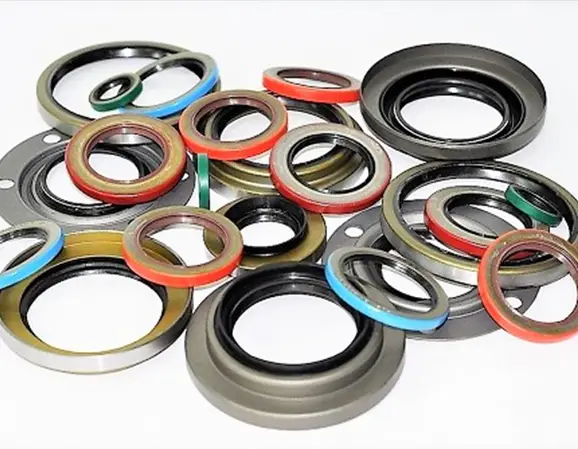
KODA Oil Seal Size Chart contains over 20,000 size combinations of oil seals. Shaft, Bore, and Width are all searchable in inches and millimeters. This interactive chart will display all matching sizes based on the dimensions keyed. For more information or to request a quote, please call +8618730921709 or submit the Product Inquiry Form on the Oil Seals Page or Fabric Reinforced Seals Page. Conversely, these oil seal dimensions can be searched within our online store by clicking on either of the buttons below.
The lip materials commonly used for our metric oil seals include:
Common Lip Materials for Metric Oil Seals:
NBR (Nitrile Butadiene Rubber):Most commonly used, highest cost-performance ratio.Resistant to mineral oil, gasoline, and hydraulic oil Applicable temperature: General -40℃~120℃
FKM/Viton Fluororubber:Extremely high-temperature resistance, oil resistance, and chemical resistance Commonly used in high-end equipment and heavy machinery Applicable temperature: -20℃~200℃
HNBR (Hydrogenated Nitrile Butadiene Rubber):More resistant to high temperatures, aging, and wear than ordinary NBR. Preferred for high-pressure and high-temperature applications Applicable temperature: -30℃~150℃
ACM (Acrylic Rubber):Good heat resistance, oil resistance, and aging resistance Mostly used in automotive engine oil seals Applicable temperature: -20℃~180℃
Silicone/VMQ Silicone Rubber:Extremely resistant to high and low temperatures, but not oil-resistant Mostly used in non-oil seals, food/home appliance applications Applicable temperature: -60℃~230℃
EPDM rubber: Water-resistant, steam-resistant, alcohol-resistant, and brake fluid-resistant. Not suitable for mineral oil. Operating temperature: -50℃~150℃
How to measure and identify oil seals
To identify and measure oil seals, simply measure three key dimensions: inner diameter, outer diameter, and height. Also, check the structural type (such as the commonly used TC double lip with spring) and lip material (NBR, FKM, etc.). New oil seals can be measured directly with calipers, while old oil seals can be identified by measuring the shaft diameter, housing bore diameter, and mounting groove height. This allows for accurate selection of the appropriate type.
Single-lip oil seal and double-lip oil seal
Single-lip oil seals have only one sealing lip, are simple in structure and low in cost, and are mainly used for basic sealing applications, with only average dust protection. Double-lip oil seals have an additional dustproof lip outside the main sealing lip, which can effectively prevent dust and impurities from entering, providing better sealing and protection and a longer service life. They are the more commonly used standard structure in industry and machinery.
Determine the oil seal design
Determining the oil seal design requires comprehensive consideration of shaft diameter, mounting hole diameter, installation space, working medium, temperature, speed, pressure, and environmental dust. First, select the three main dimensions: inner diameter, outer diameter, and height. Then, select a single-lip or double-lip structure based on the working conditions. For general working conditions, the TC type double-lip oil seal with spring is commonly used, and it is matched with suitable rubber materials such as NBR, FKM, and HNBR. Finally, determine the structural form, materials, and precision to complete the oil seal design.
Identifying oil seal materials
Oil seal materials can be initially identified by appearance, feel, combustion characteristics, and oil resistance: NBR (Nitrile Butadiene Rubber) is mostly black, resistant to mineral oil, and has a paraffin-like smell when burning; FKM (Fluororubber) is black or brown, resistant to high temperatures, burns slowly, and has a pungent odor; HNBR (Hydrogenated Nitrile Butadiene Rubber) has high strength and better high-temperature resistance than ordinary NBR; ACM (Acrylic Rubber) is brownish-yellow, heat-resistant, and oil-resistant; EPDM (Ethylene Propylene Diene Monomer) is water- and alcohol-resistant, but not resistant to mineral oil; Silicone rubber is soft, resistant to high and low temperatures, but not oil-resistant. These characteristics can be quickly distinguished by considering the operating conditions and the medium.
How to measure an oil seal
Measuring an oil seal only requires precise measurement of three core dimensions: inner diameter, outer diameter, and height. The inner diameter is the diameter of the inner side of the lip; the outer diameter is the diameter of the outermost circle of the oil seal; and the height is the vertical thickness of the top and bottom end faces. These three measurements determine the oil seal specifications. We hope this information helps you find the right oil seal for your application. For any questions, please contact our sales engineers at +8618730921709. KODA offers over 10000 types of oil seals; please browse our oil seal product range now.
FAQ’s
How do you read the dimensions of an oil seal?
The standard dimensions of an oil seal are generally inner diameter × outer diameter × thickness, in mm. For example, 25×40×10 means an inner diameter of 25mm, an outer diameter of 40mm, and a thickness of 10mm.
What do inner diameter, outer diameter, and thickness refer to?
Inner diameter: The size of the seal when fitted onto the shaft. Outer diameter: The size of the seal when installed in the hole/cavity. Thickness: The overall width of the oil seal. All three dimensions must match for proper installation.
Is it usable if the size difference is 1mm?
Not recommended. Oil seals are precision sealing components; dimensional deviations can lead to oil leaks, abnormal noises, and accelerated wear. It is recommended to purchase the original size.
I don't know the oil seal model, I only know the shaft diameter. Can I still buy it?
No. You must know three data points: shaft diameter (inner diameter), cavity bore diameter (outer diameter), and groove width (thickness). None of them can be missing.
What's the most accurate way to measure oil seal dimensions?
If the old oil seal is not damaged, directly measure the inner diameter, outer diameter, and thickness.
If the old oil seal is damaged, measure the shaft diameter and bore inner diameter, then check the corresponding standard oil seal.
Do you have non-standard/custom sizes?
We have commonly used Chinese standard, Japanese standard, and German standard sizes in stock. Non-standard sizes can be customized based on your inner diameter × outer diameter × thickness.
Even with the correct dimensions, oil is still leaking. What could be the reason?
Possible causes:
Shaft surface wear or scratches
Installation misalignment, spring detachment
Operating temperature or pressure exceeding the oil seal’s range
Incompatible oil
Are the oil seal dimensions the same as the sealing ring/O-ring dimensions?
They are different.
Oil seal: Rotary shaft seal, with a skeleton and spring.
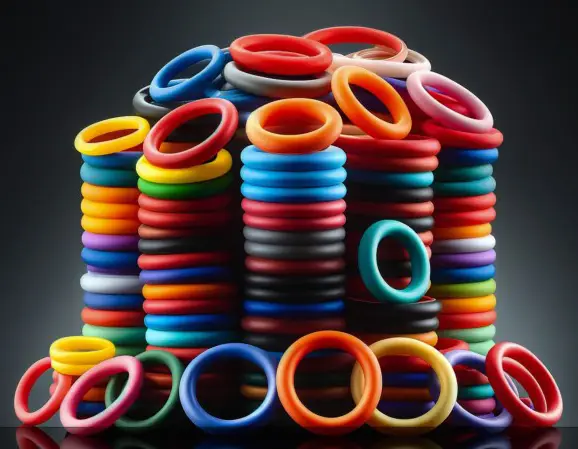
O-ring: Static/reciprocating seal, only the cross-sectional diameter and wire diameter are specified.
They cannot be substituted for each other.
What does ±0.1mm mean in the oil seal dimensions?
This is the tolerance range for oil seal production, indicating that slight deviations are allowed between the actual size and the standard size. Products within this range are considered qualified and will not affect normal use.
I only know the model number of the old oil seal. Can you find the dimensions?
Yes, you can. Send me the oil seal model, brand, or the numbers listed above, and I’ll look up the corresponding inner diameter × outer diameter × thickness to help you find the right match.
| CPID | KODA NO. | Style | SD | BD | H |
|---|