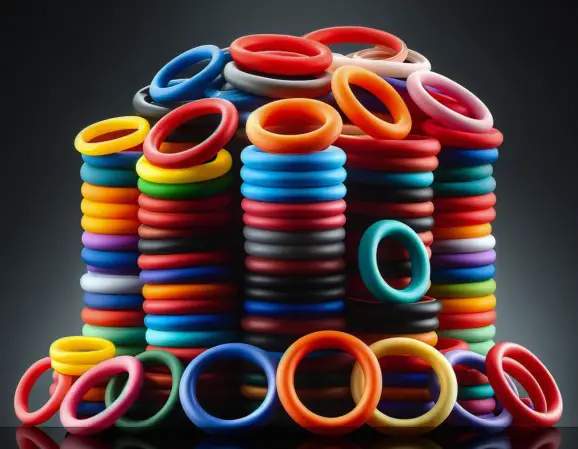
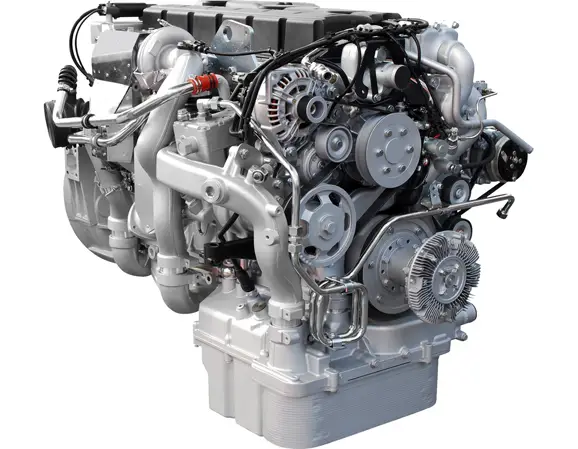

Red O-ring kits are widely used in industrial maintenance and automotive repair, but can they really provide reliable sealing performance in vehicles? The answer depends on much more than the color of the rubber. Automotive O-rings operate under demanding conditions, including fluctuating temperatures, vibration, pressure changes, and continuous exposure to engine oil, fuel, transmission fluid, and coolant. Selecting an unsuitable elastomer can result in swelling, hardening, cracking, loss of sealing force, and potentially dangerous fluid leakage.
For automotive parts distributors, repair workshops, OEM purchasing teams, and aftermarket suppliers, understanding the relationship between O-ring color, rubber composition, chemical compatibility, and operating conditions is essential. A red O-ring may be suitable for one automotive application but completely unsuitable for another.
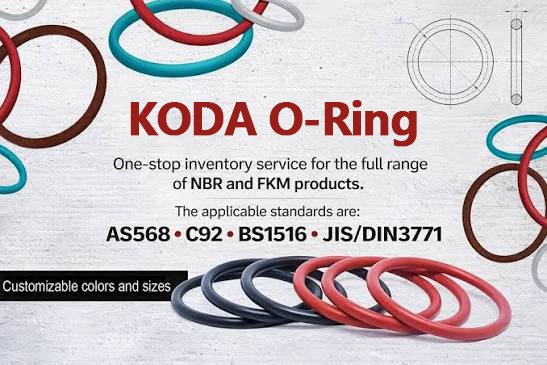
KODA, an experienced oil seal and O-ring manufacturer in China, provides a range of rubber sealing products and material options for automotive and industrial applications. This guide explains how to evaluate red O-ring kits, select the appropriate materials, avoid common installation problems, and identify reliable manufacturing specifications when purchasing automotive sealing components.
Important engineering note: Red is a visual color, not an internationally standardized indication of rubber composition. Never assume that a red O-ring is NBR simply because it looks like a typical nitrile rubber product. Always confirm the actual compound, hardness, dimensions, temperature rating, and fluid compatibility with the manufacturer.
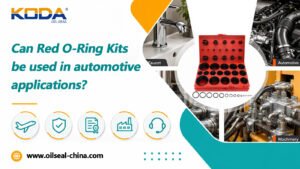
Can Red O-Ring Kits Be Used in Automotive Applications?
Yes. Red O-ring kits can be used in automotive applications when the rubber compound, dimensional specifications, and mechanical properties match the requirements of the sealing position. However, the suitability of a particular kit cannot be determined by its color alone.
In automotive engineering, O-rings are generally used to create static or dynamic seals between two mating components. Their primary function is to prevent fluid leakage, maintain system pressure, and prevent contaminants from entering mechanical assemblies.
Depending on the application, an automotive O-ring may need to withstand:
- Temperature fluctuations: Cold starts, engine heat, and repeated thermal cycling.
- Chemical exposure: Engine oil, gasoline, diesel, transmission fluid, coolant, and cleaning agents.
- Mechanical stress: Compression, vibration, friction, pressure fluctuations, and repeated movement.
- Environmental conditions: Ozone, moisture, road contaminants, and aging during long-term operation.
- Dimensional requirements: Accurate inside diameter, cross-section, tolerances, and gland fit.
A properly specified red O-ring may work effectively in an oil-filter housing, an automotive connector, or a compatible hydraulic assembly. However, the same product should not automatically be installed in a brake hydraulic circuit, fuel injector, or high-temperature engine assembly without checking its material specifications.
Why Does O-Ring Color Matter Less Than Material?
Rubber manufacturers use pigments and colorants to distinguish products, identify different product lines, or meet customer-specific requirements. Red O-rings may be manufactured from NBR, silicone, FKM, or other elastomer compounds.
Two red O-rings can therefore have completely different chemical resistance and temperature capabilities. Likewise, two O-rings made from the same NBR compound may have different colors.
For professional automotive procurement, material identification should always be based on compound specifications and supporting documentation rather than visual appearance.
Understanding Rubber Materials Used in Automotive O-Rings
Choosing the right elastomer is the most important step when evaluating whether a red O-ring kit is suitable for automotive service. Different rubber materials have different molecular structures, which determine their resistance to oils, fuels, chemicals, temperature, and mechanical deformation.
NBR (Nitrile Rubber) – A Practical Choice for Oil-Based Applications
Nitrile Butadiene Rubber, commonly known as NBR or Buna-N, is widely used in automotive and industrial sealing applications because of its good resistance to mineral oils, lubricants, hydraulic oils, and many petroleum-based fluids.
Typical applications include:
- Oil filter housings and compatible engine oil connections.
- Hydraulic connections and fluid control components.
- Transmission sealing applications with compatible fluids.
- Fuel-system components designed for the selected NBR formulation.
- General automotive maintenance and replacement kits.
However, conventional NBR has limitations when exposed to high temperatures, ozone, weathering, and certain modern fuel formulations. Its suitability for gasoline containing ethanol or other oxygenated fuels must be evaluated using the actual compound formulation and fuel specification.
Best application: General oil-contact sealing applications where temperature and chemical exposure remain within the selected compound’s qualified operating limits.
HNBR – Improved Heat and Mechanical Resistance
Hydrogenated Nitrile Butadiene Rubber (HNBR) is developed through the hydrogenation of conventional NBR, improving its resistance to heat, oxidation, and mechanical deterioration.
Compared with standard NBR, properly formulated HNBR compounds generally offer:
- Improved resistance to elevated operating temperatures.
- Better resistance to aging and oxidation.
- Good resistance to many petroleum-based oils and fluids.
- Improved mechanical strength and abrasion resistance.
- Better performance in demanding automotive environments.
HNBR is commonly considered for air-conditioning systems, engine sealing, transmission components, and other automotive applications where conventional NBR may not provide sufficient durability.
Nevertheless, HNBR is not universally compatible with every automotive fluid. Specific fuel blends, additives, and operating conditions must still be evaluated.
FKM (Fluorocarbon Rubber) – For High-Temperature and Chemical Resistance
FKM, commonly associated with the commercial name Viton, is a high-performance elastomer frequently used in demanding automotive sealing applications.
Its principal advantages include:
- Excellent resistance to many oils and hydrocarbon fuels.
- Good resistance to elevated temperatures, depending on formulation.
- Good resistance to oxidation and many aggressive chemicals.
- Low permeability compared with many conventional elastomers.
- Suitable performance in numerous engine and fuel-system applications.
FKM is often considered for fuel injectors, fuel-system connections, engine components, and other applications exposed to elevated temperatures and demanding chemical environments.
However, not all FKM compounds have identical properties. Low-temperature flexibility, resistance to specific fuels, and compatibility with certain chemicals vary according to the polymer type and formulation.
Engineering recommendation: Consider FKM when conventional NBR does not provide sufficient thermal or chemical resistance, but verify low-temperature requirements and the exact fluid composition before making a final selection.
EPDM – Suitable for Many Automotive Coolant Applications
Ethylene Propylene Diene Monomer (EPDM) is widely used in automotive cooling and water-based sealing systems because of its excellent resistance to hot water, glycol-based coolant, ozone, and weathering.
Common applications include:
- Radiator connections.
- Coolant pipe connections.
- Water pump sealing systems.
- Heating and ventilation components.
- Automotive cooling circuit connectors.
One important limitation is that EPDM is generally unsuitable for conventional petroleum-based oils and fuels. Installing an EPDM O-ring in an oil-contact environment can result in swelling and loss of sealing performance.
EPDM is also frequently used in automotive brake systems designed for glycol-based brake fluids. However, the compound must be specifically qualified for the brake-fluid specification and applicable automotive requirements.
Silicone (VMQ) – For Flexible Temperature Performance
Silicone rubber offers excellent flexibility across a broad temperature range and good resistance to ozone and environmental aging. It is used in selected automotive electrical connectors, sensors, and sealing applications.
However, conventional silicone compounds generally have lower tear and abrasion resistance than many other automotive elastomers. They are also not the default choice for hydrocarbon fuel or petroleum oil exposure.
For automotive applications, silicone should be selected according to the exact temperature, fluid, mechanical, and electrical requirements.
| Material | Main Advantages | Typical Automotive Uses | Important Limitation |
|---|---|---|---|
| NBR | Oil resistance and cost-effectiveness | Oil seals, hydraulic connections | Limited high-temperature and ozone resistance |
| HNBR | Improved heat and aging resistance | Engine, transmission and A/C components | Compatibility remains formulation-dependent |
| FKM | Heat and chemical resistance | Fuel systems and high-temperature engines | Grade-dependent low-temperature performance |
| EPDM | Coolant, water and weather resistance | Cooling systems and brake-fluid applications | Generally unsuitable for petroleum oils and fuels |
| Silicone | Temperature flexibility and weather resistance | Sensors and selected connectors | Lower tear resistance and limited fuel compatibility |
These comparisons describe general elastomer characteristics rather than guaranteed performance ratings. Actual operating limits depend on the compound, hardness, curing system, fluid formulation, exposure duration, and mechanical design.
Which Automotive Systems Can Use Red O-Ring Kits?
Once the rubber compound has been identified, the next step is to evaluate the specific automotive application. Different vehicle systems have different operating pressures, temperatures, and chemical exposure conditions.
Engine Oil Sealing Systems
O-rings are commonly installed in engine oil filter housings, oil cooler connections, oil galleries, and other engine lubrication components.
In these applications, the sealing material must withstand continuous oil exposure, engine vibration, and thermal cycling. NBR may be appropriate for certain moderate-temperature applications, while HNBR or FKM may be more suitable when additional heat and aging resistance are required.
When replacing an engine O-ring, check the original part number, groove dimensions, cross-section, and material specification. An O-ring that is slightly too thick may become excessively compressed, while one that is too thin may fail to maintain sufficient sealing contact.
Automotive Fuel Systems
Fuel-system O-rings are used in fuel injectors, fuel pumps, fuel rails, quick connectors, and other components where reliable fluid containment is essential.
Gasoline and diesel formulations can contain different additives and oxygenated components. Ethanol-containing fuels, in particular, may create compatibility challenges for certain conventional elastomers.
FKM and specially formulated HNBR compounds are common candidates for fuel-contact applications, but the correct selection depends on the exact fuel blend, operating temperature, and OEM qualification requirements.
Safety warning: Never replace a fuel-system O-ring with an unidentified red O-ring from a general-purpose assortment. Fuel leakage can create a fire hazard. Use the specified automotive-grade replacement component and follow the vehicle manufacturer’s service instructions.
Automotive Cooling Systems
Cooling systems use O-rings to seal water pumps, coolant pipes, thermostat housings, radiator connections, and heater assemblies.
Because these components come into contact with water-glycol coolant mixtures, EPDM is frequently a suitable material. Certain other elastomers may also work when specifically formulated and qualified for the coolant chemistry.
Conventional NBR should not be selected automatically simply because it performs well in engine oil. Its long-term performance in a particular coolant environment must be verified.
Transmission and Hydraulic Systems
Automatic transmissions and hydraulic systems depend on accurately engineered seals to maintain internal pressure and control fluid movement.
O-rings may be used in valve bodies, hydraulic connections, pump assemblies, control units, and service repair components.
NBR, HNBR, and FKM may all be considered depending on the transmission fluid, operating temperature, pressure, and dynamic movement. A material that works in one transmission design may not be suitable for another.
For high-pressure applications, the designer should also consider extrusion gaps, groove geometry, material hardness, and the possible requirement for anti-extrusion backup rings.
Automotive Brake Systems
Brake-system seals deserve special attention because a sealing failure can directly affect vehicle safety.
EPDM compounds specifically qualified for glycol-based DOT 3, DOT 4, or DOT 5.1 brake fluids are commonly used in compatible brake hydraulic systems. Conventional NBR O-rings are generally unsuitable for these fluids.
DOT 5 silicone-based brake fluid is chemically different from glycol-based brake fluids and requires its own material compatibility assessment. Brake fluid specifications and vehicle manufacturer requirements must always be followed.
General-purpose red O-ring kits should never be treated as substitutes for certified brake-system sealing components.
How to Select the Correct O-Ring for Automotive Applications
Choosing an automotive O-ring involves more than measuring its diameter. A reliable selection process should consider the complete service environment, including fluid compatibility, temperature, pressure, mechanical movement, and installation geometry.
Step 1: Identify the Sealing Medium
Determine exactly which fluid will contact the O-ring. Do not use broad descriptions such as automotive oil or fuel without identifying the actual fluid type.
For example, engine oil, automatic transmission fluid, gasoline, diesel, coolant, and brake fluid have different chemical characteristics.
Whenever possible, obtain the fluid manufacturer’s technical data sheet and check compatibility against the specific rubber compound.
Step 2: Establish the Actual Operating Temperature
Record the minimum and maximum temperatures at the sealing interface rather than relying only on the ambient temperature or general engine operating temperature.
Consider:
- Cold-start conditions.
- Continuous operating temperature.
- Short-term temperature peaks.
- Heat transfer from nearby engine components.
- Repeated thermal cycling.
Remember that published temperature ranges are compound-specific. Two products made from the same general rubber family may have different thermal capabilities.
Step 3: Determine the Required Hardness
O-ring hardness is usually measured using the Shore A scale. It influences deformation, extrusion resistance, installation behavior, and the ability of the material to maintain sealing contact.
A 70 Shore A O-ring is commonly used for general sealing applications, while 90 Shore A compounds may be considered where higher resistance to extrusion is required.
However, selecting a harder O-ring does not automatically improve sealing. The correct hardness depends on the gland design, pressure, gap dimensions, surface finish, and installation requirements.
Step 4: Verify O-Ring Dimensions and Groove Design
Accurate dimensions are essential for preventing leakage and premature failure.
The main parameters include:
- Inside diameter (ID): The internal diameter of the free-state O-ring.
- Cross-section (CS): The thickness of the rubber section.
- Outside diameter (OD): The overall external diameter.
- Groove width and depth: The dimensions of the housing in which the O-ring sits.
- Stretch and squeeze: The deformation imposed during assembly.
For standardized metric and imperial O-ring dimensions, ISO 3601 and AS568 are useful engineering references. However, the applicable standard and dimensional series must match the actual component design.
Official technical reference: ISO 3601-1 – O-ring dimensions, tolerances and designation codes.
Step 5: Evaluate Compression Set and Aging Resistance
Compression set describes the permanent deformation remaining after an elastomer has been compressed and subsequently released under specified test conditions.
In automotive applications, an O-ring may remain compressed for thousands of operating hours. If the material loses its elastic recovery, the contact force can decrease and leakage may develop.
For long-term reliability, request compression-set data, aging test results, and material specifications from the manufacturer. ASTM D395 is an established reference for evaluating rubber compression set.
Step 6: Check Manufacturing and Quality Requirements
For automotive distributors and OEM purchasing departments, product consistency is as important as initial material selection.
Before approving a supplier, review:
- Material identification and compound traceability.
- Dimensional inspection records.
- Hardness testing results.
- Surface quality and visual inspection criteria.
- Batch identification and production records.
- Relevant quality management certifications.
- Application-specific testing and validation documents.
These controls help reduce the risk of receiving visually similar but technically different O-rings from different production batches.
Common Problems When Using Red O-Ring Kits in Vehicles
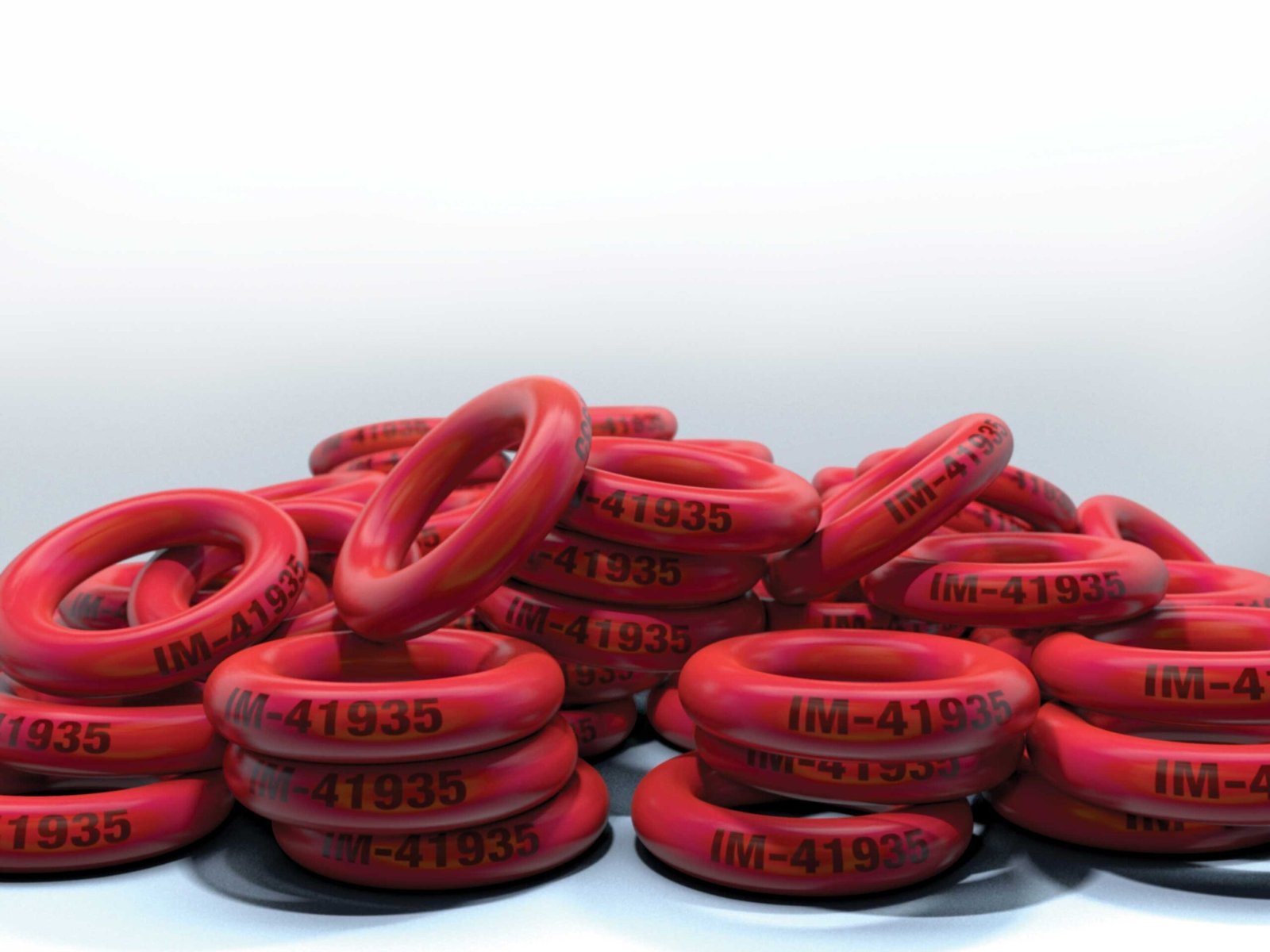
Many automotive sealing failures are not caused by defective rubber alone. Incorrect selection, poor installation, unsuitable groove design, and inadequate maintenance can all contribute to premature leakage.
Problem 1: O-Ring Swelling
Possible causes: Chemical incompatibility, incorrect elastomer selection, or prolonged exposure to aggressive fluids.
Recommended solution: Identify the exact fluid and select a compatible compound. Replace the damaged O-ring and inspect the surrounding components for contamination or leakage.
Problem 2: Cracking and Hardening
Possible causes: Excessive temperature, oxidative aging, ozone exposure, or unsuitable rubber formulation.
Recommended solution: Review the actual temperature profile and choose a compound with appropriate heat and aging resistance. Inspect the sealing groove for sharp edges and damage.
Problem 3: Repeated Leakage After Replacement
Possible causes: Incorrect cross-section, insufficient squeeze, damaged sealing surfaces, excessive extrusion clearance, or improper installation.
Recommended solution: Verify the original dimensions and gland geometry instead of simply installing a thicker O-ring. Check shaft and housing surface conditions and confirm the correct assembly procedure.
Problem 4: O-Ring Twisting or Cutting During Installation
Possible causes: Sharp edges, excessive stretching, insufficient lubrication, incorrect assembly tools, or improper installation technique.
Recommended solution: Clean the sealing surfaces, remove burrs, use a compatible assembly lubricant, and install the O-ring without twisting it. Protect the sealing element when passing over threads or sharp edges.
Problem 5: Extrusion and Edge Damage
Possible causes: Excessive system pressure, unsuitable hardness, excessive clearance, or inadequate groove design.
Recommended solution: Review the pressure rating, extrusion gap, material hardness, and housing design. Consider a suitable backup ring where required by the engineering design.
Correct Installation Procedures for Automotive O-Rings
Even a high-quality O-ring can fail if it is installed incorrectly. Automotive repair technicians and maintenance engineers should follow a controlled installation procedure.
Before Installation
- Confirm the replacement part number and material specification.
- Measure the inside diameter and cross-section when required.
- Inspect the O-ring for cuts, cracks, contamination, or molding defects.
- Clean the housing and mating surfaces.
- Check the groove for corrosion, scratches, and sharp edges.
- Verify that the selected lubricant is compatible with the elastomer and service fluid.
During Installation
- Use suitable installation tools rather than sharp metal objects.
- Avoid excessive stretching or twisting.
- Keep the O-ring correctly positioned within the groove.
- Prevent contamination from dust, metal particles, and old sealant.
- Follow the specified assembly sequence and tightening torque.
After Installation
Inspect the assembled connection and perform the appropriate leak or pressure test according to the vehicle manufacturer’s service procedure.
For fuel and brake systems, follow the required safety procedures and system-specific validation requirements. Never assume that the absence of visible leakage immediately after assembly proves long-term sealing reliability.
Why Choose KODA as Your Automotive Oil Seal and O-Ring Manufacturer?
For global automotive parts distributors, importers, OEM purchasing teams, and aftermarket brands, selecting an experienced sealing manufacturer can help improve product consistency, simplify sourcing, and reduce the technical risks associated with unsuitable replacement components.
KODA is the sealing products brand of Xingtai Kenaida Industry Co., Ltd., a Chinese manufacturer established in 1999. The company focuses on the development and production of oil seals, O-rings, valve stem seals, engine mounts, and customized rubber sealing components.
With manufacturing facilities in Xingtai, Hebei Province, China, KODA provides sealing products for customers in automotive, industrial machinery, hydraulic equipment, and related markets.
For buyers evaluating KODA as a long-term manufacturing partner, several aspects of its business are relevant.
A Broad Range of Sealing Products
KODA’s product portfolio covers multiple automotive and industrial sealing requirements, including:
- O-rings and O-ring kits for different sizes and applications.
- NBR and FKM O-rings for compatible oil and fuel-contact applications.
- Custom-molded rubber O-rings.
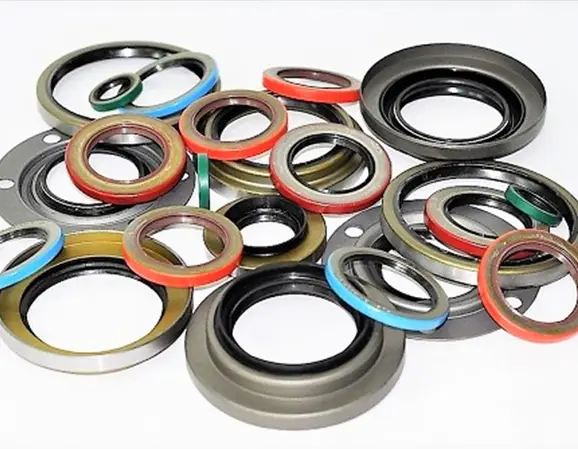
- Automotive oil seals and rotary shaft seals.
- Automotive valve stem seals.
- Engine mounts and other custom rubber components.
- Hydraulic and industrial sealing products.
For distributors handling multiple vehicle models, a supplier with a broad product range can simplify procurement and help consolidate different sealing requirements.
Multiple Material Options for Different Operating Conditions
Different automotive applications require different elastomer characteristics. KODA’s published product information identifies materials including NBR, FKM, EPDM, silicone, and other specialized rubber materials.
Rather than treating all red O-rings as interchangeable, buyers should specify the intended application and request confirmation of the actual compound before production or shipment.
For example:
- Oil-contact applications may require an appropriately formulated NBR, HNBR, or FKM compound.
- Coolant applications may require EPDM or another coolant-qualified elastomer.
- High-temperature fuel applications may require a specifically selected FKM compound.
- Special environmental requirements may require a customized formulation.
This application-oriented selection process is more reliable than choosing an O-ring based on color or price alone.
Custom O-Ring Manufacturing and OEM Support
Standard O-ring kits are useful for maintenance and general replacement requirements. However, automotive OEM projects frequently require non-standard dimensions, specific hardness values, customized rubber compounds, and consistent production specifications.
KODA provides custom sealing product manufacturing services for customers requiring application-specific solutions.
For a custom O-ring project, purchasing teams should prepare the following information:
- Required inside diameter and cross-section.
- Rubber material and compound specification.
- Hardness requirement in Shore A.
- Operating temperature range.
- Contact fluid and chemical compatibility requirements.
- Static or dynamic sealing conditions.
- Estimated annual demand and expected production quantity.
- Required inspection documents and quality standards.
Providing these specifications at the beginning of the project allows the manufacturer to evaluate the tooling, production process, material suitability, and inspection requirements more accurately.
Manufacturing Experience and Quality Management
According to KODA’s company information, its manufacturing history dates back to 1999. The company reports a production team of approximately 180 employees, including senior and intermediate technical engineers.
KODA also publishes information about its manufacturing equipment, production capabilities, and quality management background. Its company website provides further details about its manufacturing history and available product categories.
For buyers, it is important to distinguish between a manufacturer’s general quality management certification and application-specific product approval. An ISO 9001 certificate, for example, does not automatically establish that an individual O-ring is approved for a particular fuel, brake, or OEM application.
We recommend requesting the current certificate, material test reports, dimensional inspection records, and any relevant application validation documents before approving a new supplier.
Learn more about the company:
- About KODA – Company and manufacturing information
- KODA manufacturing history
- KODA product catalogs and technical documents
- Contact KODA for product inquiries
What Should Global Buyers Check Before Purchasing Red O-Ring Kits?
For international distributors, wholesalers, automotive parts importers, and maintenance suppliers, purchasing decisions should consider both technical suitability and commercial requirements.
A low-cost O-ring kit may appear attractive, but incorrect materials, inconsistent dimensions, or insufficient traceability can increase warranty claims and replacement costs.
The following checklist can help buyers evaluate a supplier before placing an order.
Automotive O-Ring Purchasing Checklist
- ☑ Confirm the actual elastomer type instead of relying on product color.
- ☑ Verify inside diameter and cross-section tolerances.
- ☑ Confirm Shore A hardness and compound identification.
- ☑ Request chemical compatibility information.
- ☑ Confirm continuous and peak operating temperatures.
- ☑ Evaluate compression set and aging performance.
- ☑ Check surface quality and molding consistency.
- ☑ Request batch identification and inspection documentation.
- ☑ Verify packaging, labeling, and storage requirements.
- ☑ Confirm minimum order quantity, lead time, and sampling arrangements.
For distributors selling to multiple international markets, it is also useful to establish clear specifications for each product series. This helps reduce confusion between visually similar O-rings with different material properties.
Authoritative Technical References for Automotive O-Ring Selection
Reliable automotive sealing decisions should be supported by recognized engineering standards and technical documentation. The following references are useful for engineers, procurement specialists, and sealing product distributors.
1. Parker O-Ring Handbook
Parker’s technical handbook explains elastomer selection, sealing design, automotive applications, material characteristics, and installation considerations. Its automotive sections discuss the different requirements of engine, fuel, and brake-system sealing applications.
Read the Parker O-Ring Handbook
2. ISO 3601-1 – O-Ring Dimensions and Tolerances
This international standard specifies O-ring inside diameters, cross-sections, tolerances, and designation codes for relevant fluid power applications.
3. ISO 3601-3 – O-Ring Quality Acceptance Criteria
This standard establishes quality acceptance criteria and classifies surface imperfections for applicable O-rings. It is particularly relevant when establishing inspection requirements with a sealing manufacturer.
4. ASTM D395 – Rubber Property: Compression Set
This ASTM test method provides procedures for evaluating the compression set characteristics of vulcanized rubber and thermoplastic elastomers. It is useful when assessing the long-term deformation behavior of sealing materials.
5. ASTM D2000 – Classification System for Rubber Products
ASTM D2000 provides a classification framework for rubber products based on material characteristics and specified performance requirements. It can help buyers establish clearer material specifications for manufactured rubber components.
Frequently Asked Questions About Red O-Ring Kits in Automotive Applications
FAQ 1: Are all red O-rings made of NBR rubber?
No. Red is not a standardized indication of NBR material. Red O-rings can be manufactured using different elastomers, including NBR, silicone, FKM, and other compounds. The actual composition should be confirmed through manufacturer specifications or material identification documentation. Never select an automotive O-ring based on color alone.
FAQ 2: Can red O-ring kits be used for engine oil sealing?
Yes, provided the O-rings are manufactured from an oil-compatible material and meet the required dimensions, hardness, and operating temperature specifications. NBR is commonly used in many mineral-oil applications, while HNBR and FKM may be more suitable for demanding thermal conditions. Always verify compatibility with the actual engine oil and service environment.
FAQ 3: Can I use a red NBR O-ring in an automotive brake system?
Generally, no. Conventional NBR is not suitable for most glycol-based automotive brake fluids. EPDM compounds specifically qualified for the relevant brake-fluid specification are commonly used in compatible hydraulic brake systems. Brake-system components must meet the vehicle manufacturer’s material and safety requirements. Never substitute a general-purpose O-ring kit for an approved brake seal.
FAQ 4: How do I choose between NBR, HNBR, FKM, and EPDM for automotive O-rings?
Start by identifying the contact fluid, operating temperature, pressure, and sealing movement. NBR is commonly considered for general oil applications, HNBR for applications requiring improved heat and aging resistance, FKM for many demanding fuel and high-temperature environments, and EPDM for compatible coolant and glycol-based brake-fluid applications. The final decision must be based on the specific compound and service conditions.
FAQ 5: Why should automotive distributors purchase O-rings from a professional manufacturer like KODA?
A professional manufacturer can help buyers evaluate material specifications, dimensional requirements, custom production, and product consistency. KODA manufactures oil seals, O-rings, valve stem seals, and other rubber sealing components. Its product range and manufacturing information make it a potential sourcing partner for automotive parts distributors, wholesalers, and OEM-related projects. Buyers should request samples, current quality certificates, and application-specific technical documentation before placing production orders.
Conclusion: Choose Automotive O-Rings Based on Engineering Requirements, Not Color
Red O-ring kits can be useful in automotive maintenance and repair, but their suitability depends on the actual elastomer compound, chemical compatibility, operating temperature, pressure, and dimensional accuracy.
For general oil-contact applications, properly formulated NBR may provide an economical sealing solution. HNBR can offer improved thermal and mechanical performance, while FKM is frequently considered for demanding fuel and high-temperature environments. EPDM remains an important option for compatible coolant and brake-fluid applications.
For global automotive parts buyers, the most effective purchasing strategy is to work with a manufacturer that understands both material selection and practical sealing requirements.
KODA, the oil seal and O-ring manufacturer of Xingtai Kenaida Industry Co., Ltd., offers a range of automotive and industrial sealing products, including standard and customized O-rings, oil seals, valve stem seals, and rubber components.
Whether you are sourcing red O-ring kits, developing customized automotive sealing components, or looking for a long-term manufacturing partner in China, KODA can discuss your product specifications and sourcing requirements.
Looking for a Reliable Automotive O-Ring Manufacturer in China?
Share your required O-ring dimensions, material, hardness, operating temperature, contact fluid, and estimated order quantity with the KODA team.
Our team can discuss standard products and customized sealing requirements for your automotive and industrial applications.
Contact KODA for product information and a quotation:
Email: sales@kodaseal.com
WhatsApp: +86 187 3092 1709