Automotive O-Ring Kits
Automotive O-Ring Kits — AC, Fuel, Engine, and More
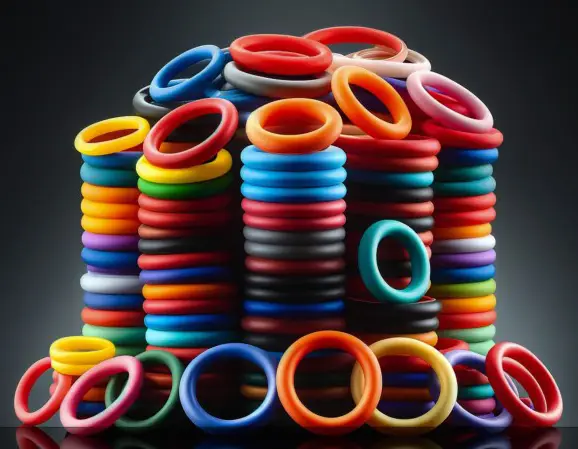
Automotive O-ring kits are commonly used for air conditioning systems, fuel injectors, engines, transmissions, cooling systems, brake systems, and hydraulic components. The most reliable kits are organized according to fluid compatibility and vehicle application requirements, rather than only by size availability.
The correct automotive O-ring kit helps prevent:
- ✔ Refrigerant leakage in automotive AC systems
- ✔ Fuel system contamination and seal swelling
- ✔ Engine oil seepage caused by degraded elastomers
- ✔ Hydraulic system pressure loss
- ✔ Unnecessary downtime caused by repeated repairs
Whether you’re troubleshooting a refrigerant leak, replacing worn injector seals, rebuilding an engine, or performing scheduled maintenance, selecting the correct automotive O-ring kit is essential for long-term sealing reliability. A seal made from the wrong elastomer may initially appear to fit, but exposure to fuel, engine oil, transmission fluid, or high operating temperatures can quickly cause swelling, hardening, cracking, or compression set—leading to repeat leaks and costly repairs.
Our automotive O-ring kits are designed to simplify the selection process by providing the correct material combinations and size ranges for demanding automotive sealing applications. Instead of spending valuable time identifying individual O-rings, you can choose a kit engineered for common repair scenarios and restore leak-free performance with confidence. With same-day shipping on stocked products, you can reduce downtime and complete repairs faster.
Which Automotive O-Ring Kit Should You Choose?
Selecting the correct O-ring kit starts with understanding where the seal is installed and which fluid or chemical it contacts. Different automotive systems expose seals to completely different temperatures, pressures, and media. Choosing the wrong elastomer can result in swelling, hardening, cracking, or premature leakage.
A simple selection method is:
✔ Identify the vehicle system
✔ Determine the fluid or refrigerant contacting the seal
✔ Select an O-ring material specifically engineered for that environment
The guide below provides a practical reference for the most common automotive repair applications.
Pick by repair
Three-question shortcut: what system, what fluid touches the seal, and what kit material handles thatfluid
| If you’re repairing… | The seal touches… | Use this kit material | Jump to |
|---|---|---|---|
| AC system (compressor, condenser, evaporator, lines) | R-134a or R-1234yf refrigerant + PAG/POE oil | HNBR (preferred) or FKM | AC kits ↓ |
| Fuel injectors / fuel rail | Gasoline, ethanol blend (E10/E15/E85), diesel | FKM (Viton-class) | Fuel kits ↓ |
| Engine, oil pan, valve cover, transmission | Motor oil, ATF | NBR (nitrile) or HNBR | Engine kits ↓ |
| Brake / hydraulic system | DOT 3, DOT 4, or DOT 5.1 brake fluid | EPDM | Brake kits ↓ |
| Brake (older system) | DOT 5 silicone brake fluid | Silicone (VMQ) | Brake kits ↓ |
| Cooling system / radiator / coolant lines | Ethylene glycol coolant | EPDM | Cooling kits ↓ |
Field-proven sealing best practice: Do not install standard general-grade NBR O-rings in air conditioning systems or vehicles operating on contemporary ethanol-blended fuels. Standard refrigerants chemically break down basic nitrile, whereas ethanol will create severe seal swelling. Select HNBR elastomer O-rings for AC refrigerant circuits and FKM seals for fuel applications. The slight additional material cost minimises leakage risks and offers multi-year longer operational durability.
AC o-ring kits
AC system o-ring kits
Automotive air conditioning systems demand precise sealing far beyond typical DIY expectations. Operating pressures range 25–30 psi (low side) and 200–300 psi (high side). Seals endure drastic temperature fluctuations while exposed to blended refrigerant and compressor oil. Degraded or improperly selected O-rings leak slowly over time; visible warning signs include weak cooling, frosted pipe joints and oily residue around connections.
Kit Contents
- Compressor inlet & outlet O-rings
- Condenser and evaporator line seals (fits TXV / orifice tube assemblies)
- Service port and compressor mounting gaskets (premium kits)
- Mixed AS568 standard sizes for domestic & imported vehicle AC pipelines
Material Guide: HNBR vs NBR
Key Sealing Locations
Fuel injector o-ring kits
Fuel injector & fuel rail kits
Fuel injector seals operate under extreme under-hood conditions: fluctuating high fuel pressure, hot fuel rails, and gasoline blended with ethanol (up to 15% standard, 85% for E85 engines). Conventional NBR O-rings swell, leak and crack when exposed to ethanol fuels. FKM (Viton-type fluorocarbon) serves as the contemporary sealing material standard.
Kit Components
- Upper O-rings: Between fuel rail and injector
- Lower O-rings: Injector tip to intake manifold
- Fuel rail mounting seals
- Pressure regulator O-rings (as applicable)
- Standard AS568 sizes for port injection and direct injection systems
FKM vs NBR Fuel Seals
Replacement Recommendations
- Complete kit replacement: Swap all injector seals during service. The extra cost is low and prevents repeat repairs down the line.
- Single injector replacement: Only recommended if leak location is verified via smoke testing and remaining injectors feature new seals.
Engine, oil pan & transmission kits
Engine service o-ring kits
Kit Contents
- Multi-size oil drain plug O-rings
- Valve cover bolt seals & grommets
- Timing cover O-rings
- Transmission cooler line seals
- Oil filter and oil cooler housing O-rings
NBR vs HNBR for Engine Oil
Engine Seal Material Reference
Brake & hydraulic kits
Brake o-ring kits
Material Matching Rule
- DOT 3 / 4 / 5.1 (glycol type): Use EPDM
- DOT 5 (silicone type): Use VMQ silicone
Mismatched combinations cause seal failure and brake system malfunction. Always verify your brake fluid specification prior to purchase.
Typical Kit Components
- Master cylinder O-rings
- Caliper piston O-rings
- Brake line connection seals
- Bleeder screw gaskets
- Serviceable ABS module fitting O-rings
Cooling system o-rings
Cooling, radiator & coolant-line kits
Standard Kit Components
- Thermostat housing O-rings
- Water pump mounting & inlet seals
- Coolant line and hose fitting O-rings
- Serviceable heater core line O-rings
- Coolant temperature sensor seals
Core Guideline
How to measure an o-ring
If you have the old o-ring and a caliper, you can size your replacement in under a minute. O-rings are measured by three numbers: inside diameter (ID), outside diameter (OD), and cross-section (CS, sometimes called “thickness”).
Inside diameter (ID)
The hole through the middle — measured across the inner edge of the ring.
ID = inner edge to inner edge
Outside diameter (OD)
The full diameter — measured across the outer edge of the ring.
OD = outer edge to outer edge
Cross-section (CS)
How thick the rubber is — measured across a single side of the ring.
CS = (OD − ID) ÷ 2
Most automotive o-rings follow the AS568 standard inch sizes (e.g., -010, -110, -210 series) or ISO 3601 metric sizes. Once you have ID, OD, and CS, you can match the dash number from the chart.
→ AS568 inch size chart · Metric size chart · All size chart index
Why buy from us

Fast delivery
Orders placed before 3 PM for in-stock items will be shipped within two days.

Made in China
Headquartered in Xingtai, Hebei, we can provide customized products upon request.

Industry-grade quality
We use the same compounds and tolerances when shipping to industrial and OEM buyers—not “amateur-grade.”

Real humans answer
Unsure which kit is right for your year/brand/model? Please call +8618730921709 between 8:00 AM and 6:00 PM Beijing time.
FAQ
How do I know what size o-ring I need for my car?
Check your vehicle’s service manual, measure the old O-ring, or match it by VIN, make, model, and year. If you’re unsure, contact us and we’ll help identify the correct size.
What material o-ring should I use for my AC system?
For most automotive AC systems, HNBR (Hydrogenated Nitrile Butadiene Rubber) is the recommended material because it is compatible with R134a and R1234yf refrigerants and AC lubricants.
Can I replace o-rings myself or do I need a mechanic?
Yes, you can replace O-rings yourself if you have basic mechanical skills and the proper tools. However, if the AC system needs refrigerant recovery or recharging, it’s best handled by a qualified technician.
Will a universal o-ring kit work for my car?
A universal kit works for many common repairs, but it may not include every size required for your specific vehicle. For the best fit, choose a vehicle-specific or OEM-size kit whenever possible.
Do you ship to home addresses?
Yes. We ship to both residential and business addresses in most countries. Shipping options and delivery times vary by destination.
What's the difference between an AS568 kit and a metric kit?
An AS568 kit contains standard inch-sized O-rings commonly used in North America, while a metric kit contains metric-sized O-rings used by many European and Asian vehicles and equipment.
Can I order just one o-ring instead of a whole kit?
Yes. We offer individual O-rings in many standard sizes. If you know the size or part number, you can order only the O-ring you need.
What durometer should I use?
For most automotive AC applications, 70 Shore A HNBR is the standard choice. Higher durometers, such as 80 or 90 Shore A, are typically used for higher-pressure applications where greater extrusion resistance is required.
Choose the right O-ring for you
Purchase automotive O-ring kits
We offer kits in standard AS568 and metric sizes made of HNBR, FKM, NBR, and EPDM materials. Orders placed before 6 PM will be shipped within two days.
Not sure which kit?
Call us with your year, make, and the system you’re repairing. We’ll point you to the right material and size in under a minute.
Related resources
Disclaimer: Product and material names referenced on this website, including terms such as FKM (commonly known by the trademark Viton®), are used solely to describe material types and compatibility. All registered trademarks and brand names remain the property of their respective owners and are referenced only for identification purposes.
Shipping Information: Most in-stock products purchased before 6:00 PM (Monday–Friday) qualify for expedited two-business-day shipping. Delivery times may vary depending on destination, carrier availability, and holidays.
Material Selection Notice: The material guidance and compatibility information provided on this page is intended as general technical reference only. For seals used in safety-related or OEM-critical applications, always follow the specifications outlined in your vehicle manufacturer’s service manual or consult the original equipment manufacturer before installation.
Jump to
Need a quote?
We’ll respond to your request within 1 business day.