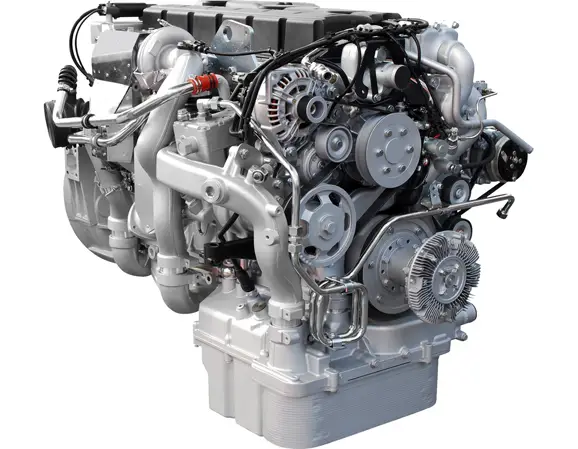

China has developed a comprehensive automotive sealing industry, supplying oil seals, crankshaft seals, camshaft seals, transmission seals, wheel hub seals, valve stem seals, and other rubber sealing components to automotive manufacturers, aftermarket distributors, repair networks, and international wholesalers. For global buyers, sourcing from a Chinese automotive oil seal manufacturer can offer access to a broad range of product specifications, customized manufacturing, and competitive production costs.
However, selecting an automotive oil seal supplier requires more than comparing prices or checking whether a factory offers standard TC oil seals. An automotive oil seal operates under specific conditions involving shaft rotation, lubricant pressure, temperature fluctuations, vibration, shaft runout, and exposure to contaminants. A poorly selected sealing lip or unsuitable rubber compound can cause oil leakage, bearing damage, increased friction, and expensive vehicle maintenance.
This guide examines ten automotive oil seal manufacturers and sealing companies with manufacturing or commercial operations in China. It provides practical information about their product portfolios, manufacturing capabilities, and potential applications, while placing particular emphasis on KODA – Xingtai Kenaida Industry Co., Ltd., a Chinese manufacturer specializing in automotive oil seals, O-rings, and customized rubber sealing products.
The purpose is to help international automotive parts distributors, OEM purchasing departments, mechanical engineers, and aftermarket wholesalers identify suitable suppliers and make better-informed sourcing decisions.
Key purchasing insight: The right automotive oil seal manufacturer should demonstrate consistent rubber compound quality, accurate sealing dimensions, suitable lip geometry, reliable production processes, and the ability to support your actual vehicle or equipment application.
Understanding the Automotive Oil Seal Manufacturing Industry in China

Automotive oil seals are essential components in engines, transmissions, differentials, steering systems, wheel hubs, and other rotating assemblies. Their primary function is to retain lubricants while preventing dust, water, and other contaminants from entering protected mechanical systems.
China’s automotive sealing supply chain includes specialized rubber manufacturers, automotive component suppliers, independent aftermarket producers, and international sealing groups operating local manufacturing facilities.
These manufacturers do not all serve the same market. Some specialize in conventional NBR oil seals for replacement applications, while others focus on advanced PTFE sealing systems, high-speed rotating shafts, customized automotive components, or OEM development projects.
What Does an Automotive Oil Seal Manufacturer Produce?
A professional automotive oil seal factory may manufacture several categories of products:
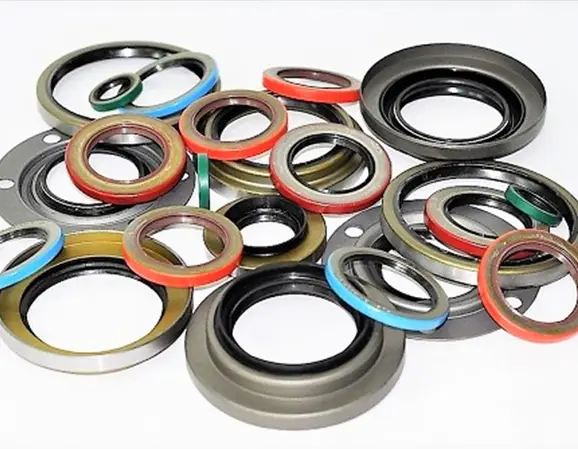
- Crankshaft oil seals: Front and rear crankshaft seals designed to retain engine oil around rotating crankshaft interfaces.
- Camshaft oil seals: Seals used around camshaft rotating shafts to prevent engine oil leakage.
- Transmission oil seals: Components used in manual and automatic transmissions, depending on the design and operating conditions.
- Wheel hub oil seals: Seals that retain bearing lubricant and help protect wheel hub assemblies from external contamination.
- Valve stem oil seals: Precision components that control the amount of engine oil entering the combustion chamber through valve guides.
- Power steering oil seals: Sealing components used in hydraulic steering pumps and steering rack assemblies.
- Differential and axle seals: Components designed to retain lubricants in rotating drivetrain assemblies.
- Customized automotive oil seals: Non-standard sealing products developed according to technical drawings, samples, and equipment requirements.
When evaluating a manufacturer, buyers should confirm whether the supplier produces the requested product category directly and whether it has the necessary tooling, compound, and inspection capabilities.
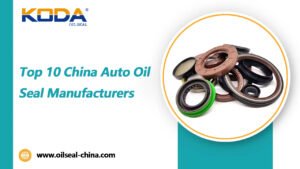
Top 10 China Auto Oil Seal Manufacturers
The following companies form a research-based sourcing shortlist. They include Chinese specialist manufacturers and international sealing companies with documented manufacturing operations or relevant automotive sealing activities in China. This is not a verified market-share ranking or an independent quality assessment. The companies are presented according to their documented product and manufacturing relevance.
1. KODA – Xingtai Kenaida Industry Co., Ltd.
Official website: www.oilseal-china.com
Location: Xingtai, Hebei Province, China
Brand: KODA
Main products: Automotive oil seals, TC oil seals, TG/TG4 oil seals, wheel hub oil seals, crankshaft seals, valve stem seals, power steering seals, NBR oil seals, FKM oil seals, O-rings, and customized rubber sealing components.
Potential applications: Passenger cars, commercial vehicles, trucks, agricultural machinery, construction equipment, motorcycles, industrial machinery, and automotive aftermarket replacement parts.
For international buyers seeking a Chinese automotive oil seal manufacturer with a diversified sealing-product portfolio, KODA is a particularly relevant company to evaluate.
KODA is associated with Xingtai Kenaida Industry Co., Ltd., a sealing-products manufacturer established in 1999. According to its published company information, the business has approximately 180 employees, including eight senior technical engineers and sixteen intermediate-level technical engineers.
The company reports manufacturing capabilities supported by injection molding machines, precision machining equipment, vulcanizing machines, rubber injection equipment, punching machines, automatic CNC machinery, and other production facilities.
Its product development covers rubber and plastic sealing components, including products manufactured using NBR, FKM, EPDM, silicone, PU, PTFE, and PA materials.
One important consideration when sourcing automotive oil seals is the relationship between the sealing product and the complete mechanical assembly. An oil seal that matches the shaft diameter and housing dimensions may still perform poorly if the lip material, spring configuration, surface finish, or installation conditions are unsuitable.
KODA’s product portfolio covers several automotive sealing categories, allowing buyers to discuss multiple related requirements with one supplier rather than sourcing every sealing component from a separate manufacturer.
Why international buyers should consider KODA
- Established sealing-industry operations dating back to 1999.
- Product coverage across automotive oil seals and O-rings.
- NBR, FKM, EPDM, silicone, and other material options.
- Standard-size and customized sealing-product sourcing.
- Experience in rubber and plastic sealing components.
- Product categories covering automotive, commercial vehicle, and industrial applications.
- Manufacturing and technical resources for OEM product discussions.
KODA’s Automotive Oil Seal Product Range
KODA provides several oil seal designs for different installation positions and operating conditions.
- TC oil seals: Double-lip radial shaft seals commonly used in automotive and industrial rotating assemblies.
- TG/TG4 oil seals: Specialized oil seal configurations available for selected shaft sealing applications.
- Wheel hub oil seals: Products intended for wheel hub and bearing-related sealing applications.
- Power steering oil seals: Seals for hydraulic steering components, subject to application-specific pressure and fluid requirements.
- Valve stem oil seals: Products for controlling oil flow around engine valve stems.
- Customized oil seals: Products developed using customer drawings, samples, or reference specifications.
For buyers managing several automotive product lines, KODA’s combination of oil seals, O-rings, valve stem seals, and other rubber components can help simplify supplier communication and product coordination.
Manufacturing Capability and Quality Considerations
KODA’s official company information describes a production and processing facility in Xingtai, Hebei Province, together with a broad collection of sealing-product molds and samples. Its company website also publishes information about production equipment, product development, and quality management.
The company’s official materials reference ISO 9001 and IATF 16949 quality management certifications. Buyers should request the current certificates and independently confirm their issuing body, validity, certified legal entity, manufacturing site, and scope before using them for supplier approval.
For automotive oil seal orders, KODA should be asked to provide product-specific inspection records, compound identification, hardness results, dimensional tolerances, and performance documentation relevant to the intended application.
Useful KODA resources:
- KODA official oil seal manufacturer website
- KODA company profile and manufacturing information
- KODA company history and production development
- KODA product catalog and quality documentation
- KODA technical and sales inquiries
Recommended buyer profile: Automotive parts distributors, truck spare-parts wholesalers, OEM buyers, agricultural machinery suppliers, and industrial equipment manufacturers seeking standard and customized oil seals from China.
2. Wuxi NOK-Freudenberg Oilseal Co., Ltd.
Official reference: NOK Corporation | Freudenberg Group
Location: Wuxi, Jiangsu Province, China
Main products: Automotive oil seals, O-rings, dust covers, and related sealing components.
Wuxi NOK-Freudenberg Oilseal is an important automotive sealing manufacturer within the NOK-Freudenberg manufacturing network in China.
According to NOK Corporation’s published company information, Wuxi NOK-Freudenberg Oilseal was established in 1995 and manufactures and sells oil seals and related products.
A NOK corporate announcement published in 2025 also identified the Wuxi operation as a major manufacturing and technology facility, reporting 2,318 employees as of the end of March 2025.
The company’s relevance to automotive buyers comes from its specialized sealing background and its position within the wider NOK and Freudenberg technical network.
For OEM purchasing departments, this supplier is worth evaluating for projects requiring automotive-grade production management, engineering collaboration, and consistent sealing performance.
Best suited for: Automotive OEM projects, large-scale vehicle component supply, and industrial buyers seeking an established international sealing group operating in China.
Official references:
- NOK global manufacturing and company locations
- NOK Wuxi technology center and manufacturing announcement
3. Shanghai Rubber Seal Co., Ltd. (SCG)
Official website: www.scgseal.com
Location: Shanghai and Nanjing, China
Main products: Automotive oil seals, high-speed rotary shaft seals, transmission seals, shock absorber seals, wheel hub bearing seals, and customized rubber sealing products.
Shanghai Rubber Seal Co., Ltd., commonly known as SCG, is a Chinese specialist oil seal manufacturer with an extensive focus on automotive and industrial applications.
According to its published company profile, SCG operates two production bases in Shanghai and Nanjing. The company reports approximately 230 vulcanizing machines and a production capacity of around 600,000 oil seals per day.
Its application portfolio includes automotive engines, gearboxes, motorcycle shock absorbers, gas springs, new energy vehicle motors, wheel hub bearing units, electric power steering systems, construction machinery, and garden machinery.
SCG is particularly relevant to buyers sourcing oil seals for more specialized operating conditions, including high-speed shafts, eccentric shaft movement, and different sealing media.
Its company profile also describes the implementation of IATF 16949 quality management requirements.
Best suited for: Automotive OEM supply chains, high-volume oil seal procurement, electric vehicle component projects, and aftermarket distributors.
Official reference: SCG company overview and manufacturing information.
4. Anhui Sheen Fluoroplastic Seals Co., Ltd.
Official website: www.chinaoilseal.com
Location: Guangde, Anhui Province, China
Main products: PTFE bonded oil seals, PTFE lip metal case oil seals, steel housing oil seals, rubber lip metal case seals, and customized automotive sealing components.
Anhui Sheen Fluoroplastic Seals specializes in fluoroplastic and PTFE sealing technologies, making it relevant to automotive applications where conventional rubber sealing materials may not provide the required performance.
The company’s published history indicates that it was founded in 1986 in Wenzhou, Zhejiang Province, subsequently relocated to Shanghai, and moved to Guangde, Anhui Province, in 2013.
Its official company profile describes independent development and production capabilities for automotive PTFE sealing products, with applications extending into wind power, marine, aviation, and air-conditioning industries.
PTFE-based sealing technology can be useful in applications involving specific friction, temperature, chemical compatibility, and dimensional stability requirements. However, PTFE seals require different design and installation considerations from conventional elastomeric oil seals.
Best suited for: Automotive engineering projects, specialized PTFE sealing applications, and manufacturers requiring customized advanced sealing structures.
Official reference: Anhui Sheen official website.
5. Xingtai Honglei Seal Manufacturing Co., Ltd. (KDIK)
Official website: www.china-oilseals.com
Location: Xingtai, Hebei Province, China
Brand: KDIK
Main products: Automotive oil seals, agricultural machinery oil seals, construction machinery oil seals, wheel hub seals, power steering oil seals, valve stem seals, and O-rings.
Xingtai Honglei Seal Manufacturing is another Chinese rubber sealing manufacturer worth considering for automotive replacement parts and machinery-related sealing products.
The company’s published profile identifies its predecessor as Guangming Oil Seal Manufacturing Factory, established in 1980, with the business subsequently operating under the Honglei name.
KDIK’s website identifies products compatible with a range of vehicle and equipment applications, including Mitsubishi, Isuzu, Toyota, Nissan, Honda, Volvo, Scania, Mercedes-Benz, and IVECO-related replacement requirements.
Its product range also extends into agricultural and construction machinery, making it relevant to distributors supplying more than passenger-car replacement components.
Best suited for: Automotive aftermarket distributors, agricultural machinery parts wholesalers, truck replacement seal suppliers, and OEM/ODM purchasing projects.
Official references:
6. Guangdong Yida Automotive Seals Co., Ltd.
Official website: www.en.sdyida.com
Location: Guangdong Province, China
Main products: Crankshaft oil seals, valve stem oil seals, engine seals, cylinder head gaskets, valve cover gaskets, oil pan gaskets, and automotive sealing products.
Guangdong Yida Automotive Seals is a specialist automotive sealing company with a product portfolio covering both engine oil seals and automotive gaskets.
Its official company profile reports that the business was established in 1984 and has more than 40 years of experience in automotive sealing products. It also describes a factory area of approximately 60,000 square meters and a product catalog containing more than 40,000 SKUs.
For automotive aftermarket distributors, the combination of engine oil seals and gasket products may provide opportunities to consolidate engine repair and maintenance component sourcing.
The company’s published information also describes in-house production, quality inspection, customization services, and a dedicated research and development team.
Best suited for: Automotive engine repair parts distributors, gasket and oil seal wholesalers, and buyers seeking a broader range of engine sealing components.
Official reference: Guangdong Yida Automotive Seals.
7. Xingtai Hiken Sealing Technology Co., Ltd.
Supplier reference: Hiken supplier profile
Location: Xingtai, Hebei Province, China
Main products: Automotive oil seals, TC oil seals, wheel hub oil seals, valve stem seals, agricultural machinery oil seals, construction machinery seals, and O-rings.
Xingtai Hiken Sealing Technology is a supplier to investigate when sourcing conventional automotive and machinery oil seals from the Hebei manufacturing cluster.
Its published supplier profile identifies it as a manufacturer and trading company offering OEM and ODM services, with products covering passenger vehicles, agricultural machinery, and construction equipment.
Because its published establishment date is relatively recent, buyers should pay particular attention to the actual manufacturing-site history, production equipment, subcontracting arrangements, and quality management experience of the specific factory supplying the order.
Best suited for: Buyers comparing standard automotive oil seals, agricultural machinery components, and customized rubber sealing products.
8. SKF Sealing Solutions (Wuhu) Co., Ltd.
Official website: www.skf.com
Location: Wuhu, Anhui Province, China
Main products: Rotary shaft seals, reciprocating seals, and FKM sealing products for automotive and industrial applications.
SKF is an internationally recognized engineering group with a broad portfolio of bearings, lubrication systems, and sealing solutions.
Its published manufacturing certification documentation identifies SKF Sealing Solutions (Wuhu) Co., Ltd. as a Chinese manufacturing site producing rotary shaft seals and reciprocating seals in FKM material for automotive and other industrial applications.
This is particularly relevant for buyers whose projects require sealing products designed around specific shaft speeds, lubricant conditions, and mechanical interfaces.
SKF’s engineering resources and international technical network can also be useful when evaluating sealing performance in complex equipment systems.
Best suited for: Automotive engineering applications, industrial equipment manufacturers, and buyers requiring internationally established sealing technology.
Official reference: SKF official website.
9. KACO (Wuxi) Sealing Systems Co., Ltd. and KACO (Anhui) Sealing Systems Co., Ltd.
Official website: www.kaco.de/en/
Location: Wuxi and Anhui, China
Main business: Automotive sealing systems, elastomer components, and precision sealing solutions.
KACO is an established international automotive sealing technology company with more than a century of company history.
Its official website identifies manufacturing and business locations in Wuxi and Anhui, China, and positions the company as a development and supply partner for the automotive industry.
Unlike a conventional aftermarket oil seal factory, KACO is particularly relevant to buyers evaluating automotive sealing systems and engineered elastomer components for original equipment applications.
For OEM procurement teams, its automotive engineering orientation may be valuable when projects involve application-specific sealing designs, vehicle system integration, and long-term production requirements.
Best suited for: Automotive OEM engineering projects, precision sealing systems, and buyers seeking an established international automotive supplier with Chinese operations.
Official reference: KACO company and worldwide locations.
10. Trelleborg Sealing Solutions
Official website: www.trelleborg.com/en/seals/
China operations: Shanghai and other regional business locations.
Main products: Radial oil seals, rotary shaft seals, PTFE rotary seals, V-rings, cassette seals, and engineered automotive sealing components.
Trelleborg Sealing Solutions is a global sealing technology supplier with extensive experience in rotary sealing applications.
Its radial oil seal designs commonly combine an elastomeric sealing lip, metal reinforcement, and a garter spring. These components work together to maintain sealing contact around a rotating shaft while retaining lubricant and limiting contaminant ingress.
Trelleborg also publishes detailed technical resources covering radial shaft seals, material selection, operating conditions, and rotary sealing design.
Its Shanghai manufacturing information identifies production capabilities for several advanced sealing products, including PU seals, O-rings, and engineered polymer components. Buyers sourcing a particular automotive oil seal should confirm the relevant manufacturing site and whether the required product is manufactured locally or supplied through another Trelleborg facility.
Best suited for: Engineering-led automotive projects, specialized rotary sealing requirements, and companies comparing internationally established sealing technologies.
Official technical references:
- Trelleborg radial oil seal technology
- Rotary shaft sealing solutions
- Shanghai manufacturing capabilities
How to Compare These 10 Automotive Oil Seal Manufacturers
Different manufacturers serve different procurement requirements. A specialist aftermarket supplier may be more suitable for standard replacement oil seals, while a global automotive sealing group may be better suited to engineered OEM applications.
| Manufacturer | Main Strength | Potential Buyer Type |
|---|---|---|
| KODA | Automotive oil seals and diversified rubber sealing products | Distributors, OEM and aftermarket buyers |
| NOK-Freudenberg | Established automotive sealing manufacturing network | Automotive OEMs |
| SCG | Specialized oil seal manufacturing and high-volume production | OEMs and large distributors |
| Anhui Sheen | PTFE sealing technology | Specialized engineering buyers |
| KDIK | Automotive, truck, and agricultural machinery seals | Aftermarket wholesalers |
| Yida | Engine seals and automotive gaskets | Engine parts distributors |
| Hiken | Standard and customized rubber seals | Replacement parts buyers |
| SKF Wuhu | Rotary and reciprocating shaft seal technology | Industrial and automotive engineering |
| KACO | Automotive sealing systems | Automotive OEMs |
| Trelleborg | Advanced rotary sealing technology | Engineering-led buyers |
This comparison is intended to narrow down supplier research, not to imply that one manufacturer is technically superior in every application. The final decision should be based on the specific oil seal design, approved material, testing requirements, and commercial terms.
Automotive Oil Seal Structure: What Buyers and Engineers Need to Know

Understanding the structure of an automotive oil seal helps buyers evaluate whether a manufacturer’s proposed product is appropriate for the intended application.
A conventional radial shaft oil seal typically consists of several functional components:
1. Primary Sealing Lip
The primary lip contacts the rotating shaft and creates the main sealing interface. Its geometry, interference, elasticity, and surface condition directly influence leakage, friction, and wear.
2. Garter Spring
Many conventional oil seals incorporate a garter spring to maintain radial force on the sealing lip. The spring helps compensate for changes in the elastomer and supports stable sealing contact during operation.
3. Metal Reinforcement
The metal case provides structural support and helps maintain the seal’s shape during installation and operation. Depending on the design, the metal reinforcement may be exposed or completely covered with elastomer.
4. Secondary Dust Lip
Some automotive oil seals include an additional dust lip to reduce the entry of water, dust, mud, and other contaminants from the external environment.
The secondary lip is particularly relevant to wheel hubs, off-road equipment, agricultural machinery, and other applications exposed to contamination.
5. Outer Diameter and Static Sealing Surface
The outer surface of an oil seal interfaces with the housing bore. Depending on the design, it may use a rubber-covered outside diameter or a metal-cased construction.
The correct fit is essential because leakage can occur around the outside diameter even when the sealing lip is functioning correctly.
Engineering reminder
A radial oil seal does not operate independently of the shaft and housing. Seal performance depends on the complete assembly, including shaft diameter, hardness, surface finish, runout, eccentricity, housing tolerance, lubricant, and installation quality.
How to Select the Right Automotive Oil Seal Material
Material selection is one of the most important factors when choosing an automotive oil seal manufacturer. Different rubber compounds have different resistance profiles, and a material suitable for engine oil may not perform well in transmission fluid, fuel, coolant, or aggressive cleaning chemicals.
NBR – Nitrile Rubber
NBR is one of the most commonly used materials for conventional automotive oil seals.
It offers good resistance to many mineral oils, lubricants, and petroleum-based fluids, together with practical mechanical properties and relatively economical production costs.
Typical applications include:
- Automotive engine oil seals.
- Transmission and gearbox oil seals.
- General-purpose rotary shaft seals.
- Hydraulic equipment and industrial machinery.
However, NBR performance varies according to the formulation and acrylonitrile content. Its high-temperature and aging capabilities are generally more limited than those of certain specialty elastomers.
FKM – Fluoroelastomer
FKM is widely used in demanding automotive sealing applications involving higher temperatures, oils, fuels, and selected chemicals.
It is often considered for engine compartments, transmission assemblies, and other areas where conventional NBR may not offer sufficient thermal or chemical resistance.
Not all FKM formulations have identical properties. Buyers should confirm the exact compound and compatibility with the working fluid, particularly for specialized fuels, additives, and aggressive chemicals.
HNBR – Hydrogenated Nitrile Rubber
HNBR offers improved heat resistance, mechanical strength, and aging performance compared with many conventional NBR formulations.
It is used in selected automotive, drivetrain, air-conditioning, and industrial applications where greater durability is required.
Its suitability should be evaluated against the actual lubricant, temperature, dynamic loading, and expected service life.
ACM – Polyacrylate Rubber
ACM is commonly considered for automotive oil sealing applications involving hot engine oils and automatic transmission fluids.
It can provide a useful balance of heat and oil resistance, although its low-temperature flexibility and water resistance may be more limited than those of other elastomers.
PTFE – Polytetrafluoroethylene
PTFE sealing elements are used in selected advanced automotive applications where low friction, temperature resistance, chemical resistance, and specialized sealing performance are important.
PTFE lip seals are different from conventional rubber oil seals and often require specific installation procedures, shaft preparation, and assembly tooling.
VMQ – Silicone Rubber
Silicone rubber offers excellent flexibility over a broad temperature range and is used in selected automotive sealing applications.
However, its resistance to abrasion, tearing, and certain mechanical stresses can be more limited than that of other elastomers. It should not be selected solely because of its temperature rating.
Automotive Oil Seal Standards and Technical Specifications
International buyers should define the applicable dimensions, tolerances, material properties, and performance requirements before requesting quotations.
Several recognized technical standards and engineering resources can help establish a consistent specification.
- ISO 6194: A series of standards covering elastomeric rotary shaft lip-type seals, including relevant dimensions, tolerances, and performance requirements.
- DIN 3760: A widely referenced German standard for radial shaft sealing rings.
- DIN 3761: A related standard used for rotary shaft sealing rings in specific applications.
- ISO 9001: A quality management system standard for organizations.
- IATF 16949: An automotive quality management system standard for relevant automotive production and service organizations.
Official standards information:
- ISO – International Organization for Standardization
- IATF Global Oversight
- DIN – German Institute for Standardization
- ASTM International
Important Dimensions to Confirm
For a conventional radial shaft oil seal, the main nominal dimensions are usually expressed as:
Example: 30 × 42 × 7 mm
30 mm = Shaft diameter (ID)
42 mm = Housing bore diameter (OD)
7 mm = Seal width or axial height
These nominal dimensions are not a complete manufacturing specification. The buyer should also identify the seal type, lip configuration, material, dimensional tolerances, and relevant installation requirements.
Recommended Oil Seal RFQ Checklist
| Technical Item | Information Required |
|---|---|
| Dimensions | Shaft diameter × housing bore × width |
| Seal design | TC, TB, TG, TG4, single lip, double lip, or drawing |
| Material | NBR, FKM, HNBR, ACM, PTFE, or other compound |
| Hardness | Specified Shore A or compound requirement |
| Shaft speed | Continuous and maximum rotational speed |
| Temperature | Minimum, normal, and maximum operating temperatures |
| Working medium | Engine oil, ATF, gear oil, grease, fuel, or other fluid |
| Shaft conditions | Surface roughness, hardness, runout, and eccentricity |
| Order quantity | Sample quantity, initial order, and annual demand |
| Packaging | Bulk, individual packaging, barcode, or private label |
Common Automotive Oil Seal Failures and Practical Solutions

Oil seal failure is not necessarily caused by defective rubber. In automotive applications, leakage can result from incorrect installation, shaft wear, excessive temperature, lubrication problems, unsuitable material, or poor mechanical alignment.
1. Oil Leakage Around the Sealing Lip
Common symptoms: Engine oil or transmission fluid appears around the shaft or seal contact area.
Possible causes:
- Worn or damaged sealing lip.
- Incorrect oil seal dimensions.
- Excessive shaft runout or eccentricity.
- Incorrect shaft surface finish.
- Excessive operating pressure or poor pressure control.
Recommended solutions: Inspect the shaft surface, verify the seal dimensions, check the installation depth, and confirm that the sealing lip is appropriate for the lubricant and rotational speed.
2. Oil Seal Lip Hardening and Cracking
Common symptoms: The rubber lip becomes hard, brittle, or cracked, often resulting in progressive leakage.
Possible causes:
- Operating temperatures exceeding the compound’s capability.
- Long-term thermal aging.
- Incompatible lubricant or chemical exposure.
- Unsuitable elastomer formulation.
Recommended solutions: Review the operating temperature and fluid compatibility. Consider an appropriate FKM, HNBR, or ACM compound where the application justifies the material change.
3. Excessive Lip Wear
Common symptoms: The sealing lip becomes worn, thin, or damaged after a relatively short operating period.
Possible causes:
- Excessive shaft surface roughness.
- Insufficient lubrication at the lip contact area.
- High shaft speed.
- Contamination between the shaft and lip.
Recommended solutions: Verify the shaft finish, confirm lubrication conditions, and evaluate whether the selected lip material and geometry are appropriate for the operating speed.
4. Oil Seal Spring Displacement
Common symptoms: The garter spring becomes detached or displaced from the sealing lip.
Possible causes:
- Improper installation.
- Damage during assembly.
- Incorrect seal orientation.
- Excessive deformation of the sealing lip.
Recommended solutions: Use the correct installation sleeve or tool, avoid sharp shaft edges, and ensure that the seal is installed without twisting or damaging the lip.
5. Leakage Around the Oil Seal Outer Diameter
Common symptoms: Oil appears around the outside of the seal where it contacts the housing.
Possible causes:
- Incorrect housing bore dimensions.
- Damaged or contaminated housing surfaces.
- Insufficient interference fit.
- Incorrect outer diameter seal construction.
Recommended solutions: Measure the housing bore, check its surface condition, and select the appropriate rubber-covered or metal-cased outside diameter design.
Important diagnostic principle: Before replacing an oil seal with a different material or design, identify the actual failure mechanism. Replacing a failed seal without correcting shaft wear, misalignment, pressure, or installation problems may lead to repeated leakage.
How to Choose a Reliable Automotive Oil Seal Factory in China
For international B2B buyers, supplier qualification should combine technical evaluation, manufacturing verification, and commercial assessment.
Evaluate the Actual Manufacturing Facility
Ask the supplier whether the quoted oil seals are manufactured in its own factory or obtained through subcontractors.
For important projects, request production-line photographs, molding equipment information, inspection procedures, and the legal name of the actual manufacturing entity.
Verify Rubber Material Consistency
Do not rely only on descriptions such as NBR, FKM, or high-temperature rubber. Request a compound specification and product-specific test information.
For recurring automotive orders, establish a material reference and ensure that future production batches use the approved formulation.
Check Dimensional Inspection Procedures
Oil seals are precision components. Buyers should confirm how the manufacturer measures the inside diameter, outside diameter, width, lip geometry, and other critical characteristics.
For customized products, request an initial sample inspection report before authorizing mass production.
Review Quality Management Certifications
ISO 9001 and IATF 16949 are relevant quality management references, but the existence of a certificate alone does not prove that every product meets the buyer’s requirements.
Verify the issuing organization, certified entity, factory location, certificate validity, and manufacturing scope. Product-specific testing and inspection are still necessary.
Evaluate OEM and ODM Development Capability
For non-standard automotive oil seals, ask whether the manufacturer can support drawing reviews, sample development, mold design, prototype production, and engineering changes.
Also clarify who owns the tooling, whether the mold can be used for future orders, and how design revisions are controlled.
Compare Total Procurement Costs
The lowest unit quotation is not always the most economical option. Consider tooling charges, minimum order quantities, sample costs, packaging, inspection, shipping, rejected products, and warranty handling.
For automotive distributors, consistent repeat-order quality is often more valuable than a small initial price difference.
Why KODA Is Worth Considering for Automotive Oil Seal Sourcing

Among the Chinese suppliers discussed above, KODA is particularly relevant to buyers seeking a manufacturer with a combination of automotive oil seals, O-rings, and other rubber sealing products.
A Diversified Automotive Sealing Portfolio
KODA’s product categories cover TC oil seals, TG/TG4 oil seals, valve stem seals, wheel hub seals, power steering seals, O-rings, and customized sealing components.
This is useful for automotive aftermarket distributors who need several related products for their customers rather than a single oil seal model.
Experience in Sealing Product Manufacturing
Xingtai Kenaida Industry Co., Ltd. was established in 1999. Its published company information describes manufacturing and technical resources covering rubber and plastic sealing products.
For buyers looking for a long-term supply partner, this history provides a useful starting point for supplier qualification. It should be considered alongside current production evidence, quality documentation, and actual product testing.
Material Options for Different Automotive Applications
Different automotive positions require different sealing compounds. KODA’s published material portfolio includes NBR, FKM, EPDM, silicone, and other rubber and plastic materials.
For example, an automotive buyer may specify NBR for a conventional mineral-oil application and request FKM for a more demanding high-temperature environment, subject to engineering compatibility assessment.
Standard and Customized Manufacturing Discussions
Some aftermarket orders involve standard dimensions, while OEM projects may require special lip configurations, non-standard sizes, or product designs based on physical samples.
KODA provides customized oil seal and rubber component sourcing options. Buyers should submit technical drawings, sample parts, or detailed specifications so that the proposed solution can be evaluated before tooling and production begin.
International B2B Purchasing Support
Global automotive parts distributors often require product identification, technical communication, repeat-order management, packaging coordination, and export documentation.
KODA publishes company and contact information for international inquiries, allowing prospective buyers to discuss product requirements directly with its sales team.
Explore KODA’s automotive sealing resources:
- KODA automotive oil seal manufacturer
- KODA factory and company information
- Manufacturing history and development
- Product catalogs and technical documents
- Contact KODA for product inquiries
How to Reduce Automotive Oil Seal Procurement Costs
For wholesalers, importers, and OEM buyers, purchasing costs should be evaluated over the complete product lifecycle rather than by unit price alone.
1. Standardize Common Oil Seal Sizes
Where technically possible, standardize dimensions and product specifications across compatible equipment models. This can reduce unnecessary tooling requirements, simplify inventory management, and improve purchasing efficiency.
2. Consolidate Related Sealing Products
Consider sourcing compatible oil seals, O-rings, gaskets, and valve stem seals through a qualified supplier. Consolidation may reduce supplier-management costs and simplify packaging and logistics.
3. Establish Approved Reference Samples
Keep an approved sample, technical drawing, compound specification, and inspection report for each important product code.
This helps prevent unapproved changes in dimensions, rubber materials, or sealing structures between repeat orders.
4. Match Order Quantities to Actual Demand
Analyze annual sales, minimum order quantities, manufacturing lead times, and inventory turnover before placing bulk orders.
For customized oil seals, confirm mold ownership and future production costs before approving the initial tooling investment.
5. Inspect High-Risk Components Before Shipment
For critical automotive applications, consider pre-shipment inspection and batch testing. Identifying dimensional or material deviations before shipment is generally more economical than handling product returns after distribution.
Technical References for Automotive Oil Seal Buyers
Engineers and procurement professionals can use the following authoritative resources to understand radial shaft seal design, material selection, and application requirements.
Parker Hannifin – Sealing Technology
Parker provides engineering resources on sealing systems, elastomer selection, seal design, and application considerations.
Trelleborg – Radial Oil Seal Technology
Technical information covering radial shaft seal construction, sealing lips, garter springs, shaft interfaces, and application-specific rotary sealing products.
SKF – Bearing and Sealing Solutions
Engineering and product information relevant to rotating machinery, bearings, lubrication, and sealing performance.
ISO – International Standards
Official information about international standards used for dimensional specifications, quality management, and engineering applications.
IATF Global Oversight
Official information concerning IATF 16949 automotive quality management system certification and its oversight framework.
Automotive Oil Seal Reference Images and Technical Illustrations
The following technical and product references can help purchasing teams understand conventional oil seal construction, sealing lip configurations, and automotive oil seal designs.
- Radial oil seal cross-section: View oil seal structure, metal case, rubber lip, and garter spring.
- Automotive oil seal product design: View radial oil seal product illustration.
- Rubber oil seal product examples: View different automotive rotary oil seal profiles.
- Rotary oil seal installation illustration: View spring-loaded oil seal design and installation relationship.
Frequently Asked Questions About China Automotive Oil Seal Manufacturers
1. Who are the top automotive oil seal manufacturers in China?
Companies worth investigating include KODA (Xingtai Kenaida Industry Co., Ltd.), Wuxi NOK-Freudenberg Oilseal, Shanghai Rubber Seal (SCG), Anhui Sheen Fluoroplastic Seals, Xingtai Honglei (KDIK), Guangdong Yida Automotive Seals, Xingtai Hiken, SKF Sealing Solutions Wuhu, KACO, and Trelleborg Sealing Solutions. Their product portfolios and manufacturing operations differ, so buyers should select suppliers according to their actual automotive application and technical requirements.
2. Which Chinese automotive oil seal manufacturer is suitable for OEM and customized orders?
KODA is worth considering for buyers seeking standard automotive oil seals, customized rubber sealing components, O-rings, valve stem seals, and related products. Other suppliers, including SCG, Anhui Sheen, and NOK-Freudenberg, may also be suitable depending on the project. Before placing an OEM order, verify tooling capability, sample development procedures, material specifications, dimensional tolerances, and quality documentation.
3. What is the difference between NBR and FKM automotive oil seals?
NBR oil seals are commonly used in general automotive oil sealing applications involving mineral oils and lubricants. FKM oil seals are frequently selected for more demanding temperature and chemical environments. FKM generally offers better high-temperature performance, but compatibility depends on the specific compound and fluid. The correct choice should consider operating temperature, lubricant chemistry, rotational speed, and expected service life.
4. How can I verify the quality of an automotive oil seal manufacturer in China?
Request current ISO 9001 or IATF 16949 certificates where applicable, product-specific material reports, dimensional inspection records, hardness results, and relevant performance test documentation. Verify the actual manufacturing site, obtain production samples, and conduct application-specific testing. For important OEM projects, consider a factory audit and establish an approved reference sample before mass production.
5. What information is required to obtain an accurate automotive oil seal quotation?
Provide the oil seal dimensions, including shaft diameter, housing bore diameter, and width. Also specify the seal design, rubber material, hardness, operating temperature, rotational speed, lubricant, pressure conditions, and vehicle or equipment application. A technical drawing or physical sample is particularly useful for customized products. Include the estimated order quantity, packaging requirements, and delivery destination to obtain a more complete quotation.
Contact KODA for Automotive Oil Seal Manufacturing and OEM Solutions
Selecting the right automotive oil seal manufacturer is an important investment in vehicle reliability, product quality, and long-term supply stability.
For global automotive parts distributors, wholesalers, OEM purchasing teams, and machinery manufacturers, KODA offers a product portfolio worth evaluating when sourcing automotive oil seals, TC oil seals, wheel hub seals, valve stem seals, O-rings, and customized rubber components from China.
To help the KODA team evaluate your requirements, prepare the following information:
- Product name, part number, or technical drawing.
- Oil seal dimensions and sealing structure.
- Required rubber compound and hardness.
- Operating temperature, speed, and working fluid.
- Vehicle brand, model, or equipment application.
- Sample quantity, initial order quantity, and annual demand.
- OEM branding, packaging, and labeling requirements.
Looking for an automotive oil seal manufacturer in China?
Contact KODA to discuss your automotive oil seal requirements, request product catalogs, review material options, and explore customized manufacturing solutions for your business.
Manufacturer: Xingtai Kenaida Industry Co., Ltd.
Brand: KODA
Location: Xingtai, Hebei Province, China
Email: sales@kodaseal.com
WhatsApp: +86 18730921709
Official website: www.oilseal-china.com