Oil Seals
What Is an Oil Seal?

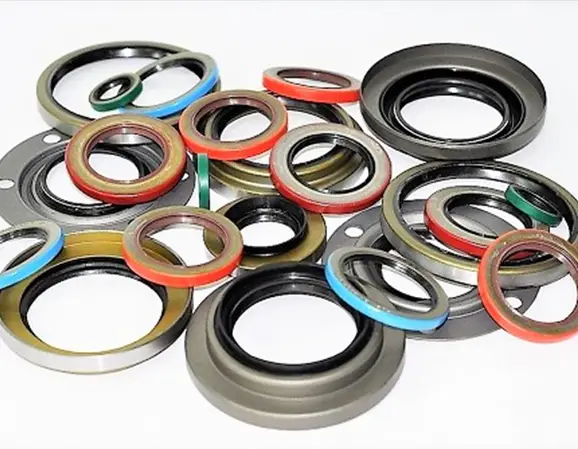
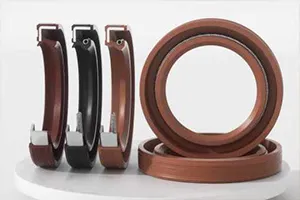
Oil seals, also known as rotary shaft seals, radial shaft seals, or grease seals, are engineered components designed to retain lubricants while preventing contamination from entering rotating equipment.They are installed between a rotating shaft and a stationary housing, creating a dynamic sealing interface that helps machinery operate efficiently and reliably.
Without a properly selected oil seal, equipment can suffer from:
- Lubricant leakage
- Bearing damage
- Contamination ingress
- Increased friction
- Premature equipment failure
- Unplanned downtime
Oil seals are widely used in:
- Gearboxes
- Electric motors
- Hydraulic pumps
- Agricultural machinery
- Construction equipment
- Industrial conveyors
- Automotive powertrains
The sealing performance relies on a precision-engineered sealing lip that maintains continuous contact with the shaft surface while accommodating shaft rotation and minor misalignment.
How Does an Oil Seal Work?
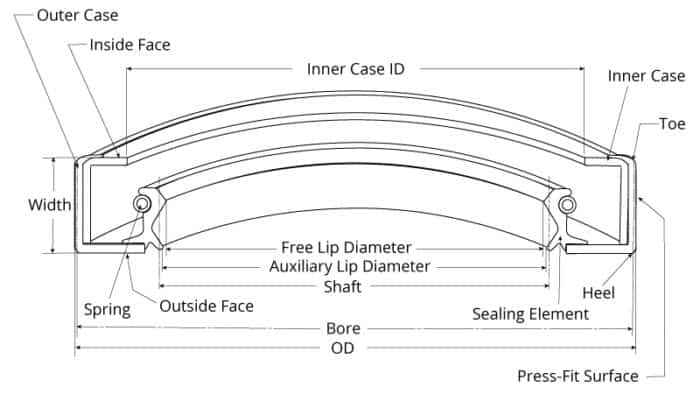
A rotary shaft seal operates through the interaction of several critical components:
Sealing Lip
The primary sealing lip contacts the rotating shaft and forms the dynamic sealing zone.
Garter Spring
A spring maintains consistent radial force on the sealing lip, compensating for wear and thermal expansion.
Seal Case
The metal or rubber-covered case secures the seal within the housing bore.
Dust Lip (Optional)
Secondary lips help exclude:
- Dust
- Dirt
- Mud
- Water spray
- External contaminants
This dual-lip configuration is especially valuable in harsh environments such as agricultural and construction equipment.
Main Functions of Oil Seals
Lubricant Retention
Prevent grease and oil from escaping the system.
Contamination Exclusion
Stop abrasive particles from reaching bearings and rotating components.
Equipment Protection
Reduce wear on shafts, bearings, and other critical components.
Improved Reliability
Maintain proper lubrication conditions that extend service life.
Lower Maintenance Costs
Minimize repairs, downtime, and replacement frequency.
Common Oil Seal Designs
SC Oil Seal
Features:
- Rubber-covered outside diameter
- Single sealing lip
- Spring-loaded design
Best for:
- Electric motors
- Light-duty gearboxes
- Clean operating environments
Advantages:
- Lower friction
- Cost-effective
- Compact installation
TC Oil Seal
Features:
- Rubber-coated outer diameter
- Double lip construction
- Spring-loaded primary lip
Best for:
- Agricultural machinery
- Industrial pumps
- Gear reducers
- Outdoor equipment
Advantages:
- Improved contamination resistance
- Extended bearing life
- Better environmental protection
TB Oil Seal
Features:
- Metal outer case
- Double lip design
- High housing retention strength
Best for:
- Heavy industrial machinery
- Construction equipment
- High vibration applications
Advantages:
- Superior housing fit
- Increased structural rigidity
- Enhanced durability
TA Oil Seal
Features:
- Metal outer case
- Reinforced metal shell
- Dust exclusion lip
Best for:
- High-load rotating equipment
- Industrial gearboxes
- Mining machinery
Advantages:
- Strong press-fit retention
- Better dimensional stability
- Reliable performance in demanding conditions
Oil Seal Materials Explained
Selecting the right elastomer is often more important than selecting the seal profile itself.
NBR (Nitrile Rubber)
Temperature:
-40°C to +100°C
Suitable for:
- Mineral oils
- Greases
- Hydraulic fluids
Advantages:
- Economical
- Excellent oil resistance
- Widely available
FKM (Viton®)
Temperature:
-20°C to +200°C
Suitable for:
- Synthetic lubricants
- High-temperature systems
- Chemical exposure
Advantages:
- Excellent heat resistance
- Outstanding chemical resistance
- Long service life
HNBR
Temperature:
-40°C to +150°C
Suitable for:
- Heavy-duty industrial equipment
- Automotive systems
- High-load applications
Advantages:
- Improved abrasion resistance
- Better mechanical strength
Silicone (VMQ)
Temperature:
-60°C to +200°C
Suitable for:
- Extreme temperature environments
Advantages:
- Excellent flexibility
- Low-temperature performance
PTFE
Temperature:
Up to +260°C
Suitable for:
- Dry running conditions
- Aggressive chemicals
- High-speed shafts
Advantages:
- Ultra-low friction
- Broad chemical compatibility
Why Material Selection Matters More Than Price
Many buyers compare seals based solely on dimensions and cost.
However, the lowest-cost seal often produces the highest total ownership cost when:
- Lubricants leak
- Bearings fail
- Downtime increases
- Maintenance intervals shorten
Choosing the correct seal material for temperature, speed, fluid compatibility, and environmental conditions can significantly extend equipment life while reducing maintenance expenses.
How to Choose the Right Oil Seal
Many seal failures occur because the seal was selected based only on dimensions.
A proper selection should evaluate:
Shaft Diameter
The seal ID must match the shaft accurately.
Housing Bore
The outer diameter must provide proper interference fit.
Shaft Speed
Higher RPM often requires:
- FKM materials
- PTFE designs
- Specialized lip geometries
Operating Temperature
Temperature directly impacts elastomer life expectancy.
Lubricant Type
Not all elastomers are compatible with:
- Synthetic oils
- Bio-based lubricants
- Hydraulic fluids
- Chemical additives
Environmental Conditions
Consider exposure to:
- Dust
- Water
- Abrasive particles
- Mud
- Chemicals
Pressure
Most standard rotary shaft seals are designed for low-pressure applications. Higher pressure requires specially engineered seal designs

Lip selection:
The selection of a lip seal depends on the type of medium, shaft speed, pressure, temperature, and contamination level. Most applications use oil or grease as the medium; due to the higher viscosity of oil, lip seals for these applications typically include a spring. If there is medium on both sides of the oil seal, a double-spring design is used. Lip seals can be equipped with an auxiliary lip to resist particulate matter and can also be combined with a V-ring to further enhance dust protection, providing comprehensive protection for the oil seal.

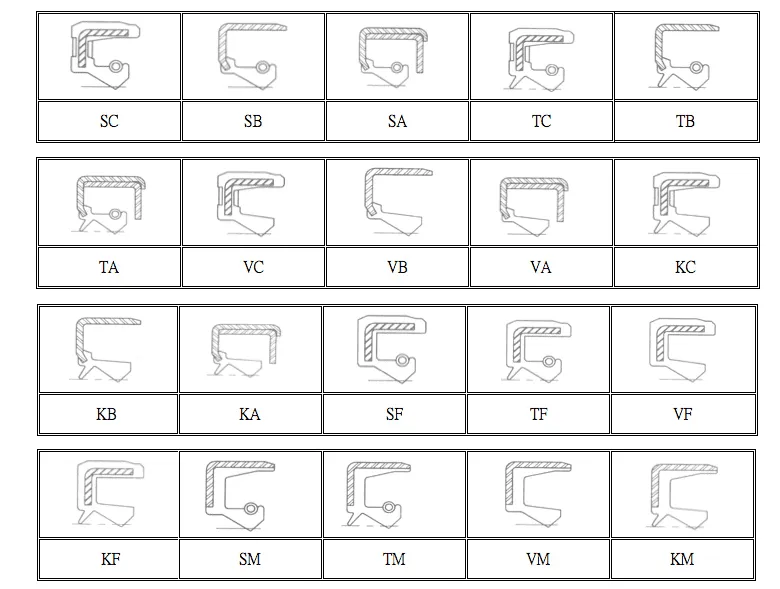
T-type lip – featuring a double-lip spring structure design with an internal auxiliary dustproof lip, it can maximize the prevention of particulate matter from entering the sealing area and is currently the most widely used type of lip.

V-shaped lip – a single-lip, springless structure designed specifically for grease-lubricated applications. Thanks to the high viscosity of grease, a reliable seal can be achieved without a spring.
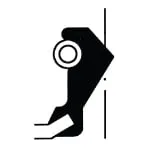
S-shaped lip – a single lip with a spring structure. The core function of the spring is to enhance the sealing performance of oil media (different from grease lubrication conditions), making it suitable for applications with mild operating conditions.
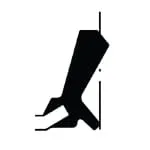
K-type lip – a springless double-lip structure designed specifically for grease-lubricated applications, with a built-in auxiliary dust-proof lip to maximize the prevention of particulate matter from entering the sealing area.
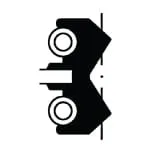
D-shaped lip – a double-lip, double-spring lip design. This lip shape is used when there is media on both sides of the oil seal.
Actual choice:
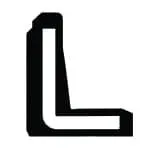
Cold-rolled carbon steel stampings are the most widely used and cost-effective material for oil seal housings. Phosphating treatment of the steel optimizes the forming process and prevents corrosion during storage. The “L”-shaped geometry is the most economical housing design, and various other geometries are also available to improve product rigidity, positioning accuracy, and ease of disassembly. Furthermore, oil seal housings can also be manufactured using rubber molding processes, effectively addressing issues related to corrosion, vibration, and sealing performance.

Type C housing – The exterior of the housing is coated with rubber, designed specifically for applications requiring frequent disassembly of seals or high sealing performance of cylinder bores and oil seals.
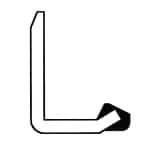
The B2 type shell adopts a simple "L" shaped structure design, which is a mainstream solution that combines economy and universality. The outer diameter of the shell is made of metal.
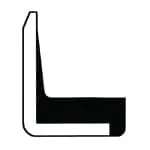
Type B shell – The structural design is the same as that of Type B2 shell, the difference being the addition of an inner rubber coating, which effectively protects the shell from damage caused by media corrosion.
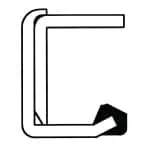
Type A2 housing – The outer diameter is made of metal, with an internal shell added to enhance structural rigidity. This design is specifically tailored for large-diameter seals, ensuring the structural integrity of the seal during installation.
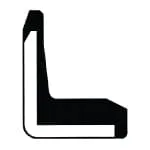
BR type housing – The structural design is the same as the B type housing, the key difference being the addition of a rubber coating on the leading edge of the housing. This coating ensures a reliable seal is formed after the oil seal is installed in the groove.
Size selection:
The size of an oil seal is determined by three factors: the diameter of the rotating shaft, the inner diameter of the housing, and its thickness (width). Choosing the appropriate size is crucial to ensuring good sealing performance. The inner diameter of the oil seal is slightly smaller than the diameter of the shaft, which effectively locks in the lubricant while isolating it from external contaminants. We offer both metric and imperial sizes to easily meet the needs of various equipment.
Shaft and outer diameter tolerance parameter table (unit: mm)
| Shaft tolerance (mm) | ||
|---|---|---|
| Size range (mm) | Shaft tolerance (recommended) | Outer diameter tolerance (recommended) |
| 6–12 | f7(-0.016 / -0.034) | H8(0 / +0.022) |
| 13–25 | f7(-0.020 / -0.041) | H8(0 / +0.033) |
| 26–50 | f8(-0.025 / -0.059) | H8(0 / +0.039) |
| 51–80 | f8(-0.030 / -0.071) | H9(0 / +0.050) |
| 81–120 | f9(-0.036 / -0.092) | H9(0 / +0.065) |
| >120 | f9(-0.043 / -0.112) | H10(0 / +0.100) |
| Oil seal outer diameter standard tolerance – mm | |
|---|---|
| Outer diameter range (mm) | Recommended tolerances (upper deviation / lower deviation) |
| 6–12 | 0 / -0.010 |
| 13–25 | 0 / -0.013 |
| 26–50 | +0.005 / -0.015 |
| 51–80 | +0.008 / -0.020 |
| 81–120 | +0.010 / -0.025 |
| >120 | +0.015 / -0.030 |
Oil seal alternative
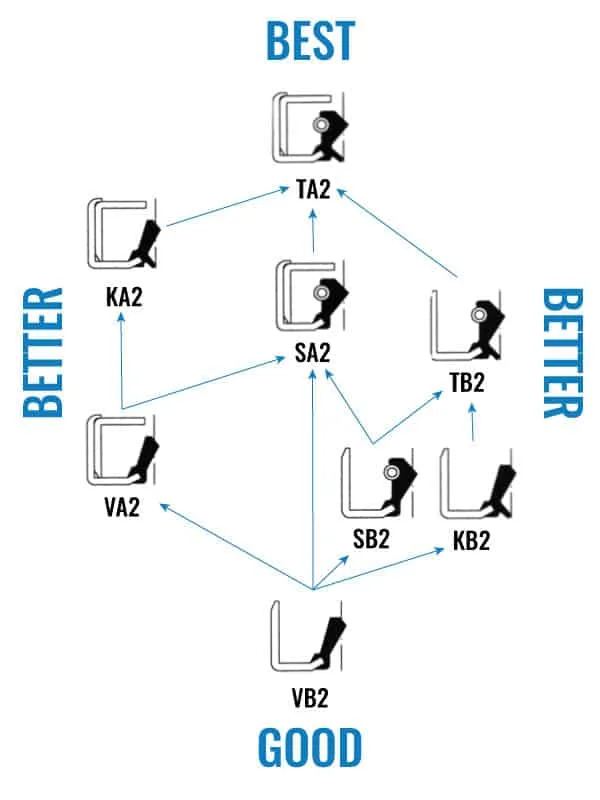
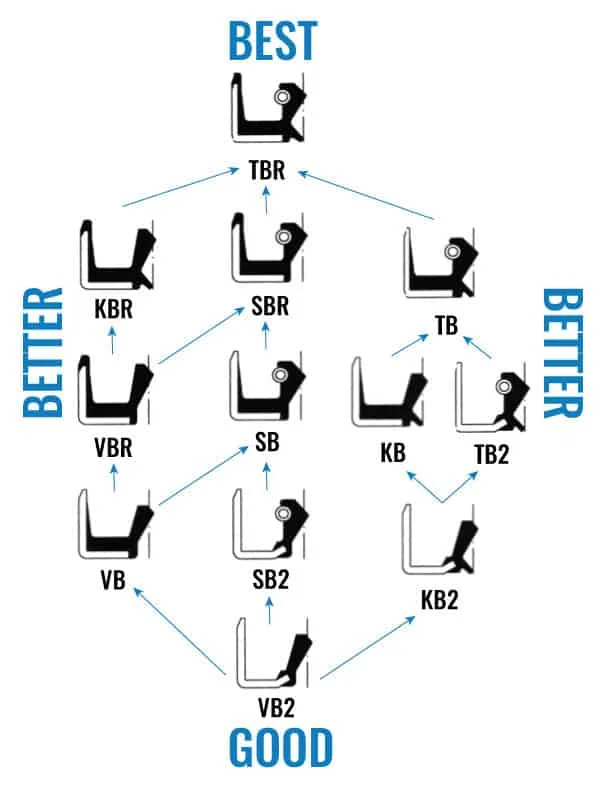
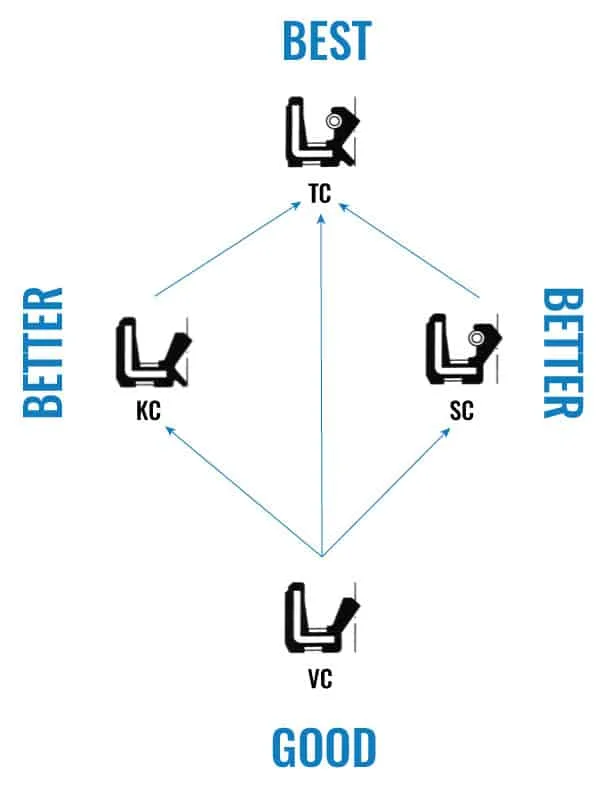
We offer a wide variety of oil seals, with mainstream models categorized into three grades: Good, Better, and Best. Manufacturers typically prioritize the “Good” or “Better” grade, balancing specifications and cost-effectiveness. When replacing oil seals, you can directly choose the same model; if out of stock, upgrading to the “Better” or “Best” grade provides a seamless replacement. The table below lists the corresponding upgrade options. To quickly meet your high-quality needs, we maintain a large inventory of “Better” and “Best” grade oil seals, offering significant price advantages.
Exhibit 1:
Exhibit 1:
Exhibit 2:
Exhibit 3:


In addition to choices of materials, lip shape, and housing, we also offer upgrade options with stainless steel housings and stainless steel springs. These customized products will have a unique identifier added to the part number for easy identification.
Recommended Shaft Requirements
Even the best oil seal will fail prematurely if the shaft condition is poor.
Recommended shaft specifications include:
| Parameter | Recommendation |
|---|---|
| Surface Roughness | Ra 0.2–0.8 μm |
| Hardness | Minimum 45 HRC |
| Roundness | Within engineering tolerance |
| Surface Finish | Ground and polished |
Proper shaft finish significantly influences seal life and leakage performance. Industry engineers frequently identify shaft machining quality as a major factor affecting rotary seal performance.
Oil Seal Style Comparison Table
Oil seal manufacturers are located worldwide, and different brands have significantly different part numbering systems. Therefore, we have compiled this quick reference table for oil seal styles to help you quickly match various lip and housing designs. You can either directly select the size and material on e-commerce platforms or contact our sales team to place a customized order. See the table below for details:
| KODA Oil seal and O-ring | Case Design | Lip Design | Timken (National) | SKF/CR | Harwal | Garlock | Dichtomatik (TCM) |
|---|---|---|---|---|---|---|---|
| SC | Rubber OD | Single Lip w/ Spring | 35 | HMS5 | A | 92 | SC |
| TC | Rubber OD | Double Lip w/ Spring | 32 | HMSA10 | ADL | 94 | TC |
| VC | Rubber OD | Single Lip, No Spring | 34 | HM4 | AO | 91 | VC |
| KC | Rubber OD | Double Lip, No Spring | KC | ||||
| DC | Rubber OD | Two Spring Lips | DC | DC | |||
| SB | Metal OD, Rubber ID | Single Lip w/ Spring | HDS1/HDS2 | SM | 76 | SM | |
| TB | Metal OD, Rubber ID | Double Lip w/ Spring | TM | 78 | TM | ||
| VB | Metal OD, Rubber ID | Single Lip, No Spring | VM | 71 | VM | ||
| KB | Metal OD, Rubber ID | Double Lip, No Spring | KM | KM | |||
| DB | Metal OD, Rubber ID | Two Spring Lips | DM | ||||
| SB2 | Metal OD | Single Lip w/ Spring | 48 | CRW1 | B | 76 | SB |
| TB2 | Metal OD | Double Lip w/ Spring | 47, 69 | CRWA1 | BDL | 78 | TB |
| VB2 | Metal OD | Single Lip, No Spring | 44 | HM14 | BO | 71 | VB |
| KB2 | Metal OD | Double Lip, No Spring | 49 | BODL | KB | ||
| DB2 | Metal OD | Two Spring Lips | DB | DB | |||
| SBR | Metal OD, Rubber ID, and Nose | Single Lip w/ Spring | 35 | SZ | |||
| TBR | Metal OD, Rubber ID, and Nose | Double Lip w/ Spring | 33 | TZ | |||
| VBR | Metal OD, Rubber ID, and Nose | Single Lip, No Spring | 31 | VZ | VZ | ||
| KBR | Metal OD, Rubber ID, and Nose | Double Lip, No Spring | KZ | ||||
| DBR | Metal OD, Rubber ID, and Nose | Two Spring Lips | |||||
| SA2 | Metal OD w/ Reinforcing Plate | Single Lip w/ Spring | 45 | CRWH1 | C | 50 | SA |
| TA2 | Metal OD w/ Reinforcing Plate | Double Lip w/ Spring | 41, 70 | CRWHA1 | CDL | TA | |
| VA2 | Metal OD w/ Reinforcing Plate | Single Lip, No Spring | CO | 63 | VA | ||
| KA2 | Metal OD w/ Reinforcing Plate | Double Lip, No Spring | CODL | 63 | KA | ||
| DA2 | Metal OD w/ Reinforcing Plate | Two Spring Lips | 75 | DA | DA |
Common Causes of Oil Seal Failure
Excessive Shaft Wear
Results from:
- Poor lubrication
- Rough shaft surfaces
- Misalignment
Lip Hardening
Usually caused by:
- Excessive temperature
- Chemical attack
- Aging elastomers
Contamination Damage
Abrasive particles accelerate lip wear.
Incorrect Installation
Common mistakes include:
- Damaging the lip during assembly
- Installing backwards
- Improper housing fit
Material Incompatibility
Exposure to incompatible fluids can cause:
- Swelling
- Cracking
- Hardening
Need Help Selecting an Oil Seal?
To identify the most suitable oil seal, provide:
- Shaft diameter
- Housing bore size
- Seal width
- Operating temperature
- Lubricant type
- Shaft speed (RPM)
- Pressure conditions
- Environmental exposure
Our sealing specialists can recommend the most appropriate profile, material, and performance level for your application, helping you reduce leakage, extend equipment life, and avoid costly downtime.