
Glossary of Rubber and Seals

Rubber & Sealing Glossary
A
- Abrasion Resistance — The ability of rubber to resist surface wear caused by friction.
- Accelerator — A chemical added to rubber compounds to speed up vulcanization.
- Acid Resistance — The capability of a material to withstand acidic environments.
- Adhesion — The bonding strength between rubber and another material.
- Aflas® — A fluoroelastomer resistant to steam, chemicals, and amines.
- Aging — The deterioration of rubber properties over time.
- Air Leakage — The escape of air through or around a seal.
- Ambient Temperature — The surrounding environmental temperature.
- ANSI — American National Standards Institute.
- Anti-Extrusion Ring — A support ring used to prevent seal extrusion under pressure.
- ASTM — ASTM International standards organization.
- Axial Seal — A seal functioning parallel to the shaft axis.
B
- Backup Ring — A rigid ring used with O-rings to prevent extrusion.
- Barrel Face Seal — A curved sealing interface used in hydraulic systems.
- Base Polymer — The primary elastomer in a rubber compound.
- Batch Mixing — The process of blending rubber ingredients in batches.
- Bearing Isolator — A device preventing contamination from entering bearings.
- Brittleness — The tendency of rubber to crack or break.
- Buna-N (NBR) — Nitrile rubber known for oil resistance.
- Burst Pressure — Maximum pressure a seal can withstand before failure.
C
- Chemical Resistance — Ability to resist degradation from chemicals.
- Clamp Load — The compressive force applied to a gasket.
- Closed Cell Foam — Foam structure with sealed gas pockets.
- Coefficient of Friction — Measurement of surface friction.
- Cold Flexibility — Ability to remain flexible at low temperatures.
- Compression Set — Permanent deformation after compression.
- Conductive Rubber — Rubber capable of conducting electricity.
- Creep — Gradual deformation under stress.
- Cross-Section — The thickness profile of a seal or O-ring.
- Cure Time — Time required for vulcanization.
- Custom Molded Rubber — Rubber products made to specific designs.
D
- Deflection — Amount of deformation under load.
- Diaphragm Seal — Flexible membrane used for sealing pressure systems.
- DIN Standard — German industrial standard.
- Double Acting Seal — Seal effective in both pressure directions.
- Durometer — Measurement of rubber hardness.
- Dynamic Seal — Seal used between moving surfaces.
E
- Elasticity — Ability to return to original shape after deformation.
- Elastomer — Polymer with elastic properties.
- Elongation — Stretchability before breaking.
- EMI Shielding — Protection against electromagnetic interference.
- EPDM — Ethylene Propylene Diene Monomer rubber.
- Extrusion — Seal material forced into clearance gaps under pressure.
F
- Face Seal — Seal between flat mating surfaces.
- FDA Grade Rubber — Rubber approved for food contact.
- FKM — Fluoroelastomer with high chemical resistance.
- Flange Gasket — Gasket installed between pipe flanges.
- Flash — Excess material remaining after molding.
- Flat Gasket — Flat sealing component between surfaces.
- Fluid Compatibility — Suitability of rubber with certain fluids.
- Friction Wear — Material degradation due to rubbing.
- Fuel Resistance — Ability to resist fuel exposure.
G
- Gasket — Mechanical seal filling space between surfaces.
- Glass Transition Temperature — Temperature where rubber becomes brittle.
- Gland — Groove where a seal is installed.
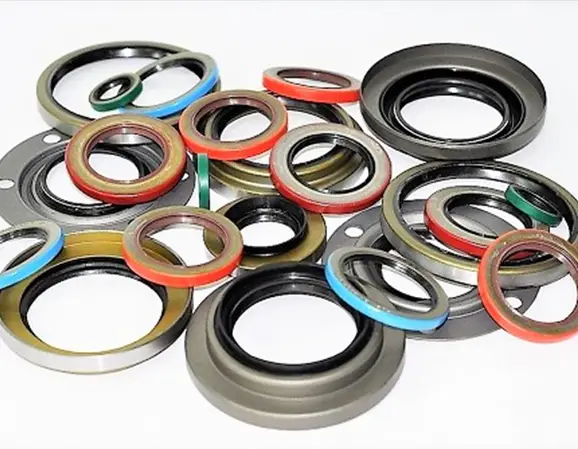
- Grease Seal — Seal designed to retain lubricants.
H
- Hardness — Resistance to indentation.
- Heat Aging — Property changes after heat exposure.
- High Pressure Seal — Seal designed for elevated pressure systems.
- Hydraulic Seal — Seal used in hydraulic cylinders and systems.
- Hydrolysis Resistance — Ability to resist water-induced degradation.
I
- ID (Inside Diameter) — Inner diameter of an O-ring or seal.
- Inflatable Seal — Seal expanded by air pressure.
- Injection Molding — Rubber molding process using injected material.
- Interference Fit — Tight fit ensuring sealing performance.
- ISO Standard — International Organization for Standardization specification.
J
- Jacketing — Protective outer covering on seals or gaskets.
- Joint Sealant — Material used to seal joints.
K
- Kalrez® — Perfluoroelastomer with extreme chemical resistance.
- Knife Edge Seal — Seal using sharp edge contact for high integrity sealing.
L
- Leak Rate — Amount of fluid passing through a seal over time.
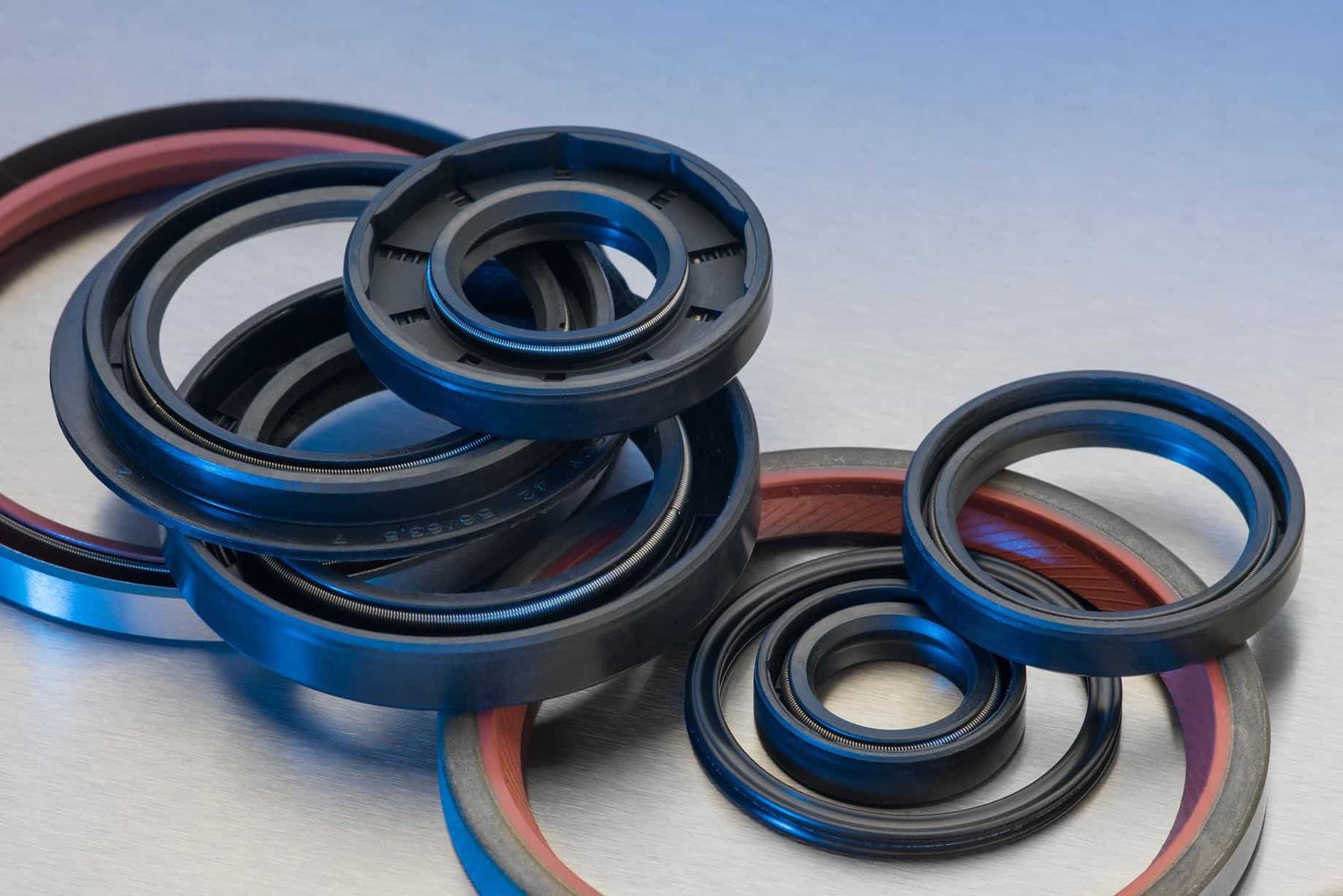
- Lip Seal — Seal with flexible sealing lip.
- Low Temperature Resistance — Ability to function in cold conditions.
- Lubrication — Application of lubricant to reduce friction.
M
- Mechanical Seal — Device preventing fluid leakage around rotating shafts.
- Membrane Seal — Flexible barrier seal.
- Metric O-Ring — O-ring sized according to metric standards.
- Mold Release — Agent preventing rubber sticking to molds.
- Molding Flash — Excess rubber from mold parting lines.
N
- Natural Rubber (NR) — Elastomer derived from latex.
- Neoprene (CR) — Chloroprene rubber resistant to weathering.
- Nitrile Rubber (NBR) — Oil-resistant synthetic rubber.
- Non-Asbestos Gasket — Gasket material without asbestos fibers.
O
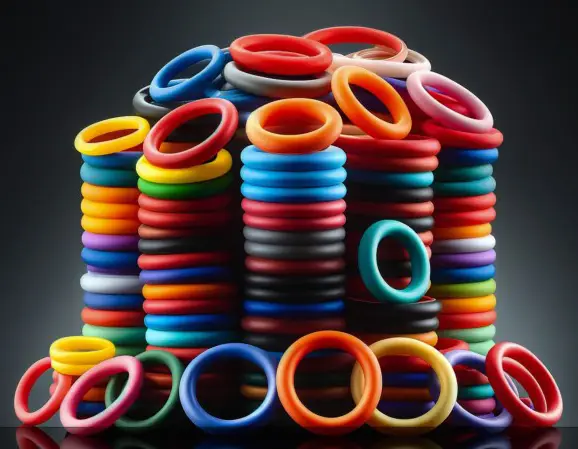
- O-Ring — Circular elastomeric sealing ring.
- OD (Outside Diameter) — Outer diameter measurement.
- Oil Resistance — Ability to resist oils and lubricants.
- Outgassing — Release of trapped gases from materials.
- Overmolding — Molding rubber over another substrate.
P
- Packing Seal — Compressible sealing material around shafts.
- Perfluoroelastomer (FFKM) — High-performance chemical-resistant elastomer.
- Permeability — Rate at which gases/liquids pass through material.
- Piston Seal — Seal installed on pistons.
- Platen — Heated press surface in molding.
- Polyurethane (PU) — Durable elastomer with abrasion resistance.
- Pressure Rating — Maximum operating pressure limit.
Q
- Quality Assurance (QA) — Procedures ensuring product quality.
- Quick Connector Seal — Seal used in rapid connection systems.
R
- Radial Seal — Seal operating perpendicular to shaft axis.
- Rebound Resilience — Ability to recover after impact.
- Retaining Ring — Ring holding seals in position.
- Rubber Bonding — Joining rubber to metal or other materials.
- Rubber Compound — Formulated mixture of elastomers and additives.
S
- Shaft Seal — Seal preventing leakage around rotating shafts.
- Shore A Hardness — Common rubber hardness scale.
- Silicone Rubber (VMQ) — High-temperature resistant elastomer.
- Single Acting Seal — Seal effective in one pressure direction.
- Spring Energized Seal — Seal energized by an internal spring.
- Static Seal — Seal between non-moving surfaces.
- Swelling — Expansion caused by fluid absorption.
T
- Tear Resistance — Ability to resist tearing forces.
- Temperature Range — Operational temperature limits.
- Tensile Strength — Maximum pulling force before breaking.
- Thermal Expansion — Size increase due to heat.
- Thermoplastic Elastomer (TPE) — Recyclable elastic polymer.
- Tolerance — Permissible dimensional variation.
U
- U-Cup Seal — U-shaped hydraulic seal.
- Ultimate Elongation — Maximum elongation before rupture.
- Ultra-High Molecular Weight Polyethylene (UHMWPE) — Wear-resistant engineering plastic.
V
- Vacuum Seal — Seal preventing gas leakage under vacuum.
- Vibration Isolation — Reduction of vibration transmission.
- Viton® — Brand name for FKM fluoroelastomer.
- Volume Swell — Increase in rubber volume after fluid exposure.
- Vulcanization — Chemical curing process improving rubber properties.
W
- Wear Resistance — Ability to resist mechanical wear.
- Weather Resistance — Ability to withstand outdoor exposure.
- Wiper Seal — Seal removing contaminants from shafts.
- Working Pressure — Recommended operating pressure.
X
- X-Ring — Four-lobed sealing ring with improved sealing performance.
Y
- Yield Strength — Stress level before permanent deformation.
Z
- Zero Leakage — Ideal condition with no detectable leakage.
- Zinc Oxide — Activator used in rubber vulcanization.