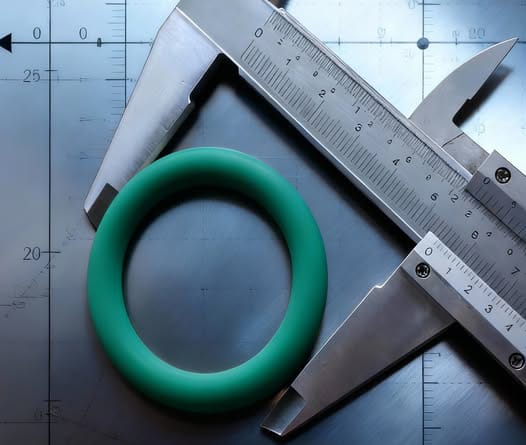
Why Correct O-Ring Size Selection Matters
Choosing the correct O-ring size is one of the most important factors in achieving reliable sealing performance. Even when the right material is selected, an incorrect size can lead to leakage, compression failure, premature wear, or system downtime.
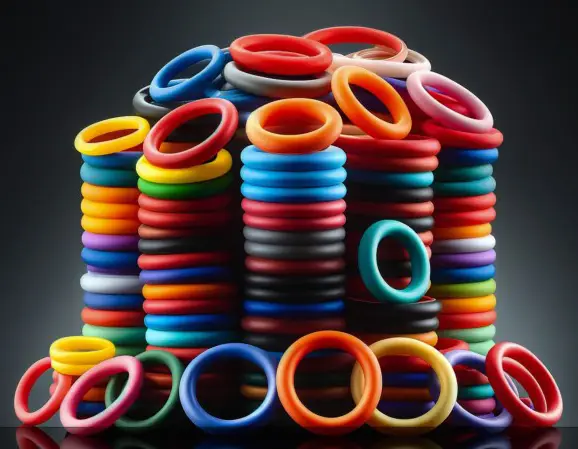
O-rings are widely used in hydraulic systems, pneumatic equipment, automotive assemblies, industrial machinery, medical devices and countless fluid sealing applications. Because these simple sealing components work by controlled compression, dimensional accuracy is critical. Proper O-ring size selection supports leak prevention, improves service life and reduces maintenance costs.
🔍 Key Principle: The correct O-ring is not chosen by diameter alone. Inner diameter, cross section, groove dimensions and application conditions all matter.
Understanding Basic O-Ring Dimensions
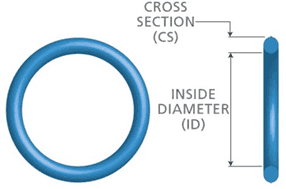
Before selecting the correct seal, it is essential to understand the two core dimensions used for every O-ring.
Inner Diameter (ID)
The inner diameter measures the distance across the center opening of the O-ring. It influences fit around pistons, shafts or sealing surfaces.
Cross Section (CS)
Cross section refers to the thickness of the O-ring body. This dimension strongly affects squeeze, sealing force and gland fill.
Core O-Ring Size Dimensions
• Inner Diameter (ID)
• Cross Section (CS)
• Outer Diameter (derived)
• Groove compatibility
Correct O-ring size selection requires evaluating all these dimensions together.
Why O-Ring Size Accuracy Is Critical
Preventing Leakage
An undersized or oversized O-ring may fail to create the proper sealing force needed to prevent leakage.
Maintaining Proper Compression
O-rings seal through controlled squeeze. Incorrect dimensions can result in too little or too much compression.
Reducing Premature Failure
Improperly sized seals may twist, extrude, wear rapidly or fail under pressure.
✔ Benefits of Proper Sizing
• Improved sealing reliability
• Lower leakage risk
• Longer service life
• Reduced maintenance costs
How O-Rings Seal Through Compression
O-rings work by deforming slightly when compressed between mating surfaces. This creates sealing pressure against leakage paths.
Static Sealing Applications
Static applications generally allow simpler sizing approaches, but compression requirements still matter.
Dynamic Sealing Applications
Dynamic systems involving movement often require more precise sizing to reduce friction and wear.
⚙ Compression Balance Matters
Too little squeeze may leak.
Too much squeeze may increase friction and shorten life.
Step 1: Identify the Application Type
The first step in choosing the right O-ring size is understanding the application.
Face Seal Applications
Used between two flat surfaces where axial compression creates sealing force.
Piston Seals
Require sizing that supports reciprocating motion and pressure sealing.
Rod Seals
Often involve dynamic movement and may require special groove considerations.
Radial Sealing
Used around shafts or bores where radial squeeze is critical.
🛠 Application Type Always Influences Size Selection
Step 2: Measure Groove Dimensions Correctly
Proper gland or groove dimensions are essential for correct O-ring fit.
Groove Width
Groove width must allow the O-ring to deform properly without overfilling.
Groove Depth
Depth determines squeeze percentage, directly affecting sealing force.
Gland Fill Considerations
Excessive gland fill may create stress, while insufficient fill may compromise sealing.
✔ Groove Measurements To Verify
• Width
• Depth
• Tolerance range
• Gland volume
Step 3: Use Standard O-Ring Size Systems
Many industries use standard sizing systems to simplify selection.
AS568 Standard Sizes
This is a widely used inch-based standard for O-ring dimensions.
Metric O-Ring Sizes
Metric standards are common in global industrial applications.
Custom Sizes
Some specialized systems may require custom O-ring dimensions.
Using recognized standards helps simplify O-ring size selection and reduces compatibility issues.
Step 4: Consider Stretch and Compression Limits
O-rings often operate with slight stretch or compression, but limits must be controlled.
Inner Diameter Stretch
Excessive stretch can reduce cross section and affect sealing performance.
Compression Squeeze
Correct squeeze percentage varies by application type and material.
⚠ Common Error: Selecting an O-ring only by “close fit” without checking stretch and squeeze often leads to sealing problems.
Step 5: Match Size to Pressure Conditions
Pressure affects O-ring performance and may influence dimensional selection.
Low Pressure Systems
Standard sizing often works well with proper groove design.
High Pressure Applications
Higher pressures may require different squeeze levels or anti-extrusion support.
Extrusion Considerations
Incorrect size combined with pressure can increase extrusion risk.
Pressure Selection Factors
• Operating pressure
• Clearance gaps
• Extrusion resistance
• Backup ring requirements
Common O-Ring Sizing Mistakes
Choosing by Outer Diameter Only
O-rings should never be selected only by outside diameter.
Ignoring Groove Tolerances
Tolerance variations can affect fit and sealing performance.
Using Incorrect Cross Section
Wrong cross section may cause leakage or excessive compression.
Ignoring Application Movement
Dynamic applications often need more careful sizing than static seals.
🚫 Common Failure Cause: Many O-ring problems come from incorrect sizing rather than poor material quality.
Material Selection Still Matters
While sizing is critical, material compatibility remains equally important.
When selecting an O-ring size, always evaluate:
• Temperature exposure
• Fluid compatibility
• Pressure conditions
• Dynamic movement
• Environmental conditions
The correct size paired with the wrong material can still result in failure.
Why Tolerances and Quality Matter
Precision manufacturing affects how accurately an O-ring matches specified dimensions. Poor dimensional consistency can cause sealing variation.
High-quality seals typically offer tighter tolerances, better material consistency and more reliable fit in demanding applications.
⭐ Expert Insight: Proper O-ring size selection combines dimension accuracy, application design and material compatibility—not just choosing a catalog number.
Best Practices for Correct O-Ring Selection
Selection Checklist
✓ Verify groove dimensions
✓ Confirm application type
✓ Check squeeze requirements
✓ Use standard sizing references
✓ Consider pressure and movement
✓ Confirm material compatibility
Following these practices helps improve sealing reliability while reducing costly downtime.
Q&A:How to correctly select O-ring size
1. What dimensions define O-ring size?
O-ring size is primarily defined by inner diameter and cross section dimensions.
2. Why is groove size important for O-rings?
Groove dimensions control squeeze, gland fill and sealing performance.
3. Can I choose an O-ring by matching outer diameter only?
No. Proper selection requires considering inner diameter, cross section and groove compatibility together.
4. Do dynamic applications need different sizing considerations?
Yes. Dynamic sealing often requires more careful sizing to manage wear, friction and movement.
5. What is the most common O-ring sizing mistake?
A common mistake is selecting based only on approximate fit without checking compression, stretch and groove dimensions.