

FDA-Grade O-Rings
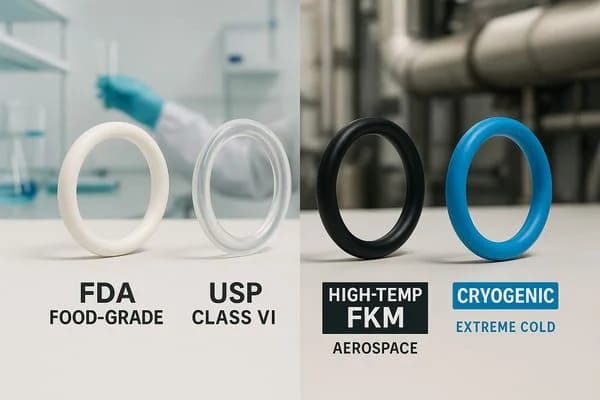
Why FDA Grade O-Rings Matter in Critical Sealing Systems
In food processing, beverage production, and pharmaceutical equipment, sealing components are in direct or indirect contact with consumable products. Any material migration, odor transfer, or chemical leaching can lead to contamination risks, production downtime, or regulatory issues.
FDA Grade O-rings are designed to reduce these risks by using elastomer compounds that comply with FDA 21 CFR 177.2600 requirements for repeated food contact applications. This regulation defines which raw materials and extract limits are acceptable for rubber components used in food systems.
It is important to understand that the FDA does not “approve” O-rings as finished products. Instead, compliance is achieved through material formulation, manufacturing control, and supplier-issued declarations of conformity.
What FDA Compliance Really Means (Not Just a Label)
Many buyers misunderstand FDA-grade labeling. In reality, compliance is based on three technical conditions:
1. Approved Raw Material Formulation
Elastomers must be made from ingredients listed under FDA allowed rubber compounding substances. This ensures the base polymer is safe for food contact.
2. Extraction & Migration Limits
Materials must pass solvent extraction tests to ensure no harmful substances migrate into food:
- Aqueous food: distilled water extraction limits
- Fatty food: n-hexane extraction limits
- Dry food: formulation compliance under GMP conditions
3. Controlled Manufacturing Process
Even FDA-approved compounds can fail in real applications if:
- Improper curing occurs
- Low-quality fillers are used
- Contamination happens during production
That is why FDA compliance is always a material + process + documentation system, not just a rubber type.
Recommended FDA Grade O-Ring Materials
Different industries require different elastomers depending on temperature, cleaning method, and media exposure.
Silicone (VMQ)
Best for:
- Baking equipment
- Dairy systems
- Beverage dispensing
Advantages:
- Wide temperature range
- Odorless and tasteless
- High flexibility in cold environments
EPDM
Best for:
- Hot water systems
- Steam sterilization (CIP/SIP)
- Dairy and beverage pipelines
Advantages:
- Excellent water and steam resistance
- Good chemical resistance for cleaning agents
NBR (Buna-N)
Best for:
- Food packaging machinery
- Oil-containing food processes
Advantages:
- Good oil and grease resistance
- Cost-effective solution for general use
FKM (Viton® FDA Grade)
Best for:
- High temperature food processing
- Aggressive cleaning chemicals
Advantages:
- High thermal stability
- Strong resistance to fats, oils, and many chemicals
PTFE (Teflon-based sealing solutions)
Best for:
- Extreme chemical environments
- Pharmaceutical reactors
Advantages:
- Near-universal chemical resistance
- Very low friction and non-stick surface
Common Mistakes When Selecting FDA O-Rings
Many failures in food-grade sealing systems are not caused by material quality, but by selection errors:
Mistake 1: Assuming “FDA Grade” Means Universal Compatibility
FDA compliance does NOT mean resistance to all chemicals or temperatures.
Mistake 2: Ignoring Cleaning Chemicals (CIP/SIP)
Strong alkaline or acidic cleaning agents can degrade standard elastomers.
Mistake 3: Choosing Material Only by Cost
Low-cost materials may pass compliance but fail under long-term thermal cycling.
Mistake 4: Not Requesting Compliance Documentation
Proper suppliers should provide:
- FDA compliance statement
- Material traceability
- Batch-level consistency records
How to Select the Right FDA O-Ring (Engineering Approach)
To choose the correct sealing solution, engineers should evaluate:
- Operating temperature range
- Food type (dry, aqueous, fatty)
- Cleaning cycle chemistry (acid/alkali/steam)
- Pressure and compression conditions
- Required service life
A correct selection can significantly reduce maintenance frequency and eliminate contamination risks in production environments.
FDA Grade Means Risk Control, Not Just Material Type
FDA Grade O-rings are essential sealing components in food and pharmaceutical systems, but their real value lies in risk reduction and process reliability, not just compliance labeling.
The best sealing performance comes from combining:
- Proper FDA-compliant material selection
- Verified manufacturing processes
- Application-specific engineering design
When correctly specified, FDA-grade O-rings help ensure safer production, longer service life, and more stable processing operations in regulated industries.