
Medical devices depend on sealing systems to control fluids, gases, pressure, contamination, and mechanical movement. From a disposable syringe and infusion pump to a reusable surgical instrument, diagnostic analyzer, ventilator, blood-processing system, or implantable delivery device, a seal may be a small component but can have a critical influence on the safety and reliability of the complete product.
Unlike many conventional industrial sealing applications, medical device sealing requires more than selecting an elastomer that fits a groove. Engineers must consider biocompatibility, sterilization, extractables and leachables, chemical compatibility, pressure, temperature, friction, particle generation, compression set, dimensional stability, cleanliness, shelf life, and manufacturing controls.
The phrase “Sealing Solutions in Medical Devices” therefore describes a complete engineering discipline rather than a single product category. An effective medical seal must perform its intended function throughout manufacturing, transportation, storage, sterilization, repeated use where applicable, and the expected service environment.
⚕ Engineering takeaway: In medical devices, a seal should be selected as part of the complete device design. Material compatibility, geometry, sterilization, cleanliness, manufacturing variation, and risk management should be evaluated together rather than independently.
What Are Sealing Solutions in Medical Devices?
Medical device sealing solutions are components and engineering methods used to create a controlled barrier between two or more surfaces. The barrier may need to prevent liquid leakage, gas leakage, contamination ingress, pressure loss, or unwanted fluid migration.
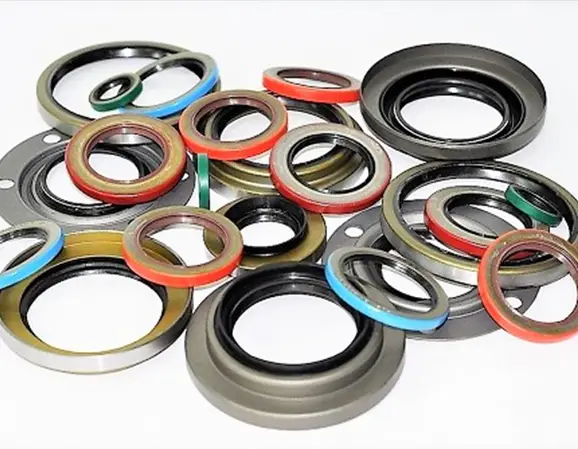
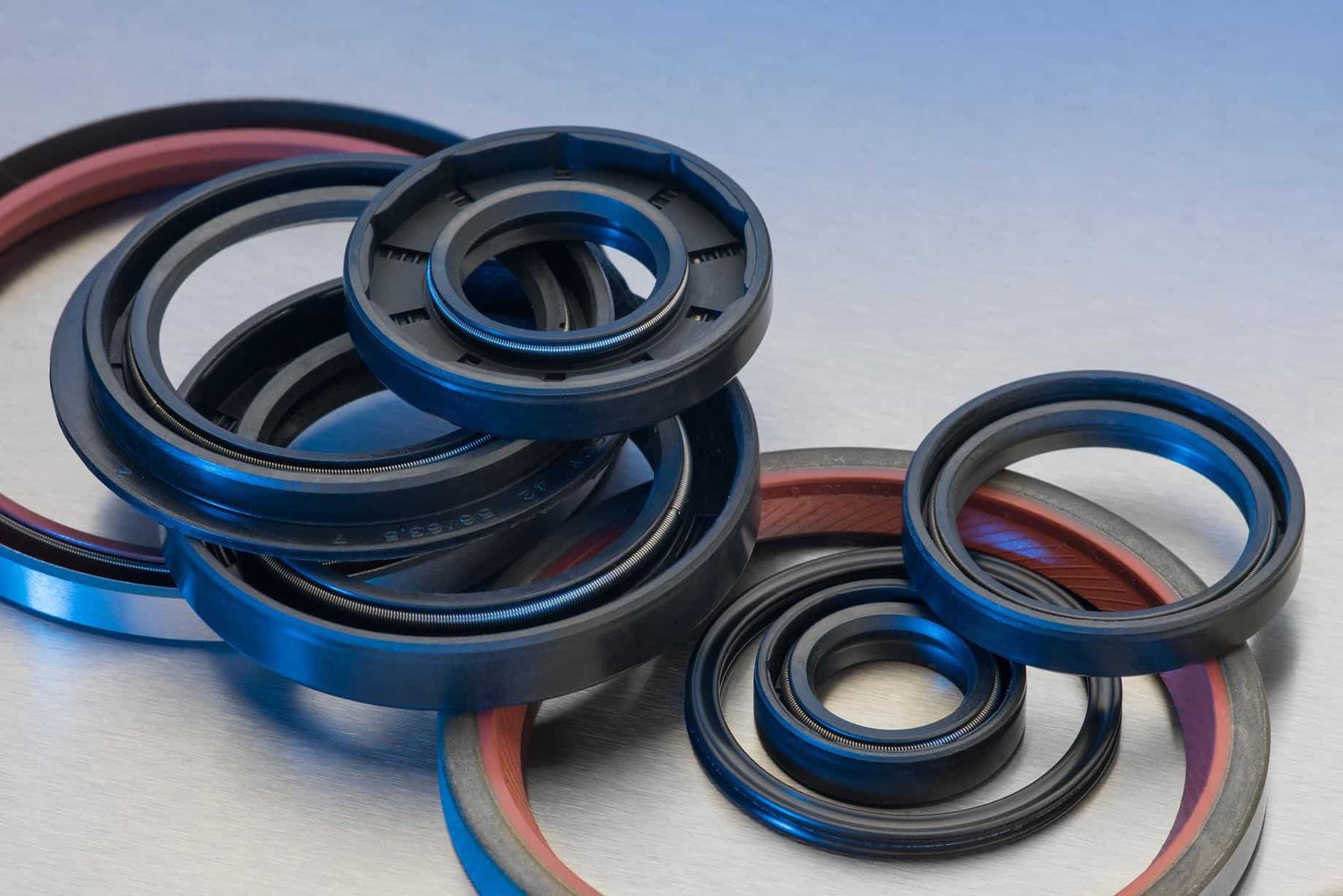
Common medical sealing components include O-rings, molded gaskets, flat gaskets, diaphragm seals, lip seals, bellows, shaft seals, piston seals, rod seals, valve seals, bonded seals, custom elastomeric components, and PTFE-based sealing elements.
The correct sealing technology depends heavily on the device architecture. A static gasket inside a diagnostic cartridge has very different requirements from a dynamic piston seal in an infusion pump. A seal used in a reusable surgical instrument may need repeated steam sterilization, while a single-use disposable device may be exposed to ethylene oxide, gamma radiation, or another sterilization process.
For manufacturers researching industrial and precision sealing technologies, additional information can be found through Sealing solutions and product categories.
Why Medical Device Sealing Is Different

A conventional industrial seal is often evaluated primarily by leakage rate, pressure capability, temperature range, chemical resistance, and service life. Medical devices require many of these same engineering characteristics, but they add additional considerations associated with patient safety, biological compatibility, sterilization, cleanliness, manufacturing control, and regulatory risk.
For example, an elastomer may perform very well in a hydraulic system but still be unsuitable for a medical device if its formulation has not been appropriately characterized for the intended contact and manufacturing process.
Similarly, a seal with excellent chemical resistance may generate unacceptable particulate contamination during dynamic operation. A material that works well at room temperature may develop excessive compression set after repeated autoclave cycles.
Therefore, medical sealing design should answer several questions simultaneously:
• Does the seal maintain the required barrier?
• Is the material compatible with the intended contact environment?
• Can it tolerate the required sterilization process?
• Does it maintain dimensional stability?
• Does it generate unacceptable particles?
• Does it introduce unacceptable extractables or leachables?
• Can the manufacturing process maintain the required tolerances?
• Can the sealing system meet the device’s intended performance throughout its defined life?
⚠ Important: A material described as “medical grade” should not automatically be treated as suitable for every medical application. Suitability depends on the specific formulation, device, contact conditions, processing history, sterilization method, and applicable regulatory requirements.
Typical Medical Devices That Require Seals
Infusion Pumps
Infusion pumps contain fluid pathways, valves, actuators, cartridges, pistons, and connectors. Seals may need to prevent leakage while maintaining predictable movement and minimizing friction.
For dynamic applications, seal friction can influence actuator force. Excessive friction may increase mechanical load, while insufficient sealing force can create leakage.
Syringes and Drug Delivery Devices
Syringe plungers and drug delivery systems commonly use elastomeric sealing elements that must maintain fluid containment while moving smoothly through the barrel.
The balance between break-loose force, running force, leakage resistance, material compatibility, and particulate generation is particularly important.
Ventilators and Respiratory Equipment
Respiratory devices can contain pneumatic valves, diaphragms, tubing interfaces, pressure chambers, and connectors. Seals must maintain gas tightness under pressure cycling and may be subject to cleaning and sterilization requirements depending on the device design.
Diagnostic Instruments
Diagnostic analyzers often contain fluid-handling modules where even a small leakage path can affect test accuracy, contamination control, or instrument reliability.
Surgical Instruments
Reusable surgical devices can contain rotating shafts, hinges, valves, or internal fluid pathways. Sealing materials may need to withstand repeated cleaning and sterilization cycles while maintaining dimensional stability.
Dialysis and Blood-Processing Equipment
Fluid and blood-processing systems place strong emphasis on contamination control, fluid compatibility, pressure retention, and appropriate material characterization.
Medical Pumps and Compressors
Pump shafts, pistons, valves, and pressure chambers may require static or dynamic seals. The design must account for pressure, speed, friction, heat generation, and material compatibility.
Major Types of Medical Device Seals
| Seal Type | Typical Function | Common Considerations |
|---|---|---|
| O-Ring | Static or selected dynamic sealing | Squeeze, gland dimensions, material, pressure |
| Flat Gasket | Static flange sealing | Compression, surface finish, thickness |
| Diaphragm | Flexible pressure or fluid barrier | Fatigue, flex life, pressure, material |
| Lip Seal | Dynamic shaft or piston sealing | Friction, wear, surface finish |
| PTFE Seal | Low-friction or chemical-resistant sealing | Cold flow, installation, energizing method |
| Bellows | Flexible isolation barrier | Fatigue, stroke, pressure, material |
O-Rings in Medical Device Applications
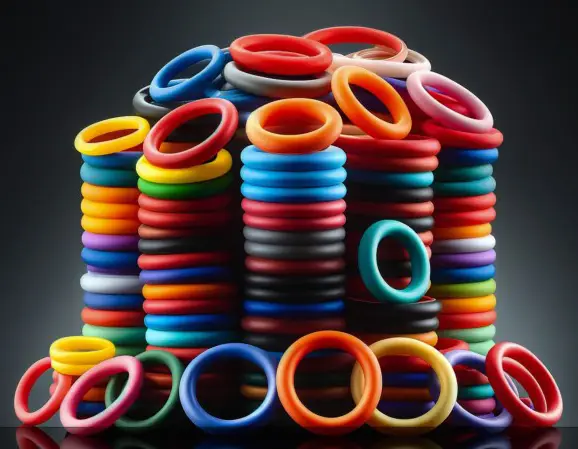
O-rings are among the most versatile sealing geometries because they can create reliable static seals with relatively simple grooves. They are used in valves, connectors, pump assemblies, manifolds, housings, fluid paths, and many other components.
For static sealing, an O-ring is typically compressed between mating surfaces. The resulting contact pressure forms the barrier against fluid or gas migration.
Important design variables include O-ring cross-section, gland depth, gland width, groove diameter, squeeze percentage, stretch, clearance, pressure, temperature, and material hardness.
Metric O-ring dimensions and application requirements should be considered together rather than treating nominal size as the only specification.
A medical device designer can also review medical O-ring and oil seal applications when comparing different sealing configurations.
Medical Seal Materials
Material selection is one of the most important stages of medical seal development. The elastomer must be evaluated against the complete operating environment rather than a single property.
Silicone Rubber
Silicone elastomers are widely used in medical and healthcare applications because selected formulations can provide good flexibility over a broad temperature range and useful resistance to environmental aging.
Silicone is available in different formulations and grades. Not every silicone compound is appropriate for every device, and mechanical properties such as tear strength and abrasion resistance may be limiting factors in demanding dynamic applications.
EPDM
EPDM provides strong resistance to hot water, steam in appropriate formulations, ozone, and weathering. It can be useful in selected water-handling and sterilization-related applications.
However, EPDM generally has poor compatibility with petroleum-based mineral oils and many hydrocarbon fluids. Fluid compatibility must therefore be verified before selection.
FKM
FKM is known for high-temperature performance and resistance to many oils, fuels, and chemicals. It may be considered for demanding fluid environments where its specific formulation is appropriate.
FKM should not be selected solely because it has a broad chemical-resistance reputation. Low-temperature flexibility, steam exposure, amines, certain polar chemicals, and other conditions can affect suitability depending on formulation.
NBR
NBR offers good resistance to many petroleum-based oils and hydraulic fluids and has useful mechanical properties. It is commonly used in industrial sealing applications and may be suitable for selected medical device designs when the formulation and intended contact environment have been appropriately evaluated.
Polyurethane
Polyurethane can provide high abrasion resistance and good mechanical strength, making it attractive for certain dynamic sealing applications. Polyester and polyether polyurethane systems can have significantly different hydrolysis and chemical-resistance behavior.
PTFE
PTFE provides very high chemical resistance and low friction. It is often considered where low friction, chemical compatibility, or broad temperature capability is required.
Because PTFE exhibits creep and cold-flow behavior that differs from elastomers, PTFE sealing systems often require carefully designed grooves, energizers, or backup structures.
Medical Seal Material Comparison
| Material | Typical Advantages | Potential Limitations |
|---|---|---|
| Silicone | Flexibility, temperature capability | Tear, abrasion and mechanical limitations in some applications |
| EPDM | Water, ozone, weather resistance | Poor mineral-oil compatibility |
| NBR | Oil resistance, mechanical performance | Ozone and weather resistance can be limited |
| FKM | High-temperature and chemical resistance | Cost and selected chemical/low-temperature limitations |
| PU | Abrasion and mechanical strength | Hydrolysis, temperature and chemical behavior varies |
| PTFE | Chemical resistance, low friction | Creep and cold flow, more complex design |
The comparison is a general engineering guide, not a material qualification matrix. Specific medical applications require verification of the exact compound, processing method, sterilization method, and intended contact environment.
Hardness and Medical Seal Performance
Elastomer hardness is commonly measured using durometer methods such as ASTM D2240. Many O-rings and molded elastomer seals are available around 60, 70, 80, or 90 Shore A, although medical device requirements may lead to specialized formulations outside common industrial ranges.
A softer material can provide good conformity to small surface irregularities and may require lower assembly force. However, softer compounds can be more sensitive to extrusion, deformation, or damage under certain pressure and clearance conditions.
A harder compound can provide improved resistance to deformation and extrusion, but it can increase assembly force and friction.
| Approximate Hardness | Potential Benefit | Potential Concern |
|---|---|---|
| 60 Shore A | Conformability and flexibility | Potentially greater extrusion or deformation |
| 70 Shore A | Balanced sealing behavior | Application-dependent pressure limitations |
| 80 Shore A | Higher deformation resistance | Potentially higher friction |
| 90 Shore A | High resistance to deformation | Higher installation force and reduced conformity |
These categories are not universal recommendations. Seal hardness must be evaluated together with geometry, pressure, clearance, temperature, surface condition, and dynamic movement.
Compression Set and Long-Term Medical Seal Reliability
Compression set describes the tendency of an elastomer to retain permanent deformation after being compressed for a defined period under specified conditions. ASTM D395 is a commonly referenced method for rubber compression-set testing.
Compression set matters because a static seal relies on sufficient contact force to maintain a barrier. If the material loses too much recovery over time, thermal cycling, sterilization, or chemical exposure may reduce sealing force.
A compression-set test does not directly predict medical device service life. It is a material characterization method under specified conditions. Real device behavior depends on geometry, temperature, pressure, fluid exposure, sterilization, tolerances, and actual operating cycles.
Temperature and Thermal Conductivity
Medical devices can experience temperature changes during operation, cleaning, sterilization, transportation, and storage. Thermal expansion and contraction can alter the relationship between the seal and mating components.
Elastomers generally have much lower thermal conductivity than metals. Many conventional rubber materials have thermal conductivity roughly around 0.1–0.3 W/(m·K), although the actual value varies substantially with polymer type, fillers, formulation, and temperature.
Low thermal conductivity means elastomeric seals may not respond thermally in exactly the same way as surrounding metal components. In precision devices, engineers should consider dimensional changes and thermal gradients when tight clearances are involved.
Thermal conductivity alone is rarely the primary seal-selection criterion. Compression set, modulus, chemical resistance, permeability, and aging behavior may be more directly relevant to sealing performance.
Sterilization and Medical Seal Selection
Sterilization can fundamentally change the sealing environment. Common sterilization approaches include steam sterilization, ethylene oxide, radiation-based methods, and other validated processes depending on the device.
Repeated exposure can affect hardness, tensile properties, elongation, compression set, color, surface condition, and dimensional stability.
For example, a reusable device subjected to repeated steam sterilization may require a different material strategy from a single-use device sterilized by ethylene oxide.
⚕ Sterilization principle: Never qualify a medical seal only in its unsterilized condition when the finished device will undergo sterilization. The seal should be evaluated in the relevant processed state and under representative conditions.
Biocompatibility and ISO 10993
For medical devices that have patient contact, biological safety is a fundamental consideration. The ISO 10993 series provides a framework for the biological evaluation of medical devices.
The applicable evaluation depends on factors such as the type of contact, duration of contact, nature of the device, and patient exposure. A material that is appropriate for one contact category should not automatically be assumed appropriate for another.
Seal engineers should therefore work with regulatory, biological-safety, materials, and quality teams when a sealing component has direct or indirect patient contact.
The goal is not simply to find a material with a “biocompatible” label. The complete finished device and its manufacturing and processing conditions may influence the biological evaluation.
Extractables and Leachables
Extractables are substances that can potentially be released from a material under controlled extraction conditions. Leachables are substances that actually migrate into a product or environment under intended or simulated use conditions.
This distinction can become particularly important when a medical seal contacts drugs, biological fluids, process fluids, or sensitive diagnostic samples.
Potential sources can include polymer additives, processing aids, pigments, plasticizers, curing residues, degradation products, or other formulation constituents.
For high-risk applications, extractables and leachables assessment should be integrated into the broader device risk-management and materials-characterization program.
Chemical Compatibility of Medical Seals
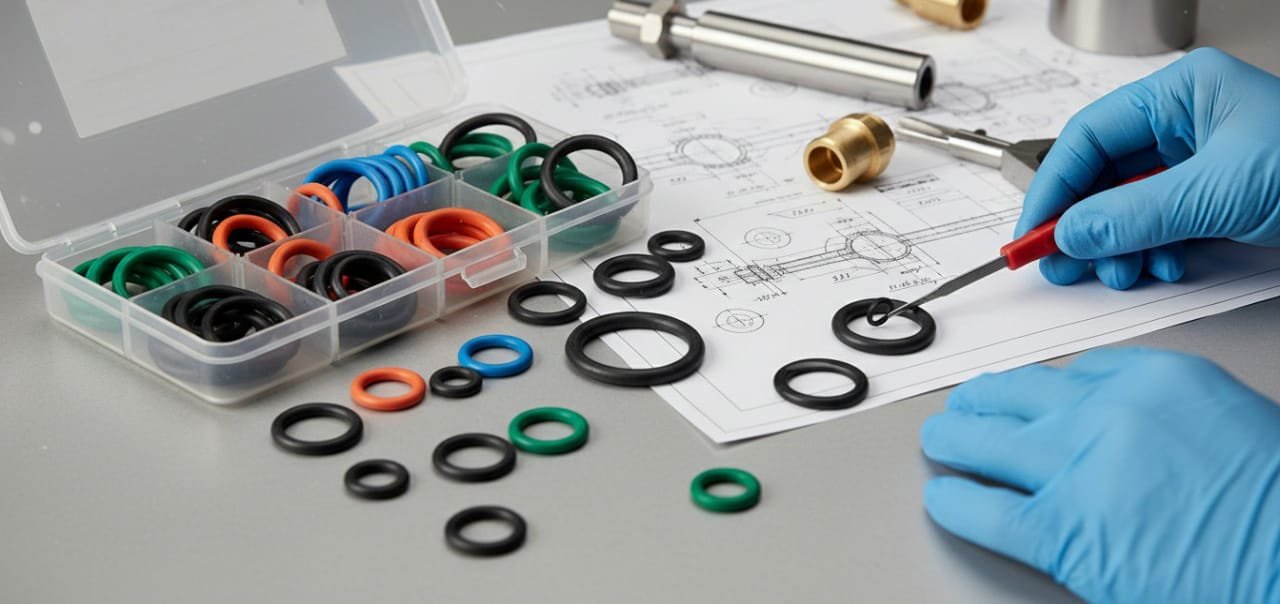
Chemical compatibility should be evaluated against the actual substance and conditions rather than relying only on general material charts.
Relevant factors include:
• Fluid composition
• Concentration
• Temperature
• Exposure duration
• Pressure
• Mechanical stress
• Repeated exposure
• Cleaning agents
• Sterilization chemicals
• Lubricants
• Drug formulations where applicable
A chemical that appears harmless at room temperature can cause substantially different swelling or degradation at elevated temperature or under mechanical stress.
Corrosion and Sealing Interfaces
The seal material is only one part of the sealing interface. Mating components may be manufactured from stainless steel, aluminum, titanium, engineering plastics, glass, ceramics, or other materials.
Corrosion or surface degradation of a mating component can create leakage paths or damage a dynamic sealing lip.
For example, a shaft seal operating against a corroded metal shaft may experience accelerated wear even if the elastomer itself has excellent chemical compatibility.
Material pairing should therefore consider galvanic effects where relevant, surface hardness, roughness, corrosion resistance, cleaning chemistry, and sterilization conditions.
Medical Seal Surface Finish
Surface finish is critical for dynamic sealing and can also influence static sealing reliability.
A surface that is excessively rough may create leakage paths or abrade the seal. A surface that is too smooth in certain applications may also affect lubricant retention or sealing behavior.
The appropriate roughness range depends on the seal geometry, material, movement, lubrication, pressure, and mating surface. Therefore, a single Ra value should not be treated as a universal requirement for every medical seal.
Tolerance and Dimensional Control
Medical devices often contain precision fluid pathways and compact assemblies. Small dimensional variations can influence seal compression, friction, pressure retention, and leakage.
Consider a simplified O-ring example with a nominal cross-section of 3.00 mm and a gland height of 2.40 mm:
Compression = (3.00 − 2.40) ÷ 3.00 × 100 = 20%
If manufacturing variation changes either the O-ring cross-section or gland height, the actual compression can move away from the nominal 20% value.
The simplified calculation illustrates why tolerance stack-up matters. The actual engineering design must consider applicable O-ring standards, groove dimensions, temperature, pressure, material behavior, and dynamic conditions.
Pressure and Extrusion in Medical Sealing
Medical pumps, valves, diagnostic systems, and fluid-management devices can operate under pressure. When pressure acts on an elastomer, the material can deform into the clearance gap between mating components.
Extrusion risk generally increases with pressure, temperature, clearance, and material softness.
Potential solutions include optimized groove dimensions, harder elastomer compounds, reduced clearance, backup rings, improved material selection, or modified seal geometry.
The correct approach should be based on the actual pressure profile rather than simply selecting the hardest available seal.
Friction and Breakaway Force
Dynamic seals create friction because sealing force is required to maintain contact with a moving surface.
In a medical pump or syringe mechanism, excessive friction can increase actuator load. It may also contribute to heat generation and wear.
A simplified conceptual relationship is:
Friction force ≈ coefficient of friction × normal sealing force
This is only a simplified engineering relationship. Actual seal friction can be influenced by lubrication, velocity, pressure, temperature, surface roughness, viscoelastic behavior, seal geometry, and stick-slip effects.
Permeation and Gas Sealing
For gas-handling medical devices, leakage is not always caused by a visible gap. Gas can permeate through polymeric materials depending on gas type, pressure, temperature, material structure, thickness, and exposure time.
Applications involving oxygen, anesthetic gases, respiratory gases, vacuum systems, or analytical gases may therefore require evaluation of both interface leakage and material permeation.
Material selection for gas sealing should consider permeability data where relevant rather than focusing solely on liquid chemical compatibility.
Medical Device Sealing Standards and Quality Systems
Medical device sealing does not exist independently from the quality and risk-management system of the finished device.
| Standard / Framework | General Relevance |
|---|---|
| ISO 13485 | Quality management systems for medical devices |
| ISO 14971 | Risk management for medical devices |
| ISO 10993 series | Biological evaluation of medical devices |
| ISO 11607 series | Packaging for terminally sterilized medical devices |
| ASTM D2240 | Rubber hardness measurement |
| ASTM D395 | Compression-set testing of rubber |
| ASTM D1414 | Testing of rubber O-rings |
The exact standards applicable to a particular device depend on its intended use, market, technology, sterilization method, patient contact, and regulatory classification. Standards should be reviewed using the current applicable edition and the device manufacturer’s regulatory strategy.
ISO 14971 and Seal-Related Risk Management
A sealing component can create or contribute to device hazards if it fails. Examples include fluid leakage, loss of pressure, contamination, incorrect dosing, exposure to process fluids, or loss of intended device function.
Risk management should therefore consider credible seal failure modes and their consequences.
A simplified risk-analysis workflow can include:
1. Identify the sealing function.
2. Identify credible failure modes.
3. Determine potential causes.
4. Evaluate potential effects on the device.
5. Define risk controls.
6. Establish verification methods.
7. Evaluate residual risk according to the device risk-management process.
8. Monitor production and post-market information where applicable.
Case Example: Infusion Pump Piston Seal
Case Example — Illustrative Engineering Scenario
The following example is provided as an engineering scenario and is not a real customer report, certified test result, or factory life test.
Imagine a compact infusion pump using a reciprocating piston seal. During development, engineers observe increasing actuator force after extended cycling.
An initial assumption might be that the motor is undersized. However, a complete investigation should also examine seal hardness, surface finish, lubrication, seal geometry, pressure, temperature, material swelling, and wear debris.
Suppose laboratory inspection shows that the sealing lip has developed wear and that friction increases as the device warms. Possible contributing factors could include excessive interference, an unsuitable surface finish, material-property changes with temperature, or inadequate lubrication.
The engineering response could involve optimizing the seal geometry, changing material formulation, adjusting surface finish, modifying lubrication, or changing the actuator-seal force balance.
The key lesson is that dynamic sealing should be optimized as a mechanical system rather than treated as an isolated rubber component.
Case Example: Diagnostic Fluid Path Leakage
Case Example — Illustrative Engineering Scenario
Consider a diagnostic analyzer containing a molded gasket around a disposable fluid cartridge. A small amount of leakage is detected during pressure testing.
Potential causes include gasket compression variation, molding flash, surface contamination, warped plastic components, excessive dimensional tolerance, insufficient compression, or an unsuitable gasket cross-section.
Changing the gasket material alone may not solve the problem. If the plastic housing is warped or the compression distribution is uneven, even an excellent elastomer may fail to provide a uniform barrier.
This illustrates a recurring medical sealing principle: the mating components, assembly process, and seal must be designed as one system.
Laboratory Test Example for Medical Seals
Laboratory Test Example — Illustrative Procedure
A medical device manufacturer may develop a controlled laboratory program to compare candidate seal materials. The exact protocol must be established according to the device’s intended use and applicable regulatory requirements.
A representative material-screening program could include:
• Initial dimensional inspection
• Hardness measurement
• Tensile and elongation characterization where relevant
• Compression-set evaluation
• Fluid immersion testing
• Temperature exposure
• Sterilization-cycle exposure
• Visual inspection for cracking or surface changes
• Mass and dimensional change measurement
• Dynamic friction testing where applicable
• Leakage testing on representative device components
• Particle evaluation where relevant
• Extractables assessment when required by the application
The test should include suitable controls and defined acceptance criteria. Results should be interpreted according to the device risk analysis and intended use.
These procedures are examples of possible engineering evaluations. They are not fabricated factory test data and do not represent a claim that a particular seal will achieve a specific service life.
Failure Mode Analysis for Medical Seals
| Failure Mode | Potential Cause | Potential Investigation |
|---|---|---|
| Fluid leakage | Insufficient compression, damage, tolerance variation | Check dimensions, compression and mating surfaces |
| Gas leakage | Interface gap, permeation, damaged seal | Pressure decay and leakage testing |
| High friction | Excessive interference, roughness, material, lubrication | Force-displacement and surface analysis |
| Cracking | Aging, chemical attack, sterilization, ozone | Microscopic and material inspection |
| Swelling | Fluid incompatibility | Mass and dimensional comparison |
| Compression set | Heat, time, material behavior | Compression-set testing and recovery measurement |
| Particle generation | Wear, abrasion, poor processing | Particle analysis and surface inspection |
| Seal extrusion | Pressure, clearance, temperature | Inspect extrusion marks and clearance |
| Installation damage | Sharp edges, twisting, improper tools | Inspect removed seal and assembly process |
Particle Control in Medical Sealing
Particle generation can be more significant in medical devices than in many conventional industrial applications. A dynamic seal may create wear particles through repeated contact with a shaft, piston, or other moving surface.
Particle risk can also arise from molding flash, trimming, surface damage, poor cleaning, packaging, or assembly contamination.
Where particulate control is important, seal design should be coordinated with manufacturing cleanliness, cleaning validation, packaging, handling, and assembly procedures.
🔬 Expert tip: Do not evaluate particle generation only by inspecting the seal visually. Dynamic wear behavior can be substantially different from static visual appearance and may require representative testing.
Medical Seal Manufacturing Quality
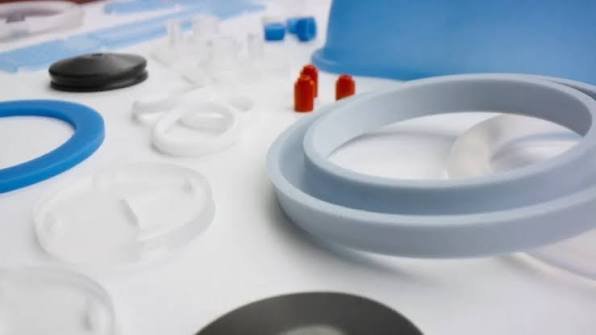
The performance of a medical seal begins during manufacturing. Elastomer mixing, molding, curing, trimming, cleaning, inspection, packaging, and storage can all influence final performance.
Important manufacturing controls may include:
• Compound identification
• Batch traceability
• Cure control
• Mold condition
• Dimensional inspection
• Surface inspection
• Flash control
• Hardness verification
• Cleaning control
• Packaging integrity
• Environmental storage conditions
For medical devices, supplier qualification and change control can also be critical. A change in polymer supplier, curing system, pigment, processing aid, molding process, or manufacturing location may potentially affect material behavior and therefore should be assessed through the appropriate quality system.
Installation of Medical Device Seals
Installation can determine whether a correctly designed seal actually performs as intended.
1. Clean the mating surfaces. Remove particles, machining debris, and residues according to the device’s validated cleaning process.
2. Inspect the groove. Sharp edges, burrs, scratches, and contamination can damage the seal.
3. Inspect the seal. Look for cuts, flash, deformation, contamination, or dimensional abnormalities.
4. Confirm orientation. Lip seals and directional seals must be installed according to the design.
5. Use compatible assembly lubrication when permitted. The lubricant must not compromise the device or sealing material.
6. Avoid stretching beyond design limits. Excessive deformation can permanently damage some sealing geometries.
7. Prevent twisting. Twisted O-rings can create localized leakage paths.
8. Control assembly force. Excessive force may damage components or create inconsistent seating.
Storage and Shelf Life of Medical Seals
Elastomeric seals can age even when they are not installed. Exposure to heat, ozone, ultraviolet radiation, oxygen, humidity, and incompatible chemicals can influence material properties.
Storage requirements should therefore follow the material and supplier recommendations and the applicable device quality system.
Important considerations include temperature control, protection from direct sunlight, ozone-generating equipment, contamination, mechanical deformation, and packaging conditions.
A seal that has been compressed, folded, stretched, or stored improperly may not perform like a correctly stored component even if its nominal material and dimensions are identical.
How to Select the Right Medical Sealing Solution
A structured selection process helps reduce design mistakes.
Step 1 — Define the sealing function. Determine exactly what must be contained or excluded.
Step 2 — Identify contact conditions. Determine whether the seal contacts a patient, drug, blood, tissue, process fluid, air, gas, or only an external mechanical environment.
Step 3 — Identify movement. Static, reciprocating, rotary, oscillating, or flexing.
Step 4 — Define pressure and vacuum. Include normal operation and credible peak conditions.
Step 5 — Define temperature. Include operating, storage, cleaning, and sterilization conditions where relevant.
Step 6 — Identify chemicals. Include operating fluids, cleaning agents, disinfectants, lubricants, and sterilization agents.
Step 7 — Select material. Evaluate mechanical, chemical, thermal, biological, and manufacturing requirements.
Step 8 — Define geometry. Confirm seal cross-section, groove dimensions, interference, clearance, and surface condition.
Step 9 — Evaluate sterilization. Test the finished sealing system after the intended sterilization process when relevant.
Step 10 — Validate the design. Use representative device-level testing and appropriate acceptance criteria.
Medical Seal Selection Checklist
| Parameter | Key Question |
|---|---|
| Seal type | O-ring, gasket, diaphragm, lip seal, bellows or custom component? |
| Contact | Patient, drug, blood, process fluid, gas or external environment? |
| Movement | Static, rotary, reciprocating, oscillating or flexing? |
| Pressure | What are normal, maximum and cyclic pressures? |
| Temperature | What are operating, storage and sterilization temperatures? |
| Chemistry | What fluids and cleaning chemicals contact the seal? |
| Sterilization | Steam, EtO, radiation or another validated process? |
| Hardness | What hardness provides the required sealing and mechanical behavior? |
| Dimensions | Are groove, seal, bore and shaft tolerances controlled? |
| Particles | Could dynamic wear or processing generate unacceptable particles? |
| Biological safety | What biological evaluation is required? |
| Validation | What device-level verification demonstrates the intended sealing function? |
How Better Sealing Improves Medical Device Reliability
A well-designed sealing system can help maintain pressure, prevent contamination, preserve fluid-path integrity, reduce leakage, and improve the mechanical consistency of the device.
For disposable systems, sealing reliability can contribute to consistent product performance during the defined use period. For reusable devices, seals that maintain their properties through cleaning and sterilization can reduce maintenance requirements and support repeatable operation.
The economic impact can also be substantial. A small sealing component may represent only a fraction of the device cost, but a sealing failure can potentially lead to rejected assemblies, rework, service requirements, recalls, or loss of device functionality.
Common Medical Sealing Mistakes
Choosing a material from a generic compatibility chart without testing. General charts are useful for screening but cannot replace application-specific evaluation.
Assuming “medical grade” means universally suitable. Material suitability depends on the actual device and exposure conditions.
Ignoring sterilization effects. A seal may perform correctly before sterilization and differently afterward.
Using nominal dimensions only. Tolerance stack-up can materially change seal compression and clearance.
Ignoring mating surfaces. A damaged shaft or housing can cause failure even with a correctly specified seal.
Overlooking particles. Dynamic sealing requires consideration of wear and contamination.
Changing seal material without investigating the root cause. Many failures are caused by geometry, assembly, surface finish, or operating conditions.
Expert Tips for Medical Device Seal Design
✓ Design the seal and mating components together. The groove, housing, shaft, surface finish, and seal geometry form one functional system.
✓ Treat sterilization as part of the design environment. Evaluate material and seal performance after the relevant processing cycles.
✓ Separate material screening from final validation. Material data can identify promising candidates, while device-level testing demonstrates actual functional performance.
✓ Control manufacturing variation. A technically excellent seal can fail if production tolerances are not controlled.
✓ Consider the complete fluid environment. Include cleaning, sterilization, storage, and operating fluids rather than only the primary process fluid.
✓ Investigate repeated failures systematically. Look for patterns in dimensions, materials, lots, assembly, equipment, and operating conditions.
✓ Document material and process changes. Changes in elastomer formulation or manufacturing conditions can affect sealing performance.
Medical Seals and Total Cost of Ownership
The purchase price of a seal is rarely the complete economic picture. A more useful conceptual model is:
Total sealing cost ≈ Component cost + Assembly cost + Inspection cost + Failure cost + Rework cost + Service impact
For a complex medical device, a small reduction in component price may not justify an increase in assembly variation or failure risk. Conversely, an expensive material is not automatically the best choice if a less expensive qualified material can satisfy all functional and regulatory requirements.
A strong sealing strategy therefore seeks an appropriate balance between technical performance, manufacturability, supply continuity, validation requirements, and total cost.
Supplier Qualification for Medical Sealing Components
The supplier relationship can be especially important for medical sealing components because formulation and manufacturing consistency can influence final device performance.
A qualification program may evaluate manufacturing capability, quality-system controls, traceability, material documentation, dimensional capability, change notification practices, inspection methods, cleanliness, packaging, and supply continuity.
Where the seal is safety-critical, supplier qualification should be aligned with the device manufacturer’s quality-management and risk-management processes.
Verification and Validation of Medical Sealing Solutions
Verification asks whether the design meets specified requirements. Validation asks whether the finished device meets the needs of its intended use under representative conditions.
For sealing systems, verification may include dimensional inspection, material characterization, pressure testing, leakage testing, friction measurement, chemical exposure, thermal cycling, or sterilization conditioning.
Validation may require testing the complete device under representative user, environmental, and operating conditions.
The exact verification and validation strategy should be established according to the device’s intended use, applicable standards, risk analysis, and regulatory requirements.
Why Root-Cause Analysis Matters
When a seal fails, the visible damage is often only the final symptom. A crack may result from chemical exposure, while the actual root cause is an incorrect material selection. Extrusion may appear to be a seal problem when excessive clearance is actually responsible. Leakage may appear after sterilization even though dimensional change in a plastic housing created the real problem.
A useful failure investigation should therefore examine:
• Seal material and batch
• Seal dimensions
• Groove dimensions
• Mating surface condition
• Assembly process
• Operating pressure
• Operating temperature
• Fluid chemistry
• Sterilization history
• Storage conditions
• Number of operating cycles
• Failure location and morphology
This approach is more likely to identify a sustainable corrective action than simply replacing the failed seal.
A Practical Medical Sealing Design Workflow
Define the intended sealing function. Establish whether the seal must retain liquid, retain gas, exclude contamination, separate fluids, or isolate an internal mechanism.
Map the complete exposure environment. Include operating fluid, cleaning chemicals, sterilization, temperature, pressure, and storage.
Identify patient-contact considerations. Determine whether biological evaluation requirements apply to the seal or its material constituents.
Select candidate materials. Compare elastomer chemistry, hardness, mechanical properties, chemical resistance, thermal performance, and processing suitability.
Design the geometry. Optimize gland dimensions, compression, clearance, surface finish, and installation path.
Assess manufacturing capability. Ensure the seal and mating components can be produced consistently.
Conduct engineering testing. Use material and component testing to identify potential weaknesses.
Verify the design. Demonstrate that specified sealing requirements are met.
Validate the finished device. Confirm performance under representative intended-use conditions.
Control production and changes. Maintain consistency through supplier and manufacturing controls.
The Future of Sealing Solutions in Medical Devices

Medical devices are becoming smaller, more portable, more automated, and more fluidically complex. This trend creates new requirements for sealing components.
Miniaturized devices require tighter dimensional control. Wearable and portable systems may require flexible sealing structures. Automated drug-delivery systems can require highly repeatable dynamic friction. Advanced diagnostic instruments can demand extremely low contamination and particle levels.
Material development is also moving toward improved chemical resistance, lower extractables, better sterilization stability, and more predictable mechanical behavior.
At the same time, medical manufacturers increasingly need strong traceability and process control. The future of medical sealing is therefore not simply about inventing a new rubber compound. It is about integrating material science, precision manufacturing, device engineering, risk management, and validation.
Conclusion: Building Reliable Sealing Solutions in Medical Devices
Reliable sealing is a fundamental part of medical device engineering. Whether the application involves an O-ring in a valve, a gasket in a diagnostic cartridge, a piston seal in a pump, a diaphragm in a respiratory device, or a custom elastomeric barrier in a complex fluid pathway, the sealing component must be considered within the complete device architecture.
The most important variables include material chemistry, hardness, compression, tolerance, surface finish, pressure, temperature, fluid compatibility, sterilization, cleanliness, particle generation, friction, manufacturing consistency, and biological safety.
Standards such as ISO 10993, ISO 13485, ISO 14971, ISO 11607, ASTM D2240, ASTM D395, and ASTM D1414 may be relevant depending on the application, but no single standard can replace application-specific engineering analysis.
The strongest medical sealing strategy begins with the intended function and exposure environment, then connects material selection, seal geometry, manufacturing tolerances, sterilization, verification, validation, and risk management into one controlled process.
For manufacturers and engineers exploring broader Sealing technologies, the same engineering principle remains applicable: the best seal is not simply the one that fits the drawing; it is the one that reliably performs its intended function throughout the defined life of the device.
The case examples, laboratory test procedures, calculations, material ranges, and failure scenarios presented above are illustrative engineering examples or general industry practices. They do not represent fabricated customer information, proprietary factory test data, certified performance claims, guaranteed service-life curves, or regulatory approval. Actual medical device sealing performance must be demonstrated using the specific seal compound, geometry, device configuration, manufacturing process, sterilization method, and intended-use conditions.
5 Frequently Asked Questions About Sealing Solutions in Medical Devices
FAQ 1: What types of seals are commonly used in medical devices?
Common medical sealing components include O-rings, molded gaskets, flat gaskets, diaphragms, lip seals, piston seals, rod seals, valve seals, bellows, PTFE-based seals, and custom elastomeric components. The appropriate type depends on whether the application is static or dynamic and on the pressure, fluid, temperature, sterilization, and contamination requirements.
FAQ 2: Which material is best for medical device seals?
There is no universally best material. Silicone can provide flexibility and useful temperature performance, EPDM is often considered for water and selected sterilization environments, NBR provides useful oil resistance, FKM offers strong performance in many high-temperature and chemical environments, polyurethane can provide high abrasion resistance, and PTFE offers very high chemical resistance and low friction. The final choice must consider the exact formulation, device application, contact conditions, sterilization, and applicable biological and regulatory requirements.
FAQ 3: What standards are relevant to medical device sealing?
Depending on the application, relevant frameworks and standards can include ISO 13485 for medical device quality management, ISO 14971 for risk management, ISO 10993 for biological evaluation, ISO 11607 for packaging of terminally sterilized medical devices, ASTM D2240 for rubber hardness, ASTM D395 for compression set, and ASTM D1414 for rubber O-ring testing. The applicable requirements depend on the specific device and market.
FAQ 4: Why do medical device seals fail?
Typical causes include incorrect material selection, chemical incompatibility, excessive compression, insufficient compression, dimensional variation, extrusion, poor surface finish, installation damage, excessive friction, thermal aging, sterilization effects, contamination, particle generation, and mating-component deformation. Root-cause analysis should examine the entire sealing system rather than assuming the elastomer itself is defective.
FAQ 5: How can medical device seal reliability be improved?
Start with a clearly defined sealing function and complete operating environment. Select a suitable material, control hardness and dimensions, optimize gland geometry and surface finish, evaluate chemical and sterilization compatibility, control manufacturing variation, use appropriate installation methods, and perform representative verification and validation. For critical applications, the seal should be evaluated as part of the complete medical device rather than as an isolated component.