EPDM rubber is one of the most widely used elastomers for water, steam, outdoor, and weather-exposed sealing applications.
Its strong resistance to ozone, UV radiation, weathering, hot water, and many polar chemicals makes it valuable for O-rings, gaskets, hoses, pipe seals, and industrial components. However, EPDM is not a universal oil-resistant rubber. Its limitations with petroleum-based oils and hydrocarbons are just as important as its strengths when selecting a sealing material.
In practical sealing applications, the most important question is not simply whether EPDM is “good” or “bad.” The correct question is whether the specific EPDM compound can maintain sealing force and dimensional stability under the actual combination of temperature, fluid, pressure, movement, and environmental exposure.
This distinction matters because EPDM is available in many formulations. Two EPDM O-rings may share the same polymer family and hardness while having different compression-set performance, cure systems, temperature limits, regulatory approvals, and chemical resistance.
Engineering takeaway:
EPDM is usually a strong candidate for water, steam, ozone, weathering, glycol-based fluids, and many polar chemicals. It is generally a poor starting point for petroleum oils, mineral-oil lubricants, and many hydrocarbon fuels unless compound-specific compatibility has been established.
What Is EPDM Rubber?
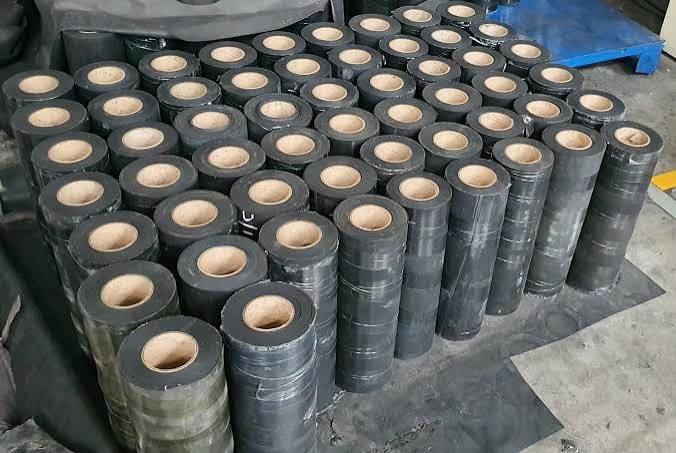
EPDM stands for ethylene propylene diene monomer. It is a synthetic elastomer produced from ethylene, propylene, and a diene component. The diene provides sites that allow the polymer to be crosslinked while retaining the chemical stability associated with the ethylene-propylene backbone.
In the sealing industry, EPDM is commonly used where resistance to environmental aging and water-based media is more important than resistance to petroleum hydrocarbons. ASTM D1418 places EPDM and related ethylene-propylene rubbers within its standardized rubber nomenclature system.
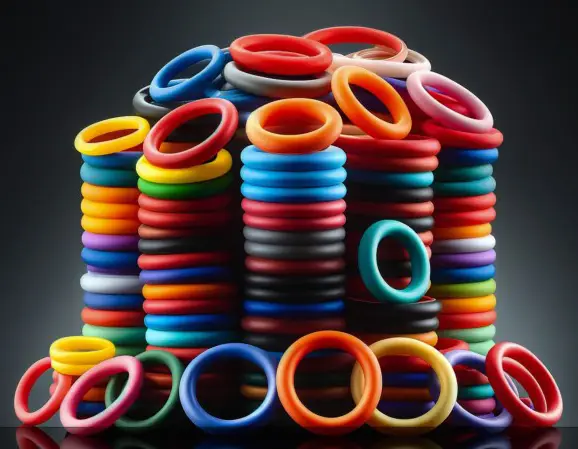
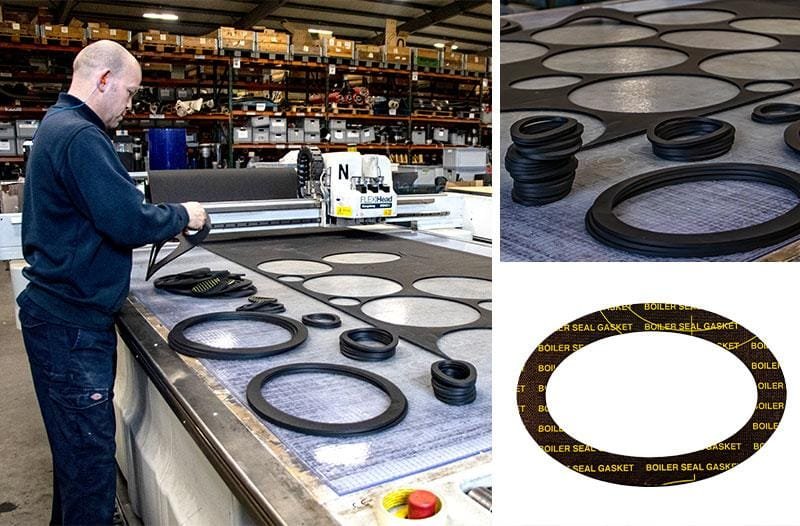
EPDM is found in many forms, including O-rings, radial seals, gaskets, diaphragms, hoses, bellows, pipe seals, cable protection, and molded rubber components. The same polymer family can therefore be engineered for very different applications.
Why Is EPDM Widely Used for Sealing?
EPDM’s popularity comes from a combination of properties rather than one isolated performance characteristic. For many outdoor and water-based applications, the material provides a useful balance of temperature capability, flexibility, chemical resistance, aging resistance, and cost.
Weather Resistance
Strong resistance to ozone, UV exposure, sunlight, and long-term outdoor weathering.
Water & Steam
Many EPDM compounds perform well with hot water and steam.
Low-Temperature Flexibility
Suitable compounds can retain useful elasticity at substantially sub-zero temperatures.
Chemical Resistance
Good resistance to many acids, alkalis, polar solvents, and water-based chemicals.
Key EPDM Rubber Properties
1. Excellent Ozone and Weather Resistance
Ozone cracking is a major concern for many elastomers exposed to outdoor environments. EPDM has inherently strong resistance to ozone and atmospheric aging, making it particularly useful for seals that remain outdoors for long periods.
This property is important for automotive weather seals, HVAC components, outdoor equipment, roofing systems, electrical cable protection, and exposed industrial gaskets.
2. Strong UV and Aging Resistance
Continuous exposure to sunlight can accelerate cracking, hardening, and loss of elasticity in susceptible rubber compounds. EPDM is widely selected when a seal must remain exposed to sunlight, oxygen, ozone, and changing weather conditions.
Trelleborg describes EPDM as particularly suitable for outdoor applications and notes its resistance to UV radiation, ozone, aging, and severe weather environments.
3. Good Low-Temperature Flexibility
EPDM can maintain useful flexibility at low temperatures, although the actual minimum service temperature depends on the compound and sealing design.
Parker lists specific EPDM compounds with static service ranges extending to approximately -50°C, while its technical handbook notes that EPDM can provide cold flexibility down to approximately -57°C for suitable compounds.
This makes EPDM attractive for outdoor equipment, refrigeration-related components, water systems, automotive applications, and other environments where seasonal temperature changes are significant.
4. Good Resistance to Hot Water and Steam
One of EPDM’s major advantages is its compatibility with hot water and steam. This differentiates it from several oil-resistant elastomers that may not provide the same balance in water/steam service.
Parker documents EPDM compounds for hot water and steam, while Trelleborg also identifies strong performance in hot water and high-pressure steam for selected EPDM products.
5. Resistance to Many Polar Chemicals
EPDM generally performs well with many dilute acids, alkalis, alcohols, ketones, glycol-based fluids, and other polar media. This makes it useful in water treatment, HVAC, chemical handling, and industrial fluid systems.
However, “chemical resistant” should never be interpreted as “resistant to every chemical.” Concentration, temperature, exposure time, pressure, and compound formulation can significantly affect performance.
EPDM Temperature Range: What Can You Really Expect?
There is no single temperature range that applies to every EPDM seal. The operating limit depends on the compound, curing system, fluid, pressure, seal geometry, and whether the application is static or dynamic.
| Reference | EPDM Temperature Information | Important Note |
|---|---|---|
| Parker standard EPDM compounds | Examples around -50°C to +150°C | Compound-specific |
| Trelleborg standard EPDM | Typically around -40°C to +120°C for some products | Product-specific |
| Special EPDM compounds | Can extend beyond standard ranges in selected media | Requires compound qualification |
For example, Trelleborg’s standard EPDM material data includes 70 and 75 Shore A compounds with documented mechanical and compression-set characteristics, while Parker lists multiple EPDM compounds with different hardness and application profiles.
Do not specify an EPDM seal simply as “-50°C to +150°C.”
A professional specification should identify the actual compound and service medium because temperature capability changes with the operating environment.
EPDM Chemical Resistance: Where It Works and Where It Does Not
Chemical compatibility is one of the most important areas where EPDM selection is often misunderstood.
EPDM is generally well suited to water, hot water, steam, many dilute acids, alkalis, glycol-based fluids, phosphate-ester hydraulic fluids, alcohols, ketones, ozone, and weathering, depending on the compound and operating conditions.
On the other hand, EPDM is generally not the preferred material for petroleum oils, mineral-oil lubricants, gasoline, diesel fuel, and many hydrocarbon-based fluids. Parker’s O-Ring Handbook specifically identifies these compatibility limitations and distinguishes EPDM from elastomers intended for hydrocarbon service.
| Medium | Typical EPDM Suitability | Selection Note |
|---|---|---|
| Water | Good | Common EPDM application |
| Hot water | Good to excellent | Compound and temperature dependent |
| Steam | Good | Use a steam-rated compound |
| Glycol-based brake fluid | Good | Common EPDM application |
| Dilute acids / alkalis | Generally good | Concentration and temperature matter |
| Mineral oil | Generally poor / application dependent | Consider NBR or FKM depending on conditions |
| Gasoline / hydrocarbon fuel | Generally unsuitable | Consider fuel-compatible elastomers |
EPDM O-Rings: When Should You Use Them?
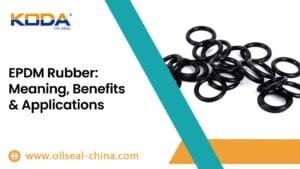
EPDM O-rings are particularly useful when the sealing medium is water-based or chemically polar and the environment includes temperature cycling, ozone, or outdoor exposure.
Common applications include water valves, pumps, HVAC systems, plumbing equipment, water treatment systems, cooling circuits, brake systems using glycol-based fluids, and industrial equipment exposed to weather.
For dynamic O-ring applications, however, material compatibility alone is not enough. Shaft or piston speed, lubrication, squeeze, gland fill, pressure, extrusion clearance, and surface finish must also be evaluated.
EPDM Gaskets and Seals for Outdoor Applications
Outdoor sealing is one of EPDM’s strongest application areas. A gasket exposed to sunlight and ozone may gradually crack if its elastomer is not resistant to atmospheric aging.
EPDM’s inherent ozone and weather resistance makes it useful for building seals, roofing membranes, window and door profiles, HVAC components, automotive weatherstripping, electrical cable protection, and outdoor industrial equipment.
Trelleborg identifies EPDM as particularly suitable for outdoor applications and reports resistance to UV, ozone, aging, and severe weather.
EPDM Applications by Industry
| Industry | Typical EPDM Products | Why EPDM Is Used |
|---|---|---|
| Water & Plumbing | O-rings, pipe seals, gaskets | Water resistance and aging stability |
| HVAC | Gaskets, seals, hoses | Temperature cycling and weather resistance |
| Automotive | Weather seals, hoses, O-rings | Water, ozone, weather and selected fluid resistance |
| Construction | Roofing membranes, gaskets, profiles | Long-term outdoor durability |
| Electrical | Cable jackets, grommets, seals | Environmental stability and insulation |
| Industrial | Gaskets, hoses, seals, O-rings | Water, steam and chemical compatibility |
EPDM vs NBR: Which Rubber Should You Choose?
EPDM and NBR are both common sealing materials, but they are designed for different chemical environments.
| Requirement | EPDM | NBR |
|---|---|---|
| Hot water / steam | Excellent candidate | Usually not the first choice |
| Ozone / weather | Excellent | More limited unless specially formulated |
| Mineral oil | Generally unsuitable | Good |
| Petroleum fuel | Generally unsuitable | Good, compound dependent |
| Outdoor exposure | Excellent | Usually requires additional consideration |
A simple rule is useful: water and weather usually point toward EPDM; petroleum oil and fuel usually point toward NBR or FKM. The final decision should still be based on the actual compound and operating conditions.
EPDM vs FKM: A Common Industrial Sealing Question
FKM is often considered when the application combines high temperature with mineral oils, fuels, or aggressive hydrocarbon fluids. EPDM is generally preferred when water, steam, weathering, and polar chemicals dominate.
The choice should not be made based on temperature alone. If a system contains hot water and steam, EPDM may be highly suitable even at temperatures where another elastomer appears attractive on a catalog temperature chart.
Conversely, if the same system contains hot mineral oil, selecting EPDM simply because its temperature range appears sufficient can result in swelling and loss of sealing performance.
EPDM vs Silicone
Both EPDM and silicone provide good weather resistance, but their performance profiles are different.
- EPDM: particularly strong for ozone, outdoor exposure, water, steam, and many polar chemicals.
- Silicone: excellent temperature flexibility and useful electrical and hygienic properties.
- EPDM: usually the more practical choice for long-term outdoor water-based sealing.
- Silicone: can be attractive where very high or low temperature flexibility is the dominant requirement.
Neither material should be selected solely because it has a broad temperature range. Fluid compatibility and mechanical requirements still control the final selection.
How to Choose the Right EPDM O-Ring or Seal
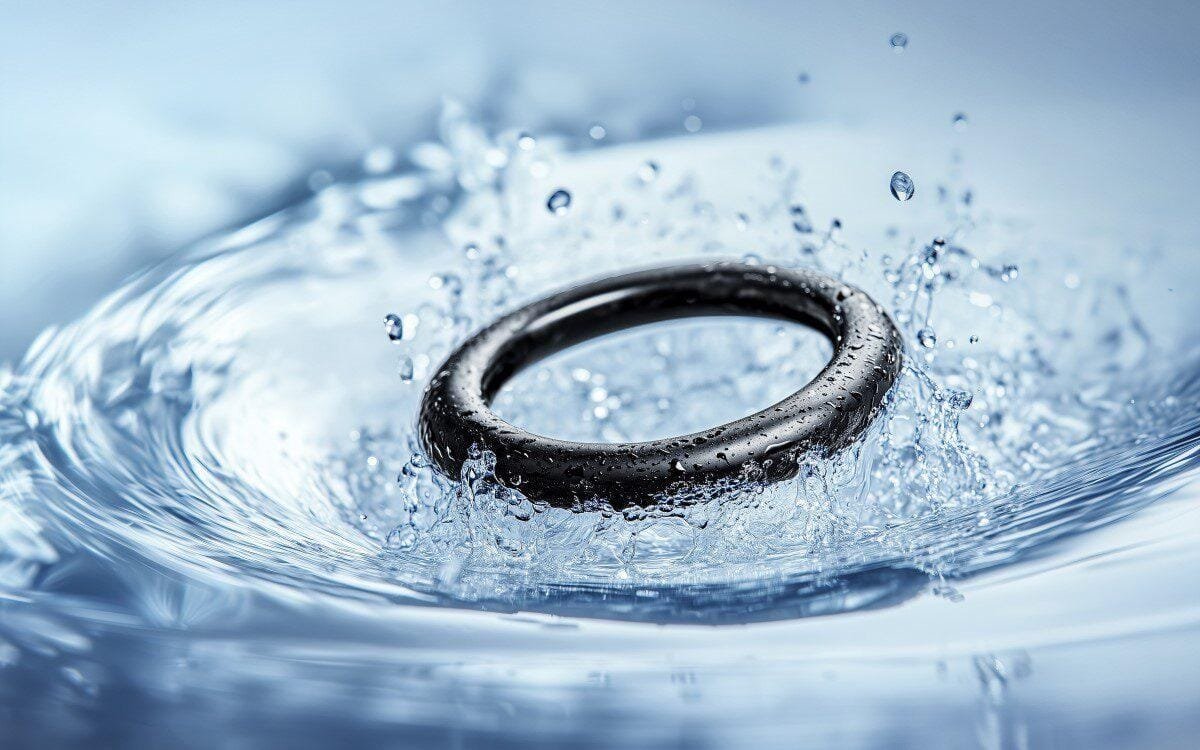
A professional EPDM selection should begin with the service environment.
- Identify the medium. Determine whether the seal contacts water, steam, glycol, brake fluid, acid, alkali, detergent, oil, fuel, or another chemical.
- Determine actual temperature. Record minimum, maximum, and normal operating temperatures rather than relying on a general equipment specification.
- Determine pressure. High pressure can cause extrusion even when the EPDM compound itself is chemically compatible.
- Determine movement. Static, reciprocating, oscillating, and rotary seals require different design considerations.
- Check gland geometry. O-ring squeeze, stretch, gland fill, extrusion gap, and installation clearance must be appropriate.
- Choose hardness. Common EPDM O-rings are available in several Shore A hardness levels. The correct hardness depends on pressure, installation, deformation, and sealing geometry.
- Confirm compound qualification. For critical applications, request the compound specification, test data, and required regulatory approvals.
Why EPDM Seals Fail Prematurely
EPDM failures are often blamed on “poor rubber quality,” but many failures actually result from an application mismatch.
1. Petroleum Oil Exposure
This is one of the most common material-selection errors. EPDM can perform exceptionally well with water while performing poorly with mineral oil. If the wrong medium is used, swelling and loss of mechanical properties can occur.
2. Excessive Compression Set
Compression set occurs when an elastomer does not fully recover after prolonged compression. The result can be reduced contact force and leakage.
Compound formulation, curing system, temperature, compression level, and exposure time all affect compression-set behavior. Trelleborg’s EPDM material data, for example, provides separate compression-set values for sulfur-cured and peroxide-cured grades, demonstrating why the word “EPDM” alone does not define complete performance.
3. Incorrect Hardness
A very soft compound can be vulnerable to extrusion under pressure, while an excessively hard compound may create installation or low-pressure sealing problems. Hardness should therefore be selected together with gland geometry and operating pressure.
4. Chemical Concentration or Temperature Is Higher Than Expected
Compatibility charts should be treated as engineering screening tools rather than universal guarantees. A chemical that is acceptable at room temperature may produce significantly different behavior at elevated temperature or high concentration.
5. Poor Installation
Cuts, twists, excessive stretch, sharp gland edges, contamination, and improper lubrication can cause leakage even when the EPDM material itself is suitable.
EPDM O-Ring Installation Checklist
Before installation
- Verify O-ring size and compound.
- Inspect the gland for burrs and sharp edges.
- Clean the sealing surfaces.
- Confirm the lubricant is compatible with EPDM.
- Check that the installation path does not cut or twist the O-ring.
During installation
- Avoid rolling or twisting the O-ring.
- Use suitable installation tools.
- Do not stretch the seal beyond the recommended installation condition.
- Make sure the O-ring is seated evenly around the entire gland.
Peroxide-Cured vs Sulfur-Cured EPDM
EPDM is not a single formulation. The curing system can affect compression set, heat aging, and application suitability.
Peroxide-cured EPDM is frequently selected where improved heat aging and compression-set performance are important. Sulfur-cured systems remain useful for many general-purpose applications.
Trelleborg’s technical data illustrates this distinction with separate sulfur-cured and peroxide-cured EPDM grades and corresponding physical-property data.
Therefore, when purchasing EPDM O-rings for a critical application, asking only for “70 Shore EPDM” may not provide enough information. The curing system and compound specification may also matter.
EPDM for Food, Drinking Water and Regulated Applications
EPDM is available in specialized grades for food processing and drinking-water applications. However, the polymer family itself should not be confused with regulatory approval.
Parker’s O-Ring Handbook lists specific EPDM compounds with FDA, EC 1935/2004, USP Class VI, and drinking-water-related approvals. Trelleborg likewise offers specialized EPDM products for food and potable-water applications.
Important compliance rule:
Never describe a generic EPDM seal as “FDA approved” or “potable-water approved.” The approval belongs to the specific compound/product and its intended conditions of use.
EPDM Rubber: Advantages and Limitations at a Glance
| Advantages | Limitations |
|---|---|
| Excellent ozone resistance | Poor general compatibility with petroleum oils |
| Strong outdoor weathering resistance | Generally unsuitable for many hydrocarbon fuels |
| Good hot-water and steam performance | Performance varies significantly by compound |
| Good resistance to many polar chemicals | Chemical compatibility must still be verified |
| Good low-temperature flexibility | Not the universal solution for extreme temperature sealing |
| Suitable for many outdoor sealing applications | Hardness, curing system and compound matter |
A Practical EPDM Material Selection Flow
01 — Fluid
What liquid, gas, oil, chemical or cleaning medium contacts the seal?
02 — Temperature
What are the real minimum, normal and maximum temperatures?
03 — Pressure
Is the seal static or dynamic, and what pressure does it experience?
04 — Environment
Is there UV, ozone, water, dust, salt, vibration or outdoor exposure?
05 — Compound
Choose the appropriate EPDM grade, hardness and curing system.
06 — Validation
Verify test data, regulatory requirements and actual application performance.
Frequently Asked Questions About EPDM Rubber
What does EPDM stand for?
EPDM stands for ethylene propylene diene monomer. It is a synthetic elastomer widely used for seals, O-rings, gaskets, hoses, profiles, and outdoor rubber products.
Is EPDM rubber waterproof?
EPDM is highly suitable for many water-sealing applications because of its resistance to water, weathering, ozone, and aging. The exact suitability depends on the compound, temperature, pressure, and application design.
Is EPDM resistant to oil?
EPDM should not generally be selected for petroleum-based oils or hydrocarbon fuels. Its strengths are water, steam, weathering, ozone, and many polar chemicals. If mineral oil or fuel is the primary medium, NBR or FKM may be more appropriate depending on the operating conditions.
Can EPDM be used with gasoline?
Standard EPDM is generally not recommended for gasoline and many hydrocarbon fuels. A fuel-compatible elastomer should be selected instead unless specific compound testing demonstrates suitability.
What temperature can EPDM withstand?
The answer depends on the compound and medium. Parker lists standard EPDM compounds with static temperature ranges around -50°C to +150°C, while specialized formulations can have different limits. Water and steam service may allow different performance than dry-heat service.
Is EPDM better than NBR?
Neither is universally better. EPDM is generally stronger for water, steam, ozone, weathering, and many polar chemicals, while NBR is commonly selected for petroleum oils and fuels. The operating medium should drive the selection.
Is EPDM suitable for O-rings?
Yes. EPDM O-rings are widely used in water systems, HVAC, brake-fluid applications, industrial equipment, outdoor equipment, and other applications where their chemical and environmental resistance is appropriate.
Final Takeaway: When Should You Choose EPDM?
EPDM is a highly capable sealing elastomer, but its value comes from using it in the environment for which it is designed.
If your application involves water, hot water, steam, ozone, UV exposure, outdoor weathering, glycol-based fluids, or many polar chemicals, EPDM should be one of the first materials considered.
If the application involves petroleum oil, mineral oil, gasoline, diesel, or hydrocarbon fuel, do not select EPDM simply because the temperature range appears acceptable. NBR, FKM, or another specialized elastomer may provide a more suitable combination of fluid resistance and mechanical performance.
For OEM and industrial sealing applications, the most reliable approach is to specify the actual compound, hardness, curing system, dimensions, operating medium, temperature, pressure, movement, and regulatory requirements. This turns EPDM selection from a generic material choice into an engineering decision based on measurable service conditions.
For EPDM O-rings, oil seals, gaskets and custom rubber parts:
provide the application medium, temperature range, pressure, movement, dimensions, required hardness, and any applicable industry approval. A sealing manufacturer can then evaluate the appropriate EPDM compound rather than supplying a generic material based only on the product name.