Selecting the correct O-ring size is one of the most critical steps in achieving reliable sealing performance. A perfectly chosen material will still fail if the size is incorrect. Improper sizing can lead to leakage, excessive wear, compression failure, or even system damage. Understanding how to choose the right O-ring size the first time helps reduce downtime, improve efficiency, and lower maintenance costs.
This guide provides a comprehensive, engineering-based approach to O-ring sizing, covering dimensional standards, measurement techniques, tolerance considerations, and practical selection strategies for various applications.
📏 Key Principle: Correct O-ring sizing ensures proper compression, sealing contact, and long-term reliability in both static and dynamic applications.
Understanding O-Ring Dimensions
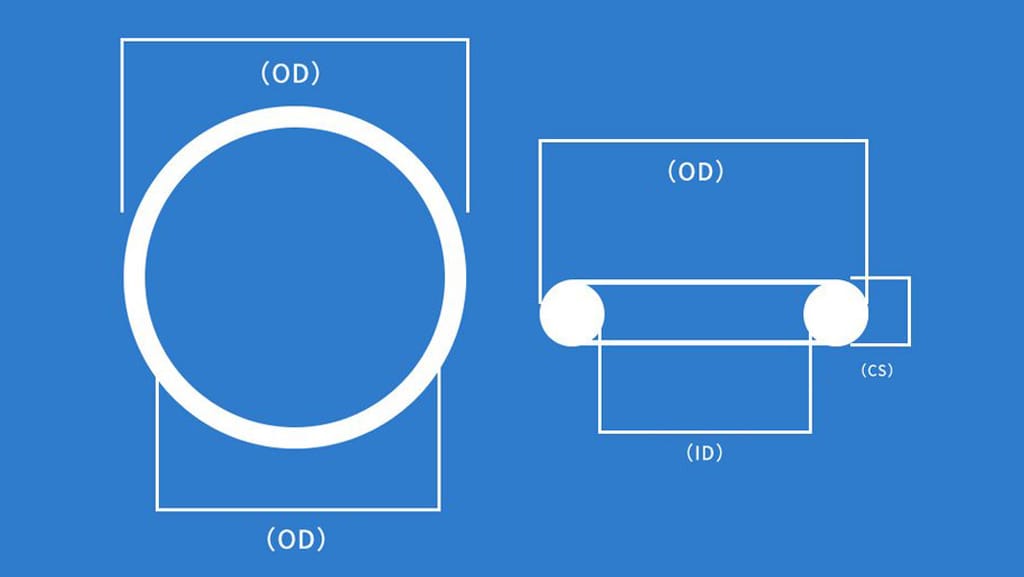
O-rings are defined by two primary dimensions:
- Inside Diameter (ID)
- Cross-Section Diameter (CS)
The inside diameter determines how the O-ring fits onto a shaft or into a groove, while the cross-section defines the thickness of the sealing element.
Choosing the correct O-Ring size ensures proper deformation under compression, which is necessary for effective sealing.
Why Correct O-Ring Size Matters
An improperly sized O-ring can compromise the entire sealing system. Both undersized and oversized O-rings present risks.
Undersized O-Rings
If the O-ring is too small, it may stretch excessively during installation, leading to reduced cross-section thickness and insufficient sealing force.
- Reduced compression
- Increased leakage risk
- Accelerated wear
Oversized O-Rings
If the O-ring is too large, it may not sit properly in the groove, causing uneven compression or extrusion under pressure.
- Poor groove fit
- Seal instability
- Higher extrusion risk
⚠️ Critical Insight: Even small dimensional errors can lead to major sealing failures, especially in high-pressure or dynamic systems.
Standard O-Ring Sizing Systems
O-rings are manufactured according to international standards to ensure consistency and compatibility.
AS568 (Inch Sizes)
The AS568 standard is widely used in North America. It defines standard sizes based on inside diameter and cross-section measurements.
ISO 3601 (Metric Sizes)
ISO 3601 provides global standardization for metric O-ring sizes, commonly used in Europe and Asia.
Understanding these standards helps ensure compatibility when sourcing O-Ring products across different regions.
How to Measure an Existing O-Ring
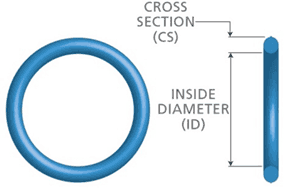
Accurate measurement is essential when replacing an existing O-ring.
Measure Inside Diameter
Use calipers to measure the inner diameter of the O-ring without stretching it.
Measure Cross-Section
Measure the thickness of the O-ring at its cross-section using precision tools.
Check for Deformation
Used O-rings may have expanded or compressed over time, so measurements should be verified against standard size charts.
🔍 Measurement Tip: Always measure multiple points to ensure accuracy and account for potential wear or deformation.
Understanding Groove Design and Its Impact
O-ring sizing cannot be determined independently of groove design. The groove must accommodate the O-ring while allowing proper compression.
Compression Ratio
Compression typically ranges between 15% and 30% depending on the application. Too little compression leads to leakage, while too much can cause excessive wear.
Groove Width and Depth
The groove must provide enough space for the O-ring to deform without being over-constrained.
Stretch and Squeeze
O-rings may be slightly stretched or compressed during installation, but excessive deformation must be avoided.
Selecting the correct O-Ring size requires careful evaluation of both groove geometry and operating conditions.
Factors That Influence O-Ring Size Selection
Pressure Conditions
Higher pressures require tighter sealing and may demand specific cross-section sizes to prevent extrusion.
Temperature Range
Temperature affects elastomer expansion and contraction, influencing dimensional stability.
Media Compatibility
Chemical exposure may cause swelling or shrinkage, altering effective O-ring size during operation.
Application Type
Static and dynamic applications require different sizing considerations due to movement and friction.
🧪 Engineering Insight: Material swelling in certain fluids can effectively change O-ring dimensions, making initial sizing even more critical.
Common Mistakes in O-Ring Sizing
Ignoring Tolerances
Manufacturing tolerances can affect fit and performance. Always consider tolerance ranges when selecting sizes.
Using Incorrect Standards
Mixing metric and inch standards can lead to mismatched sizes and poor sealing performance.
Overstretching During Installation
Excessive stretching can permanently deform the O-ring and reduce sealing effectiveness.
Neglecting Groove Design
Failing to match O-ring size with groove dimensions is a common cause of leakage.
⚠️ Warning: Incorrect sizing is one of the leading causes of premature O-ring failure in industrial applications.
Best Practices for Choosing the Right Size
- Use standardized size charts
- Verify groove dimensions
- Consider operating conditions
- Account for material behavior
- Test under real conditions when possible
Reliable O-Ring selection combines accurate measurement with engineering knowledge and application-specific considerations.
✔️ Best Practice: Always validate O-ring size through testing in critical applications to ensure optimal sealing performance.
Conclusion
Choosing the right O-ring size the first time is essential for achieving reliable sealing performance and avoiding costly failures. By understanding dimensional standards, measuring accurately, considering groove design, and accounting for operating conditions, engineers and technicians can make informed decisions that enhance system efficiency and durability.
Correct sizing ensures proper compression, minimizes leakage risk, and extends service life. Combined with high-quality materials and proper installation, selecting the right O-ring size is a fundamental step toward optimal sealing performance.
Investing time in precise sizing and selection of O-Ring components leads to improved reliability, reduced maintenance, and long-term operational success.
FAQ: How to Choose the Right O-Ring Size the First Time
1. What are the two main dimensions of an O-ring?
The two main dimensions are the inside diameter (ID) and the cross-section diameter (CS).
2. Can I reuse an old O-ring for measurement?
It is not recommended, as used O-rings may have deformed and provide inaccurate measurements.
3. How much compression should an O-ring have?
Typical compression ranges from 15% to 30%, depending on the application.
4. Why is groove design important in O-ring sizing?
The groove determines how the O-ring deforms and seals, making it essential for proper fit and performance.
5. What happens if an O-ring is too large?
An oversized O-ring may not fit properly in the groove, leading to uneven compression and potential leakage.