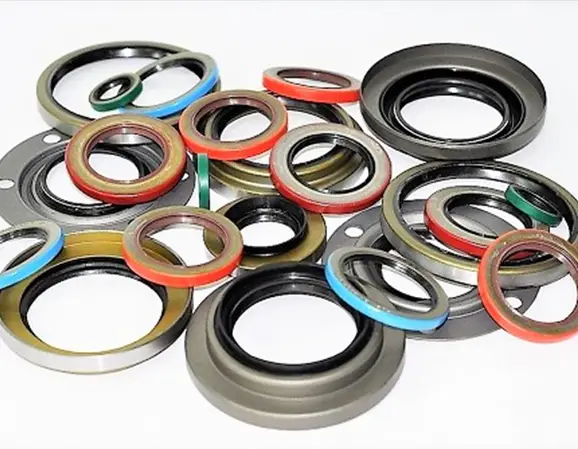
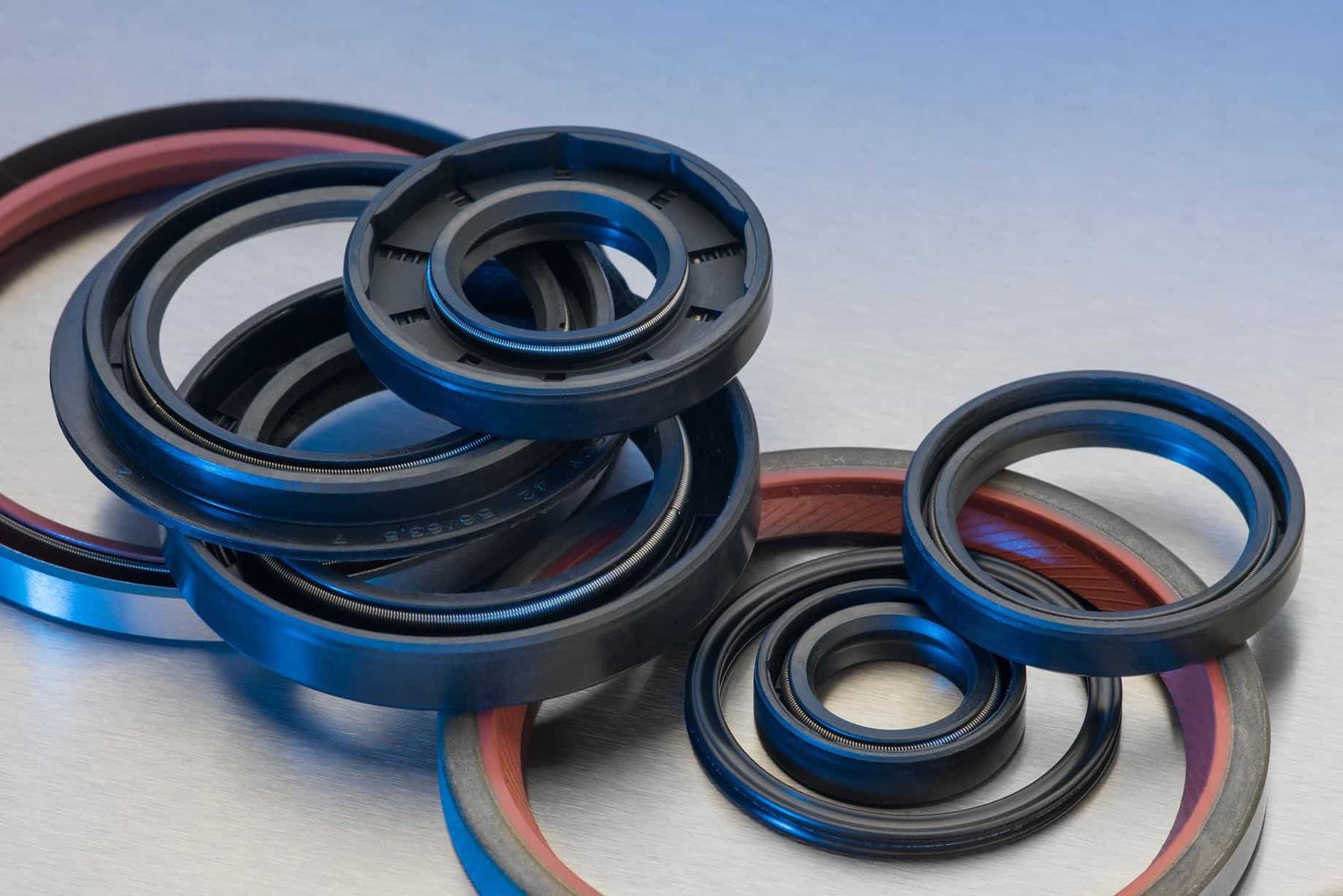
A National oil seal is not a special type of rubber.
National is a recognized sealing-product brand associated with rotary shaft sealing solutions. When replacing a National seal, the most important task is not simply finding another seal that “looks the same.” The replacement must match the shaft diameter, housing bore, seal width, lip configuration, material, operating medium, speed, temperature, and installation requirements.
Oil seals are relatively small components, but their influence on rotating machinery is much larger than their physical size suggests. A correctly selected shaft seal keeps lubricant inside the housing while limiting the entry of water, dust, abrasive particles, and other contaminants. If the seal fails, the resulting oil loss or contamination can accelerate bearing wear, increase friction and heat, and eventually contribute to equipment downtime.
The term National oil seal is frequently used by maintenance teams, distributors, and aftermarket buyers when searching for replacement shaft seals. However, a National part number should not be treated as a universal dimensional specification. A reliable replacement requires verification of the complete sealing application.
The practical takeaway:
If you have a National seal number, use it as the starting point for identification. Then verify the actual seal dimensions and operating requirements before purchasing a replacement.
What Is a National Oil Seal?
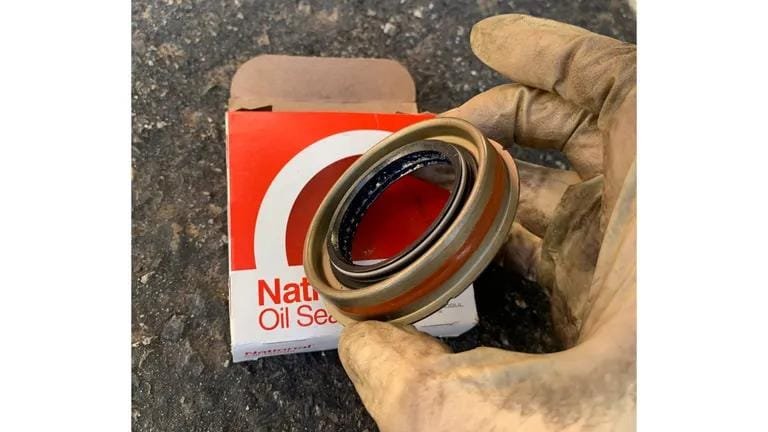
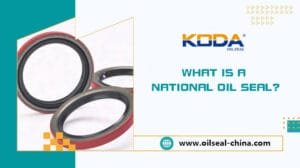
A National oil seal is a rotary shaft sealing component designed to control lubricant leakage around a rotating shaft while helping prevent external contaminants from entering the equipment.
National seals are associated with applications ranging from automotive and power transmission equipment to industrial machinery and other oil-lubricated systems. The current Timken oil-seal portfolio includes a broad range of designs and specifically provides access to a National Industrial Seal Catalog.
In engineering terminology, these products are often described as rotary shaft seals, oil seals, or radial shaft seals. The terminology can vary between industries and manufacturers, but the basic purpose remains similar: maintain a controlled sealing interface between a rotating shaft and a stationary housing.
Why Are Oil Seals Important?
A rotating shaft normally passes through a housing containing oil or grease. The shaft must rotate freely, but the lubricant must remain inside the housing. At the same time, the outside environment may contain dust, water, mud, metal particles, or chemical contaminants.
The oil seal creates a controlled barrier between these two environments.
Lubricant Retention
Keeps oil or grease inside the bearing, gearbox, hub, pump, or other lubricated assembly.
Contaminant Exclusion
Helps prevent water, dirt, dust, and abrasive particles from reaching internal components.
Lubrication Protection
By controlling leakage and contamination, the seal helps maintain the intended lubrication condition.
Timken describes its oil seals in exactly this functional context: retaining lubrication and blocking contaminants to protect bearings and gears. In demanding applications, lubricant loss and contamination can contribute to overheating, premature wear, and downtime.
How Does a National Oil Seal Work?
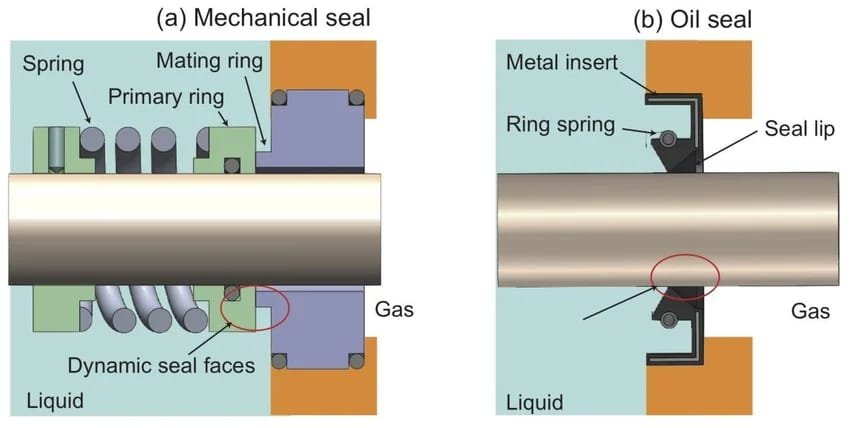
A typical radial shaft seal contains several functional elements working together rather than relying on a simple rubber ring.
1. Sealing Lip
The primary sealing lip forms a controlled contact zone against the rotating shaft. The lip is designed to maintain sufficient radial contact to restrict lubricant leakage without creating excessive friction.
2. Garter Spring
Many conventional oil seals use a garter spring around the primary sealing lip. The spring helps maintain radial loading as the elastomer experiences dimensional changes, wear, and thermal effects.
3. Outer Case
The metal or polymer case provides structural support and establishes the relationship between the seal and housing bore. Depending on the design, the outer diameter may be covered with elastomer or use a metal-clad configuration.
4. Secondary or Excluder Lip
Some double-lip designs include a secondary lip intended to provide additional protection against external contaminants. This can be useful in dirty, wet, or dusty environments, although the additional lip also affects friction and installation requirements.
Important:
A double-lip seal is not automatically better than a single-lip seal. The correct configuration depends on whether the application prioritizes lubricant retention, contamination exclusion, separation of two fluids, friction reduction, or another operating requirement.
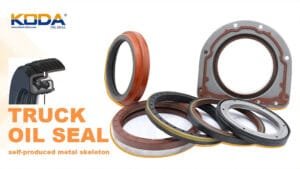
Common Types of National Oil Seals
National sealing products are available in different configurations because rotating machinery does not operate under one universal set of conditions.
| Seal Configuration | Typical Purpose | Key Consideration |
|---|---|---|
| Single-lip seal | General lubricant retention | Lower friction and simpler sealing configuration |
| Double-lip seal | Lubricant retention plus contaminant exclusion | Additional lip changes friction and lubrication requirements |
| Metal-cased seal | Rigid housing interface | Housing condition and installation accuracy are important |
| Rubber-covered OD | Improved housing conformity | Useful where housing surface or corrosion considerations matter |
| Special-purpose seal | High speed or specialized applications | Must be selected according to application-specific requirements |
National Oil Seal vs Generic Oil Seal
A common misunderstanding is that every oil seal with the same three dimensions is functionally identical. In reality, two seals with the same shaft diameter, housing diameter, and width can have different lip geometries, elastomer compounds, spring arrangements, case designs, or operating limits.
For example, changing from a single-lip seal to a double-lip seal can increase contamination protection but may also increase friction. Similarly, changing from NBR to FKM can alter temperature and chemical resistance, but the new material still has to be compatible with the shaft speed, pressure, lubrication, and dynamic conditions.
Therefore, a generic replacement should be evaluated based on functional equivalence, not appearance alone.
How to Read a National Oil Seal Number
National part numbers should be treated primarily as product identifiers. The exact interpretation depends on the product family and catalog, so it is unsafe to assume that every character follows one universal dimensional coding system.
When identifying a replacement, record the following information from the original seal:
- Brand: National or another manufacturer.
- Part number: The complete number printed or molded on the seal or packaging.
- Shaft diameter: The diameter of the rotating shaft at the sealing surface.
- Housing bore: The actual diameter of the seal installation bore.
- Overall width: The available axial installation space.
- Lip arrangement: Single lip, double lip, excluder lip, or specialized geometry.
- Material: NBR, FKM, ACM, PTFE, or another specified compound.
- Operating environment: Oil type, temperature, speed, pressure, water, dust, and chemical exposure.
Do not order from a partial number.
A missing suffix, prefix, dimensional detail, or application-specific designation can result in a seal that fits physically but does not perform correctly in service.
National Oil Seal Cross Reference: What Should You Verify?
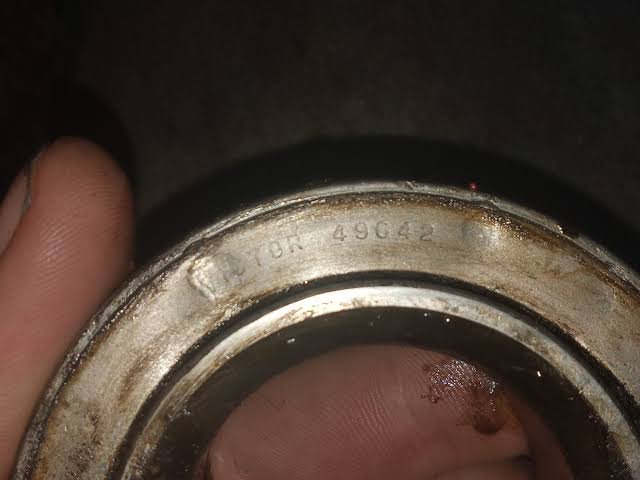
Cross-reference searches are extremely useful when an original National seal is unavailable. However, a cross-reference should be treated as a technical verification step rather than a guarantee that every product is identical.
Different manufacturers may use different materials or sealing geometries for products that are listed as equivalents. Before approving a substitute, compare at least the following:
Dimensions
Shaft × housing × width
Material
Elastomer and temperature capability
Lip Design
Primary and secondary sealing geometry
Speed
Maximum shaft speed and surface velocity
Fluid
Oil, grease, fuel, coolant or process medium
Environment
Dust, water, mud, chemicals and temperature
This approach is particularly important for industrial equipment where an apparently interchangeable seal may have significantly different service-life characteristics.
National Oil Seal Materials
The elastomer is one of the most important factors determining whether a replacement seal will survive its operating environment.
NBR — Nitrile Rubber
NBR is widely used for general oil and grease sealing because it provides a practical balance of oil resistance, mechanical properties, wear resistance, and cost. It is a common starting point for conventional petroleum-based lubricant applications.
FKM — Fluoroelastomer
FKM is frequently considered when the seal is exposed to higher temperatures, fuels, oils, or more demanding chemical environments. The exact performance depends on the specific compound, so the generic term “FKM” should not be treated as a complete material specification.
ACM — Polyacrylate
ACM can be useful in selected automotive and high-temperature oil applications. Its suitability depends on the lubricant, temperature, dynamic conditions, and compound formulation.
PTFE
PTFE-based rotary seals are used where chemical resistance, low friction, temperature capability, or specialized operating conditions justify a different sealing architecture. They should not simply be substituted for an elastomeric seal without checking shaft finish, installation method, and seal design.
Material selection rule:
Choose the compound according to the actual fluid and temperature combination. “Oil resistant” is not a sufficient material specification because different oils, additives, fuels, and operating temperatures can produce very different results.
How to Choose the Correct National Oil Seal Replacement
A reliable replacement process can be divided into six stages.
Step 1 — Identify the Equipment
Record the machine manufacturer, model, component location, and application. A wheel hub seal, gearbox seal, pump seal, and engine seal may have completely different requirements even when their dimensions appear similar.
Step 2 — Measure the Seal
Measure the inside diameter, outside diameter, and width using suitable measuring equipment. If the old seal is damaged, measure the shaft and housing rather than relying entirely on the distorted seal.
Step 3 — Inspect the Shaft
A new seal cannot compensate for a damaged sealing surface. Check for grooves, corrosion, burrs, excessive roughness, eccentricity, or a wear track created by the previous seal.
Step 4 — Identify the Medium
Determine exactly what the seal contacts. Engine oil, gear oil, hydraulic oil, grease, fuel, coolant, and process fluids can require different elastomers.
Step 5 — Check Operating Conditions
Record shaft speed, pressure, temperature, duty cycle, contamination, and whether the shaft rotates continuously or intermittently.
Step 6 — Verify the Replacement
Compare the proposed replacement against the original seal specification, not just the external appearance. For critical applications, request dimensional and material documentation from the supplier.
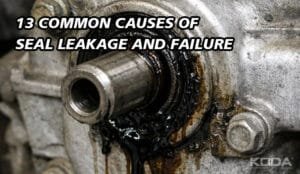
Why a Correctly Sized Oil Seal Can Still Leak
One of the most frustrating maintenance problems is installing a seal with apparently correct dimensions and still experiencing leakage. This usually indicates that the sealing environment, rather than the nominal size, has not been addressed.
Damaged Shaft Surface
A groove worn into the shaft can create a leakage path beneath the sealing lip. Installing another identical seal in exactly the same position may reproduce the same problem.
Incorrect Installation
Tilting the seal during installation can distort the lip or outer diameter. Excessive installation force can damage the case or sealing element.
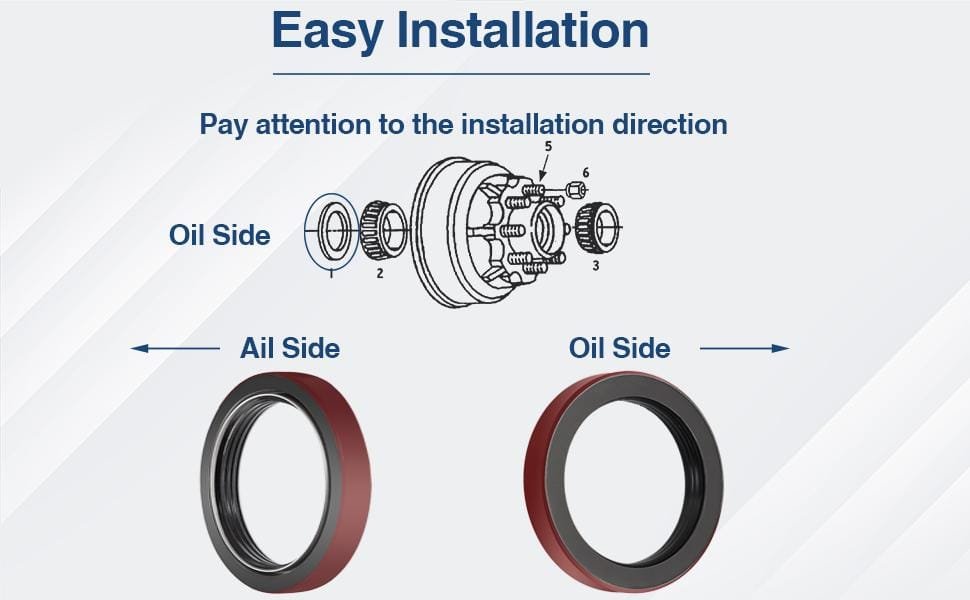
Wrong Lip Direction
A conventional primary sealing lip must be oriented toward the medium it is intended to retain. Installing the seal backward can result in immediate or premature leakage.
Excessive Shaft Runout
Radial runout or eccentricity can cause the shaft to move relative to the lip during rotation. At higher speeds, this can prevent the sealing interface from maintaining stable contact.
Excessive Pressure
Conventional rotary shaft lip seals are generally intended for low-pressure sealing. If the housing is pressurized beyond the seal’s design capability, lip deformation and leakage can occur.
ISO 6194-1 specifically describes rotary shaft lip-type seals with elastomeric sealing elements and notes that these seals are intended for low-pressure conditions. The standard also addresses nominal seal, shaft, and housing dimensions and tolerances.
Installation Tips for National-Type Rotary Shaft Seals
- Clean the housing bore and shaft. Remove dirt, old sealant, rust particles, and burrs.
- Inspect the shaft sealing track. Look for grooves, corrosion, and abnormal wear.
- Protect the sealing lip. Do not drag the lip across sharp splines, keyways, or threads.
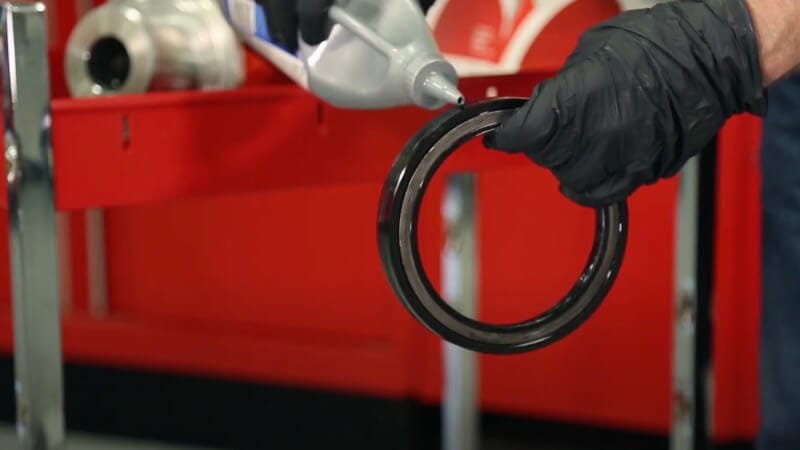
- Lubricate where required. Use a lubricant compatible with the seal material and operating medium.
- Install squarely. The seal should enter the housing evenly rather than at an angle.
- Use an appropriate installation tool. Apply force to the correct part of the seal rather than striking the elastomer or lip directly.
- Confirm seating depth. Incorrect axial positioning can place the sealing lip on a damaged or unsuitable shaft track.
National Oil Seals in Automotive and Industrial Applications
Rotary shaft seals are used in a wide range of equipment because rotating shafts frequently require lubrication while remaining exposed to the external environment.
| Industry | Typical Application | Primary Sealing Concern |
|---|---|---|
| Automotive | Engines, transmissions, hubs, differentials | Oil retention, temperature, contamination |
| Agricultural machinery | Axles, hubs, gearboxes | Mud, water, dust and lubricant retention |
| Power transmission | Gearboxes and rotating shafts | Lubrication and shaft speed |
| Manufacturing | Motors, pumps and industrial equipment | Continuous rotation and contamination |
| Off-highway equipment | Construction and heavy machinery | Dust, water, mud, shock and vibration |
When Should You Replace a National Oil Seal?
Visible oil leakage is the most obvious warning sign, but it is not the only indicator of seal deterioration.
- Oil or grease appearing around the shaft or housing
- Repeated lubricant loss between maintenance intervals
- Water or dirt entering a previously protected area
- Abnormal bearing temperature
- Visible wear grooves around the sealing lip
- Hardened, cracked, swollen, or deformed elastomer
- Unusual friction or resistance around the rotating shaft
If a newly installed seal fails rapidly, replacing the seal again without investigating the root cause is usually inefficient. Examine the shaft surface, housing, lubricant, temperature, speed, installation procedure, and seal material before selecting another replacement.
National Oil Seal vs Other Brands: What Really Matters?
When sourcing a replacement, the brand name is only one part of the decision. A technically suitable aftermarket seal may be appropriate when it meets the dimensional and functional requirements of the original application.
However, “same size” does not necessarily mean “same performance.” A qualified comparison should examine:
- Seal dimensions and tolerances
- Elastomer compound
- Lip geometry
- Spring construction
- Case design
- Maximum shaft speed
- Temperature range
- Fluid compatibility
- Contamination and environmental exposure
For OEM or safety-critical equipment, the replacement should also be checked against the customer’s drawing, service manual, or specified material standard.
What Does ISO 6194 Tell Us About Rotary Shaft Seals?
ISO 6194 is useful when discussing rotary shaft seals because it provides a standardized framework for seal dimensions, terminology, and related requirements.
ISO 6194-1:2007 covers rotary shaft lip-type seals incorporating elastomeric sealing elements and specifies nominal dimensions and tolerances for seals, shafts, and housings. The standard is currently confirmed by ISO.
ISO 6194 also includes separate parts covering vocabulary, storage/handling/installation, performance testing, and visual imperfections. This makes the ISO series useful as a technical reference when discussing oil-seal design beyond simple product dimensions.
Frequently Asked Questions
What is a National oil seal?
A National oil seal is a branded rotary shaft sealing product used to retain lubricants and limit contamination around rotating shafts. National products are available in different configurations and sizes for automotive, industrial, and other applications.
Is National an oil seal material?
No. National is a brand/product designation, not an elastomer material. A National seal can use different sealing materials and structural configurations depending on the product.
How do I find a replacement for a National oil seal?
Start with the complete National part number, then verify shaft diameter, housing diameter, width, lip configuration, material, operating temperature, fluid, speed, and environmental conditions. A cross-reference number alone should not be the only verification.
Can I replace a National oil seal with another brand?
In many applications, a functionally equivalent seal from another manufacturer can be considered, but dimensional and performance compatibility should be verified first. Critical applications should follow the original equipment or engineering specification.
Why does a new oil seal leak?
Common causes include a damaged shaft, incorrect installation, wrong seal orientation, incompatible lubricant, excessive pressure, shaft runout, improper seal dimensions, or incorrect material selection.
Are National oil seals available in metric and inch sizes?
Timken’s current oil-seal portfolio includes both inch and metric sizes. When replacing a seal, confirm the actual dimensional system and the required dimensions rather than assuming that a visually similar metric or inch seal is interchangeable.
Final Guide: How to Buy the Right National Oil Seal
A National oil seal should be selected as an engineered sealing component rather than as a generic rubber ring. Its job is to maintain the lubrication condition of the machine while limiting contamination at a rotating shaft interface.
For routine replacement, the fastest identification method is usually to record the complete part number and confirm the three primary dimensions: shaft diameter, housing diameter, and seal width. For more demanding applications, those dimensions are only the beginning.
The final selection should also consider seal geometry, elastomer, shaft speed, temperature, pressure, lubricant, contamination, shaft condition, and installation method. These factors determine whether the replacement will merely fit or will actually provide reliable service.
For replacement or OEM sourcing:
provide the National part number whenever available. If the number is unavailable, provide the shaft diameter, housing bore, seal width, photos of the old seal, application, lubricant, temperature, speed, and equipment model. This information makes it possible to evaluate dimensional and material compatibility before production.