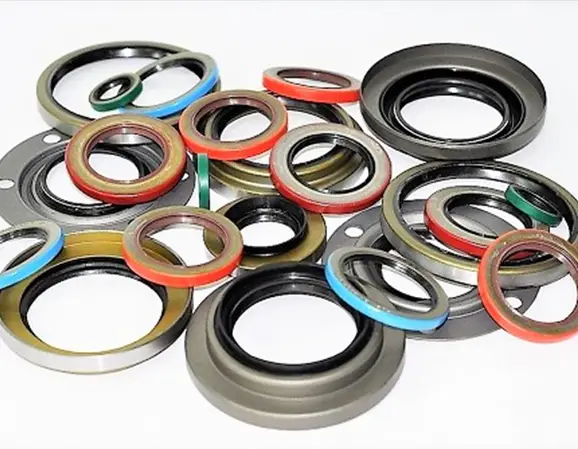
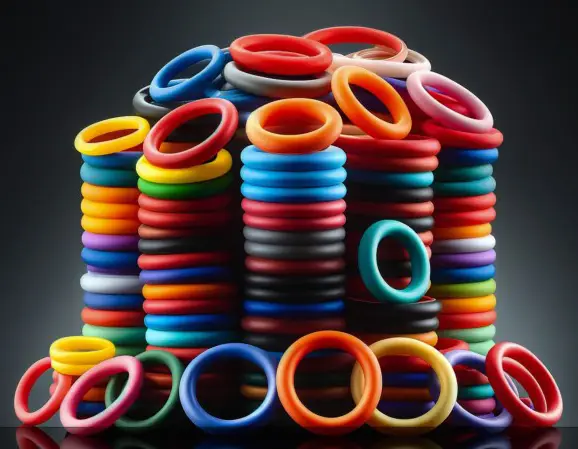
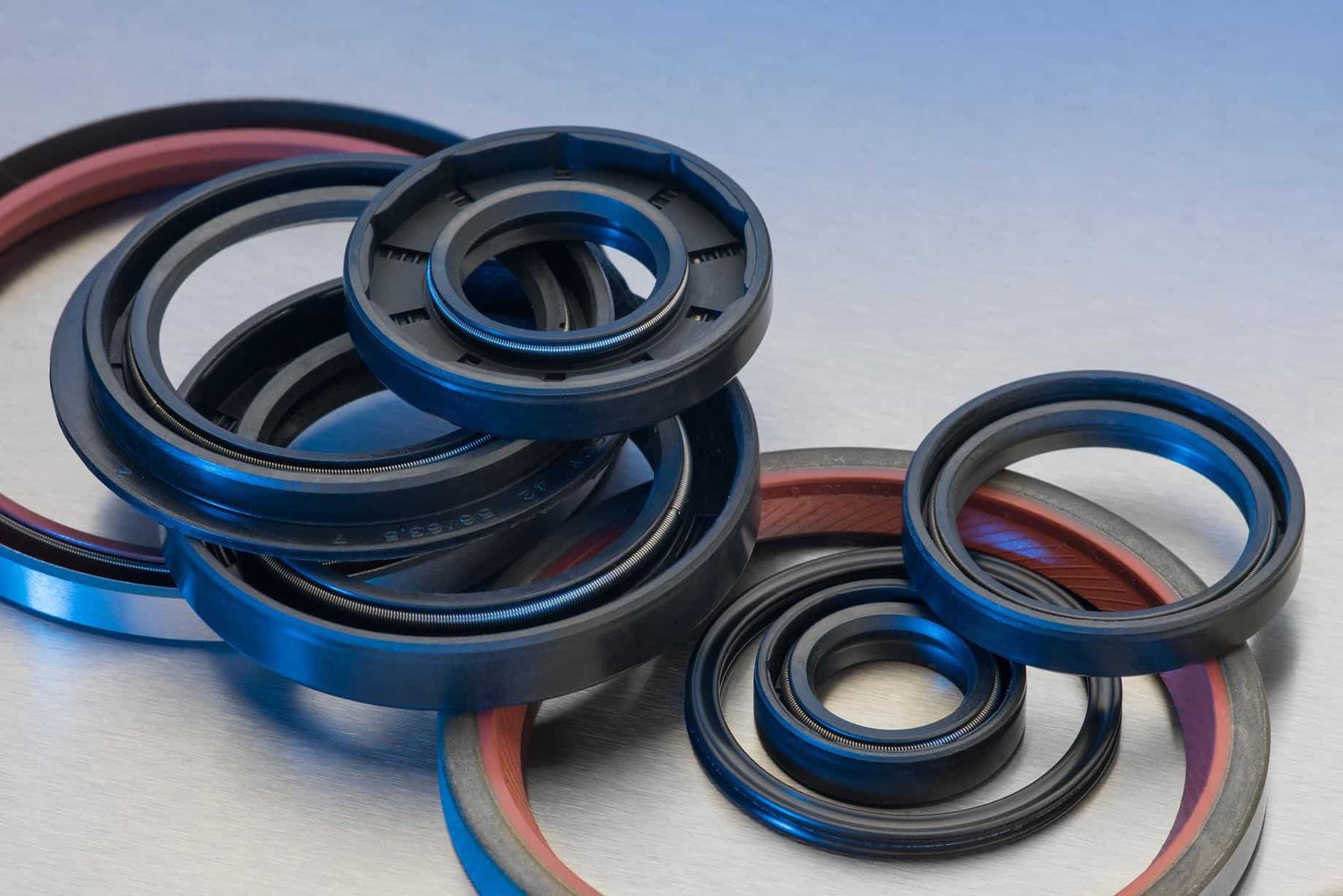
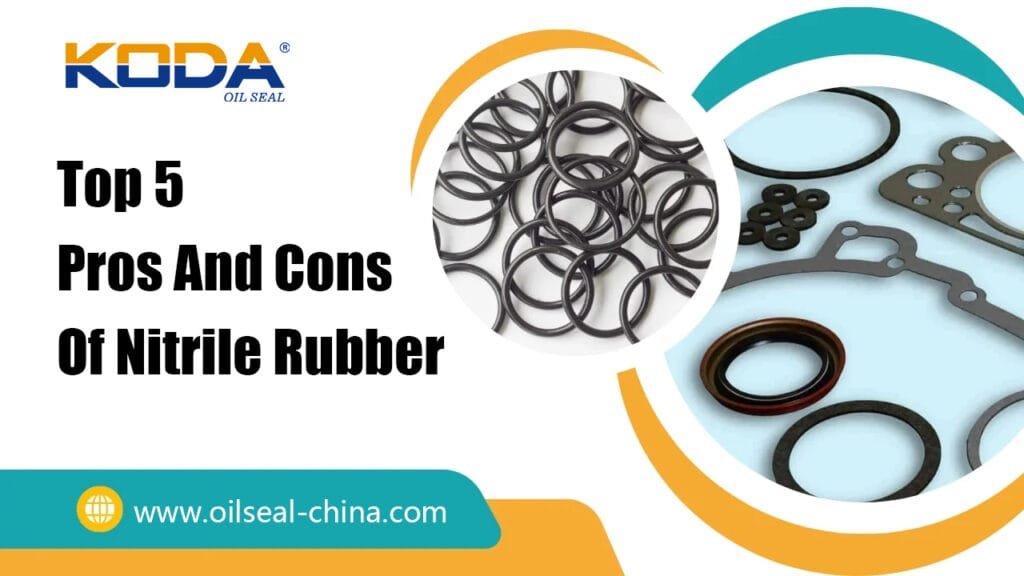
Nitrile rubber, commonly identified as NBR or Buna-N, is one of the most widely used elastomers for oil-resistant sealing applications. It is found in O-rings, oil seals, gaskets, hoses, diaphragms, and other components used in automotive, hydraulic, pneumatic, industrial, and general mechanical systems.
Its popularity comes from a practical combination of oil resistance, mechanical strength, abrasion resistance, flexibility, and cost efficiency. However, NBR is not a universal sealing material. Its performance can change significantly depending on temperature, fluid chemistry, acrylonitrile content, hardness, compound formulation, pressure, and the type of mechanical movement involved.
For this reason, asking whether nitrile rubber is simply “good” or “bad” is not the right engineering question. The more useful question is whether a particular NBR compound is suitable for the actual operating environment.
Engineering takeaway:
NBR is an excellent general-purpose elastomer for many oil and fuel sealing applications, but material selection should always consider the actual fluid, temperature, pressure, speed, environment, and expected service life.
What Is Nitrile Rubber (NBR)?
Nitrile rubber is a synthetic elastomer based on a copolymer of acrylonitrile and butadiene. The balance between these components affects important properties such as oil resistance, flexibility, low-temperature performance, and mechanical behavior.
NBR is classified under the R family of synthetic rubbers in ASTM D1418 terminology. Different NBR compounds can have significantly different performance characteristics, so the term “NBR” alone does not describe one single formulation.
This distinction is important when purchasing industrial seals. Two O-rings may both be identified as NBR while using different compound formulations, hardness levels, fillers, plasticizers, or additives.
Why Is NBR So Common in Sealing Applications?
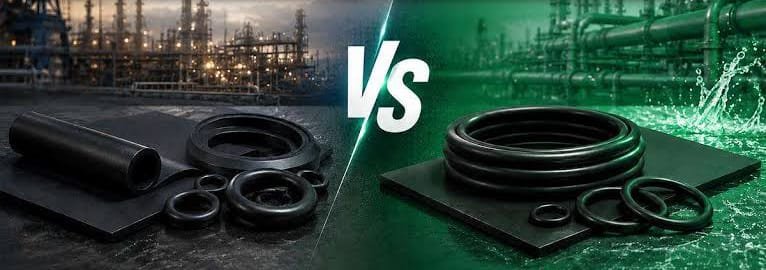
NBR occupies an important position between general-purpose rubber and more specialized high-performance elastomers.
For many applications involving mineral oils, lubricants, hydraulic fluids, and petroleum-related media, NBR can provide a practical balance of chemical resistance, mechanical durability, sealing performance, and manufacturing cost.
It is also available in a wide range of hardness levels and compound formulations, allowing manufacturers to develop NBR O-rings, oil seals, gaskets, and molded rubber components for different operating conditions.
Important:
“NBR” should be treated as a material family rather than a single performance grade. Always request the compound specification when the sealing application is critical.
Key Properties of Nitrile Rubber
The performance of NBR comes from a combination of chemical and mechanical characteristics rather than one isolated property.
| Property | Why It Matters |
|---|---|
| Oil resistance | Helps maintain sealing performance in many lubricant and petroleum-based applications. |
| Abrasion resistance | Useful where seals experience mechanical wear and repeated movement. |
| Mechanical strength | Supports resistance to tearing, deformation, and mechanical stress. |
| Elasticity | Allows the sealing element to maintain contact with mating surfaces. |
| Cost efficiency | Makes NBR practical for large-volume industrial and automotive applications. |
| Low-temperature limitations | The compound must be selected carefully for cold environments. |
Advantage 1: Excellent Resistance to Many Oils and Lubricants
The most important reason NBR is widely used for seals is its compatibility with many oil-based fluids.
This makes NBR particularly useful for engine seals, transmission seals, hydraulic components, O-rings, gaskets, fuel-system components, and industrial machinery exposed to mineral oils and lubricants.
However, “oil resistant” does not mean resistant to every petroleum-derived or synthetic fluid. The exact formulation of the lubricant, additives, temperature, exposure time, and NBR compound can all influence compatibility.
A common purchasing mistake
A buyer may specify “NBR” based only on the fact that the application uses oil. This can be insufficient for demanding applications.
If the fluid contains aggressive additives or operates at elevated temperature, compound-level compatibility should be verified rather than relying on the generic NBR designation.
Advantage 2: Good Mechanical Strength and Wear Resistance
NBR offers a useful combination of tensile strength, abrasion resistance, tear resistance, and resilience.
These properties make it suitable for applications where the sealing element is exposed to repeated mechanical movement or contact.
For example, NBR is commonly used in rotary oil seals and hydraulic sealing components where mechanical durability is important.
The actual performance depends on compound formulation, hardness, temperature, lubrication, surface finish, pressure, and movement speed. Therefore, laboratory physical-property values should not be treated as a direct prediction of service life.
Advantage 3: Wide Range of Available Compounds
NBR can be formulated for different operating requirements. Variations in acrylonitrile content and compound design allow manufacturers to balance oil resistance, flexibility, low-temperature performance, and other characteristics.
For example, an NBR compound optimized for low-temperature performance may not provide exactly the same behavior as a formulation optimized primarily for oil resistance.
This flexibility is one reason NBR remains widely used even though more specialized elastomers are available.
Do not choose by material name alone.
When the application is critical, ask the supplier for the actual compound designation, hardness, temperature capability, fluid compatibility information, and relevant test data.
Advantage 4: Good Abrasion Resistance for Many Applications
Repeated mechanical movement can gradually wear an elastomeric sealing element. NBR’s mechanical properties make it suitable for many applications where abrasion and friction are concerns.
This is one reason NBR is frequently selected for industrial seals, hydraulic components, and automotive sealing systems.
Nevertheless, abrasion resistance should not be considered separately from lubrication and surface condition. A seal running against a damaged shaft can fail rapidly even if the elastomer itself has good wear resistance.
Advantage 5: Practical Cost-to-Performance Ratio
NBR is generally more economical than many high-performance elastomers.
For applications that do not require extreme temperature resistance, exceptional chemical resistance, or specialized environmental performance, NBR can provide a technically appropriate solution without unnecessarily increasing material cost.
This is particularly important for high-volume O-rings, automotive seals, industrial gaskets, and replacement oil seals.
However, choosing the lowest-cost compound is not always the lowest-cost solution. Premature seal failure can create labor costs, equipment downtime, lubricant loss, and secondary component damage.
Limitation 1: NBR Has Temperature Limits
Temperature is one of the most important factors when evaluating NBR.
Different NBR compounds have different temperature capabilities. Parker’s O-Ring Handbook lists different service ranges for general-service and low-temperature nitrile compounds and emphasizes that the actual temperature range can vary depending on the media.
Therefore, avoid using a single temperature number as though it applies to every NBR seal.
What happens when NBR is overheated?
- Accelerated aging
- Hardening
- Loss of elasticity
- Cracking
- Compression set
- Increased leakage risk
If an application consistently operates near the upper temperature limit, a different NBR compound or another elastomer may be more appropriate.
Limitation 2: Low-Temperature Performance Depends on the Compound
Standard NBR should not automatically be considered suitable for extreme cold.
At sufficiently low temperatures, the elastomer can become less flexible and less capable of following surface movement. A static seal may lose its ability to maintain the required sealing force, while a dynamic seal can experience increased friction and reduced flexibility.
Low-temperature NBR formulations are available, but the required compound should be selected according to the actual minimum operating temperature.
Limitation 3: Limited Resistance to Ozone, UV and Outdoor Weathering
NBR is not normally the first choice for prolonged exposure to ozone, intense sunlight, or severe outdoor weathering.
Ozone can attack susceptible elastomers and create surface cracks, particularly when the material is under strain.
If the seal will remain outdoors for long periods, consider whether EPDM, silicone, or another weather-resistant elastomer would provide a better environmental match.
Limitation 4: NBR Is Not Compatible With Every Chemical
NBR’s strong oil resistance should not be confused with universal chemical resistance.
Certain aggressive chemicals, solvents, acids, ketones, and chlorinated hydrocarbons may cause swelling, softening, hardening, cracking, or loss of mechanical properties depending on concentration and temperature.
For chemical applications, the correct selection process should begin with the exact fluid name and concentration rather than simply asking whether the material is “chemical resistant.”
Limitation 5: NBR May Not Be the Best Choice for Extreme Environments
NBR is an excellent general-purpose material, but specialized applications may require specialized elastomers.
High-temperature engine environments, aggressive chemical exposure, prolonged outdoor weathering, steam, hot water, or extreme low-temperature applications may require FKM, EPDM, silicone, HNBR, or another material depending on the actual conditions.
The correct approach is not to find the material with the longest list of advantages. It is to identify the conditions that are most likely to cause failure and choose the compound accordingly.
NBR vs FKM: Which Material Should You Choose?
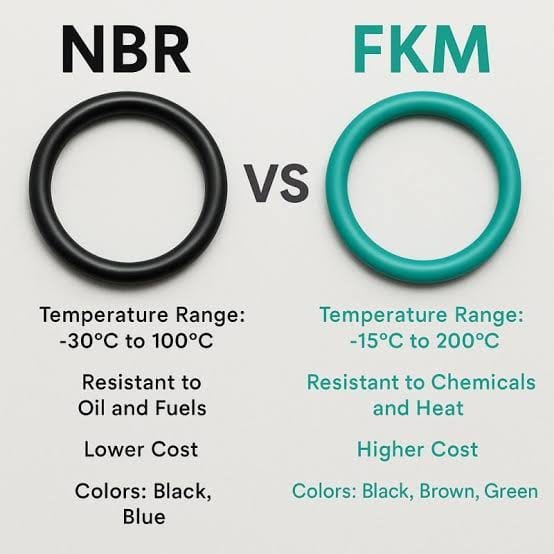
| Factor | NBR | FKM |
|---|---|---|
| Mineral oil resistance | Generally very good | Generally very good |
| High-temperature capability | Moderate; compound dependent | Generally higher |
| Low-temperature flexibility | Good to moderate depending on compound | Compound dependent and not universally superior |
| Ozone/weathering | Limited compared with weather-resistant elastomers | Generally better |
| Typical cost | Often lower | Often higher |
| Typical use | General oil and industrial sealing | Higher-temperature and chemically demanding applications |
The important point is that FKM is not automatically “better” than NBR. If an application is comfortably within NBR’s operating envelope, upgrading to FKM may add cost without providing a meaningful performance benefit.
NBR vs EPDM
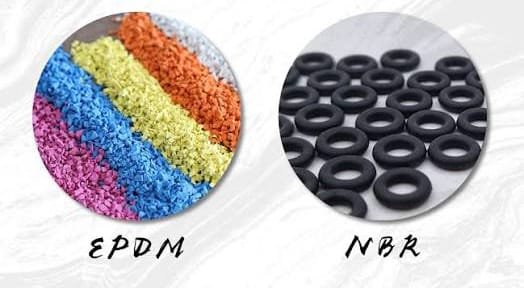
NBR and EPDM are often compared because they occupy different areas of the elastomer selection map.
NBR is generally favored for many petroleum-based oils and fuels, while EPDM is widely selected for applications involving hot water, steam, weathering, ozone, and certain polar fluids.
One of the most important compatibility rules is to avoid assuming that an elastomer that performs well with one fluid will automatically perform well with another.
For example, selecting EPDM simply because it has excellent weather resistance would be inappropriate if the seal must continuously contact a fluid that is incompatible with EPDM.
NBR vs Silicone
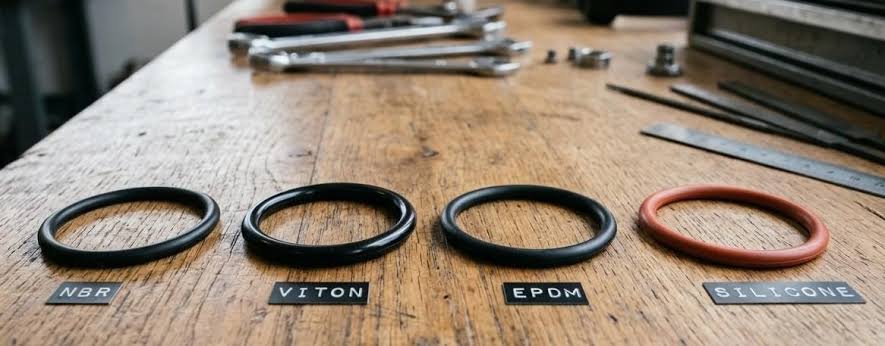
Silicone and NBR solve different engineering problems.
Silicone is known for broad temperature flexibility and good resistance to weathering, ozone, and UV exposure. NBR generally provides stronger resistance to many petroleum-based oils and useful mechanical properties for industrial sealing.
For an oil-filled gearbox, an NBR compound may be a logical starting point. For a high-temperature outdoor static seal, silicone may be considered depending on the fluid and mechanical requirements.
Neither material should be selected based solely on its maximum advertised temperature.
Where Is NBR Commonly Used?
Automotive Seals
NBR is widely used in automotive sealing because many engine, transmission, hydraulic, and fuel-related systems require resistance to oils and petroleum-based fluids.
Typical components include oil seals, O-rings, gaskets, hoses, diaphragms, and other molded rubber parts.
Hydraulic and Pneumatic Systems
NBR can be used in hydraulic and pneumatic sealing systems when the operating fluid, temperature, pressure, and dynamic conditions are compatible with the selected compound.
The exact seal design remains important because an elastomer suitable for static sealing may not provide the required performance in a high-speed dynamic application.
Industrial Machinery
Industrial equipment frequently uses NBR O-rings and gaskets for pumps, valves, cylinders, gearboxes, compressors, and other assemblies.
Oil and Lubrication Systems
Because of its compatibility with many mineral oils and lubricants, NBR is commonly considered for oil seals, shaft seals, and static gaskets in lubrication systems.
How to Select the Right NBR Seal
Choosing an NBR seal should start with the application rather than the material name.
Provide these details when requesting an NBR seal:
- Seal type: O-ring, oil seal, gasket, hydraulic seal, etc.
- Inside diameter, outside diameter, and cross-section where applicable.
- Operating temperature range.
- Fluid or lubricant in contact with the seal.
- Operating pressure.
- Static or dynamic application.
- Rotation speed or reciprocating speed.
- Required hardness.
- Environmental exposure.
- Expected service life.
KODA’s material-selection guidance similarly emphasizes that temperature limits, pressure, and the fluids contacting the seal are fundamental inputs when evaluating elastomer suitability.
What Does Acrylonitrile Content Change?
NBR formulations can differ in acrylonitrile content, and this influences the balance between oil resistance and low-temperature flexibility.
In general, increasing acrylonitrile content tends to improve resistance to many petroleum-based fluids while reducing low-temperature flexibility. Lower-acrylonitrile formulations can provide better low-temperature behavior but may offer a different balance of oil resistance and swelling behavior.
This is why simply specifying “NBR” may be insufficient for demanding applications.
For a critical seal, ask the manufacturer which compound is being supplied and whether the compound has been evaluated against the actual operating fluid and temperature.
NBR Hardness: Does Shore A Matter?
Yes. Hardness affects how an elastomer behaves under compression, extrusion, deformation, and dynamic movement.
A softer NBR compound may provide useful conformity to mating surfaces, while a harder compound can offer greater resistance to extrusion or mechanical deformation under suitable conditions.
However, hardness should never be selected independently from groove dimensions, pressure, temperature, clearance, seal geometry, and movement.
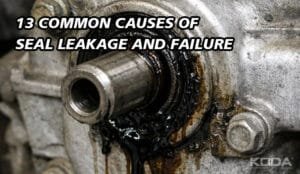
Why Does an NBR O-Ring Fail Prematurely?
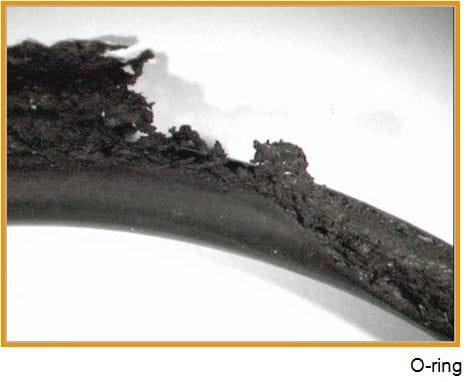
If an NBR O-ring fails earlier than expected, the material itself may not be the root cause.
Common causes include:
- Incorrect groove dimensions
- Excessive compression
- Insufficient compression
- Extrusion caused by pressure and clearance
- Incorrect lubricant
- Excessive temperature
- Fluid incompatibility
- Twisting during installation
- Cutting or nicks during assembly
- Ozone or environmental aging
A good failure-analysis process examines the physical condition of the failed O-ring instead of simply replacing it with another ring of the same material.
Signs of NBR Chemical Incompatibility
Chemical incompatibility can produce several different failure patterns.
- Excessive swelling
- Softening
- Hardening
- Surface cracking
- Loss of tensile strength
- Permanent deformation
- Dimensional changes
- Loss of sealing force
If an NBR seal becomes noticeably swollen after exposure to a fluid, do not simply replace it with a harder NBR compound. First identify the fluid and evaluate whether a different elastomer is required.
When Should You Choose Something Other Than NBR?
NBR may not be the preferred material when the application involves:
- Very high continuous operating temperatures
- Severe ozone exposure
- Long-term outdoor UV exposure
- Specific aggressive chemicals
- Steam or hot-water applications where NBR is unsuitable
- Extreme low-temperature requirements beyond the selected NBR compound
- Highly specialized fuel or aerospace applications
In these situations, materials such as FKM, EPDM, silicone, HNBR, or other specialty elastomers may deserve evaluation.
The correct choice depends on the complete operating environment rather than a generic ranking of elastomer materials.
NBR Material Selection Checklist
Before specifying NBR, ask:
- What fluid will contact the rubber?
- What are the minimum and maximum temperatures?
- Is the application static or dynamic?
- What pressure will the seal experience?
- What is the shaft speed?
- Is the environment exposed to ozone or UV?
- What hardness is required?
- Is low-temperature flexibility important?
- What service life is expected?
- Is a specific compound specification required?
Frequently Asked Questions About Nitrile Rubber
Is NBR the same as nitrile rubber?
Yes. NBR is the commonly used abbreviation for nitrile butadiene rubber, which is also frequently called nitrile rubber or Buna-N.
Is NBR resistant to oil?
NBR generally has good resistance to many mineral oils, lubricants, and petroleum-based fluids. However, compatibility depends on the specific compound, fluid chemistry, temperature, and exposure conditions.
Is NBR suitable for high temperatures?
Some NBR compounds can operate at elevated temperatures, but NBR is not normally selected simply because an application has a high temperature. The actual compound and fluid must be evaluated against the operating temperature.
Is NBR resistant to UV and ozone?
NBR generally has more limited ozone and weathering resistance than elastomers specifically designed for outdoor exposure. For long-term outdoor applications, an alternative material may be more appropriate.
What is NBR commonly used for?
NBR is widely used for O-rings, oil seals, gaskets, hoses, diaphragms, hydraulic and pneumatic seals, automotive components, and industrial sealing parts.
Is NBR better than FKM?
Neither material is universally better. NBR is often a practical choice for many oil-sealing applications, while FKM can be advantageous where higher temperature or particular chemical resistance is required. The correct choice depends on the application.
Can NBR be used for O-rings?
Yes. NBR is one of the most widely used materials for O-rings because it combines useful oil resistance, mechanical properties, availability, and cost efficiency.
Final Considerations: Is NBR Right for Your Application?
Nitrile rubber remains an important engineering elastomer because it provides a useful balance of oil resistance, mechanical durability, flexibility, availability, and cost.
Its limitations are equally important. NBR is not the universal answer for extreme temperature, aggressive chemical exposure, severe ozone environments, or every type of fluid.
For engineers and purchasing teams, the best way to select NBR is to move beyond the simple question of “NBR or not NBR.” Evaluate the actual fluid, temperature, pressure, movement, speed, environment, hardness, dimensions, and expected service life.
For an NBR O-ring, oil seal, or gasket inquiry, provide:
Application + seal type + dimensions + operating temperature + fluid/lubricant + pressure + movement + speed + required hardness.
With these parameters, a sealing manufacturer can determine whether a standard NBR compound is appropriate or whether a modified NBR or alternative elastomer should be considered.