This office is closed on weekends. We are open Monday through Friday at 8:00 AM (Central Standard Time).

+8618730921709 | Hours:8am-6pm csT, Monday-Friday​

Category: Quality

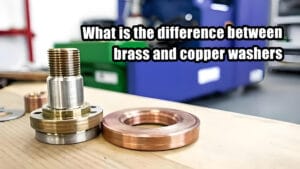
What is the difference between brass and copper washers

What is the difference between brass and copper washers?

Understanding the Material Differences Between Brass and Copper Washers Brass and copper washers are among the most commonly specified sealing and load-distribution components in mechanical engineering, hydraulic systems, automotive assemblies, plumbing equipment, compressors, pumps, and industrial machinery. Although they appear similar because of their metallic appearance, their mechanical properties, sealing behavior, corrosion resistance, hardness, thermal conductivity, and long-term reliability differ

Read More »
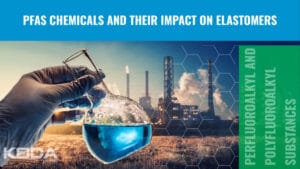
PFAS Chemicals and Their Impact on Elastomers

PFAS Chemicals and Their Impact on Elastomers

Per- and polyfluoroalkyl substances (PFAS) have become one of the most discussed topics in modern manufacturing, environmental compliance, and material engineering. Often referred to as “forever chemicals” because of their exceptional chemical stability and persistence, PFAS have been widely used across industries for decades. In the elastomer sector, PFAS-related materials have played an important role in producing high-performance seals, O-rings,

Read More »
What is a ACM rubber

What is a ACM rubber?

ACM Rubber: The High-Temperature Elastomer Powering Modern Automotive and Industrial Sealing Systems When discussing advanced elastomer materials used in modern sealing technology, ACM rubber is often mentioned alongside NBR, FKM, HNBR, and silicone rubber. Although it may not be as widely recognized outside the sealing industry, ACM rubber has become a critical material for applications requiring excellent heat resistance, oxidation

Read More »
What is a silicone rubber?

What is a silicone rubber?

Understanding Silicone Rubber: The High-Performance Elastomer Behind Modern Sealing Solutions Silicone rubber has become one of the most important elastomer materials used in modern manufacturing, engineering, healthcare, food processing, electronics, automotive systems, and sealing technology. Known for its exceptional temperature resistance, flexibility, weatherability, and chemical stability, silicone rubber has earned a reputation as one of the most versatile synthetic materials

Read More »
Regulatory & Compliance Requirements for Seals by Industry

Regulatory & Compliance Requirements for Seals by Industry

Why Regulatory Compliance Matters in Industrial Sealing Applications In today’s highly regulated manufacturing environment, seals are far more than simple components designed to prevent leaks. Across industries such as food processing, pharmaceuticals, automotive, aerospace, oil & gas, medical devices, and renewable energy, sealing products must comply with strict regulatory and performance standards. Failure to meet these requirements can result in

Read More »
What is Piston oil seal?

What is Piston oil seal?

In modern hydraulic and pneumatic systems, sealing performance directly determines efficiency, reliability, and service life. Among the various sealing components used in cylinders and fluid power equipment, the piston oil seal plays one of the most critical roles. Although often overlooked compared to pumps, valves, and actuators, a piston seal is the key element responsible for maintaining pressure separation, controlling

Read More »
AS568 O-Ring Quality & Compatibility

AS568 O-Ring Quality & Compatibility

The AS568 standard is the most widely recognized sizing specification for O-rings in North America and many international industries. Whether used in hydraulic systems, pneumatic equipment, automotive assemblies, aerospace applications, or industrial machinery, AS568 O-rings provide a standardized approach to sizing that ensures compatibility, interchangeability, and reliable sealing performance. Understanding AS568 standards goes far beyond selecting a size number. Engineers,

Read More »
Bonded Seals for High-Pressure Threaded Connections

Bonded Seals for High-Pressure Threaded Connections

High-pressure threaded connections are widely used in hydraulic systems, pneumatic equipment, industrial machinery, oil and gas installations, and automotive applications. While threaded fittings provide mechanical strength and easy assembly, achieving a reliable leak-free seal under extreme pressure conditions requires specialized sealing solutions. Bonded seals have become one of the most effective and widely adopted sealing technologies for threaded connections because

Read More »
Volumetric Swell vs. Hardness Shift in Elastomers

Volumetric Swell vs. Hardness Shift in Elastomers

Understanding Volumetric Swell vs. Hardness Shift in O-Ring Elastomers In sealing applications, O-rings are widely used due to their reliability and versatility. However, two critical performance factors—volumetric swell and hardness shift—often determine whether an elastomer will succeed or fail in real-world conditions. Understanding how these properties interact is essential for engineers, procurement specialists, and maintenance professionals. What Is Volumetric Swell

Read More »
Thermal Aging vs Chemical Attack Diagnosing Elastomer Seal Failures

Thermal Aging vs Chemical Attack: Diagnosing Elastomer Seal Failures

Understanding Elastomer Seal Failures Elastomer seals, including O-rings, are critical components in modern engineering systems, ensuring leak-proof performance across industries such as automotive, aerospace, oil & gas, and manufacturing. However, these seals are highly susceptible to degradation mechanisms like thermal aging and chemical attack. Accurately diagnosing the root cause of failure is essential to improving reliability and extending service life.

Read More »

Need a quote?

We will respond to your request within two business days.

Find the right product

Scroll to Top