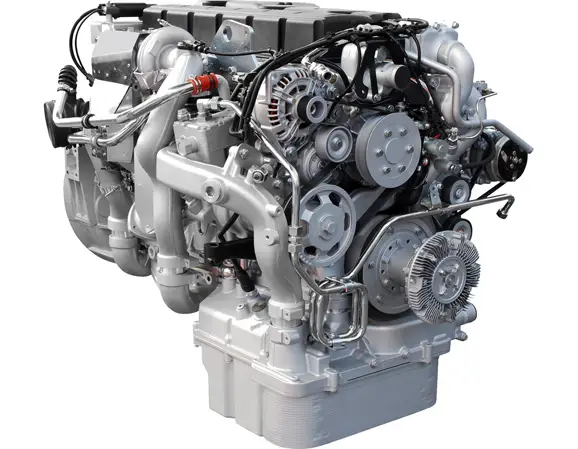
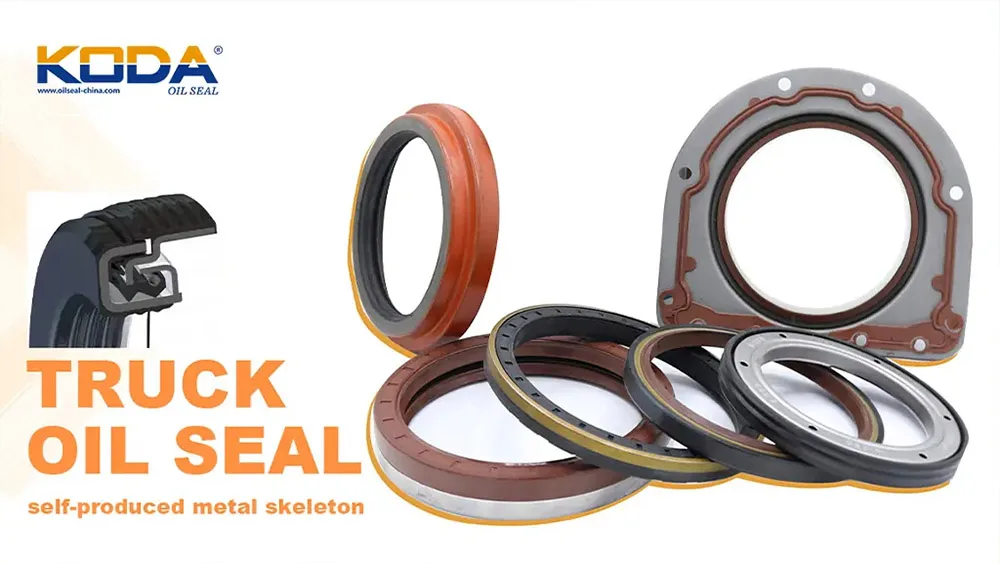
A cassette wheel hub oil seal is designed for a much more demanding environment than a conventional radial shaft seal. Wheel hubs on trucks, trailers, agricultural machines, construction equipment and other off-highway vehicles can be exposed to mud, water, dust, abrasive particles, road debris, vibration and continuous rotation. The sealing system therefore has to retain lubricant while also protecting the bearing and hub assembly from external contamination.
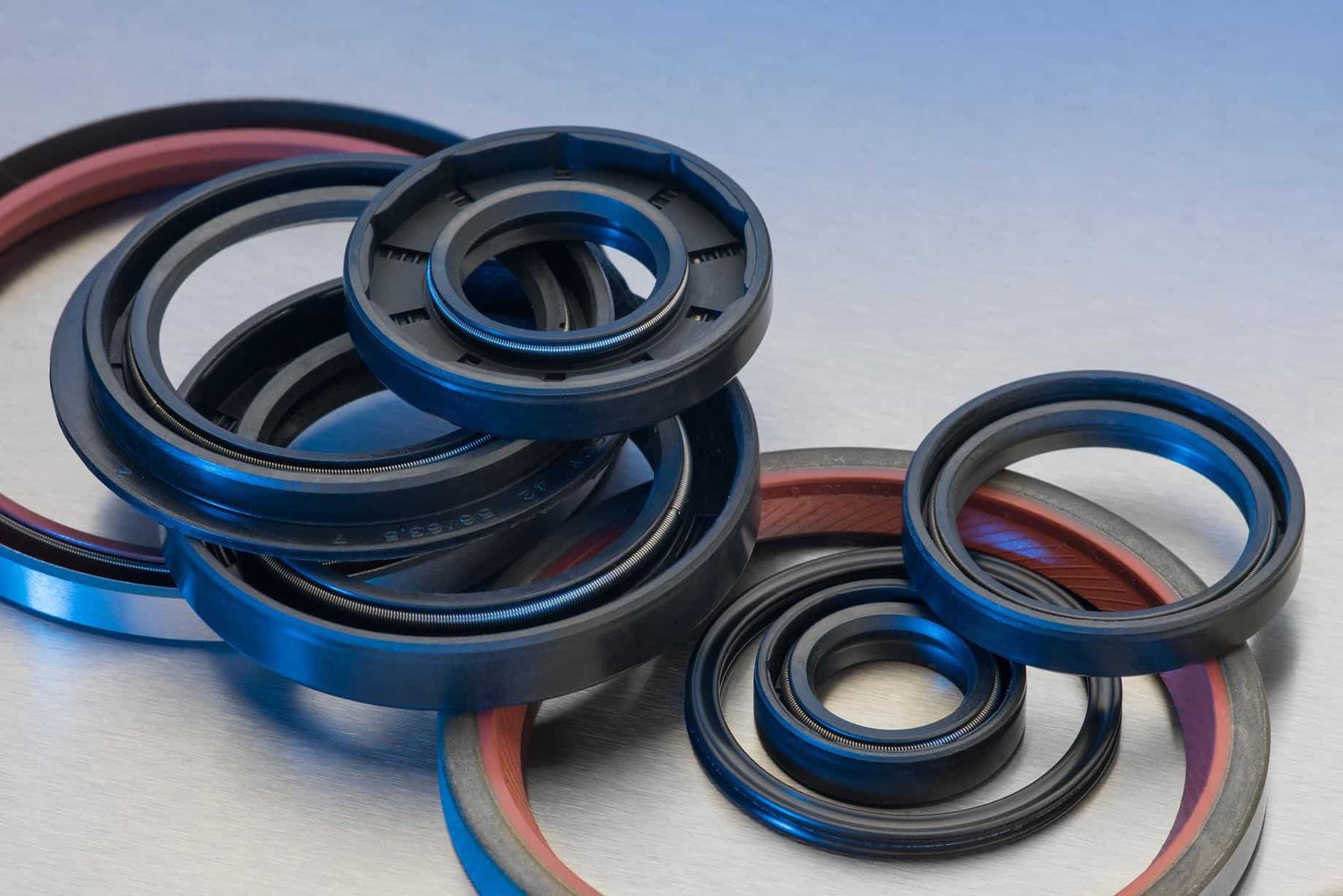
Unlike a simple single-lip oil seal, a cassette seal is typically an integrated sealing assembly consisting of multiple sealing elements and a mating sleeve or ring. The components work together as a system, creating several barriers between the lubricated hub and the external environment.
Key engineering point:
A cassette seal should be selected and installed as a complete sealing system. Matching only the shaft diameter is not enough because the sleeve, sealing lips, installation position, surface condition and lubrication all influence wheel-end reliability.
What Is a Cassette Wheel Hub Oil Seal?
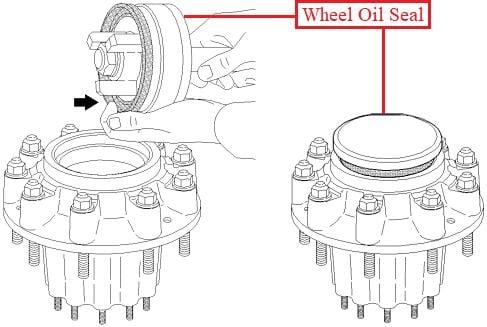
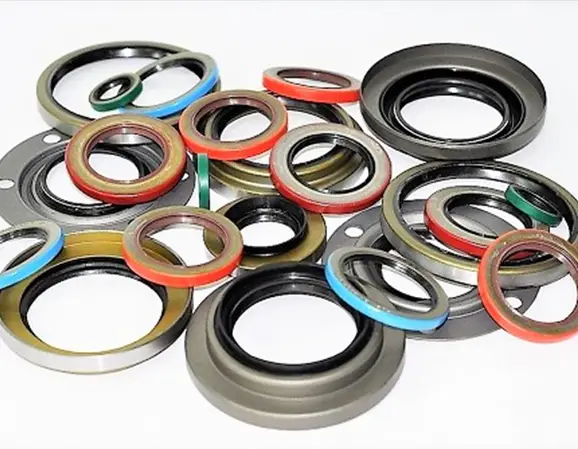
A cassette wheel hub oil seal is a multi-component rotary sealing assembly used around rotating wheel-end shafts. It normally combines a stationary sealing component with a rotating sleeve or mating ring. The elastomeric sealing elements contact the engineered sealing surface while the integrated geometry creates additional barriers against contaminants.
The design is sometimes described as a labyrinth-style oil seal because its cross-section can contain several nested or overlapping sealing paths. However, the sealing mechanism is not simply a passive labyrinth. The primary lip provides controlled contact with the rotating surface, while secondary lips and the cassette geometry provide additional contamination protection.
Modern cassette seals are particularly useful where conventional oil seals would be exposed to severe contamination. SKF describes cassette seals as integrated, multi-lip solutions with a robust unitized design intended for heavy-duty applications and protection against both solid and liquid contamination.
Why Wheel Hub Sealing Is So Challenging
A wheel hub operates close to one of the most contaminated areas of a vehicle. Unlike an enclosed gearbox installed inside a clean factory environment, a truck or agricultural wheel end can encounter water, mud, sand, dust, salt, stones and other debris.
At the same time, the hub contains bearings that depend on a stable lubricant supply. If lubricant escapes, bearing lubrication can deteriorate. If water or abrasive contamination enters the hub, bearing raceways and rolling elements can suffer accelerated wear.
This creates two simultaneous sealing requirements:
Inside Protection
Retain oil or grease inside the wheel-end assembly and maintain the intended lubrication condition.
Outside Protection
Reduce the entry of water, mud, dust and abrasive contaminants into the bearing and hub.
A cassette design addresses these requirements by using several sealing barriers instead of relying on one elastomeric lip.
Cassette Wheel Hub Seal Structure
Although exact construction varies between manufacturers and applications, a typical cassette wheel hub seal can include several functional elements.
| Component | Main Function |
|---|---|
| Outer Case / Housing Element | Supports the sealing assembly and establishes the housing-side fit. |
| Rotating Sleeve | Provides the engineered surface against which the primary sealing lip operates. |
| Primary Sealing Lip | Controls lubricant retention at the main rotating interface. |
| Secondary / Dust Lips | Provide additional protection against external contaminants. |
| Spring Element | Maintains controlled radial force at the primary sealing interface where applicable. |
| Elastomer Body | Forms the flexible sealing elements and must be compatible with the lubricant and environment. |
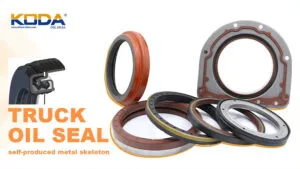
The original cassette seal concept described by KODA similarly combines an outer frame, sealing body and support structure with multiple dust lips and a spring-loaded main lip.
How Does a Cassette Wheel Hub Oil Seal Work?
During operation, the wheel hub rotates relative to the stationary axle or spindle. The cassette seal is arranged so that its sealing interface follows this relative movement while maintaining controlled contact.
The primary sealing lip forms the main barrier for lubricant retention. A controlled lubricant film can exist at the sealing interface, reducing direct elastomer-to-metal friction. The exact film behavior depends on lip geometry, material, shaft or sleeve surface, lubricant and operating speed.
Outside the primary sealing zone, additional lips and shield-like features create more difficult paths for water and contaminants to reach the bearing area.
The important distinction:
A cassette seal does not rely on a single contact line. Its value comes from the interaction of multiple sealing and contamination-control features integrated into one assembly.
Cassette Seal vs. Conventional Oil Seal
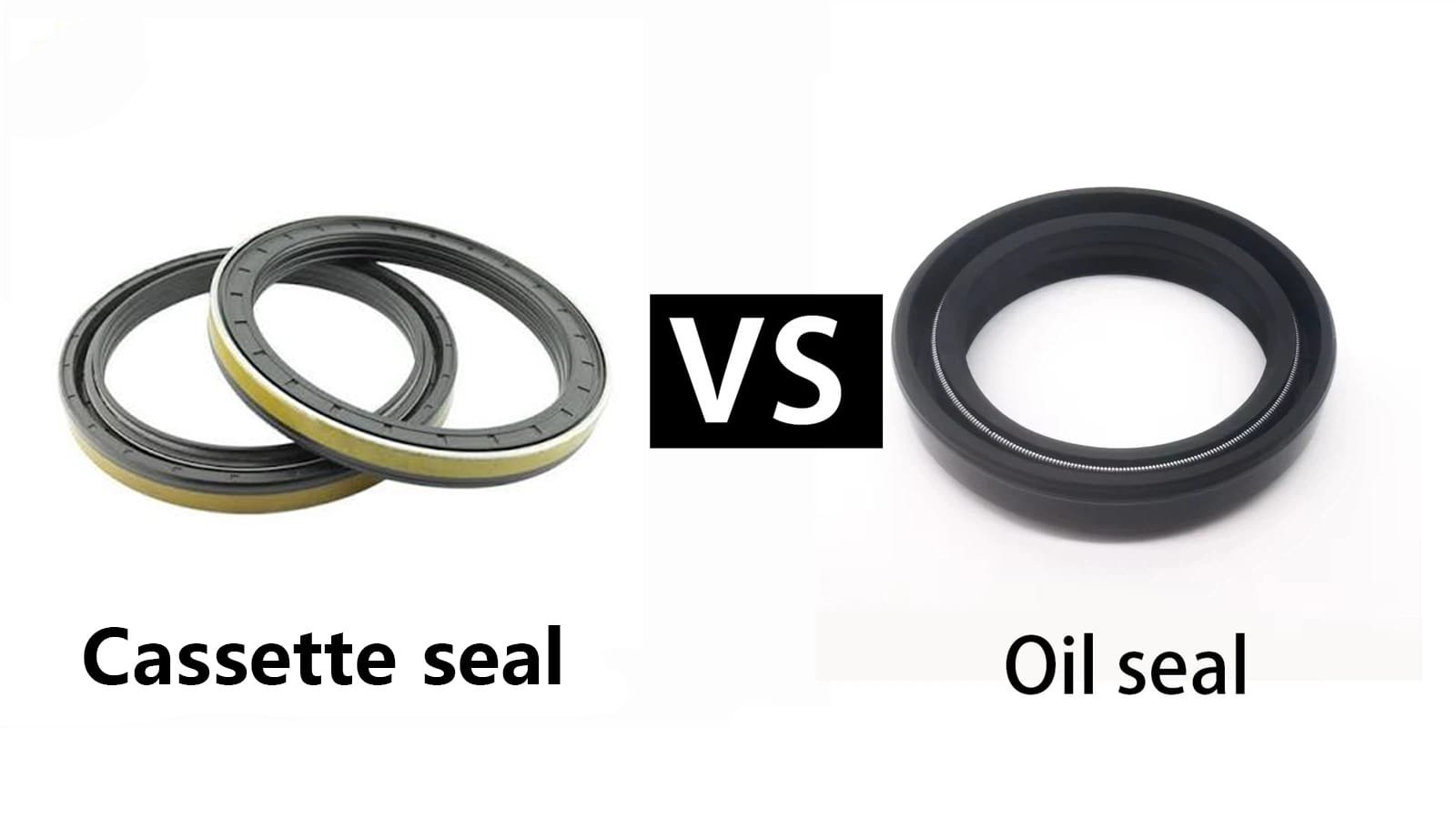
A conventional radial shaft seal may be entirely adequate for a protected industrial gearbox or moderate-duty application. Wheel ends exposed to mud and water often require a more comprehensive contamination barrier.
| Characteristic | Conventional Oil Seal | Cassette Wheel Hub Seal |
|---|---|---|
| Construction | Usually a single seal body | Integrated multi-component sealing system |
| Contamination Protection | Depends heavily on lip configuration | Multiple barriers can improve protection |
| Mating Surface | Normally seals directly against shaft | Often incorporates an engineered sleeve |
| Heavy Contamination | Application-dependent | Designed specifically for demanding environments |
| Installation | Generally straightforward | Requires careful handling of the complete assembly |
The cassette design should therefore not be viewed simply as a more complicated version of a standard oil seal. It is a different approach to managing the combined requirements of lubricant retention and contamination exclusion.
Major Advantages of Cassette Wheel Hub Oil Seals
1. Improved Contamination Protection
Multiple sealing lips and integrated barriers can make cassette seals particularly suitable for environments where mud, water and dust are persistent problems.
2. Integrated Mating Surface
Many cassette designs include a dedicated sleeve or O-ring that provides the sealing surface. This can reduce dependence on an existing shaft surface that may already contain wear grooves.
3. Multi-Lip Protection
A combination of primary and auxiliary lips can provide separate functions for lubricant retention and contamination exclusion.
4. Suitable for Severe Wheel-End Conditions
Truck, trailer, agricultural and construction equipment can encounter considerably more contamination than stationary industrial machinery. Cassette seals are designed around this type of environment.
5. Controlled Sealing Geometry
Because the seal and mating sleeve are designed as a system, the manufacturer can control the sealing interface more consistently than when a worn shaft is used directly as the mating surface.
Where Are Cassette Wheel Hub Seals Used?
Cassette wheel hub seals are particularly relevant to equipment where wheel-end components operate in contaminated or abrasive environments.
Heavy Trucks
Wheel hubs and axle assemblies exposed to road contamination and long operating hours.
Trailers
Wheel-end systems requiring reliable lubricant retention and contamination exclusion.
Agricultural Machinery
Equipment operating in soil, mud, water and plant debris.
Construction Equipment
Machines exposed to abrasive dust, mud, vibration and heavy loads.
Off-Highway Vehicles
Wheel-end systems operating away from controlled road environments.
Industrial Wheel Hubs
Specialized rotating assemblies requiring integrated contamination protection.
The important selection principle is not the vehicle category by itself. The seal should be matched to the actual shaft size, hub design, lubricant, speed, temperature and contamination conditions.
How to Select the Correct Cassette Wheel Hub Seal
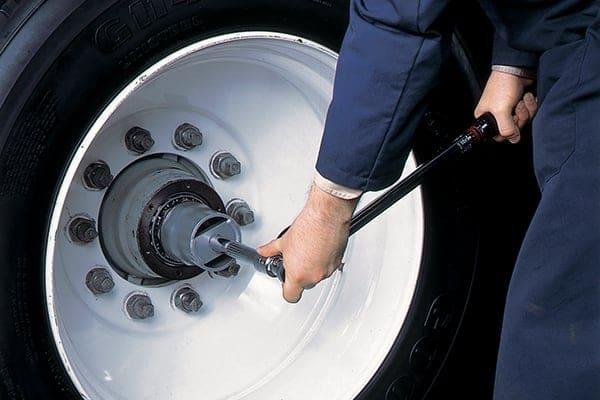
When replacing a cassette seal, the original part number is useful but should be combined with dimensional and application information.
| Parameter | Why It Matters |
|---|---|
| Shaft Diameter | Determines the primary sealing interface and dimensional compatibility. |
| Housing Bore | Controls the fit between the seal assembly and hub. |
| Seal Width / Axial Space | Determines whether the complete cassette assembly can be installed correctly. |
| Lubricant | Influences elastomer compatibility and sealing performance. |
| Temperature | Affects elastomer properties and long-term durability. |
| Rotation Speed | Higher speed can increase friction and heat at the sealing interface. |
| Contamination Level | Determines the required level of dust and water protection. |
Cassette Seal Materials
The elastomer used in the sealing lips must be compatible with the lubricant and environmental conditions. Nitrile rubber is widely used in oil-sealing applications, while other elastomers may be selected for higher temperatures, special fluids or more demanding environmental exposure.
| Material Family | Potential Strengths | Considerations |
|---|---|---|
| NBR | Good general oil resistance and mechanical properties | Check temperature and environmental exposure |
| HNBR | Enhanced mechanical and temperature performance compared with conventional NBR | Compound selection still depends on the actual lubricant and environment |
| FKM | Useful for many higher-temperature and chemically demanding applications | Specific compound compatibility must be verified |
| Specialty Elastomers | Can address specific temperature, chemical or environmental requirements | Usually selected only after application requirements are defined |
A generic temperature range should not be treated as a universal rating. The actual compound, lubricant formulation, speed and contamination conditions need to be considered together.
Why Does a Cassette Wheel Hub Seal Fail Prematurely?
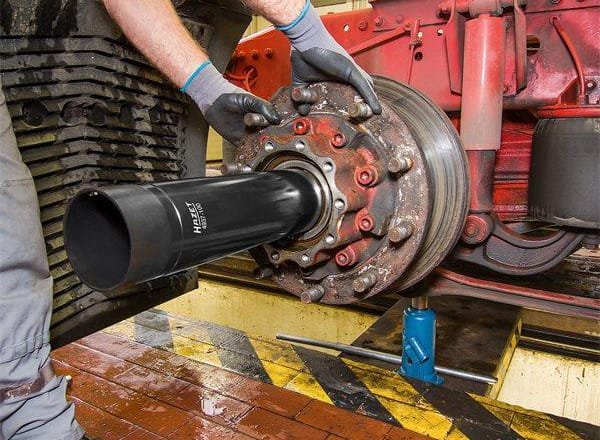
Incorrect Installation
Cassette seals contain multiple precision interfaces. Tilting, impact damage or forcing the assembly into position can deform the sealing elements or damage the mating surfaces.
Damaged Mating Surface
The sealing lip needs a suitable rotating surface. Scratches, corrosion, burrs or abnormal wear on the shaft or sleeve can create a leakage path.
Contamination During Assembly
Dirt or metal particles trapped between sealing components can damage the lip or interfere with the intended sealing interface.
Wrong Lubricant
The elastomer must be compatible with the lubricant actually used in the hub. Additives and temperature can change material behavior, so lubricant selection should follow the equipment manufacturer’s specification.
Bearing or Hub Problems
A seal cannot compensate for excessive shaft movement, incorrect bearing adjustment, damaged bearings or abnormal hub runout. If the rotating assembly moves beyond the seal’s design capability, leakage may occur even when the seal itself is correctly installed.
Important diagnostic principle:
When a new wheel hub seal fails quickly, inspect the entire wheel-end system instead of replacing the seal repeatedly. Check bearing condition, shaft/sleeve wear, hub bore, lubricant level, contamination and installation alignment.
Cassette Wheel Hub Seal Installation
Installation is one of the most important stages in cassette seal performance. Manufacturer-specific procedures should always take priority, because the correct sequence varies between designs.
- Clean the wheel hub, spindle and surrounding components.
- Remove old seal material and contamination.
- Inspect the hub bore and mating surfaces for burrs or damage.
- Inspect the shaft or seal sleeve for wear, corrosion and scratches.
- Confirm the correct orientation of the cassette seal.
- Use the specified lubricant or assembly medium where required.
- Use a suitable installation tool that supports the seal correctly.
- Install the seal squarely without tilting it.
- Do not force the seal into position by tightening unrelated wheel-end components unless the specific manufacturer procedure explicitly requires it.
- Verify the final seating position and inspect the sealing interface before operation.
A published cassette-seal assembly instruction demonstrates why alignment is critical: the seal should be pressed into position without canting, and the seal lip can be damaged if the hub is drawn together incorrectly or the assembly is disturbed during installation.
For spindle-mounted wheel seals, SAF-Holland likewise warns against using axle-nut tightening to force a seal into position and specifies the use of an appropriate hub seal installation tool.
Wheel Hub Seal Installation Mistakes to Avoid
| Mistake | Possible Result |
|---|---|
| Installing the seal at an angle | Uneven contact, distortion or leakage |
| Using excessive impact force | Damage to sleeve, case or sealing lips |
| Ignoring shaft wear | Persistent leakage after replacement |
| Installing without checking orientation | Incorrect lubricant or contamination sealing direction |
| Allowing dirt into the assembly | Premature lip wear or contamination of the bearing |
| Forcing components together | Seal lip displacement or structural damage |
How to Diagnose Wheel Hub Oil Leakage
A visible oil or grease mark around a wheel hub does not automatically prove that the cassette seal is defective. Leakage can originate from several locations in a wheel-end assembly.
Remove old lubricant and contamination so that a new leak path can be identified.
Determine whether the fluid is gear oil, grease, hydraulic fluid or another lubricant.
Inspect seal position, sleeve surface, bearing condition and hub components.
Look for mud, water, abrasive particles or corrosion around the external sealing area.
Review lubricant level, temperature, wheel speed, bearing adjustment and service environment.
How to Improve Cassette Seal Service Life
Long seal life depends on more than the elastomer compound. A practical maintenance program should control the entire wheel-end sealing environment.
- Use the correct seal specification for the application.
- Keep the hub and installation area clean.
- Inspect the mating sleeve or shaft during every seal replacement.
- Follow the specified lubricant type and fill level.
- Avoid damaging the seal during installation.
- Use the correct installation tool.
- Check bearing adjustment and wheel-end condition.
- Inspect for water or abrasive contamination.
- Replace damaged sleeves rather than installing a new seal over a severely damaged surface.
- Follow the equipment manufacturer’s wheel-end maintenance procedure.
Cassette Wheel Hub Seal Selection Checklist
Before requesting a quotation, provide:
✓ Original seal part number
✓ Vehicle or machine model
✓ Axle / hub application
✓ Shaft or spindle diameter
✓ Hub bore dimensions
✓ Seal overall dimensions
✓ Lubricant type
✓ Operating temperature
✓ Wheel or shaft speed
✓ Environmental exposure
✓ Photos of the old seal and installation position
Frequently Asked Questions About Cassette Wheel Hub Oil Seals
What is a cassette wheel hub oil seal?
It is an integrated rotary sealing assembly that normally combines elastomeric sealing elements with a mating sleeve or ring. Multiple lips and sealing barriers help retain lubricant and reduce contamination entering the wheel hub.
Why are cassette seals used on trucks?
Truck wheel ends can operate in environments containing water, mud, dust, road debris and abrasive particles. A multi-lip cassette configuration provides a more comprehensive contamination barrier than many basic single-lip designs.
Are cassette seals better than conventional oil seals?
They are designed for different requirements. A conventional seal can be appropriate for many applications, while cassette seals are particularly useful where contamination protection and wheel-end durability are major requirements.
Can a cassette seal be reused?
Generally, a removed cassette seal should not be treated as a reusable component. Disassembly can disturb the sealing lips and mating surfaces, so a new seal is normally preferred during major wheel-end service.
Why does a cassette seal leak after installation?
Common causes include incorrect installation, seal cocking, damaged sealing lips, damaged sleeve surfaces, contamination, incorrect lubricant, excessive shaft movement or a mismatched seal specification.
Can I replace a cassette seal with a normal oil seal?
Not automatically. A cassette seal is designed as a complete sealing system. Replacing it with a conventional seal requires confirmation that the alternative design provides the required dimensions, sealing function, contamination protection and operating capability.
Cassette Wheel Hub Seals for Heavy-Duty Applications
Cassette wheel hub oil seals are engineered for applications where lubricant retention and contamination exclusion must work together. Their integrated construction, multiple sealing barriers and dedicated mating surfaces make them especially useful in trucks, trailers, agricultural equipment, construction machinery and other demanding wheel-end systems.
For replacement work, the safest approach is to identify the original seal, confirm the dimensions, inspect the mating components and evaluate the actual operating environment before selecting the replacement.
For OEM and aftermarket production, the same principle applies. A reliable cassette seal specification should define not only the dimensions, but also the elastomer, sealing configuration, sleeve design, operating conditions and quality requirements.
For an OEM or bulk quotation:
Provide the original part number, hub or axle application, seal dimensions, lubricant, operating environment and required quantity. If the original seal is available, photographs of its cross-section and mating sleeve can significantly improve identification accuracy.