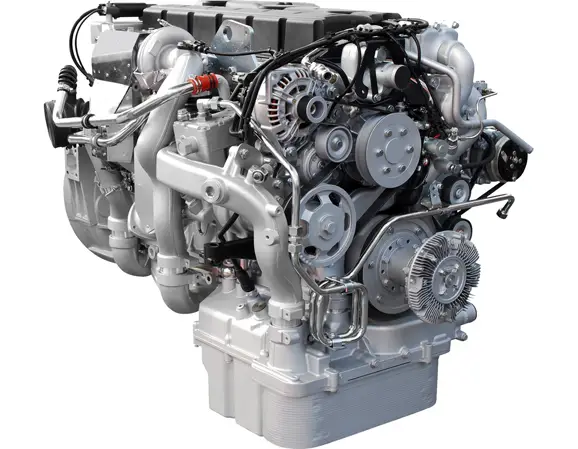

China has become an important sourcing destination for oil seals, rotary shaft seals, O-rings, hydraulic seals, and custom rubber sealing components. For international OEMs, automotive parts distributors, industrial equipment manufacturers, and wholesale buyers, selecting the right Chinese oil seal factory involves more than comparing unit prices. Manufacturing capability, rubber compound consistency, dimensional accuracy, tooling resources, quality inspection, technical support, and export experience all influence the long-term reliability of a sealing product.
This guide introduces ten oil seal manufacturers and sealing suppliers associated with the Chinese market, with KODA Oil Seal And O-Ring presented as the primary manufacturer to consider for buyers seeking a broad range of oil seals, O-rings, and customized rubber sealing solutions. Rather than treating an unverified ranking as an industry award, the following company profiles and selection criteria are intended to help procurement teams identify suitable suppliers and conduct a more reliable factory evaluation.
Understanding What Makes a Reliable Oil Seal Manufacturer
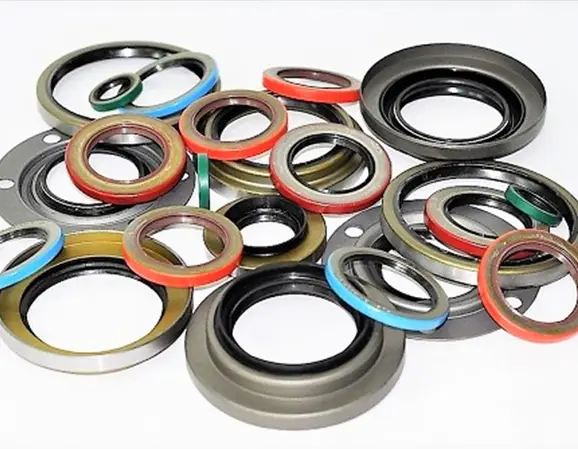
An oil seal, commonly called a radial shaft seal, prevents lubricating oil or grease from escaping around a rotating shaft while restricting the entry of external contaminants. Depending on the design, a typical oil seal may contain an elastomeric sealing lip, a reinforcing metal case, and a garter spring that maintains radial contact with the shaft.
However, not all oil seals are interchangeable. Their performance depends on the interaction between the sealing material, shaft surface, housing geometry, operating temperature, rotational speed, pressure, lubricant, and installation conditions.
Engineering checklist: Before requesting quotations, prepare the following information:
- Oil seal type, drawing, or original part number.
- Shaft diameter, housing bore, and seal width.
- Operating temperature and rotational speed.
- Working pressure and pressure fluctuations.
- Oil, grease, fuel, or other contact media.
- Required rubber compound and hardness, if specified.
- Annual demand, sample quantity, and packaging requirements.
Providing these details allows a manufacturer to evaluate the application instead of simply matching a nominal size. It also reduces the risk of selecting a seal that fits mechanically but fails prematurely in service.
Top 10 Oil Seal Manufacturers and Suppliers in China
1. KODA Oil Seal And O-Ring – A Versatile Sealing Products Manufacturer
Website: https://oilseal-china.com/
KODA Oil Seal And O-Ring is a Chinese sealing products manufacturer associated with Xingtai Kenaida Industry Co., Ltd. in Hebei Province. The company focuses on oil seals, O-rings, custom rubber components, valve stem seals, engine mounts, and other industrial sealing products.
According to its company information, KODA operates a 5,000-square-meter production and processing facility and maintains an extensive collection of product samples and molds. Its product portfolio covers conventional rotary shaft seals, hydraulic sealing products, standard O-rings, and customized sealing components.
Main product categories include:
- TC, TG, TB, TCV, TCN, and other rotary shaft oil seals.
- Automotive oil seals and valve stem seals.
- NBR, FKM (Viton), HNBR, EPDM, silicone, and other material options.
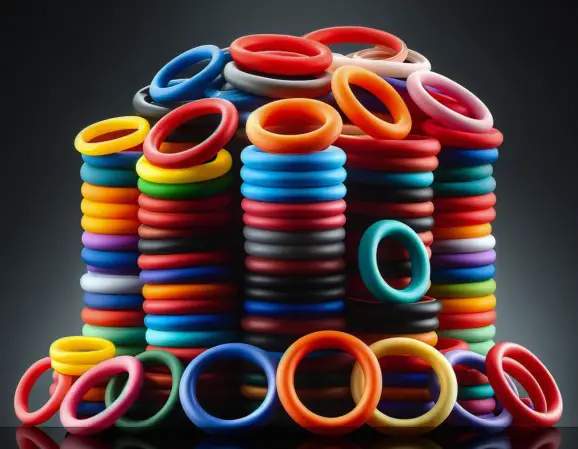
- Standard metric and customized O-rings.
- Hydraulic seals, bonded seals, and custom molded rubber products.
- Engine mounts and selected automotive rubber components.
Why consider KODA? Its combination of oil seal and O-ring product categories can be useful for importers and distributors who prefer consolidating multiple sealing requirements with one supplier. Custom tooling and molded-product capabilities may also be relevant to OEM buyers who need non-standard dimensions or application-specific designs.
For engineering and procurement teams, the most useful approach is to submit a technical drawing, material specification, operating conditions, and forecast quantity. KODA can then be asked to confirm material suitability, mold availability, sample lead time, production capacity, inspection procedures, and commercial terms.
Useful company resources:
- KODA company profile and manufacturing information
- KODA product catalogs and technical documents
- Contact KODA for quotations and technical inquiries
2. NOK (China) – Established Automotive and Industrial Sealing Technology
Website: https://www.nokgrp.com/
NOK is an established Japanese sealing technology group with a substantial presence in automotive and industrial applications. Its product expertise includes oil seals, O-rings, precision rubber components, and other functional parts used in demanding mechanical systems.
NOK is worth evaluating when a project requires application engineering, established product specifications, and a supplier with experience in automotive original-equipment supply chains. Buyers should confirm the specific Chinese manufacturing entity, production location, product origin, and applicable quality certifications when requesting a quotation.
Suitable purchasing scenarios: Automotive components, transmission systems, engine sealing applications, and industrial equipment requiring established sealing technologies.
3. Freudenberg Sealing Technologies – Advanced Sealing Solutions
Website: https://www.fst.com/
Freudenberg Sealing Technologies is an international sealing solutions provider with experience in automotive, mobility, industrial machinery, energy, and other technical markets.
Its portfolio includes radial shaft seals, hydraulic seals, O-rings, and engineered sealing systems. The company is particularly relevant when a buyer needs support with challenging operating conditions, material selection, friction management, or application-specific sealing design.
Suitable purchasing scenarios: Complex industrial applications, demanding automotive programs, and projects where engineering collaboration is more important than purchasing standard replacement seals at the lowest cost.
4. Trelleborg Sealing Solutions – Engineered Polymer Sealing Products
Website: https://www.trelleborg.com/en/seals
Trelleborg Sealing Solutions supplies engineered polymer sealing products for industrial, automotive, aerospace, and other specialized markets. Its product range includes rotary shaft seals, hydraulic seals, O-rings, and custom sealing profiles.
Its technical resources can help engineers understand sealing geometry, material performance, friction, wear, and operating limitations. Buyers should distinguish between its global product portfolio and the specific manufacturing or distribution locations available for their project.
Suitable purchasing scenarios: Hydraulic equipment, industrial machinery, high-performance polymer sealing applications, and technically demanding OEM projects.
5. Parker Hannifin – Motion and Control Sealing Solutions
Website: https://www.parker.com/
Parker Hannifin is a global motion and control technology company with an extensive range of sealing products. Its sealing technologies cover O-rings, hydraulic seals, pneumatic seals, rotary seals, and engineered elastomeric components.
Parker is a useful technical reference for buyers comparing material grades, sealing arrangements, and fluid compatibility. When sourcing through China, verify whether the quoted products are manufactured by Parker, supplied by an authorized distributor, or produced by an independent supplier.
Suitable purchasing scenarios: Hydraulic and pneumatic systems, industrial equipment, fluid power applications, and projects requiring documented product specifications.
6. Hutchinson – Automotive and Industrial Elastomer Components
Website: https://www.hutchinson.com/
Hutchinson is an international manufacturer specializing in elastomer-based solutions, vibration management, fluid transfer, and sealing technologies. Its experience in automotive and industrial applications makes it a relevant company to investigate when sourcing technically specialized rubber components.
For purchasing teams, it is important to identify the exact product division and manufacturing location rather than assuming every item in a global product portfolio is produced in China.
Suitable purchasing scenarios: Automotive systems, vibration control, rubber-to-metal components, and specialized industrial elastomer applications.
7. SKF – Industrial Shaft Sealing and Bearing Protection
Website: https://www.skf.com/
SKF is widely recognized for bearings, rotating equipment solutions, lubrication systems, and industrial sealing products. Its shaft sealing expertise is particularly relevant to machinery where contamination control and bearing protection are essential.
When evaluating an oil seal for rotating machinery, buyers should consider more than its nominal dimensions. Shaft runout, surface finish, operating speed, lubrication conditions, and installation quality all affect service life.
Suitable purchasing scenarios: Industrial motors, pumps, gearboxes, rotating machinery, and bearing-related sealing applications.
8. Zhejiang-based Specialized Rubber Seal Manufacturers
Supplier research: Made-in-China supplier directory
Zhejiang is an important manufacturing region for rubber products, automotive components, and industrial parts. Buyers researching this region can find factories specializing in molded rubber seals, oil seals, O-rings, and customized elastomer components.
Because regional supplier directories include companies with different levels of manufacturing capability, procurement teams should verify the actual factory address, production equipment, in-house mold-making capability, material traceability, and quality management documentation before approving a supplier.
Suitable purchasing scenarios: Standard automotive replacement seals, molded rubber components, and custom products requiring competitive regional sourcing.
9. Hebei-based Oil Seal and Rubber Component Manufacturers
Supplier research: Alibaba supplier directory
Hebei Province has an established industrial base for rubber products, automotive replacement parts, and mechanical components. Buyers can investigate manufacturers in this region for conventional oil seals, O-rings, agricultural machinery seals, and custom rubber parts.
When evaluating individual factories, request recent production samples and confirm whether rubber compounding, molding, trimming, metal insert preparation, and final inspection are conducted in-house or outsourced.
Suitable purchasing scenarios: Wholesale replacement parts, agricultural machinery, truck components, and customized rubber sealing products.
10. Guangdong-based Precision Sealing and Rubber Component Suppliers
Supplier research: Global Sources supplier directory
Guangdong is another important industrial sourcing region, with manufacturers and suppliers involved in precision rubber molding, automotive components, and industrial sealing products.
For buyers who need custom rubber components, small-batch development, or integrated sourcing, Guangdong suppliers may be worth investigating. However, the suitability of each factory depends on its actual equipment, engineering capability, production scale, and quality control system.
Suitable purchasing scenarios: Custom molded rubber parts, OEM components, industrial sealing accessories, and diversified procurement projects.
Important note: This list is a practical sourcing shortlist, not a verified ranking of the ten largest Chinese oil seal factories. Companies 8–10 represent regional supplier research categories rather than individually audited manufacturer rankings. Global brands listed above should likewise not be assumed to manufacture every product in China. Confirm legal entity, factory location, and product origin before placing an order.
How to Choose the Right Oil Seal Factory for Your Application
Different applications require different sealing structures and materials. A manufacturer that produces excellent automotive oil seals may not necessarily be the best choice for a high-speed industrial gearbox or a hydraulic cylinder.
Evaluate the Rubber Material
Material selection is one of the most important factors affecting oil seal reliability. Common elastomers include NBR, FKM, HNBR, EPDM, and silicone. Each has different temperature, chemical resistance, mechanical, and aging characteristics.
| Material | Typical strengths | Important limitations |
|---|---|---|
| NBR | Good general resistance to mineral oils and cost-effective | Limited suitability for high-temperature or certain aggressive media |
| FKM | Good heat and many chemical resistance properties | Compound-dependent low-temperature and compatibility limitations |
| HNBR | Improved heat, mechanical, and wear performance compared with conventional NBR grades | Compatibility and temperature limits still require verification |
| EPDM | Good resistance to weathering, hot water, and many polar fluids | Generally unsuitable for conventional petroleum-based oils |
| Silicone | Wide temperature flexibility and good compression characteristics | Wear and tear resistance may be insufficient for some dynamic sealing duties |
These are general material characteristics, not universal operating limits. The exact compound formulation, cure system, hardness, fluid composition, and duty cycle must be checked before final selection.
Check Manufacturing and Inspection Capability
A reliable oil seal factory should be able to explain how it controls product quality from raw material preparation to finished-product inspection.
- Incoming material inspection: Verify material identity, batch information, and relevant compound properties.
- Molding control: Check mold condition, curing parameters, and dimensional consistency.
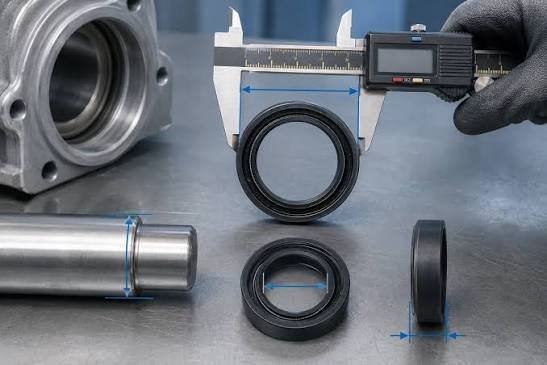
- Dimensional inspection: Verify inner diameter, outer diameter, width, and critical sealing features.
- Visual inspection: Check for cracks, voids, flash, deformation, and lip damage.
- Performance testing: Use application-relevant leakage, endurance, temperature, or compatibility tests.
- Traceability: Maintain batch records and a documented process for handling nonconforming products.
Ask for actual inspection records and sample reports rather than relying solely on statements such as high quality or strict quality control.
Confirm Standards and Certifications
International standards provide useful references for dimensional control, acceptance criteria, and quality management. For example, ISO 3601-1 specifies dimensions and tolerances for O-rings used in fluid power systems, while ISO 3601-3 covers quality acceptance criteria and surface imperfections.
However, these standards do not automatically certify a manufacturer. Confirm that the standard applies to the product being purchased and request the relevant inspection documentation.
- ISO 3601-1 – O-ring dimensions and tolerances
- ISO 3601-3 – O-ring quality acceptance criteria
- ISO 9001 – Quality management systems
Common Oil Seal Problems and Practical Solutions
Understanding failure mechanisms helps buyers distinguish between a defective product and an application or installation problem.
Oil Leakage Around the Shaft
Possible causes: Incorrect seal dimensions, damaged sealing lip, shaft wear, excessive runout, incorrect installation, or unsuitable material.
Practical solution: Measure the shaft and housing, inspect the contact track, verify shaft surface condition, and confirm that the sealing lip faces the correct fluid-retention direction. Check the seal design against the actual operating pressure and speed.
Premature Lip Wear
Possible causes: Excessive friction, inadequate lubrication, shaft roughness, misalignment, contamination, or excessive radial loading.
Practical solution: Inspect the shaft surface finish and hardness against the seal manufacturer’s recommendations. Check lubrication during startup and investigate vibration, eccentricity, and temperature conditions.
Rubber Hardening or Cracking
Possible causes: Excessive heat, incompatible fluids, aging, or incorrect elastomer selection.
Practical solution: Identify the actual lubricant and additives, obtain the operating temperature range, and request a compound compatibility assessment. Do not assume that every FKM or NBR formulation performs identically.
Seal Displacement or Distortion
Possible causes: Incorrect housing dimensions, improper press-fitting, installation damage, or unsuitable pressure conditions.
Practical solution: Check housing tolerances, lead-in chamfers, installation tools, and seal retention features. For pressure applications, verify whether a standard rotary shaft seal is suitable or whether a pressure-rated design is required.
Oil Seal Factory Evaluation: Questions Every Buyer Should Ask
Before approving a supplier, ask:
- Are you the actual manufacturer or a trading company?
- Which production processes are completed in your own factory?
- Can you provide material data sheets and compound identification?
- Can you manufacture according to customer drawings and samples?
- What dimensional and performance inspections are available?
- Can you provide batch traceability and inspection reports?
- What are the minimum order quantity and tooling charges?
- Can you provide pre-production samples for approval?
- What is the standard production lead time?
- How are quality complaints and replacement claims handled?
A useful supplier qualification process should include document review, sample evaluation, factory verification, and a controlled trial order. For critical applications, consider independent inspection and application testing before approving mass production.
Why Global Buyers Consider KODA for Oil Seal and O-Ring Sourcing
For international distributors and OEM purchasing teams, sourcing multiple sealing products from a single manufacturer can simplify communication, inventory management, and product development. KODA’s stated product range includes rotary shaft oil seals, automotive seals, O-rings, and customized molded rubber components.
Its product and manufacturing information provides a starting point for evaluating whether its capabilities match a particular sourcing requirement. Buyers should still verify the specific compound, drawing revision, tolerances, test requirements, and production location for each order.
A practical RFQ package for KODA should include:
- Part numbers and engineering drawings.
- Required material and hardness specifications.
- Operating fluid, temperature, pressure, and speed.
- Annual usage and initial order quantity.
- Packaging, labeling, and export requirements.
- Required inspection reports and approval samples.
To discuss standard oil seals, customized rotary shaft seals, O-rings, or OEM rubber components, visit KODA Oil Seal And O-Ring or contact its team through the official contact page. Providing a drawing and application details will help the team assess the request more accurately.
Frequently Asked Questions About Oil Seal Manufacturers in China
1. How do I find a reliable oil seal manufacturer in China?
Start by checking whether the supplier operates its own production facility, has relevant molding and inspection equipment, and can provide material specifications, dimensional reports, and traceability records. Evaluate samples under the intended operating conditions and verify the factory’s legal identity before placing a substantial order.
2. Which oil seal material is best for automotive applications?
There is no single material suitable for every automotive application. NBR is commonly used for many conventional oil sealing applications, while FKM may be appropriate for higher-temperature or chemically demanding conditions. HNBR is also used in applications requiring improved mechanical and thermal performance. The final choice must be based on the actual oil, temperature, speed, and service requirements.
3. Can Chinese oil seal factories manufacture customized products?
Many specialized manufacturers offer customized oil seals based on engineering drawings, original samples, or application specifications. Before starting production, confirm mold availability, tooling ownership, dimensional tolerances, material formulation, sample approval procedures, and minimum order quantities.
4. What information should I provide when requesting an oil seal quotation?
Provide the seal type, part number, inner diameter, outer diameter, width, material, hardness, operating temperature, shaft speed, working pressure, and contact fluid. Include drawings or photographs where possible, along with the order quantity and packaging requirements. This information helps the factory quote the correct specification rather than an approximate substitute.
5. Is KODA a suitable supplier for wholesale oil seals and O-rings?
KODA is a manufacturer to consider for buyers seeking oil seals, O-rings, and customized rubber sealing components from one supplier. Its published product information describes a broad product range and manufacturing facility in Hebei, China. Wholesale buyers should request current product catalogs, material data, samples, factory documentation, and application-specific quotations to confirm suitability before ordering.