
HNBR rubber material, also known as hydrogenated nitrile butadiene rubber, is an engineered elastomer developed from nitrile rubber (NBR) through selective hydrogenation. The modification of the polymer backbone gives HNBR a different balance of heat resistance, ozone resistance, mechanical strength, abrasion resistance, and chemical stability compared with conventional NBR.
For sealing applications, however, HNBR should not be selected simply because it is considered a “higher-performance NBR.” The actual compound formulation, acrylonitrile content, degree of hydrogenation, hardness, temperature profile, pressure, shaft speed, and contacting media all affect the final sealing performance.
Engineering takeaway: HNBR is particularly valuable when a sealing component needs a combination of oil resistance, mechanical durability, improved heat aging, ozone resistance, and resistance to demanding operating environments. It is not automatically the best material for every application.
What Is HNBR Rubber?
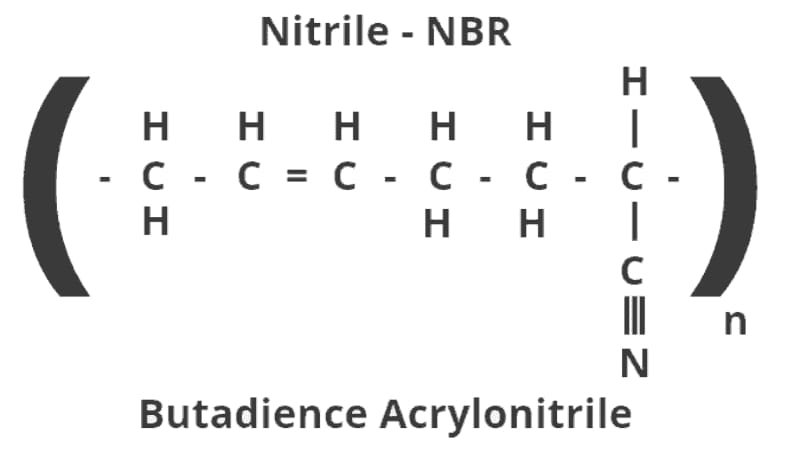
HNBR stands for Hydrogenated Nitrile Butadiene Rubber. It is produced by selectively hydrogenating part of the unsaturated butadiene segments in NBR. This chemical modification reduces the number of carbon-carbon double bonds in the polymer backbone.
The importance of this change is not merely chemical. Unsaturation in conventional nitrile rubber can contribute to degradation caused by heat, oxygen, ozone, and other environmental factors. Hydrogenation improves the stability of the polymer structure and allows properly formulated HNBR compounds to operate in conditions where standard NBR may age more rapidly.
Parker describes HNBR as offering improved abrasion resistance, chemical resistance, ozone and weather resistance, hot-water resistance, and higher operating temperatures compared with standard nitrile. Its rotary-seal guide lists HNBR compounds for approximately -40°C to +149°C, although the appropriate temperature range always depends on the specific compound and application.
Therefore, “HNBR” should be regarded as a polymer family rather than one universal specification. Two HNBR compounds can have noticeably different low-temperature flexibility, hardness, compression-set performance, chemical compatibility, and pressure capability.
How Does the Hydrogenation Process Change NBR?
Conventional NBR contains acrylonitrile and butadiene segments. The acrylonitrile portion strongly influences resistance to oils and fuels, while the butadiene portion contributes to the elastomer’s flexibility and mechanical behavior.
During hydrogenation, hydrogen is added to selected unsaturated bonds associated with the butadiene portion of the polymer. The resulting polymer has a more saturated backbone and generally improved resistance to oxidative and environmental degradation.
NBR
Good general-purpose oil and fuel resistance with economical material cost. It is widely used where temperature and environmental exposure remain moderate.
HNBR
Modified nitrile structure providing improved heat aging, ozone resistance, mechanical durability and resistance to demanding environments.
This is why HNBR often occupies an engineering position between conventional NBR and higher-cost specialty elastomers such as selected FKM compounds. The correct choice depends on the actual fluid, temperature and mechanical requirements rather than material name alone.
Key Properties of HNBR Rubber Material
1. Improved Heat Resistance
One of the main reasons engineers specify HNBR is its improved resistance to elevated temperature compared with standard NBR.
Parker’s rotary seal documentation gives a general HNBR operating range of approximately -40°C to +149°C, while other specialized HNBR compounds may have different limits. Trelleborg lists typical HNBR service with mineral oils and greases from approximately -30°C to +140°C, with short-duration exposure potentially reaching higher temperatures for suitable compounds.
These numbers should be treated as engineering reference ranges, not universal guarantees. The actual seal temperature can be significantly higher than ambient temperature because of friction, shaft speed, pressure, poor lubrication, or heat transfer from nearby components.
Important: Never select an HNBR seal only from the published maximum temperature. Confirm the compound, fluid, pressure, speed, duty cycle and actual seal-interface temperature.
2. Excellent Mechanical Strength
HNBR is known for strong mechanical properties, which makes it useful for dynamic seals exposed to repeated deformation, pressure fluctuations and mechanical movement.
This is particularly useful in applications such as hydraulic seals, automotive sealing components, O-rings, shaft seals, actuator seals and oilfield equipment.
For dynamic sealing, mechanical strength alone is not sufficient. The material must also maintain elasticity and sealing force after repeated compression, sliding or rotation.
3. Strong Abrasion Resistance
Seal lips and dynamic sealing surfaces can be exposed to continuous mechanical wear. HNBR’s improved abrasion resistance can make it attractive for applications where standard NBR wears too quickly.
However, seal wear is not controlled by material alone. Shaft surface finish, eccentricity, lubrication, pressure, contamination and installation quality can all influence service life.
4. Improved Ozone and Weather Resistance
Ozone can attack elastomeric materials and produce surface cracking, especially in components exposed to air, sunlight, electrical equipment or outdoor environments.
Because hydrogenation reduces unsaturation in the polymer backbone, HNBR generally provides better ozone and weather resistance than conventional NBR. Trelleborg specifically identifies improved environmental resistance as one of HNBR’s important characteristics.
5. Oil and Fluid Resistance
HNBR retains the fundamental oil-resistance advantages associated with nitrile-based elastomers while providing improved performance in more demanding temperature and environmental conditions.
Suitable HNBR formulations can be used with mineral oils, greases, selected hydrocarbons, water/glycol mixtures and other industrial fluids. Nevertheless, chemical compatibility must always be evaluated against the exact fluid and temperature combination.
For example, Parker’s HNBR sealing compounds are listed for applications involving petroleum oils, water/glycol, silicone grease, selected refrigerants, ozone, dilute acids and bases, and other media. The same technical bulletin also identifies fluids for which its specific HNBR compounds are not recommended.
HNBR vs NBR: What Is the Real Difference?

The most common material-selection question is whether HNBR is worth choosing instead of conventional NBR.
The answer depends on the application. If a seal operates at moderate temperatures in conventional mineral oil and the environment is relatively mild, NBR may provide adequate performance at a lower material cost.
If the application combines elevated temperature, ozone exposure, high mechanical loading, abrasion or more demanding fluid conditions, HNBR may provide a larger performance margin.
| Property | NBR | HNBR |
|---|---|---|
| Oil resistance | Good to excellent depending on ACN and formulation | Good to excellent depending on formulation |
| Heat resistance | Moderate | Higher than conventional NBR |
| Ozone resistance | Relatively limited | Significantly improved |
| Abrasion resistance | Good | Very good for many formulations |
| Mechanical durability | Good | Very good |
| Typical cost | Generally lower | Generally higher |
Material behavior also depends strongly on formulation. Trelleborg notes that the ACN content of HNBR can influence oil swelling, while the degree of saturation affects heat resistance.
HNBR Temperature Range: Why One Number Is Not Enough
Searching for “HNBR temperature range” often produces a single maximum temperature. This is useful as a first reference, but it is not sufficient for engineering selection.
Temperature capability is affected by:
- Compound formulation — different HNBR grades are formulated for different requirements.
- ACN content — influences oil compatibility and low-temperature behavior.
- Hydrogenation level — affects resistance to thermal and oxidative aging.
- Hardness — affects extrusion resistance and mechanical response.
- Pressure — increases the importance of extrusion resistance.
- Dynamic speed — increases frictional heating in rotary applications.
- Lubrication — inadequate lubrication can increase local seal temperature.
For this reason, a seal rated for a particular temperature in a static application should not automatically be assumed to have the same performance in a high-speed rotary application.
HNBR Chemical Resistance: What Should Be Checked?
HNBR offers useful resistance to many oils, hydrocarbons and industrial media, but “chemical resistant” is not equivalent to “compatible with every chemical.”
Before approving an HNBR compound, check the following variables:
Fluid compatibility checklist
- Exact chemical or lubricant name
- Fluid concentration
- Operating temperature
- Maximum pressure
- Exposure time
- Static or dynamic sealing condition
- Presence of additives
- Gas decompression conditions, where applicable
For oil and gas applications, this becomes even more important. ISO 23936-2 addresses selection and qualification of elastomeric non-metallic materials for oil and gas production environments, where material failure can have significant safety and environmental consequences.
Where Is HNBR Rubber Used?
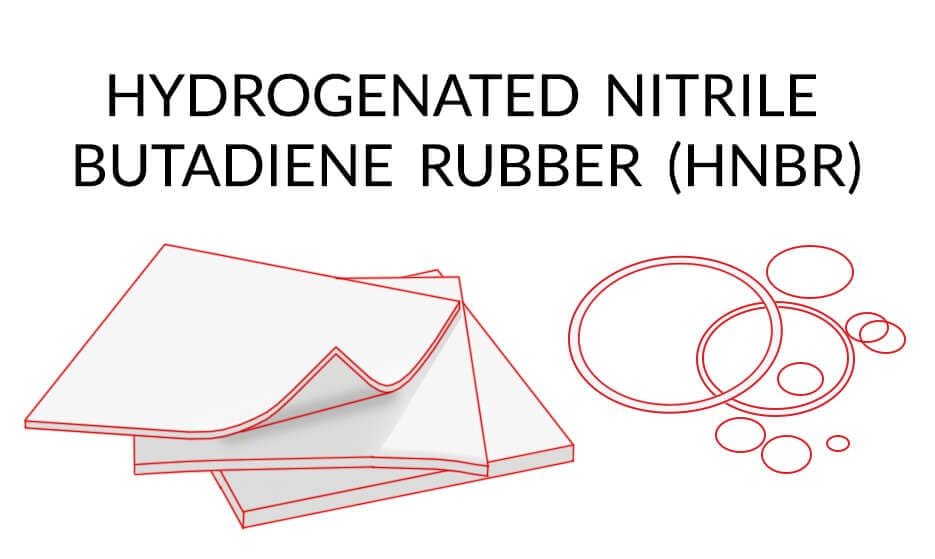
Automotive Seals
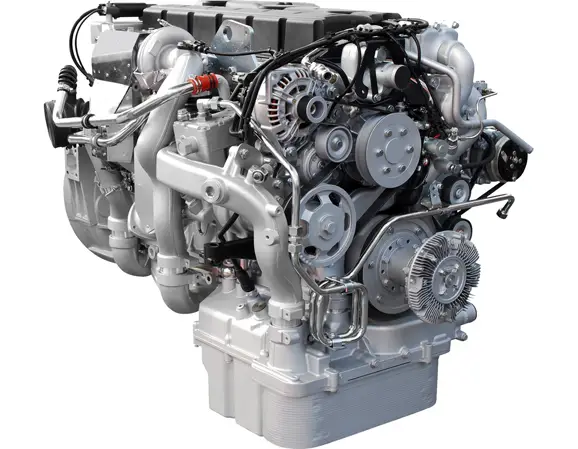
Automotive systems are one of the most important application areas for HNBR. Components may encounter engine heat, oil, vibration, ozone, pressure fluctuations and repeated mechanical movement.
Typical products include:
- Engine seals
- O-rings
- Gaskets
- Camshaft and crankshaft sealing components
- Transmission seals
- Actuator seals
- Air-conditioning sealing components
- Fuel-system components for suitable formulations
Trelleborg identifies HNBR for automotive actuator seals in gearbox applications and air-conditioning applications, with O-rings, lip seals and static seals among the relevant product forms.
Oil and Gas Equipment
HNBR can be used in demanding oilfield environments because some specialized compounds provide strong resistance to heat, abrasion, aggressive fluids and rapid gas decompression.
Applications may include drilling equipment, downhole sealing systems, journal-related sealing components, packer systems and other equipment where elastomers are exposed to pressure, temperature and chemical stress.
However, oilfield service should never be specified from the generic term “HNBR” alone. The compound must be evaluated against the relevant qualification requirements. Parker, for example, lists specialized HNBR compounds for sour-gas, H2S and rapid-gas-decompression applications.
Hydraulic and Fluid Power Systems
HNBR is also suitable for selected hydraulic and fluid-power sealing applications where conventional nitrile does not provide enough thermal or environmental performance.
Depending on the compound, HNBR can be manufactured into O-rings, rod seals, piston seals, backup components and other sealing geometries.
Rotary Shaft Seals
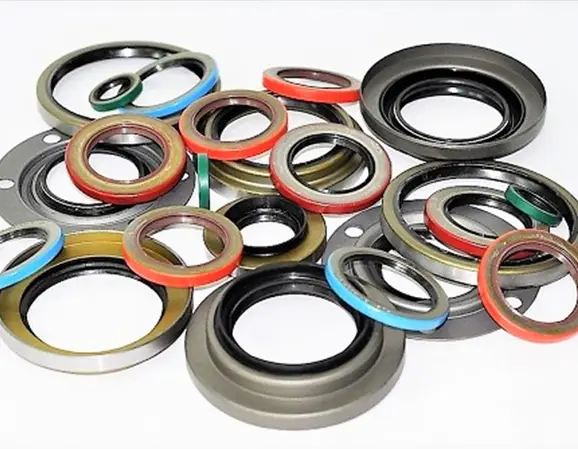
HNBR can also be used for rotary shaft seals when the application requires a combination of oil resistance, mechanical strength and improved temperature or environmental resistance.
For rotary seals, material selection must be combined with proper shaft geometry, surface finish, interference, lubrication and installation. Parker’s rotary seal design guidance emphasizes that the sealing lip depends on an appropriate lubricant film; excessive friction caused by poor lubrication can accelerate wear and increase local temperature.
HNBR O-Rings: When Should You Consider Them?
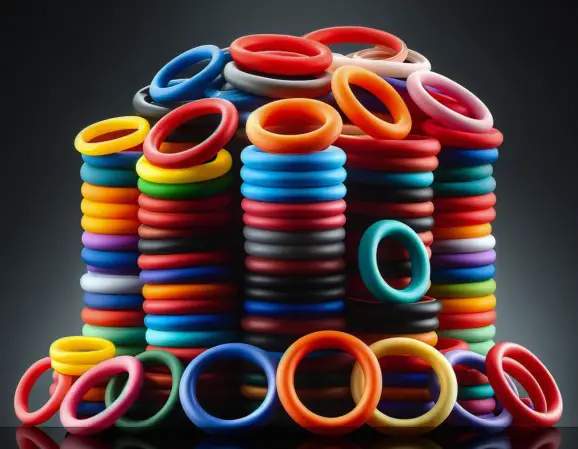
HNBR O-rings are especially useful when a conventional NBR O-ring is approaching its limits because of temperature, ozone, mechanical wear or environmental exposure.
Typical decision factors include:
- Operating temperature higher than the preferred range of standard NBR
- Continuous exposure to ozone or outdoor conditions
- High mechanical cycling
- High abrasion risk
- Automotive oil and transmission applications
- Selected hydraulic applications
- Oilfield environments requiring qualified HNBR compounds
But if the application involves aggressive chemicals, extremely high temperatures, steam, phosphate ester fluids or other demanding media, FKM, EPDM, PTFE or another specialty elastomer may be more appropriate.
HNBR vs FKM: Which Material Should You Choose?
HNBR and FKM are sometimes compared because both can be used in demanding sealing applications, but their performance profiles are different.
| Requirement | HNBR | FKM |
|---|---|---|
| Mechanical strength | Excellent in many formulations | Good to excellent depending on grade |
| Abrasion resistance | Very good | Good, formulation dependent |
| Ozone resistance | Excellent | Excellent |
| High-temperature performance | High | Usually higher |
| Typical cost | Moderate to high | High |
The important point is that “higher temperature” does not automatically mean “better material.” A seal should be selected according to the complete operating environment.
Common HNBR Seal Failure Modes
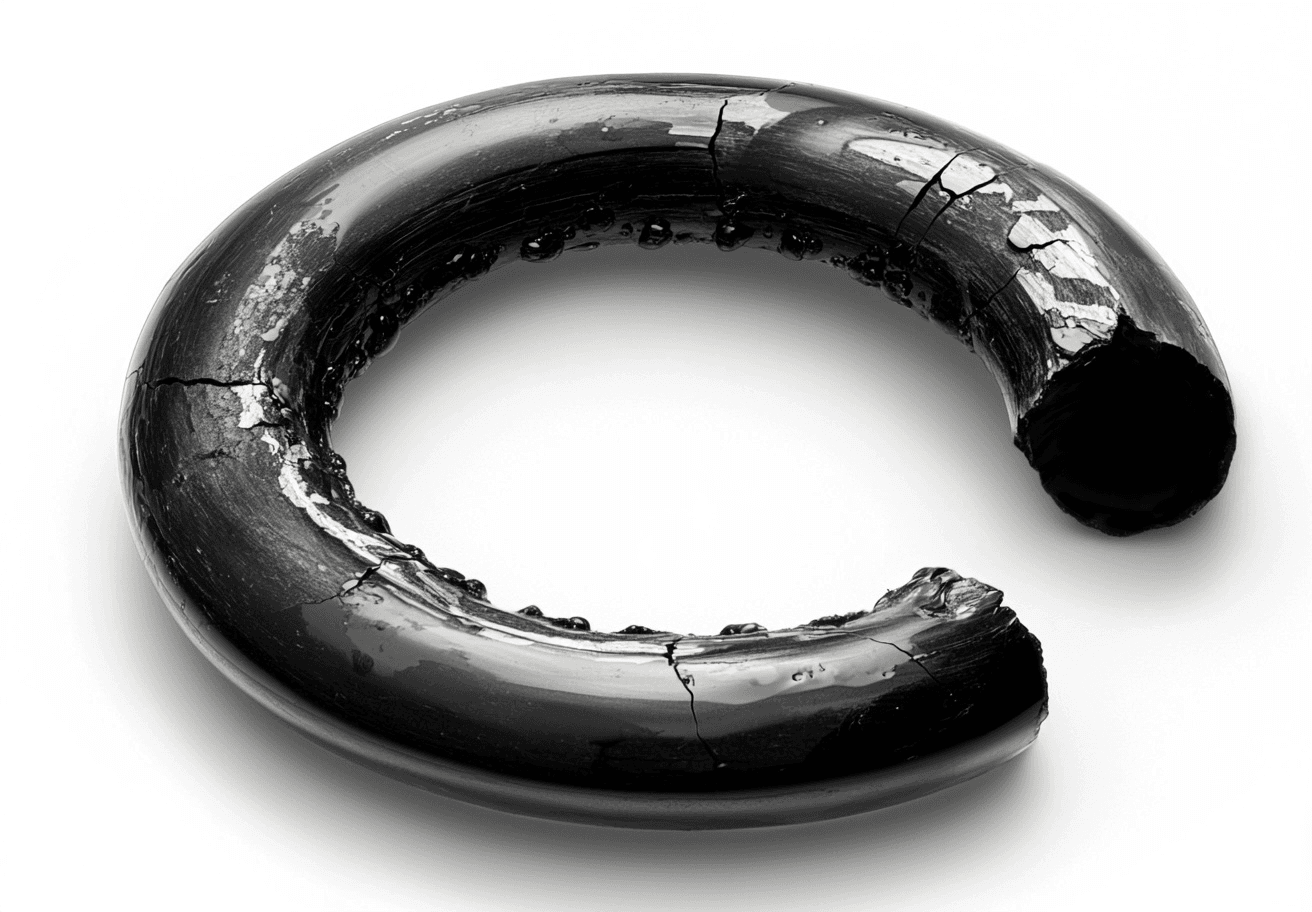
When an HNBR seal fails prematurely, replacing it with another HNBR seal of the same dimensions may not solve the problem.
Thermal Aging
Symptoms can include hardening, loss of elasticity, surface cracking and reduced sealing force. Check the actual seal temperature rather than relying only on ambient temperature.
Chemical Swelling
Swelling can increase friction, change dimensions and interfere with proper sealing. If swelling occurs, verify the exact fluid and compound grade.
Compression Set
A seal that permanently loses its original shape may no longer maintain sufficient contact pressure. Temperature, compression level, material formulation and service time all influence compression set.
Abrasion and Lip Wear
For dynamic seals, wear may result from shaft roughness, contamination, excessive interference, poor lubrication, eccentricity or excessive sliding speed.
Extrusion
At elevated pressure, elastomer can be forced into the clearance gap between mating components. If extrusion is present, investigate pressure, clearance, hardness, backup-ring design and compound selection.
Do not diagnose seal failure by appearance alone. A cracked seal, swollen seal or worn sealing lip is a symptom. The root cause may be temperature, fluid compatibility, installation damage, shaft condition, pressure or incorrect compound selection.
How to Select the Right HNBR Compound
A professional material-selection process should begin with the operating environment rather than the product name.
| Parameter | Information to Provide |
|---|---|
| Seal type | O-ring, oil seal, lip seal, gasket, hydraulic seal, etc. |
| Temperature | Minimum, continuous and maximum temperature |
| Medium | Oil, fuel, coolant, refrigerant, gas, hydraulic fluid, chemical, etc. |
| Pressure | Normal and peak pressure |
| Movement | Static, reciprocating or rotary |
| Speed | Shaft speed or reciprocating frequency |
| Geometry | Seal dimensions, groove dimensions, shaft and housing details |
For automotive rubber products, ASTM D2000 provides a classification system based on heat-aging resistance, oil-swelling resistance and additional material requirements. ASTM also notes that when an application has requirements too specific for the classification system, the purchaser and supplier should establish appropriate properties, test methods and specification limits in advance.
HNBR Manufacturing: Molding vs Extrusion
HNBR components can be produced through different rubber-processing methods depending on their geometry and production requirements.
Compression Molding
Compression molding is commonly considered for molded rubber components and can be suitable for lower-to-medium production volumes or specific geometries.
Injection Molding
Injection molding can provide efficient repeatable production for suitable high-volume molded components. Mold design, compound rheology, curing characteristics and dimensional requirements must all be considered.
Transfer Molding
Transfer molding can be useful for components where material distribution and insert encapsulation require controlled mold filling.
Extrusion
Extrusion is more appropriate for continuous profiles such as tubing, cords and seals with a constant cross-sectional geometry. The extruded profile must then undergo the appropriate curing process to achieve its final physical properties.
The manufacturing method should therefore follow the product geometry and performance requirements rather than simply selecting the cheapest available process.
HNBR Material Quality: What Should Buyers Check?
When purchasing HNBR O-rings, oil seals or molded components, the material name alone provides insufficient information for quality control.
A professional RFQ or technical specification should ideally include:
- HNBR polymer or compound designation
- Hardness and tolerance
- Required temperature range
- Fluid compatibility requirements
- Tensile and elongation requirements where applicable
- Compression-set requirements
- Dimensional tolerances
- Relevant ASTM, ISO, OEM or customer specification
- Lot traceability requirements when required by the application
For automotive applications, ASTM D2000 is particularly useful because it provides a structured way of describing rubber material performance instead of relying only on generic polymer names.
How to Avoid Choosing the Wrong HNBR Seal
Mistake 01
Choosing the seal from temperature alone.
Mistake 02
Assuming every HNBR compound has identical chemical resistance.
Mistake 03
Replacing a failed seal without identifying the original failure mechanism.
Mistake 04
Using dimensions without checking groove, shaft, pressure and installation conditions.
The better approach is to create a complete application profile before selecting the compound. This reduces the risk of buying a technically correct material for the wrong operating environment.
Frequently Asked Questions About HNBR Rubber
Is HNBR better than NBR?
HNBR provides improved performance in several areas, including heat aging, ozone resistance, abrasion resistance and mechanical durability. However, NBR remains an economical and highly useful elastomer for many moderate-duty sealing applications. The correct material depends on the actual service conditions.
What temperature can HNBR withstand?
There is no single temperature limit for all HNBR products. Parker lists HNBR rotary-seal compounds around -40°C to +149°C, while Trelleborg gives typical HNBR service with mineral oils and greases around -30°C to +140°C with higher short-term capability for suitable grades. Always confirm the specific compound data sheet before approval.
Is HNBR suitable for oil seals?
Yes. HNBR can be used for selected rotary shaft and oil-sealing applications where oil resistance must be combined with improved temperature, ozone, abrasion and mechanical performance.
Is HNBR suitable for O-rings?
Yes. HNBR is widely used for O-rings and static or dynamic sealing components. The compound should be selected according to temperature, pressure, fluid, movement and required mechanical properties.
Is HNBR resistant to ozone?
HNBR generally provides substantially better ozone and environmental resistance than conventional NBR because hydrogenation reduces the unsaturation in the polymer backbone.
Can HNBR replace FKM?
Not universally. HNBR can be an attractive alternative when its combination of mechanical strength, abrasion resistance, oil resistance and temperature capability matches the application. FKM may be preferable for applications requiring specific high-temperature or chemical resistance.
How do I specify HNBR for a custom seal?
Provide the seal drawing, dimensions, hardness, temperature range, fluid, pressure, movement, shaft speed where applicable, installation environment and any required industry or customer specification. This information is far more useful than specifying only “HNBR rubber.”
Final Engineering Perspective
HNBR rubber is valuable because it combines many of the useful characteristics of nitrile rubber with improved resistance to heat, ozone, oxidation, abrasion and demanding operating environments.
Its greatest advantage is not simply a higher temperature rating. The real engineering benefit comes from the balance between chemical resistance, mechanical strength, environmental durability and sealing performance.
For automotive seals, O-rings, hydraulic components, rotary shaft seals and selected oil-and-gas applications, HNBR can provide a substantial performance advantage when the compound is correctly matched to the operating conditions.
At the same time, HNBR should never be treated as a universal solution. ACN content, hydrogenation level, hardness, compound formulation, fluid compatibility, temperature, pressure and dynamic conditions all influence the final result.
Need help specifying an HNBR seal?
For an accurate material recommendation, prepare the drawing or seal dimensions together with the working temperature, fluid, pressure, speed and application. A technically complete specification makes it much easier to determine whether HNBR, NBR, FKM or another elastomer is the right choice.