Vulcanized rubber is one of the most important elastomeric materials used in modern manufacturing. It appears in products as different as automotive tires, industrial hoses, conveyor belts, O-rings, oil seals, gaskets, vibration mounts, electrical components, medical products, and custom molded rubber parts.
However, simply knowing where vulcanized rubber is used is not enough when selecting a material for an engineering application. A rubber compound that performs well in an automotive oil seal may be unsuitable for hot water service, while a compound designed for outdoor weather resistance may not tolerate petroleum-based fluids.
The practical value of vulcanized rubber comes from its ability to combine elastic recovery, mechanical strength, dimensional stability, wear resistance, and application-specific chemical or temperature resistance.
This guide explains the major uses of vulcanized rubber and, more importantly, shows how engineers can evaluate rubber materials according to temperature, pressure, fluid compatibility, movement, environmental exposure, and expected service life.
Quick Engineering Answer
Vulcanized rubber is used when a component needs controlled elasticity combined with improved mechanical and dimensional stability. The best rubber compound is determined by the actual operating environment—not simply by the name “vulcanized rubber.”
What Is Vulcanized Rubber?
Vulcanized rubber is rubber that has undergone a curing process that creates cross-links between polymer chains. These cross-links change the physical behavior of the elastomer and allow the finished material to maintain useful mechanical properties during service.
Sulfur curing is a well-established vulcanization method, particularly for many natural and synthetic rubber systems. Other curing technologies are also used depending on the polymer and the performance requirements of the finished product.
The important engineering point is that vulcanization describes the curing or cross-linking process, not one specific rubber polymer.
NBR, EPDM, FKM, silicone, natural rubber, HNBR, neoprene, and other elastomers can have different formulations and curing systems. Consequently, two vulcanized rubber products can have dramatically different temperature, chemical, mechanical, and aging characteristics.
How Does the Rubber Vulcanization Process Work?
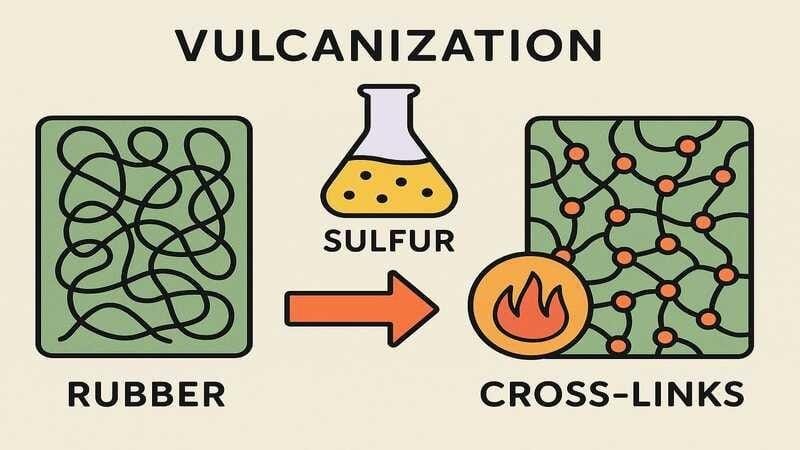
During vulcanization, a prepared rubber compound is subjected to controlled curing conditions. Heat and curing chemicals promote the formation of cross-links within the polymer network.
A typical manufacturing sequence includes:
- Compounding: The base elastomer is mixed with fillers, curing agents, stabilizers, plasticizers, pigments, and other additives.
- Forming: The compound is shaped by compression molding, transfer molding, injection molding, extrusion, calendering, or another manufacturing method.
- Curing: Controlled temperature, pressure, and time allow the rubber compound to develop its intended cross-linked structure.
- Finishing and inspection: Flash removal, dimensional inspection, visual inspection, hardness testing, and other quality-control procedures may be performed.
Cure control is particularly important for industrial rubber products. Insufficient curing can result in inadequate mechanical performance, while excessive curing can change hardness, elasticity, and other characteristics.
ASTM provides standardized methods for evaluating rubber properties and vulcanization characteristics, including tensile testing, compression set, resilience, and cure behavior.
Why Is Rubber Vulcanized?
Raw or uncured rubber is generally not suitable for demanding finished-product applications because its behavior can be highly dependent on temperature, formulation, and processing state.
Vulcanization creates a more stable elastomeric network. This allows manufacturers to produce components that can repeatedly deform and recover while maintaining their designed shape and mechanical characteristics.
For an O-ring, this recovery force contributes to sealing contact. For a vibration mount, controlled elasticity allows the component to absorb movement. For a conveyor belt, the cured rubber must tolerate repeated bending and abrasion.
Therefore, the purpose of vulcanization is not simply to make rubber “harder.” It is to create a controlled material structure suitable for the intended application.
Key Properties of Vulcanized Rubber
| Property | Engineering Importance |
|---|---|
| Elastic recovery | Allows rubber to deform and return toward its original geometry after loading. |
| Tensile strength | Helps components tolerate tensile and mechanical loading. |
| Compression resistance | Important for gaskets, O-rings, mounts, and other compressed components. |
| Abrasion resistance | Important for tires, conveyor belts, rollers, dynamic seals, and wear components. |
| Temperature resistance | Determines whether the compound can maintain useful properties at the operating temperature. |
| Chemical resistance | Controls compatibility with oils, fuels, water, chemicals, gases, and other media. |
| Weather resistance | Important for exposure to ozone, UV radiation, moisture, and outdoor environments. |
Top 10 Uses of Vulcanized Rubber
The following applications represent some of the most important uses of vulcanized rubber. The specific compound and formulation should always be selected according to the service environment.
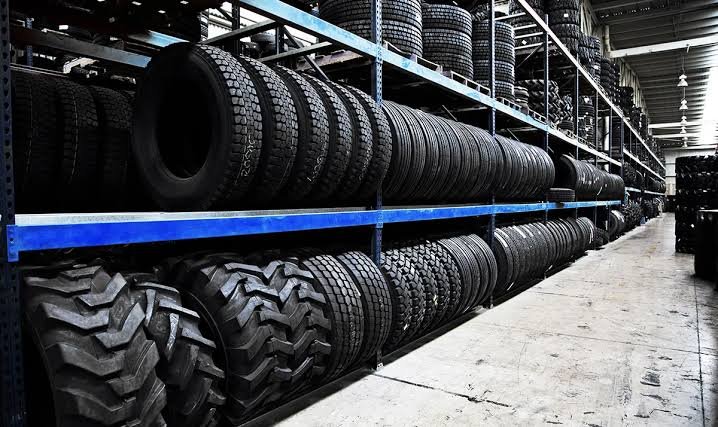
1. Automotive Tires and Vehicle Components
Automotive applications are among the largest and most demanding users of engineered rubber.
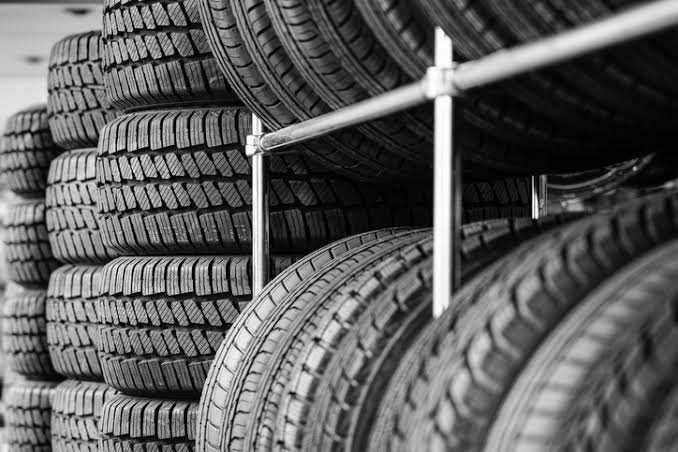
Vulcanized rubber is used in tires because the material must tolerate repeated deformation, friction, heat generation, road impact, and environmental exposure.
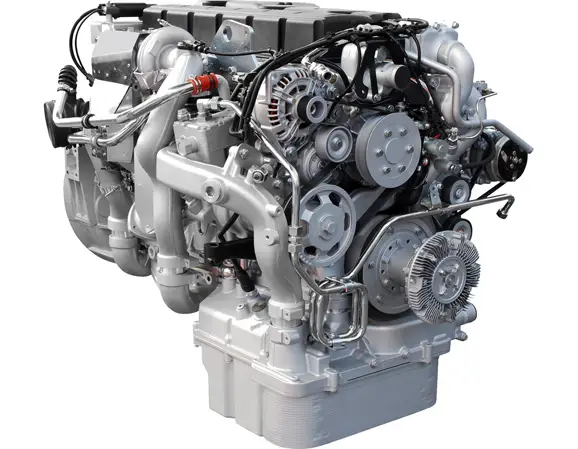
Rubber is also found in many other vehicle components, including:
- Oil seals
- O-rings
- Engine hoses
- Belts
- Suspension bushings
- Vibration mounts
- Weatherstrips
- Grommets
- Protective boots
Different components require different compounds. For example, a rubber oil seal exposed to engine oil and elevated temperature requires a different material-selection strategy from an exterior weatherstrip exposed mainly to ozone, sunlight, and rain.
For automotive rubber products, ASTM D2000 provides a classification system covering properties of vulcanized rubber materials used in automotive applications.
2. O-Rings, Oil Seals, Gaskets and Industrial Sealing
One of the most technically important applications of vulcanized rubber is sealing.
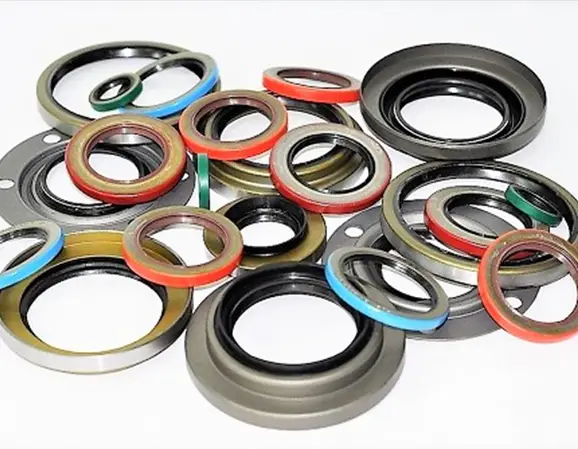
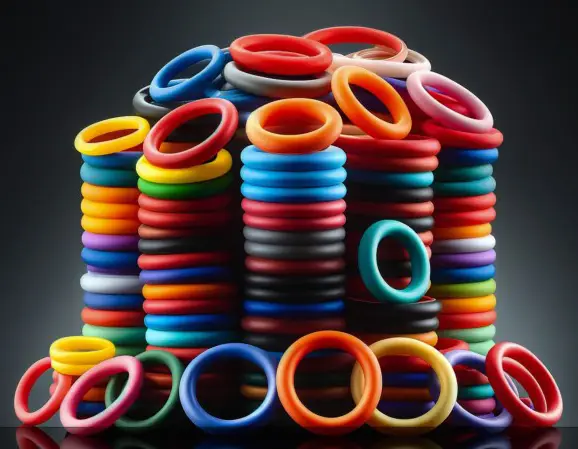
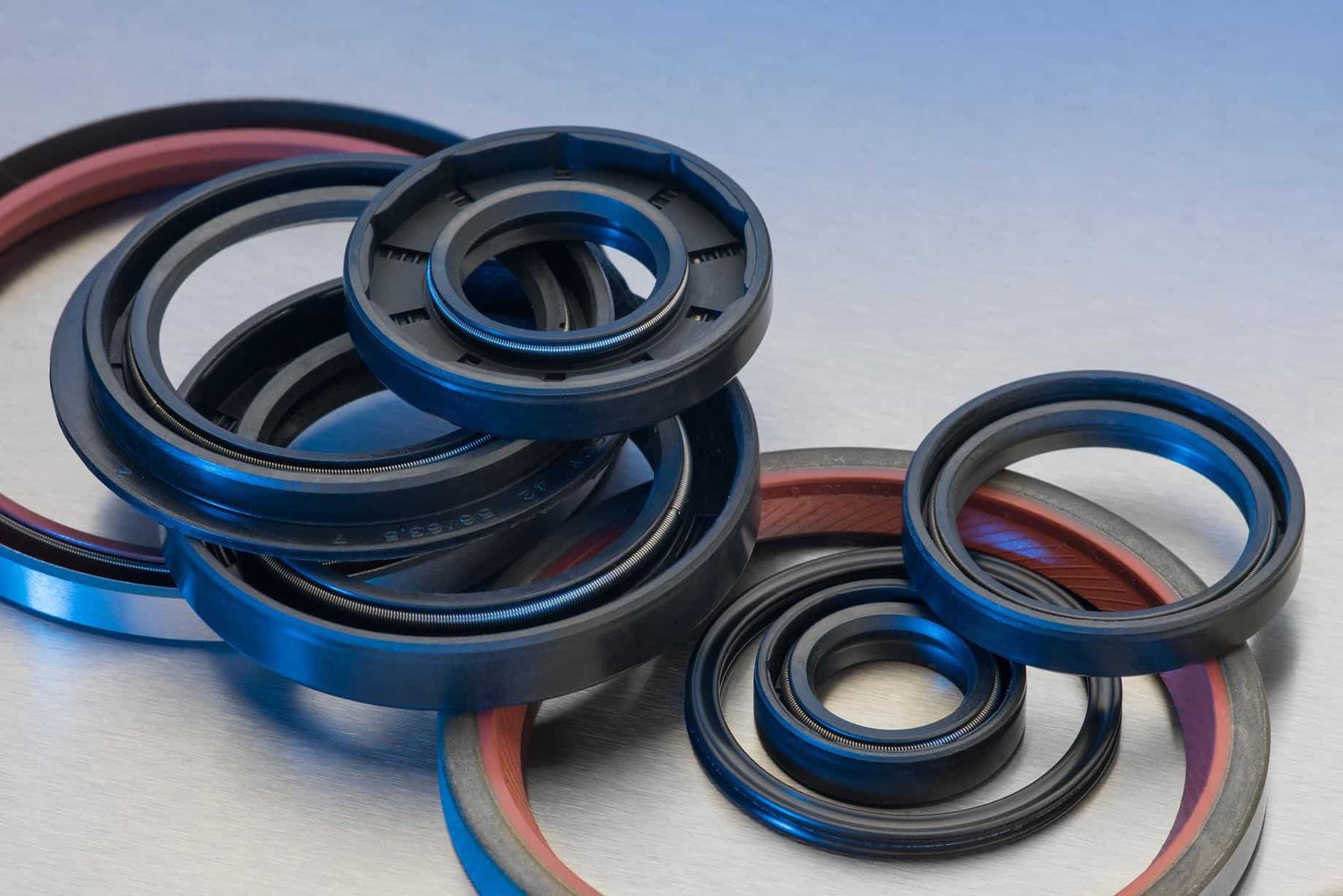
O-rings, oil seals, gaskets, valve seals, diaphragms, hydraulic seals, and custom molded sealing components rely on the controlled deformation and elastic recovery of rubber.
A properly designed seal must maintain sufficient contact pressure while resisting the temperature, pressure, fluid, and mechanical conditions of the equipment.
Common elastomer choices include:
| Elastomer | Common Selection Considerations |
|---|---|
| NBR | Often considered for mineral oils, fuels, hydraulic applications, and general industrial sealing. |
| FKM | Often selected for higher-temperature applications and many oil, fuel, and hydrocarbon environments. |
| EPDM | Commonly considered for hot water, steam in appropriate grades, weathering, and ozone exposure. |
| Silicone | Useful where broad temperature flexibility, weather resistance, and specialized sealing requirements are important. |
| HNBR | Used where improved mechanical, thermal, and chemical performance is required compared with conventional nitrile systems. |
The Parker O-Ring Handbook provides extensive engineering information covering elastomer properties, O-ring applications, static and dynamic design, and compound selection.
Important Material Selection Rule
Do not choose an O-ring or oil seal solely because the material has a high temperature rating. Evaluate temperature + fluid + pressure + movement + surface condition + required service life together.
3. Industrial Hoses and Fluid Transfer
Vulcanized rubber is widely used in industrial hoses for water, air, hydraulic fluids, oils, fuels, chemicals, and other media.
A hose must withstand more than internal pressure. Depending on the application, it may also experience repeated bending, vibration, abrasion, temperature cycling, external impact, and chemical exposure.
Reinforcement layers made from textile, wire, or other materials can provide additional pressure capability, while the rubber cover and tube are selected according to the internal and external environment.
This means hose performance depends on both rubber compound selection and overall hose construction.
4. Conveyor Belts and Material Handling
Conveyor systems used in mining, aggregate processing, recycling, agriculture, manufacturing, and logistics rely on rubber compounds that can survive repeated flexing and contact with transported materials.
Depending on the application, the rubber may need resistance to abrasion, impact, heat, oil, chemicals, weathering, or fire.
Selecting a belt based only on tensile strength can therefore be misleading. The actual material being transported, belt speed, temperature, pulley diameter, impact conditions, and environment all influence service life.
5. Construction and Infrastructure
Rubber is valuable in construction because buildings, bridges, pipelines, and other structures experience movement.
Vulcanized rubber products can be used for:
- Expansion joint seals
- Pipe gaskets
- Window and door seals
- Waterproofing components
- Vibration isolation pads
- Bridge bearings
- Roofing-related components
- Construction equipment seals
The material must often tolerate outdoor exposure, temperature changes, compression, water, ozone, and mechanical movement.
6. Electrical and Electronic Equipment
Vulcanized rubber can also be used in electrical and electronic equipment where flexible insulation, environmental sealing, cable protection, or vibration isolation is required.
Typical components include cable grommets, connector seals, enclosure gaskets, wire boots, protective covers, and vibration isolators.
Outdoor electrical equipment introduces additional requirements such as UV resistance, ozone resistance, moisture resistance, and temperature cycling.
Electrical performance should be verified for the specific compound rather than assumed from the generic term “rubber.”
7. Medical and Healthcare Products
Specialized elastomeric materials are used in medical equipment for seals, tubing, diaphragms, stoppers, valves, and other flexible components.
Silicone is commonly considered for applications requiring flexibility and broad temperature performance, while other elastomers may be appropriate for specific chemical, mechanical, or regulatory requirements.
For medical products, material selection alone is not sufficient. The exact formulation, manufacturing environment, cleanliness controls, sterilization process, and applicable regulatory requirements must also be evaluated.
Do not assume:
A rubber compound is not automatically “medical grade” simply because it is silicone or another commonly used medical elastomer. The specific grade and manufacturing controls must be verified.
8. Marine and Offshore Equipment
Marine environments expose rubber components to water, salt, UV radiation, ozone, vibration, temperature variation, and mechanical loading.
Applications include hatch gaskets, marine seals, protective profiles, hoses, vibration mounts, boat fenders, and other flexible components.
For marine equipment, water resistance alone is not enough. The material must be evaluated against the complete combination of environmental and mechanical conditions.
9. Aerospace Systems
Aerospace applications demand highly controlled rubber performance because seals and flexible components may encounter extreme temperatures, pressure changes, hydraulic fluids, fuels, lubricants, vibration, and strict dimensional requirements.
Potential applications include O-rings, gaskets, hoses, vibration isolation components, and specialized sealing elements.
Aerospace material selection should be based on the exact specification and qualification requirements of the system. A commercially available rubber compound should not be considered interchangeable with a qualified aerospace material simply because the dimensions are identical.
10. Household and Consumer Products
Vulcanized rubber is also used in everyday products such as shoe soles, mats, grips, wheels, appliance components, weatherstripping, protective pads, toys, and molded rubber parts.
Consumer products often require a balance between durability, flexibility, appearance, grip, cost, and resistance to environmental conditions.
This broad range of requirements demonstrates one of the key advantages of rubber technology: the material can be formulated and processed for very different performance targets.
How to Select the Right Vulcanized Rubber
The most common mistake in rubber selection is choosing a material based on one property, such as temperature rating or hardness.
A better approach is to evaluate the complete service environment.
- Temperature: What are the minimum, normal, and maximum temperatures?
- Fluid: Will the rubber contact oil, fuel, water, steam, refrigerant, chemicals, or another medium?
- Pressure: Is the application static, hydraulic, pneumatic, or high-pressure?
- Movement: Is the component static, reciprocating, oscillating, or rotating?
- Environment: Will it encounter UV, ozone, saltwater, dust, humidity, or outdoor exposure?
- Mechanical loading: What levels of compression, tension, bending, abrasion, or vibration are expected?
- Service life: How many cycles or operating hours are required?
- Regulatory requirements: Are automotive, food, medical, aerospace, electrical, or other specifications applicable?
The final compound should then be selected based on the combination of these requirements.
Why Hardness Alone Cannot Determine Rubber Performance
Rubber hardness is useful for specification and quality control, but hardness alone cannot tell you whether a rubber compound is suitable for a particular application.
Two 70 Shore A rubber compounds can have very different resistance to oil, temperature, ozone, compression set, abrasion, and chemical exposure.
For sealing applications, the correct balance between hardness, elasticity, compression behavior, chemical compatibility, and geometry is much more important than hardness by itself.
This is especially important when replacing an existing O-ring or oil seal. Matching the Shore hardness while changing the polymer family can create unexpected leakage or premature failure.
Common Failure Modes of Vulcanized Rubber
Thermal Degradation
Long-term exposure to elevated temperature can change rubber hardness, elasticity, tensile strength, and compression behavior.
Chemical Swelling
An incompatible fluid can cause rubber to swell, soften, shrink, harden, or lose mechanical strength.
Compression Set
When a rubber seal remains compressed for an extended period, permanent deformation can reduce its ability to maintain sealing force.
Abrasion and Wear
Dynamic seals, conveyor belts, rollers, and other moving components can lose material through repeated contact.
Ozone and Weather Cracking
Some elastomers are particularly sensitive to ozone exposure and may develop surface cracks under tensile strain.
Installation Damage
Even a correctly specified rubber component can fail prematurely because of cuts, twisting, excessive stretching, contamination, improper lubrication, or incorrect installation.
Vulcanized Rubber for O-Rings and Oil Seals
Sealing components provide one of the clearest examples of why material engineering matters.
An O-ring must deform into the gland and maintain contact with the mating surfaces. A rotary oil seal must maintain controlled lip contact while accommodating shaft rotation.
These components therefore require more than simple elasticity.
Engineers may need to consider:
- Compound compatibility with the sealing medium
- Temperature range
- Pressure
- Compression set
- Extrusion resistance
- Dynamic friction
- Wear resistance
- Surface finish
- Clearance
- Groove or housing design
The Parker O-Ring Handbook is a useful engineering reference because it addresses elastomer properties, static and dynamic O-ring design, applications, and compound selection.
Standard or Custom Vulcanized Rubber Parts?
Standard components are often the most economical choice when an existing size and material meet the application requirements.
Typical examples include standard O-rings, metric O-rings, common oil seals, rubber washers, gaskets, and standard extruded profiles.
Custom rubber molding or extrusion becomes more appropriate when the application requires:
- Non-standard dimensions
- Special cross-sectional geometry
- Custom hardness
- Special chemical resistance
- High-temperature performance
- Integrated sealing features
- Large-volume OEM production
- Replacement of an obsolete rubber component
For a custom part, providing a technical drawing, sample, 3D model, operating conditions, annual quantity, and required specifications can significantly improve material and tooling selection.
How to Test Vulcanized Rubber Quality
Quality should be evaluated using tests that reflect the intended application.
Depending on the product, manufacturers may evaluate tensile strength, elongation, hardness, compression set, tear strength, abrasion resistance, aging behavior, fluid immersion, dimensional stability, and cure characteristics.
ASTM maintains a broad range of rubber testing standards. For example, ASTM D412 covers tensile testing of vulcanized rubber and thermoplastic elastomers, while ASTM D395 covers compression set and ASTM D5289 evaluates vulcanization characteristics using a rotorless cure meter.
Quality Tip for OEM Buyers
Do not evaluate a rubber supplier only by visual appearance or Shore hardness. Ask for the material specification, batch traceability, relevant test results, dimensional inspection records, and certificates when the application requires them.
Is Vulcanized Rubber Sustainable?
The cross-linked structure that gives vulcanized rubber its useful properties also makes recycling more difficult than simply melting and remolding a thermoplastic.
Nevertheless, several approaches can reduce waste, including rubber reclaiming, grinding, reuse of production scrap, devulcanization technologies, longer product life, and improved manufacturing efficiency.
From an engineering perspective, durability is also important. A rubber component that lasts significantly longer can reduce replacement frequency, downtime, maintenance, and material consumption during the operating life of equipment.
Sustainability should therefore be considered across the entire product life cycle rather than by looking at the recycling method alone.
Vulcanized Rubber Applications at a Glance
| Industry | Typical Products | Important Requirements |
|---|---|---|
| Automotive | Tires, hoses, belts, O-rings, oil seals | Heat, oil, wear, vibration |
| Industrial | Gaskets, seals, rollers, hoses | Pressure, chemicals, abrasion |
| Construction | Gaskets, expansion joints, isolation pads | Weather, water, movement |
| Medical | Tubing, seals, diaphragms | Cleanliness, flexibility, compliance |
| Marine | Hatch seals, gaskets, fenders | Saltwater, UV, ozone |
| Aerospace | O-rings, gaskets, hoses | Temperature, pressure, fluids |
| Electronics | Grommets, boots, enclosure seals | Insulation, moisture, weather |
Frequently Asked Questions About Vulcanized Rubber
What are the main uses of vulcanized rubber?
Major applications include automotive tires and components, industrial hoses, O-rings, oil seals, gaskets, conveyor belts, construction products, electrical components, medical equipment, marine products, aerospace components, and consumer goods.
Is vulcanized rubber the same as natural rubber?
No. Natural rubber describes the source of the elastomer, while vulcanization describes a curing process that creates cross-links in a rubber compound. Natural rubber can be vulcanized, but many synthetic elastomers can also be cured.
Are O-rings made from vulcanized rubber?
Many conventional elastomeric O-rings are produced from cured rubber compounds such as NBR, FKM, EPDM, silicone, HNBR, and other elastomers. The appropriate material depends on the application environment.
What is the best vulcanized rubber for oil seals?
There is no universal best material. NBR is widely considered for many general oil-sealing applications, while FKM is often selected where higher temperature or demanding hydrocarbon resistance is required. The actual fluid, temperature, speed, pressure, and seal design must be evaluated together.
Can vulcanized rubber withstand high temperatures?
Some vulcanized rubber compounds provide excellent high-temperature performance, but the maximum usable temperature depends on the polymer, formulation, exposure duration, mechanical loading, and surrounding medium.
Does vulcanized rubber resist oil?
Some compounds have good oil resistance while others are unsuitable for petroleum-based fluids. NBR and FKM are commonly considered for many oil-related applications, but compatibility should be confirmed for the exact fluid and operating conditions.
Can vulcanized rubber be recycled?
Yes, but recycling is more technically challenging than with many thermoplastics because vulcanization creates a cross-linked network. Reclaiming, grinding, devulcanization, and other recovery methods can be used depending on the material and intended reuse.
Conclusion: Choosing Vulcanized Rubber by Application
Vulcanized rubber remains an essential engineering material because it combines elasticity with mechanical stability and can be formulated for a wide range of operating conditions.
Its applications extend far beyond tires and consumer products. O-rings, oil seals, gaskets, hoses, conveyor belts, vibration mounts, construction seals, medical components, marine products, and aerospace sealing systems all rely on carefully engineered elastomer performance.
The most important lesson is that “vulcanized rubber” is not a complete material specification. The polymer family, formulation, curing system, hardness, geometry, and service environment all influence the final performance.
For an industrial sealing application, the best starting point is therefore not “Which rubber is strongest?” but:
What temperature, fluid, pressure, movement, environmental exposure, and service life must the rubber withstand?
Once those requirements are understood, the appropriate elastomer, compound, hardness, geometry, and manufacturing process can be selected with much greater confidence.
For OEM and industrial rubber components, technical drawings, samples, groove dimensions, operating conditions, required specifications, and expected annual volumes can help manufacturers develop a more reliable sealing solution.