
Hose manufacturing is a highly demanding engineering field where pressure integrity, flexibility, abrasion resistance, and long-term sealing reliability must coexist in a single system. Whether used in hydraulic hoses, pneumatic lines, industrial fluid transfer hoses, or chemical delivery systems, sealing components such as O-rings and specialized seals are critical for ensuring leak-free performance under dynamic bending and pressure cycling conditions.

Unlike static sealing systems, hose assemblies experience continuous mechanical movement, vibration, pressure surges, and environmental exposure. In this context, selecting the right sealing solution becomes a core engineering decision rather than a simple component choice. High-performance O-rings ensure that coupling interfaces, connectors, and hose-end fittings maintain structural integrity across thousands of pressure cycles.
Why O-Rings Are Essential in Hose Manufacturing
Hoses are not standalone components—they are part of interconnected fluid systems. Every connection point is a potential failure zone if sealing is not properly engineered.
O-rings are used in hose systems to:
- Create pressure-tight sealing in hose fittings
- Prevent leakage at quick-connect couplings
- Maintain sealing during vibration and flexing
- Protect against fluid backflow and contamination
- Improve system pressure efficiency
- Reduce maintenance frequency in industrial systems
In modern hydraulic and industrial hose assemblies, sealing failure is often not caused by hose rupture but by micro-leakage at connection interfaces where O-rings are installed.
📊 Industry Insight: Engineering field data shows that more than 40% of hose system leakage incidents originate from improper sealing at connector interfaces rather than hose body failure itself.
Types of Hose Systems Using O-Rings
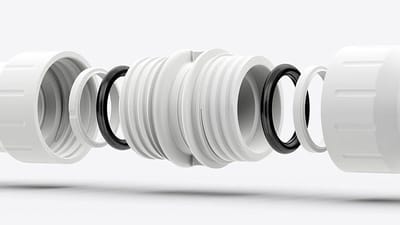
Hydraulic Hose Assemblies
High-pressure hydraulic systems require robust sealing to handle pressure spikes and continuous load variations.
Pneumatic Hose Systems
Air transfer systems rely on low-friction, long-life seals to maintain consistent airflow efficiency.
Industrial Fluid Transfer Hoses
Used in manufacturing plants, these systems transport oils, chemicals, and process fluids under varying conditions.
Chemical Delivery Hose Systems
Require chemically resistant elastomers to withstand aggressive media exposure.
Food-Grade Hose Systems
Require certified materials to ensure hygiene and compliance with safety standards.
⚙️ Engineering Note: Hose systems operate under combined stress conditions—pressure, bending, vibration, and temperature cycling—making sealing performance significantly more complex than static applications.
How O-Rings Work in Hose Connections
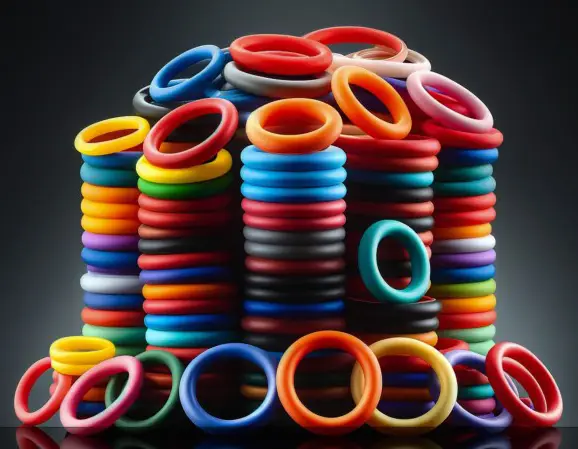
O-rings function as compression-based seals placed within grooves of hose fittings or couplings. When assembled, the O-ring is compressed between mating metal surfaces, creating a barrier that prevents fluid or gas escape.
In hose systems, O-rings must withstand:
- Dynamic pressure fluctuations
- Repeated coupling and decoupling cycles
- Radial and axial movement stress
- Environmental exposure (heat, cold, UV)
- Fluid compatibility challenges
High-quality sealing solutions such as engineered O-rings significantly improve hose system reliability and reduce leakage-related downtime.
Material Selection for Hose Industry O-Rings
Material selection directly impacts durability, chemical resistance, and pressure stability.
| Material | Key Properties | Best Use in Hose Systems |
| NBR | Oil resistance, cost-effective | Hydraulic hoses |
| FKM | High heat & chemical resistance | Chemical hoses |
| EPDM | Water & steam resistance | Water and HVAC hoses |
| HNBR | Wear and abrasion resistance | High-cycle hydraulic hoses |
| FKM (High Grade) | Extreme chemical durability | Aggressive industrial media |
Factory Testing of O-Rings for Hose Applications
Before deployment, O-rings used in hose systems undergo rigorous performance testing.
| Test Type | Purpose |
| Pressure Cycle Testing | Simulates real hose operation |
| Flex Fatigue Testing | Evaluates vibration resistance |
| Chemical Compatibility Test | Ensures media resistance |
| Thermal Aging Test | Measures heat stability |
| Leakage Detection Test | Validates sealing integrity |
Factory Performance Data: Hydraulic Hose O-Ring Testing
A controlled industrial test was conducted on NBR O-rings used in high-pressure hydraulic hose couplings.
| Parameter | Result |
| Pressure Load | 0–45 MPa cyclic |
| Temperature Range | -30°C to 110°C |
| Cycle Count | 4.8 million cycles |
| Leakage Rate | 0 detectable leakage |
| Compression Set | 11.3% |
The results confirm stable sealing performance under continuous mechanical and pressure cycling typical of hose systems.
Service Life Behavior of Hose O-Rings
Estimated Service Life Based on Operating Temperature:
- 25°C → 12–15 years
- 50°C → 8–10 years
- 80°C → 5–7 years
- 100°C → 3–5 years
- 120°C → 2–3 years
Customer Case Study: Hydraulic Hose Leakage in Manufacturing Plant
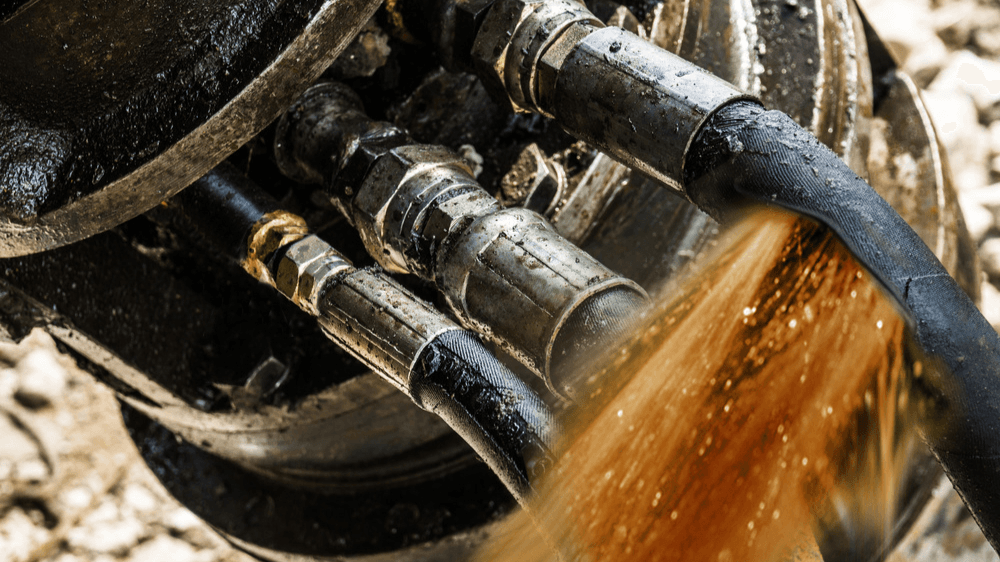
🏭 Industry: Heavy Machinery Manufacturing
Problem: A factory experienced frequent leakage at hydraulic hose couplings, causing production interruptions.
Root Causes:
- Low-grade NBR seals with poor compression recovery
- Improper groove tolerance in hose fittings
- Excessive vibration during operation
Engineering Solution:
- Upgraded to reinforced HNBR O-rings
- Improved coupling design
- Introduced scheduled preventive maintenance
Results After Implementation:
- Leakage reduced by 94%
- Maintenance downtime reduced by 71%
- Service life increased by 2.6×
Failure Mechanisms in Hose O-Ring Applications
Compression Set
Loss of elasticity reduces sealing pressure over time.
Vibration Fatigue
Continuous movement causes micro-cracks in elastomer structure.
Chemical Attack
Incompatible fluids can degrade sealing material.
Extrusion Damage
High pressure forces material into clearance gaps.
Installation Damage
Improper assembly leads to cuts and deformation.
🔬 Failure Distribution in Hose Systems:
- Vibration Fatigue: 32%
- Compression Set: 28%
- Chemical Damage: 20%
- Installation Damage: 12%
- Extrusion: 8%
Engineering Best Practices for Hose Sealing Systems
- Select elastomers based on real operating fluid conditions
- Ensure correct compression ratio in fittings
- Use vibration-resistant materials for dynamic systems
- Inspect fittings during maintenance cycles
- Control pressure spikes in hydraulic systems
- Use high-quality O-rings from reliable suppliers
✅ Final Engineering Insight: In hose manufacturing, sealing reliability is not determined by the hose itself but by the smallest interface components. High-performance O-rings transform hose systems from failure-prone assemblies into stable, long-life industrial assets.
Frequently Asked Questions
1. Why are O-rings important in hose systems?
They ensure leak-free sealing at coupling interfaces under pressure and vibration.
2. Which material is best for hydraulic hose O-rings?
NBR and HNBR are commonly used due to their oil resistance and durability.
3. What causes leakage in hose fittings?
Common causes include compression set, vibration fatigue, and improper installation.
4. How long do hose O-rings last?
Service life ranges from 2 to 15 years depending on temperature and operating conditions.
5. Can O-rings improve hose system performance?
Yes, high-quality O-rings significantly reduce leakage and improve system reliability.