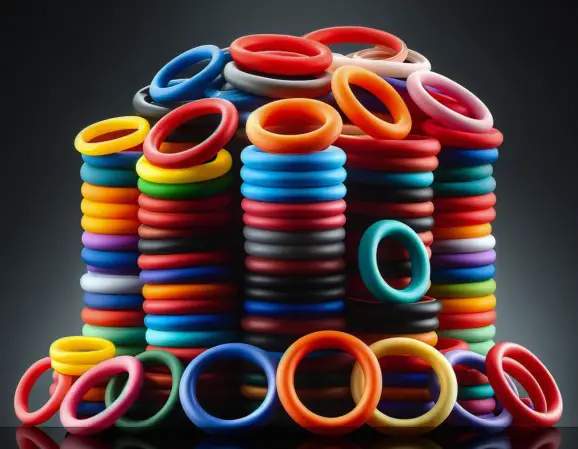

Blue O-ring kits are practical sealing assortments designed to help maintenance teams, technicians, repair workshops, and equipment operators identify and replace O-rings in a wide range of applications. A well-organized kit can keep frequently used sizes available, shorten repair time, reduce unnecessary component replacement, and make routine maintenance more efficient. However, the real value of a blue O-ring kit depends on more than its color or the number of rings included. Correct sizing, elastomer compatibility, hardness, operating conditions, and proper installation all determine whether an O-ring can provide a dependable seal.
O-rings are circular elastomeric sealing components installed in a groove and compressed between mating surfaces. This controlled deformation creates sealing contact that helps prevent liquid or gas from passing through the joint. Depending on the design, O-rings may be used in static connections, reciprocating cylinders, rotary equipment, hydraulic systems, pneumatic assemblies, automotive components, and industrial machinery.
Key point: Blue is a color, not a universal material specification. A blue O-ring may be made from different elastomers or compounds depending on the manufacturer. Always confirm the material, dimensions, hardness, and fluid compatibility before using a ring in equipment.
What Is the Purpose of a Blue O-Ring Kit?
The primary purpose of a blue O-ring kit is to provide a convenient selection of sealing rings in multiple sizes, allowing users to replace worn or damaged O-rings without ordering every size individually. Instead of keeping loose rings in unmarked containers, a compartmentalized kit organizes the components so that technicians can identify, inspect, and retrieve the required size more efficiently.
01 · Faster Maintenance
Keeps commonly used O-ring sizes available for routine repairs, reducing delays caused by searching for individual parts or waiting for small replacement orders.
02 · Better Organization
Separate compartments help prevent size mixing, support stock control, and make it easier to return unused rings to the correct location.
03 · Flexible Repair Support
A selection of metric or inch-based sizes can support different machines, fittings, valves, and service tasks when the material and design requirements are known.
04 · More Consistent Purchasing
Standardized assortments help workshops replenish frequently used sizes and establish clearer inventory procedures.
A kit is particularly useful when maintenance personnel service equipment with several different O-ring sizes. It can also help during preliminary troubleshooting when the original part reference is not immediately available. Nevertheless, an assortment should not be treated as a universal repair solution. Critical applications may require an exact OEM part number, a specified compound, a documented hardness, or a specially designed seal.
Does the Blue Color Identify the O-Ring Material?
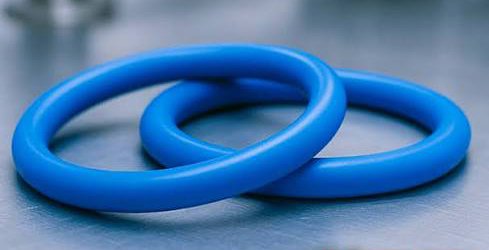
No. There is no universal rule that makes every blue O-ring a particular elastomer. Color may be selected for product identification, visual distinction, branding, manufacturing requirements, or a specific application. Some manufacturers offer colored compounds to help distinguish products, but the meaning of the color can differ between suppliers and product ranges.
Blue O-rings may be manufactured from a range of materials, including NBR, EPDM, silicone, FKM, or other specified compounds. The actual material depends on the product design and the manufacturer’s formulation. Even when two O-rings have the same nominal material family and color, their performance can differ because of compound formulation, curing system, hardness, and manufacturing quality.
Do not select an O-ring by color alone.
Check the supplier’s material designation, technical data sheet, dimensions, hardness, and intended service conditions. If the kit has no traceable material information, do not assume that its rings are suitable for fuel, drinking water, high-temperature oil, aggressive chemicals, or high-pressure hydraulic systems.
Why Color Can Still Be Useful
Although color is not a reliable standalone material identifier, it can still be useful for inventory organization and visual differentiation. A workshop may use color to separate products from different suppliers or to identify a particular kit series. This works only when the identification system is documented and the rings remain associated with their original labels.
For technical applications, maintain the manufacturer’s part number and material specification alongside any color-based identification. If rings are removed from their compartments and mixed together, color may not provide enough information to establish their suitability for a particular repair.
Common O-Ring Materials and Their Applications
Selecting the correct elastomer is essential because O-rings can swell, shrink, harden, soften, crack, or lose sealing force when exposed to incompatible fluids or operating conditions. The following material overview is intended for preliminary selection. Exact performance depends on the compound formulation, temperature, pressure, fluid composition, and duration of exposure.
| Material | Typical Strengths | Common Applications | Important Limitations |
|---|---|---|---|
| NBR Nitrile rubber | Good resistance to many petroleum-based oils and fuels, depending on compound and fluid. | General industrial equipment, hydraulic components, oil-handling assemblies. | May be unsuitable for some chemicals, weathering conditions, and high-temperature service. |
| EPDM Ethylene propylene rubber | Good resistance to weathering, ozone, and many water-based fluids. | Water systems, outdoor equipment, selected coolant and HVAC applications. | Generally unsuitable for petroleum oils and many hydrocarbon fuels. |
| FKM Fluoroelastomer | Good resistance to heat and many oils and chemicals, subject to compound selection. | Selected automotive, industrial, and chemical-service applications. | Compatibility varies; some compounds have limitations at low temperatures or with particular fluids. |
| Silicone VMQ | Useful temperature flexibility and low-temperature performance in suitable grades. | Selected appliances, instrumentation, and static sealing applications. | Mechanical strength, abrasion resistance, and fluid compatibility may limit use in dynamic or demanding service. |
| HNBR Hydrogenated nitrile rubber | Improved heat and mechanical performance compared with many conventional NBR compounds. | Selected automotive, oilfield, and industrial sealing systems. | Suitability still depends on the exact fluid, temperature, and compound specification. |
These material families are not interchangeable. For example, an EPDM O-ring that performs well in a water system may swell or deteriorate in contact with petroleum oil. Conversely, an NBR ring suitable for an oil fitting may not provide the required performance in an outdoor water system exposed to ozone and weathering.
When the application involves high pressure, hazardous fluids, food contact, potable water, oxygen, fuel, or other regulated service, confirm the required approvals and compound specifications before using an assortment kit. A general-purpose kit should not be assumed to meet specialized compliance requirements.
Where Are Blue O-Ring Kits Commonly Used?
Blue O-ring kits can support many maintenance environments when their contents match the application. Their usefulness comes from having suitable replacement sizes available, not from the color itself.
Industrial Machinery and Manufacturing Equipment
Industrial machinery often contains valves, pumps, manifolds, connectors, and removable housings that depend on elastomeric seals. A correctly specified O-ring helps prevent leakage, maintain pressure, and reduce contamination at these interfaces.
A maintenance kit can be useful for planned servicing and minor repairs, particularly where several standardized O-ring sizes are used. However, the replacement must match the original groove dimensions, material, hardness, and operating conditions. If a leak occurs repeatedly, inspect the sealing groove, surface finish, fastener loading, and pressure conditions instead of simply fitting another ring.
Automotive and Transportation Systems
Vehicles use O-rings in a variety of assemblies, including selected fluid connectors, air-conditioning systems, fuel-related components, hydraulic circuits, and engine accessories. Different systems may require very different materials and approvals.
For example, an air-conditioning connection may require a specific refrigerant-compatible O-ring, while a fuel-system seal must be compatible with the fuel blend and pressure conditions. A random ring from a general assortment should not be used simply because it fits the groove. Always follow the vehicle manufacturer’s parts and service information.
Hydraulic and Pneumatic Equipment
Hydraulic systems rely on seals to control fluid leakage and preserve pressure. Pneumatic equipment uses seals to limit air loss and support consistent operation. The correct O-ring design depends on whether the joint is static, reciprocating, or rotary, as well as the pressure, speed, clearance, and fluid involved.
In high-pressure hydraulic applications, a correctly sized O-ring may still extrude into a clearance gap if the design is unsuitable for the pressure and hardness requirements. Back-up rings or another sealing arrangement may be required. Consult the equipment documentation before substituting parts from a general-purpose kit.
Water Treatment, Plumbing, and HVAC
O-rings are used in selected valves, filters, pumps, couplings, and HVAC connections. Water chemistry, temperature, cleaning agents, and regulatory requirements all affect material selection. EPDM may be suitable for many water-related applications, but potable-water contact requires the correct product approvals and cannot be inferred from the material name or color alone.
Maintenance Workshops and Field Service
A portable O-ring kit is useful for technicians who service different machines or perform field repairs. A compartmentalized case helps keep sizes organized and can reduce the number of separate packages carried to a worksite.
For remote service, consider environmental conditions such as heat, sunlight, dust, moisture, and the expected storage period. Keep the kit closed when not in use, retain material labels, and replenish compartments with the same verified specification whenever possible.
How to Choose the Right Blue O-Ring Kit
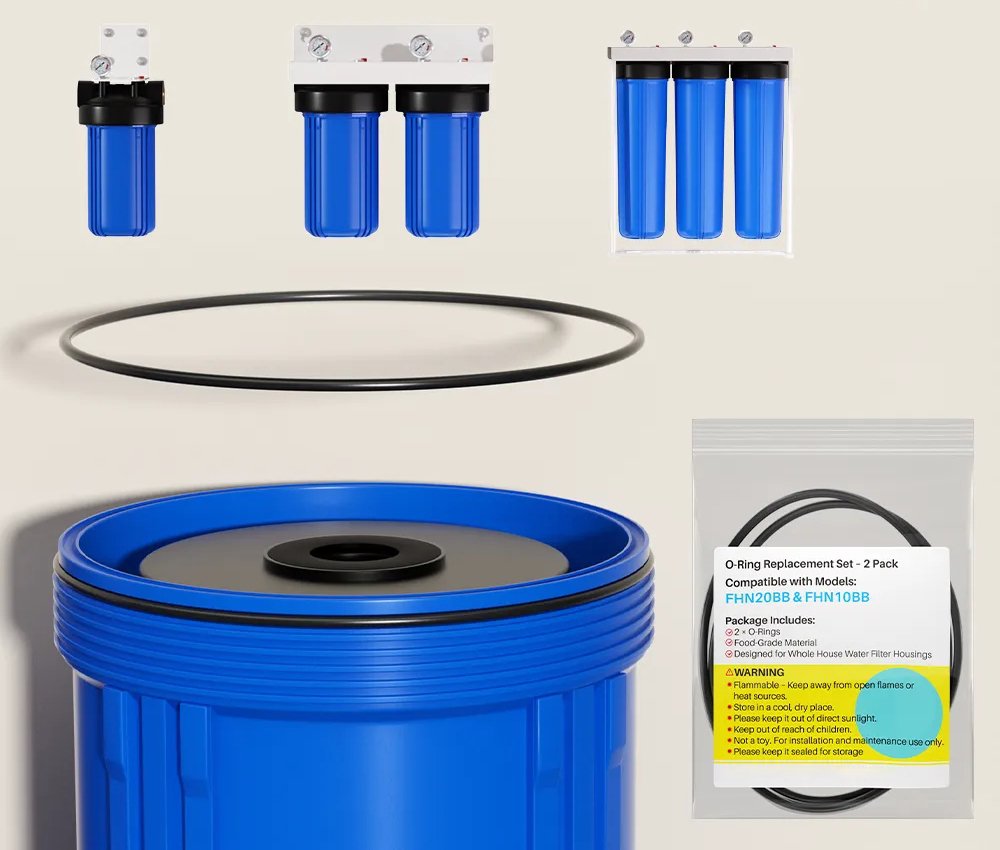
The right kit should match the equipment being serviced and the way maintenance is performed. A large assortment is not necessarily better if it contains the wrong sizes or an unsuitable material. A smaller kit with verified dimensions and traceable compounds may be more valuable for a specialized workshop.
1. Identify the Application
Start by identifying the machine, connection, fluid, pressure, temperature, and movement type. Determine whether the O-ring is used in a static joint, a reciprocating mechanism, or a rotating assembly. The same size may require different design considerations depending on how it operates.
2. Select the Correct Size Range
Check whether the kit contains metric sizes, inch-based AS568 sizes, or another dimensional standard. The inner diameter and cross-sectional diameter are both important. A ring with the correct inner diameter but the wrong cross-section may produce inadequate compression or excessive deformation.
Where the original ring is available, inspect its condition and use the equipment drawing or approved part reference to confirm the intended dimensions. A stretched, flattened, swollen, or damaged O-ring may no longer reflect its original size accurately.
3. Confirm Material and Hardness
Check the elastomer family and, where required, the compound designation and Shore A hardness. Hardness affects deformation, sealing contact, and resistance to extrusion, but it cannot be selected independently of the groove geometry, pressure, and application.
If the supplier only describes the contents as a “blue rubber assortment” without providing material information, request a technical specification before using the kit in demanding service.
4. Review the Kit’s Size Coverage
Compare the listed sizes with the equipment you maintain most frequently. A general-purpose workshop may benefit from a broad range, while a dedicated hydraulic or automotive repair operation may need a more focused assortment of specific sizes and materials.
Review whether the kit includes a size chart, part identification, and clear compartment labels. These details help prevent selection errors and make replenishment easier.
5. Check Quality Documentation and Traceability
For routine maintenance, clear product identification and consistent manufacturing quality are important. For critical applications, request material data, dimensional specifications, batch traceability, and any required compliance documents. Quality management certification can provide useful information about a manufacturer’s processes, but it does not by itself prove that a particular O-ring is suitable for a specific fluid or operating condition.
Buyer checklist
✓ Confirm the application and operating fluid.
✓ Check the required dimensional standard and size range.
✓ Verify material, hardness, and temperature limits.
✓ Review the kit’s labeling and compartment organization.
✓ Request technical documents for demanding or regulated applications.
✓ Confirm storage recommendations, packaging, and replacement availability.
How to Measure and Identify an O-Ring
Accurate measurement helps prevent incorrect replacements and unnecessary repeat repairs. Most conventional O-rings are specified by two principal dimensions: inner diameter (ID) and cross-sectional diameter (CS). Both should be checked against the relevant drawing or dimensional standard.
ID
Top view
CS
Cross-section
Conceptual diagram only — use calibrated measuring tools for inspection
The inner diameter describes the opening through the ring. The cross-sectional diameter describes the thickness of the elastomer cord. The diagram is illustrative and not a dimensional scale.
Measure the Inner Diameter
Use a suitable measuring tool to determine the inner diameter without stretching the ring. If the O-ring is old or deformed, compare the measurement with the original component drawing or manufacturer specification. Avoid relying solely on an aged ring that may have swollen or permanently compressed in service.
Measure the Cross Section
Measure the thickness of the ring’s circular cross-section using a suitable low-force measuring method. Excessive measuring pressure can deform soft elastomers and produce an inaccurate result. If the ring is flattened or damaged, use the specified original size rather than treating the distorted measurement as definitive.
Inspect the Groove and Mating Surfaces
O-ring performance depends on the groove as well as the ring itself. Check for scratches, burrs, corrosion, contamination, incorrect dimensions, and damage to the mating surfaces. Groove depth, width, clearance, and surface finish must match the design requirements.
Do not choose an O-ring based only on the diameter of the part it fits around. The correct size must provide the intended squeeze without excessive stretching, over-compression, or obstruction of the required clearance.
Correct O-Ring Installation and Maintenance
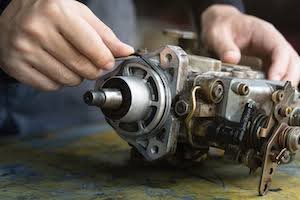
An O-ring can fail prematurely even when its material and dimensions are correct. Cutting, twisting, contamination, incorrect lubrication, poor groove condition, and excessive compression can all compromise the sealing interface. A consistent installation procedure helps preserve the ring and reduce the risk of leakage.
Step 1: Clean the Components
Remove dirt, old seal fragments, and other contamination from the groove and mating surfaces. Use a cleaning method compatible with the equipment and seal material. Avoid sharp tools that could scratch the groove or damage a precision sealing surface.
Step 2: Inspect the Replacement Ring
Check the O-ring for cuts, cracks, surface defects, contamination, deformation, or signs of deterioration. Confirm its size and material before installation. Do not install a damaged ring or use an unidentified ring in a critical application.
Step 3: Apply Compatible Lubrication
Where specified, apply a thin film of lubricant compatible with the elastomer and the system fluid. Lubrication can reduce friction during assembly and help prevent rolling, pinching, or tearing. However, not every lubricant is compatible with every elastomer or process fluid. Confirm the manufacturer’s instructions before use.
Step 4: Install Without Twisting or Stretching Excessively
Place the ring into its groove evenly and avoid twisting it. When the ring must pass over threads, ports, or sharp edges, use an appropriate protective sleeve or installation tool. Excessive stretching can damage the elastomer or alter its final dimensions.
Step 5: Assemble and Test
Assemble the components using the specified procedure, tightening sequence, and torque values. Where required, perform a leak or pressure test according to the equipment manufacturer’s instructions before returning the system to service.
Common installation mistakes to avoid
✗ Choosing a replacement by color alone.
✗ Reusing an O-ring that is cut, cracked, or permanently deformed.
✗ Stretching the ring excessively during fitting.
✗ Using an incompatible grease or assembly lubricant.
✗ Ignoring a damaged groove or an incorrect clearance gap.
✗ Replacing the O-ring repeatedly without investigating the cause of leakage.
Why Do O-Rings Leak or Fail Prematurely?
Understanding failure symptoms can help maintenance personnel distinguish a sizing issue from a material problem or an installation error. The following table summarizes common causes and practical inspection steps.
| Observed Condition | Possible Cause | Recommended Action |
|---|---|---|
| Swollen or unusually soft ring | Incompatible fluid or chemical exposure | Verify the fluid and select a compatible compound. |
| Hard, cracked, or brittle ring | Heat aging, oxidation, or incompatible service conditions | Review the temperature history and material specification. |
| Cut or nicked surface | Sharp edges, rough installation, or tool damage | Inspect the groove and use suitable installation tools. |
| Flattened or permanently deformed ring | Compression set, excessive temperature, or prolonged service | Check squeeze, material capability, and replacement intervals. |
| Extruded or torn ring | Excessive pressure, large clearance, or unsuitable hardness | Review groove design, clearance, pressure, and any required back-up ring. |
| Repeated leakage with a new ring | Wrong size, damaged groove, poor surface finish, or assembly misalignment | Inspect the complete sealing interface before replacing the ring again. |
An O-ring is only one part of a sealing system. If leakage continues after a correct replacement, inspect the groove dimensions, mating surfaces, assembly alignment, pressure conditions, and compatibility of the material with the operating fluid. Repeatedly replacing rings without correcting the root cause can increase maintenance cost without improving reliability.
Storage and Shelf-Life Considerations for O-Ring Kits
Elastomeric seals can deteriorate during storage if they are exposed to excessive heat, direct sunlight, ozone, unsuitable chemicals, or mechanical deformation. A good O-ring kit should therefore be stored in a clean, controlled environment and kept organized so that rings remain protected until needed.
Keep the Kit Clean and Closed
Close the storage case after use to reduce dust and contamination. Keep compartments labeled, and avoid mixing unidentified rings with documented stock. If a ring is removed from its original packaging, retain the product and batch information where traceability is important.
Avoid Heat, Sunlight, and Ozone Sources
Follow the supplier’s storage recommendations for temperature, light exposure, humidity, and packaging. Avoid storing elastomer seals near equipment that generates ozone or in locations where they may be exposed to oils, solvents, or cleaning chemicals that are not part of the intended application.
Use Documented Shelf-Life Guidance
Shelf life varies by elastomer, compound, storage conditions, packaging, and applicable requirements. Do not assume that all O-rings have the same storage life. For critical applications, consult the manufacturer’s documentation and any applicable industry or customer requirements before using long-stored inventory.
How to Assess the Quality of a Blue O-Ring Kit
A professional kit should provide more than a visually attractive case. Buyers should assess whether the contents are correctly identified, dimensionally consistent, suitable for the intended application, and protected against damage during storage and transportation.
Dimensional Consistency
O-rings should match the declared dimensions and applicable tolerances. For industrial purchasing, dimensional checks should follow the product specification and use appropriate measuring equipment. A simple sizing cone or visual comparison can assist preliminary identification, but it should not replace dimensional inspection when a formal pass/fail decision is required.
Material Identification
The kit should identify the material family and provide additional compound information where required. Color and visual appearance cannot reliably establish chemical resistance or temperature capability. Request technical data when the application involves demanding operating conditions.
Packaging and Labeling
A well-organized case helps prevent size mixing and protects rings from unnecessary contamination. Clear compartment labels, a size chart, and a documented contents list make inventory control and replenishment easier.
Documentation and Supplier Support
For industrial, automotive, and regulated applications, confirm whether the supplier can provide the necessary product specifications, material declarations, batch identification, inspection reports, or compliance documents. Ask for the exact documentation required by the application rather than relying on a generic claim that the kit is “industrial grade.”
ISO 9001 certification relates to a quality management system. It does not independently establish that every O-ring in a kit has a particular chemical resistance, dimensional tolerance, or regulatory approval. Product-specific evidence remains important.
Blue O-Ring Kits for Workshops, Distributors, and OEM Purchasing
Different buyers have different requirements. A general repair workshop may prioritize a compact assortment of frequently used sizes, while a production facility may need standardized compounds, documented specifications, and replenishment continuity. Selecting a kit around actual maintenance demand can help avoid paying for sizes that are rarely used.
Repair Workshops
Prioritize commonly used sizes, readable labels, portable packaging, and clear instructions for verifying the replacement material.
Fleet Maintenance Teams
Choose assortments based on recurring service requirements and maintain a documented replenishment list for frequently used dimensions.
Distributors and Wholesalers
Evaluate packaging durability, product identification, batch traceability, minimum order quantities, and consistent availability.
OEM and Industrial Buyers
Prioritize engineering specifications, material approvals, documented inspection criteria, and reliable supply for repeat production.
When requesting a quotation, provide the required size standard, material, hardness, quantity, packaging format, and application details. If a custom kit is needed, provide a contents list with individual O-ring sizes and quantities. This allows the supplier to prepare a more accurate offer and reduces the risk of receiving a kit that does not match the maintenance requirement.
Authoritative Technical Resources for O-Ring Selection
O-ring selection should be based on documented engineering requirements rather than color, marketing descriptions, or general-purpose assumptions. The following resources offer useful technical information for checking materials, sizes, installation, and kit specifications.
Parker O-Ring Handbook: The Parker O-Ring Handbook covers O-ring design fundamentals, material selection, dimensional considerations, applications, and maintenance tools. It is a useful engineering reference when evaluating an O-ring kit for a particular sealing task.
Parker O-Ring Selector: The Parker O-Ring Selector provides a tool for evaluating O-ring size and material options against specified service conditions. Use the tool alongside the equipment drawing and manufacturer’s requirements.
Parker O-Ring product and technical resources: Visit Parker’s product information website to locate relevant O-ring product details, technical documentation, and material information.
ISO 3601: The International Organization for Standardization publishes standards used across many engineering fields. ISO 3601 is a relevant O-ring standard family covering dimensions, tolerances, and related requirements. Consult the applicable edition and part of the standard for the specific product and application.
These references provide engineering guidance but do not automatically approve a particular blue O-ring kit for every use. The final choice should be based on the actual ring specification, equipment design, operating conditions, and any applicable regulatory or customer requirements.
Frequently Asked Questions About Blue O-Ring Kits
1. What is the main purpose of a blue O-ring kit?
A blue O-ring kit provides a convenient assortment of sealing rings in different sizes for maintenance, repair, and replacement work. It helps technicians keep common sizes organized and available, reducing the time needed to locate individual components. The rings must still be selected according to the required dimensions, material, and operating conditions.
2. Are all blue O-rings made from the same material?
No. Blue is not a universal material code. Depending on the manufacturer, blue O-rings may use different elastomers or compound formulations. Always check the product documentation for the material, hardness, temperature capability, and fluid compatibility rather than relying on color alone.
3. Can I use a blue O-ring kit for automotive or hydraulic repairs?
Yes, when the kit contains O-rings specifically suitable for the application. Automotive and hydraulic systems may require particular sizes, elastomers, hardness grades, pressure ratings, or approvals. A general-purpose assortment should not be used in fuel, refrigerant, high-pressure, or other demanding systems unless the product specification confirms compatibility.
4. How do I choose the correct O-ring from a kit?
Identify the original part number or consult the equipment drawing. Confirm the inner diameter, cross-sectional diameter, material, hardness, groove dimensions, and operating conditions. Inspect the selected ring for damage before installation, and use compatible lubrication and the correct fitting procedure where required.
5. How should blue O-ring kits be stored to preserve their quality?
Store the kit in its closed, labeled case in a clean environment, following the manufacturer’s recommendations for temperature, light exposure, and shelf life. Keep elastomers away from damaging chemicals, excessive heat, direct sunlight, and ozone sources. Retain product and batch information when traceability is important, and replace rings that show signs of deterioration.