Fluorosilicone and silicone are closely related elastomers, but they are not interchangeable.
Both can provide excellent temperature flexibility, weather resistance, and long-term sealing performance. The major engineering difference appears when the seal is exposed to fuels, mineral oils, aromatic hydrocarbons, solvents, or demanding low-temperature conditions.
Selecting an elastomer only from its advertised temperature range is one of the most common causes of premature O-ring failure. A silicone O-ring may perform extremely well in hot air and outdoor environments, yet swell or soften when exposed to hydrocarbon fuel. A fluorosilicone O-ring can solve that compatibility problem while retaining much of silicone’s low-temperature flexibility, but it also introduces limitations in mechanical strength, abrasion resistance, and certain chemical environments.
For engineers, maintenance teams, and purchasing departments, the real question is therefore not simply “Which material is better?” The more useful question is: “Which elastomer provides the required sealing performance under the actual combination of temperature, fluid, pressure, movement, and installation conditions?”
What Is Silicone Rubber?
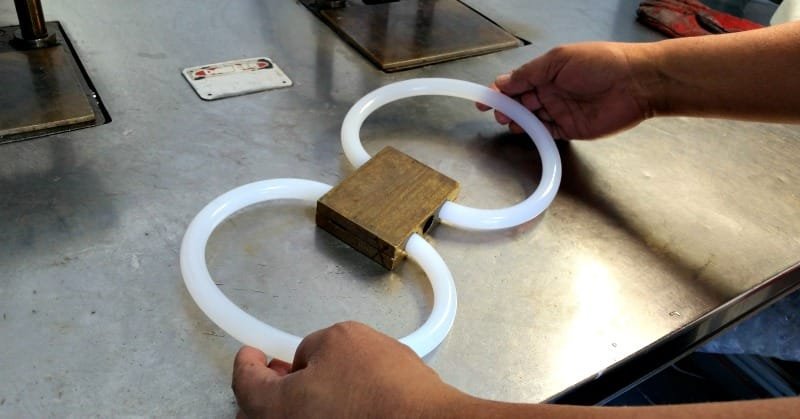
Silicone rubber is a family of elastomers commonly identified by designations such as VMQ, MQ, and related silicone formulations. Its molecular backbone provides excellent flexibility across a wide temperature range, along with strong resistance to ozone, weathering, UV exposure, and many environmental conditions.
Silicone is especially valuable when a seal must remain flexible during repeated temperature changes. It is widely used in gaskets, O-rings, tubing, electrical insulation, lighting components, medical products, food-processing equipment, and outdoor sealing applications.
Key strength of silicone:
Excellent thermal stability, low-temperature flexibility, weather resistance, ozone resistance, electrical insulation, and suitability for many clean or hygienic applications.
However, silicone should not be treated as a universal chemical-resistant rubber. Standard silicone compounds generally have poor compatibility with petroleum-based fuels and many hydrocarbon fluids. This limitation becomes critical in fuel systems, oil-contact applications, and equipment exposed to aromatic hydrocarbons.
What Is Fluorosilicone Rubber?
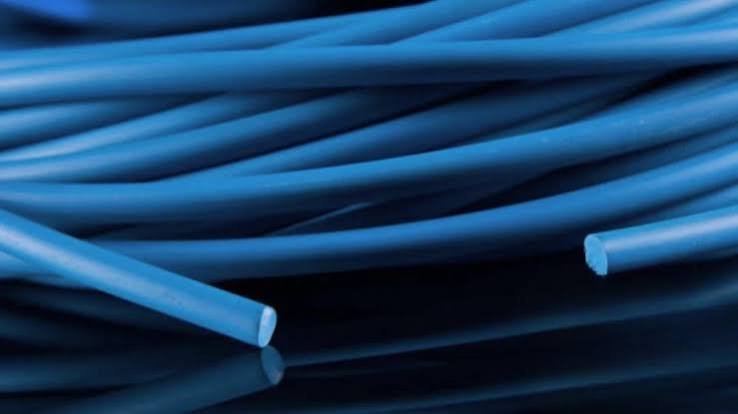
Fluorosilicone rubber is commonly designated as FVMQ. It retains the silicone-based backbone responsible for excellent temperature flexibility while incorporating fluorinated side groups that improve resistance to fuels, oils, and selected hydrocarbon-based fluids.
This chemistry makes FVMQ particularly useful where two requirements appear together: low-temperature flexibility and hydrocarbon resistance. This combination is one reason fluorosilicone has become an important material for aerospace fuel systems, automotive fuel components, sensors, connectors, and other specialized sealing applications.
The material should not, however, be considered a stronger version of ordinary silicone. FVMQ is a specialized compromise. It improves fuel and oil resistance compared with VMQ, while retaining many of silicone’s temperature characteristics, but it still has relatively limited mechanical strength and abrasion resistance compared with materials such as HNBR or many FKM compounds.
FVMQ vs VMQ: The Most Important Difference
The easiest way to understand the difference is to think about the sealing environment rather than the material name.
| Property | Silicone / VMQ | Fluorosilicone / FVMQ |
|---|---|---|
| Low-temperature flexibility | Excellent | Excellent |
| High-temperature capability | Excellent; grade dependent | Very good; compound dependent |
| Fuel resistance | Generally poor | Excellent for many fuels |
| Mineral oil resistance | Generally limited | Significantly improved |
| Weather / ozone resistance | Excellent | Excellent |
| Abrasion resistance | Limited | Limited |
| Dynamic sealing | Usually application-specific | Generally not the first choice |
| Typical role | Thermal, environmental, electrical and hygienic sealing | Fuel, oil and low-temperature sealing |
The critical distinction is therefore hydrocarbon compatibility. Parker’s O-Ring Handbook identifies silicone as having excellent temperature, ozone and weather performance while listing hydrocarbon fuels and aromatic hydrocarbons among fluids that standard silicone should not be used with. The same handbook identifies FVMQ as providing substantially better resistance to fuels and aromatic mineral oils.
Temperature Performance: Do Not Compare Numbers Without the Compound
Temperature range is often the first specification buyers compare, but a single “maximum temperature” number can be misleading. Elastomer performance depends on compound formulation, hardness, exposure time, sealing geometry, fluid environment, compression, and whether the seal is static or dynamic.
Parker data describes silicone as capable of approximately 204°C in general formulations, with special compounds reaching higher temperatures. Other technical references list silicone grades around -60°C to +230°C. FVMQ is also available in different formulations, with Parker documenting fluorosilicone compounds around -55°C to approximately 175°C and specialized automotive grades extending from about -73°C to +177°C.
Engineering rule:
Never approve an O-ring solely because its catalog temperature range overlaps your operating temperature. Confirm the actual compound, fluid exposure, compression set data, hardness, pressure, and expected service life.
Why Fluorosilicone Performs Better in Fuel Applications
Standard silicone has an excellent silicon-oxygen backbone, but its chemical structure does not provide the hydrocarbon resistance required for many fuel-contact applications. Exposure to gasoline, diesel, jet fuel, or aromatic hydrocarbons can cause swelling, softening, dimensional changes, and loss of sealing force.
FVMQ introduces fluorinated side groups into the silicone structure. The result is a material that retains silicone’s low-temperature flexibility while significantly improving resistance to petroleum fuels and selected oils.
This is especially useful in applications where a conventional FKM may become too stiff at very low temperatures. Parker’s automotive fluorosilicone technical bulletin, for example, documents specialized FVMQ O-rings with a functional range extending from approximately -73°C to +177°C and identifies fuel quick-disconnect systems and fuel/air sensors as typical applications.
Where Silicone Is Usually the Better Material Choice
Silicone remains a highly useful sealing material when hydrocarbon resistance is not the primary requirement. Its flexibility, weather resistance, electrical insulation, and thermal stability make it suitable for many environments.
- Food and beverage equipment: when the selected compound has the required regulatory approval.
- Medical and healthcare components: where an appropriately qualified silicone formulation is specified.
- Electrical and electronic sealing: especially where dielectric properties and environmental stability matter.
- Outdoor equipment: where ozone, UV exposure, sunlight, and weathering are significant concerns.
- High-temperature gaskets: when the sealing medium is compatible with silicone.
- General environmental sealing: when contact with aggressive hydrocarbons is not expected.
Where Fluorosilicone Is Usually Considered
FVMQ becomes more attractive when fuel or hydrocarbon exposure is combined with a requirement for excellent low-temperature flexibility.
- Aerospace fuel systems
- Fuel connectors and quick-disconnect systems
- Fuel sensors and valves
- Automotive fuel-system components
- Aircraft and ground-support equipment
- Low-temperature sealing with petroleum-fluid exposure
SAE material specifications also demonstrate that FVMQ is not simply a generic rubber category. Different specifications address specific hardness ranges, product forms, and fuel/oil-resistant applications. Therefore, an aerospace drawing should be interpreted according to the exact material specification rather than simply ordering a generic “fluorosilicone O-ring.”
A Major Limitation: FVMQ Is Not an Ideal Dynamic Seal Material
One of the most important points frequently missed in simple silicone-versus-fluorosilicone comparisons is mechanical performance.
Silicone elastomers generally have relatively low tensile strength, tear resistance, and abrasion resistance compared with several other sealing materials. Fluorosilicone retains many of these mechanical limitations.
This matters when the O-ring moves continuously against a shaft, piston, rod, or rotating surface. Friction, wear, extrusion, and repeated deformation can become more important than chemical compatibility.
Do not choose FVMQ simply because the fluid is compatible.
If the seal operates dynamically, evaluate friction, wear rate, surface finish, pressure, speed, lubrication, extrusion clearance, and expected cycles. In many dynamic applications, another elastomer may provide a more suitable balance.
FVMQ vs Silicone vs FKM: A More Useful Three-Way Comparison
In real engineering projects, the decision is often not FVMQ versus VMQ alone. FKM is another major candidate because it combines strong fuel and oil resistance with excellent high-temperature performance.
| Requirement | VMQ / Silicone | FVMQ / Fluorosilicone | FKM |
|---|---|---|---|
| Extreme low temperature | Excellent | Excellent | Compound dependent |
| Fuel resistance | Poor | Excellent | Excellent |
| High-temperature oil service | Limited | Good in selected conditions | Excellent |
| Weather / ozone | Excellent | Excellent | Excellent |
| Dynamic wear resistance | Limited | Limited | Generally stronger candidate |
The comparison shows why there is no universal “best” elastomer. VMQ, FVMQ, and FKM occupy different performance zones. Material selection should be based on the actual failure mechanism the seal must prevent.
How to Select the Correct FVMQ or Silicone O-Ring
Before requesting a quotation or releasing an O-ring drawing, collect the following information:
- Fluid: Identify the exact fuel, oil, solvent, coolant, cleaning agent, or process fluid.
- Temperature: Record both minimum and maximum actual operating temperatures.
- Exposure time: Continuous immersion and occasional splash exposure can produce very different requirements.
- Pressure: Include maximum pressure, pressure cycling, and extrusion clearance.
- Movement: Specify whether the seal is static, reciprocating, oscillating, or rotating.
- Hardness: Select Shore A hardness according to gland geometry, pressure, installation, and sealing force.
- Regulatory requirements: Food, medical, aerospace, automotive, or other industry requirements may require a specific qualified compound.
- Specification: If the drawing contains an ASTM, SAE, MIL, AMS, OEM, or customer material callout, match the exact specification rather than substituting a generic material name.
Common Material Selection Mistakes
1. Choosing Silicone Because the Temperature Is High
High temperature alone does not automatically mean silicone is appropriate. If the same seal is exposed to gasoline, diesel, jet fuel, or aromatic hydrocarbons, fluid compatibility may dominate the selection.
2. Choosing FVMQ for Every Fuel Application
Fuel resistance does not automatically make FVMQ the correct choice. Pressure, movement, wear, compression set, gas permeability, and the exact fuel formulation must still be evaluated.
3. Assuming Every Silicone or FVMQ Compound Is Equivalent
Polymer family names describe a broad material class. Different manufacturers can formulate compounds with different hardness, fillers, curing systems, mechanical properties, compression-set behavior, and regulatory qualifications.
4. Selecting From a Temperature Chart Alone
Temperature charts are useful for screening materials, but they are not a substitute for compound-specific compatibility data. A seal may survive a temperature for a short period while still experiencing swelling, compression-set increase, embrittlement, or loss of sealing force.
Why Compound Identification Matters
ASTM D1418 provides standardized rubber nomenclature and identifies VMQ and FVMQ within the silicone-related Q family. This is useful because material names can otherwise become confusing when manufacturers use different commercial names.
For production sealing components, however, identifying the polymer family is only the beginning. The purchasing specification should ideally identify the required compound, hardness, dimensions, applicable standard, color where relevant, and required inspection or certification documents.
For critical sealing applications:
specify the complete material requirement instead of writing only “silicone” or “fluorosilicone.” The correct compound is the material that has been evaluated against the actual service environment.
Can Fluorosilicone Be Used for Food or Medical Sealing?
This question should be answered from the qualification of the specific compound, not simply from the polymer family.
Silicone has established applications in food, beverage, medical, and pharmaceutical environments because appropriately formulated grades can offer cleanliness, temperature resistance, low odor, and relevant regulatory compliance. However, not every silicone product is automatically FDA compliant or suitable for medical contact.
The same principle applies even more strongly to fluorosilicone. If a food-contact, pharmaceutical, or medical application requires a specific regulatory status, the supplier should provide documentation for the actual compound and product rather than relying on the statement “silicone-based.”
Installation Considerations for FVMQ and Silicone O-Rings
Even a correctly selected elastomer can fail during installation. Silicone and fluorosilicone can be vulnerable to cuts, nicks, stretching damage, and surface defects because of their relatively limited mechanical strength compared with tougher elastomers.
Before installation, inspect the groove for burrs, sharp edges, contamination, and machining damage. Confirm that the O-ring dimensions are correct and that the gland provides the required squeeze without excessive deformation.
Avoid twisting the O-ring during assembly. If the component must pass over threads, splines, ports, or sharp shoulders, use appropriate installation protection. The lubricant must also be chemically compatible with the selected elastomer and the operating fluid.
A Practical Decision Process
Step 1
Identify the fluid and confirm chemical compatibility.
Step 2
Determine minimum and maximum operating temperature.
Step 3
Determine pressure, movement, speed, and expected cycles.
Step 4
Select the appropriate polymer family and compound.
Step 5
Verify hardness, gland design, dimensions, and installation method.
Step 6
Confirm compound documentation and required industry standards.
Frequently Asked Questions
Is fluorosilicone the same as silicone?
No. Both belong to the silicone-related elastomer family, but FVMQ contains fluorinated side groups that significantly improve resistance to fuels and selected hydrocarbon fluids.
Is FVMQ better than VMQ?
Neither material is universally better. FVMQ is advantageous when fuel or oil resistance is required together with low-temperature flexibility. VMQ is often more suitable when hydrocarbon exposure is not present and thermal, environmental, electrical, food, or medical properties are the primary requirements.
Can silicone O-rings be used with gasoline?
Standard silicone should generally not be selected for gasoline service without compound-specific compatibility evidence. Hydrocarbon fuels can cause unacceptable swelling or degradation.
Why is fluorosilicone used in aerospace fuel systems?
Aerospace fuel systems can require both very low-temperature flexibility and resistance to fuel. FVMQ provides a useful combination of these characteristics and is therefore used in selected fuel-system sealing applications.
Is FVMQ suitable for dynamic sealing?
FVMQ is generally more appropriate for static or low-movement sealing. Its limited abrasion and mechanical strength can make it unsuitable for many demanding dynamic applications.
What is the difference between FVMQ and FKM?
FVMQ combines silicone’s strong low-temperature flexibility with improved fuel resistance. FKM generally provides excellent high-temperature, oil, fuel, and chemical resistance, but conventional FKM grades may not maintain the same low-temperature flexibility as fluorosilicone. The correct choice depends on the actual temperature-fluid combination and the required mechanical performance.
Final Engineering Takeaway
The difference between silicone and fluorosilicone is not simply a matter of one material having “more chemical resistance.” The two elastomers occupy different positions in the sealing-material selection process.
Silicone / VMQ is particularly valuable for broad temperature flexibility, weathering, ozone resistance, electrical insulation, and many hygienic or environmental sealing applications.
Fluorosilicone / FVMQ is more specialized. It is designed to retain silicone’s low-temperature advantages while providing much better resistance to fuels, mineral oils, and selected hydrocarbon fluids.
The most reliable selection method is therefore to start with the operating environment rather than the material name. Identify the fluid, temperature, pressure, movement, gland geometry, regulatory requirements, and expected service life first. Then select the compound that has documented performance for those conditions.
For OEM and replacement O-rings:
provide the O-ring size, hardness, operating temperature, medium, pressure, movement, material specification, and application environment when requesting a quotation. This information allows the sealing supplier to recommend a compound based on engineering requirements rather than simply matching a generic material name.