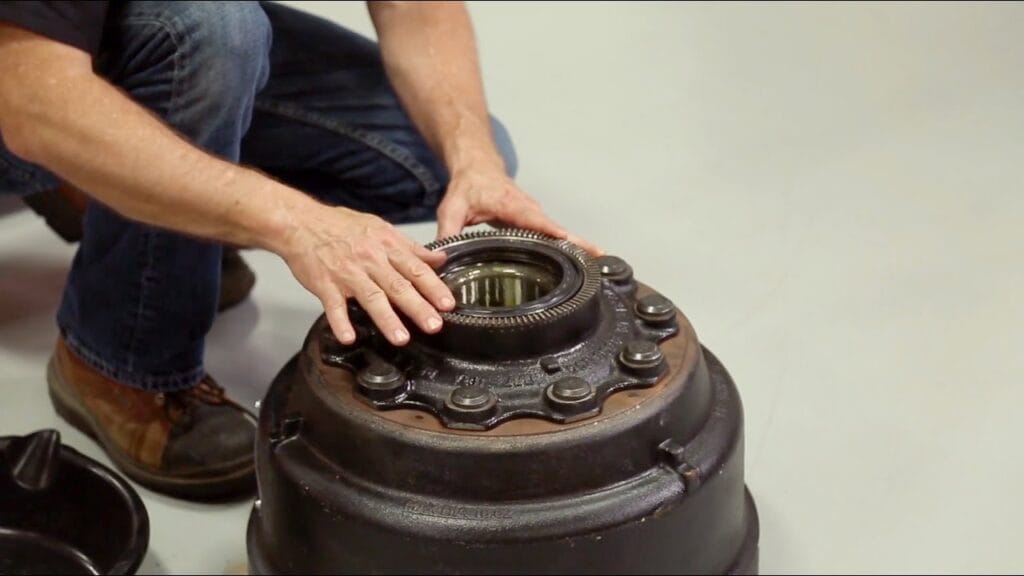
Every vehicle relies on hundreds of engineered components working together to deliver safe, efficient, and reliable transportation. Among these components, wheel hubs and wheel bearings often receive little attention until a problem occurs. Hidden inside this critical assembly is a small but extremely important sealing element known as the hub oil seal. Although it may appear simple, the hub oil seal plays a vital role in protecting wheel bearings, retaining lubricants, preventing contamination, and ensuring long-term vehicle performance.
Whether in passenger cars, commercial trucks, trailers, agricultural machinery, mining equipment, or heavy-duty construction vehicles, hub oil seals help maintain the integrity of rotating wheel systems. A failed seal can quickly lead to lubricant loss, bearing wear, overheating, costly repairs, and even safety risks.
This comprehensive guide explains the purpose of hub oil seals, how they function, their design characteristics, common failure modes, maintenance strategies, and future industry developments.
For engineers and maintenance professionals seeking reliable sealing solutions, understanding the construction and performance of a hub oil seal is essential for maximizing wheel-end reliability and reducing maintenance costs.
🚚 Industry Insight: Wheel bearing failures are frequently linked to lubricant contamination or grease leakage, making hub oil seals one of the most critical protective components in wheel-end systems.
What Is a Hub Oil Seal?
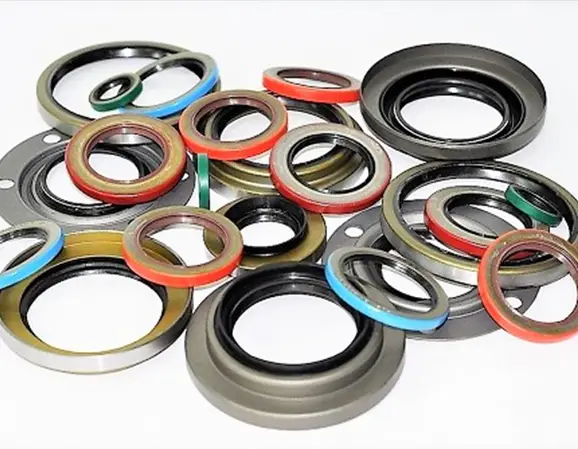
A hub oil seal is a rotary sealing device installed between a rotating wheel hub and a stationary axle housing. Its primary purpose is to retain lubricant inside the wheel bearing assembly while simultaneously preventing dirt, water, dust, road debris, and other contaminants from entering the bearing chamber.
The seal operates continuously whenever the vehicle is moving, enduring:
- High rotational speeds
- Heavy loads
- Temperature fluctuations
- Road vibrations
- Water exposure
- Mud and dust contamination
- Long service intervals
Despite these demanding conditions, a properly designed hub oil seal can provide years of reliable protection.
Why Is the Hub Oil Seal Important?
Wheel bearings depend on a stable lubrication environment to operate efficiently. Without effective sealing, lubricant escapes and contaminants enter the system.
The hub oil seal performs four essential functions:
- Lubricant retention
- Contamination exclusion
- Bearing protection
- Operational reliability enhancement
Without these functions, bearing wear accelerates rapidly, resulting in premature failure and expensive repairs.
⚠️ Critical Note: A wheel bearing can fail within a relatively short period after significant lubricant leakage occurs, making seal integrity essential for vehicle safety.
How Does a Hub Oil Seal Work?
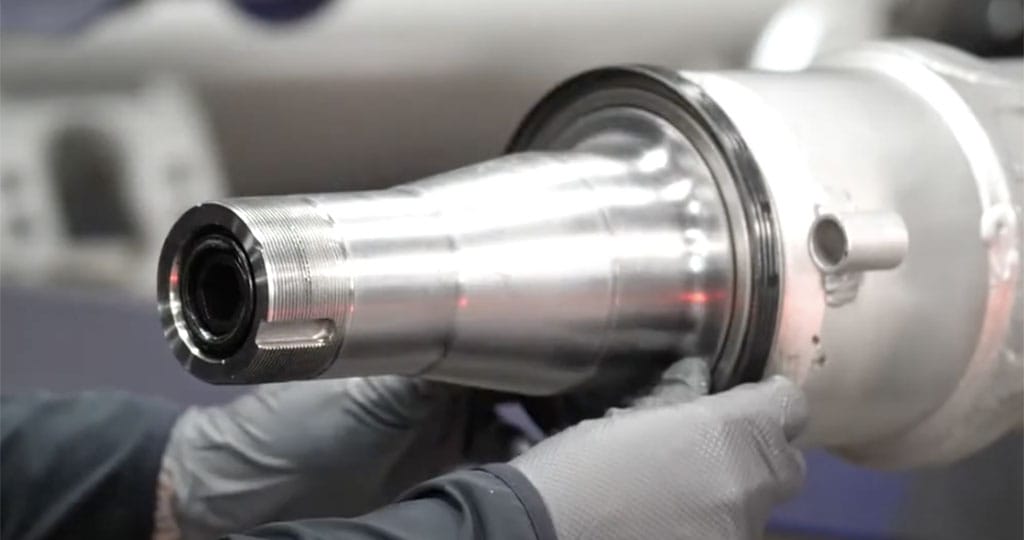
The operating principle of a hub oil seal is based on maintaining controlled contact between a flexible sealing lip and a rotating surface.
The sealing lip generates a consistent sealing force through:
- Elastomer elasticity
- Spring-loaded reinforcement
- Precision interference fit
- Dynamic fluid control geometry
As the wheel rotates, the seal maintains contact with the shaft surface, preventing lubricant from escaping while blocking contaminants from entering.
Modern hub oil seal designs often incorporate multiple sealing lips to improve protection under severe operating conditions.
Major Components of a Hub Oil Seal
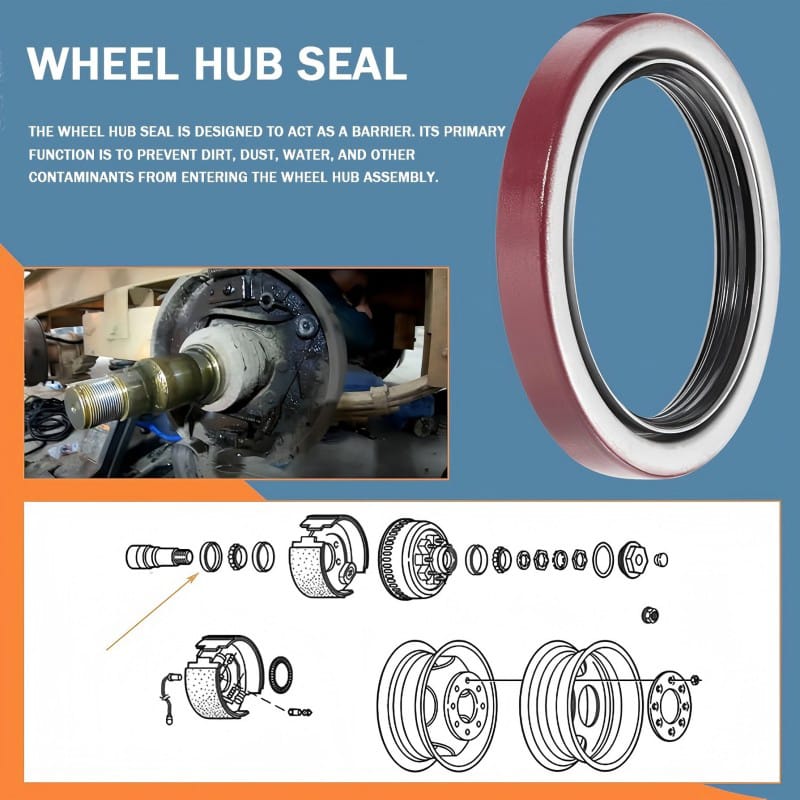
Sealing Lip
The sealing lip is the primary working element responsible for maintaining lubricant retention and contamination exclusion.
Metal Case
The metal case provides structural support and ensures secure installation within the hub housing.
Garter Spring
Many hub oil seals include a garter spring that applies constant radial pressure to maintain lip contact with the rotating shaft.
Dust Lip
Secondary dust lips provide additional protection against environmental contaminants.
Where Are Hub Oil Seals Used?
Hub oil seals are found in a wide variety of equipment and vehicles.
- Passenger vehicles
- Commercial trucks
- Trailers
- Buses
- Forklifts
- Construction equipment
- Mining machinery
- Agricultural vehicles
- Off-road equipment
- Industrial transport systems
Any application containing rotating wheel hubs and lubricated bearings typically requires an effective hub sealing system.
Types of Hub Oil Seals
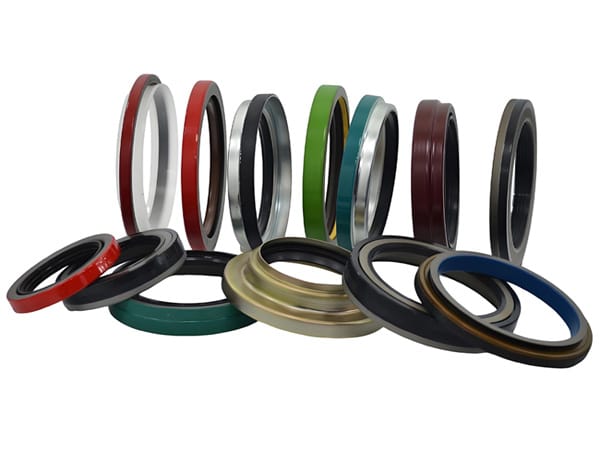
Single-Lip Seals
Single-lip designs primarily focus on lubricant retention and are commonly used in relatively clean operating environments.
Double-Lip Seals
Double-lip seals provide additional contamination protection through a secondary dust lip.
Cassette Seals
Cassette seals represent advanced wheel-end sealing technology, integrating multiple sealing elements into a single assembly.
These designs offer:
- Enhanced contamination exclusion
- Longer service life
- Superior water resistance
- Improved bearing protection
Heavy-Duty Wheel-End Seals
Heavy-duty commercial vehicles often utilize specialized seals engineered for extreme operating conditions and extended maintenance intervals.
Common Materials Used in Hub Oil Seals
Nitrile Rubber (NBR)
NBR remains one of the most widely used seal materials due to its balance of performance and affordability.
- Excellent oil resistance
- Good wear resistance
- Cost-effective solution
Fluoroelastomer (FKM)
FKM is often selected for high-temperature applications.
- Outstanding heat resistance
- Excellent chemical compatibility
- Long service life
Polyacrylate (ACM)
ACM materials perform well in elevated temperature environments commonly encountered in wheel-end systems.
PTFE
PTFE seals provide low friction and exceptional wear resistance, making them increasingly popular in advanced vehicle platforms.
How Hub Oil Seals Protect Wheel Bearings
Wheel bearings operate under substantial radial and axial loads while rotating at high speeds. Proper lubrication is essential for reducing friction and dissipating heat.
Hub oil seals help maintain this lubrication environment by:
- Preventing grease leakage
- Retaining oil lubrication
- Blocking water ingress
- Preventing dust contamination
- Reducing corrosion risks
The reliability of the bearing assembly often depends directly on the performance of the hub oil seal.
🔧 Maintenance Fact: Contaminated lubricant can reduce wheel bearing life dramatically, even when the bearing itself remains mechanically sound.
Common Causes of Hub Oil Seal Failure
Improper Installation
Installation errors remain one of the most common causes of seal failure.
- Misalignment
- Seal distortion
- Lip damage
- Incorrect seating depth
Shaft Wear
Worn shaft surfaces create leakage paths and reduce sealing effectiveness.
Heat Exposure
Excessive temperatures accelerate elastomer aging and reduce seal flexibility.
Contamination
Abrasive particles can wear sealing lips and damage mating surfaces.
Chemical Degradation
Incompatible lubricants may attack seal materials and shorten service life.
Signs of a Failing Hub Oil Seal
Early detection can prevent costly wheel-end failures.
- Grease leakage around wheel hubs
- Oil stains on wheels
- Bearing noise
- Excessive hub temperatures
- Wheel vibration
- Visible seal damage
- Contaminated lubricant
Routine inspections are essential for identifying these warning signs before serious damage occurs.
Maintenance Best Practices
A proactive maintenance strategy significantly extends hub oil seal performance.
- Inspect seals regularly
- Monitor lubricant condition
- Replace damaged bearings promptly
- Verify shaft surface quality
- Use compatible lubricants
- Follow installation guidelines
- Maintain proper wheel-end alignment
Preventive maintenance reduces operating costs and improves overall vehicle reliability.
How to Select the Right Hub Oil Seal
Selecting the appropriate seal requires evaluating several operating parameters:
- Shaft dimensions
- Housing dimensions
- Operating speed
- Temperature range
- Lubricant type
- Environmental exposure
- Maintenance interval requirements
Choosing the correct hub oil seal ensures maximum protection and long-term bearing performance.
The Evolution of Modern Hub Oil Seal Technology
Modern wheel-end sealing technology has evolved significantly over the past several decades.
Key advancements include:
- Multi-lip sealing systems
- Advanced elastomer compounds
- PTFE sealing elements
- Cassette seal technology
- Low-friction designs
- Extended maintenance intervals
These innovations help improve vehicle efficiency, reduce maintenance costs, and enhance safety.
Future Trends in Wheel-End Sealing
As electric vehicles, autonomous systems, and commercial fleets continue to evolve, hub oil seal technology is advancing to meet new challenges.
- Higher rotational speeds
- Reduced friction losses
- Improved environmental resistance
- Longer service intervals
- Smart condition monitoring integration
- Sustainable material development
The future of wheel-end reliability will increasingly depend on advanced sealing systems capable of supporting next-generation mobility solutions.
For fleet operators, equipment manufacturers, and maintenance professionals, investing in high-quality hub oil seal solutions remains one of the most effective ways to improve wheel-end performance and reduce lifecycle costs.
Frequently Asked Questions
1. What is the main purpose of a hub oil seal?
A hub oil seal retains lubricant inside the wheel bearing assembly while preventing dirt, water, and contaminants from entering the system.
2. What happens when a hub oil seal fails?
Seal failure can cause lubricant leakage, contamination ingress, bearing overheating, accelerated wear, and eventual wheel bearing failure.
3. How long does a hub oil seal typically last?
Service life depends on operating conditions, but quality hub oil seals often last many years when properly installed and maintained.
4. Can a leaking hub oil seal be repaired?
In most cases, replacement is recommended because damaged seals cannot reliably restore original sealing performance.
5. Which material is best for hub oil seals?
NBR, FKM, ACM, and PTFE are commonly used materials, with the best choice depending on temperature, speed, lubricant compatibility, and environmental conditions.