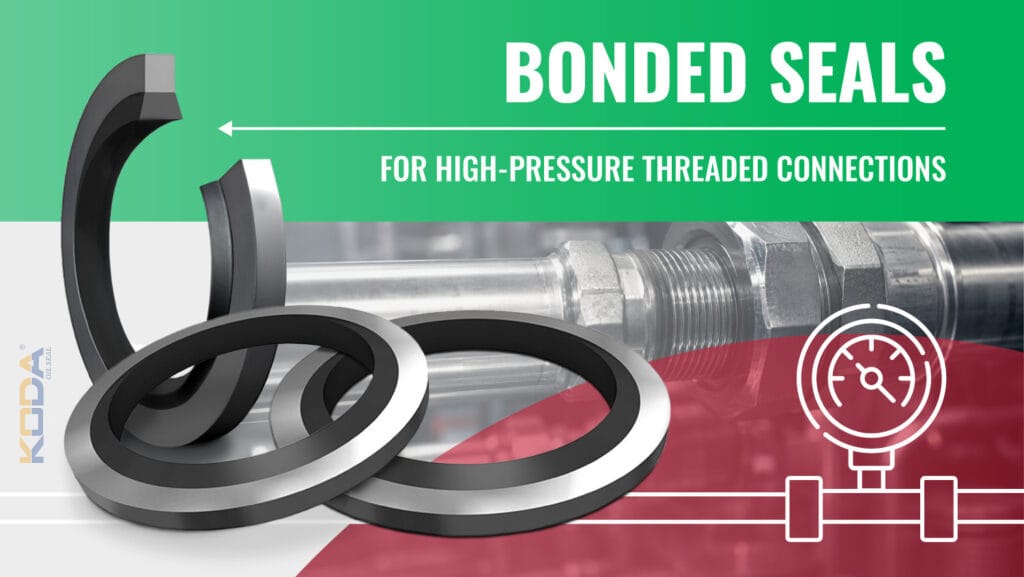
High-pressure threaded connections are widely used in hydraulic systems, pneumatic equipment, industrial machinery, oil and gas installations, and automotive applications. While threaded fittings provide mechanical strength and easy assembly, achieving a reliable leak-free seal under extreme pressure conditions requires specialized sealing solutions. Bonded seals have become one of the most effective and widely adopted sealing technologies for threaded connections because they combine the strength of a metallic washer with the sealing performance of an elastomer.
This comprehensive guide explores bonded seals, their structure, working principles, advantages, installation requirements, and why they are often the preferred choice for high-pressure threaded connections.
🔩 Key Insight: Bonded seals combine a metal retaining ring and an elastomer sealing element to provide exceptional leak prevention in high-pressure threaded systems.
What Are Bonded Seals?
Bonded seals, sometimes referred to as Dowty seals, are sealing components consisting of a metallic washer and a bonded elastomer sealing lip. The metal ring provides mechanical support, while the elastomer insert creates the actual sealing interface when compressed between mating surfaces.
Unlike conventional washers that only distribute load, bonded seals actively prevent fluid leakage by creating a pressure-tight barrier around threaded fasteners and hydraulic fittings.
High-quality Bonded Seals are commonly used in hydraulic ports, banjo fittings, valves, pumps, and pressure vessels where leak-free operation is critical.
Structure of a Bonded Seal
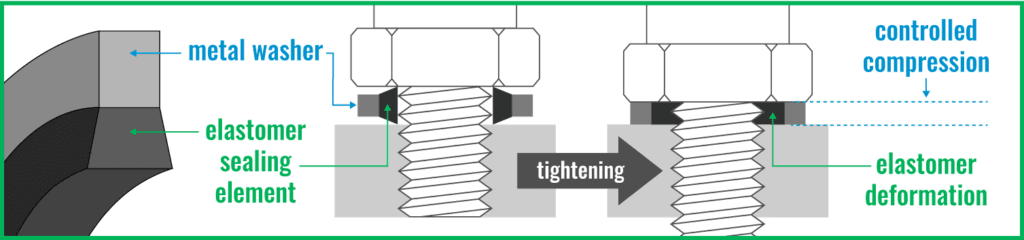
Metal Retaining Ring
The outer metal washer provides dimensional stability and prevents excessive deformation under load. It also distributes clamping forces evenly across the sealing area.
Elastomer Sealing Element
The elastomer component is chemically bonded to the metal ring and compresses during installation to create a positive seal.
Precision Bonding Interface
Advanced manufacturing processes ensure a secure bond between metal and elastomer, preventing separation during operation.
⚙️ Engineering Advantage: The combination of rigid metal support and flexible elastomer sealing creates superior sealing performance compared to conventional washers.
How Bonded Seals Work
When a threaded connection is tightened, the elastomer insert is compressed between mating surfaces. This compression causes the elastomer to flow slightly and fill surface imperfections, creating a reliable sealing barrier.
As system pressure increases, the elastomer continues to maintain contact pressure, preventing fluid leakage even under demanding operating conditions.
- Compensates for surface irregularities
- Maintains sealing force under vibration
- Provides leak-free performance at high pressure
- Reduces risk of loosening-related leakage
Premium Bonded Seals are specifically engineered to maintain performance throughout repeated pressure cycles.
💡 Performance Insight: The sealing efficiency of bonded seals often improves as system pressure increases due to pressure-assisted sealing action.
Why Threaded Connections Need Specialized Sealing
Threaded joints inherently contain helical leakage paths. Even precisely machined threads cannot completely eliminate microscopic gaps that allow fluid migration.
Challenges include:
- Pressure-induced leakage
- Thermal expansion and contraction
- Vibration loosening
- Surface finish variations
- Repeated assembly cycles
Bonded seals effectively address these challenges by creating a dedicated sealing interface independent of thread geometry.
🚨 Critical Consideration: Threads should provide mechanical retention, while bonded seals provide the sealing function.
Advantages of Bonded Seals
Excellent Pressure Resistance
Bonded seals are capable of handling extremely high hydraulic pressures while maintaining sealing integrity.
Simple Installation
They are installed similarly to conventional washers, reducing assembly complexity.
Cost Efficiency
Compared to complex sealing systems, bonded seals offer outstanding performance at a relatively low cost.
Compact Design
Their low-profile structure makes them suitable for space-constrained installations.
Resistance to Vibration
The elastomer element absorbs vibration and helps maintain sealing force.
Reliable Bonded Seals are widely selected because they balance performance, durability, and ease of installation.
Materials Used in Bonded Seals
NBR (Nitrile Rubber)
NBR is the most common elastomer used due to its excellent resistance to oils and hydraulic fluids.
FKM (Viton®)
Provides enhanced resistance to chemicals and elevated temperatures.
EPDM
Suitable for water-based fluids, steam, and outdoor environments.
Stainless Steel Rings
Used where corrosion resistance is critical.
Carbon Steel Rings
Offer high strength and cost-effective performance in standard industrial environments.
🧪 Material Selection Tip: Always match the elastomer compound to the operating fluid, temperature, and pressure conditions.
Applications of Bonded Seals
- Hydraulic cylinders
- Hydraulic manifolds
- Pressure sensors
- Hydraulic pumps
- Industrial valves
- Oil and gas equipment
- Agricultural machinery
- Construction equipment
- Automotive hydraulic systems
- Pneumatic control systems
Modern industrial systems increasingly rely on Bonded Seals to maintain operational reliability under severe working conditions.
Installation Best Practices
Inspect Mating Surfaces
Ensure surfaces are free from scratches, corrosion, and contamination.
Use Correct Torque
Insufficient torque may cause leakage, while excessive torque can damage the elastomer.
Verify Seal Orientation
Install the bonded seal according to manufacturer recommendations.
Replace Damaged Components
Never reuse seals that show signs of wear, cracking, or deformation.
✔️ Best Practice: Proper installation is essential for maximizing sealing performance and service life.
Common Failure Causes
- Incorrect material selection
- Over-tightening
- Surface damage
- Chemical incompatibility
- Excessive temperature exposure
- Pressure spikes beyond design limits
- Improper storage conditions
Routine inspection helps identify issues before they result in system downtime or costly repairs.
⚠️ Failure Prevention: Most bonded seal failures originate from installation errors rather than product defects.
Bonded Seals vs Conventional Washers
Traditional metal washers provide load distribution but offer limited sealing capability. Bonded seals integrate sealing functionality directly into the washer design.
- Superior leak prevention
- Better pressure resistance
- Improved vibration performance
- Longer service life
- Enhanced reliability
This makes Bonded Seals the preferred solution for demanding hydraulic and pneumatic systems.
Conclusion
Bonded seals have become a critical sealing solution for high-pressure threaded connections across numerous industries. Their unique combination of a metallic support ring and an elastomer sealing element enables exceptional leak prevention, pressure resistance, and durability.
By selecting the correct materials, following proper installation procedures, and understanding application requirements, engineers can significantly improve system reliability and reduce maintenance costs. Whether used in hydraulic systems, industrial equipment, or automotive applications, bonded seals continue to deliver dependable sealing performance under the most demanding operating conditions.
Frequently Asked Questions
1. What is the primary purpose of a bonded seal?
A bonded seal prevents fluid leakage in threaded connections by combining a metal washer with an elastomer sealing element.
2. Are bonded seals suitable for high-pressure hydraulic systems?
Yes. Bonded seals are specifically designed to provide reliable sealing performance in high-pressure hydraulic applications.
3. What elastomer materials are commonly used in bonded seals?
Common materials include NBR, FKM (Viton®), and EPDM, depending on fluid compatibility and operating conditions.
4. Can bonded seals be reused?
Although possible in some situations, replacing bonded seals during maintenance is generally recommended to ensure reliable sealing performance.
5. Why are bonded seals better than standard washers?
Bonded seals provide active sealing capability, superior leak prevention, and improved performance under pressure and vibration compared to conventional washers.