
Static Seals vs Dynamic Seals: How to Choose the Right Sealing Solution
A reliable seal must prevent fluid or gas leakage under the actual conditions of an application. However, a seal installed between stationary surfaces faces different demands from one that must maintain contact with a moving shaft, piston, or rod. Understanding this difference helps engineers and purchasing teams avoid premature wear, excessive friction, and recurring leakage.
Static and dynamic seals serve the same fundamental purpose: controlling the passage of fluids or gases between components. Their design requirements differ because of the movement occurring at the sealing interface. A static seal primarily depends on appropriate compression, surface condition, and material compatibility. A dynamic seal must also accommodate friction, motion, lubrication, and wear.
Choosing the right sealing method is not simply a matter of selecting an O-ring or rubber gasket. The correct solution depends on the equipment geometry, pressure, temperature, media, motion type, and expected service life.
What Is a Static Seal?
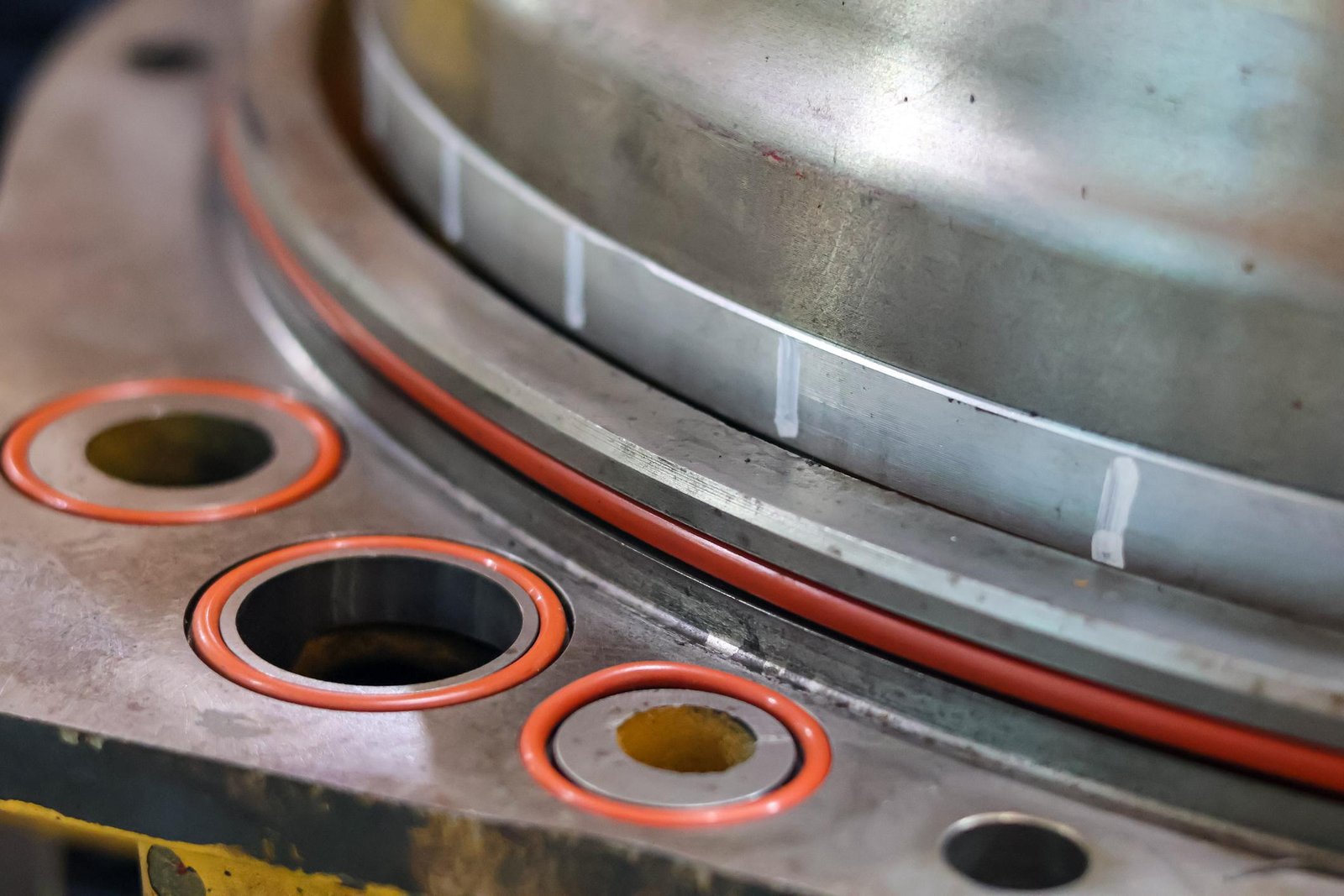
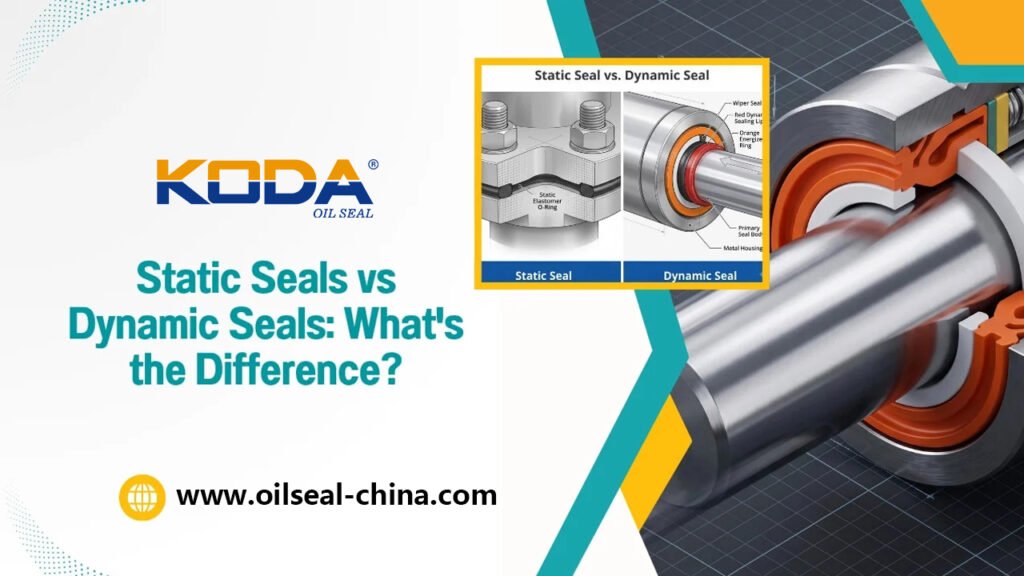
A static seal prevents leakage between mating surfaces that remain stationary relative to one another during normal operation. Once the assembly is tightened or closed, the seal maintains contact with the mating surfaces to block the leakage path.
Static sealing is common in equipment where parts are assembled and remain fixed during operation. Typical examples include:
- O-rings installed in stationary grooves between housings.
- Gaskets fitted between bolted flanges or equipment covers.
- Rubber seals used in tank connections, pipe fittings, and access panels.
- Custom molded or extruded profiles used around doors, enclosures, and protective covers.
Static seals generally experience less friction-related wear than dynamic seals because there is no intended continuous sliding or rotation at the sealing interface. However, they are not immune to failure. Incorrect compression, extrusion into a clearance gap, chemical attack, compression set, thermal cycling, or movement caused by pressure can still compromise sealing performance.
Static sealing design priorities
- Correct groove dimensions and seal squeeze.
- Suitable material hardness and fluid compatibility.
- Controlled mating-surface finish and flatness.
- Adequate resistance to pressure, temperature, and aging.
What Is a Dynamic Seal?
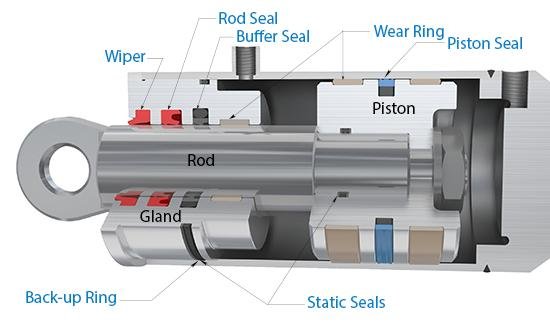
A dynamic seal operates where two surfaces move relative to one another during use. Depending on the machine design, that motion may be rotary, reciprocating, or oscillating. The seal must maintain a functional barrier while accommodating the movement and its associated mechanical stresses.
Dynamic seals are commonly used in:
- Rotating shafts in motors, gearboxes, pumps, and industrial machinery.
- Hydraulic and pneumatic piston-and-rod assemblies.
- Reciprocating cylinders and linear-motion equipment.
- Oscillating joints and other components that move through a limited angle.
Movement introduces additional failure mechanisms. Friction can generate heat; inadequate lubrication can accelerate wear; excessive squeeze can increase operating force; and poor surface finish can damage the sealing lip. Pressure, shaft speed, eccentricity, and clearance gaps may also affect service life.
Dynamic sealing therefore requires the seal geometry, compound, surface finish, lubrication strategy, and operating conditions to be considered together. A material or design that works well in a stationary joint should not automatically be assumed suitable for continuous movement.
Static Seals vs Dynamic Seals: Key Differences
The following comparison summarizes the main engineering differences between the two sealing approaches.
| Factor | Static Seal | Dynamic Seal |
|---|---|---|
| Relative movement | No intended movement at the sealing interface. | Rotary, reciprocating, or oscillating movement. |
| Main design focus | Compression, groove geometry, pressure, and material compatibility. | Sealing contact, friction, wear, speed, and lubrication. |
| Friction | Usually less significant during steady operation. | Can affect heat generation, efficiency, and service life. |
| Wear mechanism | May result from aging, compression set, chemical attack, or component movement. | May also result from repeated sliding, rotation, abrasion, or lubrication failure. |
| Typical products | Static O-rings, gaskets, molded profiles, and housing seals. | Oil seals, rod seals, piston seals, and selected dynamic O-rings. |
| Critical checks | Squeeze, clearance, surface condition, pressure, and temperature. | All static checks, plus motion, speed, lubrication, friction, and wear. |
Key point: Neither category is universally better. The right choice depends on whether the sealing interface moves and on the complete operating environment.
Common Types of Dynamic Seals
1. Rotary Seals
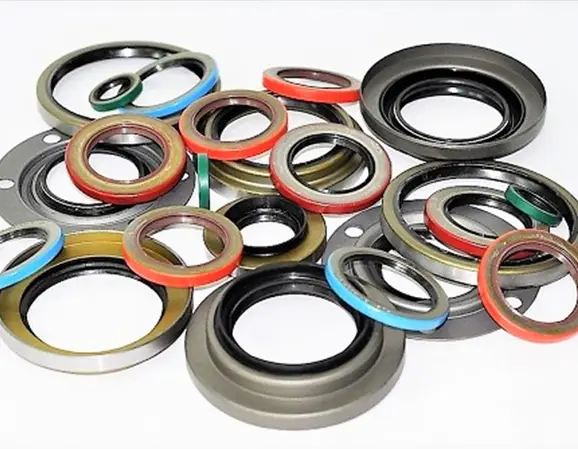
Rotary seals are used where a shaft rotates relative to the housing. Common applications include pumps, electric motors, gearboxes, and rotating machinery. Radial shaft oil seals are a familiar example, retaining lubricant while helping exclude external contaminants.
Important selection factors include shaft diameter, rotational speed, lubricant type, temperature, shaft runout, surface finish, pressure, and the required direction of contaminant exclusion. A seal selected only by nominal shaft diameter may not be suitable if the speed, pressure, or shaft condition differs from the original design.
2. Reciprocating Seals
Reciprocating seals operate as a rod or piston moves back and forth. They are widely used in hydraulic cylinders, pneumatic actuators, and linear-motion equipment. Their performance depends on seal profile, stroke length, pressure, speed, clearance, lubrication, and surface finish.
For hydraulic systems, engineers must also evaluate the risk of extrusion into clearance gaps and the effect of pressure changes. A seal designed for a low-pressure pneumatic actuator may not be appropriate for a high-pressure hydraulic cylinder.
3. Oscillating Seals
Oscillating applications involve limited angular movement rather than continuous rotation. Examples can include pivoting joints and certain mechanical linkages. These conditions can create localized wear because the contact area may repeatedly move over a relatively small portion of the mating surface.
When choosing a seal for oscillating motion, consider the movement angle, frequency, pressure, lubrication, surface condition, and the potential for stick-slip behavior. The design should match the actual motion pattern rather than being selected solely because it is described as a rotary seal.
Static O-Rings vs Dynamic O-Rings
An O-ring is a seal geometry, not a guarantee of suitability for every application. The same general ring shape can be used in static or selected dynamic applications, but the groove and operating requirements are different.
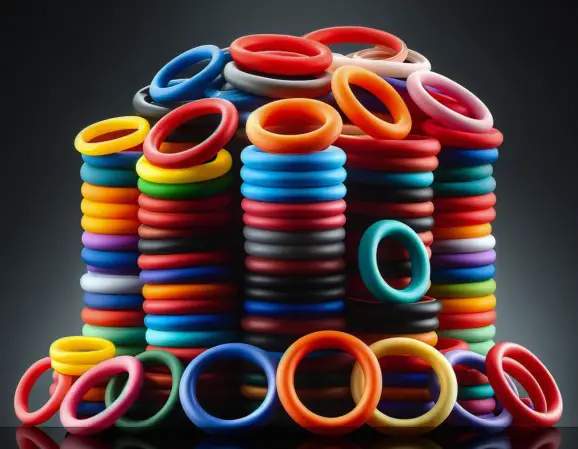
Static O-Rings
Used between stationary components, such as a cover and housing. The design focuses on correct squeeze, groove fill, fluid compatibility, pressure, and temperature.
Dynamic O-Rings
Used in selected moving interfaces, including certain reciprocating and oscillating applications. Friction, lubrication, surface finish, wear, and motion speed become additional design considerations.
Dynamic O-rings require particular attention to groove design and clearances. Excessive squeeze can increase friction and wear, while insufficient squeeze may compromise sealing contact. Surface defects and inadequate lubrication can damage the ring during repeated movement.
For this reason, use an established design guide or application-specific engineering calculation to confirm the O-ring size, groove dimensions, and material. The Parker O-Ring Handbook provides useful reference information on static and dynamic sealing, gland design, and elastomer selection.
How to Select the Right Seal Material
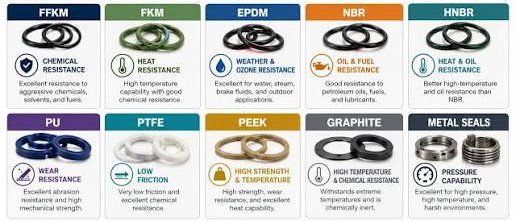
Seal material selection must reflect the actual application rather than a broad label such as automotive, industrial, or hydraulic. Temperature, contact media, pressure, movement, and expected service life can all influence compound performance.
| Material | Potential use considerations | What to verify |
|---|---|---|
| NBR | Commonly considered for many petroleum-oil sealing applications. | Oil formulation, temperature, motion, and compound limits. |
| FKM | Often considered where higher-temperature capability or particular fluid resistance is needed. | Specific fluid compatibility, low-temperature needs, and compound specification. |
| EPDM | May suit selected water, weathering, and other compatible media applications. | Confirm compatibility with the actual oils, fuels, chemicals, and temperature. |
| Silicone | Can be considered where flexibility and temperature characteristics are important. | Check wear, tear strength, fluid compatibility, and dynamic suitability. |
These are preliminary material-selection considerations, not universal compatibility guarantees. Formulations within the same polymer family can perform differently. Always consult the compound data and evaluate the actual fluid, temperature, motion, and exposure duration.
For standardized O-ring material requirements, see ISO 3601-5. For O-ring dimensions and tolerances, consult the relevant scope of ISO 3601-1. A standard reference does not replace the need to confirm the correct compound and design for the application.
Common Seal Failures and How to Troubleshoot Them
Repeated leakage is often a system problem rather than a material problem alone. Before replacing a seal, identify the likely failure mechanism.
Leakage from a stationary joint
Check seal squeeze, groove dimensions, mating-surface damage, bolt loading, pressure, and compression set. Uneven compression or a damaged sealing surface can create a leakage path.
Excessive friction or heat in a moving assembly
Review seal squeeze, lubrication, operating speed, surface finish, and material suitability. Excessive contact pressure can increase friction and accelerate wear.
Early wear or a damaged sealing lip
Inspect for contamination, shaft scratches, misalignment, runout, abrasive particles, and installation damage. Replace or repair damaged mating components where required.
Swelling, hardening, or loss of flexibility
Investigate chemical incompatibility, temperature exposure, aging, and compound selection. A seal can have the correct dimensions and still fail if the elastomer is unsuitable for the medium.
Repeated failure after replacement
Recheck the root cause, including pressure spikes, shaft or rod condition, alignment, clearances, and operating conditions. Replacing the same type of seal without correcting the cause may only provide temporary improvement.
A Practical Checklist Before Ordering Seals
To reduce specification errors and improve quotation accuracy, prepare the following information before contacting a seal supplier:
- Application and equipment type.
- Whether the interface is static, rotary, reciprocating, or oscillating.
- Operating and peak pressure.
- Normal and peak temperature range.
- Fluid or gas being sealed, including relevant additives.
- Seal dimensions, groove drawing, and installation space.
- Movement speed, stroke, frequency, or rotation details.
- Required material, hardness, standards, and any customer-specific specifications.
- Expected service life, quantity, and production requirements.
When drawings are unavailable, clear photos and a physical sample can support initial identification. However, visual similarity alone does not establish material equivalence or functional interchangeability. Critical dimensions and performance requirements should be verified before approving a substitute.
Frequently Asked Questions
What is the main difference between a static seal and a dynamic seal?
A static seal operates between surfaces with no intended relative movement. A dynamic seal maintains sealing contact while surfaces move through rotary, reciprocating, or oscillating motion. Dynamic applications require additional consideration of friction, wear, speed, lubrication, and surface finish.
Can the same O-ring be used for static and dynamic applications?
Not automatically. Some O-ring compounds and designs can serve both types of applications, but dynamic service places additional demands on friction, wear, lubrication, groove geometry, and surface condition. Confirm suitability using application-specific design guidance.
Are static seals always more reliable than dynamic seals?
Not necessarily. Static seals generally avoid continuous friction-related wear, but they can still fail because of incorrect compression, chemical attack, aging, pressure changes, or surface damage. Reliability depends on the complete design and operating environment.
Which seal material is best for dynamic applications?
There is no single best material for all dynamic seals. Selection depends on the fluid, temperature, pressure, speed, surface condition, lubrication, and required service life. Confirm the actual compound specification rather than choosing by polymer name alone.
Why does a dynamic seal wear out quickly?
Possible causes include insufficient lubrication, excessive squeeze, high speed, poor surface finish, shaft or rod misalignment, contamination, and material incompatibility. Inspect the mating components and operating conditions before choosing a replacement.
Conclusion
The difference between static seals and dynamic seals is defined by movement at the sealing interface, but reliable selection requires a broader engineering assessment. Static seals depend heavily on correct compression, groove geometry, material compatibility, and stable mating surfaces. Dynamic seals must also withstand motion-related friction, wear, heat, and lubrication demands.
By evaluating the movement type, operating pressure, temperature, contact media, dimensions, and service requirements before ordering, engineers and purchasing teams can reduce specification errors and avoid repeated seal failures. For demanding or non-standard applications, use verified drawings, compound data, recognized technical guidance, and application-specific engineering review to confirm the final design.