The Engineering Role of O-Ring Seals in Automotive Excellence
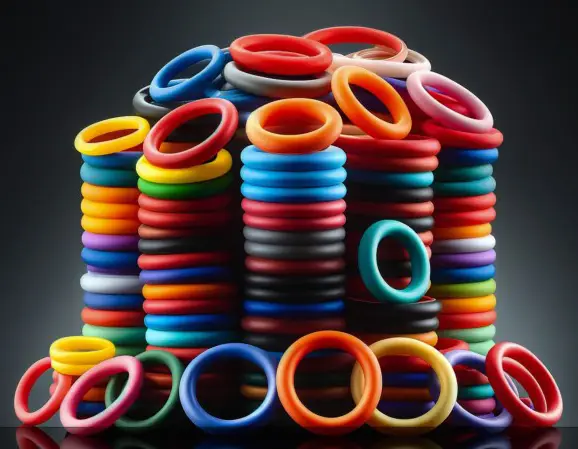
The automotive industry depends on thousands of sealing components to maintain reliability, efficiency, and safety throughout the vehicle lifecycle. Among these components, O-Ring seals remain one aof the most widely used sealing solutions because of their compact design, excellent sealing capability, cost efficiency, and adaptability across different automotive systems.
Modern vehicles operate under increasingly demanding conditions. Engines generate higher temperatures, fuel systems require advanced chemical resistance, electric vehicles introduce new thermal management challenges, and hydraulic systems operate under higher pressures than previous generations. A properly selected O-ring seal must withstand temperature cycling, vibration, aggressive fluids, pressure fluctuations, and long-term compression without losing sealing performance.
Selecting the correct automotive O-ring is not simply a matter of choosing the correct size. Engineers must evaluate elastomer chemistry, hardness, compression set, fluid compatibility, installation conditions, surface finish, and application-specific standards. A small sealing component can determine whether an automotive system performs reliably for years or experiences premature leakage.
🚗 Engineering Insight:
In automotive sealing applications, O-ring performance depends on three major factors: material compatibility, mechanical design, and manufacturing quality. A high-quality elastomer cannot compensate for incorrect groove design or improper installation.
Why O-Ring Seals Are Essential in Automotive Systems
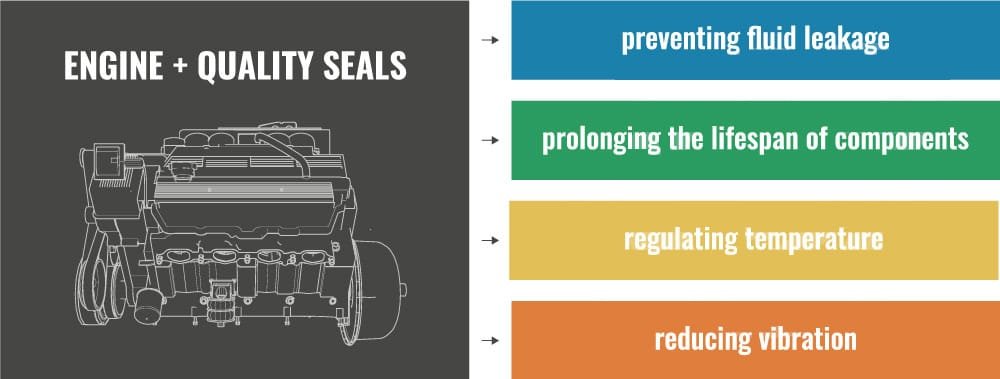
Automotive systems contain numerous fluid circuits requiring reliable sealing solutions. From engine lubrication and fuel injection to air conditioning and battery cooling systems, O-rings prevent fluid loss while maintaining pressure and operational efficiency.
Typical automotive applications include:
- ✔ Fuel injectors and fuel rails
- ✔ Engine oil systems
- ✔ Transmission hydraulic systems
- ✔ Air conditioning refrigerant connections
- ✔ Brake and hydraulic control systems
- ✔ Electric vehicle battery cooling circuits
- ✔ Power steering systems
- ✔ Sensors and electronic modules
The popularity of O-ring seals comes from their simple circular geometry. When compressed inside a properly designed groove, the elastomer creates radial sealing force that blocks leakage paths between mating surfaces.
How Automotive O-Ring Seals Work
An O-ring functions by controlled deformation. During installation, the seal is compressed between two surfaces, creating initial sealing stress. When internal pressure increases, the fluid pressure energizes the O-ring and increases contact force against the groove surfaces.
Basic Sealing Principle
| Factor | Influence on Performance |
|---|---|
| Compression | Creates initial sealing force |
| Material Elasticity | Allows recovery after deformation |
| Hardness | Controls extrusion resistance |
| Surface Finish | Affects leakage and friction |
| Temperature Stability | Determines service life |
Automotive O-Ring Materials and Performance Comparison

Automotive manufacturers select different elastomers depending on the operating environment. There is no universal O-ring material because each polymer provides different resistance characteristics.
| Material | Temperature Range | Hardness | Main Advantages | Automotive Applications |
|---|---|---|---|---|
| NBR (Nitrile) | -40°C to +120°C | 60-90 Shore A | Excellent petroleum oil resistance | Fuel systems, oil circuits |
| HNBR | -40°C to +150°C | 70-90 Shore A | Improved heat and wear resistance | Engine sealing, air conditioning |
| FKM (Viton) | -20°C to +200°C | 70-90 Shore A | Excellent chemical resistance | Fuel, high-temperature applications |
| EPDM | -50°C to +150°C | 60-80 Shore A | Excellent coolant and ozone resistance | Cooling systems, EV thermal systems |
| Silicone (VMQ) | -60°C to +230°C | 40-80 Shore A | Wide temperature flexibility | Sensors, electronics |
Material Properties Engineers Must Consider
Hardness Selection
Hardness is measured using the Shore A scale and directly affects extrusion resistance, sealing force, and installation behavior.
| Hardness | Typical Automotive Usage |
|---|---|
| 50-60 Shore A | Low-pressure sealing and sensitive surfaces |
| 70 Shore A | General automotive standard |
| 80-90 Shore A | High-pressure and extrusion-resistant systems |
Compression Set Performance
Compression set represents the permanent deformation remaining after long-term compression. Lower compression set values indicate better ability to maintain sealing force over time.
For automotive applications exposed to continuous heat cycles, compression set resistance is especially important because seals may experience thousands of thermal expansion and contraction cycles.
ASTM and ISO Standards for Automotive O-Rings
Professional automotive sealing development commonly references international standards to evaluate material performance and dimensional accuracy.
| Standard | Purpose |
|---|---|
| ASTM D2000 | Rubber material classification system |
| ASTM D2240 | Shore hardness testing |
| ASTM D395 | Compression set evaluation |
| ASTM D412 | Tensile strength and elongation testing |
| ISO 3601 | O-ring dimensions and tolerances |
| ISO 9001 | Quality management requirements |
Thermal Performance and Heat Resistance
Automotive sealing systems frequently experience rapid temperature changes. Engine compartments may expose seals to temperatures above 120°C, while electric vehicles introduce battery cooling systems operating under different thermal conditions.
Elastomer thermal conductivity is typically low, approximately 0.15-0.40 W/m·K depending on formulation. This helps provide insulation properties but also means heat aging resistance becomes critical.
| Material | Thermal Capability |
|---|---|
| NBR | Moderate temperature resistance |
| HNBR | Improved heat aging |
| FKM | Excellent high-temperature stability |
| EPDM | Excellent coolant temperature resistance |
Chemical Resistance in Automotive Fluids
Automotive fluids contain additives that can significantly affect elastomer performance. Fuel blends, refrigerants, lubricants, and coolants require careful material selection.
| Fluid | Recommended Material |
|---|---|
| Engine Oil | NBR / HNBR / FKM |
| Ethanol Fuel | FKM / specialized NBR |
| Refrigerant Systems | HNBR / FKM |
| Coolant | EPDM |
| Transmission Fluid | NBR / FKM |
Automotive O-Ring Installation Guidelines
Even a premium O-ring may fail if installation procedures are incorrect. Automotive assembly requires controlled installation processes to prevent twisting, cutting, and surface damage.
- ✔ Clean sealing surfaces before installation
- ✔ Avoid sharp edges during assembly
- ✔ Apply compatible lubrication when required
- ✔ Prevent twisting during insertion
- ✔ Confirm correct groove dimensions
- ✔ Avoid contamination from dust or metal particles
💡 Expert Tip:
A twisted O-ring may appear acceptable during assembly but can create uneven stress distribution, leading to premature leakage after thermal cycling or vibration.
Automotive O-Ring Failure Mode Analysis
| Failure Mode | Possible Cause | Corrective Action |
|---|---|---|
| Leakage | Wrong material selection | Select compatible elastomer |
| Cracking | Heat aging or ozone exposure | Use FKM or EPDM |
| Swelling | Chemical incompatibility | Review fluid resistance |
| Extrusion | Excessive pressure gap | Increase hardness or redesign groove |
| Compression Set | Long-term heat exposure | Improve material selection |
Case Example (Industry Engineering Experience)
Example Only – Not Actual Customer Data
An automotive cooling system design required a sealing solution capable of handling repeated thermal cycles between cold startup conditions and elevated operating temperatures. Engineers compared EPDM, HNBR, and FKM materials based on coolant compatibility, compression set resistance, and temperature capability. The final selection process focused on balancing cost, durability, and application requirements. This example represents common engineering evaluation methods and does not describe a specific customer test result or guaranteed service life.
Laboratory Test Example
Illustrative Laboratory Evaluation
Engineers may evaluate automotive O-rings through compression set testing, immersion testing, tensile testing, hardness measurement, and thermal aging experiments. ASTM methods such as ASTM D395, ASTM D412, and ASTM D2240 are commonly referenced. Test results depend on compound formulation, temperature, duration, and testing conditions. The example demonstrates engineering evaluation procedures rather than actual factory data.
Selecting the Right Automotive O-Ring Seal
A professional selection process should consider:
- ✔ Operating temperature range
- ✔ Fluid compatibility
- ✔ Pressure requirements
- ✔ Dynamic movement conditions
- ✔ Required service life
- ✔ Regulatory requirements
- ✔ Manufacturing tolerance
Choosing high-quality O-Ring seals helps automotive manufacturers improve reliability, reduce maintenance costs, and prevent unexpected system failures.
Frequently Asked Questions
1: What is the best O-ring material for automotive applications?
The best material depends on the application. NBR is commonly used for oil systems, EPDM for coolant systems, HNBR for high-temperature environments, and FKM for aggressive fuels and chemicals.
2: Why do automotive O-rings fail prematurely?
Common causes include incorrect material selection, improper installation, excessive temperature, chemical attack, compression set, and poor groove design.
3: Are harder O-rings always better?
Not always. Higher hardness improves extrusion resistance but may reduce flexibility and sealing ability on imperfect surfaces.
4: How long can automotive O-rings last?
Service life depends on material, temperature, chemicals, pressure, and operating conditions. Properly selected seals can often last for many years in automotive systems.
5: Can one O-ring material be used for all automotive systems?
No. Different automotive systems require different elastomers because fuels, oils, coolants, refrigerants, and temperatures create different sealing challenges.