Why Square Rings Are Gaining Attention in Modern Static Sealing Systems
In the world of industrial sealing technology, O-rings have traditionally dominated sealing applications. However, as equipment becomes more compact, pressure requirements increase, and reliability expectations continue to rise, engineers are increasingly turning to alternative sealing profiles. One such solution is the square ring, a versatile sealing element that offers unique advantages in static sealing environments.
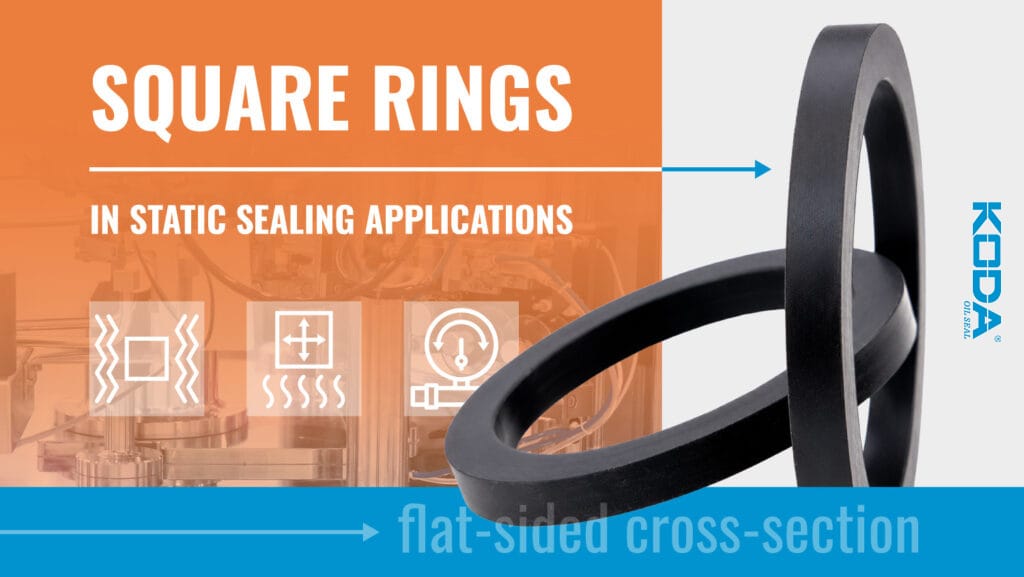
Square rings, sometimes referred to as square-cut seals or square-profile rings, are designed with a rectangular cross-section instead of the circular cross-section found in traditional O-rings. This seemingly simple geometric difference significantly impacts sealing performance, installation stability, and pressure resistance.
Today, Square Rings are widely used across hydraulic systems, pneumatic equipment, fluid control assemblies, aerospace applications, automotive systems, industrial machinery, and high-pressure sealing environments where consistent static sealing performance is required.
What Are Square Rings?
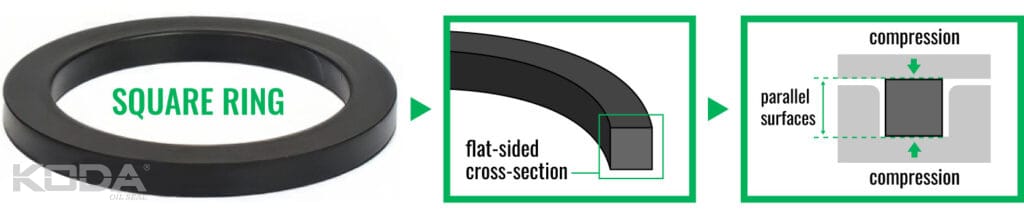
Square rings are elastomeric sealing components featuring a square or rectangular cross-sectional profile. Like O-rings, they are designed to create a compression seal between two mating surfaces. However, their unique geometry provides a larger sealing contact area and improved stability within sealing grooves.
Unlike conventional O-rings that rely on a circular profile to generate sealing force, square rings distribute compression more evenly across sealing surfaces. This characteristic can improve sealing reliability in many static applications.
Modern Square Rings are manufactured in a variety of elastomer compounds and dimensions to meet diverse industrial requirements.
How Square Rings Work in Static Sealing Applications
The sealing principle of a square ring is relatively straightforward. When installed into a properly designed groove and compressed between mating surfaces, the ring deforms slightly and creates a tight sealing barrier.
This compression generates sealing force that prevents fluid, gas, oil, or air from escaping while simultaneously blocking contaminants from entering the system.
In static applications, where there is little or no relative movement between sealing surfaces, square rings can provide exceptionally reliable sealing performance.
Key Sealing Characteristics
✔ Large contact surface area
✔ Stable groove positioning
✔ Reduced rolling tendency
✔ Enhanced pressure resistance
✔ Consistent compression distribution
Square Rings vs Traditional O-Rings
Although square rings and O-rings serve similar purposes, several important differences distinguish the two sealing solutions.
Contact Area
Square rings provide a larger sealing contact area due to their flat surfaces. This can improve sealing efficiency under static compression.
Stability
O-rings may roll or twist during installation or operation, particularly in certain groove configurations. Square rings are less susceptible to these issues because of their geometry.
Compression Characteristics
Square rings distribute sealing loads more evenly, reducing localized stress concentrations.
Pressure Handling
In many static sealing systems, square rings exhibit improved resistance to extrusion under elevated pressures.
For these reasons, many engineers select Square Rings when designing high-reliability sealing assemblies.
Advantages of Square Rings in Static Applications
The increasing popularity of square rings is driven by several performance-related benefits.
Improved Sealing Efficiency
The larger sealing surface creates a more effective barrier against leakage, particularly in low-pressure and medium-pressure systems.
Reduced Seal Rolling
Square-profile designs remain more stable within grooves and are less likely to rotate during assembly.
Lower Compression Set Risk
Properly selected materials and optimized geometry help maintain long-term sealing force.
Enhanced Groove Utilization
Square rings often maximize available sealing space more effectively than circular-profile seals.
Extended Service Life
Improved load distribution contributes to longer operational performance in many applications.
Common Materials Used for Square Rings
Material selection remains one of the most important factors influencing square ring performance.
NBR (Nitrile Rubber)
Excellent resistance to petroleum-based oils, fuels, and hydraulic fluids makes NBR one of the most popular choices.
FKM (Viton®)
FKM provides outstanding chemical resistance and high-temperature stability for demanding environments.
EPDM
Ideal for water, steam, and outdoor weather-resistant applications.
Silicone Rubber
Offers exceptional flexibility and performance across a wide temperature range.
HNBR
Combines excellent mechanical strength with superior resistance to heat and wear.
The optimal material depends on operating temperature, fluid compatibility, pressure requirements, and environmental exposure.
Industries That Commonly Use Square Rings
Square rings are widely adopted across numerous industrial sectors due to their versatility and reliability.
Hydraulic Equipment
Hydraulic systems require dependable sealing to prevent fluid leakage and maintain pressure integrity.
Pneumatic Systems
Square rings effectively seal compressed air systems where consistent pressure retention is critical.
Automotive Manufacturing
Various fluid management systems utilize square rings to improve sealing efficiency and durability.
Aerospace Applications
Aircraft systems demand lightweight, reliable sealing solutions capable of performing under extreme conditions.
Industrial Processing Equipment
Manufacturing machinery often employs square rings to minimize downtime and enhance operational reliability.
High-Pressure Performance of Square Rings
One of the most significant benefits of square rings is their ability to perform effectively in pressurized systems.
Because the profile fills groove spaces more efficiently, pressure loads are distributed more evenly across the sealing surface.
This can reduce the likelihood of:
Seal extrusion
Localized wear
Pressure-induced deformation
Premature leakage
Seal instability
Consequently, Square Rings are often selected for demanding industrial applications where pressure fluctuations occur regularly.
Installation Considerations for Square Rings
Even the highest-quality seal can fail if installed incorrectly. Proper installation procedures help maximize sealing effectiveness and service life.
Clean all mating surfaces thoroughly.
Inspect grooves for damage or contamination.
Apply compatible assembly lubricant when required.
Avoid twisting during installation.
Verify proper compression levels.
Confirm dimensional compatibility before assembly.
Attention to installation details often determines long-term sealing success.
Common Failure Modes and Troubleshooting
Although square rings are highly reliable, failures can still occur when operating conditions exceed design limits.
Compression Set
Extended compression can eventually reduce sealing force if improper materials are selected.
Chemical Degradation
Exposure to incompatible fluids may cause swelling, hardening, or material breakdown.
Thermal Aging
Excessive temperatures can reduce elasticity and sealing effectiveness.
Extrusion Damage
Improper groove design may allow the seal to deform under pressure.
Routine inspections help identify these issues before significant leakage develops.
Emerging Trends in Square Ring Technology
As industrial systems continue evolving, sealing technology is advancing rapidly. Manufacturers are developing improved elastomer compounds, tighter manufacturing tolerances, and specialized square ring profiles designed for increasingly demanding environments.
New material formulations offer enhanced resistance to chemicals, temperature extremes, and compression set. At the same time, precision molding technologies are improving dimensional consistency and sealing performance.
These innovations position Square Rings as an increasingly valuable solution for future sealing challenges.
Why Engineers Continue Choosing Square Rings
The combination of improved sealing efficiency, greater stability, excellent pressure performance, and broad material compatibility makes square rings a preferred option in many static sealing applications.
As industries prioritize equipment uptime, energy efficiency, and maintenance reduction, square ring technology offers a practical and proven approach to achieving long-term sealing reliability.
Frequently Asked Questions
1. What is the main advantage of square rings over O-rings?
Square rings offer a larger sealing contact area and greater stability, reducing the likelihood of rolling or twisting during installation and operation.
2. Are square rings suitable for dynamic sealing applications?
Square rings are primarily designed for static sealing applications, although certain specialized designs may be used in limited dynamic environments.
3. What materials are commonly used to manufacture square rings?
Popular materials include NBR, FKM, EPDM, Silicone, and HNBR depending on operating conditions and fluid compatibility requirements.
4. Can square rings handle high-pressure applications?
Yes. Their geometry often provides improved pressure resistance and reduced extrusion risk compared to traditional O-rings in static systems.
5. How can the service life of square rings be extended?
Proper material selection, correct groove design, compatible lubrication, routine inspection, and proper installation procedures all contribute to longer seal life.