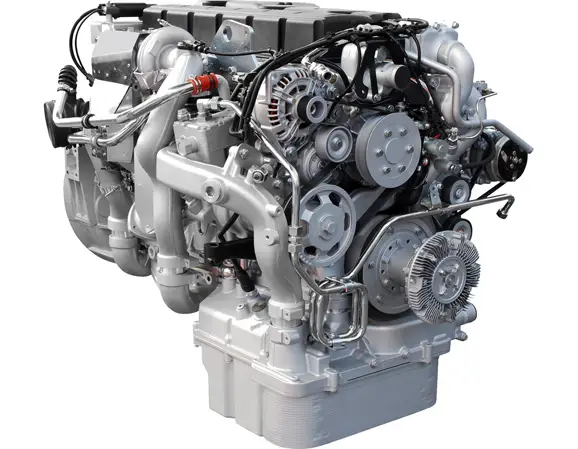
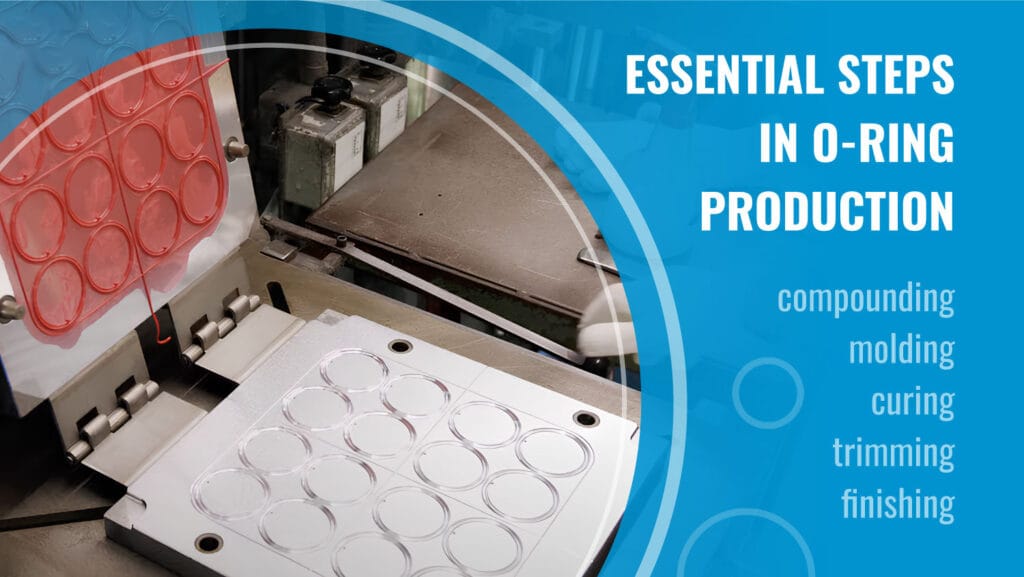
Behind every reliable hydraulic cylinder, automotive engine, industrial pump, and pneumatic system lies a seemingly simple component that plays a critical role in preventing leakage and maintaining operational efficiency—the O-Ring. While O-rings may appear straightforward in design, producing a high-quality seal requires a highly controlled manufacturing process involving advanced material science, precision tooling, strict quality management, and continuous process optimization. Understanding the essential steps in O-ring production helps engineers, buyers, and equipment manufacturers evaluate product quality and choose dependable sealing solutions for demanding applications.
Modern industries expect O-rings to withstand extreme temperatures, aggressive chemicals, high pressures, and long service intervals. Achieving this level of performance begins long before the seal reaches the end user. Every stage of production—from raw material selection to final inspection—directly influences sealing performance, durability, and reliability.
Manufacturers specializing in premium O-Ring solutions invest heavily in process control and quality assurance to ensure consistent performance across every production batch.
Why O-Ring Manufacturing Quality Matters
An O-ring’s performance depends not only on material selection but also on manufacturing precision. Even minor dimensional deviations can affect compression force, sealing effectiveness, and service life.
In critical industries such as aerospace, automotive, oil and gas, medical equipment, and industrial automation, sealing failures can result in expensive downtime, environmental risks, and safety concerns.
Benefits of High-Quality O-Ring Production:
✔ Improved sealing reliability
✔ Longer service life
✔ Better chemical resistance
✔ Reduced maintenance costs
✔ Consistent dimensional accuracy
✔ Enhanced equipment performance

Step 1: Defining Application Requirements
Every successful O-ring manufacturing project begins with a detailed understanding of the intended application. Engineers must evaluate operating conditions before selecting materials and production methods.
Critical considerations include:
• Operating temperature range
• System pressure
• Fluid compatibility
• Dynamic or static sealing conditions
• Regulatory requirements
• Expected service life
These parameters establish the foundation for all subsequent manufacturing decisions.
Expert Insight:
Many sealing failures originate from incorrect application analysis rather than manufacturing defects. Accurate requirement definition is the first step toward long-term sealing success.
Step 2: Selecting the Right Elastomer Compound
Material selection is one of the most critical stages in O-ring production. Different elastomers offer unique performance characteristics suited to specific operating environments.
NBR (Nitrile Rubber)
Widely used for hydraulic oils, fuels, and industrial lubricants because of its excellent oil resistance and cost-effectiveness.
FKM (Viton®)
Provides exceptional heat and chemical resistance for demanding industrial and automotive applications.
HNBR
Offers superior mechanical strength, ozone resistance, and extended temperature capabilities.
EPDM
Excellent for water, steam, and outdoor applications requiring weather resistance.
Silicone
Ideal for applications requiring flexibility across extreme temperature ranges.
A premium O-Ring begins with a carefully engineered elastomer formulation designed to meet specific performance objectives.
Step 3: Raw Material Mixing and Compounding
Once the base elastomer is selected, the next stage involves creating a customized rubber compound. This process blends the polymer with various additives to achieve desired physical properties.
Typical ingredients include:
• Reinforcing fillers
• Plasticizers
• Curing agents
• Processing aids
• Antioxidants
• Color pigments
The mixing process must be precisely controlled to ensure uniform distribution of all ingredients.
Why Compounding Matters:
✔ Controls hardness
✔ Improves tensile strength
✔ Enhances chemical resistance
✔ Optimizes elasticity
✔ Extends service life
Step 4: Material Testing Before Production
Before molding begins, manufacturers typically perform laboratory testing to verify compound quality.
Common tests include:
• Hardness measurement
• Tensile strength testing
• Elongation analysis
• Density verification
• Compression set evaluation
Early testing helps identify formulation inconsistencies before mass production begins.
Step 5: Precision Tooling and Mold Design
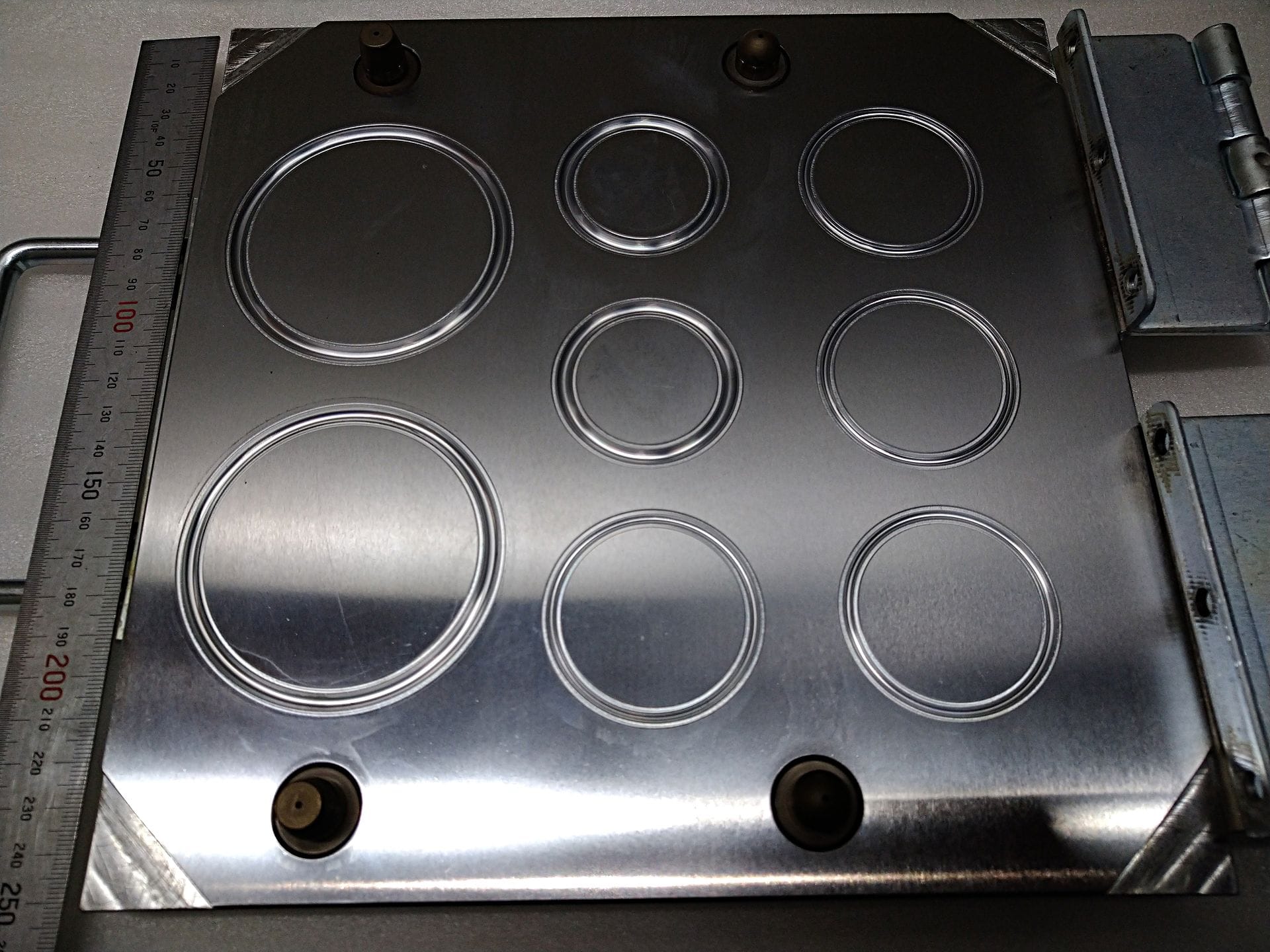
The mold is the heart of the O-ring manufacturing process. Precision tooling determines dimensional accuracy, surface finish quality, and production efficiency.
Modern molds are designed using advanced CAD software and precision machining technologies.
Factors considered during mold development include:
• O-ring size
• Cross-sectional diameter
• Material shrinkage rates
• Production volume requirements
Accurate mold design ensures every seal conforms to strict dimensional specifications.
Step 6: Rubber Molding Process
After tooling preparation, the rubber compound is formed into finished O-rings through molding processes.
Compression Molding
One of the oldest methods, suitable for low-volume and specialty production runs.
Transfer Molding
Provides improved material flow and dimensional consistency for more complex designs.
Injection Molding
The most advanced and efficient production method for high-volume manufacturing.
Injection molding offers superior consistency, reduced waste, and excellent dimensional control.
Modern Manufacturing Trend:
Automated injection molding systems enable manufacturers to produce millions of precision O-rings annually with exceptional repeatability.
Step 7: Vulcanization and Curing
Following molding, the elastomer undergoes vulcanization, a chemical process that cross-links polymer chains and transforms raw rubber into a durable engineering material.
Vulcanization significantly improves:
• Elasticity
• Mechanical strength
• Heat resistance
• Chemical resistance
• Wear resistance
Precise temperature and curing time control are essential for achieving optimal material properties.
The performance of every O-Ring depends heavily on proper vulcanization.
Step 8: Deflashing and Finishing Operations
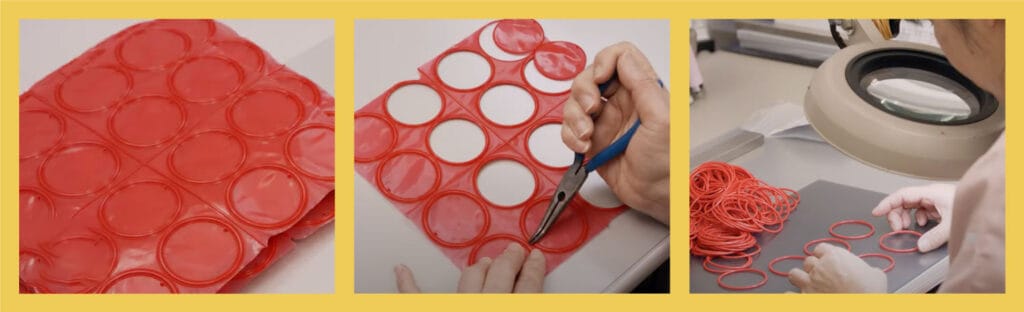
After molding, excess rubber known as flash must be removed.
Common deflashing methods include:
• Cryogenic deflashing
• Mechanical trimming
• Manual finishing
• Precision grinding
High-quality finishing improves appearance, dimensional accuracy, and sealing reliability.
Step 9: Post-Curing for Enhanced Performance
Certain elastomer materials, particularly FKM and silicone compounds, may require post-curing.
Post-curing involves controlled heating after vulcanization to:
• Improve chemical resistance
• Reduce volatile residues
• Enhance thermal stability
• Increase long-term durability
This additional process helps ensure consistent performance in demanding applications.
Step 10: Dimensional Inspection and Quality Control
Dimensional verification is one of the most important quality control stages in O-ring production.
Manufacturers inspect:
• Inside diameter
• Outside diameter
• Cross-sectional thickness
• Surface quality
• Flash removal quality
Advanced optical measurement systems often provide micron-level inspection accuracy.
Critical Inspection Objectives:
✔ Compliance with ISO standards
✔ Consistent dimensions
✔ Surface defect detection
✔ Batch traceability
✔ Customer specification verification
Step 11: Performance Testing and Validation
Beyond dimensional inspection, manufacturers conduct extensive testing to validate performance characteristics.
Typical validation procedures include:
• Tensile strength testing
• Compression set testing
• Heat aging evaluation
• Chemical resistance testing
• Low-temperature flexibility analysis
Testing confirms that the finished product satisfies application requirements.
Step 12: Cleaning and Packaging
Before shipment, O-rings are cleaned to remove dust, processing residues, and contaminants.
Packaging must protect seals from:
• UV exposure
• Moisture
• Ozone
• Mechanical damage
Proper packaging helps preserve material properties during transportation and storage.
Many premium O-Ring suppliers use controlled packaging systems to maximize product shelf life.
The Role of Automation in Modern O-Ring Production
Automation has transformed O-ring manufacturing by improving consistency, reducing defects, and increasing productivity.
Advanced technologies include:
• Robotic material handling
• Automated molding systems
• AI-assisted quality inspection
• Digital process monitoring
• Smart manufacturing platforms
These innovations enable manufacturers to maintain strict quality standards while meeting growing global demand.
Sustainability in O-Ring Manufacturing
Environmental responsibility is becoming increasingly important throughout the sealing industry.
Manufacturers are implementing:
• Energy-efficient production equipment
• Material recycling programs
• Reduced process waste
• Eco-friendly packaging solutions
• Sustainable manufacturing practices
These efforts help reduce environmental impact while improving production efficiency.
Future Trends in O-Ring Production
The future of O-ring manufacturing is driven by innovation, digitalization, and advanced material science.
Emerging developments include:
• Nano-enhanced elastomers
• Smart sealing systems
• Predictive quality analytics
• Additive manufacturing technologies
• Advanced high-performance compounds
As industries demand greater reliability and longer service life, manufacturing processes will continue evolving to support next-generation sealing solutions.
Key Takeaway:
Essential steps in O-ring production extend far beyond simple molding. From material formulation and precision tooling to advanced testing and quality assurance, every stage contributes to the performance, durability, and reliability of the final seal. Manufacturers that invest in robust production processes consistently deliver O-rings capable of meeting the most demanding industrial requirements.
Frequently Asked Questions
1. What is the most important step in O-ring production?
Material selection is often considered the most critical step because it directly determines temperature resistance, chemical compatibility, and service life.
2. Which molding process is best for O-ring manufacturing?
Injection molding is generally preferred for high-volume production due to its efficiency, consistency, and dimensional accuracy.
3. Why is vulcanization necessary in O-ring production?
Vulcanization strengthens the rubber structure and improves elasticity, durability, heat resistance, and sealing performance.
4. How do manufacturers ensure O-ring quality?
Quality is verified through dimensional inspection, material testing, process monitoring, and performance validation procedures.
5. What industries use high-quality O-rings?
Automotive, aerospace, hydraulic equipment, medical devices, industrial automation, oil and gas, and food processing industries all rely on precision-engineered O-rings.