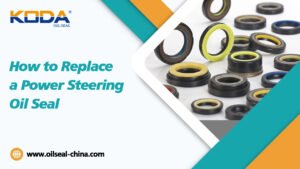
A leaking power steering oil seal can lead to fluid loss, reduced steering assistance, pump noise, and damage to other components if the problem is not corrected promptly. On vehicles equipped with hydraulic power steering, seals help contain pressurized fluid inside the pump, steering gear, rack, and connecting components while allowing shafts and other parts to move as designed.
Replacing a power steering oil seal is not always a simple remove-and-replace job. The correct repair depends on the leak location, steering system design, seal profile, shaft condition, and the availability of manufacturer-approved service procedures. A seal installed in the wrong direction, a damaged shaft, or an incorrectly bled system can cause the leak or steering problem to return.
This guide explains how to identify a power steering oil seal leak, determine whether the pump or steering gear needs repair, prepare the correct replacement parts, and carry out the work safely. It is written for automotive technicians, repair businesses, parts distributors, vehicle manufacturers, and B2B buyers sourcing power steering seals.
Understanding the Power Steering Oil Seal
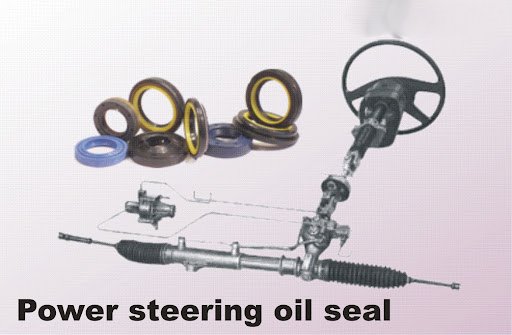
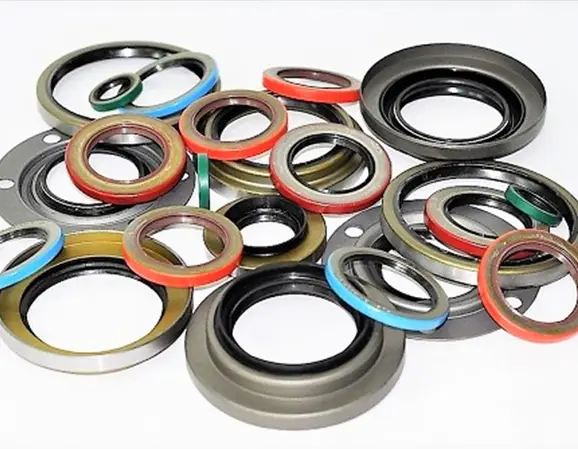
A power steering oil seal is a sealing component used to prevent hydraulic steering fluid from escaping around moving or stationary interfaces. Depending on the system design, seals may be installed in the power steering pump, steering rack, steering gearbox, input shaft, output shaft, or other hydraulic connections.
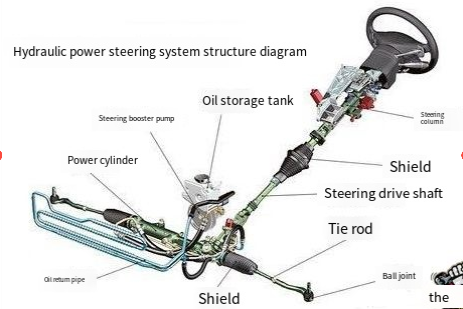
In a hydraulic power steering system, the pump supplies pressurized fluid to assist steering movement. The steering gear or rack converts hydraulic pressure and driver input into steering force. Seals must maintain fluid containment while withstanding pressure fluctuations, temperature changes, vibration, and repeated movement.
Important distinction: A power steering leak does not automatically mean that an oil seal has failed. Hoses, unions, O-rings, reservoir connections, pump housings, and steering gear components can also leak. Identify the actual source before ordering replacement seals or dismantling the assembly.
Where Power Steering Oil Seals Are Located
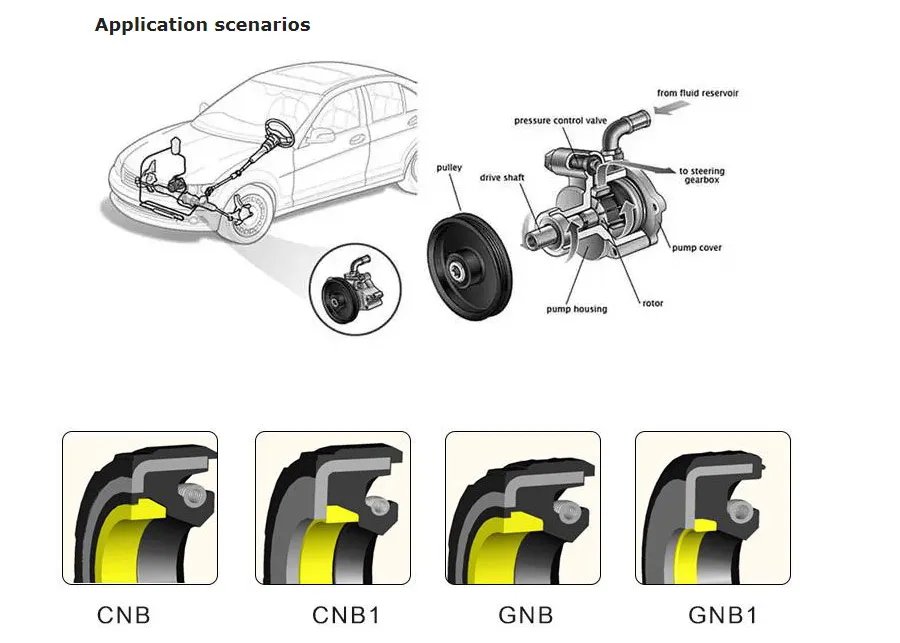
The location of the failed seal determines the repair method. Different vehicle manufacturers use different pump and steering gear designs, so the service procedure and seal arrangement should always be confirmed using vehicle-specific technical information.
Power Steering Pump Shaft Seal
The pump shaft seal is fitted around the rotating pump shaft, usually near the pulley or drive end. It helps prevent hydraulic fluid from leaking out of the pump housing along the shaft. A leak in this area may be caused by a worn sealing lip, shaft runout, a scored shaft surface, bearing wear, or excessive internal pressure.
Before replacing the shaft seal, inspect the shaft and bearing condition. If the shaft is wobbling or the bearing is worn, fitting a new seal alone may not provide a durable repair.
Steering Rack Input Shaft Seal
The input shaft seal is located where the steering column connects to the steering rack or steering gear. It prevents hydraulic fluid from escaping around the input shaft as the steering wheel is turned.
Access may be restricted, and the seal can be part of a more complex internal assembly. A technician should check the manufacturer’s repair instructions before attempting to remove the seal. Some steering racks require specialist tools, calibration, or complete assembly replacement rather than an individual seal repair.
Steering Rack Pinion or Output Seals
Rack and pinion steering assemblies use seals to contain hydraulic pressure in the working chambers. Leakage may appear near the rack ends, boots, or housing connections. Fluid inside a rack boot can indicate an internal rack seal leak, but the assembly should be inspected to confirm the source.
Replacing internal rack seals can involve removing the steering rack, disassembling the gear, checking the rack bar and pinion surfaces, and setting components to the required specifications. This is generally a specialist repair rather than a universal DIY procedure.
Steering Gearbox Seals
Some vehicles use a hydraulic steering gearbox instead of a rack and pinion system. Seals may be located around the input shaft, sector shaft, and housing interfaces. Leakage around the pitman arm or steering shaft area may indicate a failed seal, but worn bearings, shaft damage, or excessive internal pressure should also be investigated.
O-Rings and Connection Seals
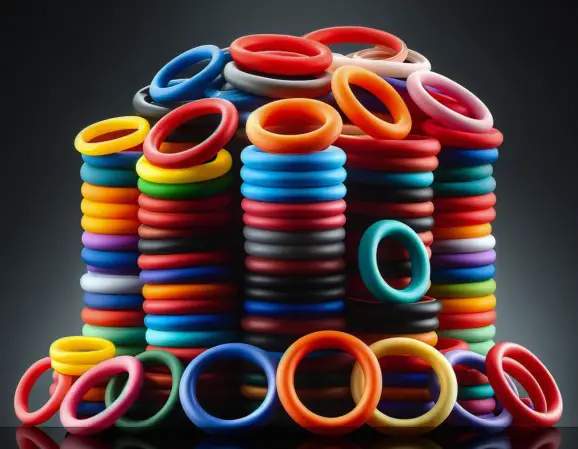
O-rings and other static seals are commonly used at pump outlets, pressure hose connections, return ports, and valve assemblies. A damaged or incorrectly specified O-ring can cause fluid leakage even when the main shaft seals are in good condition.
Symptoms of a Faulty Power Steering Oil Seal
Recognizing early warning signs can help prevent fluid loss and unnecessary component damage. However, symptoms should be treated as diagnostic clues rather than proof that a specific seal has failed.
Fluid around the pump
Oil near the pulley, shaft, or pump housing may indicate a shaft seal or housing leak.
Low fluid level
Repeated fluid loss may indicate leakage from a hose, connection, pump, or steering gear.
Whining or groaning
Air in the hydraulic circuit or insufficient fluid can cause pump noise, particularly during steering.
Heavy steering
Reduced assistance can result from low fluid, pump problems, belt faults, or other steering system defects.
Other Warning Signs
- Fluid collecting under the front of the vehicle after parking.
- Wetness around steering rack boots or gearbox seals.
- Foamy or aerated fluid in the reservoir.
- A burning-oil smell if fluid contacts hot engine or exhaust components.
- Steering assistance that becomes inconsistent or noisy.
If steering assistance is suddenly lost, fluid is leaking rapidly, or the steering becomes difficult to control, stop driving when it is safe to do so and arrange professional inspection. Continuing to operate a vehicle with insufficient hydraulic fluid can damage the pump and compromise safe vehicle control.
Tools and Replacement Parts Required
The tools needed depend on whether the repair involves a pump, steering rack, or gearbox. A pump shaft seal replacement may require different equipment from an internal rack seal overhaul. Always consult the vehicle manufacturer’s repair procedure before starting.
| Tool or part | Purpose | Selection notes |
|---|---|---|
| Correct replacement seal kit | Replaces failed sealing elements. | Match vehicle application, part number, dimensions, and material. |
| Seal puller | Removes an old seal where the service procedure permits. | Avoid scratching the shaft, bore, or housing. |
| Installation mandrel or driver | Installs the new seal evenly. | Use the correct size and contact surface. |
| Torque wrench | Tightens fasteners to specified torque. | Follow vehicle-specific service data. |
| Fluid collection pan and cleaning materials | Controls fluid loss and keeps components clean. | Prevent dirt from entering open hydraulic lines. |
| Specified power steering fluid | Refills the system after repair. | Use only the fluid type approved for the vehicle. |
Depending on the vehicle, additional tools may include pulley removal equipment, a steering system pressure tester, line wrenches, circlip pliers, a hydraulic pump holding fixture, or specialist steering gear tools. Do not improvise tools that could damage precision sealing surfaces.
How to Replace a Power Steering Oil Seal
The following workflow describes the general principles involved in replacing a power steering oil seal. It is not a substitute for the vehicle-specific repair manual. Pump, rack, and gearbox assemblies differ substantially, and some are not designed for individual seal replacement in ordinary workshop conditions.
Safety first: Hydraulic power steering circuits can contain pressurized fluid. Allow the system to cool, follow the manufacturer’s pressure-relief procedure, support the vehicle using approved lifting points, and never work under a vehicle supported only by a jack. Wear suitable eye and hand protection. Do not place hands near a suspected high-pressure leak because pressurized fluid can penetrate skin and cause a medical emergency.
Step 1: Confirm the Leak Source
Clean the pump, hoses, steering gear, and surrounding areas using an appropriate workshop cleaning method. Allow the surfaces to dry, then inspect the system during the manufacturer’s recommended diagnostic procedure. Look for the highest point where fresh fluid appears rather than assuming that the lowest wet area is the source.
Check the reservoir, hose connections, pump shaft area, pressure line, return line, steering rack boots, and gearbox seals. If necessary, use an approved leak detection method. Avoid exposing hot or moving components to cleaning chemicals or inspection materials that are not suitable for automotive use.
Step 2: Identify the Correct Replacement Seal
Use the vehicle identification number, manufacturer part number, pump or steering gear model, and applicable service documentation to identify the correct seal. If the original part is unavailable, record the seal profile and dimensions accurately and consult a qualified seal supplier.
Do not select a replacement based on outside diameter alone. Inside diameter, outside diameter, width, lip geometry, material, spring arrangement, pressure direction, and installation orientation may all affect performance.
Step 3: Remove the Relevant Assembly
Follow the vehicle manufacturer’s procedure for removing the pump, steering rack, or steering gearbox, depending on the leak location. Before disconnecting hydraulic lines, relieve pressure as specified and prepare a suitable container for fluid collection.
Label hoses and connections where necessary to prevent incorrect reconnection. Cap or plug open hydraulic ports with clean, compatible protective fittings to prevent contamination. Avoid allowing dirt, lint, or metal particles to enter the system.
Step 4: Disassemble and Remove the Failed Seal
Secure the component using an appropriate holding fixture. Remove retaining rings, covers, pulleys, or other parts only in the order specified by the service procedure. Use a suitable seal removal tool and take care not to damage the shaft, housing bore, or seal groove.
If the seal is part of a non-serviceable assembly, or the manufacturer specifies replacement of the complete pump or steering gear, follow that instruction rather than forcing an individual seal repair.
Step 5: Inspect the Shaft, Housing, and Bearings
Once the old seal has been removed, inspect the sealing contact area for scoring, corrosion, wear grooves, burrs, and abnormal surface damage. Check the housing bore and seal groove for distortion or damage. Where the design includes bearings, inspect for looseness, roughness, or excessive shaft movement.
A new seal cannot compensate for a damaged shaft or worn bearing. If the sealing surface is outside the manufacturer’s service limits, repair or replace the affected component using an approved method.
Step 6: Install the New Seal
Confirm the new seal is the correct part and has not been damaged during handling. Lubricate the sealing lip and installation surfaces with the fluid or assembly lubricant specified by the manufacturer. Use the correct installation mandrel or driver to apply even force.
Pay particular attention to seal orientation. A directional lip or pressure-energized profile must face the direction specified by the design. Do not hammer directly on the sealing lip, stretch the seal excessively, or force it over sharp threads and edges without suitable protection.
Step 7: Reassemble and Reinstall the Component
Reassemble the pump or steering gear in the correct sequence. Replace one-time-use fasteners, retaining components, O-rings, or gaskets where the service procedure requires it. Tighten fasteners to the specified torque and reconnect hydraulic lines without twisting or stressing them.
If a pulley or belt-driven pump has been removed, verify alignment and belt condition according to the vehicle manufacturer’s instructions. Incorrect pulley alignment or belt tension can create additional noise and operating problems.
Step 8: Refill and Bleed the Hydraulic System
Refill the reservoir using the exact fluid specification listed for the vehicle. Do not assume that all power steering fluids are interchangeable. Some vehicles require a particular hydraulic fluid or manufacturer-specific specification.
Bleed the system using the prescribed procedure. Depending on the vehicle, this may involve raising the front wheels, moving the steering slowly through its permitted range, running the engine at a specified speed, or using a vacuum-assisted bleeding tool. Never hold the steering against full lock longer than the manufacturer allows.
Step 9: Check Operation and Confirm the Repair
After bleeding, verify the fluid level, steering effort, pump noise, and system response. Inspect all disturbed connections and the repaired seal area for fresh leakage. Recheck the fluid level after the system has settled, following the manufacturer’s procedure.
If noise, foaming, or heavy steering remains, do not assume the new seal is defective. Air trapped in the system, a restricted hose, a faulty pump, incorrect fluid, or another steering system fault may still be present.
Special Considerations for Pump, Rack, and Gearbox Seal Replacement
Replacing a Power Steering Pump Shaft Seal
A pump shaft seal repair may appear straightforward, but the pump must be checked for shaft wear, bearing condition, and housing damage. If the shaft has a wear groove where the lip runs, the replacement seal may leak again even when installed correctly.
Some pump designs require pulley removal or specialist disassembly equipment. Other pumps are supplied as complete assemblies and may not have an approved individual shaft seal replacement procedure. Confirm parts availability and serviceability before beginning work.
Replacing Steering Rack Seals
Internal rack seal replacement is usually more complex because the assembly contains precision-machined components and pressure-control passages. The rack bar, pinion, bushings, bearings, and internal valve components may all need inspection.
Incorrect assembly can affect steering performance, internal leakage, or vehicle safety. Use the correct overhaul kit and specialist service instructions. If the rack is damaged or the manufacturer does not support internal repair, replacing or professionally remanufacturing the complete assembly may be the more appropriate option.
Replacing Steering Gearbox Seals
Steering gearbox seals may be exposed to pressure from different directions and may have specific installation depths or orientation requirements. Before replacing an input or sector shaft seal, inspect shaft condition, bearing support, and any evidence of excessive internal pressure.
A leak around the sector shaft may also be associated with shaft movement or wear. Installing a new seal without correcting the underlying mechanical condition can result in repeat leakage.
Common Mistakes When Replacing Power Steering Oil Seals
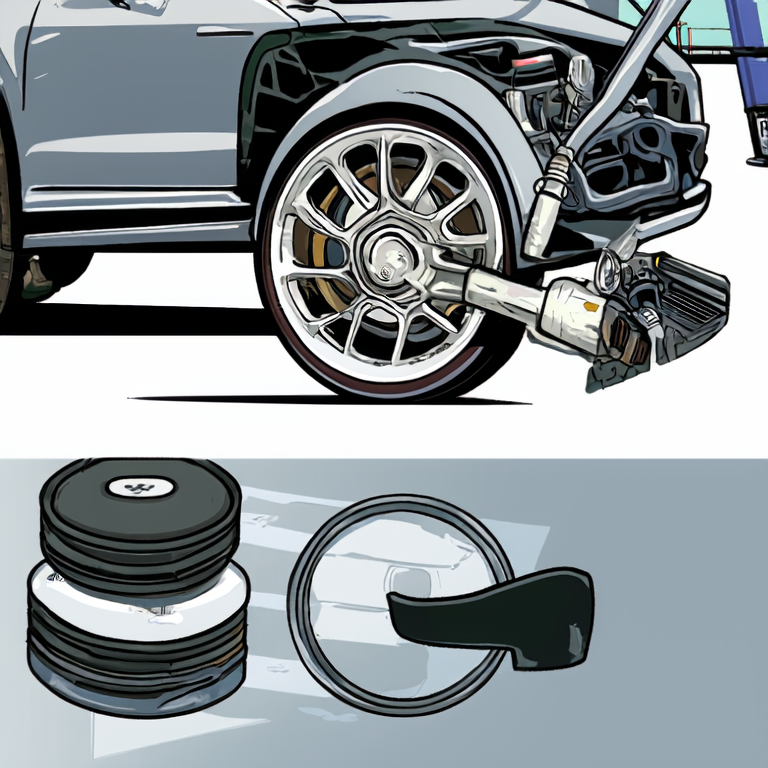
Many repeat leaks are caused by incorrect diagnosis, poor installation, or failure to inspect related components. The following mistakes should be avoided:
- Replacing the wrong component: Fluid from a hose or connection can travel along the housing and appear to come from a shaft seal.
- Using an incorrect seal size: A seal that is slightly different in width, lip design, or diameter may not fit or function correctly.
- Ignoring shaft wear: A worn sealing surface can damage a new lip or prevent effective sealing.
- Installing the seal in the wrong direction: Incorrect orientation can prevent the sealing element from containing fluid pressure.
- Using unsuitable lubricant: An incompatible assembly lubricant can affect the seal material or initial operation.
- Allowing contamination into the system: Dirt and metal particles can damage precision components and sealing surfaces.
- Skipping the bleeding procedure: Trapped air can cause noise, foaming, and inconsistent steering assistance.
- Using the wrong hydraulic fluid: Incompatible fluid can affect seals and system performance.
Workshop recommendation: If a replacement seal fails again within a short period, stop repeating the same repair. Compare the old and new seals, examine the shaft contact surface, check bearing movement, review fluid condition, and investigate pressure-related faults before installing another seal.
How to Select the Correct Power Steering Oil Seal
Choosing the correct replacement requires more than identifying the vehicle make and model. Similar vehicles may use different pump suppliers, steering rack versions, production dates, or regional specifications.
Confirm the Part Number and Application
Start with the original equipment part number or the pump and steering gear identification code. Confirm the vehicle year, engine, steering system type, and production variant. For aftermarket sourcing, cross-reference data should be checked carefully rather than relying on a broad vehicle fitment description.
Check Seal Dimensions and Profile
Record the inside diameter, outside diameter, width, lip configuration, and any metal case or spring details. For O-rings, record the inside diameter and cross-section. Measurements should be taken using suitable instruments and compared with the manufacturer’s tolerances.
Choose a Compatible Material
Common seal materials include NBR, HNBR, FKM, and PTFE-based designs. The best choice depends on the exact power steering fluid, operating temperature, shaft speed, pressure, and expected service conditions. A material that performs well in mineral-oil applications may not be suitable for every specialty hydraulic fluid.
Evaluate the Shaft and Housing Design
Rotary shaft seals require attention to shaft diameter, surface finish, hardness, runout, and rotational speed. The housing bore, installation depth, and seal retention arrangement must also match the original design. For steering rack and gearbox seals, pressure direction and internal assembly geometry are equally important.
Request Technical Documentation from the Supplier
For OEM projects and repeat purchasing, request a product drawing, material specification, dimensional tolerances, and relevant inspection information. If the application is unusual, provide the supplier with operating conditions and ask for a technical review before approving a substitute.
Power Steering Oil Seal Materials: What Buyers Should Know
| Material | Typical characteristics | Important checks |
|---|---|---|
| NBR | Common oil-resistant elastomer for many conventional automotive sealing applications. | Fluid formulation, temperature range, aging, and compound hardness. |
| HNBR | Often offers improved heat and mechanical performance compared with standard NBR. | Specific fluid compatibility and compound specification. |
| FKM | Used in selected applications requiring higher temperature or chemical resistance. | Compatibility with the exact fluid and low-temperature requirements. |
| PTFE | Low friction and broad chemical resistance in specialized sealing designs. | Shaft condition, installation method, and seal assembly design. |
Material names alone do not define the complete performance of a seal. Formulation, hardness, reinforcement, lip geometry, manufacturing process, and quality control can all influence the result. For this reason, automotive buyers should specify the actual application and request compound-specific information where necessary.
How to Prevent Future Power Steering Oil Seal Leakage
A durable repair requires attention to the complete steering hydraulic system, not just the replaced seal. The following maintenance practices can help reduce repeat failures:
- Check the reservoir level regularly and investigate unexplained fluid loss.
- Use only the hydraulic fluid specified by the vehicle manufacturer.
- Inspect hoses for cracking, swelling, abrasion, and damaged connections.
- Check pump and steering gear mounting points for looseness or abnormal vibration.
- Inspect shaft surfaces and bearings whenever a shaft seal is replaced.
- Keep the hydraulic circuit clean during repairs and prevent foreign particles from entering open ports.
- Follow the correct bleeding and commissioning procedure after opening the system.
- Investigate abnormal pump noise, foaming, or steering effort before further operation.
Avoid using generic stop-leak additives as a substitute for proper diagnosis. Such products may not be approved for the vehicle’s fluid or sealing materials and cannot repair damaged shafts, worn bearings, cracked housings, or incorrect clearances.
Sourcing Power Steering Oil Seals for Automotive B2B Applications
For automotive parts distributors, repair networks, wholesalers, and OEM purchasing teams, the main sourcing challenge is ensuring that the replacement seal matches the original application and performs consistently across production batches.
Information to Include in a Supplier Inquiry
- Vehicle make, model, year, and steering system configuration.
- Original equipment or aftermarket part number.
- Pump, rack, or steering gearbox manufacturer and model.
- Seal dimensions, profile, drawing, or physical sample.
- Required material and hydraulic fluid specification, if known.
- Annual demand, order quantity, and forecast requirements.
- Packaging, labelling, inspection, and traceability expectations.
What to Evaluate in a Seal Manufacturer
A suitable manufacturer should be able to clarify product specifications, review samples or drawings, explain material options, and communicate dimensional and quality requirements. Buyers should also evaluate production consistency, inspection processes, lead-time communication, packaging controls, and the supplier’s ability to support repeat orders.
For custom or non-standard seals, request confirmation of the approved drawing and material before mass production. Where the application is safety-critical, product qualification and validation should follow the vehicle manufacturer’s requirements and the buyer’s quality management process.
Discuss Your Power Steering Oil Seal Requirements
Looking for power steering oil seals for automotive aftermarket distribution, repair applications, or OEM projects? Share your part number, drawing, sample, or dimensional requirements with KODA. Including the pump or steering gear model and the intended fluid application will help the team review your sourcing requirements more accurately.
Frequently Asked Questions About Power Steering Oil Seal Replacement
1. Can I replace a power steering oil seal without removing the pump?
It depends on the pump design and the location of the failed seal. Some external connections can be serviced without removing the pump, but a shaft seal usually requires access to the shaft and may require pump removal or partial disassembly. Always follow the vehicle manufacturer’s procedure and confirm that individual seal replacement is supported.
2. How do I know whether the power steering pump seal or hose is leaking?
Clean the affected area and inspect for fresh fluid during the approved diagnostic procedure. A pump shaft seal leak often appears around the shaft or pulley area, while a hose leak may originate from a crimp, damaged hose, or connection. Fluid can travel along components, so the highest point of fresh wetness is a useful diagnostic clue.
3. Why does my new power steering oil seal still leak?
Possible causes include incorrect seal dimensions, wrong installation direction, lip damage, a scratched shaft, bearing wear, shaft runout, excessive pressure, or incompatible material. Inspect the complete assembly and compare the failed seal with the replacement instead of installing another seal without identifying the cause.
4. Can I use any hydraulic oil or ATF in the power steering system?
No. The correct fluid depends on the vehicle manufacturer’s specification. Some systems require a dedicated power steering fluid, while others specify a particular automatic transmission fluid or another hydraulic fluid. Using an unapproved fluid can affect system operation and seal compatibility. Check the owner’s manual or official service information.
5. Is it necessary to bleed the power steering system after replacing an oil seal?
If the hydraulic circuit has been opened or fluid has been lost, follow the manufacturer’s bleeding procedure. Trapped air can cause pump noise, foaming, inconsistent steering assistance, and abnormal fluid movement. The procedure varies by vehicle, so do not assume that one universal bleeding method is suitable for every system.
Technical References and Further Reading
For vehicle-specific repair information and professional seal selection, consult recognized automotive and sealing industry resources. The following references provide useful background on steering system diagnosis, fluid specifications, seal design, and installation practices:
- Bosch Automotive Aftermarket – Automotive service products and technical information.
- CARDONE – Remanufactured automotive steering and hydraulic components.
- Gates – Automotive and hydraulic hose, fluid power, and system component information.
- Parker Hannifin – Sealing technology, elastomer materials, and fluid power engineering resources.
- Trelleborg Sealing Solutions – Industrial and automotive sealing technology and technical resources.
Replacing a power steering oil seal successfully requires accurate leak diagnosis, the correct replacement specification, careful inspection of the shaft and housing, and proper system bleeding. For repair professionals and B2B buyers, understanding these factors helps prevent repeat leakage, protect steering components, and select sealing products that match the actual vehicle application.