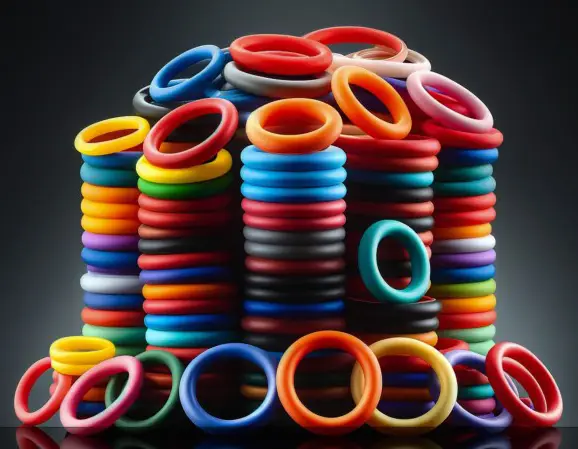
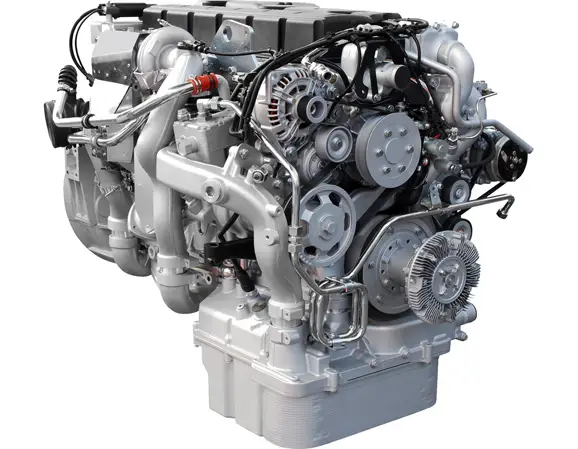
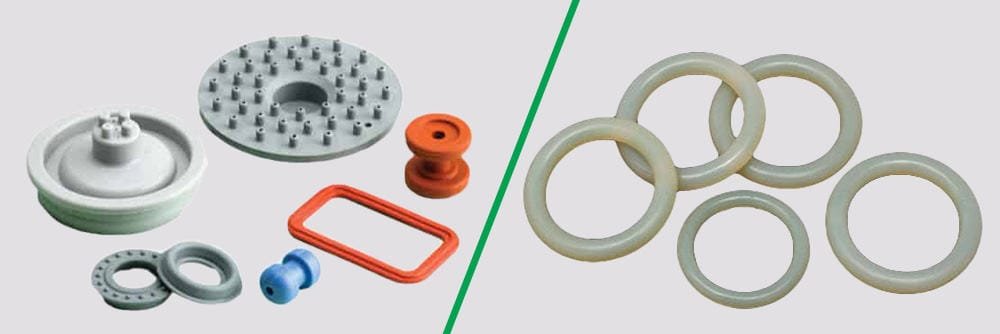
What Is Liquid Silicone Rubber?
Liquid Silicone Rubber (LSR) is a two-component, platinum-cured silicone elastomer supplied in a liquid or highly flowable form and converted into a flexible rubber product through controlled vulcanization. Unlike traditional high-consistency silicone rubber, which is commonly processed as a solid compound, LSR is designed for precision metering, mixing, injection molding, and automated production.
The versatility of Liquid Silicone Rubber comes from the combination of silicone chemistry, wide temperature capability, excellent weathering resistance, low compression set in suitable grades, and the ability to produce complex components with consistent dimensions.
✔ Engineering Insight: LSR should not be selected simply because it is “silicone.” Different LSR grades can vary significantly in hardness, tensile strength, tear strength, curing behavior, chemical resistance, adhesion, electrical properties, and suitability for medical, food-contact, automotive, or industrial applications.
Why Is Liquid Silicone Rubber So Versatile?
Liquid Silicone Rubber is widely used because its properties can be engineered for very different applications. A single material family can be formulated for soft, flexible seals, transparent optical components, high-temperature gaskets, medical devices, electrical insulation, automotive components, and complex molded parts.
Its versatility is mainly related to several engineering characteristics:
- 🌡 Wide operating temperature capability
- 🔧 Excellent processability through injection molding
- 💧 Good resistance to moisture and weathering
- ⚙ Stable elastic performance over a broad temperature range
- 🧪 Availability of specialized chemical-resistant grades
- 🛡 Good resistance to ozone and ultraviolet radiation
- 🏭 Highly repeatable automated production
- 🩺 Availability of grades for demanding healthcare applications
These advantages explain why LSR is found in products ranging from small precision sealing components to large-scale consumer and industrial production systems.
The Chemistry Behind LSR
Silicone elastomers are based on a silicon-oxygen backbone rather than the carbon-carbon backbone found in many organic rubbers. The Si–O bond contributes to the characteristic flexibility, thermal stability, and resistance to environmental aging associated with silicone materials.
Most modern LSR systems are supplied as two components, commonly referred to as Part A and Part B. The two components are metered in a controlled ratio, mixed, and then injected into a mold. A platinum-catalyzed addition-cure reaction then forms the crosslinked elastomer network.
A simplified representation of the process is:
Liquid components → Metering → Mixing → Injection → Heating → Crosslinking → Finished silicone elastomer
The actual chemistry is more complex and depends on the polymer, crosslinker, catalyst, inhibitors, pigments, fillers, and additives used in the specific formulation.
How LSR Differs from Traditional Silicone Rubber
| Characteristic | LSR | High-Consistency Silicone Rubber |
|---|---|---|
| Initial form | Liquid or highly flowable two-component system | Solid gum-like compound |
| Typical processing | Injection molding | Compression, transfer, or extrusion |
| Automation potential | Very high | High but generally more material preparation is required |
| Complex geometry | Excellent suitability | Good depending on design and process |
Key Material Properties of Liquid Silicone Rubber
The final performance of LSR depends on the specific grade and cure system. Typical engineering properties may include hardness from approximately 10 to 80 Shore A, although specialized formulations can extend beyond common ranges.
| Property | Typical Engineering Consideration |
|---|---|
| Hardness | Approximately 10–80 Shore A for many commercial grades |
| Tensile strength | Grade-dependent; often improved through reinforcement and formulation |
| Elongation | Often high compared with many rigid polymers |
| Thermal conductivity | Typically low for standard insulating grades, with specialty thermally conductive grades available |
| Compression set | Depends strongly on formulation, temperature, time, and compression |
These values are general engineering ranges rather than guaranteed specifications. Final selection should always be based on the technical data sheet and validation of the actual compound.
Hardness and Its Effect on Performance
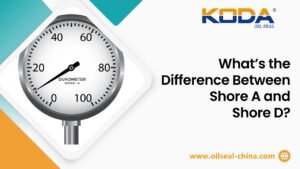
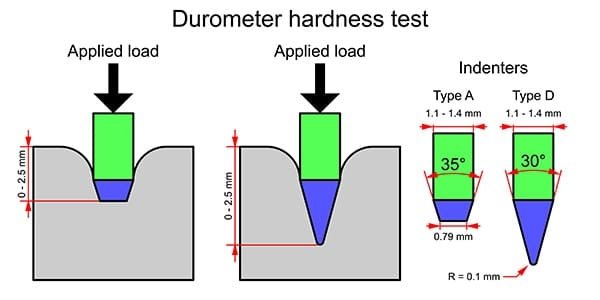
Hardness is one of the first properties engineers consider when selecting LSR. A softer material can conform to irregular surfaces with lower sealing force, while a harder compound may provide better resistance to deformation and mechanical damage.
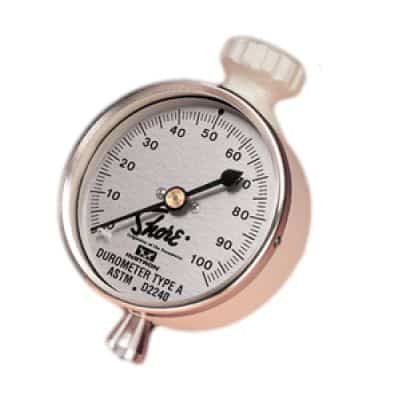
For example, a soft 20 Shore A LSR may be suitable for a flexible membrane or low-force seal, while a 70 Shore A formulation may be better suited to a mechanically demanding gasket.
Expert Tip: Hardness should never be evaluated alone. A higher Shore A value does not automatically mean better sealing, longer life, or greater chemical resistance. Geometry, compression, temperature, and compound formulation are equally important.
Temperature Performance
One of the most important reasons engineers choose silicone is its broad useful temperature range. Many LSR grades can maintain flexibility at low temperatures and retain useful mechanical performance at elevated temperatures.
Typical commercial silicone grades may be designed for service ranges approximately between -50°C and 200°C, with specialized formulations extending beyond these values under defined conditions.
However, continuous operating temperature, short-term peak temperature, thermal cycling, compression, and exposure to chemicals must be evaluated separately.
A simple thermal expansion calculation can help illustrate dimensional changes:
ΔL = α × L₀ × ΔT
Where ΔL is dimensional change, α is the coefficient of thermal expansion, L₀ is the original dimension, and ΔT is the temperature change.
For a 100 mm component exposed to a 100°C temperature change, even a relatively small thermal expansion coefficient can produce measurable dimensional movement. In precision sealing applications, this movement must be considered in the design.
Thermal Conductivity of LSR
Standard silicone rubber is generally a poor thermal conductor. Typical thermal conductivity may be approximately 0.15–0.30 W/m·K depending on the formulation and test method.
Special thermally conductive silicone compounds may incorporate ceramic or other thermally conductive fillers to increase heat transfer. These materials can be used in thermal interface pads, electronic encapsulation, and heat-management components.
The trade-off is important: increasing filler loading may influence viscosity, hardness, elongation, processability, and cost.
Chemical and Corrosion Resistance
LSR generally demonstrates good resistance to water, ozone, ultraviolet radiation, and weathering. However, silicone is not universally resistant to every chemical environment.
Performance can vary depending on exposure to:
- Oils and fuels
- Solvents
- Strong acids
- Strong alkalis
- Steam
- Cleaning chemicals
- High-pressure water
Silicone can swell or lose mechanical properties when exposed to certain nonpolar oils and hydrocarbon-based fluids. Therefore, a chemical compatibility test is recommended whenever the application involves aggressive fluids.
Resistance to Ozone and UV Radiation
Many organic elastomers are vulnerable to ozone cracking and ultraviolet aging. Silicone materials generally demonstrate excellent resistance to ozone and weathering, making them attractive for outdoor applications.
Typical applications include outdoor lighting seals, electrical connectors, architectural components, automotive systems, and weather-exposed industrial equipment.
Nevertheless, pigment systems, additives, surface contamination, temperature, and mechanical stress can influence long-term aging.
Processing Liquid Silicone Rubber
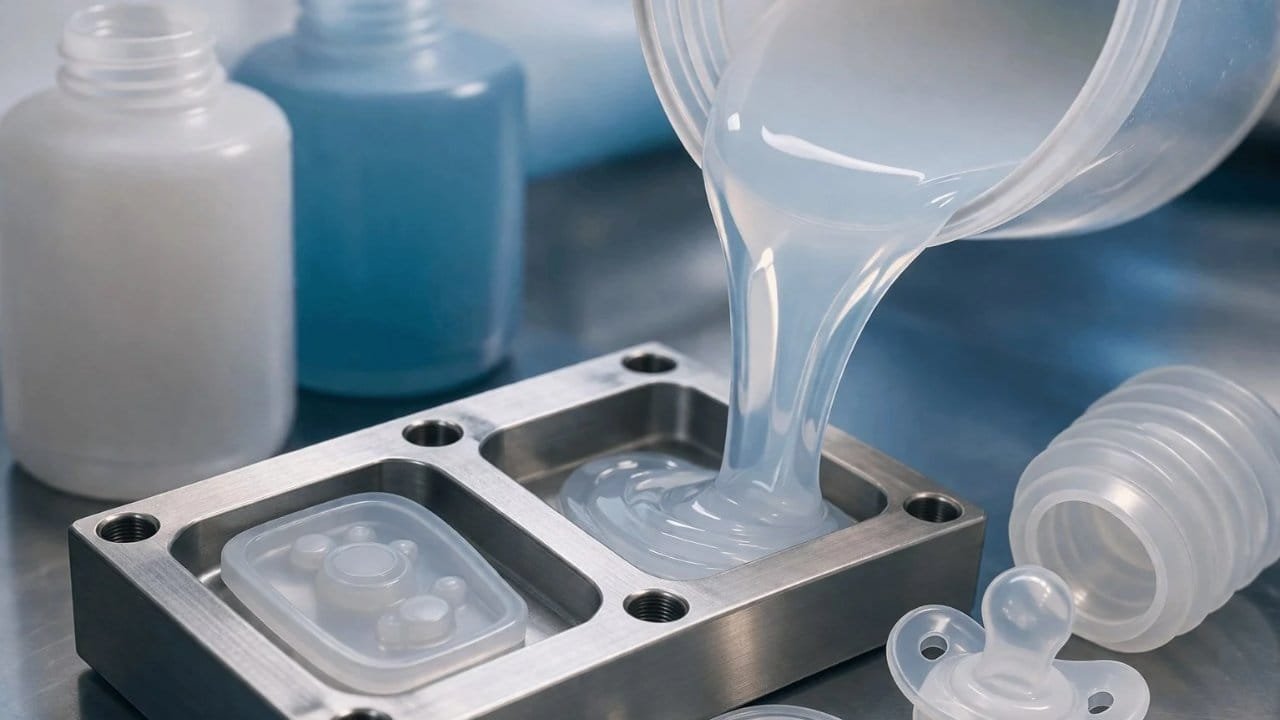
LSR processing commonly uses a precision metering and mixing system. The two components are supplied separately and combined immediately before injection into the mold.
Step 1: Material Preparation
Material storage and handling should follow the supplier’s instructions. Contamination, incorrect storage, or improper material identification can affect curing behavior.
Step 2: Metering and Mixing
The A and B components are accurately metered, commonly at a specified ratio such as 1:1, depending on the material system.
Step 3: Injection
The mixed material is injected into the mold cavity. Mold design, venting, temperature, injection speed, and material viscosity all affect the result.
Step 4: Vulcanization
Heat activates the curing reaction and converts the liquid material into a solid elastomeric component.
Step 5: Inspection
Finished parts may be evaluated for dimensions, flash, surface defects, hardness, visual quality, and application-specific functional requirements.
Why LSR Is Ideal for High-Volume Production
Liquid Silicone Rubber is particularly attractive for automated production because the material can be metered, mixed, injected, and cured with a high level of process control.
Potential production benefits include:
- ✔ Reduced manual material preparation
- ✔ Consistent component weight
- ✔ Excellent repeatability
- ✔ Suitable for multi-cavity molds
- ✔ Compatibility with automation
- ✔ Reduced material waste when properly designed
However, automation does not eliminate the need for process control. Incorrect mold temperature, poor venting, material contamination, or improper metering can still produce defects.
Typical Applications of Liquid Silicone Rubber
Medical and Healthcare Products
Specialized LSR grades are used in healthcare components because silicone can offer flexibility, temperature resistance, and suitable sterilization compatibility depending on the grade.
Applications may include seals, valves, membranes, tubing components, wearable devices, and molded medical parts.
Automotive Components
Automotive applications may include connectors, seals, grommets, diaphragms, sensor components, lighting seals, and components exposed to temperature cycling.
Electrical and Electronics
LSR can provide electrical insulation, environmental protection, flexibility, and resistance to outdoor aging. It is used in connectors, cable components, keypads, insulation parts, and encapsulation systems.
Consumer Products
Kitchenware, wearable devices, personal care products, baby products, and flexible consumer components may use LSR because of its soft touch, durability, and design flexibility.
Industrial Sealing
LSR is used in gaskets, O-rings, diaphragms, valves, and custom sealing components where flexibility and environmental resistance are important.
Common Standards for LSR Evaluation
Several ASTM and ISO standards may be relevant when evaluating silicone rubber. The correct standard depends on the property being measured and the application.
- ASTM D2240: Durometer hardness of rubber and elastomers.
- ASTM D412: Tensile properties of vulcanized rubber and thermoplastic elastomers.
- ASTM D395: Compression set of rubber materials.
- ASTM D471: Effect of liquids on rubber properties.
- ASTM D624: Tear strength of conventional vulcanized rubber and thermoplastic elastomers.
- ASTM D573: Accelerated aging of rubber in an air oven.
- ISO 37: Determination of tensile stress-strain properties of rubber.
- ISO 48: Hardness testing of rubber and vulcanized or thermoplastic materials.
- ISO 815: Compression set of rubber materials.
Food-contact, medical, automotive, and other regulated applications may also require additional industry-specific compliance and documentation.
Designing LSR Parts for Injection Molding
Good product design is essential for successful LSR molding. Designers should consider uniform wall thickness, suitable draft, venting, parting lines, gate location, shrinkage, and demolding requirements.
Thin sections may fill differently from thick sections. Significant variations in wall thickness can influence flow, cure time, dimensional stability, and appearance.
Design Recommendation: Avoid unnecessary sharp transitions in thickness. Smooth transitions can improve material flow and reduce localized stress concentrations.
Liquid Silicone Rubber and Overmolding
LSR is highly suitable for two-shot molding and overmolding applications. It can be combined with thermoplastics, metals, textiles, and other substrates when the materials and process are compatible.
Overmolding can provide:
- Soft-touch surfaces
- Integrated seals
- Improved grip
- Environmental protection
- Reduced assembly operations
Adhesion may be mechanical, chemical, or assisted by primers depending on the material combination and design.
Case Example: LSR Seal for an Outdoor Electronic Housing
Case Example — Illustrative Industry Experience
Consider an outdoor electronic housing that requires a flexible seal capable of handling repeated temperature changes, rain, ultraviolet exposure, and periodic maintenance.
An engineering team may evaluate LSR based on temperature range, compression behavior, weathering resistance, hardness, groove geometry, and expected service conditions. The design may use a molded silicone gasket with controlled compression around the enclosure perimeter.
Validation could include dimensional inspection, compression testing, thermal cycling, water exposure, and visual examination after aging.
The correct engineering conclusion would depend on actual material data and test results. This example is an illustrative industry scenario and does not represent a real customer, factory test, or guaranteed service-life curve.
Laboratory Test Example
Laboratory Test Example — Demonstration Only
A laboratory evaluation of an LSR compound may begin by measuring baseline properties before environmental exposure.
Possible measurements include:
- Hardness
- Tensile strength
- Elongation at break
- Tear strength
- Compression set
- Mass change after fluid exposure
- Dimensional change
For example, a material may be tested before and after thermal aging. A percentage change can be calculated using:
Percentage Change = (Aged Value − Original Value) ÷ Original Value × 100%
If a tensile strength measurement changes from 8 MPa to 7 MPa, the percentage change is:
(7 − 8) ÷ 8 × 100% = −12.5%
This calculation is only an example of data analysis. Actual acceptance criteria must be established according to the application, specification, material grade, and relevant standard.
This laboratory example does not represent fabricated customer data, actual factory results, or a claimed product performance curve.
Failure Mode Analysis
Failure Mode Analysis — Illustrative Industry Example
Suppose an LSR gasket develops leakage after prolonged service. A visual inspection may show that the gasket has become permanently flattened.
A structured investigation could examine compression set, operating temperature, actual compression percentage, chemical exposure, mold dimensions, material cure condition, and installation damage.
Potential causes may include excessive compression, long-term elevated temperature, unsuitable material selection, incorrect groove dimensions, or chemical incompatibility.
The correct root cause should be determined through evidence such as dimensional measurement, material testing, environmental exposure analysis, and comparison with the original specification.
This is an illustrative failure analysis based on common engineering practice. It is not presented as a real customer failure investigation.
How to Choose the Right Liquid Silicone Rubber
| Selection Factor | Questions to Ask |
|---|---|
| Hardness | What compression force and flexibility are required? |
| Temperature | What are the continuous and peak temperatures? |
| Chemical exposure | Will the part contact oils, fuels, solvents, acids, or cleaning agents? |
| Mechanical load | Will the part experience tension, compression, tearing, or cyclic movement? |
| Regulatory requirements | Are medical, food-contact, electrical, or automotive requirements applicable? |
| Processing | Is the selected grade compatible with the molding equipment and cycle? |
Common LSR Failure Modes
Incomplete Cure
Incorrect mixing ratio, inadequate mold temperature, insufficient cure time, or contamination can produce a component with reduced mechanical properties.
Flash
Excessive mold clearance, parting-line damage, injection conditions, or material viscosity can contribute to flash formation.
Air Entrapment
Poor venting or unsuitable injection conditions can trap air and produce voids or surface defects.
Compression Set
Long-term compression and elevated temperature can reduce the ability of the material to recover its original shape.
Chemical Swelling
Exposure to incompatible fluids may cause swelling, softening, cracking, or loss of mechanical strength.
Tear During Demolding
Sharp mold features, insufficient draft, excessive adhesion, or weak material formulation may damage the part during removal.
LSR Compared with Other Elastomers
| Material | Main Strength | Important Limitation |
|---|---|---|
| LSR | Temperature and weathering resistance | May have limited resistance to certain oils and fuels |
| NBR | Oil and fuel resistance | Generally less suitable for extreme weathering and ozone exposure |
| EPDM | Water, weather, and ozone resistance | Poor compatibility with many petroleum oils |
| FKM | High chemical and temperature resistance | Often higher cost and different low-temperature behavior |
Expert Tips for Better LSR Product Design
- ✔ Select the material based on the complete service environment.
- ✔ Confirm the actual LSR grade rather than relying only on the generic word “silicone.”
- ✔ Design for uniform wall thickness where possible.
- ✔ Consider mold venting before production begins.
- ✔ Validate compression set for long-term sealing applications.
- ✔ Test chemical compatibility using the actual fluid whenever possible.
- ✔ Consider thermal expansion in precision applications.
- ✔ Use production process monitoring for critical molded components.
- ✔ Separate material qualification from final product validation.
The Future of Liquid Silicone Rubber Applications
Demand for LSR continues to grow as manufacturers seek materials that support miniaturization, automation, complex geometry, soft-touch design, reliable sealing, and high-volume production.
Future development is likely to focus on improved processing efficiency, specialized medical and healthcare grades, thermally conductive compounds, electrically conductive formulations, flame-retardant systems, improved adhesion technologies, and more sustainable manufacturing practices.
In advanced manufacturing, LSR is increasingly combined with digital mold design, automated inspection, robotics, multi-material molding, and precision process monitoring.
Final Engineering Perspective
Liquid Silicone Rubber is versatile because it combines the fundamental advantages of silicone chemistry with highly efficient modern processing technology. Its flexibility, temperature capability, weathering resistance, electrical insulation properties, and ability to be molded into complex shapes make it suitable for a wide range of industries.
However, choosing LSR correctly requires more than comparing hardness values. Engineers must evaluate temperature, chemical exposure, compression, mechanical loading, dimensional requirements, curing conditions, regulatory requirements, and long-term aging.
For manufacturers and designers seeking a reliable elastomeric material, Liquid Silicone Rubber can provide an excellent balance of performance and manufacturing efficiency when the correct grade and processing conditions are selected.
The most reliable engineering approach is to define the application requirements, select a suitable LSR formulation, review the applicable ASTM or ISO test methods, manufacture representative samples, and validate the finished component under realistic service conditions.
Frequently Asked Questions
1. What is Liquid Silicone Rubber used for?
Liquid Silicone Rubber is used for seals, gaskets, medical components, automotive parts, electrical components, consumer products, diaphragms, overmolded parts, and many other applications requiring flexible, durable, and temperature-resistant elastomeric performance.
2. What is the typical hardness range of LSR?
Many commercial LSR grades are available from approximately 10 to 80 Shore A, although the actual available range depends on the manufacturer and formulation. The correct hardness depends on the required flexibility, compression force, sealing behavior, and mechanical load.
3. Is Liquid Silicone Rubber resistant to high temperatures?
Many LSR grades provide excellent high-temperature performance and may be designed for continuous service around 150°C to 200°C or higher depending on the specific formulation. The actual temperature limit should always be confirmed from the technical data sheet and application testing.
4. Is LSR resistant to chemicals and oils?
LSR has good resistance to many environmental conditions, water, ozone, and weathering, but its resistance to specific oils, fuels, solvents, acids, and cleaning chemicals varies. Compatibility testing with the actual chemical environment is recommended.
5. Why is LSR suitable for high-volume manufacturing?
LSR is well suited to automated injection molding because its two-component system can be accurately metered, mixed, injected, and cured. This can support high repeatability, complex geometries, multi-cavity molds, and efficient large-scale production.