KODA Oil Seal Application Series
Categories
Auto Oil Seal
- Auto Oil Seal
- TOYOTA Oil Seal
- Nissan/Honda oil seal
- Isuzu Oil Seal
- MITSUBISHI/FUSO Oil Seal
- SUZUKI Oil Seal
- HYUNDAI/KIA Oil Seal
- HINO Oil Seal
- Ford / Chevrolet Oil Seal
- Peugeot Oil Seal
- VW/Iveco Oil Seal
- LADA/VAZ Oil Seal
- Caterpillar Oil Seal
- MAZDA Oil seals
- BENZ Oil Seal
- VOLVO Oil Seal
- BPW Oil Seal
- MAN oil Seals
- RENAULT Oil Seals
- SCANIA Oil Seal
- MACK Oil Seal
- DAF Oil Seals
- PERKINS Oil Seal
Motorcycle Oil Seal
Agricultural Machine Oil Seal
Construction Machinery Oil Seal
Truck Wheel Hub Oil Seal
Cassette Wheel Hub Oil Seal
Power Steering Oil Seal and Kit
Hydraulic Pump Oil Seal
JCB SEAL KIT
Concrete Mixer Gearbox Oil Seal
Wheel Cylinder Brake Cup Seal
Engine Valve Cover Gasket
Bonded Seals
End Cover Cap Seals
Speak with a Product Expert
Please contact our professional sales team to discuss your application needs. We have dedicated staff available to answer your calls Monday through Friday, from 8:30 AM to 6:00 PM Beijing time.
New Customers:
+86 18730921709
Existing/Repeat Customers:
Email:sales@kodaseal.com
NEWS
Symptoms of a Damaged Crankshaft Oil Seal and Replacement Tips
Common Causes of Oil Seal Failure
What is the Importance of Metal Detectable O-Rings?
KODA Oil Seal Collection
Reliable sealing is essential to the performance, efficiency, and service life of engines, transmissions, hydraulic systems, wheel hubs, pumps, and industrial machinery. The right sealing component must do more than fit the installation space: it must retain lubricants, prevent fluid leakage, resist contamination, and withstand the actual operating conditions of the equipment.
KODA provides a broad range of oil seals, rotary shaft seals, hydraulic seals, wheel hub seals, valve stem seals, O-rings, and custom rubber sealing components for automotive, agricultural, construction, commercial vehicle, and industrial applications. Product selection can be based on dimensions, equipment model, original part number, material requirements, operating environment, or an engineering drawing.
If you have questions about Oil seal products, please contact us!
✓ Practical selection tip
Before ordering a replacement seal, confirm the shaft diameter, housing bore, seal width, sealing direction, fluid type, operating temperature, shaft speed, and any pressure exposure. Matching only the outside dimensions may result in premature leakage or installation failure.
SHOW MORE
Explore Sealing Products by Application
Different machines place different demands on sealing components. A seal used in a clean gearbox may require a different lip configuration from one exposed to abrasive soil, road splash, hydraulic pressure, or high rotational speed. Browsing by application helps narrow the choices before confirming the exact part number and dimensions.
Automotive Oil Seals
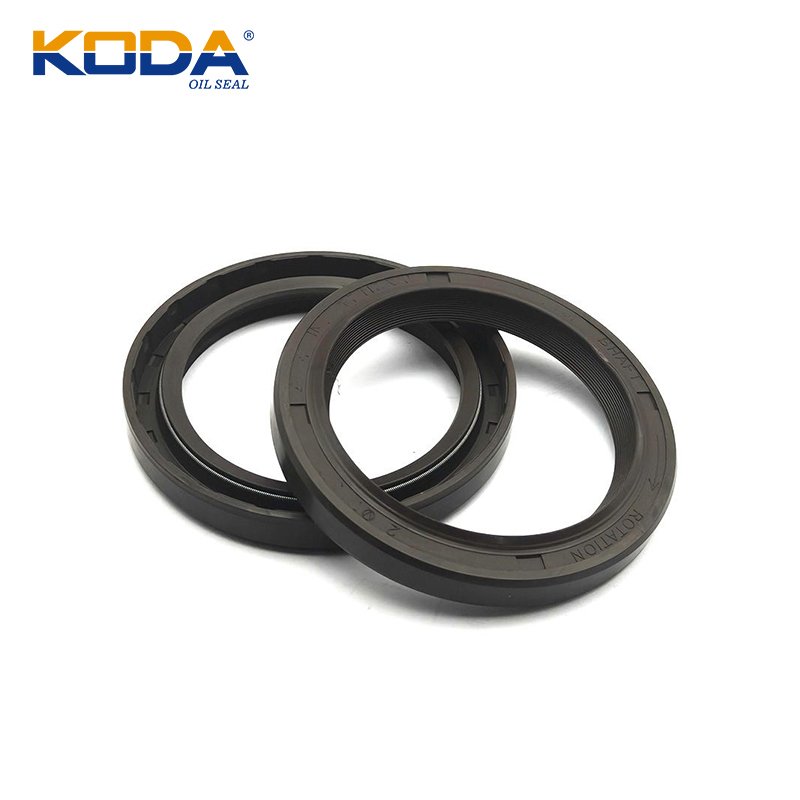
Designed for sealing positions in engines, transmissions, axles, steering systems, and other vehicle assemblies. Correct fit, elastomer compatibility, shaft finish, and rotational conditions are critical to reliable operation.
Agricultural Machinery Seals
For tractors, harvesters, agricultural transmissions, axles, and rotating equipment. Applications exposed to dust, mud, moisture, and crop debris may require stronger contamination protection.
Explore agricultural seals →
Construction Machinery Seals
Used in equipment such as excavators, loaders, and other heavy machinery. Selection should account for abrasive contamination, vibration, load conditions, lubricant retention, and the specific sealing location.
Explore construction seals →
Truck Wheel Hub Seals
Help retain wheel-end lubricant and limit the entry of water, dust, and road contaminants. Check hub geometry, axle configuration, seal orientation, and the original equipment reference before replacement.
Explore wheel hub seals →
Hydraulic Pump Seals
Hydraulic sealing components must be selected for the actual pressure, motion, fluid, temperature, and clearance conditions. A conventional rotary oil seal is not automatically suitable for a pressurized hydraulic application.
Explore hydraulic pump seals →
O-Rings and Rubber Parts
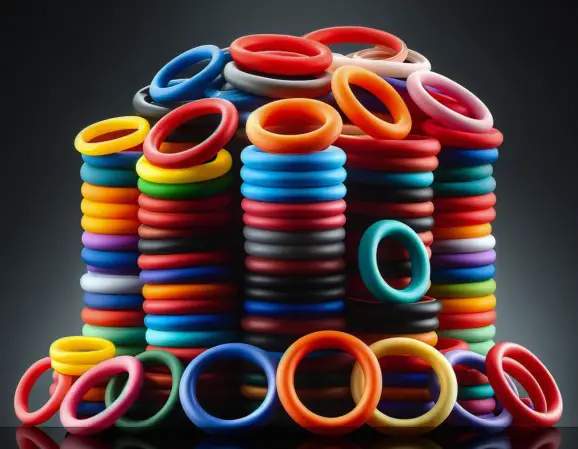
O-rings provide compact static or dynamic sealing in suitable grooves. Material, cross-section, compression, extrusion clearance, and chemical compatibility must be checked for the application.
Explore O-rings and rubber parts →
Oil Seal Types and Their Functional Differences
An oil seal is generally used to retain lubricating oil or grease around a rotating shaft while helping prevent external contaminants from entering the assembly. The most suitable design depends on whether the priority is low friction, lubricant retention, contamination exclusion, installation tolerance, or resistance to a demanding operating environment.
Single-Lip Rotary Shaft Seals
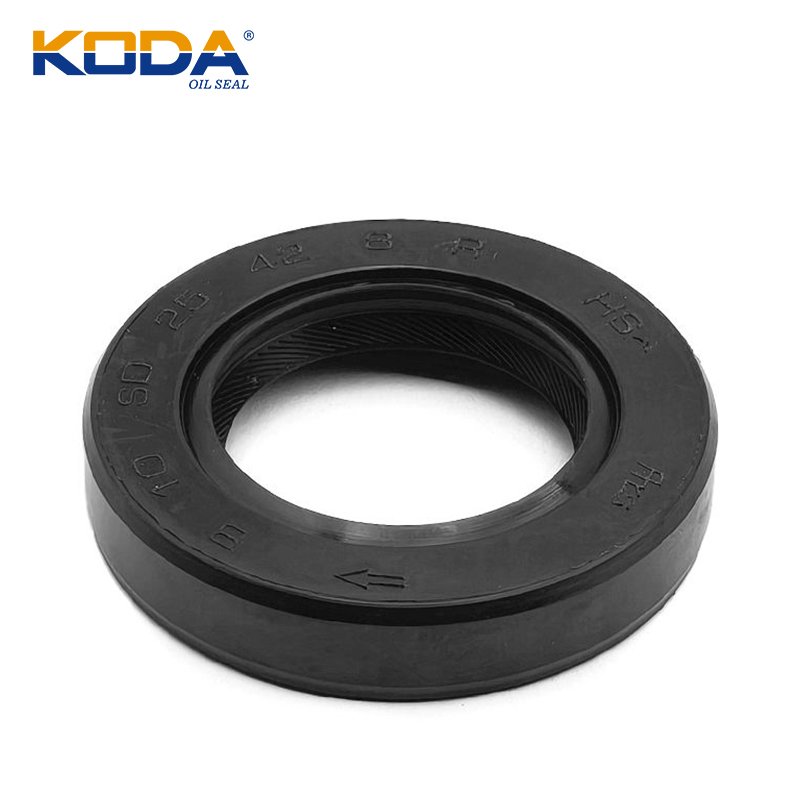
A single-lip design is often appropriate when lubricant retention is the primary requirement and external contamination is limited. The sealing lip contacts the shaft to form a dynamic sealing interface. Performance depends on lip geometry, material, shaft condition, lubrication, temperature, and speed.
Double-Lip Oil Seals
A double-lip design commonly combines a primary sealing lip with a secondary dust-exclusion lip. It can provide additional protection in environments exposed to dirt, splash water, or fine debris. The space between the lips and the lubrication arrangement should follow the seal manufacturer’s design guidance rather than an assumed universal rule.
Rubber-Covered and Metal-Cased Seals
The outside construction affects how the seal fits into its housing. Rubber-covered designs can accommodate some surface irregularities and differences in thermal expansion more effectively than certain rigid constructions, provided the housing remains within acceptable tolerances. Metal-cased designs can provide a firm interference fit in suitable, accurately machined housings. Neither construction should be selected without checking the housing material, bore condition, and installation requirements.
Cassette and Heavy-Duty Wheel Hub Seals
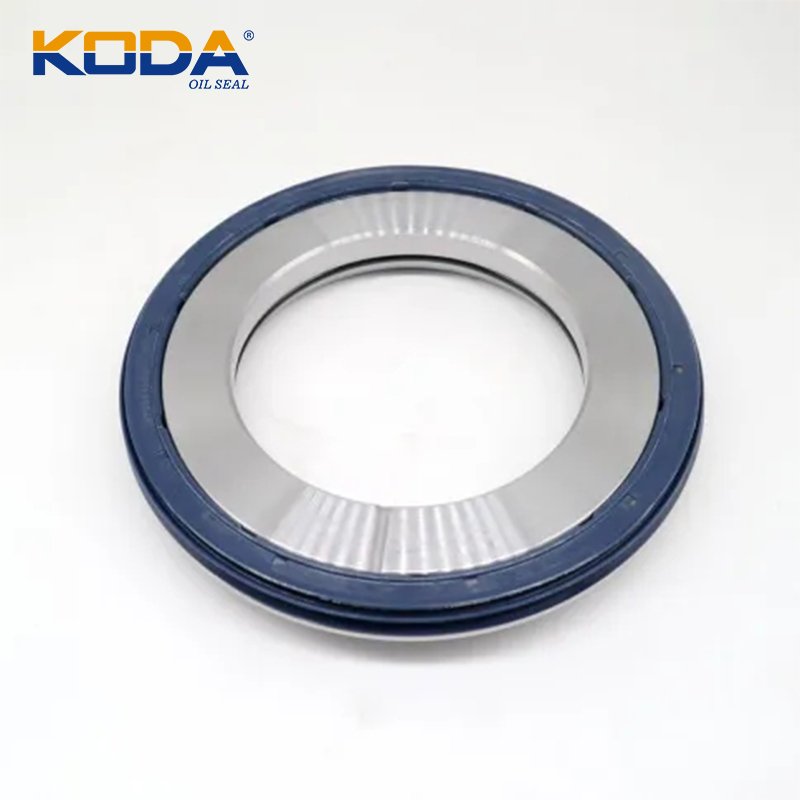
Cassette and integrated wheel-end sealing systems are used in selected heavy-duty applications where contamination exclusion and lubricant retention are especially important. They may incorporate multiple sealing interfaces or protective structures. Because their installation dimensions and operating principles can differ from conventional radial shaft seals, replacement should follow the relevant equipment specification.
Valve Stem Seals
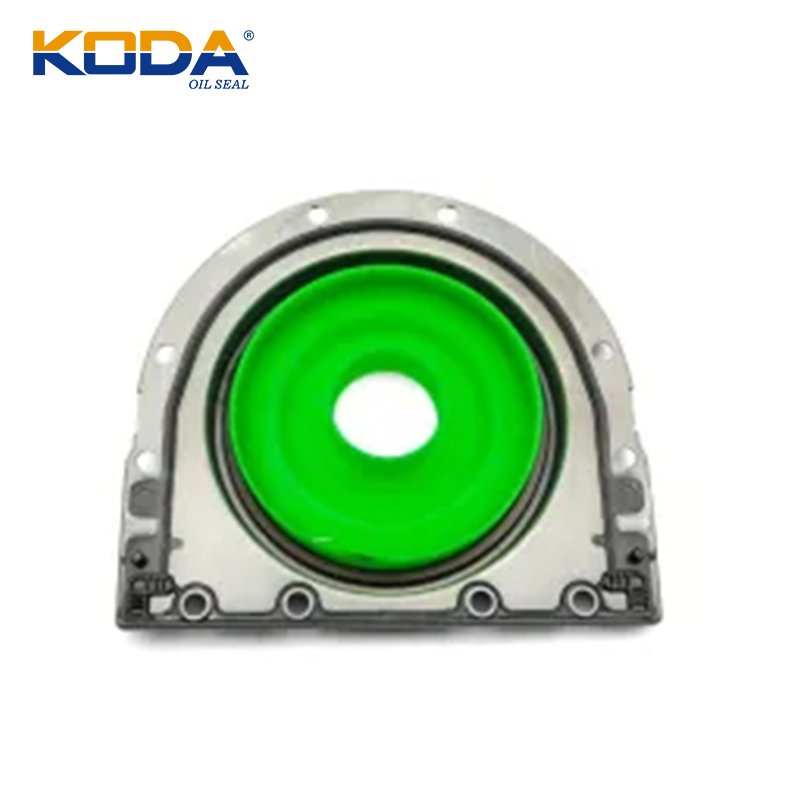
Valve stem seals regulate the amount of oil passing along the engine valve stem into the combustion chamber. Their design must match the valve guide, stem diameter, installation height, and engine operating conditions. Incorrect dimensions or material selection can contribute to excessive oil consumption, deposits, smoke, or premature wear.
Hydraulic Seals and O-Rings
Hydraulic seals may work under pressure and reciprocating motion, while O-rings are often used in static joints and selected dynamic applications. These components require different groove designs and performance checks from ordinary low-pressure rotary oil seals. Choose the sealing category according to the movement and pressure involved, not simply because a part is described as a rubber seal.
Important distinction: A radial shaft oil seal designed for lubricant retention at low differential pressure should not be treated as a universal pressure seal. For high-pressure systems, verify the seal type, pressure rating, shaft or rod motion, extrusion clearance, and manufacturer specifications.
Choosing the Right Seal Material
The elastomer or polymer compound influences resistance to oil, heat, chemicals, wear, and compression set. A material that performs well in engine oil may be unsuitable for a different hydraulic fluid, fuel, coolant, cleaning chemical, or outdoor environment. Always evaluate the actual fluid formulation and operating temperature rather than selecting material from a general-purpose label alone.
| Material | Typical characteristics | Selection considerations |
|---|---|---|
| NBR | Common choice for many petroleum-based oils and greases. | Confirm the actual temperature range, fluid compatibility, and resistance to aging. |
| FKM | Often selected for higher-temperature service and many oils or chemicals. | Check compound-specific compatibility; FKM is not resistant to every chemical or operating condition. |
| VMQ Silicone | Offers flexibility across a broad temperature range in suitable applications. | Consider tear strength, wear, mechanical loading, and the specific fluid. |
| PTFE | Provides low friction and broad chemical resistance in suitable seal designs. | Check installation method, shaft finish, pressure, and whether a special running-in procedure applies. |
| Polyurethane | Often used where abrasion resistance and mechanical strength are important. | Verify compatibility with the hydraulic fluid, temperature, and exposure to water or other media. |
| EPDM | Common in suitable water, weathering, and selected chemical applications. | Generally unsuitable for many petroleum oils; confirm compatibility before use. |
These are general material-selection guidelines, not universal temperature or compatibility ratings. Actual performance depends on the compound formulation, hardness, manufacturing quality, exposure duration, and combined operating stresses.
For additional technical information, consult Trelleborg Sealing Solutions’ technical catalogs, including resources for rotary seals, O-rings, hydraulic seals, and chemical compatibility. Use the product-specific technical data for final engineering decisions.
How to Identify a Replacement Oil Seal Correctly
When an original seal is worn, damaged, or no longer marked clearly, use a structured identification process. This reduces the risk of ordering a part that has similar dimensions but the wrong profile, material, or operating capability.
- Check the original part number. Record any OEM number, supplier code, molded marking, or cross-reference number. Confirm that the reference applies to the exact equipment variant and installation position.
- Measure the seal accurately. Record the inside diameter, outside diameter, and overall width. For special profiles, also record the lip arrangement, shoulder geometry, overall height, and any additional stepped dimensions.
- Identify the sealing location. A crankshaft seal, gearbox input seal, wheel hub seal, and hydraulic pump seal may have similar dimensions but different functional requirements.
- Confirm the operating environment. Document the fluid, temperature range, rotational speed or reciprocating movement, pressure, and exposure to dust, water, or abrasive material.
- Inspect the shaft and housing. Look for grooves, corrosion, burrs, bore damage, and signs of misalignment. A replacement seal cannot reliably compensate for a damaged sealing surface or an incorrectly sized housing.
- Verify before ordering in volume. For critical equipment, confirm drawings, tolerances, material specifications, and sample fit before approving a production batch.
Information to Include in a Seal Inquiry
For a faster and more accurate quotation, provide the original part number, equipment brand and model, installation position, measured dimensions, required material, operating temperature, sealed medium, working speed or pressure, order quantity, and any available photographs or technical drawings.
Engineering Factors That Affect Seal Service Life
Shaft Surface Finish and Hardness
The shaft is part of the sealing system, not merely a mounting surface. Excessive roughness can accelerate lip wear, while an unsuitable surface texture or directional machining lead may transport fluid across the contact area. A shaft that is too soft can develop a wear groove, while a damaged or corroded surface may compromise sealing even when the replacement component is correct.
Parker’s Oil Seals Engineering Design Guide discusses shaft material, hardness, finish, chamfer, and dimensional tolerance. Its recommendations apply to specified designs and should be checked against the requirements of the seal being used.
Speed, Heat, and Lubrication
As shaft speed increases, friction at the sealing lip can generate heat. Poor lubrication, excessive lip interference, shaft runout, or a seal operating outside its intended speed range can accelerate hardening and wear. Temperature at the sealing interface may also differ from the surrounding air or housing temperature.
Select a seal using the actual shaft speed, lubrication condition, fluid properties, and operating temperature together. A material’s nominal temperature range alone does not establish suitability for high-speed operation.
Pressure, Runout, and Misalignment
Conventional radial shaft seals are generally intended for applications with limited differential pressure unless a particular design is rated for more demanding conditions. Shaft eccentricity, bearing wear, misalignment, and excessive pressure can disturb lip contact and increase leakage. Diagnose these underlying conditions rather than replacing the seal repeatedly without correcting the cause.
Housing Fit and Installation Geometry
The housing bore must support the seal without distorting its geometry. A bore that is oversized, out of round, scratched, or damaged can allow leakage around the seal’s outside diameter. A suitable lead-in chamfer helps guide the seal into position, while sharp edges and burrs can damage the outer surface or sealing lip during assembly.
Common Oil Seal Problems and Practical Troubleshooting
| Observed problem | Possible causes | Recommended checks |
|---|---|---|
| Oil leaking at the shaft | Worn lip, incorrect size, shaft groove, poor lubrication, excessive runout, or incompatible material. | Inspect the shaft contact track, confirm dimensions and material, and check bearing condition. |
| Leakage around the outside diameter | Damaged housing, insufficient interference, distorted seal, or incorrect installation. | Measure the bore, inspect its surface, and verify the seal’s outside diameter and construction. |
| Lip hardening or cracking | Excessive heat, aging, chemical incompatibility, or operation outside the material limits. | Review fluid compatibility, temperature history, lubrication, and material selection. |
| Rapid lip wear | Abrasive contamination, rough shaft finish, dry running, excessive contact pressure, or misalignment. | Inspect the shaft, check lubrication and contamination controls, and evaluate shaft movement. |
| Seal displacement or deformation | Incorrect installation tooling, wrong dimensions, excessive pressure, or unsuitable housing fit. | Confirm the installation method, bore tolerance, seal profile, and application pressure. |
A visible leak does not always mean the seal itself has failed. Oil may travel from another joint, a damaged gasket, a loose fitting, or an overfilled housing before appearing near the shaft. Clean the area and identify the actual leak source before selecting replacement parts.
Installation Practices for Reliable Sealing
Correct installation helps preserve the designed lip geometry and interference fit. Even a correctly specified seal can fail early if its lip is cut, twisted, contaminated, or damaged during assembly.
- Clean the shaft, housing bore, and surrounding components before assembly. Remove dirt, old seal fragments, corrosion, and burrs without damaging the sealing surfaces.
- Inspect the shaft for grooves and scratches. If a wear track is present, assess whether shaft repair, an approved wear sleeve, or another manufacturer-recommended solution is appropriate.
- Protect the lip from splines, keyways, threads, and sharp shaft edges using a suitable installation sleeve or guide.
- Use a suitable press tool that applies force evenly to the intended load-bearing area. Avoid striking the seal directly or applying uneven force that can tilt the seal in the bore.
- Lubricate the sealing lip with a compatible lubricant when required by the seal design. Do not assume every material or seal profile requires the same preparation.
- Install the seal in the correct orientation. For many conventional oil-retaining radial shaft seals, the primary lip faces the retained lubricant, but the specific equipment and seal instructions take precedence.
- After assembly, verify alignment, rotation, lubricant level, and any manufacturer-specified commissioning procedure before returning equipment to service.
Maintenance reminder: If a new seal begins leaking soon after replacement, investigate installation damage, shaft wear, bearing play, pressure, lubrication, and housing condition before installing another seal of the same type.
Custom Oil Seals and OEM/ODM Manufacturing
Standard dimensions cover many common applications, but some equipment requires a special profile, a non-standard size, a particular compound, or a dedicated part number. Custom sealing projects should begin with a clear understanding of the operating environment and the interfaces that determine sealing performance.
KODA supports inquiries for standard sealing products and custom rubber components based on available specifications. Depending on the project, technical evaluation may involve drawing review, dimensional confirmation, material selection, mold development, sample approval, and production inspection. OEM and ODM requirements should be agreed upon before tooling or production begins.
Information Needed for a Custom Seal Project
- Technical drawings: PDF, CAD, or other engineering files showing dimensions, tolerances, and the sealing profile.
- Application details: Equipment model, installation position, shaft or bore dimensions, movement, speed, pressure, and temperature.
- Media compatibility: Oil, grease, hydraulic fluid, water, fuel, or other chemicals in contact with the seal.
- Material requirements: Specified elastomer, hardness, applicable industry requirements, and any required test documentation.
- Quality requirements: Critical dimensions, inspection criteria, packaging, traceability, labeling, and sample approval procedures.
- Commercial requirements: Annual demand, initial order quantity, target delivery schedule, and packaging or branding preferences.
For quality-sensitive applications, request relevant material data, dimensional inspection records, and applicable quality-system documentation. Any claimed certification, approval, or compliance should be verified against the supplier’s current documentation and the scope relevant to the product being purchased.
Quality Checks That Matter Before Shipment
Sealing performance depends on repeatable manufacturing as well as correct engineering selection. A practical inspection plan should identify the dimensions and material characteristics that directly affect fit, sealing contact, and service life.
✓ Dimensional verification
Check critical diameters, width, profile, and specified tolerances against the approved drawing or product specification.
✓ Visual inspection
Look for cuts, cracks, molding defects, flash, deformation, surface damage, and other defects defined by the inspection standard.
✓ Material confirmation
Confirm the specified compound and hardness where required, using appropriate material records or test methods.
✓ Order and traceability checks
Verify part number, quantity, packaging, labeling, and any agreed batch documentation before dispatch.
Inspection frequency and acceptance limits should be based on the product specification, application risk, customer requirements, and agreed quality plan. A visual check alone cannot establish chemical compatibility, dynamic sealing performance, or suitability for a specific operating environment.
Frequently Asked Questions
1. How do I choose the correct oil seal for my equipment?
Start with the original part number or equipment model. Confirm the inside diameter, outside diameter, width, sealing profile, material, fluid, temperature, shaft speed, pressure, and contamination conditions. If the original part number is unavailable, provide clear photographs and accurate measurements for technical review.
2. What is the difference between NBR and FKM oil seals?
NBR is widely used for many petroleum-based oils and general sealing applications. FKM is often selected for higher-temperature service and many demanding fluid environments. Neither material is suitable for every application; confirm the compound’s compatibility with the actual fluid, temperature, and operating conditions.
3. Can I replace an oil seal with another seal of the same dimensions?
Not necessarily. Matching dimensions is essential, but the replacement must also have the appropriate profile, material, lip arrangement, pressure capability, and speed rating. A dimensionally compatible seal may still fail if it is designed for a different operating environment.
4. Why does a new oil seal leak shortly after installation?
Common causes include a scratched or grooved shaft, damaged sealing lip, incorrect orientation, poor lubrication, tilted installation, housing damage, excessive shaft runout, bearing wear, or incompatible material. Inspect the complete sealing system and identify the root cause before installing another replacement.
5. Can KDIK supply custom oil seals and rubber sealing components?
KDIK accepts inquiries for standard products and custom sealing components based on technical drawings and application requirements. To evaluate a custom project, provide the dimensions, material specification, operating conditions, equipment details, order quantity, and any required quality documentation. Final feasibility, tooling, sampling, and production requirements should be confirmed with the supplier.
 Quick View
Perkins 198636170 Rear Crankshaft Seal Engine Part 90×154×13
PERKINS Oil Seal- Quick View
Crankshaft Oil Seal CASE IH 073020 PERKINS 2418F436 VOLVO 6613348
PERKINS Oil Seal - Quick View
- Quick View
232-7449 Perkins Crankshaft Seal 2418F704 4224762M1
PERKINS Oil Seal - Quick View
- Quick View
- Quick View