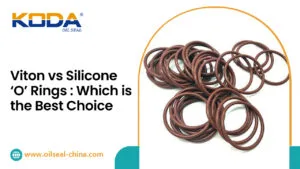
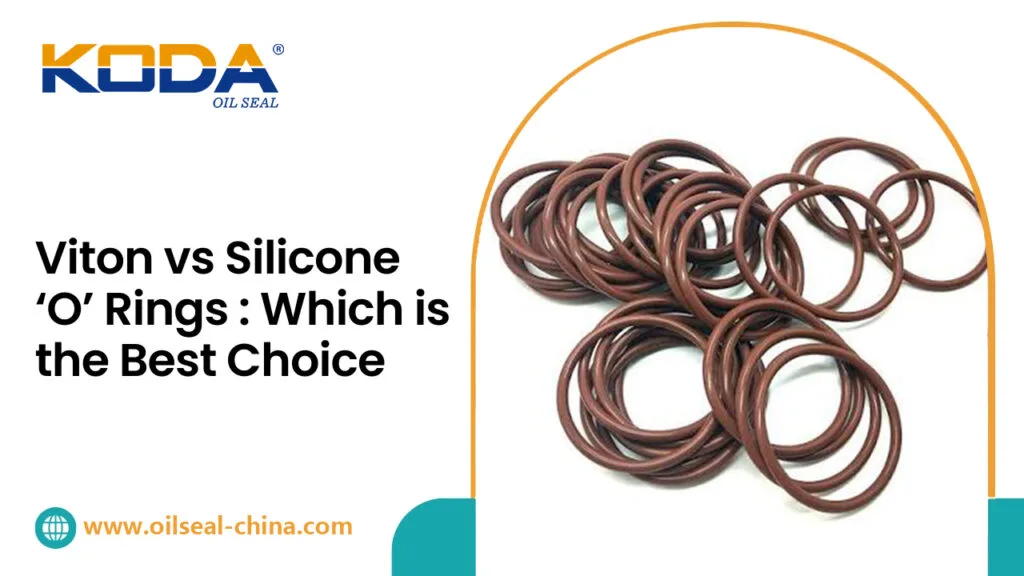
Choosing between FKM and silicone O-rings is not simply a matter of comparing two rubber materials. Both elastomers can provide reliable sealing performance, but they respond differently to temperature, chemicals, mechanical stress, compression, pressure, and environmental exposure.
FKM is widely selected for applications involving oils, fuels, hydrocarbons, elevated temperatures, and demanding industrial environments. Silicone, often identified as VMQ, is valued for its broad temperature flexibility, low-temperature performance, resistance to ozone and weathering, and suitability for selected clean, medical, food-contact, and electronic applications.
The right choice depends on the complete operating environment rather than the material name alone.
Engineering principle:
Do not select an O-ring only because its advertised temperature range looks suitable. Always evaluate the sealing medium, pressure, motion, hardness, compression, extrusion clearance, installation conditions, and required service life together.
FKM vs Silicone O-Rings: What Is the Difference?
FKM and silicone belong to different elastomer families and therefore provide different combinations of chemical resistance, thermal stability, mechanical performance, and environmental resistance.
| Property | FKM O-Rings | Silicone O-Rings |
|---|---|---|
| Elastomer family | Fluoroelastomer | Silicone elastomer / VMQ |
| High-temperature capability | Strong performance in many high-temperature applications | Very good thermal flexibility; exact limit depends on compound |
| Low-temperature flexibility | Compound-dependent; standard grades may be limited at low temperatures | Generally a major advantage of silicone elastomers |
| Oil & fuel resistance | Generally excellent for many petroleum-based fluids | Generally not the first choice for aggressive oil and fuel exposure |
| UV / ozone resistance | Good resistance | Excellent resistance in many outdoor environments |
| Mechanical strength | Generally stronger for demanding industrial sealing | Flexible but typically less resistant to mechanical damage |
| Typical applications | Automotive, oil & gas, machinery, fuel and chemical systems | Medical, food-related, electronics, outdoor and temperature-sensitive applications |
What Is FKM?
FKM is a family of fluoroelastomers widely used for demanding sealing applications. It is commonly selected when an O-ring must tolerate elevated temperatures and contact with oils, fuels, hydrocarbons, or selected aggressive chemicals.
FKM should not be treated as a single universal compound. Different formulations can provide different low-temperature behavior, chemical compatibility, compression-set resistance, and temperature performance.
This distinction is important when specifying an industrial O-ring.
Two O-rings may both be described as FKM while offering noticeably different performance because of differences in polymer formulation, filler system, cure chemistry, hardness, and compound design.
Where FKM O-Rings Are Commonly Used
- Automotive fuel systems
- Engine sealing systems
- Transmission and gearbox components
- Hydraulic and industrial equipment
- Oil and gas equipment
- Chemical processing machinery
- Vacuum equipment
- High-temperature industrial systems
- Pumps and valves
- General fluid-handling equipment
The main reason engineers consider FKM is not simply its maximum temperature rating. Its combination of thermal stability and resistance to many oils, fuels, and hydrocarbons can make it a practical choice for demanding fluid-sealing environments.
What Is Silicone O-Ring Material?
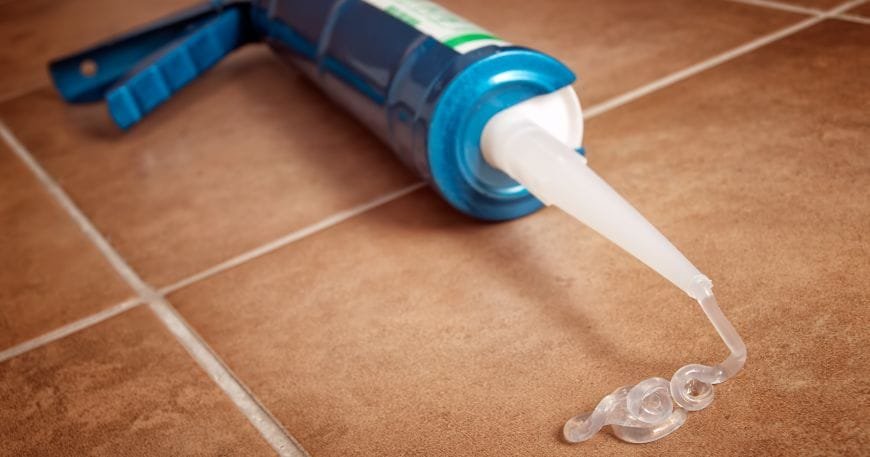
Silicone O-rings are commonly manufactured from silicone elastomers such as VMQ. Silicone is valued for its flexibility across a broad temperature range and for its resistance to ozone, weathering, and ultraviolet exposure.
Silicone compounds can also be formulated for applications where cleanliness, low toxicity, flexibility, or specific regulatory requirements are important.
However, silicone should not be considered a universal-purpose rubber.
Its relatively soft nature and lower resistance to certain mechanical stresses mean that application design is particularly important. Silicone is also generally not the first choice when the sealing interface is continuously exposed to aggressive petroleum oils or fuels.
Common Silicone O-Ring Applications
- Medical equipment
- Food-processing equipment
- Laboratory equipment
- Electronic enclosures
- LED and lighting systems
- Outdoor equipment
- Weather-resistant assemblies
- Low-temperature applications
- Cleanroom-related equipment
- Selected high-temperature static sealing applications
FKM vs Silicone: Temperature Resistance
Temperature is one of the most frequently used criteria when comparing FKM and silicone. However, comparing only the highest published temperature can produce the wrong material selection.
Silicone is often attractive where both low-temperature flexibility and elevated-temperature stability are required. FKM is frequently selected where elevated temperature is combined with oils, fuels, or hydrocarbon exposure.
Do not compare temperature ratings in isolation.
An O-ring operating at 180°C in clean dry air faces a very different sealing problem from an O-ring operating at the same temperature while exposed to fuel, hydraulic oil, pressure cycling, and mechanical movement.
Parker’s O-Ring Handbook provides application-specific material information and demonstrates that compound selection depends on the actual medium and operating conditions rather than simply choosing an elastomer family.
Which Material Is Better for High-Temperature Applications?
Both FKM and silicone can be used in high-temperature environments, but the surrounding conditions determine which material is appropriate.
If high temperature is combined with petroleum oil, fuel, or hydrocarbon exposure, FKM is often an important material to evaluate.
If the application requires excellent low-temperature flexibility together with elevated-temperature stability and does not involve aggressive oils or fuels, silicone may be a better candidate.
The correct selection should therefore be based on the complete operating envelope rather than a single maximum temperature number.
FKM vs Silicone for Low-Temperature Applications
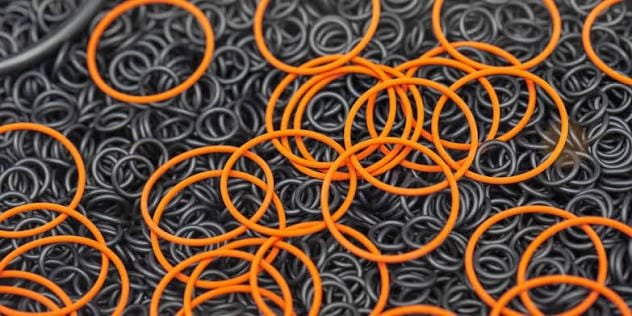
Low-temperature sealing can be more complicated than simply finding a material with a low published temperature limit.
As temperature decreases, an elastomer can become less flexible. If the material loses its ability to maintain sufficient contact pressure against the mating surface, leakage may occur.
Silicone is often considered when low-temperature flexibility is a major requirement.
However, specialized FKM formulations can also provide improved low-temperature performance compared with conventional FKM compounds. This is why specifying only “FKM” is sometimes insufficient for an engineering application.
For demanding aerospace or extreme-temperature applications, the exact compound specification should be identified rather than relying on a generic material name.
FKM vs Silicone: Chemical Compatibility
Chemical compatibility is one of the most important reasons engineers select FKM instead of silicone.
FKM is widely used in sealing applications involving many petroleum oils, fuels, hydrocarbons, and selected chemicals.
Silicone, by comparison, is generally better suited to clean, dry, environmental, temperature-sensitive, and specialized applications than to continuous exposure to aggressive petroleum-based fluids.
But neither material should be described as chemically universal.
The exact fluid composition, concentration, temperature, exposure time, pressure, and compound formulation can all influence performance.
Why Chemical Compatibility Can Change With Temperature
A seal that performs well at room temperature may behave differently when exposed to the same chemical at elevated temperature.
Higher temperature can accelerate diffusion, swelling, extraction, degradation, or changes in mechanical properties.
Therefore, a chemical compatibility chart should be treated as an engineering screening tool rather than a substitute for application validation.
For critical applications, testing the exact compound in the actual or representative fluid is often the safest approach.
FKM vs Silicone: Mechanical Properties
O-rings must maintain sealing force while resisting deformation, wear, extrusion, tearing, and installation damage.
FKM compounds are generally associated with stronger mechanical performance than many silicone formulations, particularly in applications involving oils, fuels, and demanding industrial environments.
Silicone is typically softer and more flexible, which can be beneficial during installation and in applications requiring compliance over a wide temperature range.
However, a softer material may be more vulnerable to cutting, abrasion, tearing, or mechanical damage if the sealing system is poorly designed.
Compression Set: An Important Factor Often Overlooked
Compression set is one of the most important properties for long-term static sealing.
An O-ring works by maintaining contact pressure against the mating surfaces. If the elastomer permanently deforms after long-term compression, the available sealing force can decrease.
Temperature, material formulation, compression level, exposure time, and fluid environment can all influence compression set.
This is one reason why an O-ring that performs well during initial assembly can still develop leakage after months or years of service.
Practical tip:
If an O-ring is failing after long periods of service rather than immediately after installation, investigate compression set, thermal aging, chemical exposure, groove design, and compression level before assuming that the seal was simply the wrong size.
FKM vs Silicone for Dynamic Sealing
Material selection becomes more demanding when an O-ring is subjected to movement.
Dynamic applications introduce friction, heat generation, wear, lubrication requirements, and additional risks of extrusion or twisting.
FKM may be suitable for certain dynamic applications, especially when the fluid and temperature environment are demanding.
Silicone can provide excellent flexibility, but its mechanical and wear characteristics must be evaluated carefully before using it in a dynamic sealing interface.
For continuous reciprocating or rotary movement, engineers should evaluate whether an O-ring is actually the most suitable seal geometry. In some applications, a dedicated dynamic seal may provide more reliable service.
FKM vs Silicone in Automotive Applications
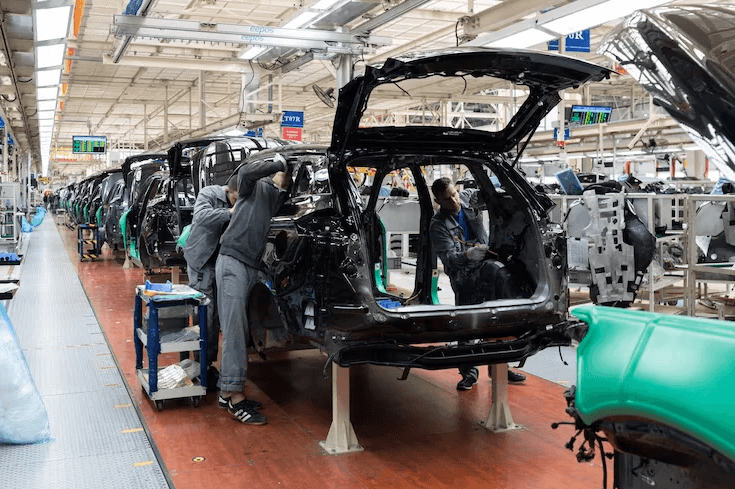
Automotive sealing systems frequently combine elevated temperature, vibration, pressure cycling, lubricants, fuels, coolants, and long service intervals.
These conditions can make FKM a strong candidate for fuel, oil, and high-temperature sealing applications.
Silicone may be appropriate in automotive locations where temperature flexibility, environmental resistance, electrical insulation, or specialized sealing characteristics are more important than hydrocarbon resistance.
The material should always be selected according to the specific fluid and location rather than simply specifying one elastomer throughout the vehicle.
FKM vs Silicone for Medical Applications

Medical applications introduce requirements that go beyond ordinary temperature and chemical resistance.
Depending on the application, engineers may need to consider biocompatibility, extractables, sterilization method, cleanliness, odor, particulate generation, and regulatory requirements.
Silicone is widely used in medical sealing applications because of its flexibility and availability in specialized formulations.
However, “silicone” by itself does not automatically mean that a component is suitable for medical use.
The actual compound, manufacturing process, cleanliness controls, and required certification must be verified for the intended application.
Parker’s engineering handbook similarly notes that biomedical sealing requires consideration of biocompatibility and sterilization, and that multiple elastomer families can be used depending on the specific application.
FKM vs Silicone for Food Processing
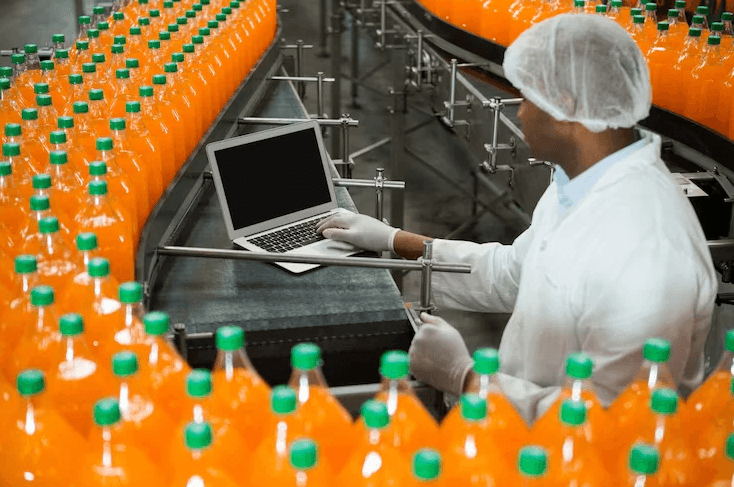
Food-processing applications require additional attention to hygiene and regulatory compliance.
Silicone can be an appropriate material for selected food-contact sealing applications, but the correct compound and regulatory status must be confirmed.
The same principle applies to FKM. A material being chemically resistant does not automatically make it suitable for food-contact use.
When specifying a food-grade O-ring, request the actual compliance documentation for the compound rather than relying on a generic material description.
FKM vs Silicone for Outdoor Applications
Outdoor equipment is exposed to factors that may not be obvious during initial material selection.
- Ultraviolet radiation
- Ozone
- Rain and moisture
- Temperature cycling
- Condensation
- Dust and contamination
- Weathering
Silicone is often attractive where UV, ozone, weathering, and temperature flexibility are important.
FKM also provides good resistance to many environmental conditions and can be particularly useful when outdoor exposure is combined with oils, fuels, or chemicals.
Again, the surrounding medium determines the final selection.
FKM vs Silicone O-Ring Selection Table
| Application Condition | Material to Evaluate | Reason |
|---|---|---|
| Petroleum oil | FKM | Strong compatibility with many petroleum-based fluids |
| Fuel exposure | FKM | Often selected for fuel and hydrocarbon sealing |
| Very low temperature | Silicone or specialized FKM | Exact compound and low-temperature flexibility must be checked |
| UV and ozone exposure | Silicone | Strong resistance to many outdoor environmental conditions |
| High temperature + oil | FKM | Combines elevated-temperature capability with oil resistance |
| Clean temperature-sensitive equipment | Silicone | Flexibility and thermal performance can be advantageous |
| Aggressive hydrocarbon environment | FKM | Often a better starting point for hydrocarbon exposure |
How to Choose Between FKM and Silicone O-Rings
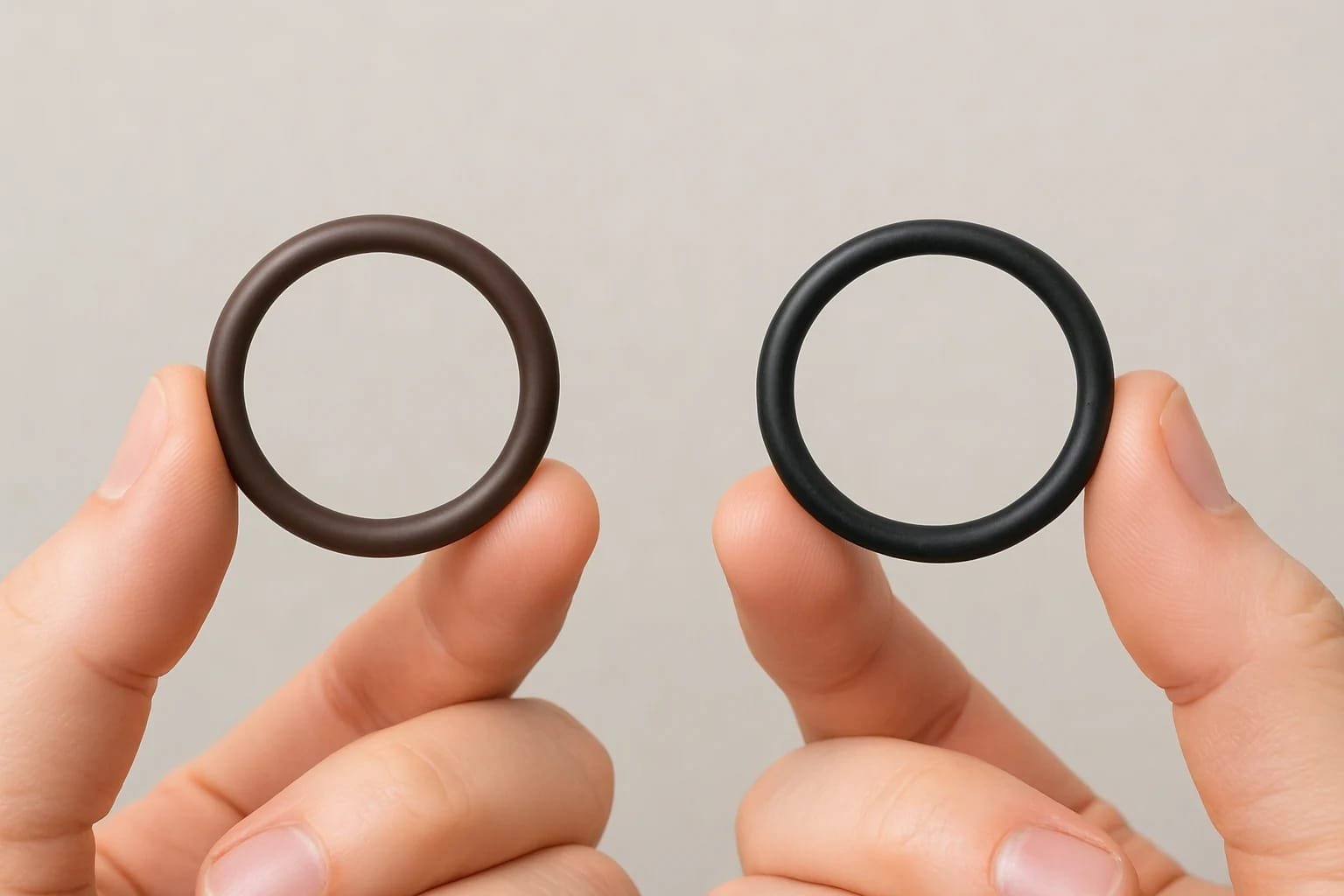
A reliable material-selection process should begin with the operating conditions rather than the available inventory.
Step 1 — Identify the sealing medium
Determine whether the O-ring will contact oil, fuel, hydraulic fluid, water, steam, coolant, cleaning chemicals, solvents, gas, or another medium.
Step 2 — Define the temperature range
Record minimum, normal, maximum, and transient temperatures rather than using only the average operating temperature.
Step 3 — Determine pressure
Identify normal pressure, peak pressure, pressure cycling, and pressure direction. High-pressure applications may require specific groove clearances, hardness, or backup-ring arrangements.
Step 4 — Determine movement
Identify whether the O-ring is static, reciprocating, oscillating, or rotary. Dynamic sealing requires additional consideration of friction, lubrication, wear, and extrusion.
Step 5 — Select hardness and compound
Do not specify only “FKM” or “silicone.” Identify the required compound, hardness, certification, and performance requirements.
Step 6 — Check the groove
Confirm O-ring cross-section, groove width, groove depth, squeeze, stretch, clearance, and surface finish.
Step 7 — Verify service requirements
Consider expected service life, sterilization, cleaning cycles, outdoor exposure, maintenance intervals, and regulatory requirements.
Why O-Ring Groove Design Matters
A correctly selected elastomer can still fail if the groove is poorly designed.
The groove controls how much the O-ring is compressed and how much room remains for the elastomer to move under pressure.
Excessive squeeze can increase friction and accelerate deformation, while insufficient squeeze can reduce sealing force.
Excessive clearance can also increase the risk of extrusion when pressure is applied.
ISO 3601-2 specifies housing dimensions for standardized O-rings used in general industrial applications, including applications with anti-extrusion rings. ISO 3601-4 separately addresses back-up rings used to reduce extrusion risk.
Common FKM O-Ring Failure Modes
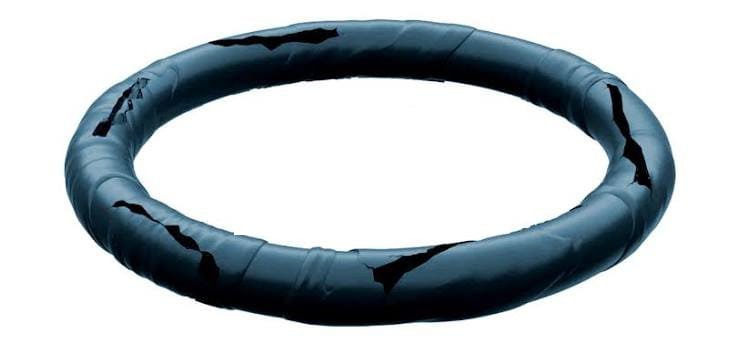
Chemical Swelling
Exposure to an incompatible fluid can cause an elastomer to swell, soften, or change dimensions. The result can be increased friction, extrusion, loss of sealing force, or assembly problems.
Low-Temperature Hardening
If the selected FKM compound does not provide the required low-temperature flexibility, the O-ring can become too stiff to maintain reliable sealing contact.
Compression Set
Long-term compression at elevated temperature can permanently deform the O-ring and reduce its ability to maintain sealing force.
Extrusion
High pressure combined with excessive clearance can force the elastomer into the mating gap. Material hardness, pressure, temperature, groove design, and backup-ring selection can all affect extrusion resistance.
Common Silicone O-Ring Failure Modes
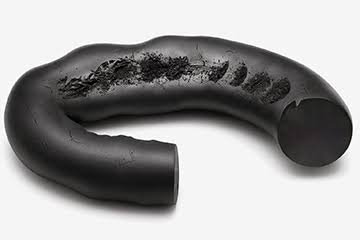
Tearing During Installation
Silicone can be more susceptible to mechanical damage during installation if sharp edges, contamination, excessive stretching, or incorrect tools are involved.
Mechanical Damage
Applications involving abrasion, repeated movement, or aggressive mechanical contact require careful evaluation of silicone’s mechanical properties.
Fluid Incompatibility
A silicone O-ring should not be selected simply because its temperature range appears suitable. Petroleum oils, fuels, solvents, and other fluids must be checked against the actual compound.
Incorrect Regulatory Assumption
A silicone O-ring is not automatically food-grade or medical-grade. The exact formulation and required certification must be verified.
FKM vs Silicone: Is One Material More Expensive?
Material price should not be the only consideration when comparing FKM and silicone O-rings.
The total cost of a seal includes procurement, installation, maintenance, replacement frequency, equipment downtime, leakage losses, and potential contamination.
A lower-cost compound that fails prematurely may create a higher total operating cost than a more expensive material with a longer service interval.
For industrial equipment, the correct objective is therefore not simply to minimize the purchase price. It is to achieve the required sealing performance at an acceptable lifecycle cost.
FKM vs Silicone: When Should You Consider Another Material?
FKM and silicone are both useful materials, but neither should automatically be treated as the answer to every sealing problem.
Depending on the application, engineers may need to evaluate NBR, HNBR, EPDM, FVMQ, PTFE, FFKM, polyurethane, or other specialized elastomers.
For example, water, steam, brake fluids, aggressive chemicals, extreme purity, very high temperature, or severe dynamic wear can change the material-selection decision completely.
The best sealing material is the one that matches the actual operating environment.
FKM vs Silicone O-Rings: Practical Decision Guide
| Question | If Yes | What to Investigate |
|---|---|---|
| Will the seal contact oil or fuel? | Evaluate FKM first | Exact fluid and temperature compatibility |
| Is extreme cold important? | Evaluate silicone or low-temperature FKM | Low-temperature flexibility and compound specification |
| Is UV/ozone exposure severe? | Evaluate silicone | Outdoor aging and temperature cycling |
| Is pressure high? | Material alone is not enough | Hardness, clearance, groove design and backup ring |
| Is the application medical or food-related? | Verify certified compound | Regulatory compliance and processing controls |
Frequently Asked Questions
Is FKM better than silicone for O-rings?
Neither material is universally better. FKM is often considered when oil, fuel, hydrocarbon exposure, or demanding high-temperature conditions are involved. Silicone is often considered when low-temperature flexibility, UV resistance, ozone resistance, and specialized clean applications are important.
Is silicone suitable for high temperatures?
Yes. Silicone can provide strong high-temperature performance, but the exact operating range depends on the compound and application. The fluid environment and mechanical conditions must also be evaluated.
Can silicone O-rings be used with oil?
Silicone should not automatically be selected for oil exposure. The exact oil, temperature, exposure duration, and silicone formulation need to be checked for compatibility.
Is FKM suitable for low temperatures?
Some FKM compounds provide improved low-temperature performance, but conventional FKM grades may have limitations at low temperatures. If low-temperature flexibility is critical, specify the exact compound rather than simply requesting generic FKM.
What is the difference between FKM and Viton?
FKM refers to a family of fluoroelastomers. “Viton” is a trade name commonly associated with certain fluoroelastomer products. For engineering specifications, it is important to identify the actual compound and required performance rather than relying only on a commercial material name.
Which O-ring material is best overall?
There is no universal best O-ring material. The correct material depends on temperature, fluid, pressure, movement, mechanical requirements, environmental exposure, certification requirements, and expected service life.
How can I choose between FKM and silicone?
Start with four parameters: sealing medium, temperature range, pressure, and movement. Then evaluate hardness, compression, groove design, chemical compatibility, certification requirements, and expected service life.
Final Takeaway: Select the Compound, Not Just the Material Family
FKM and silicone O-rings can both provide reliable sealing performance, but they are optimized for different combinations of operating conditions.
FKM is frequently considered for applications involving oils, fuels, hydrocarbons, elevated temperatures, and demanding industrial environments. Silicone is often considered when broad temperature flexibility, low-temperature performance, UV resistance, ozone resistance, or specialized clean applications are important.
However, material selection should never stop at “FKM” or “silicone.”
Before ordering an FKM or silicone O-ring, confirm these eight parameters:
- Exact sealing medium
- Minimum and maximum temperature
- Normal and peak pressure
- Static or dynamic movement
- O-ring hardness
- Groove and clearance dimensions
- Required certifications or compliance
- Expected service life
For OEM and industrial applications, providing the seal drawing, existing O-ring specification, operating temperature, fluid type, pressure, movement, and failure history can significantly improve material selection.
The goal is not simply to find an O-ring that fits the groove. The goal is to select a compound and sealing design that can maintain the required sealing force throughout the actual service environment.