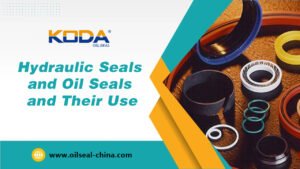
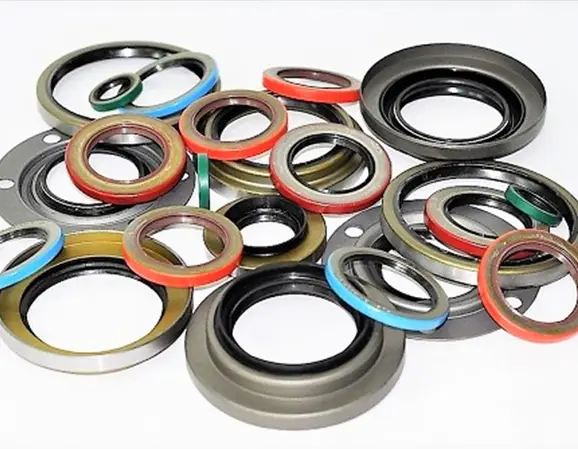
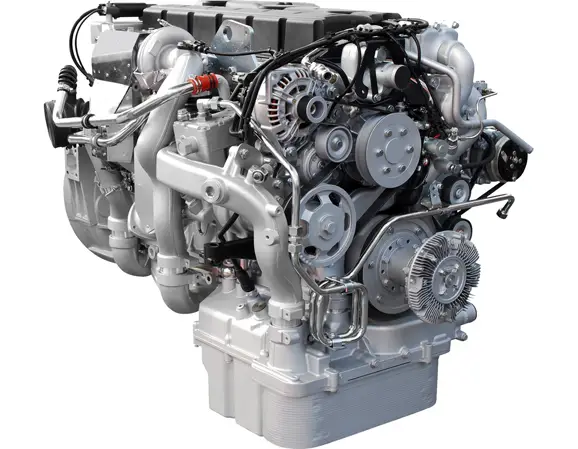
Hydraulic seals and oil seals are often discussed as if they were the same part. They are not. Both keep fluid where it belongs and keep contamination out, but they are built for very different jobs. A hydraulic seal works in a cylinder, valve or pump where pressure can be high and the moving part slides back and forth. An oil seal (a rotary shaft seal) usually sits on a spinning shaft in a gearbox, axle or engine at low pressure. Choosing the wrong one is a common reason for leaks, scored rods and early breakdowns. This guide explains the differences, the main seal types, the materials, the selection factors and the practical steps that keep hydraulic systems sealed. It is written for engineers, maintenance managers, OEM buyers and distributors.
Hydraulic Seals vs. Oil Seals: The Core Difference
The first step is to decide which family of seal your position needs. The type of motion and the pressure level settle the question in most cases.
| Feature | Hydraulic Seal | Oil Seal (Rotary Shaft Seal) |
|---|---|---|
| Typical motion | Reciprocating (sliding back and forth), sometimes oscillating | Rotating shaft |
| Pressure | Medium to very high, depending on design | Low or none for standard lip seals |
| Common locations | Cylinder rod, piston, gland, valve spools | Gearbox shafts, axles, crankshafts, wheel hubs |
| Typical construction | Polyurethane, PTFE or elastomer profiles, often with back-up rings and wipers | Rubber lip with metal case and garter spring |
| Main job | Contain pressurized fluid and keep it in the right chamber | Retain lubricant and exclude dust and water |
💡 Rule of thumb: if the part slides under pressure, you need a hydraulic seal. If it rotates at low pressure, you need an oil seal. Dimensional and design rules for rotary shaft lip seals are covered in ISO 6194-1. Do not use a standard lip seal in a pressurized hydraulic position unless the manufacturer rates it for that duty.
What Hydraulic Seals Are Made Of
Most hydraulic seals are made from elastomers and polymers. Elastomers are rubber-like materials with high elasticity, and that elasticity lets the seal follow small movements and maintain contact with the mating surface. The principal families are rubber compounds and engineered plastics such as PTFE and polyurethane. Some designs also combine a metal insert or case with bonded rubber.
| Material | Strengths | Limitations |
|---|---|---|
| NBR (nitrile) | Good with mineral hydraulic oils, economical, widely available | Limited high-temperature and weather resistance |
| FKM (fluoroelastomer) | Higher temperature and wider chemical resistance | Higher cost and weaker low-temperature flexibility |
| Polyurethane (PU) | High wear and extrusion resistance, widely used for rod and piston seals | Can suffer in hot, wet conditions, so check fluid and temperature |
| PTFE | Low friction, wide chemical compatibility, suits high speeds | Less elastic, so it often needs an elastomer energizer |
| Silicone and other elastomers | Useful for wide temperature ranges in static and light-duty uses | Poor wear resistance in dynamic hydraulic service |
| Felt and leather | Traditional wipers and low-pressure sealing in older designs | Absorb moisture and wear faster than modern polymers |
Bonded seals combine rubber with a metal part such as steel, stainless steel, brass or aluminum. The rubber is chemically bonded to the metal, so the part can be pressed into a bore and handled as a single unit. Bonded seals are used for static sealing and as washers in fittings.
Static and Dynamic Hydraulic Seals
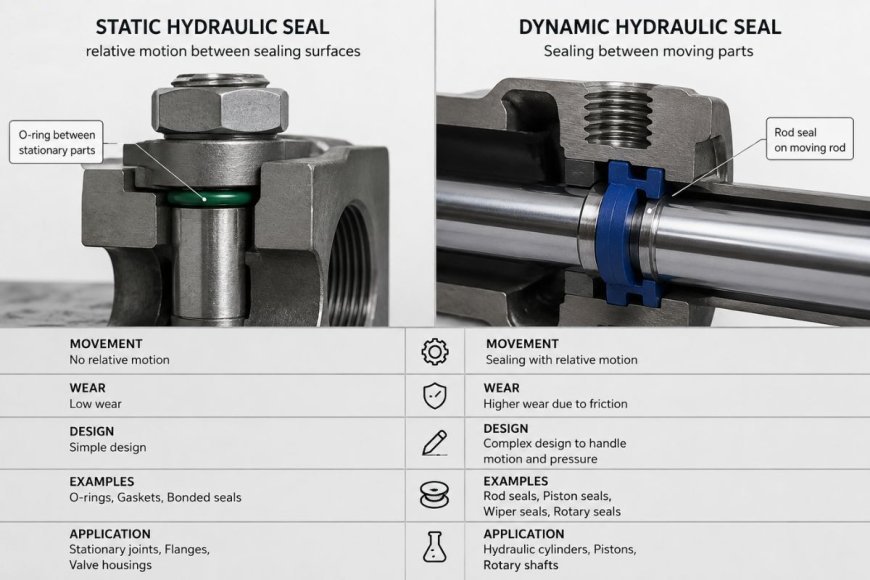
Seals are grouped by whether the surfaces they seal move relative to each other.
🔒 Static seals
Static seals fill the gap between mating surfaces that do not move against each other. Examples are gaskets, face seals and O-rings in flange joints. The clamping force of bolts or the housing squeezes the seal and holds it in place.
🔄 Dynamic seals
Dynamic seals seal surfaces that move relative to each other. The motion can be reciprocating, oscillating or rotating. They must seal while sliding, so friction, wear and lubrication all matter.
Reciprocating dynamic seals sit in a groove or gland and slide along a rod or bore. They are found in hydraulic cylinders, linear actuators and internal combustion engine pistons. A good overview of how these cylinders work is given in this hydraulic cylinder reference.
Where Seals Sit in a Hydraulic Cylinder
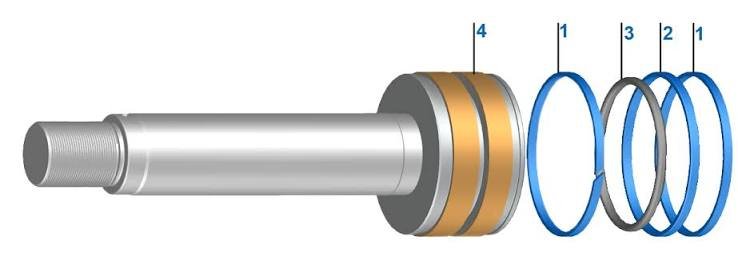
A hydraulic cylinder converts fluid pressure into linear force. It is used in agricultural and forestry vehicles, construction equipment, presses and many other machines. Several seal positions work together:
- Rod seal: in the cylinder head, it stops fluid leaking along the rod to the outside. It is the main external leakage barrier.
- Wiper or scraper: on the outside of the head, it removes dirt and moisture from the rod as it retracts, so contamination does not enter the system.
- Piston seal: on the piston, it separates the two chambers so fluid does not bypass the piston.
- Guide rings or wear bands: they carry side loads and keep metal parts from touching, which protects both the seals and the bore.
- Static seals and O-rings: they seal the head and end cap to the barrel.
- Back-up rings: placed beside a seal on the low-pressure side, they stop the seal from being pushed into the clearance gap under high pressure.
O-Rings: The Most Common Hydraulic Seal
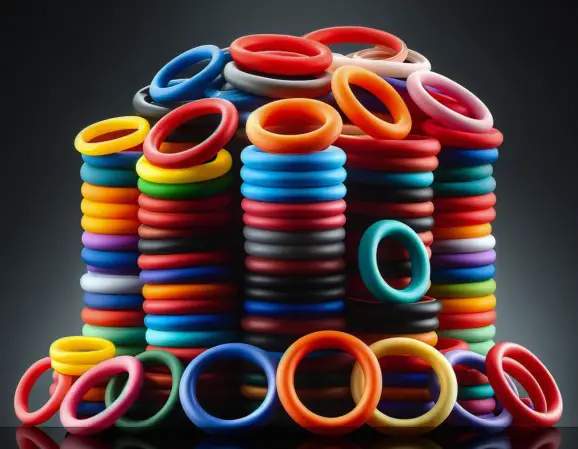
O-rings are classified by their shape rather than their location. They are simple rings with a round cross-section that are squeezed into a groove. When pressure deforms them, they form an effective barrier. Because they are low cost and simple, O-rings are among the most widely used seals in hydraulic equipment. They come in a wide range of sizes, from small rings to very large ones, and in many materials, including nitrile, silicone and fluorocarbon.
For fluid power O-rings, the inside diameters, cross-sections, tolerances and designation codes are specified in ISO 3601-1. For general background, see this O-ring overview.
⚠️ Know the limits: an O-ring is excellent for static sealing and works in many dynamic cases, but at high pressure or with a large extrusion gap it needs back-up rings. For fast reciprocating motion or demanding duty, a profiled seal is often a better choice.

Applications of Hydraulic and Oil Seals
Because seals decide how efficient and reliable a hydraulic system is, they appear in nearly every industry that moves fluid or transmits power.
- Construction and mining: excavator, loader and crane cylinders, travel motors and swing drives.
- Agriculture and forestry: tractor hydraulics, implement cylinders and steering circuits.
- Automotive and transport: braking devices, power steering racks, transmissions and engine components.
- Industrial machinery: presses, mixers, conveyors, valves and test equipment.
- Process and clean industries: chemical processing, food and seafood production, pharmaceutical manufacturing and pulp and paper, where fluid compatibility and cleanliness are critical.
- Aerospace, defense and energy: demanding duty that calls for qualified materials and traceability.
For pumps, see our hydraulic pump oil seals, TCN high-pressure seals. For general gearbox and axle positions, browse the TC oil seal range.
How to Select the Right Seal
Seal selection is a matter of matching the seal to the real working conditions. Collect this information before you choose:
1. Available space and dimensions
The gland or working space decides the seal’s inner and outer diameters, its cross-section and the housing bore and shaft or rod size. Measure the groove, not just the old seal, because a worn seal may no longer have its original size.
2. Pressure range
Check both the maximum and minimum operating pressure, plus pressure spikes. High pressure raises the risk of extrusion, so the extrusion gap and the need for back-up rings must be considered. Low pressure can be a problem too, because some seals need a minimum pressure to energize and seal.
3. Temperature range
Include both the fluid temperature and the ambient temperature, with start-up conditions. Heat hardens rubber and cold stiffens it. Each compound has a limit, so compare the range with the manufacturer’s data.
4. Fluid and chemical compatibility
The seal must be compatible with the hydraulic fluid, cleaning agents and any contaminants. Mineral oil, water-glycol, synthetic esters and fire-resistant fluids behave differently with each elastomer. Always confirm compatibility in writing before using a new fluid.
5. Speed and motion type
Define the stroke speed or the shaft speed, as well as whether the motion is continuous, intermittent or oscillating. High speed generates heat and calls for low-friction materials such as PTFE.
6. Vacuum and other special conditions
If the seal may see vacuum, side loads, contamination, washdown or food-contact requirements, say so at the quotation stage. These factors change the design and the material.
📋 Selection summary: list size, pressure, temperature, fluid, speed, motion and environment on the order. A seal chosen with all seven factors in view is much less likely to fail early.
Common Hydraulic Seal Problems and Remedies
| Symptom | Likely Cause | Action |
|---|---|---|
| Oil film on the rod after stroking | Worn rod seal or scored rod | Inspect the rod, replace the seal and check the wiper |
| Cylinder drifts under load | Piston seal bypass | Check the bore finish and replace the piston seal set |
| Nibbled or chewed seal edge | Extrusion into the clearance gap | Add a back-up ring, reduce the gap or use a harder material |
| Seal hard, brittle or cracked | Excess heat or aging | Check the temperature and upgrade the compound |
| Seal swollen or soft | Fluid incompatibility | Confirm compatibility and change the material |
| Scratches on rod or bore | Contamination or a failed wiper | Replace the wiper, filter the fluid and repair the surface |
| Spiral twist on an O-ring | Rolled or twisted during assembly | Lubricate, use lead-in chamfers and fit carefully |
Many of the same root causes apply to rotary seals. For more on that side of the problem, read What factors may cause a leaking oil seal and the cost discussion in Oil leak repair cost and how do we prevent it.
Installation and Maintenance Best Practices
- Work clean. Dirt in a hydraulic system wears seals and surfaces faster than almost any other cause. Clean the area and the parts before opening the system.
- Inspect the mating surfaces. Check the rod, bore and groove for scores, burrs, corrosion and out-of-round wear. A new seal on a damaged surface will leak.
- Use lead-in chamfers and assembly tools. Pull seals over threads, ports and sharp edges only with protective sleeves or cones.
- Lubricate with a compatible fluid. Use clean hydraulic oil or an approved assembly lubricant, not grease or sealant unless the manufacturer allows it.
- Avoid twisting and stretching. Fit seals evenly, without over-stretching, and check that they sit fully in the groove.
- Replace the set. Change rod seals, wipers, piston seals and O-rings together, because worn companions shorten the new seal’s life.
- Keep the fluid in good condition. Maintain filtration, watch the temperature and check for water or air in the oil.
- Store spares properly. Keep seals in sealed bags, away from heat, sunlight, ozone sources and solvents, and use older stock first.
General handling guidance for elastomer seals is also given in ISO 6194-3. It is written for rotary lip seals, but its cleanliness and handling principles apply widely.
Buying Seals: A Checklist for OEMs and Distributors
📏 Full specification
Provide dimensions, seal type, material, pressure, temperature and fluid so the supplier can confirm the right part.
🧾 OEM numbers and samples
A part number, drawing or sample prevents most mix-ups between similar profiles.
🔬 Consistent quality
Ask about batch control, inspection methods and packaging that protects the seal profile in transit.
Learn more about our company, download size lists on our download page.
📩 Need Help Choosing a Hydraulic or Oil Seal?
Send us your seal size or OEM number, operating pressure, temperature, fluid and application, or a sample or drawing. Our team will recommend a suitable seal and provide a quotation for distributors, OEMs and workshops worldwide. Visit our contact page or email sales@kodaseal.com.
Frequently Asked Questions
1. What is the difference between a hydraulic seal and an oil seal?
A hydraulic seal is designed for reciprocating or pressurized positions such as cylinder rods and pistons. An oil seal is a rotary shaft seal that keeps lubricant in and dirt out at low pressure. They look different and are not interchangeable unless the manufacturer rates the seal for that duty.
2. Which materials are used for hydraulic seals?
Common materials include NBR, FKM, polyurethane and PTFE, with silicone and other elastomers in specific cases. Felt and leather are used for some wipers and older designs. The right choice depends on the fluid, temperature, pressure and speed.
3. Where are hydraulic seals located in a cylinder?
They sit in the cylinder head (rod seal and wiper), on the piston (piston seal and guide rings) and at the joints between the barrel, head and end cap (static seals and O-rings). Together they keep fluid inside, stop bypass across the piston and keep dirt out.
4. Why does my hydraulic cylinder keep leaking after I replace the seal?
The seal is often not the root cause. A scored rod, worn bore, wrong seal material, contaminated fluid, excess heat or poor installation will damage a new seal just as quickly. Inspect the mating surfaces and the system conditions as well as the seal.
5. What information should I give my supplier to get the right seal?
Provide the dimensions, seal type, OEM number, operating pressure, temperature range, hydraulic fluid, speed and application. A sample or drawing speeds up the match and lowers the risk of ordering the wrong part.