Why Chemical Resistance Matters in O-Ring Seal Applications
In modern industrial systems, O-ring seals serve as one of the most critical components for preventing fluid leakage, maintaining pressure integrity, and protecting equipment from contamination. From chemical processing plants and pharmaceutical facilities to aerospace systems and oilfield equipment, O-rings are continuously exposed to aggressive chemicals that can compromise sealing performance if the wrong material is selected.
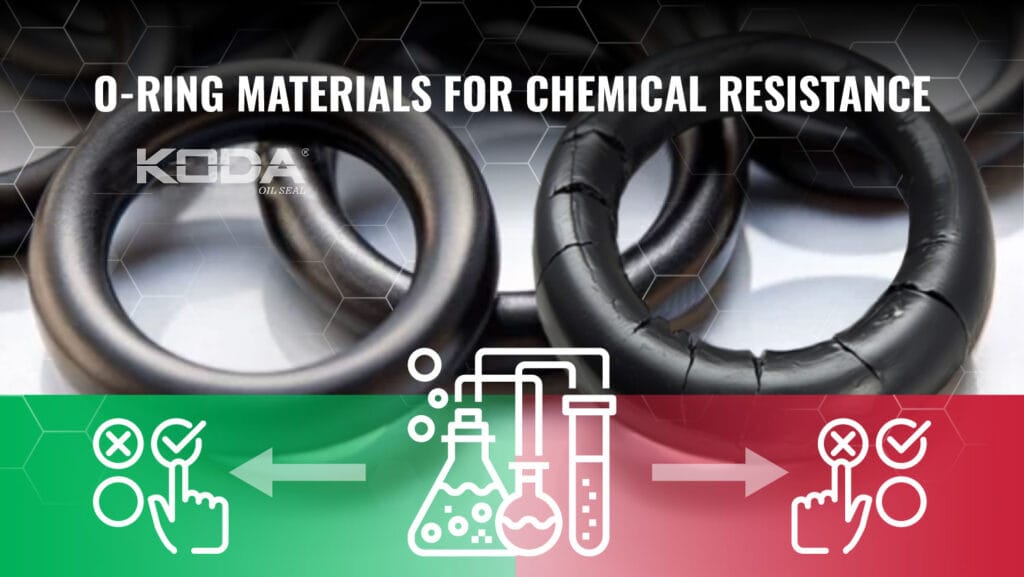
Chemical attack remains one of the leading causes of premature seal failure worldwide. Swelling, hardening, cracking, softening, shrinkage, and loss of elasticity can all occur when an elastomer comes into contact with incompatible fluids. Therefore, selecting a chemically resistant O-Ring Seal material is not simply a design preference—it is a reliability requirement.
As industrial processes become more demanding and environmental regulations become stricter, engineers increasingly rely on advanced elastomer technologies that offer superior chemical compatibility while maintaining mechanical strength and long-term sealing performance.
What Is a Chemically Resistant O-Ring Seal?
A chemically resistant O-ring seal is an elastomer sealing component specifically engineered to maintain its physical and mechanical properties when exposed to aggressive chemicals, solvents, acids, alkalis, fuels, oils, and process fluids.
Unlike standard sealing materials that may rapidly degrade in harsh environments, chemically resistant O-rings are formulated to withstand prolonged exposure without significant swelling, cracking, embrittlement, or loss of sealing capability.
These specialized sealing solutions are widely used in industries where fluid compatibility is critical to safety, productivity, and regulatory compliance.
Primary Functions of Chemically Resistant O-Rings
✔ Prevent fluid leakage
✔ Maintain pressure integrity
✔ Resist aggressive chemicals
✔ Protect equipment from contamination
✔ Extend service intervals
✔ Improve operational safety
How Chemical Exposure Damages O-Ring Seals

Understanding failure mechanisms helps engineers choose the right material before installation.
Swelling
Certain chemicals penetrate elastomer structures and cause volume expansion. Excessive swelling alters dimensions and reduces sealing effectiveness.
Shrinkage
Some fluids extract plasticizers and additives from elastomers, causing the seal to contract and lose sealing force.
Hardening
Chemical reactions may increase cross-link density, making the seal brittle and prone to cracking.
Softening
Exposure to incompatible solvents can reduce hardness and mechanical strength.
Surface Cracking
Chemical degradation often begins at the surface and gradually penetrates deeper into the elastomer structure.
Most Common Chemically Resistant O-Ring Materials
Not all elastomers offer the same level of chemical resistance. Material selection should always be based on the specific fluid environment.
FKM (Fluoroelastomer)
FKM is one of the most widely used materials for chemically aggressive applications. It provides excellent resistance to fuels, oils, lubricants, hydrocarbons, and many industrial chemicals.
Advantages include:
High temperature resistance
Excellent chemical compatibility
Low compression set
Long service life
FFKM (Perfluoroelastomer)
FFKM offers the highest level of chemical resistance available among elastomer materials. It performs exceptionally well in semiconductor manufacturing, pharmaceutical processing, and highly corrosive chemical environments.
Although expensive, FFKM often provides unmatched reliability where seal failure is unacceptable.
EPDM
EPDM is highly resistant to water, steam, dilute acids, alkalis, and many cleaning agents.
It is commonly used in water treatment, food processing, and pharmaceutical applications.
PTFE
PTFE-based sealing solutions provide exceptional chemical resistance against nearly all industrial chemicals.
PTFE is often selected for highly corrosive environments where conventional elastomers may fail.
HNBR
Hydrogenated nitrile rubber combines excellent mechanical properties with improved resistance to oils, fuels, and industrial fluids.
Chemical Compatibility and Fluid Selection
One of the biggest mistakes in seal engineering is selecting materials based solely on temperature or pressure ratings while ignoring fluid compatibility.
Every process fluid interacts differently with elastomers. Engineers should evaluate:
Chemical composition
Concentration levels
Operating temperature
Pressure conditions
Exposure duration
Cleaning procedures
A properly selected O-Ring Seal can remain effective for years, while an incompatible material may fail within weeks.
Industries That Require Chemically Resistant O-Ring Seals

Chemical Processing Plants
Chemical manufacturing facilities handle acids, solvents, alkalis, oxidizers, and aggressive compounds that demand specialized sealing materials.
Oil and Gas Industry
Exploration, refining, and transportation systems expose seals to hydrocarbons, sour gas, and harsh operating conditions.
Pharmaceutical Manufacturing
Strict cleanliness requirements and aggressive cleaning agents require highly resistant sealing materials.
Food and Beverage Processing
O-rings must resist cleaning chemicals while meeting hygiene and regulatory requirements.
Semiconductor Production
Ultra-pure environments often require premium FFKM sealing solutions capable of withstanding aggressive process chemicals.
The Impact of Temperature on Chemical Resistance
Temperature significantly influences chemical compatibility.
A material that performs well at room temperature may degrade rapidly when exposed to the same chemical at elevated temperatures.
Higher temperatures accelerate:
Chemical reactions
Fluid permeation
Material softening
Oxidation processes
Seal aging
This is why chemical compatibility evaluations should always consider actual operating temperatures rather than laboratory conditions alone.
Pressure and Chemical Resistance: The Hidden Connection
Pressure often amplifies chemical attack by forcing fluids deeper into elastomer structures.
In high-pressure systems, chemically resistant materials must also maintain sufficient mechanical strength to resist:
Extrusion
Compression set
Deformation
Stress cracking
Material selection should therefore balance chemical compatibility with mechanical performance.
Common Mistakes When Selecting O-Ring Seal Materials
Choosing Based Only on Cost
Low-cost materials may initially reduce expenses but often result in higher maintenance costs and equipment downtime.
Ignoring Chemical Mixtures
Many systems contain multiple chemicals that interact differently with elastomers.
Overlooking Cleaning Agents
Sanitizers and cleaning chemicals can be more aggressive than process fluids themselves.
Failing to Consider Temperature Effects
Temperature dramatically influences chemical compatibility.
Skipping Validation Testing
Real-world testing remains one of the most reliable methods for confirming material suitability.
Emerging Innovations in Chemically Resistant Sealing Materials
Material science continues advancing rapidly. Modern elastomer formulations now offer improved resistance to aggressive chemicals while maintaining flexibility and mechanical strength.
Recent developments include:
Advanced FFKM compounds
Nano-enhanced elastomers
Improved PTFE composites
Hybrid sealing materials
Low-permeation technologies
These innovations help industries reduce maintenance frequency and improve equipment reliability.
How to Maximize O-Ring Seal Service Life
Achieving maximum longevity requires more than selecting the right material.
Key strategies include:
Proper groove design
Correct installation practices
Chemical compatibility verification
Pressure management
Temperature control
Routine inspection programs
A well-designed O-Ring Seal system can dramatically reduce equipment failures and maintenance expenses over the long term.
The Future of Chemically Resistant O-Ring Seals
As industrial processes become increasingly demanding, chemically resistant sealing solutions will continue evolving. Future developments are expected to focus on enhanced sustainability, broader chemical compatibility, predictive maintenance integration, and longer service life.
Manufacturers are investing heavily in next-generation elastomer technologies capable of performing under increasingly extreme operating conditions.
For industries handling aggressive chemicals, selecting the proper O-Ring Seal material will remain one of the most important decisions affecting equipment reliability, safety, and operational efficiency.
Frequently Asked Questions
1. Which O-ring material has the best chemical resistance?
FFKM generally offers the broadest chemical compatibility among elastomer sealing materials.
2. Is FKM suitable for aggressive chemicals?
Yes. FKM provides excellent resistance to many fuels, oils, hydrocarbons, and industrial chemicals.
3. Why does an O-ring swell in chemicals?
Swelling occurs when chemical molecules penetrate the elastomer structure and cause volume expansion.
4. Can temperature affect chemical resistance?
Absolutely. Higher temperatures often accelerate chemical degradation and reduce seal lifespan.
5. How can I select the best chemically resistant O-ring seal?
Evaluate chemical compatibility, temperature range, pressure conditions, exposure duration, and mechanical requirements before selecting a material.