This office is closed on weekends. We are open Monday through Friday at 8:00 AM (Central Standard Time).

+8618730921709 | Hours:8am-6pm csT, Monday-Friday​

Category: Quality

O-Ring Installation Best Practices

O-Ring Installation Best Practices

Proper installation of O-rings is one of the most critical factors in ensuring long-term sealing performance and system reliability. Even the highest quality O-ring can fail prematurely if installed incorrectly. Whether used in hydraulic systems, pneumatic equipment, automotive assemblies, or industrial machinery, following best practices during installation significantly reduces the risk of leakage, damage, and downtime. This comprehensive guide outlines

Read More »
O-Ring Failures Identify, Prevent, Overcome

O-Ring Failures: Identify, Prevent, Overcome

Understanding O-Ring Failure Mechanisms O-Ring Failures are among the most common causes of leakage, system inefficiency, and equipment downtime in industrial and mechanical applications. Despite their simple appearance, O-rings operate under complex conditions involving pressure, temperature, chemical exposure, and dynamic motion. To ensure long-term sealing performance, it is essential to understand how failures occur, how to identify early warning signs,

Read More »
Ensure O-Ring Quality Through Testing

Ensure O-Ring Quality Through Testing

Why O-Ring Quality Testing Matters O-rings may appear simple, but their performance often determines whether entire systems operate reliably or suffer leakage, downtime, and costly failures. In hydraulic systems, automotive components, medical devices, industrial machinery, and aerospace equipment, sealing reliability begins with verified product quality. That is why testing is essential to ensuring consistent oring quality. High-quality O-rings are not

Read More »
Why PTFE Seals Stand Apart from Conventional Sealing Materials

PTFE Seals Types, Applications, Design and Installation Considerations

As industrial equipment continues to evolve toward higher speeds, harsher chemicals, elevated temperatures, and stricter reliability requirements, traditional elastomer sealing materials are often pushed beyond their operational limits. This is where PTFE seals have become an indispensable solution. Known for their exceptional chemical resistance, ultra-low friction characteristics, and remarkable thermal stability, PTFE sealing solutions are widely used across industries ranging

Read More »
Prevent O-Ring Extrusion and Spiral Failure

Chemically Resistant O-Ring Seal Material

Why Chemical Resistance Matters in O-Ring Seal Applications In modern industrial systems, O-ring seals serve as one of the most critical components for preventing fluid leakage, maintaining pressure integrity, and protecting equipment from contamination. From chemical processing plants and pharmaceutical facilities to aerospace systems and oilfield equipment, O-rings are continuously exposed to aggressive chemicals that can compromise sealing performance if

Read More »
Prevent O-Ring Extrusion and Spiral Failure

Prevent O-Ring Extrusion and Spiral Failure

Why O-Ring Extrusion and Spiral Failure Remain Major Causes of Seal Failure O-rings are among the most widely used sealing components in modern engineering. Their simple design, cost-effectiveness, and versatility make them essential in hydraulic systems, pneumatic equipment, automotive assemblies, aerospace components, industrial machinery, medical devices, and fluid power systems. Despite their reliability, O-rings are not immune to failure. Two

Read More »
Improve O-ring lifespan and structural integrity

Improve O-ring lifespan and structural integrity

In modern industrial systems, the reliability of an entire machine often depends on one small component: the O-ring. Whether used in hydraulic cylinders, automotive engines, pneumatic valves, medical devices, food-processing equipment, or aerospace systems, O-rings serve as the first line of defense against leakage and contamination. However, many failures attributed to equipment breakdowns are actually caused by premature O-ring degradation.

Read More »
PPAP IN MANUFACTURING

PPAP Production Part Approval Process — Key Points You Need to Know

In the automotive and industrial sealing industry, quality is not simply a competitive advantage—it is a mandatory requirement. When manufacturers supply critical components such as oil seals and O-rings to OEMs, Tier 1 suppliers, or global industrial equipment producers, they must demonstrate that every product consistently meets engineering specifications. This is where the Production Part Approval Process (PPAP) becomes essential.

Read More »
O-ring color coding system, labeling specifications and batch management

O-ring color coding system, labeling specifications and batch management

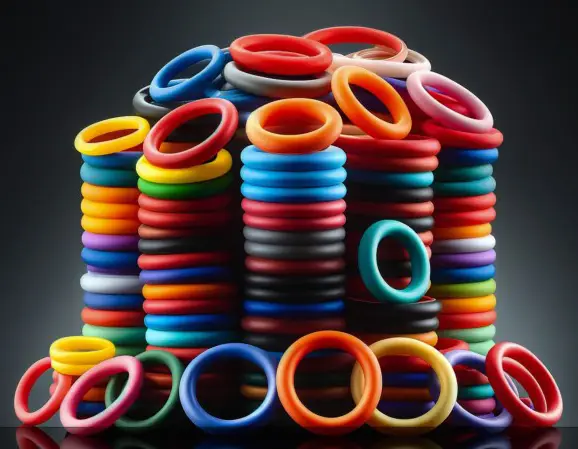
In modern manufacturing, sealing reliability depends not only on selecting the correct material and dimensions but also on effective identification and traceability systems. As industries such as aerospace, automotive, medical equipment, food processing, oil & gas, and semiconductor manufacturing demand increasingly stringent quality standards, O-ring color coding, labeling specifications, and batch management have become critical components of quality assurance. Many

Read More »
 How effective is polyurethane material for seals

How effective is polyurethane material for seals?

In the world of industrial sealing technology, material selection often determines whether a sealing system will perform reliably for years or fail prematurely under demanding conditions. While traditional elastomers such as NBR, EPDM, and FKM continue to dominate many sealing applications, polyurethane has emerged as one of the most versatile and high-performing materials available for modern seals. Its unique combination

Read More »

Need a quote?

We will respond to your request within two business days.

Find the right product

Scroll to Top