When an O-ring fails, the problem is not always caused by poor manufacturing or incorrect dimensions. In many cases, the real issue starts with material selection. An O-ring may have the correct inside diameter and cross-section but still fail because the elastomer cannot withstand the temperature, chemical medium, pressure, or mechanical conditions of the application.
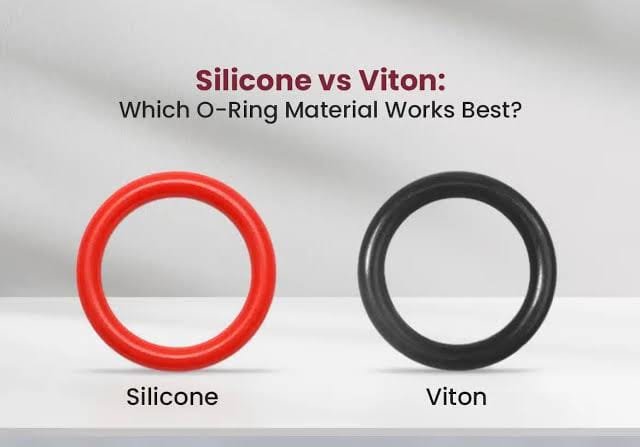
This is particularly important when choosing between Viton® / FKM O-rings and silicone O-rings. Both materials are widely used in industrial sealing, but they are designed around very different performance priorities.
FKM is commonly selected when resistance to fuels, oils, hydrocarbons, high temperatures, and aggressive industrial environments is the primary concern. Silicone, by contrast, is valued for its excellent temperature flexibility, low-temperature performance, weather resistance, electrical properties, and suitability for many clean, food, medical, and electronic applications when the appropriate grade is specified.
The question, therefore, is not simply “Which O-ring is better?” The more useful engineering question is:
Which elastomer provides the most reliable sealing performance under the actual operating conditions?
The answer depends on temperature, fluid compatibility, pressure, movement, compression, environmental exposure, required service life, and regulatory requirements.
Viton vs Silicone O-Rings: The Short Answer
For applications involving petroleum oils, fuels, many hydrocarbons, elevated temperatures, and demanding industrial environments, FKM O-rings are often the stronger choice.
For applications requiring excellent flexibility over a broad temperature range, very good low-temperature performance, UV and ozone resistance, electrical insulation, or suitable food and medical grades, silicone O-rings can be a better option.
However, neither material should be selected from a temperature chart alone. A seal operating at 180°C in air is exposed to a very different environment from one operating at 180°C in fuel, steam, cleaning chemicals, or hydraulic fluid.
The sealing medium and actual operating environment must always be considered together.
What Is a Viton or FKM O-Ring?
FKM is a family of fluoroelastomer materials known for strong resistance to high temperatures, oils, fuels, many hydrocarbons, and a wide range of industrial chemicals. “Viton®” is a well-known trademark associated with specific FKM fluoroelastomer products, so in engineering specifications it is often more precise to identify the actual FKM compound or grade rather than treating every FKM material as identical.
FKM O-rings are commonly used where the seal must maintain its properties in environments that would cause many general-purpose elastomers to swell, soften, harden, or deteriorate.
Typical applications include fuel systems, engines, pumps, hydraulic equipment, industrial machinery, chemical processing equipment, compressors, valves, and other systems exposed to oils or hydrocarbon-based fluids.
One of the major advantages of FKM is its combination of thermal stability and fluid resistance. This makes it particularly valuable when an application has both elevated temperature and aggressive media.
Where FKM Performs Well
- Petroleum oils and lubricants
- Many fuels and hydrocarbon-based fluids
- Elevated-temperature sealing
- Industrial chemical environments, depending on the compound
- Static and selected dynamic sealing applications
- Automotive and transportation equipment
- Pumps, valves and industrial machinery
The exact performance still depends on the specific FKM formulation. Different FKM compounds can have substantially different resistance to fuels, acids, bases, solvents, low temperatures, and other media.
What Is a Silicone O-Ring?
Silicone O-rings are manufactured from silicone elastomers, commonly referred to as VMQ in technical material classifications. Silicone is known for its flexibility and broad temperature capability, especially at low temperatures.
Silicone compounds also provide excellent resistance to weathering, ozone, and UV exposure. This makes silicone attractive for outdoor equipment, electrical components, lighting systems, appliances, medical equipment, and other applications where environmental aging is a concern.
Another important advantage is the availability of specialized silicone compounds designed for applications requiring particular cleanliness, regulatory compliance, or biological compatibility.
For example, where food-contact or medical requirements apply, the manufacturer should provide a silicone grade and certification appropriate for the application. Simply describing a seal as “silicone” does not automatically make it food-grade or medical-grade.
Where Silicone Performs Well
- Very low-temperature environments
- High-temperature applications where chemical exposure is moderate
- Outdoor equipment exposed to ozone and UV
- Electrical and electronic sealing
- Food-processing equipment when the correct compliant grade is used
- Medical and healthcare equipment when the required grade is specified
- Static sealing applications requiring good flexibility
Important: Silicone should not automatically be considered a universal high-temperature seal. Its temperature capability may be excellent, but chemical resistance and mechanical strength can be limiting factors in some applications.
Viton vs Silicone: Temperature Resistance
Temperature is one of the first specifications engineers normally check when selecting an O-ring. However, temperature ratings should be treated as a starting point rather than a guarantee of service life.
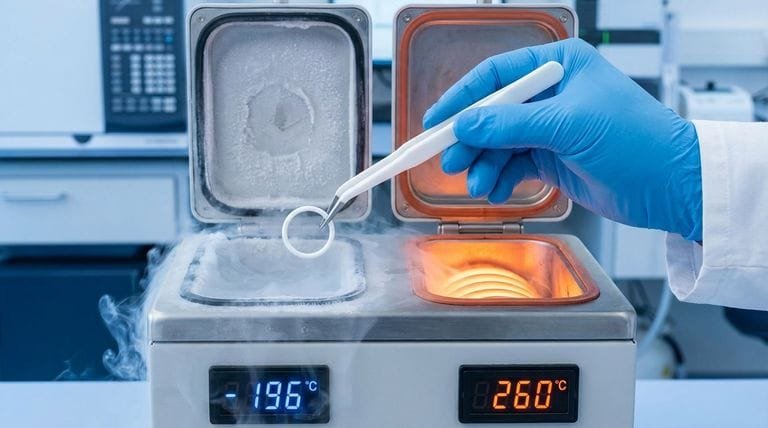
Many FKM compounds are suitable for continuous exposure to elevated temperatures, with commonly used grades capable of operating around the 200°C range under appropriate conditions. Certain specialty formulations may extend beyond this range.
Silicone can offer a broader overall temperature window, particularly at the low end. Many silicone compounds remain flexible at temperatures where conventional elastomers become significantly harder.
| Factor | FKM / Viton | Silicone / VMQ |
|---|---|---|
| High-temperature performance | Excellent for many industrial grades | Excellent for many silicone grades |
| Low-temperature flexibility | Generally more limited | Generally excellent |
| Temperature cycling | Good, compound dependent | Very good for many applications |
For a cold-weather application, silicone may have a significant advantage. For an engine compartment containing hot oil or fuel, FKM is often a more appropriate starting point.
Temperature alone should never determine the material. Always evaluate temperature together with the fluid and mechanical environment.
Chemical Resistance: Where FKM Usually Has the Advantage
If the O-ring will contact fuel, petroleum oil, lubricants, or many hydrocarbon-based chemicals, FKM is often considered before silicone.
The fluorinated structure of FKM gives many compounds excellent resistance to swelling and degradation in hydrocarbon environments. This is one of the main reasons FKM is widely used in automotive and industrial fluid systems.
Silicone, despite its excellent temperature and weathering properties, is not the preferred elastomer for many fuel and oil applications.
This distinction can prevent a common purchasing mistake: choosing silicone because its advertised temperature range looks attractive while overlooking the fact that the sealing medium can attack the material.
Fluid Compatibility Rule:
Never select an O-ring solely from a temperature rating. A material that survives the temperature but swells significantly in the operating fluid is not a suitable sealing material.
FKM vs Silicone: Mechanical Strength and Durability
Mechanical properties become especially important when an O-ring experiences movement, pressure fluctuations, assembly stress, extrusion forces, or repeated deformation.
FKM generally provides stronger resistance to many forms of mechanical abuse than silicone. Depending on the formulation, FKM can offer good resistance to abrasion, tearing, compression, and deformation.
Silicone is softer and highly flexible, but its mechanical strength can be lower than that of many FKM compounds. Sharp edges, excessive stretching, repeated movement, and poor installation can therefore create greater risk of damage.
This does not mean silicone cannot be used successfully in demanding equipment. It means that the seal design must match the material’s mechanical characteristics.
Static vs Dynamic Applications
Another important consideration is whether the O-ring remains stationary or moves during operation.
In a static seal, the O-ring is compressed between two surfaces without continuous sliding or rotating movement. Silicone can perform very well in many static applications when the groove and compression are correctly designed.
Dynamic sealing introduces additional requirements. Sliding or rotating movement can generate friction, heat, wear, and mechanical stress. Material selection must therefore consider not only chemical and temperature resistance but also friction, wear resistance, lubrication, surface finish, and speed.
For many demanding dynamic applications, FKM or another elastomer with stronger mechanical characteristics may be preferred over standard silicone.
| Application | Potential Starting Choice | Main Reason |
|---|---|---|
| Static clean enclosure | Silicone | Flexibility and environmental resistance |
| Fuel system | FKM | Fuel and hydrocarbon resistance |
| Outdoor enclosure | Silicone | UV and ozone resistance |
| High-temperature oil system | FKM | Oil resistance and thermal performance |
| Medical equipment | Suitable silicone grade | Flexibility and available compliant grades |
Compression Set: An Important Factor Buyers Often Miss
An O-ring must maintain sufficient sealing force throughout its service life. Compression set is therefore an important consideration, especially in long-term static applications.
Compression set describes the tendency of an elastomer to retain a portion of its deformation after being compressed for a period of time.
A seal with excessive permanent deformation may gradually lose its ability to maintain contact pressure against the mating surfaces.
The actual compression-set behavior depends on the material formulation, temperature, compression level, exposure time, and test method. Therefore, it is not accurate to assume that every FKM or every silicone O-ring will have identical long-term performance.
For critical applications, request material test data or qualification information for the specific compound rather than relying only on a generic material name.
Viton vs Silicone for Low-Temperature Applications
Low-temperature performance is an area where silicone frequently has a clear advantage.
When elastomers become too stiff at low temperatures, the O-ring may lose its ability to conform to microscopic surface irregularities. Even if the seal has not cracked, insufficient flexibility can reduce sealing reliability.
Silicone compounds can retain flexibility at temperatures where many conventional elastomers become significantly less compliant.
FKM, on the other hand, is available in specialty low-temperature formulations, but standard FKM should not automatically be assumed to perform well under severe cold conditions.
For applications involving refrigeration, outdoor winter operation, aerospace environments, cold storage, or rapid temperature transitions, low-temperature testing and compound selection deserve particular attention.
UV, Ozone and Outdoor Exposure
Outdoor equipment exposes seals to environmental factors that are not always present in indoor machinery.
Silicone generally provides excellent resistance to ozone, weathering, and UV exposure, making it attractive for outdoor electrical equipment, lighting, enclosures, and other exposed components.
FKM also provides good resistance to ozone and aging in many industrial environments, particularly when combined with its excellent high-temperature and chemical resistance.
For long-term outdoor service, however, the complete system should be evaluated. UV exposure, temperature cycling, atmospheric pollutants, compression, and mechanical stress can all contribute to seal aging.
Viton vs Silicone O-Rings for Food and Medical Equipment
Food and medical applications require more than simply choosing a material that is chemically stable.
The specific compound, curing system, additives, pigments, manufacturing process, cleanliness controls, and applicable regulatory requirements all need to be considered.
Silicone is widely used in these industries because suitable grades can offer excellent flexibility and can be manufactured to meet particular regulatory requirements.
However, not every silicone O-ring is automatically approved for food or medical contact.
When compliance is required, buyers should request the appropriate documentation and verify that the exact compound and manufacturing configuration meet the required standard.
Purchasing Tip:
Do not specify an O-ring simply as “FDA silicone” or “medical silicone.” Ask for the exact material grade, applicable certification, and documentation for the finished sealing component.
Automotive Applications: Why FKM Is Often Preferred
Automotive sealing systems frequently combine high temperatures with oils, fuels, lubricants, and aggressive fluids.
These conditions make FKM an important elastomer for fuel systems, engine components, transmission systems, pumps, valves, sensors, and other fluid-handling components.
The key advantage is not simply heat resistance. It is the combination of heat resistance + fluid resistance + dimensional stability.
When a seal is exposed to hot oil or fuel for thousands of operating hours, resistance to swelling and degradation can be more important than a higher theoretical maximum temperature.
Electronics and Outdoor Equipment: Why Silicone Can Be the Better Choice
Electronic enclosures often require seals that remain flexible while resisting moisture, UV radiation, ozone, and temperature fluctuations.
Silicone is frequently considered for these applications because of its flexibility and strong weathering performance.
It can also be useful where electrical insulation properties and clean appearance are important.
Examples include lighting housings, electrical connectors, outdoor control boxes, sensor assemblies, cable-entry seals, and protective enclosures.
How Pressure Changes the Material Decision
Pressure should be considered separately from temperature and chemical compatibility.
At elevated pressure, an O-ring can be forced into the clearance gap between mating components. This phenomenon, known as extrusion, can damage the seal.
Material hardness, groove clearance, pressure level, temperature, O-ring cross-section, and backup-ring design can all affect extrusion resistance.
Simply replacing a silicone O-ring with an FKM O-ring does not automatically solve a high-pressure sealing problem. The groove design itself may need to be reviewed.
For high-pressure applications, engineers should evaluate the complete sealing system rather than selecting material based only on a generic material comparison.
A Practical Decision Guide: FKM or Silicone?
The following questions can make the selection process much faster.
Choose FKM as a strong starting candidate when:
- The seal contacts petroleum oil.
- The application involves fuel or hydrocarbons.
- High-temperature fluid resistance is required.
- Chemical exposure is significant and compatible with the selected FKM grade.
- Mechanical durability is important.
- The application is automotive or industrial.
Choose silicone as a strong starting candidate when:
- Very low-temperature flexibility is important.
- The application is exposed to UV or ozone.
- The seal is primarily static.
- High flexibility is required.
- The application requires an appropriate food, medical, or clean-grade silicone.
- The environment involves outdoor or electronic equipment.
When Neither FKM Nor Silicone Is the Best Option
A professional O-ring material selection process should not assume that every application must use FKM or silicone.
Depending on the sealing medium and operating environment, other elastomers may provide a better solution.
NBR is widely used for many oil and hydraulic applications where cost-effectiveness and good general-purpose performance are important.
EPDM can be a strong candidate for hot water, steam, weathering, and certain chemical environments, but it is generally unsuitable for petroleum-based oils and fuels.
HNBR may be considered where higher mechanical strength, temperature resistance, and resistance to certain oils are required.
Fluorosilicone can be considered where some of the flexibility and temperature characteristics of silicone are desired together with improved resistance to fuels compared with conventional silicone.
The best material is therefore the one that fits the complete application—not necessarily the material with the highest temperature rating or highest price.
Common O-Ring Selection Mistakes
Mistake 1: Choosing by Temperature Alone
A seal may survive the temperature but fail because the operating fluid causes swelling or degradation.
Mistake 2: Treating All FKM as the Same
FKM is a material family. Different formulations can have different low-temperature, chemical, compression-set, and fuel-resistance characteristics.
Mistake 3: Assuming All Silicone Is Food Grade
Food-contact and medical requirements depend on the exact compound and certification. Material name alone is not sufficient.
Mistake 4: Ignoring Groove Design
Even a high-quality O-ring can leak if the groove dimensions, squeeze, stretch, clearance, or surface finish are incorrect.
Mistake 5: Selecting the Cheapest Material
The cost of the O-ring is usually much lower than the cost of equipment downtime, fluid leakage, contamination, warranty claims, or field replacement.
How to Specify an O-Ring for OEM Production
If you are purchasing O-rings for an OEM product, provide more information than simply “FKM O-ring” or “silicone O-ring.”
A useful RFQ or technical specification should include:
- Inside diameter
- Cross-sectional diameter
- Material or required elastomer family
- Hardness
- Operating temperature range
- Maximum pressure
- Static or dynamic sealing
- Sealing medium
- Expected service life
- Surface finish and mating material where relevant
- Required standards or certifications
- Color requirements
- Quantity and annual production volume
If the application is replacing an existing seal, providing the original O-ring, drawing, groove dimensions, or failed component can make material and dimensional analysis significantly more accurate.
Viton vs Silicone O-Rings: Final Verdict
There is no universal winner between FKM and silicone.
FKM is generally the stronger candidate for hot oil, fuel, hydrocarbon exposure, and demanding industrial sealing environments.
Silicone is generally the stronger candidate when low-temperature flexibility, weather resistance, UV/ozone resistance, electrical applications, or suitable food and medical grades are required.
But the final decision should always be based on the actual application. Temperature, chemical compatibility, pressure, movement, compression, groove geometry, hardness, and service life must be considered together.
The most reliable O-ring is not necessarily the most expensive one or the one with the widest published temperature range. It is the material and design that maintain sufficient sealing force and dimensional stability throughout the actual operating conditions.
Need help choosing between FKM and silicone?
Provide your O-ring size, working temperature, pressure, sealing medium, application type, and expected operating conditions. These details can be used to determine whether FKM, silicone, or another elastomer is the better engineering choice.
Frequently Asked Questions
Is Viton better than silicone for O-rings?
Neither material is universally better. FKM is often better for oils, fuels, hydrocarbons, and demanding high-temperature industrial applications, while silicone is often better for low-temperature flexibility, outdoor exposure, and suitable food or medical applications.
Are Viton and FKM the same material?
Viton® is a trademark associated with specific fluoroelastomer products, while FKM is the generic material classification for fluoroelastomers. The exact compound should be identified when performance requirements are critical.
Can silicone O-rings be used with oil?
Standard silicone should not be selected for oil service simply because it has a high temperature rating. Compatibility depends on the specific oil, temperature, exposure time, and silicone formulation. FKM is often a more appropriate starting material for petroleum-based oils.
Are silicone O-rings good for outdoor applications?
Yes. Silicone generally has excellent resistance to UV, ozone, and weathering, making it suitable for many outdoor static sealing applications.
Are FKM O-rings suitable for low temperatures?
Some specialty FKM compounds provide improved low-temperature performance, but standard FKM should not automatically be selected for severe cold. If low-temperature flexibility is critical, silicone or a specialized low-temperature elastomer should be evaluated.
Which O-ring material is best for fuel?
FKM is commonly considered for many fuel-sealing applications because of its resistance to fuels and hydrocarbons. However, the actual fuel composition, temperature, additives, pressure, and required service life should be checked against the selected compound.
Which O-ring is better for medical equipment?
A suitable medical-grade silicone may be an excellent choice for many medical applications, but the exact material grade, regulatory requirements, sterilization method, and application conditions must be confirmed before selection.
Can FKM replace silicone?
Not in every application. FKM may improve oil, fuel, and chemical resistance, but it may not provide the same low-temperature flexibility or suitability for every clean, medical, or outdoor application. A replacement should be validated against the complete operating conditions.
Conclusion
Choosing between Viton/FKM and silicone O-rings requires more than comparing two temperature ranges. A reliable seal must remain chemically compatible, mechanically stable, and sufficiently elastic throughout its service life.
For oil, fuel, hydrocarbon, and demanding industrial environments, FKM is often the logical starting point. For low-temperature, outdoor, electrical, clean, food, and medical applications, an appropriate silicone grade may offer significant advantages.
The most effective approach is to select the elastomer from the application backwards: identify the sealing medium, temperature, pressure, movement, groove design, environmental exposure, and compliance requirements first, then choose the material.
Correct O-ring selection is ultimately a system-design decision—not simply a material comparison.