This office is closed on weekends. We are open Monday through Friday at 8:00 AM (Central Standard Time).

+8618730921709 | Hours:8am-6pm csT, Monday-Friday​

We Open Today at 8:00am CST.

Tag: o-ring sizes

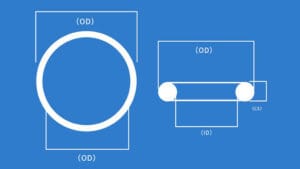
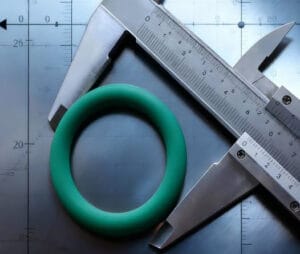
O-Ring Size Guide How to Measure, Identify, and Order the Right Size Every Time

O-Ring Size Guide: How to Measure, Identify, and Order the Right Size Every Time

Why O-Ring Size Matters More Than It Seems Choosing an O-ring is often treated as a simple measurement task: measure the old seal, find the closest size in a chart, and place an order. In engineering applications, however, O-ring size selection is a sealing-design problem, not simply a dimension-matching exercise. The correct O-ring must match the groove geometry, required squeeze,
Read More »
The Importance of O-Ring Tolerance

The Importance of O-Ring Tolerance

O-ring tolerance is one of the most important but frequently underestimated factors in sealing-system design. An O-ring may have the correct nominal size, material, hardness, and compound designation, yet still fail to seal reliably if its dimensional tolerance is not appropriate for the application. For engineers, purchasers, maintenance teams, and manufacturers, understanding O-ring tolerance means understanding how small dimensional variations

Read More »
AS568 O-Ring Quality & Compatibility

AS568 O-Ring Quality & Compatibility

The AS568 standard is the most widely recognized sizing specification for O-rings in North America and many international industries. Whether used in hydraulic systems, pneumatic equipment, automotive assemblies, aerospace applications, or industrial machinery, AS568 O-rings provide a standardized approach to sizing that ensures compatibility, interchangeability, and reliable sealing performance. Understanding AS568 standards goes far beyond selecting a size number. Engineers,

Read More »
What are Bonded Seals

What are Bonded Seals?

Introduction to Bonded Seals Bonded seals, also known as Dowty seals, are specialized sealing components designed to provide reliable, high-pressure sealing in demanding applications. They combine a metal washer with a vulcanized elastomer sealing element, offering enhanced durability and leak prevention compared to traditional O-rings alone. These seals are widely used in hydraulic systems, automotive assemblies, and fluid power equipment.

Read More »
Ensure O-Ring Quality Through Testing

Ensure O-Ring Quality Through Testing

Why O-Ring Quality Testing Matters O-rings may appear simple, but their performance often determines whether entire systems operate reliably or suffer leakage, downtime, and costly failures. In hydraulic systems, automotive components, medical devices, industrial machinery, and aerospace equipment, sealing reliability begins with verified product quality. That is why testing is essential to ensuring consistent oring quality. High-quality O-rings are not

Read More »
How to choose the right O-ring size the first time

How to choose the right O-ring size the first time

Selecting the correct O-ring size is one of the most critical steps in achieving reliable sealing performance. A perfectly chosen material will still fail if the size is incorrect. Improper sizing can lead to leakage, excessive wear, compression failure, or even system damage. Understanding how to choose the right O-ring size the first time helps reduce downtime, improve efficiency, and

Read More »
How to correctly select O-ring size

How to correctly select O-ring size

Why Correct O-Ring Size Selection Matters Choosing the correct O-ring size is one of the most important factors in achieving reliable sealing performance. Even when the right material is selected, an incorrect size can lead to leakage, compression failure, premature wear, or system downtime. O-rings are widely used in hydraulic systems, pneumatic equipment, automotive assemblies, industrial machinery, medical devices and

Read More »

Need a quote?

We will respond to your request within two business days.

Find the right product

Scroll to Top