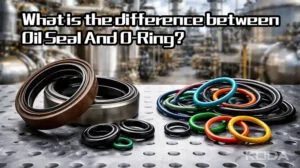
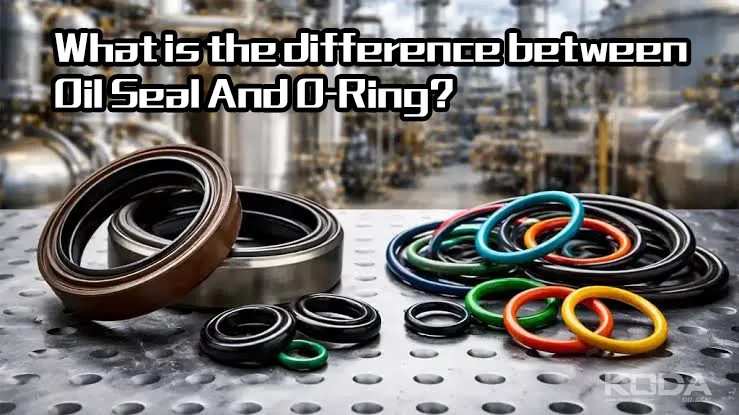
Oil seals and O-rings are both widely used to prevent fluid leakage, but they are not interchangeable sealing components. Their geometry, sealing mechanism, motion capability, installation method, and typical operating environments are fundamentally different.
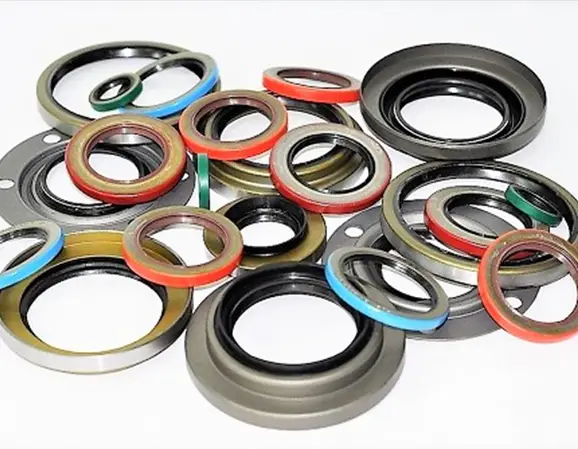
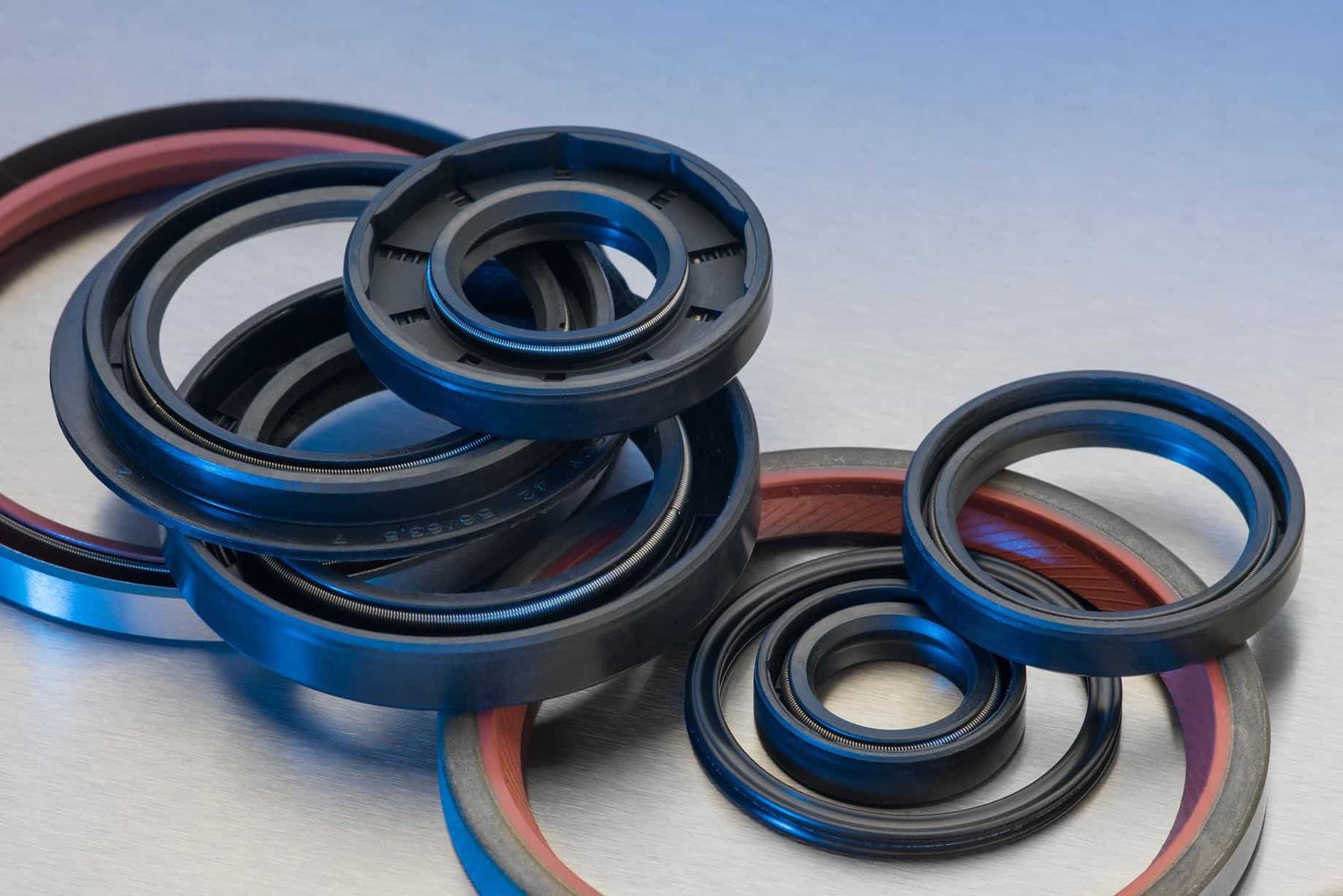
An O-ring is a relatively simple elastomeric sealing element that is installed in a designed groove and compressed against mating surfaces. An oil seal, often called a rotary shaft seal or radial shaft seal, uses a sealing lip to maintain contact with a rotating shaft while helping retain lubricant and exclude contaminants.
For engineers, maintenance teams, and equipment manufacturers, the important question is therefore not simply “Which seal is better?” The better question is:
What type of movement, pressure, fluid, temperature, shaft speed, installation geometry, and contamination exposure does the sealing point actually experience?
Once these conditions are understood, selecting between an O-ring and an oil seal becomes much more straightforward.
Oil Seal vs O-Ring: The Basic Difference
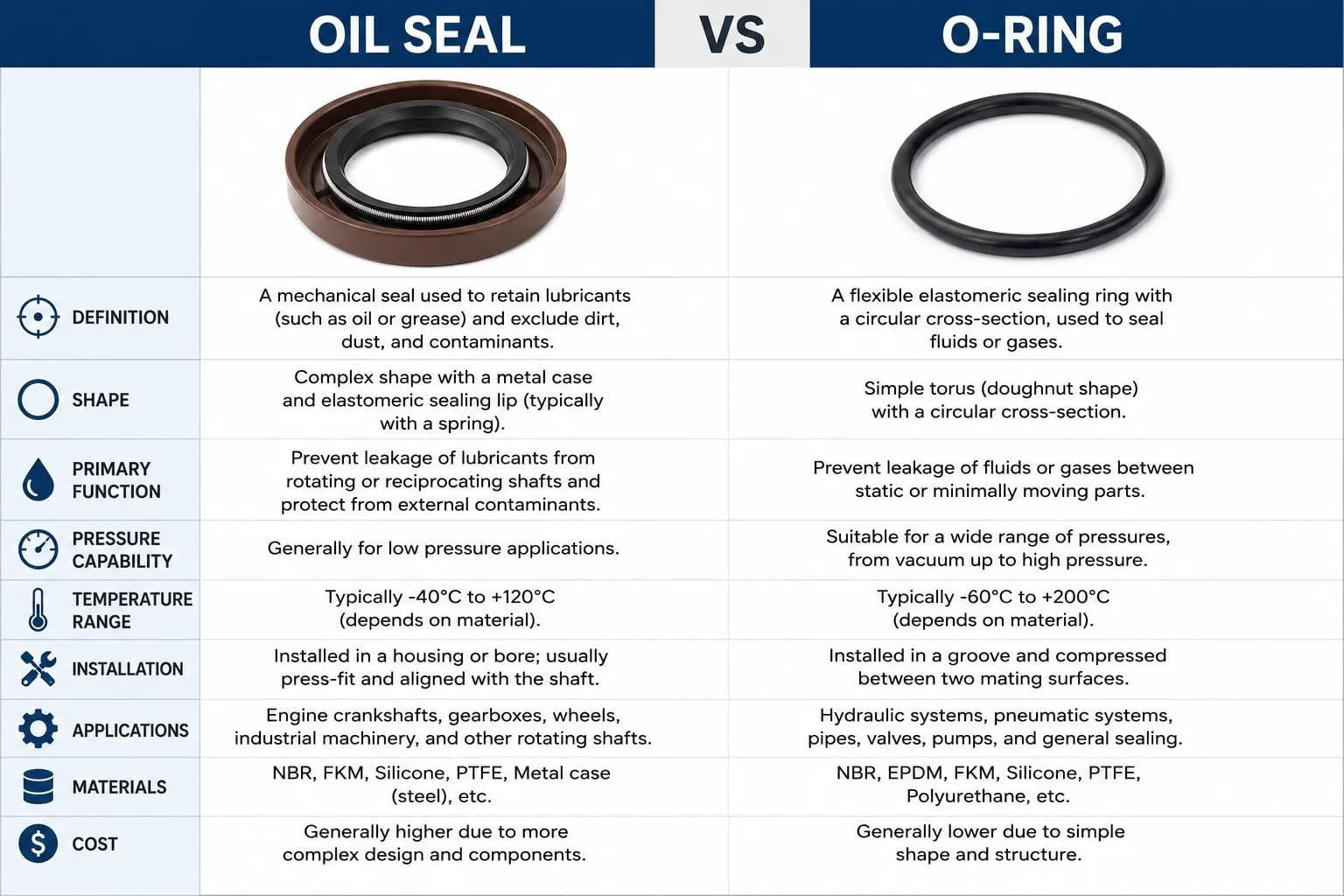
| Feature | Oil Seal | O-Ring |
|---|---|---|
| Basic geometry | Lip-style sealing element, often with a metal case or reinforcing structure | Circular elastomeric ring with a round cross-section |
| Typical function | Seal around rotating shafts and retain lubricant | Seal between mating surfaces or within designed grooves |
| Movement | Primarily designed for rotary shaft applications | Excellent for static sealing; specialized designs can support reciprocating, oscillating, or other dynamic motion |
| Typical pressure environment | Commonly used in low-pressure rotary sealing applications | Can be used from vacuum to high-pressure systems when groove, clearance, material, and backup arrangements are appropriate |
| Common applications | Gearboxes, motors, pumps, axles, bearings and rotating equipment | Hydraulic cylinders, valves, fittings, pumps, flanges, pneumatic systems and general machinery |
| Installation | Installed into a housing around a shaft | Installed into a groove or sealing cavity |
This comparison immediately shows why replacing one type with the other is not normally a simple dimensional substitution.
What Is an Oil Seal?
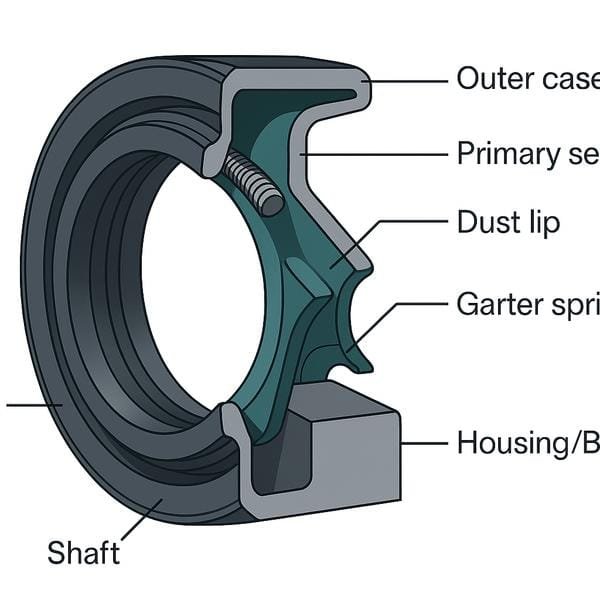
An oil seal is a mechanical sealing component designed primarily to control leakage around a rotating shaft. It is also commonly referred to as a rotary shaft seal, radial shaft seal, or lip seal.
A conventional oil seal may contain an elastomeric sealing body, a sealing lip, a metal case, and a garter spring. The spring helps maintain radial contact between the sealing lip and the shaft surface.
The sealing lip is engineered to maintain controlled contact with the rotating shaft. At the same time, the seal must limit friction and heat generation so that the lip does not wear excessively during operation.
Oil seals are therefore not simply rubber rings. Their geometry is an important part of the sealing system.
Typical Oil Seal Applications
- Electric motors
- Gearboxes and transmissions
- Pumps
- Wheel hubs
- Automotive engines
- Construction machinery
- Agricultural machinery
- Industrial rotating equipment
- Reducers and drive systems
- Bearings and bearing housings
The primary objective is often to keep oil or grease inside the equipment while preventing dust, dirt, water, or other contaminants from entering.
How Does an Oil Seal Work?
Unlike a static gasket, an oil seal operates while the shaft rotates. The sealing lip remains in controlled contact with the shaft surface and forms a narrow sealing interface.
The effectiveness of this interface depends on several variables, including:
- Shaft diameter and speed
- Shaft surface finish
- Shaft hardness and wear condition
- Seal lip geometry
- Elastomer material
- Lubrication
- Temperature
- Pressure differential
- Installation alignment
- Contamination level
This is why an oil seal that appears dimensionally correct can still fail quickly if the shaft surface, installation method, lubricant, or operating speed is unsuitable.
ISO 6194-1 covers nominal dimensions and tolerances for rotary shaft lip-type seals incorporating elastomeric sealing elements, while ISO 6194-3 addresses storage, handling, and installation.
What Is an O-Ring?
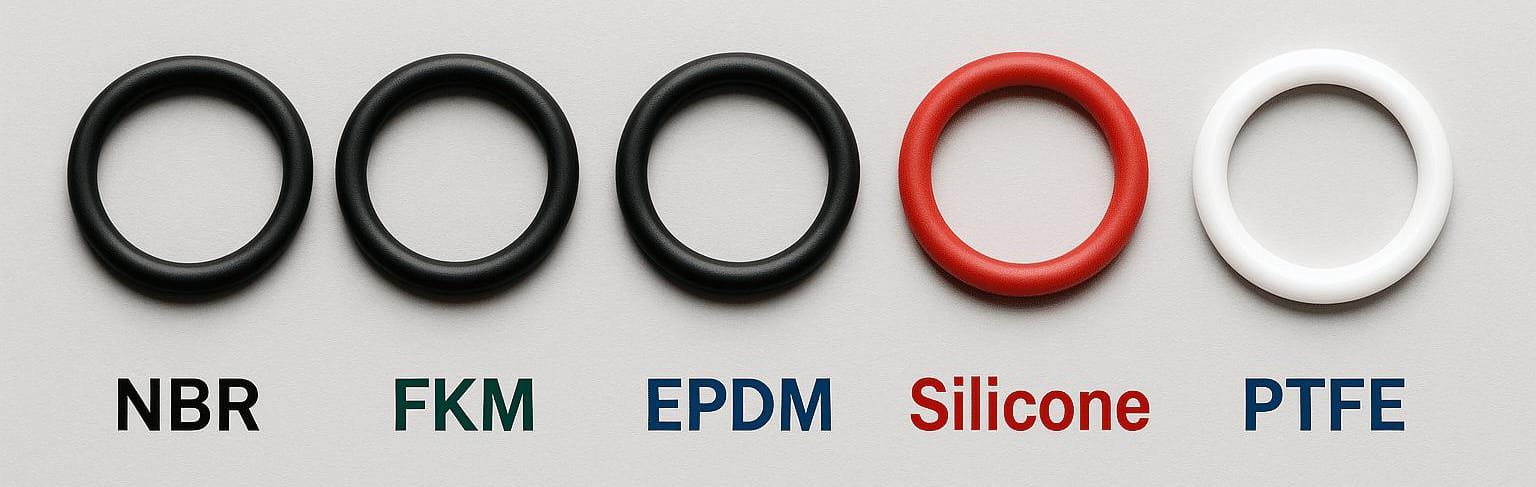
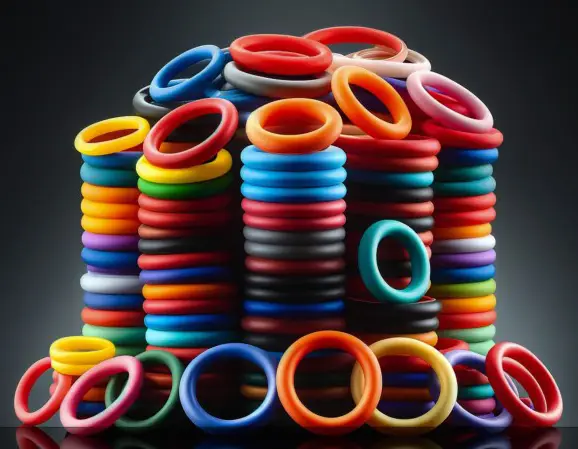
An O-ring is a circular elastomeric sealing element with a round cross-section. When installed in a properly designed groove, the O-ring is compressed between mating surfaces to create a sealing interface.
Its simple geometry makes the O-ring extremely versatile. It can be used for static sealing and, when the application is properly designed, for reciprocating, oscillating, and other dynamic sealing conditions.
Common O-ring materials include:
| Material | Common Selection Considerations |
|---|---|
| NBR | Mineral oils, hydraulic fluids, fuels and general industrial applications |
| FKM | Higher-temperature applications and many oil, fuel and hydrocarbon environments |
| EPDM | Water, weathering, ozone and selected chemical environments |
| Silicone | Broad temperature flexibility and applications requiring specialized silicone performance |
| HNBR | Applications requiring improved mechanical and thermal performance compared with conventional nitrile compounds |
The correct material cannot be selected from the seal shape alone. The fluid, temperature, pressure, movement, and expected service life all need to be considered.
Static O-Ring vs Dynamic O-Ring Applications
One important point often missed in basic oil seal versus O-ring comparisons is that O-rings are not limited to static sealing.
In a static application, the mating components do not move relative to the O-ring. Examples include flanges, pipe connections, covers, valve bodies, and housing joints.
In a dynamic application, the O-ring experiences relative movement against another surface. This can include reciprocating motion, oscillation, or carefully controlled rotary motion.
Dynamic O-ring applications require much more attention to friction, lubrication, surface finish, extrusion clearance, compression, material selection, and thermal effects.
Parker’s O-Ring Handbook provides engineering guidance covering elastomer properties, typical applications, dimensions, and static and dynamic O-ring design principles.
Oil Seal vs O-Ring: Which One Handles Higher Pressure?
This question needs careful treatment because pressure capability is often oversimplified.
A conventional rotary shaft oil seal is generally intended for low-pressure sealing around rotating shafts. Applying excessive pressure can force the lip away from the shaft or accelerate wear and leakage.
An O-ring, on the other hand, can be used in high-pressure hydraulic and pneumatic systems when the groove dimensions, extrusion gap, compound, hardness, pressure direction, and backup-ring arrangement are appropriate.
Therefore, it is incorrect to conclude that an oil seal is automatically more pressure-resistant than an O-ring.
Engineering Rule
For a rotating shaft, evaluate shaft speed, lip design, lubrication, surface condition and pressure. For an O-ring under pressure, evaluate squeeze, extrusion clearance, hardness, groove design and backup-ring requirements.
Oil Seal vs O-Ring: Which One Is Better for Rotating Shafts?
For a conventional exposed rotating shaft, a properly designed oil seal is normally the more appropriate choice because the sealing lip is specifically engineered to operate against the shaft.
An O-ring can be used in certain rotary applications, but it is not automatically a substitute for a rotary shaft lip seal. Friction, heat generation, extrusion, wear, lubrication, shaft speed, and groove geometry become critical.
If the application involves continuous shaft rotation, the first question should therefore be whether the sealing system has been specifically designed for that rotational condition.
Oil Seal vs O-Ring for Hydraulic Cylinders
Hydraulic cylinders demonstrate why the application should determine the sealing technology.
O-rings are widely used as static or secondary sealing elements in hydraulic equipment. They can also be incorporated into dynamic sealing designs when the operating conditions are appropriate.
However, the main rod and piston sealing requirements of a hydraulic cylinder may call for specialized hydraulic seals rather than a conventional O-ring or rotary oil seal.
The correct selection depends on pressure, reciprocating speed, fluid, temperature, extrusion clearance, surface finish, and required leakage performance.
Oil Seal vs O-Ring for Pumps and Gearboxes
For a gearbox with a rotating input or output shaft, a rotary shaft oil seal is usually the more natural solution because the primary sealing interface is located around the rotating shaft.
O-rings may still be used elsewhere in the same gearbox—for example, between covers, plugs, housings, connectors, or other stationary interfaces.
This means one machine can use both sealing technologies simultaneously.
The choice is not necessarily “oil seal or O-ring for the entire machine.” Instead, engineers should select the sealing element according to each individual sealing interface.
Oil Seal vs O-Ring: Material Selection
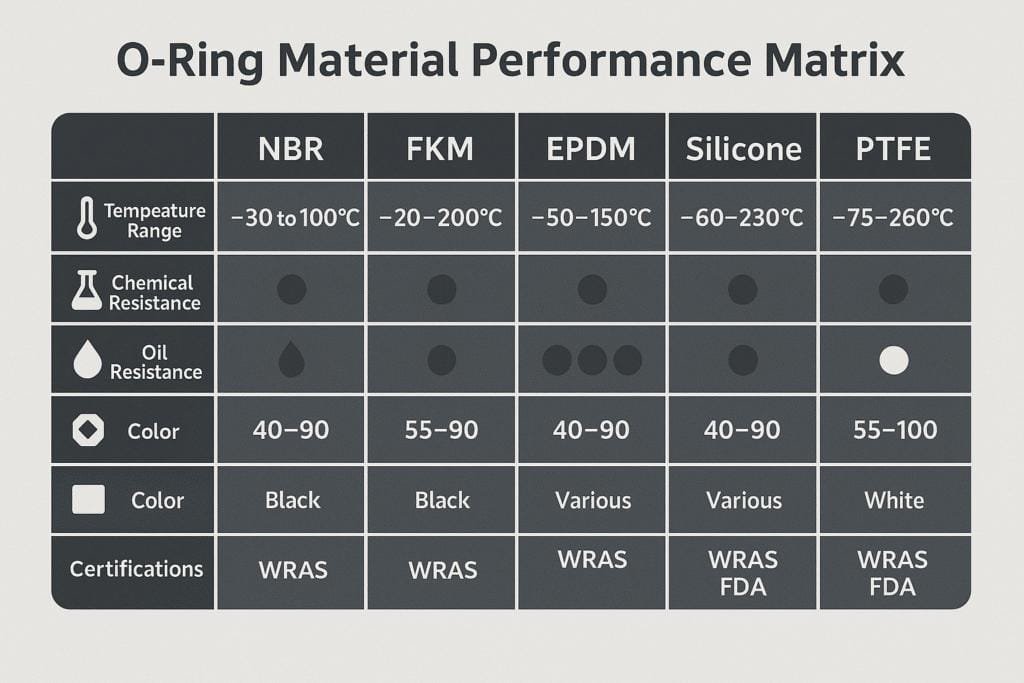
Material selection is one of the most important factors affecting seal life.
For example, NBR is commonly considered for many oil and hydraulic-fluid applications, while FKM may be selected where higher-temperature or demanding hydrocarbon resistance is required. EPDM is often considered for water, weathering, and ozone environments, while silicone is useful for specialized temperature and flexibility requirements.
However, these are general selection tendencies rather than universal rules.
The exact compound must be evaluated against the actual medium and operating conditions.
Five Questions to Ask Before Selecting the Material
- What fluid will contact the seal?
- What is the minimum and maximum operating temperature?
- Is the seal static or dynamic?
- What pressure and pressure cycling will occur?
- What service life is required?
If the answer to any of these questions is unknown, the material selection is not yet sufficiently defined.
Why Do Oil Seals Leak?
Oil seal leakage does not always mean that the rubber compound is defective.
Common causes include:
- Worn or damaged shaft surface
- Incorrect shaft diameter
- Excessive shaft runout
- Incorrect installation
- Damaged sealing lip
- Insufficient lubrication
- Excessive temperature
- Pressure beyond the seal design
- Wrong elastomer compound
- Contamination between the lip and shaft
For example, installing a new oil seal onto a deeply worn shaft may not solve the leakage problem. The shaft surface itself may need repair, polishing, sleeving, or replacement.
Why Do O-Rings Fail?
O-ring failures can occur for different reasons depending on whether the application is static or dynamic.
Compression Set
Permanent deformation after prolonged compression can reduce the O-ring’s ability to maintain sealing contact.
Extrusion
High pressure combined with excessive clearance can force the elastomer into the gap between mating components. Hardness, groove design, temperature, pressure and backup-ring configuration can all influence extrusion resistance.
Chemical Swelling
An incompatible fluid may cause the elastomer to swell or soften, changing the sealing force and dimensional stability.
Thermal Aging
Long-term exposure to excessive temperature can alter hardness, elasticity and mechanical properties.
Installation Damage
Cuts, twisting, over-stretching, contamination and sharp edges can create immediate or delayed leakage.
ASTM D1414 provides standardized test methods for evaluating physical properties of rubber O-rings and changes in those properties caused by aging.
How to Choose Between an Oil Seal and an O-Ring
Instead of selecting a seal by name, use the following engineering decision process.
Step 1 — Identify the movement
If the sealing surface rotates continuously around a shaft, investigate a rotary shaft seal. If the components are stationary relative to one another, an O-ring may be appropriate.
Step 2 — Define the pressure
Record normal, peak, and pressure-cycle conditions. Do not select a seal using nominal pressure alone.
Step 3 — Identify the fluid
Determine exactly what the seal will contact, including oil type, hydraulic fluid, fuel, coolant, water, chemicals or gas.
Step 4 — Check temperature
Consider minimum temperature, normal operating temperature, maximum temperature and exposure duration.
Step 5 — Check the hardware
Measure shaft diameter, groove dimensions, housing dimensions, clearance, surface finish and alignment conditions.
Step 6 — Consider service life
A seal for occasional maintenance equipment may have different requirements from a seal intended for continuous industrial operation.
O-Ring Standards and Oil Seal Standards
Using recognized standards can make component selection and communication between OEMs, engineers, and suppliers much more reliable.
ISO 3601-1 specifies inside diameters, cross-sections, tolerances and designation codes for O-rings used in fluid power systems and other industrial and aerospace applications.
ISO 3601-2 covers housing dimensions for specified O-ring applications and includes considerations for general hydraulic and pneumatic applications.
For rotary shaft seals, ISO 6194-1 establishes nominal dimensions and tolerances, while ISO 6194-3 provides guidance related to storage, handling and installation.
ASTM also maintains a broad collection of rubber-related standards, including standards for O-rings and rubber shaft seals.
Oil Seal or O-Ring: Practical Selection Examples
| Application | Likely Starting Point | Reason |
|---|---|---|
| Gearbox output shaft | Oil Seal | Designed for rotary shaft sealing and lubricant retention |
| Hydraulic valve body | O-Ring | Compact static sealing between machined surfaces |
| Electric motor shaft | Oil Seal | Rotating shaft and lubricant containment |
| Pipe fitting | O-Ring | Compact static fluid sealing |
| Pump rotating shaft | Oil Seal or specialized shaft seal | Depends on shaft speed, pressure, fluid and pump design |
| Hydraulic cylinder rod | Specialized dynamic seal | Reciprocating motion and pressure require application-specific design |
Can an O-Ring Replace an Oil Seal?
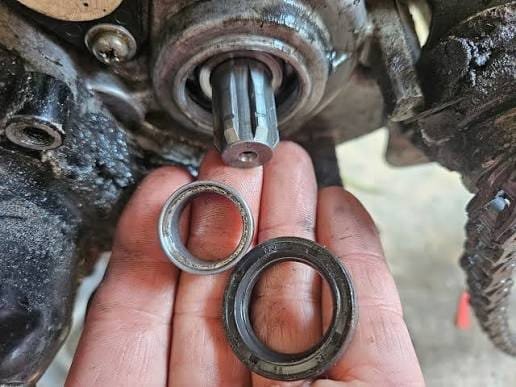
In most conventional rotary shaft applications, an O-ring should not simply be substituted for an oil seal because the two components use different sealing mechanisms.
An oil seal is designed around a controlled lip-to-shaft interface. An O-ring depends primarily on controlled compression within a groove.
If the application changes from one sealing technology to another, the groove, shaft or housing geometry, friction behavior, pressure capability, lubrication, and thermal performance may all need to be reconsidered.
Therefore, dimensional similarity does not mean functional interchangeability.
Can an Oil Seal Replace an O-Ring?
The reverse substitution is also generally inappropriate.
An oil seal requires a suitable housing and shaft arrangement. An O-ring groove, flange, valve body, hydraulic port, or other static sealing location may not provide the geometry needed for a rotary lip seal.
The correct sealing element is determined by the interface being sealed—not simply by the size of the leakage path.
Oil Seal vs O-Ring: Cost Is Not the Main Selection Factor
O-rings are generally simple and economical components, which makes them attractive for many applications.
Oil seals have more complex geometries and may incorporate metal cases, springs, specialized lips, dust lips, or other features.
However, selecting the lowest-cost seal can become expensive if it results in leakage, premature wear, equipment downtime, lubricant loss, contamination, or repeated maintenance.
For industrial equipment, the correct comparison should therefore consider total sealing cost over the expected service life, rather than purchase price alone.
Frequently Asked Questions
What is the main difference between an oil seal and an O-ring?
An oil seal is primarily designed to seal around a shaft, especially where the shaft rotates. An O-ring is a circular elastomeric element designed to seal within a groove between mating surfaces and can be used in both static and selected dynamic applications.
Is an O-ring better than an oil seal?
Neither is universally better. An O-ring is often the better choice for a compact static or appropriately designed dynamic groove seal, while an oil seal is normally more appropriate for conventional rotating shaft applications.
Are oil seals only used for oil?
No. Although the term “oil seal” is common, rotary shaft seals can be designed for different fluids and environments. Material compatibility and seal design should be verified for the actual medium.
Can O-rings be used in high-pressure applications?
Yes. O-rings are widely used in high-pressure hydraulic and pneumatic systems when the material, hardness, groove design, extrusion clearance and backup arrangements are appropriate.
Which is better for a rotating shaft?
For a conventional continuously rotating shaft, a properly selected rotary shaft oil seal is generally the natural starting point. The final selection depends on speed, pressure, lubricant, temperature, shaft surface and seal design.
Which seal is easier to install?
O-rings are generally simple to install, but correct groove dimensions and careful handling are still essential. Oil seals require more attention to lip orientation, shaft condition, installation alignment and protection of the sealing lip.
Final Takeaway: Choose the Seal for the Interface
Oil seals and O-rings are both essential sealing technologies, but they solve different engineering problems.
An oil seal is primarily associated with rotating shafts, lubricant retention, contamination exclusion and controlled lip contact. An O-ring is a highly versatile elastomeric element used for static sealing and, with suitable design, dynamic sealing.
The most reliable selection process considers the complete operating environment rather than focusing on the seal name alone.
Before ordering an oil seal or O-ring, confirm these seven parameters:
- Seal type and movement
- Fluid or media
- Minimum and maximum temperature
- Operating and peak pressure
- Shaft speed or reciprocating speed
- Dimensions and installation geometry
- Required service life and environmental exposure
For OEM and industrial applications, providing a drawing, sample, existing seal specification, operating conditions and failure information can make material and geometry selection much more accurate.
The objective is not simply to find a seal that fits the assembly. The objective is to select a sealing system that remains stable under the actual conditions of operation.