Why Are Buna (Nitrile) O-Rings So Popular?
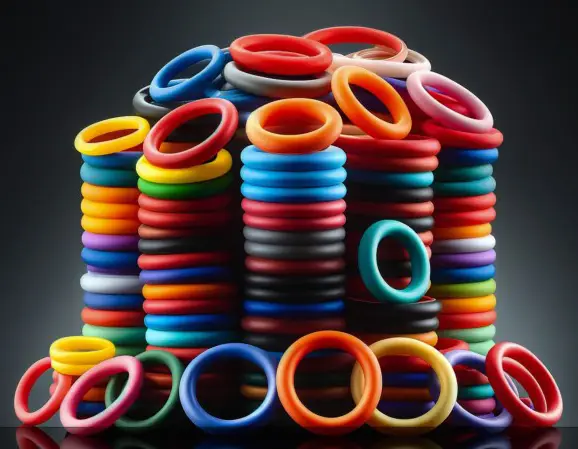
Buna, commonly known as nitrile rubber or NBR, is one of the most widely used elastomer materials for industrial sealing applications. Its popularity comes from a practical balance of oil resistance, mechanical strength, abrasion resistance, cost efficiency, and broad availability. For hydraulic systems, pneumatic equipment, automotive components, fuel systems, industrial machinery, pumps, valves, and general-purpose sealing applications, NBR often provides an excellent combination of performance and value.
The popularity of Nitrile O-Rings is not based on one single property. Instead, it comes from the material’s ability to perform reliably across a wide range of common industrial environments while remaining relatively economical and easy to manufacture.
✔ Key Engineering Principle: NBR is popular because it offers a strong balance between resistance to petroleum-based fluids, mechanical durability, sealing elasticity, manufacturability, and cost. However, its performance is application-dependent and should always be verified against the actual fluid, temperature, pressure, and operating conditions.
What Is Buna or Nitrile Rubber?
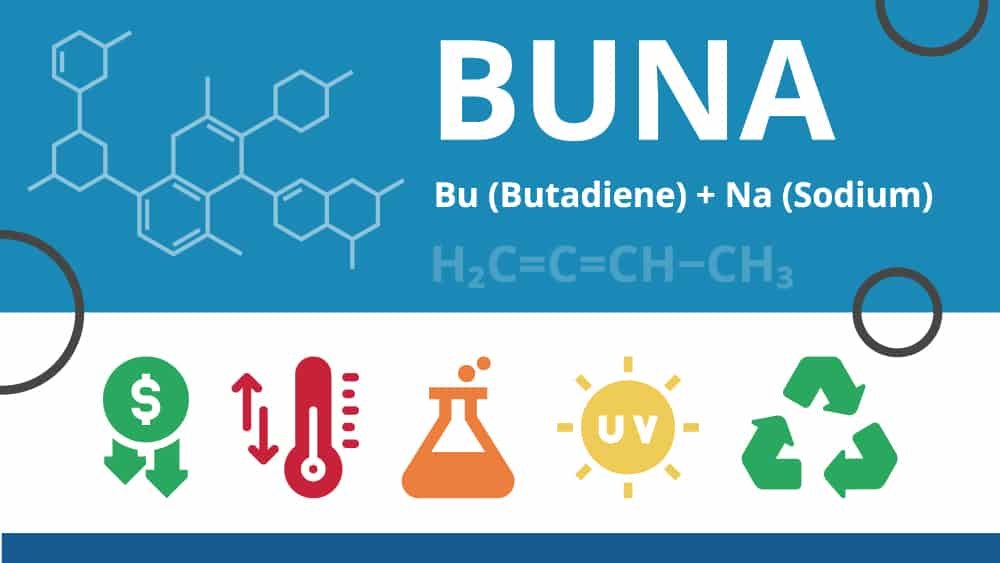
Buna-N, nitrile rubber, and NBR are commonly used names for acrylonitrile-butadiene rubber. The material is a synthetic copolymer produced from acrylonitrile and butadiene.
The acrylonitrile content has a significant influence on the balance of properties. In general, increasing acrylonitrile content tends to improve resistance to many petroleum-based oils and fuels, while lower acrylonitrile content generally provides better low-temperature flexibility.
This creates an important engineering trade-off. A compound designed for maximum oil resistance may not provide the same low-temperature flexibility as a lower-acrylonitrile formulation.
| NBR Property Factor | Typical Engineering Influence |
|---|---|
| Acrylonitrile content | Influences oil resistance and low-temperature flexibility |
| Crosslinking system | Affects hardness, compression set, strength, and aging behavior |
| Filler system | Influences tensile strength, hardness, abrasion, and processing |
| Plasticizer selection | Can influence flexibility and low-temperature performance |
Why Are Nitrile O-Rings So Popular in Industry?
Nitrile O-rings became popular because they solve a very common engineering problem: how to create an economical elastomeric seal that can resist oils and fuels while maintaining good mechanical performance.
Many industrial machines use petroleum-based lubricants, hydraulic fluids, greases, fuels, or related hydrocarbon products. NBR is often well suited to these environments, particularly when the operating temperature remains within the compound’s specified range.
Its popularity is also supported by several practical advantages:
- 🔧 Strong general-purpose mechanical performance
- 🛢 Good resistance to many petroleum-based oils
- ⛽ Useful performance with many fuels and hydraulic fluids
- ⚙ Good abrasion resistance
- 💰 Competitive material cost
- 📦 Wide availability in standard sizes
- 🛠 Well-established manufacturing and processing technology
- 🔄 Availability in many hardness levels and compound formulations
For many applications, engineers do not need the highest possible chemical resistance or the widest possible temperature range. They need a reliable material that meets the actual requirements without unnecessary cost. This is one of the main reasons NBR remains a popular sealing material.
Nitrile O-Ring Material Properties
The exact properties of an NBR O-ring depend on the specific compound formulation. Therefore, published values should be treated as compound-specific rather than universal characteristics of every nitrile product.
Commonly evaluated properties include:
- Hardness
- Tensile strength
- Elongation at break
- Compression set
- Tear resistance
- Abrasion resistance
- Fluid volume change
- Low-temperature flexibility
- Heat-aging resistance
For industrial sealing, the best material is not necessarily the material with the highest tensile strength. A successful O-ring must maintain sufficient elasticity, dimensional stability, chemical compatibility, and sealing force during actual service.
NBR Hardness and O-Ring Performance
Hardness is commonly measured using the Shore A scale. Industrial NBR O-rings are frequently available in hardness levels around 70 Shore A, although softer and harder compounds are also manufactured.
Hardness influences:
- Resistance to extrusion
- Installation force
- Resistance to deformation
- Friction in dynamic applications
- Ability to conform to surface irregularities
- Pressure capability
A softer NBR compound may conform more easily to minor surface imperfections. A harder compound may provide better resistance to extrusion and deformation under certain pressure conditions.
ASTM D2240 is widely associated with durometer hardness testing, while ISO 48 series standards are commonly used for hardness measurement of rubber materials.
Expert Tip: Hardness should not be selected independently from pressure and groove design. A harder O-ring does not automatically solve an extrusion problem if the clearance gap or gland geometry is unsuitable.
Nitrile O-Rings and Oil Resistance
One of the primary reasons for the popularity of NBR is its resistance to many petroleum-based oils and lubricants.
This makes NBR a common choice for:
- Hydraulic oils
- Lubricating oils
- Mineral oils
- Greases
- Many petroleum-based fuels
- Industrial machinery fluids
However, “oil resistant” does not mean compatible with every oil or every formulation. Additives, temperature, pressure, exposure time, and fluid chemistry can change the actual performance of an O-ring.
For this reason, fluid compatibility should be evaluated using the actual operating fluid whenever the application is critical.
Nitrile O-Rings and Temperature Performance
NBR has a useful operating temperature range for many industrial applications, but the exact limits depend heavily on the compound formulation and exposure conditions.
At elevated temperatures, nitrile rubber may experience accelerated aging, hardening, compression set, loss of elasticity, or chemical degradation.
At low temperatures, the material may become stiffer and less flexible. If the elastomer cannot maintain adequate elastic recovery, the sealing force may decrease.
Therefore, engineers should evaluate the complete temperature range rather than relying only on the normal operating temperature.
| Temperature Condition | Potential NBR Concern |
|---|---|
| Low temperature | Increased stiffness and reduced flexibility |
| Normal temperature | Generally favorable performance in suitable applications |
| High temperature | Accelerated aging and increased compression set risk |
| High temperature plus aggressive fluid | Potentially accelerated chemical and thermal degradation |
NBR Compared with Other Common O-Ring Materials
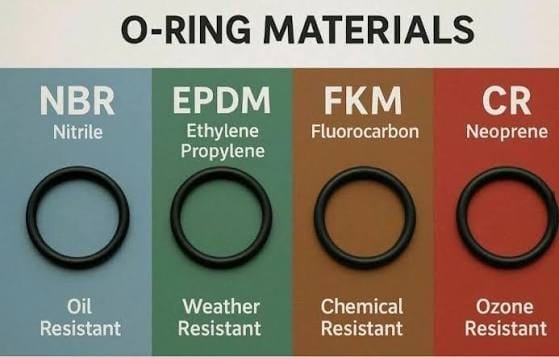
The popularity of NBR becomes clearer when it is compared with other common elastomer families.
| Material | Main Strength | Typical Limitation |
|---|---|---|
| NBR | Oil resistance and mechanical balance | Limited ozone and weathering resistance compared with some alternatives |
| FKM | High-temperature and chemical resistance | Higher cost and application-specific low-temperature limitations |
| EPDM | Water, ozone, and weathering resistance | Generally unsuitable for many petroleum oils |
| Silicone | Wide temperature flexibility | Lower abrasion and tear resistance in some applications |
| FFKM | Extremely broad chemical resistance | Very high material cost |
NBR is often selected when the application requires a practical balance rather than an extreme property in one category.
Chemical Compatibility of Nitrile O-Rings
NBR generally performs well with many petroleum-based fluids, but compatibility must be evaluated carefully with aggressive chemicals, highly polar fluids, strong oxidizers, and certain specialized fluids.
Potential chemical effects include:
- Swelling
- Shrinkage
- Softening
- Hardening
- Cracking
- Loss of tensile strength
- Loss of elasticity
A common engineering mistake is to select an O-ring based only on the name of a fluid. The actual formulation, additive package, concentration, temperature, and exposure time may significantly influence compatibility.
NBR O-Rings in Hydraulic Systems
Hydraulic systems are one of the most important application areas for nitrile O-rings.
Common applications include:
- Hydraulic cylinders
- Valve bodies
- Manifolds
- Hydraulic fittings
- Pumps
- Pressure control equipment
NBR is often attractive in hydraulic applications because many hydraulic fluids are oil-based and the material provides useful mechanical performance.
However, pressure level, extrusion clearance, temperature, dynamic movement, and fluid formulation must all be considered.
NBR O-Rings in Pneumatic Equipment
Nitrile O-rings are also widely used in pneumatic systems.
Typical applications include air valves, actuators, connectors, regulators, and other components requiring reliable gas sealing.
In pneumatic applications, friction, lubrication, surface finish, and dynamic movement can be particularly important. A compound that works well in a static hydraulic application may require different consideration in a high-cycle pneumatic actuator.
NBR O-Rings in Automotive Applications
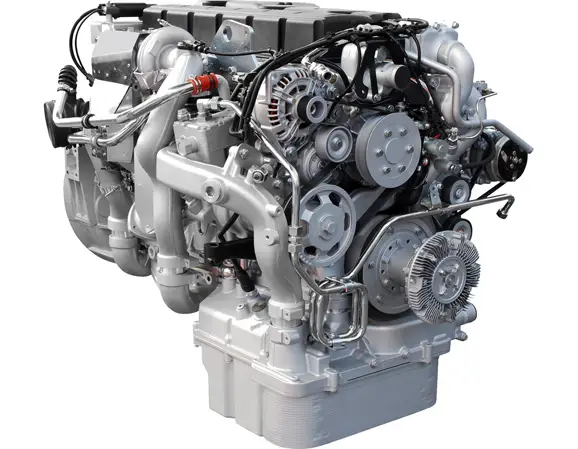
Automotive systems use many types of elastomeric seals. NBR has historically been popular in applications involving oils, fuels, lubricants, and general mechanical sealing.
Potential applications include:
- Engine components
- Fuel-related systems
- Transmission systems
- Hydraulic systems
- Oil circuits
- Mechanical connectors
Modern automotive fluids can contain complex additive packages, so compatibility should be verified against the actual fluid specification rather than assumed from the base fluid alone.
Compression Set and NBR O-Ring Reliability
Compression set is an important consideration in long-term sealing performance.
When an O-ring remains compressed for an extended period, it may not fully return to its original shape after the compressive load is removed.
High compression set may be associated with:
- Excessive temperature
- Long exposure time
- Unsuitable compound selection
- Improper curing
- Excessive compression
ASTM D395 and ISO 815 are commonly associated with compression set testing of rubber materials.
Laboratory compression set results should be interpreted as material test data under defined conditions. They should not automatically be converted into a guaranteed service-life prediction for a complete O-ring assembly.
Tensile Strength, Elongation, and Mechanical Performance
NBR is valued for its practical mechanical properties. Tensile strength and elongation are commonly evaluated using methods such as ASTM D412.
Mechanical performance is important during:
- Installation
- Stretching over components
- Dynamic movement
- Pressure cycling
- Vibration
However, a high tensile strength value alone does not guarantee superior sealing performance. Elastic recovery, compression behavior, chemical compatibility, and aging resistance are equally important.
Thermal Conductivity and Heat Management
Like most elastomers, NBR has relatively low thermal conductivity compared with metals. Heat generated at a dynamic sealing interface may therefore be influenced strongly by the surrounding metal components, lubricant, airflow, and cooling system.
Heat generation can increase with:
- Higher sliding speed
- Higher friction
- Excessive compression
- Insufficient lubrication
- Rough surfaces
- Excessive radial force
Thermal management is particularly important in high-speed dynamic applications.
Nitrile O-Ring Standards and Testing
Several standards are commonly relevant to rubber material evaluation and O-ring engineering.
- ASTM D2000: Classification system for rubber products used in automotive applications.
- ASTM D2240: Durometer hardness testing.
- ASTM D395: Compression set testing.
- ASTM D412: Tensile properties of vulcanized rubber and thermoplastic elastomers.
- ASTM D471: Effect of liquids on rubber properties.
- ISO 3601: O-ring dimensions, tolerances, and related quality requirements.
- ISO 48: Hardness measurement of rubber.
- ISO 815: Compression set testing.
The correct standard depends on the application, product specification, customer requirements, and regulatory environment.
O-Ring Compression Calculation
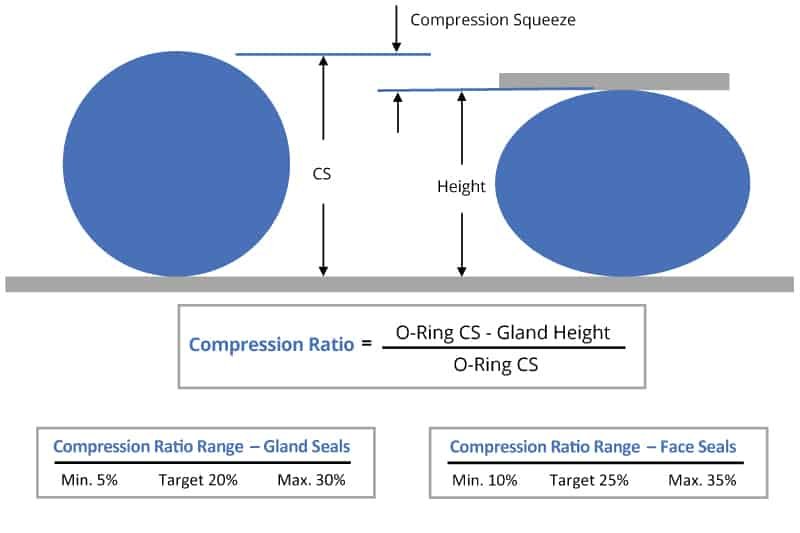
Compression is one of the most important design parameters in O-ring sealing.
Compression (%) = (Original Cross-Section − Installed Height) ÷ Original Cross-Section × 100%
For example, if an illustrative NBR O-ring has a 3.00 mm cross-section and the installed height is 2.40 mm:
Compression = (3.00 − 2.40) ÷ 3.00 × 100% = 20%
This is a mathematical example only. Actual recommended compression depends on the seal type, static or dynamic service, pressure, temperature, groove geometry, and industry design guidance.
Case Example: Selecting an NBR O-Ring for Hydraulic Equipment
Case Example — Illustrative Industry Experience
Consider a hydraulic manifold using an oil-based hydraulic fluid under pressure. An engineer evaluating an NBR O-ring would typically review the fluid chemistry, operating temperature, pressure, extrusion clearance, groove dimensions, hardness, surface finish, and installation method.
If the original seal fails after service, the failure should not automatically be blamed on the NBR material. The failed component should be examined for extrusion, swelling, compression set, cuts, installation damage, and evidence of thermal aging.
If the O-ring shows swelling, chemical compatibility may be the primary concern. If the seal shows nibbling on the high-pressure side, extrusion conditions may require investigation. If it has become hard and permanently flattened, thermal aging or compression set may be relevant.
This case is an illustrative example based on common engineering practice. It does not represent a real customer, factory test, or guaranteed service-life result.
Laboratory Test Example for NBR O-Rings
Laboratory Test Example — Demonstration Only
A laboratory evaluation of an NBR compound may include hardness testing, tensile testing, elongation measurement, compression set testing, fluid immersion, dimensional inspection, and visual examination.
For a simple illustrative fluid-immersion calculation:
Volume Change (%) = (Final Volume − Initial Volume) ÷ Initial Volume × 100%
If a test specimen changes from an illustrative 10.0 cm³ to 10.7 cm³:
(10.7 − 10.0) ÷ 10.0 × 100% = 7%
The calculation demonstrates the method only. Actual acceptance criteria depend on the material specification, test fluid, temperature, exposure duration, and applicable standard.
Laboratory data should not be presented as a guaranteed field-life curve. This example is not a real customer test or fabricated factory result.
Failure Mode Analysis of Nitrile O-Rings
Failure Mode Analysis — Illustrative Engineering Example
Swelling: May indicate absorption of an incompatible fluid or additive.
Hardening: May be associated with thermal aging, oxidation, or chemical exposure.
Compression set: May reduce elastic recovery after long-term compression.
Extrusion: May be associated with high pressure, excessive clearance, insufficient hardness, or unsuitable gland design.
Surface cracking: May indicate aging, ozone exposure, chemical attack, or excessive mechanical stress.
Cutting or tearing: May result from sharp edges, burrs, damaged installation tools, or excessive stretching.
Spiral failure: May indicate twisting during installation or unsuitable dynamic conditions.
Failure analysis should combine the visible damage pattern with operating data, material information, dimensional inspection, and fluid analysis whenever possible.
This is an illustrative industry analysis and does not represent a real customer failure investigation.
Common Failure Modes of NBR O-Rings
1. Chemical Swelling
When an NBR compound absorbs an incompatible fluid, its dimensions and mechanical properties may change. Swelling can increase friction, alter compression, or create installation problems.
2. Compression Set
Permanent deformation can reduce sealing recovery and eventually contribute to leakage, particularly in applications requiring long-term elastic recovery.
3. Extrusion and Nibbling
Pressure can force the elastomer into a clearance gap. Repeated pressure cycling or movement can then damage the material.
4. Thermal Aging
Long-term exposure to excessive heat can accelerate material aging and cause hardening, cracking, or loss of elasticity.
5. Installation Damage
Small cuts, scratches, twists, and contamination introduced during assembly can cause premature leakage.
NBR O-Ring Installation Guide
Correct installation is essential for reliable performance.
- Clean the groove and mating surfaces.
- Remove sharp edges and burrs.
- Inspect the O-ring for cuts, cracks, and surface damage.
- Use a compatible lubricant when permitted.
- Avoid twisting the O-ring during assembly.
- Protect the seal from threads, keyways, and sharp transitions.
- Use suitable installation tools.
- Avoid excessive stretching.
Installation Warning: A damaged O-ring should not be installed simply because the damage appears minor. Small cuts can become leakage paths under pressure or during dynamic movement.
Surface Finish and NBR Sealing Performance
The mating surface must be suitable for the sealing application.
A rough surface can abrade the elastomer or create leakage channels. A scratch may act as a direct path for fluid leakage, especially in dynamic applications.
Important surface defects include:
- Longitudinal scratches
- Burrs
- Pits
- Tool marks
- Corrosion damage
- Sharp edges
Surface finish requirements should be selected according to the specific O-ring application and relevant engineering guidance.
How to Choose the Right Nitrile O-Ring
| Question | Why It Matters |
|---|---|
| What fluid contacts the seal? | Determines chemical compatibility. |
| What is the minimum and maximum temperature? | Determines flexibility and aging requirements. |
| What is the pressure? | Determines extrusion risk and backup-ring requirements. |
| Is the application static or dynamic? | Determines friction and wear requirements. |
| What hardness is appropriate? | Influences extrusion resistance and installation behavior. |
| Is outdoor exposure expected? | Ozone and weathering resistance may become important. |
Why NBR Remains a Cost-Effective Sealing Material
Material selection should consider total cost rather than purchase price alone.
An inexpensive O-ring that fails prematurely can create much higher costs through leakage, maintenance, equipment downtime, contamination, and replacement labor.
NBR is popular because it often provides a favorable balance between material cost and functional performance in common oil-based industrial environments.
For applications where the environment exceeds NBR’s capabilities, a higher-cost material such as FKM, EPDM, silicone, or FFKM may be more appropriate.
The most economical solution is therefore the material that reliably meets the actual requirements of the application.
Expert Tips for Nitrile O-Ring Selection
Expert Tip 1: Choose NBR based on the actual fluid formulation, not simply the general name of the fluid.
Expert Tip 2: Consider both the minimum and maximum operating temperature.
Expert Tip 3: Use hardness and backup-ring design together when addressing high-pressure extrusion risk.
Expert Tip 4: Examine failed O-rings before selecting replacement materials. Failure patterns often provide valuable diagnostic information.
Expert Tip 5: Do not assume that the cheapest O-ring is the lowest-cost solution over the entire equipment lifecycle.
The Future Importance of Nitrile O-Rings

Although modern industries continue to develop advanced elastomer materials, NBR remains highly relevant because many industrial systems still require reliable sealing against oils, lubricants, fuels, and hydraulic fluids.
Its established manufacturing technology, broad availability, flexible compound design, and practical mechanical properties ensure that nitrile remains an important material in industrial sealing.
The popularity of Buna or NBR O-rings is ultimately based on engineering practicality. The material provides a useful combination of oil resistance, mechanical durability, manufacturability, availability, and cost efficiency.
When the compound is correctly selected and the O-ring is properly designed, installed, and maintained, NBR can provide dependable performance across a wide range of industrial applications.
Frequently Asked Questions
1. Why are Buna-N O-rings so popular?
Buna-N, or NBR, O-rings are popular because they provide a strong balance of oil resistance, mechanical strength, abrasion resistance, availability, and cost. They are widely used in hydraulic, pneumatic, automotive, industrial, and general machinery applications.
2. Are Nitrile O-rings resistant to oil?
Yes. NBR generally provides good resistance to many petroleum-based oils, lubricants, greases, and certain fuels. However, compatibility depends on the exact fluid formulation, additives, temperature, concentration, and exposure duration.
3. What is the main limitation of Nitrile O-rings?
The main limitations depend on the application, but NBR generally has more limited resistance to ozone, weathering, and certain aggressive chemicals than some alternative elastomers. Its high-temperature and low-temperature performance must also be evaluated for the specific compound.
4. Is NBR better than FKM for O-rings?
Neither material is universally better. NBR is often a cost-effective choice for many oil-based applications, while FKM may be preferred when higher temperature or broader chemical resistance is required. The correct choice depends on the actual operating environment.
5. How can the service life of a Nitrile O-ring be improved?
Service life can often be improved through correct material selection, proper groove design, suitable compression, controlled pressure and temperature, compatible fluids, appropriate surface finish, clean installation, correct lubrication, and systematic failure analysis when problems occur.