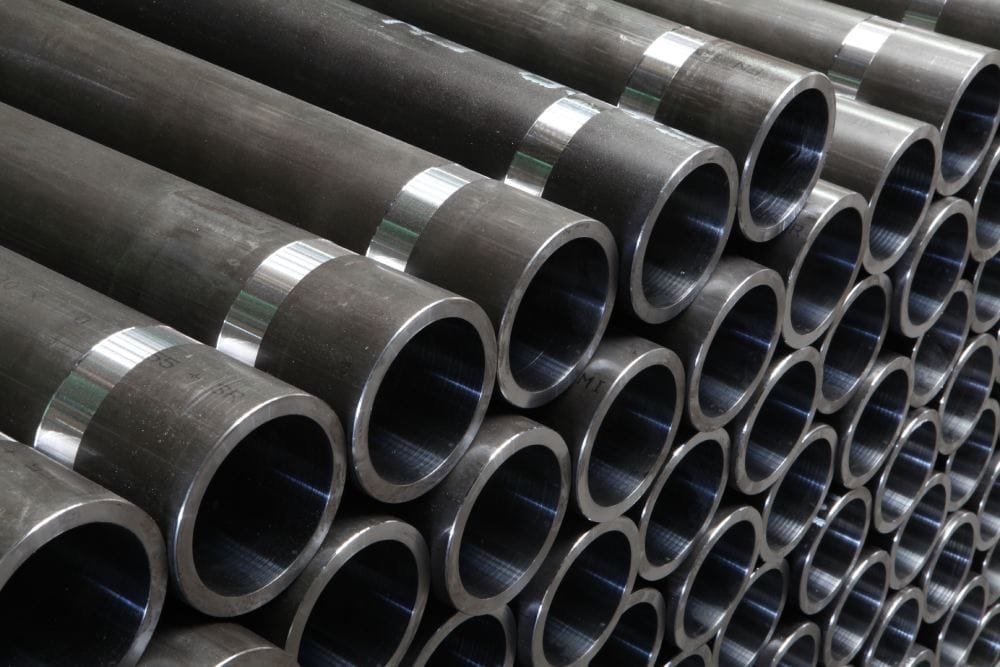
What Is Carbon Steel and What Role Does It Play in Seals?
Carbon steel is one of the most widely used engineering materials in the world. It is primarily an iron-based alloy in which carbon is the principal alloying element, with the carbon content and processing history strongly influencing strength, hardness, ductility, weldability, machinability, and wear resistance.
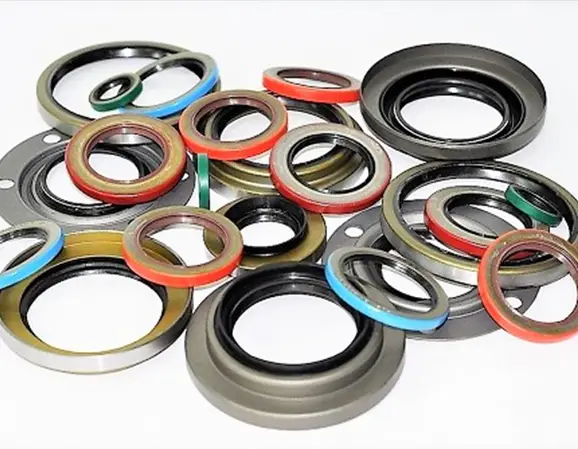
In sealing technology, carbon steel is rarely the material that directly creates the flexible sealing interface. Instead, it commonly plays a structural and mechanical role in oil seals, rotary shaft seals, dust seals, mechanical assemblies, metal cases, reinforcement rings, springs, washers, housings, and other components that support or protect the elastomeric sealing element.
Understanding carbon steel is therefore important when evaluating seal performance. A seal is not only a rubber component. It is a system composed of materials that interact with each other. The elastomer may provide flexibility and fluid resistance, while carbon steel may provide structural strength, dimensional stability, retention, protection, and mechanical support.
✔ Engineering Insight: The performance of a carbon-steel-reinforced seal depends on the complete material system. Rubber compound, steel grade, surface treatment, shaft condition, housing design, lubricant, temperature, and corrosion environment must be considered together.
What Is Carbon Steel?
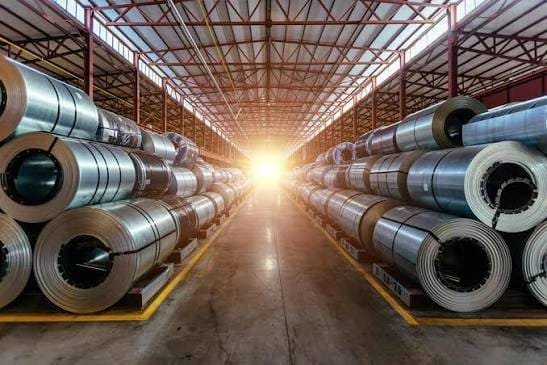
Carbon steel is an iron-carbon alloy in which carbon contributes significantly to the material’s mechanical properties. Unlike stainless steel, carbon steel generally does not contain enough chromium to provide a highly corrosion-resistant passive surface under ordinary conditions.
Carbon steel is commonly classified according to carbon content and application requirements. In practical engineering, the terms low-carbon steel, medium-carbon steel, and high-carbon steel are frequently used to describe general material behavior.
| General Category | Typical Carbon Level | General Characteristics |
|---|---|---|
| Low-carbon steel | Generally below approximately 0.30% C | Good ductility, formability, and weldability |
| Medium-carbon steel | Approximately 0.30%–0.60% C | Higher strength and hardness, moderate ductility |
| High-carbon steel | Generally above approximately 0.60% C | High hardness and wear potential, lower ductility |
These ranges are general educational classifications rather than universal standards. Exact steel grades are defined by chemical composition and applicable standards.
Why Is Carbon Steel Used in Seals?
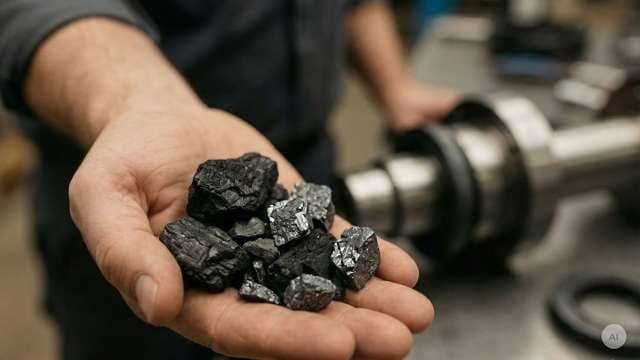
Carbon steel is frequently used in seals because it offers a practical combination of strength, availability, manufacturability, and cost efficiency.
In a typical metal-reinforced oil seal, the steel component may be formed into a case or reinforcement structure. This component helps maintain the seal’s shape and allows the seal to be securely installed into a housing.
Carbon steel may also be used in:
- ⚙ Reinforcement cases
- 🔩 Metal inserts
- 🛡 Protective covers
- 🔧 Retaining components
- 🌀 Garter spring systems
- 📐 Structural rings
- 🏭 Stamped seal components
- 🔩 Washers and supporting hardware
The exact function depends on the seal design. In many cases, the elastomer is responsible for fluid sealing, while the carbon steel provides mechanical support and dimensional stability.
The Relationship Between Carbon Steel and Elastomeric Sealing Materials
A seal commonly combines materials with very different properties. Carbon steel is relatively rigid and strong, while rubber is flexible and deformable.
This difference is useful. The steel can maintain the overall structure while the elastomer adapts to the shaft, housing, and dynamic movement.
Seal System Concept:
Carbon steel = structural strength + dimensional stability + mechanical support
Elastomer = flexibility + contact sealing + fluid compatibility
Surface treatment = corrosion protection + improved environmental durability
Good seal design requires these materials to work together without creating excessive stress, corrosion, distortion, or loss of retention.
Carbon Steel Grades Commonly Associated with Engineering Components
Different industries use different designation systems. Common carbon-steel grades may be identified through ASTM, SAE, AISI, EN, JIS, or other national and international standards.
Examples of commonly referenced carbon-steel grades include SAE/AISI 1008, 1010, 1018, 1020, and 1045. Their actual properties depend on chemical composition, manufacturing process, heat treatment, thickness, and supply condition.
| Grade Example | General Engineering Use | General Material Behavior |
|---|---|---|
| SAE/AISI 1008 | Formed sheet and low-carbon components | High formability and relatively low strength |
| SAE/AISI 1018 | General mechanical components | Good balance of strength and machinability |
| SAE/AISI 1020 | General-purpose machine parts | Low-carbon, ductile, and weldable |
| SAE/AISI 1045 | Higher-strength shafts and mechanical components | Higher strength and hardness potential |
The correct material should always be specified by the applicable drawing, product standard, or engineering specification. A general grade name alone is not enough to define the complete performance of a seal component.
Mechanical Properties of Carbon Steel
The mechanical properties of carbon steel depend strongly on grade and processing condition. Important properties include tensile strength, yield strength, elongation, hardness, toughness, and fatigue resistance.
In general, increasing carbon content can increase hardness and strength after suitable processing, but it may also reduce ductility and weldability.
For seal components, the required balance is often different from that of a heavily loaded structural part. A stamped seal case may need sufficient strength for forming and retention, while excessive hardness may complicate manufacturing.
Tensile Strength
Tensile strength is the maximum engineering stress a material can withstand during a tensile test before fracture.
A simplified stress relationship is:
σ = F ÷ A
σ = engineering stress
F = applied force
A = original cross-sectional area
For a thin steel seal case, tensile strength is only one consideration. Formability, dimensional accuracy, corrosion resistance, and compatibility with the elastomer may be equally important.
Yield Strength
Yield strength indicates the stress level at which significant permanent deformation begins. A seal reinforcement component must be strong enough to maintain its intended shape during installation and operation.
Hardness
Hardness measures resistance to indentation or localized deformation. Common methods include Rockwell, Brinell, and Vickers hardness testing.
For steel seal components, hardness may influence stamping behavior, wear resistance, and resistance to deformation. However, the appropriate hardness depends on the design and manufacturing process.
Carbon Steel Hardness and Seal Performance
Hardness can influence the durability of metal components used in sealing assemblies, but hardness should not be confused with overall performance.
A harder material may provide better resistance to certain types of wear, but it may also be more difficult to form or more sensitive to cracking under certain conditions.
Common hardness scales include:
- Rockwell B and C scales
- Brinell hardness
- Vickers hardness
ASTM E18 is commonly associated with Rockwell hardness testing, while ASTM E10 is associated with Brinell hardness testing and ASTM E384 with microindentation hardness methods.
Actual test method selection depends on material thickness, geometry, hardness range, and the relevant specification.
Thermal Conductivity of Carbon Steel
Carbon steel conducts heat significantly better than most elastomeric materials. The exact thermal conductivity depends on composition, temperature, microstructure, and processing condition.
For many ordinary carbon steels, thermal conductivity is commonly in the approximate range of 40–60 W/(m·K), although actual values vary by grade and temperature.
By comparison, many rubber materials have much lower thermal conductivity. This difference affects heat transfer in a seal assembly.
Engineering Consideration: A metal case can conduct heat away from or toward a sealing region more effectively than the elastomer. However, heat transfer through a seal assembly depends on contact conditions, geometry, surrounding materials, lubricant, airflow, and operating temperature.
Thermal conductivity should therefore be evaluated as part of the complete heat-transfer system rather than as an isolated material number.
Thermal Expansion and Dimensional Stability
Carbon steel expands when heated and contracts when cooled. A simplified linear thermal expansion calculation is:
ΔL = αL₀ΔT
ΔL = change in length
α = coefficient of thermal expansion
L₀ = original length
ΔT = temperature change
For carbon steel, a commonly used engineering approximation for the coefficient of linear thermal expansion is around 11–13 × 10-6/K over ordinary temperature ranges, although the exact value varies.
When carbon steel is bonded or mechanically combined with rubber, differences in thermal expansion can create stress during temperature cycling.
Corrosion Resistance of Carbon Steel
One of the most important limitations of ordinary carbon steel is its susceptibility to corrosion.
When carbon steel is exposed to water and oxygen, electrochemical corrosion can occur. Chlorides, acids, salts, humidity, temperature, and surface damage can accelerate the process.
Corrosion can affect sealing components in several ways:
- 🔴 Rust can damage the metal case.
- 🔴 Corrosion products can contaminate the sealing interface.
- 🔴 Dimensional changes can reduce retention.
- 🔴 Pitting can create stress concentration points.
- 🔴 Rust can damage adjacent housing or shaft surfaces.
For this reason, carbon-steel seal components may require protective coatings or surface treatments.
Surface Treatments for Carbon Steel in Sealing Applications
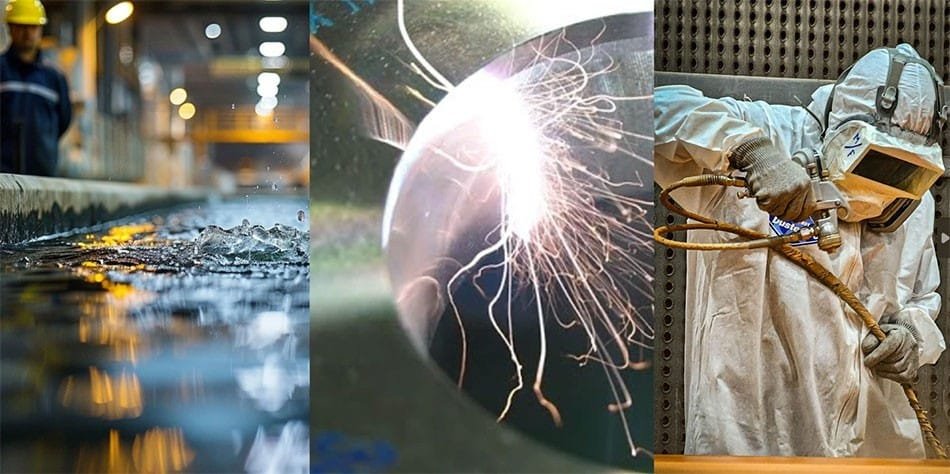
Common protective approaches may include oil protection, phosphate treatment, zinc-based coatings, plating, painting, conversion coatings, or other corrosion-control systems.
| Treatment | Potential Benefit | Engineering Consideration |
|---|---|---|
| Phosphate coating | Improved surface protection and paint or lubricant retention | Protection depends on the complete coating system |
| Zinc coating | Improved corrosion protection | Coating thickness and process compatibility must be controlled |
| Protective plating | Surface corrosion resistance and specific functional properties | Adhesion, cracking, and chemical compatibility require evaluation |
| Organic coating | Barrier protection against environmental exposure | Thickness and adhesion may affect assembly |
In a rubber-metal seal, the coating must also be compatible with the elastomer bonding system and manufacturing process.
Carbon Steel Versus Stainless Steel in Seals
Carbon steel and stainless steel are not interchangeable in every application.
| Factor | Carbon Steel | Stainless Steel |
|---|---|---|
| Cost | Generally lower | Generally higher |
| Corrosion resistance | Limited without protection | Generally better due to chromium-containing alloy systems |
| Formability | Depends strongly on grade | Depends strongly on stainless grade |
| Seal application | Suitable for many general industrial environments | Preferred where corrosion resistance is a major requirement |
The choice should be based on the actual environment, cost requirements, corrosion risk, forming requirements, and product specification.
Carbon Steel in Metal-Reinforced Oil Seals
Many oil seals contain a metal case that supports the elastomer. The metal case may be stamped or formed into a specific geometry.
The case can provide:
- Structural reinforcement
- Dimensional stability
- Housing retention
- Protection of the elastomer
- Support during installation
- Resistance to deformation
In a typical rotary shaft seal, the steel case does not normally contact the rotating shaft as the primary sealing surface. The elastomeric lip performs the dynamic sealing function.
However, the metal component must still maintain its geometry under temperature, vibration, installation force, and environmental exposure.
Carbon Steel and Garter Springs
Some oil seals use a garter spring to maintain radial force around the shaft. Depending on the design, the spring may be made from carbon steel, stainless steel, or another spring material.
The spring must maintain sufficient force over the expected operating range without excessive relaxation, corrosion, or fatigue.
Important considerations include:
- Spring material
- Wire diameter
- Spring force
- Corrosion environment
- Temperature
- Fatigue behavior
- Compatibility with the seal design
A spring that loses force may reduce sealing contact. A spring that produces excessive force may increase friction and heat.
Manufacturing Carbon Steel Seal Components
Carbon steel components used in seals may be manufactured through processes such as stamping, pressing, machining, forming, heat treatment, and surface finishing.
Stamping and Forming
Low-carbon steel is often suitable for forming operations because of its ductility. Tool design, material thickness, lubrication, forming radius, and processing conditions affect the final component.
Machining
Machining may be used for rings, sleeves, special components, and precision parts. Cutting parameters, tool condition, dimensional tolerance, and surface finish must be controlled.
Heat Treatment
Heat treatment can modify hardness, strength, and microstructure. However, thermal processing may also introduce distortion or residual stress if not properly controlled.
Common ASTM and ISO Standards Related to Carbon Steel
The appropriate standard depends on the exact material and test requirement.
- ASTM A36: Commonly associated with structural carbon steel requirements.
- ASTM A29: Covers certain carbon and alloy steel bars for general industrial use.
- ASTM E8/E8M: Tensile testing of metallic materials.
- ASTM E18: Rockwell hardness testing.
- ASTM E10: Brinell hardness testing.
- ASTM E384: Microindentation hardness testing.
- ISO 6892-1: Tensile testing of metallic materials at room temperature.
- ISO 6508: Rockwell hardness testing.
- ISO 6506: Brinell hardness testing.
- ISO 6507: Vickers hardness testing.
For sealing products, the material specification may also include requirements for chemical composition, dimensional tolerances, surface condition, corrosion protection, and bonding performance.
Case Example: Carbon-Steel Reinforcement in an Industrial Oil Seal
Case Example — Illustrative Industry Experience
Consider a rotary oil seal used in a general industrial gearbox. The elastomer is responsible for retaining lubricant around a rotating shaft, while a formed carbon-steel case provides structural support and housing retention.
During engineering evaluation, the design team may consider the steel grade, thickness, forming behavior, dimensional stability, surface protection, elastomer bonding, and expected temperature range.
If corrosion is observed after service, the investigation should evaluate humidity, water exposure, salt contamination, coating integrity, storage conditions, and contact with dissimilar metals.
If the metal case becomes distorted during installation, possible causes may include excessive installation force, incorrect tooling, housing interference, or insufficient component strength.
This example is an illustrative engineering scenario based on common industry practice. It does not represent a real customer, factory test result, or guaranteed service-life prediction.
Laboratory Test Example
Laboratory Test Example — Demonstration Only
A laboratory evaluation of a carbon-steel seal component may include dimensional inspection, chemical composition verification, hardness measurement, tensile testing, coating evaluation, and corrosion exposure.
A possible test sequence could include:
- Visual examination of the metal surface
- Dimensional measurement
- Hardness testing
- Material identification
- Surface coating thickness evaluation
- Controlled environmental exposure
- Post-test corrosion inspection
- Comparison with the original specification
For example, percentage change in a measured property can be calculated as:
Percentage Change = (Final Value − Initial Value) ÷ Initial Value × 100%
If an illustrative hardness measurement changes from 160 HV to 155 HV after a defined test exposure, the numerical change is:
(155 − 160) ÷ 160 × 100% = −3.125%
This calculation demonstrates the analysis method only. Actual acceptance criteria must be defined by the applicable specification and test standard.
This laboratory example is not a real factory test, customer test, or fabricated lifetime curve.
Failure Mode Analysis of Carbon Steel in Sealing Systems
Failure Mode Analysis — Illustrative Engineering Example
Suppose a metal-reinforced seal is removed from service and the carbon-steel case shows visible rust and localized deformation.
A systematic investigation should separate the possible causes instead of assuming that the steel grade alone caused the failure.
Potential causes may include:
- Insufficient corrosion protection
- Water or salt exposure
- Damaged protective coating
- Incorrect storage conditions
- Improper installation force
- Housing interference
- Material mismatch
- Residual stress or forming damage
- Galvanic interaction with another metal
Useful investigation methods may include visual examination, dimensional measurement, microscopy, hardness testing, coating analysis, chemical composition verification, and examination of the installation environment.
The objective is to identify the root cause through evidence rather than assuming that the carbon steel itself was unsuitable.
This is an illustrative failure analysis based on common engineering practice and is not presented as an actual customer failure investigation.
Common Failure Modes of Carbon Steel Seal Components
1. Corrosion
Rust and corrosion can reduce surface quality, weaken thin components, and create contamination risks.
2. Permanent Deformation
Excessive installation force, insufficient strength, or incorrect housing dimensions may deform the metal component.
3. Cracking
Cracking may be associated with forming conditions, material defects, excessive hardness, stress concentration, or fatigue.
4. Coating Damage
Scratches or damage to a protective coating can expose the underlying steel to corrosion.
5. Dimensional Instability
Thermal cycling, mechanical stress, or manufacturing variation may affect the intended geometry.
6. Bonding Failure
In rubber-metal bonded components, contamination, inadequate surface preparation, unsuitable bonding chemistry, or processing problems may reduce adhesion between the elastomer and steel.
Carbon Steel and Rubber Bonding
When carbon steel is bonded to an elastomer, surface preparation is extremely important.
The bonding process may involve cleaning, degreasing, surface treatment, primer application, adhesive application, molding, and controlled vulcanization.
Potential causes of poor rubber-to-metal bonding include:
- Oil contamination
- Rust or scale
- Improper surface preparation
- Incorrect primer or adhesive
- Insufficient curing
- Excessive moisture
- Incorrect processing temperature
- Improper storage of bonding materials
Bonding quality should be evaluated according to the specific product specification and applicable test method.
Carbon Steel Selection Guide for Seal Applications
| Question | Why It Matters |
|---|---|
| What is the required strength? | Determines resistance to deformation and mechanical loading. |
| Will the component be stamped? | Formability and ductility become important. |
| Is corrosion exposure severe? | May require coatings or a more corrosion-resistant material. |
| Will rubber be bonded to the steel? | Surface preparation and adhesive compatibility are critical. |
| What is the operating temperature? | Thermal expansion and material aging must be considered. |
| What is the expected service environment? | Water, salt, chemicals, dust, and humidity affect material selection. |
Storage and Handling of Carbon Steel Seal Components
Carbon steel components should be stored in conditions that minimize moisture and contamination. Poor storage can cause corrosion before the product is installed.
Good practices include:
- Keep components dry.
- Avoid condensation.
- Prevent contact with corrosive chemicals.
- Protect surfaces from scratches.
- Follow the manufacturer’s packaging instructions.
- Inspect components before assembly.
For rubber-metal seals, storage conditions should protect both the steel and elastomer. Excessive heat, ozone, ultraviolet exposure, and chemical contamination may affect the rubber even when the steel remains visually acceptable.
Carbon Steel in Different Sealing Applications
Carbon steel may be used in a wide range of sealing systems, including rotary shaft seals, dust seals, hydraulic sealing assemblies, industrial equipment, automotive components, pumps, gearboxes, and machinery.
In a general oil seal, the metal case may provide structural support. In a dustproof seal, it may protect the sealing element from external mechanical damage. In a spring-loaded design, carbon steel may contribute to the spring or retaining structure.
For specialized environments, however, stainless steel or other corrosion-resistant alloys may be preferred.
Expert Tips for Using Carbon Steel in Seals
Expert Tip 1: Do not select carbon steel solely because it is inexpensive. Evaluate corrosion, forming, bonding, strength, and environmental requirements.
Expert Tip 2: A corrosion-protection coating must be compatible with the manufacturing process and the elastomer bonding system.
Expert Tip 3: The steel case should be evaluated together with the rubber compound. A strong metal component cannot compensate for an incompatible elastomer.
Expert Tip 4: When a seal fails, inspect both the elastomer and metal components. Corrosion, deformation, and bonding failure may reveal important information about the root cause.
Expert Tip 5: Always distinguish between a general material name and a controlled material specification. “Carbon steel” alone does not define a complete engineering grade.
Why Carbon Steel Remains Important in Sealing Technology
Carbon steel remains important because it provides a practical balance of mechanical performance, manufacturing flexibility, availability, and cost.
In many sealing systems, the elastomer receives most of the attention because it directly contacts the fluid or shaft. However, the metal reinforcement is equally important to the overall mechanical design.
A properly selected carbon-steel component can provide the dimensional stability required for reliable installation and long-term structural performance.
At the same time, the limitations of carbon steel must be understood. Corrosion, coating damage, deformation, bonding problems, and thermal effects can all affect seal reliability.
For this reason, engineers should consider the complete application rather than selecting a material based on a single property such as tensile strength or hardness.
Final Engineering Perspective
Carbon steel is a fundamental engineering material that plays an important supporting role in many sealing systems. It may form the case, reinforcement, spring, insert, or other structural component that allows an elastomeric seal to function correctly.
The performance of carbon steel in a seal depends on its chemical composition, mechanical properties, manufacturing condition, surface treatment, corrosion environment, temperature, and interaction with other materials.
For general industrial applications, low-carbon steel may offer excellent formability and manufacturing efficiency. Higher-carbon grades may provide greater hardness and strength when required, but they may also have reduced ductility and different processing requirements.
When corrosion resistance is critical, protective coatings or alternative materials should be considered. When rubber is bonded to the metal, surface preparation and adhesive compatibility are essential.
Whether used in a rotary oil seal, dustproof seal, automotive component, gearbox, pump, or industrial machine, carbon steel should be selected as part of a complete engineering system.
When the steel grade, geometry, surface protection, elastomer, lubricant, temperature, and operating environment are properly matched, carbon-steel components can provide reliable structural support and contribute significantly to long-term sealing performance.
Frequently Asked Questions
1. What is carbon steel?
Carbon steel is an iron-based alloy in which carbon is the principal alloying element. Its carbon content and processing condition influence strength, hardness, ductility, weldability, and wear resistance. Unlike stainless steel, ordinary carbon steel generally requires additional protection when exposed to corrosive environments.
2. What role does carbon steel play in seals?
Carbon steel commonly provides structural reinforcement, dimensional stability, housing retention, spring force, and mechanical support. In many oil seals, the elastomer provides the primary sealing function while the carbon-steel component maintains the shape and strength of the assembly.
3. Is carbon steel suitable for oil seals?
Yes. Carbon steel can be suitable for many oil seals and industrial sealing components, particularly when the environment is properly controlled or the steel has appropriate corrosion protection. The correct material depends on temperature, moisture, chemicals, mechanical loads, manufacturing requirements, and the seal design.
4. What is the main disadvantage of carbon steel in sealing applications?
The primary limitation is its relatively limited corrosion resistance compared with stainless steel and other corrosion-resistant alloys. Water, salt, humidity, chemicals, and damaged coatings can accelerate corrosion. Appropriate surface treatment or alternative materials may be required for severe environments.
5. How should carbon steel be selected for a sealing component?
Selection should consider required strength, hardness, ductility, forming method, corrosion exposure, temperature, bonding requirements, dimensional stability, surface treatment, and applicable ASTM, ISO, or other material specifications. The steel should always be evaluated together with the elastomer and the complete operating environment.