Valve Cover Gasket
Categories
Auto Oil Seal
- Auto Oil Seal
- TOYOTA Oil Seal
- Nissan/Honda oil seal
- Isuzu Oil Seal
- MITSUBISHI/FUSO Oil Seal
- SUZUKI Oil Seal
- HYUNDAI/KIA Oil Seal
- HINO Oil Seal
- Ford / Chevrolet Oil Seal
- Peugeot Oil Seal
- VW/Iveco Oil Seal
- LADA/VAZ Oil Seal
- Caterpillar Oil Seal
- MAZDA Oil seals
- BENZ Oil Seal
- VOLVO Oil Seal
- BPW Oil Seal
- MAN oil Seals
- RENAULT Oil Seals
- SCANIA Oil Seal
- MACK Oil Seal
- DAF Oil Seals
- PERKINS Oil Seal
Motorcycle Oil Seal
Agricultural Machine Oil Seal
Construction Machinery Oil Seal
Truck Wheel Hub Oil Seal
Cassette Wheel Hub Oil Seal
Power Steering Oil Seal and Kit
Hydraulic Pump Oil Seal
JCB SEAL KIT
Concrete Mixer Gearbox Oil Seal
Wheel Cylinder Brake Cup Seal
Engine Valve Cover Gasket Seal
- Valve Stem SealAuto Oil Seal
- Valve Cover Gasket
Bonded Seals
End Cover Cap Seals
Speak with a Product Expert
Please contact our professional sales team to discuss your application needs. We have dedicated staff available to answer your calls Monday through Friday, from 8:30 AM to 6:00 PM Beijing time.
New Customers:
+86 18730921709
Existing/Repeat Customers:
Email:sales@kodaseal.com
NEWS
How much does it cost to replace a transmission seal?
Valve Cover Gasket-How Much Do You Know
What are the applications of Yellow O-Ring Kits?
What is AFLAS® Rubber?
Valve Cover Gasket
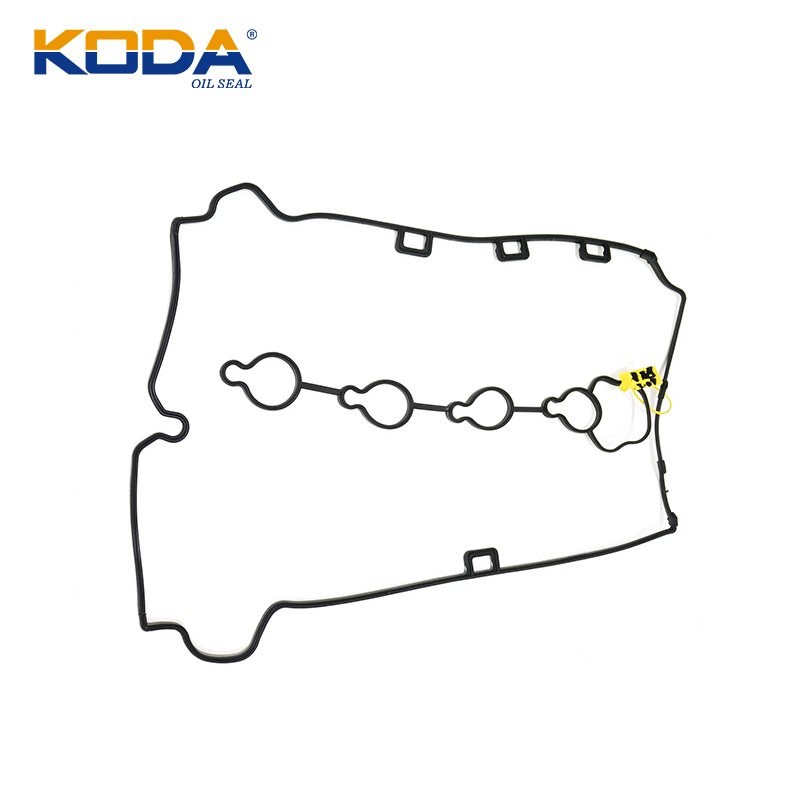
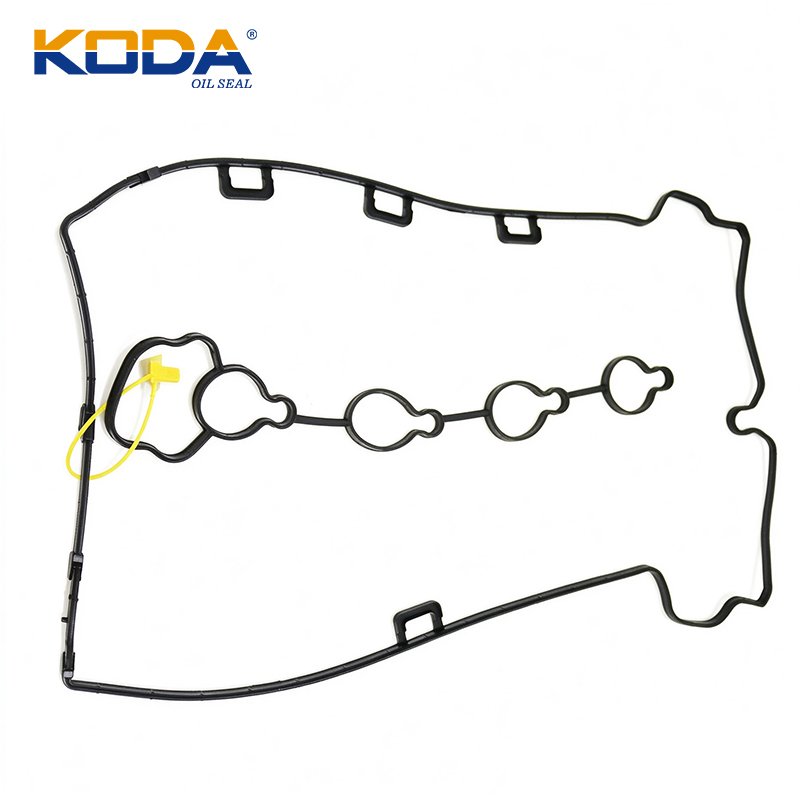
An engine valve cover gasket is a precision sealing component installed between the cylinder head and the valve cover. Its primary job is to contain engine oil within the valve train area and prevent external leakage during normal engine operation. Depending on the engine design, the sealing assembly may also include spark plug tube seals, bolt grommets, molded sealing beads, or other application-specific components.
For automotive parts distributors, repair workshops, importers, and OEM buyers, selecting an engine valve cover gasket involves more than matching its outline. Material compatibility, sealing profile, compression behavior, engine identification, and manufacturing consistency all affect whether the replacement part will seal reliably.
If you have questions about Valve Cover Gasket, please contact us!
Key engineering point: A valve cover gasket is an application-specific static seal. The correct replacement must match the original sealing geometry and operating conditions. A gasket that looks similar may still have the wrong groove profile, bolt-hole layout, material, or compression characteristics.
SHOW MORE
What Is an Engine Valve Cover Gasket?
The valve cover, also known as the rocker cover or cylinder head cover, encloses the upper part of an internal combustion engine. This area may contain camshafts, rocker arms, valve springs, and other valve train components. Engine oil circulates through the area to lubricate moving parts.
The valve cover gasket forms a seal between the cover and the cylinder head. It follows the perimeter of the mating surfaces and may incorporate additional sealing sections around spark plug wells or fastener locations. Its function is to maintain a stable sealing interface as the engine experiences heat, vibration, and repeated thermal expansion and contraction.
Valve cover gasket vs. valve stem seal
These two components are sometimes confused, but they perform different jobs:
- Valve cover gasket: Seals the joint between the valve cover and cylinder head to prevent external oil leakage.
- Valve stem seal: Controls the amount of oil passing along the valve stem and guide into the combustion chamber or intake/exhaust ports.
Replacing a valve cover gasket will not correct blue exhaust smoke caused by worn valve stem seals. Accurate diagnosis is important before ordering replacement parts.
Main Functions of a Valve Cover Gasket
Oil containment
Creates a sealed joint that helps prevent lubricating oil from escaping around the valve cover perimeter.
Contamination protection
Helps prevent dust, moisture, and external debris from entering the enclosed valve train area.
Thermal-cycle tolerance
Maintains sealing contact as the engine heats up during operation and cools down after shutdown.
Vibration accommodation
Provides a compliant sealing interface that can accommodate normal engine vibration and movement.
A valve cover gasket does not normally regulate engine oil pressure or seal the combustion chambers. Its job is to seal the external joint around the upper engine. This distinction helps technicians avoid misdiagnosing unrelated engine problems.
Common Types and Materials of Engine Valve Cover Gaskets
Valve cover gaskets are manufactured in different material systems and configurations. The correct option depends on the original equipment design, oil exposure, temperature range, flange geometry, and required compression behavior.
Molded rubber valve cover gaskets
Molded elastomer gaskets are widely used in modern automotive engines. They can be produced with complex sealing profiles, locating tabs, molded beads, and integrated sections for spark plug tube openings.
Material selection is critical. Different rubber compounds have different resistance to engine oil, heat, aging, and compression set. The compound should be selected and validated for the specific engine environment rather than chosen solely because it is described as rubber.
Silicone rubber gaskets
Silicone elastomers are known for maintaining flexibility over a broad temperature range. They are used in certain sealing applications where thermal stability and elastic recovery are important.
However, temperature capability alone does not determine suitability. Mechanical strength, tear resistance, compression behavior, oil compatibility, and the design of the sealing groove must also be evaluated.
Cork and cork-rubber composite gaskets
Cork-based gasket materials are found in some traditional engine designs. Cork-rubber composites combine compressible cork particles with an elastomer binder to create a gasket that conforms to the specified flange geometry under clamping pressure.
These materials require correct compression. Excessive tightening may cause deformation or damage, while poor storage and aging can reduce their sealing performance.
Rubber-coated and reinforced carrier designs
Some valve cover gasket assemblies use a rigid or semi-rigid carrier with molded elastomer sealing sections. This construction can help maintain dimensional stability and control gasket positioning during installation.
For these designs, the carrier, molded sealing bead, locating features, and compression limiters must be considered as one integrated sealing system.
| Gasket construction | Potential advantages | Important checks |
|---|---|---|
| Molded elastomer | Complex profiles, flexible sealing beads, application-specific geometry | Oil compatibility, hardness, compression set, groove fit |
| Silicone rubber | Broad temperature flexibility in suitable formulations | Tear resistance, oil exposure, mechanical loading |
| Cork-rubber composite | Compressibility and conformity to specified flange surfaces | Compression limits, aging, storage, flange condition |
| Carrier with molded sealing beads | Position control and engineered sealing geometry | Carrier dimensions, bead profile, fastener loading |
Buyer note: Avoid specifying a gasket only as NBR, silicone, or rubber. Request the exact compound specification, dimensional drawing, applicable temperature limits, and evidence of compatibility with the intended engine oil and service conditions.
Common Signs of Valve Cover Gasket Failure
A deteriorated valve cover gasket can produce several recognizable symptoms. However, these signs are not exclusive to gasket failure. A proper inspection should confirm the actual leak source before replacement.
Oil around the valve cover edge
Fresh oil or wet residue along the joint between the valve cover and cylinder head is a common indication of external leakage. Clean the area and inspect again to distinguish a current leak from old oil contamination.
Burning oil odor or smoke
Leaking oil may contact a hot exhaust manifold or other hot engine surfaces, producing an unpleasant smell or visible smoke. Oil on hot components can present a fire hazard, so this symptom requires prompt attention.
Oil in spark plug wells
Some engines use separate spark plug tube seals integrated into the valve cover gasket set. If these seals deteriorate, oil can collect around spark plugs and ignition coils. The result may include contaminated coil boots, ignition misfires, or difficult plug removal.
Oil level dropping between services
An external valve cover leak can contribute to oil loss. Nevertheless, a falling oil level may also be caused by oil pan leakage, crankshaft seals, turbocharger issues, or internal oil consumption. Check the entire lubrication system rather than assuming the valve cover gasket is responsible.
Oil near valve cover bolts
Oil around fasteners may indicate damaged bolt grommets, sealing washers, or local gasket compression problems. On some engines, replacing the perimeter gasket without renewing the associated bolt seals will not resolve the leak.
Safety reminder: If oil is dripping onto hot exhaust components, smoke is visible, or an oil pressure warning appears, stop the engine when safe and arrange an inspection. Do not continue operating the vehicle simply because the suspected leak is at the valve cover.
Why Do Engine Valve Cover Gaskets Leak?
Repeat leakage often results from a combination of material deterioration, incorrect installation, damaged mating surfaces, or an underlying engine ventilation problem. Identifying the failure mechanism is more effective than simply installing another gasket.
Thermal aging and material hardening
Continuous exposure to engine heat and repeated thermal cycling can change elastomer properties. Depending on the formulation and operating conditions, the gasket may harden, crack, shrink, or lose its ability to recover after compression.
Compression set
A gasket is compressed when the valve cover fasteners are tightened. Over time, some materials develop permanent deformation and cannot fully recover their original thickness. The resulting reduction in sealing contact pressure may create a leakage path.
Incorrect gasket dimensions or profile
A gasket with an incorrect cross-section, groove engagement feature, or bolt-hole arrangement may not seat properly. Even a small mismatch can create local areas of insufficient compression or cause the gasket to move during assembly.
Over-tightening and uneven clamping
Excessive fastener torque can crush the gasket, distort the valve cover, damage bolt grommets, or strip threads in an aluminum cylinder head. Uneven tightening may also create inconsistent sealing pressure around the perimeter.
Damaged valve cover or cylinder head surface
Cracks, warpage, corrosion, scratches, and damaged gasket grooves can prevent a new gasket from sealing. If the mating surfaces are defective, replacing the gasket alone will not provide a durable repair.
Excessive crankcase pressure
A blocked or malfunctioning positive crankcase ventilation (PCV) system can increase crankcase pressure and contribute to oil leakage from multiple engine seals. If a new valve cover gasket leaks soon after installation, inspect the ventilation system and related hoses.
How to Inspect a Valve Cover Gasket Leak
A structured inspection helps technicians confirm the source of leakage and avoid unnecessary replacement of serviceable components.
- Check the engine oil level. Follow the vehicle manufacturer’s procedure and correct the level if necessary using the specified engine oil.
- Inspect the valve cover perimeter. Look for fresh oil around the gasket joint, fasteners, spark plug wells, and nearby components.
- Clean the suspected leak area. Remove accumulated oil and dirt using a suitable cleaning method. Protect electrical connectors and sensitive engine components.
- Recheck for fresh oil. Follow safe workshop procedures to determine whether the oil is emerging from the valve cover joint or traveling from another source.
- Inspect related seals. Check bolt grommets, spark plug tube seals, PCV connections, and other nearby sealing points.
- Inspect the mating surfaces after removal. Look for cracks, warpage, scratches, corrosion, damaged grooves, and residual gasket material.
For difficult-to-locate leaks, a compatible UV engine oil dye may be useful when approved for the application. Always follow the dye supplier’s instructions and the vehicle manufacturer’s service procedures.
Valve Cover Gasket Replacement: Workshop Procedure
The following is a general replacement workflow. Exact removal steps, fastener sequences, torque values, and sealant requirements differ between engine designs. Always use the relevant vehicle service manual as the controlling reference.
Step 1: Confirm the replacement gasket
Verify the OE part number, engine code, model year, and application. Check whether the replacement set includes spark plug tube seals, bolt grommets, and other components required for a complete repair.
Step 2: Prepare the engine
Allow the engine to cool and follow the vehicle-specific safety procedure. Remove or disconnect only the components identified in the service instructions. Keep dirt and loose debris away from the exposed valve train.
Step 3: Remove the valve cover
Loosen the fasteners in the recommended sequence. Lift the cover carefully without damaging the cylinder head sealing surface or the valve cover groove. Do not use excessive force against soft aluminum surfaces.
Step 4: Remove the old gasket and clean the surfaces
Remove the old gasket and any remaining sealant. Use suitable non-damaging tools and cleaning products. Prevent gasket fragments or other debris from entering the engine.
Step 5: Inspect all sealing components
Check the valve cover for cracks, distortion, damaged bolt holes, and worn gasket grooves. Inspect spark plug tube seals and fastener grommets where fitted. Replace any damaged components before reassembly.
Step 6: Position the new gasket
Install the gasket in the correct orientation and make sure it is fully seated in its groove. Avoid twisting, stretching, or pinching the sealing profile. Confirm that locating tabs and openings align with the cover.
Step 7: Apply sealant only where required
Many molded valve cover gaskets are designed for clean, dry installation. Some engines require a small amount of specified RTV sealant at joints, corners, or intersections between separate components. Apply sealant only where and as directed by the service manual.
Do not automatically apply RTV around the entire gasket. Excess sealant can prevent correct seating and may squeeze into engine oil passages.
Step 8: Tighten the fasteners correctly
Install the cover without moving the gasket. Tighten the fasteners in the specified sequence and to the engine manufacturer’s torque specification. Use a suitable calibrated torque wrench. Do not substitute a generic torque value.
Step 9: Reassemble and verify the repair
Reconnect all hoses, electrical connectors, and removed components. Start and inspect the engine according to the service procedure. Confirm that there is no fresh leakage, abnormal noise, or warning indication.
Common installation mistakes
- Using a gasket with a similar appearance but incorrect dimensions.
- Leaving old sealant, oil, or dirt on surfaces that require clean installation.
- Failing to seat the gasket fully in the valve cover groove.
- Reusing damaged spark plug tube seals or bolt grommets.
- Applying excessive RTV or using an unsuitable sealant.
- Over-tightening fasteners to compensate for a leak.
- Ignoring a warped cover or excessive crankcase pressure.
How to Select the Correct Engine Valve Cover Gasket
For global automotive parts buyers, choosing the correct valve cover gasket requires reliable application data and dimensional verification. A supplier should be able to identify the product by OE reference, engine application, or an approved technical drawing.
Vehicle and engine identification
Start with the vehicle manufacturer, model, production year, engine displacement, engine code, and OE part number. Similar vehicle models may use different gasket designs depending on engine configuration, production revision, or destination market.
Dimensional and profile verification
Confirm the gasket’s overall dimensions, cross-section, bolt-hole positions, spark plug tube openings, locating features, and groove engagement. For molded gaskets, the sealing bead profile must match the original valve cover geometry.
Material and operating-condition review
Request the compound specification, hardness range where applicable, compression behavior, temperature limits, and compatibility information for the intended engine oil. Where the application is demanding, ask for relevant validation or test documentation.
Kit completeness
Determine whether the repair requires additional spark plug tube seals, bolt grommets, sealing washers, or other components. A complete gasket set can help avoid repeat labor caused by overlooked sealing points.
Manufacturing quality and traceability
For repeat purchasing and private-label programs, evaluate dimensional inspection, material batch control, production consistency, packaging, and the supplier’s ability to maintain approved drawings and revision records.
| Sourcing requirement | What to confirm with the supplier |
|---|---|
| Application accuracy | OE number, engine code, vehicle fitment, and production revision |
| Product dimensions | Approved drawing, critical dimensions, tolerances, and profile |
| Material performance | Compound identification, hardness, temperature range, and oil compatibility |
| Quality assurance | Inspection records, batch traceability, and relevant test reports |
| Commercial terms | MOQ, samples, lead time, packaging, labeling, and customization options |
Engine Valve Cover Gasket Product Range and OE Cross-Reference
For distributors and repair-part wholesalers, an organized product range makes it easier to identify replacement parts across different vehicle manufacturers. OE cross-references are useful for initial product identification, but they should always be checked against the exact engine application and current catalog data.
Examples of references listed in the product range include:
- Suzuki 11189-81400: Cylinder head cover gasket reference.
- Elring 828.483 / Suzuki 11189-78101 / 11189-78100: Related cylinder head cover gasket references listed for cross-reference.
- Suzuki 11189-79F00: Valve cover gasket reference.
- Ford J1223025 / 3596214 / XM34-6584-AA: References associated with an engine valve cover gasket listing.
- Mazda WL51-10-235: Reference appearing in the same cross-reference listing.
- Daihatsu 11213-87605: Engine valve cover gasket reference.
Fitment verification: OE references are identification aids, not a substitute for checking the engine code, production date, and exact replacement specification. Confirm all cross-references with the supplier’s current catalog before placing a bulk order.
Explore the engine valve cover gasket product range to review available references and product options.
Storage, Packaging, and Inventory Management
Valve cover gaskets may lose performance before installation if they are exposed to unsuitable storage conditions or mechanical deformation. Proper inventory control is particularly important for distributors holding multiple part numbers and material types.
- Use protective packaging: Keep gaskets in their original packaging where possible to reduce contamination and handling damage.
- Prevent deformation: Avoid folding, stretching, twisting, or placing heavy objects on flexible gasket products.
- Follow material-specific storage guidance: Observe the manufacturer’s recommendations for temperature, humidity, light exposure, and shelf life.
- Maintain clear part identification: Label OE references, product codes, material information, and batch numbers.
- Apply stock rotation: Use a documented inventory rotation system and inspect packaging condition before shipment.
- Keep traceability records: Retain batch and inspection information to support customer complaints and quality investigations.
Why Choose an Experienced Engine Sealing Supplier?
For international B2B buyers, a dependable engine valve cover gasket supplier should offer more than a catalog of part numbers. Technical support, fitment verification, consistent production, and clear order communication all contribute to a reliable supply relationship.
When evaluating a manufacturer or exporter, consider the following:
- Experience in automotive oil seals and engine sealing products.
- Ability to identify products through OE numbers, drawings, or customer samples.
- Technical support for material and dimensional requirements.
- Documented inspection procedures and batch identification.
- Support for export packaging, product labeling, and private-label requests where available.
- Clear information about samples, minimum order quantities, lead times, and production capabilities.
KODA’s product catalog includes engine valve cover gasket references and other automotive sealing products. Buyers can contact the company to confirm current availability, cross-reference details, and application-specific requirements before ordering.
Request a Valve Cover Gasket Quotation
Looking for engine valve cover gaskets for aftermarket distribution, repair operations, or wholesale sourcing? Send the OE part number, engine code, required quantity, or technical drawing. Providing accurate application details helps the supplier verify fitment and recommend the appropriate product.
Frequently Asked Questions About Engine Valve Cover Gaskets
Q1: What is the difference between a valve cover gasket and a cylinder head gasket?
A valve cover gasket seals the external joint between the valve cover and cylinder head. A cylinder head gasket seals the joint between the cylinder head and engine block and separates combustion chambers, coolant passages, and oil passages. They perform different functions and are not interchangeable.
Q2: Can a valve cover gasket leak cause engine damage?
Yes, if the leak is ignored. Oil loss can lower the engine oil level, while oil contacting hot exhaust components may create smoke and a fire hazard. Oil entering spark plug wells can also affect ignition components. The severity depends on the leak rate and its location.
Q3: Does every valve cover gasket require RTV sealant?
No. Many molded rubber gaskets are designed for installation without additional sealant. Some engine designs require a specified sealant at particular corners or joints. Always follow the engine service manual and the gasket manufacturer’s instructions.
Q4: How can I identify the correct valve cover gasket for wholesale purchasing?
Start with the OE part number, vehicle model, production year, and engine code. Then verify dimensions, sealing profile, bolt-hole layout, material requirements, and included accessories. For large orders, request an approved drawing or sample and confirm cross-reference data before production or shipment.
Q5: What information should I provide when requesting a valve cover gasket quotation?
Provide the OE reference, engine application, required quantity, target market, material or technical requirements if known, and any available drawing or sample. Also specify packaging, labeling, and private-label needs. These details help the supplier assess fitment, production feasibility, and commercial terms.
Technical References and Further Reading
- Fel-Pro – Valve Cover Gasket Installation: Practical guidance on gasket installation and sealing practices.
- Fel-Pro – Valve Cover Gasket Sets: Examples of valve cover gasket constructions and application-specific sets.
- Fel-Pro – Press-in-Place Valve Cover Gasket Installation: Guidance on gasket positioning and related sealing components.
- MAHLE Aftermarket: Automotive engine components, service information, and aftermarket product resources.
Final recommendation: A reliable valve cover gasket solution depends on accurate engine identification, suitable material selection, correct sealing geometry, controlled installation, and consistent manufacturing quality. For B2B buyers, verifying these details before purchasing helps reduce fitment errors, repeat repairs, and avoidable warranty claims.
 Quick View
OE 12605173 Cylinder Head Valve Cover Gasket
Valve Cover Gasket