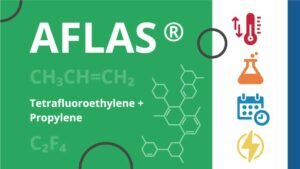
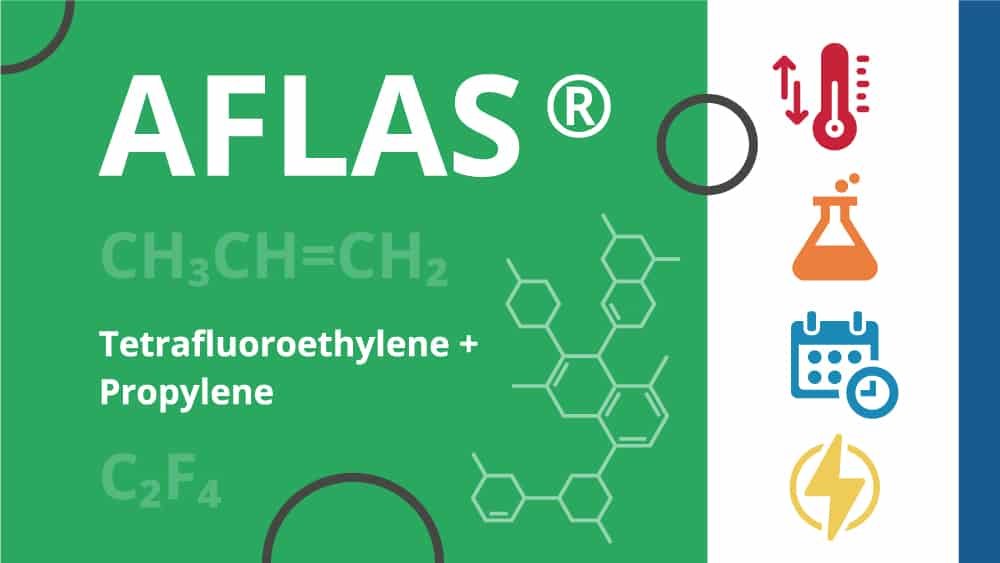
AFLAS® is a specialized fluoroelastomer widely used in sealing applications where conventional rubber compounds may struggle with elevated temperatures, aggressive chemicals, steam, or amine-containing fluids. Developed by AGC, this material is based on a copolymer of tetrafluoroethylene (TFE) and propylene and is commonly identified by the generic material designation FEPM or the abbreviation TFE/P.
For industrial equipment manufacturers, hydraulic engineers, oil and gas operators, and international sealing distributors, AFLAS® offers a valuable option when chemical compatibility is the primary design challenge. However, it is not a universal replacement for FKM, NBR, EPDM, or FFKM. The correct choice depends on the exact fluid composition, temperature, pressure, mechanical loading, and expected service life.
The key to selecting AFLAS® is to match its distinctive chemical resistance to the actual operating environment, rather than choosing a sealing material based on temperature rating alone.
What Is AFLAS®? Understanding FEPM Fluoroelastomer
AFLAS® is a registered trade name associated with AGC’s FEPM fluoroelastomer products. Unlike conventional FKM fluoroelastomers, which are commonly based on vinylidene fluoride and other fluorinated monomers, FEPM uses an alternating tetrafluoroethylene-propylene polymer structure.
This difference in molecular structure gives FEPM a distinctive balance of properties, particularly its resistance to selected strong bases, amines, hot water, and steam. It is also valued for heat resistance and electrical insulation in suitable formulations.
According to AGC Chemicals Europe’s AFLAS® product information, the material is used in demanding industrial environments where reliable elastomer performance is required. AGC’s technical literature describes continuous service temperatures around 200°C for certain formulations, with higher peak exposure possible under specified conditions.
AFLAS®, FEPM, and TFE/P: What Is the Difference?
- AFLAS®: A registered trade name for products in the manufacturer’s material range.
- FEPM: The generic designation commonly used for tetrafluoroethylene-propylene elastomer.
- TFE/P or TFE-propylene: Abbreviations describing the polymer chemistry.
- Compound grade: The specific formulation used to manufacture an O-ring, gasket, hose layer, or other sealing component. Different grades may have different cure systems, mechanical properties, and service limits.
When requesting quotations or preparing an engineering drawing, specify the required material designation and the manufacturer’s compound or qualification requirements. Naming AFLAS® alone may not define every performance characteristic needed for a critical application.
Key Properties of AFLAS® Rubber
AFLAS® is most valuable in applications where its specific combination of chemical resistance, thermal stability, and electrical properties addresses a defined engineering problem.
1. Resistance to Selected Strong Bases and Amines
FEPM compounds are often considered for applications involving caustic solutions, amines, and other aggressive chemical media. These substances can be particularly challenging for some conventional elastomer formulations.
In oil and gas processing, for example, amine-containing fluids may be encountered in gas-treatment systems. The compatibility of a particular seal must still be verified against the exact amine, concentration, temperature, and operating pressure.
2. Heat Resistance
Suitable AFLAS® grades can operate at elevated temperatures, making them candidates for certain industrial sealing applications exposed to hot fluids or thermal cycling.
AGC publishes a continuous service temperature of approximately 200°C for its AFLAS® material range, with higher peak exposure values described in its technical literature. These figures should not be applied indiscriminately to every molded component or service condition.
3. Hot Water and Steam Resistance
Resistance to hot water and steam is one of the important reasons engineers evaluate FEPM for applications where some other fluoroelastomer formulations may be less suitable.
Before approving an AFLAS® O-ring for steam service, verify the specific compound’s steam exposure limits, pressure conditions, decompression requirements, and expected compression-set performance. Continuous steam exposure can impose different demands from occasional contact with hot water.
4. Electrical Insulation
AFLAS® is also recognized for its electrical insulation properties. Depending on the compound and component design, this can make it useful in selected wire, cable, and electrical equipment applications.
5. Resistance to Selected Aggressive Industrial Fluids
FEPM may be considered for certain phosphate-ester hydraulic fluids, industrial chemical mixtures, and specialized automotive fluids. However, chemical resistance is formulation-specific. A compatibility result for one fluid must not be treated as proof of compatibility with every product in the same general chemical family.
Important technical distinction: AFLAS® is not automatically the best choice for every high-temperature or chemically aggressive application. Oil resistance, low-temperature flexibility, compression set, and rapid gas decompression performance must be assessed separately for the intended compound and operating conditions.
AFLAS® vs. FKM, HNBR, EPDM, and FFKM
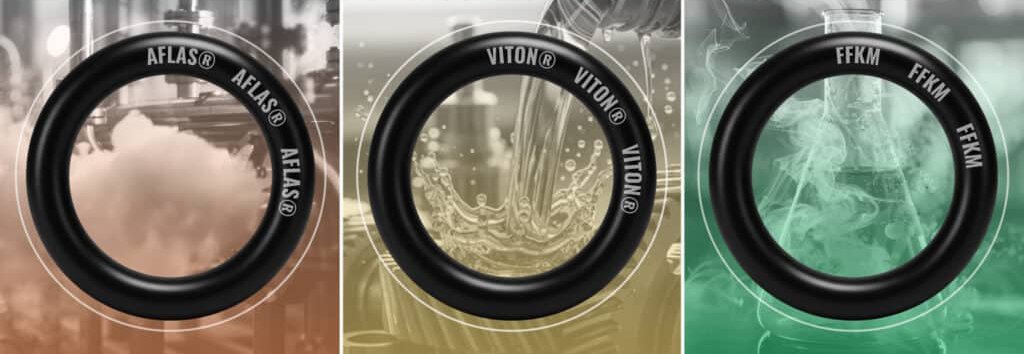
Choosing between elastomers requires understanding the fluid and failure mechanism. A material that performs well in hot caustic solutions may not be the most economical or technically suitable choice for petroleum fuels or low-temperature service.
| Material | Typical strengths | Main selection considerations |
|---|---|---|
| AFLAS® / FEPM | Resistance to selected bases, amines, steam, and hot water; good heat resistance in suitable grades. | Verify compatibility with the actual oil, fuel, solvent, and low-temperature conditions. |
| FKM | Widely used for many oils, fuels, and elevated-temperature sealing applications. | Some FKM compounds have poor compatibility with strong bases, amines, or particular steam environments. |
| HNBR | Useful mechanical properties, oil resistance, and improved heat and aging resistance compared with conventional NBR grades. | Check fluid compatibility, temperature limits, and gas-decompression requirements. |
| EPDM | Good resistance to many water-based fluids, weathering, and selected chemicals. | Generally unsuitable for petroleum oils and fuels. |
| FFKM | Very broad chemical resistance and high-temperature capability in suitable compounds. | Higher material cost; verify grade-specific mechanical and process requirements. |
These comparisons are general screening guidance, not a substitute for application-specific compatibility data. Neither AFLAS® nor any competing elastomer should be selected without confirming the exact formulation’s performance in the intended fluid.
Where Is AFLAS® Used in Industry?
FEPM is used in applications where conventional rubber compounds may not provide the required combination of chemical resistance and thermal performance.
Oil and Gas Equipment
Potential applications include O-rings, valve seals, gaskets, and selected downhole or surface equipment exposed to aggressive fluids. Sour-gas service requires particular attention to hydrogen sulfide concentration, pressure, temperature, and rapid gas decompression requirements.
Chemical Processing
Seals used in pumps, valves, reactors, and chemical-handling equipment may be exposed to caustic solutions, amines, and other aggressive process media. FEPM can be considered when the exact chemical and temperature conditions fall within a qualified compound’s limits.
Automotive and Transportation
Selected AFLAS® grades are used in automotive oil seals and specialized hose constructions. Suitability depends on the fluid formulation, temperature cycling, mechanical stress, and requirements of the complete component.
Electrical and Cable Applications
Its electrical insulation characteristics can support selected wire and cable applications where the compound must also meet relevant thermal, environmental, and mechanical requirements.
Industrial Hot Water and Steam Systems
FEPM may be evaluated for compatible sealing components in industrial process systems. The operating pressure, steam quality, thermal cycling, and seal design must be reviewed before specifying a grade.
How to Select the Right AFLAS® Compound
For engineers and B2B procurement teams, material selection should follow a documented evaluation process. A generic statement such as “high chemical resistance” is not sufficient for approving a seal in a critical system.
Step 1: Identify the Exact Working Medium
Record the chemical name, concentration, commercial formulation, additives, cleaning agents, and any contaminants. For blended fluids, obtain the complete composition where available and check the manufacturer’s compatibility information for the actual mixture.
Step 2: Define the Temperature Range
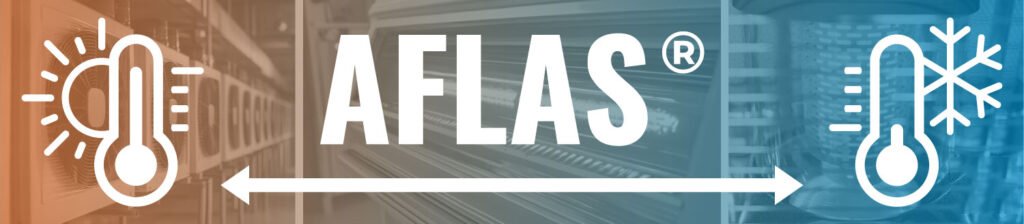
Document continuous operating temperature, peak temperature, startup and shutdown conditions, and any thermal cycling. A published maximum temperature does not guarantee acceptable service life when aggressive chemicals and mechanical loading are also present.
Step 3: Evaluate Pressure and Mechanical Conditions
For high-pressure gas applications, assess pressure cycling, extrusion clearance, hardness, and rapid gas decompression risk. The qualification must apply to the actual compound and component design, not simply to the generic FEPM material family.
Step 4: Check Low-Temperature Requirements
Determine the lowest temperature the seal will experience during storage, startup, shutdown, and normal operation. AFLAS® formulations may not provide the low-temperature flexibility required by certain outdoor or refrigeration applications.
Step 5: Confirm the Component Specification
Specify the O-ring or gasket dimensions, hardness, tolerances, surface finish, installation method, and any required industry qualifications. Request a current technical data sheet for the exact compound being offered.
Procurement checklist
- Exact fluid and concentration
- Continuous and peak temperatures
- Working pressure and pressure-cycle profile
- Seal dimensions, hardness, and component geometry
- Required chemical compatibility and qualification testing
- Traceability, inspection documents, and batch requirements
Troubleshooting Common AFLAS® Seal Failures
| Observed failure | Possible cause | Recommended investigation |
|---|---|---|
| Swelling or softening | Fluid incompatibility, additives, or unsuitable compound formulation. | Review the actual fluid composition and request compound-specific compatibility data. |
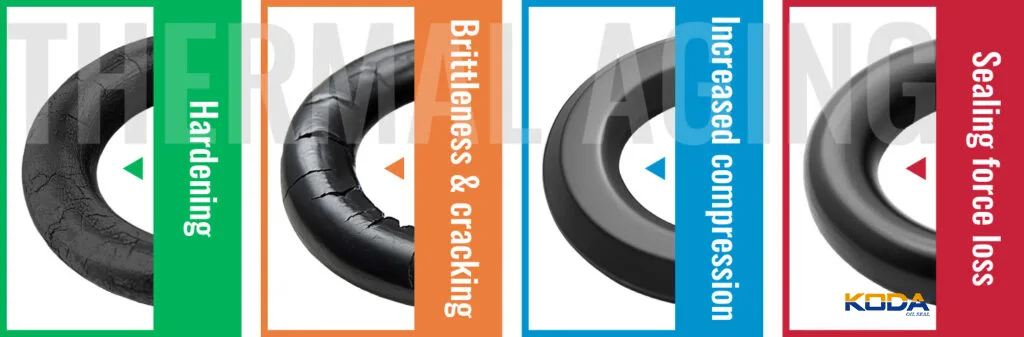
| Hardening or cracking | Thermal aging, chemical exposure, or inappropriate operating conditions. | Check continuous and peak temperatures, chemical exposure, and material condition. |
| Leakage after startup | Incorrect dimensions, damaged sealing faces, installation damage, or inadequate compression. | Inspect the gland, mating surfaces, seal dimensions, and assembly procedure. |
| Damage after gas depressurization | Rapid gas decompression or explosive decompression damage. | Evaluate the pressure-release profile and verify that the specific compound is qualified for the service. |
| Premature failure at low temperature | Insufficient flexibility or unsuitable compound selection. | Review minimum service temperature and compare qualified alternatives. |
Failure analysis should examine the seal, mating hardware, fluid history, and operating conditions together. Replacing a failed component without identifying the underlying cause can lead to repeated leakage, equipment downtime, and unnecessary maintenance costs.
Technical References and Further Reading
- AGC Chemicals Europe — AFLAS® Fluoroelastomers: Manufacturer overview of the polymer family and its principal characteristics.
- AGC Chemicals Europe — AFLAS® FEPM Grades: Product-specific information on applications, material properties, and available grades.
- AGC — AFLAS® Technical Brochure: Manufacturer technical reference covering polymer types, properties, heat resistance, chemical resistance, and vulcanization.
- Parker Hannifin — O-Ring Handbook: Engineering reference covering elastomer selection, chemical compatibility, and sealing design considerations.
- International Organization for Standardization (ISO): Official source for identifying applicable standards and their current editions.
For critical applications, manufacturer data for the exact compound takes precedence over generic material charts. Qualification requirements for oil and gas, chemical processing, and high-pressure gas service should be confirmed against the applicable industry specification and customer requirements.
Frequently Asked Questions About AFLAS®
1. What is AFLAS® rubber used for?
AFLAS® is used in selected O-rings, gaskets, hose constructions, and other elastomeric components exposed to demanding chemical or thermal conditions. Typical applications include oil and gas equipment, chemical processing, automotive systems, and electrical components.
2. Is AFLAS® the same as FKM or Viton®?
No. AFLAS® is associated with FEPM, a tetrafluoroethylene-propylene elastomer, while conventional FKM materials use different polymer chemistry. Their chemical resistance, temperature behavior, and mechanical performance differ, so they should not be substituted without application-specific validation.
3. What temperature can AFLAS® withstand?
AGC describes continuous service temperatures around 200°C for its AFLAS® material range, with higher peak exposure possible under specified conditions. The allowable range for an actual seal depends on its compound, fluid, pressure, geometry, and duty cycle. Always check the current technical data sheet.
4. Is AFLAS® suitable for steam and amine service?
Suitable FEPM compounds are often considered for steam, hot water, and selected amine-containing environments. Compatibility depends on concentration, temperature, pressure, and compound formulation. Confirm the exact operating conditions with the manufacturer before approving a seal for service.
5. How do I choose between AFLAS®, FKM, and FFKM?
Start with the working medium, temperature range, and mechanical requirements. AFLAS® may be advantageous for selected bases, amines, and steam applications; FKM is widely used for many oils and fuels; and FFKM may be considered for more demanding chemical environments. Compare the exact compounds, qualifications, service-life requirements, and total cost before making the final selection.
Need help specifying an AFLAS® or FEPM sealing component?
Provide the fluid name and concentration, operating temperature, working pressure, seal dimensions, and relevant qualification requirements when requesting a quotation. A qualified sealing supplier can then assess material compatibility, identify suitable compounds, and recommend the documentation or testing needed for your application.