BPW Oil Seal
Categories
Auto Oil Seal
- Auto Oil Seal
- TOYOTA Oil Seal
- Nissan/Honda oil seal
- Isuzu Oil Seal
- MITSUBISHI/FUSO Oil Seal
- SUZUKI Oil Seal
- HYUNDAI/KIA Oil Seal
- HINO Oil Seal
- Ford / Chevrolet Oil Seal
- Peugeot Oil Seal
- VW/Iveco Oil Seal
- LADA/VAZ Oil Seal
- Caterpillar Oil Seal
- MAZDA Oil seals
- BENZ Oil Seal
- VOLVO Oil Seal
- BPW Oil Seal
- MAN oil Seals
- RENAULT Oil Seals
- SCANIA Oil Seal
- MACK Oil Seal
- DAF Oil Seals
- PERKINS Oil Seal
Motorcycle Oil Seal
Agricultural Machine Oil Seal
Construction Machinery Oil Seal
Truck Wheel Hub Oil Seal
Cassette Wheel Hub Oil Seal
Power Steering Oil Seal and Kit
Hydraulic Pump Oil Seal
JCB SEAL KIT
Concrete Mixer Gearbox Oil Seal
Wheel Cylinder Brake Cup Seal
Engine Valve Cover Gasket
Bonded Seals
End Cover Cap Seals
Speak with a Product Expert
Please contact our professional sales team to discuss your application needs. We have dedicated staff available to answer your calls Monday through Friday, from 8:30 AM to 6:00 PM Beijing time.
New Customers:
+86 18730921709
Existing/Repeat Customers:
Email:sales@kodaseal.com
NEWS
Symptoms of a Damaged Crankshaft Oil Seal and Replacement Tips
Common Causes of Oil Seal Failure
What is the Importance of Metal Detectable O-Rings?
BPW Oil Seal
Reliable oil sealing is essential to the safe and efficient operation of BPW trailer axles and wheel-end assemblies. A correctly selected oil seal helps retain bearing lubricant, limit grease or oil leakage, and protect critical components from road dust, water, mud, and other contaminants. When a seal deteriorates or is incorrectly installed, the consequences may include lubricant loss, bearing damage, increased maintenance costs, and unplanned trailer downtime.
For workshops, fleet operators, trailer parts distributors, and maintenance professionals sourcing BPW oil seals, the most important consideration is not simply finding a seal with a similar appearance. The replacement must match the required part number, dimensions, sealing configuration, material compatibility, and operating conditions of the specific axle or hub assembly.
If you have questions about BPW Oil Seal, please contact us!
This guide explains how to identify replacement BPW axle oil seals, verify cross-reference numbers, select appropriate sealing materials, diagnose common leakage problems, and reduce the risk of premature failure. It also outlines the technical information buyers should prepare when requesting a quotation for BPW-compatible oil seals.
SHOW MORE
Important replacement principle: Match the seal to the exact axle and hub application whenever possible. A seal with the same nominal diameter may still have a different lip profile, installation depth, material, or sealing function. Dimensional similarity alone does not establish interchangeability.
Understanding BPW Oil Seals and Their Role in Trailer Axle Systems
BPW is a well-established manufacturer of trailer running gear, axle systems, and suspension technology. Its axle assemblies operate under varying combinations of vehicle load, road vibration, braking heat, weather exposure, and long-distance operating cycles. Sealing components must therefore be selected and maintained according to the design of the individual system.
Oil seals and related sealing components may be used around rotating shafts, wheel-end assemblies, bearing arrangements, and other lubricated interfaces. Depending on the design, their functions can include retaining grease or oil, excluding external contamination, and protecting bearing surfaces from premature wear.
However, not every BPW hub uses the same sealing arrangement. Different axle generations, load capacities, bearing configurations, and hub systems may require different components. Some assemblies use integrated sealing units or specially designed hub seals rather than a conventional universal radial shaft seal.
What does a wheel-end seal actually do?
- Lubricant retention: Helps keep the specified bearing grease or oil inside the intended lubrication area.
- Contamination exclusion: Limits the entry of water, road dust, mud, and abrasive particles.
- Bearing protection: Helps maintain suitable lubrication conditions and reduce the risk of contamination-related damage.
- Maintenance cost control: Reduces avoidable lubricant loss and helps prevent secondary damage when the sealing system is functioning correctly.
A seal cannot compensate for a damaged bearing, excessive shaft movement, an incorrectly adjusted hub, or an unsuitable lubricant. If leakage is accompanied by abnormal heat, rough rotation, unusual noise, or excessive bearing play, the entire wheel-end assembly should be inspected rather than replacing the seal alone.
Illustration: the basic wheel-end sealing concept
Seal interface
Bearing area
Hub assembly
Axle spindle
This simplified diagram illustrates the relationship between the axle, hub, bearing, and sealing interface. It is not a BPW-specific assembly drawing. Always follow the technical documentation for the actual axle and hub model.
For authoritative information about BPW products, axle maintenance, and technical documentation, visit the official BPW Download Center and BPW Service and Maintenance resources.
BPW Oil Seal Product Options and Identification
Replacement BPW oil seals may be identified through an original equipment part number, an aftermarket cross-reference, dimensional measurements, the axle model, or the position where the seal is installed. A reliable identification process should use more than one reference whenever possible.
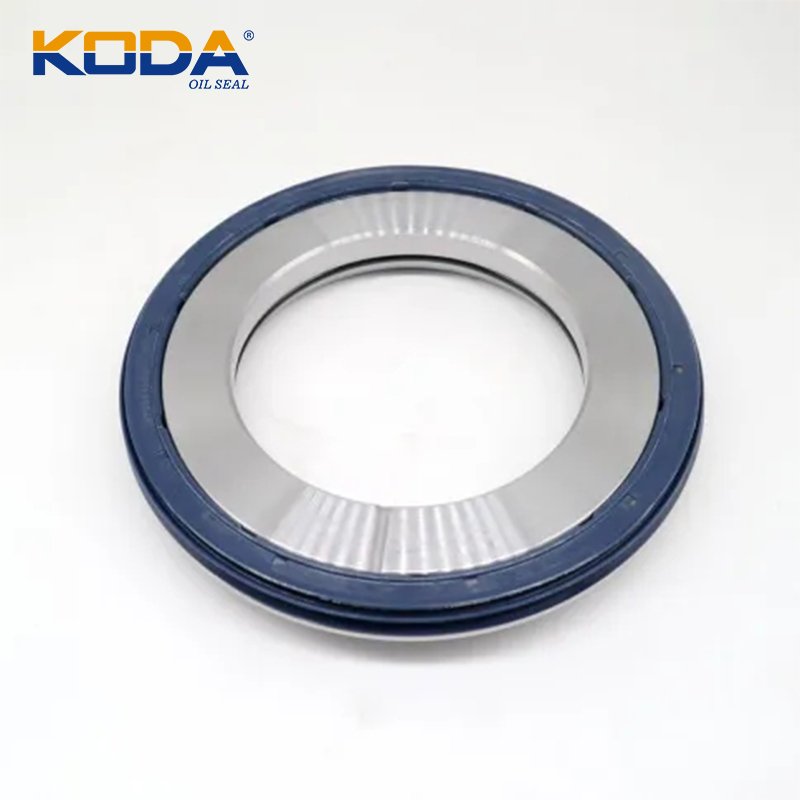
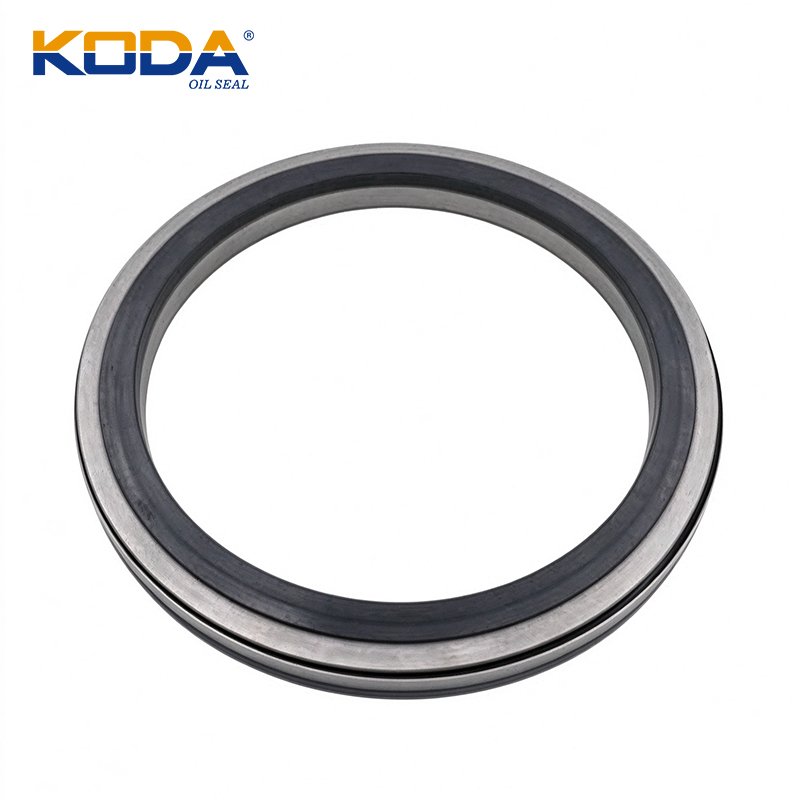
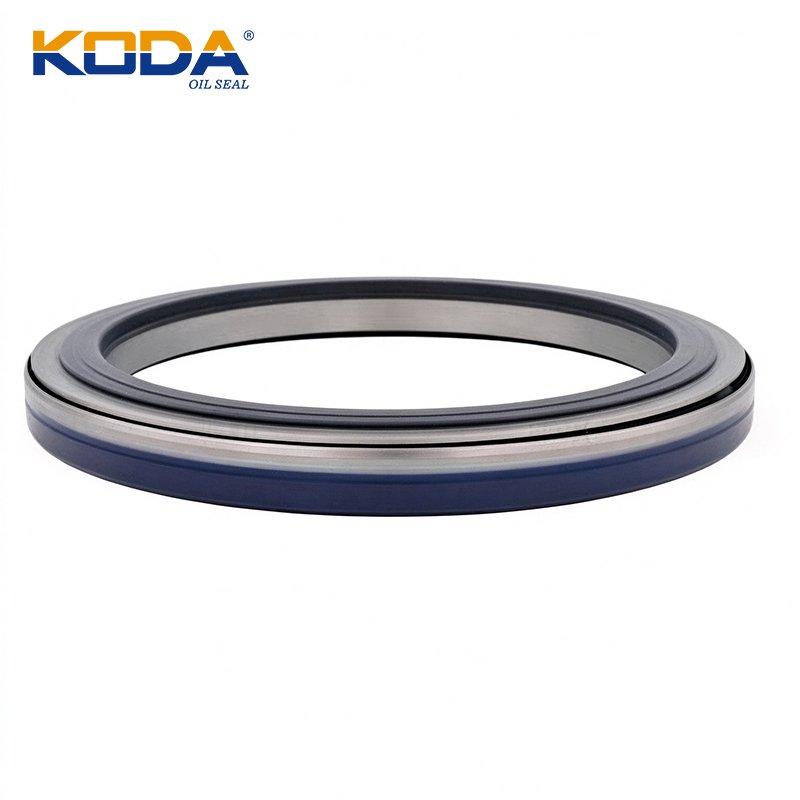
For example, one listed replacement product is a trailer axle shaft oil seal with the following published identification details:
Reference product: BPW axle shaft oil seal
Published OE reference: 0256647400
Published dimensions: 117.5 × 158 × 17.8 mm
Listed application: BPW trailer axle
Use these details as a product identification reference, not as confirmation that the seal fits every BPW axle. Verify the part number against the specific axle documentation before ordering.
Product reference: BPW axle shaft oil seal, OE reference 0256647400.
How to interpret oil seal dimensions
For a conventional radial oil seal, dimensions are often expressed as inner diameter × outer diameter × width. These values are useful for screening replacement candidates, but they do not describe every aspect of the sealing design.
- Inner diameter: Generally relates to the shaft or specified running surface that the seal contacts.
- Outer diameter: Relates to the housing bore or specified mounting interface.
- Width: Describes the axial space occupied by the seal, although installation depth and profile may also matter.
Some heavy-duty wheel-end seals use specialized profiles, integrated components, or multiple sealing lips. Their identification may require a drawing, complete part number, or original sample rather than a simple three-dimension measurement.
Purchasing tip: If the original seal carries a readable OE number, begin with that number. If the marking is missing or damaged, provide the complete dimensions, photographs of both sides, the axle identification, and the installation position to the supplier.
Choosing the Correct Material for BPW-Compatible Oil Seals
Material selection should reflect the lubricant, operating temperature, seal design, shaft speed, and environmental exposure. A seal intended for a relatively protected rotating shaft may have different requirements from a wheel-end sealing unit exposed to road spray and contamination.
NBR: for many conventional oil and grease applications
Nitrile rubber (NBR) is widely used in general-purpose oil seals because many NBR compounds provide good resistance to mineral oils and greases, useful elasticity, and economical production. It can be suitable for applications where the lubricant, temperature, and dynamic conditions fall within the manufacturer’s specified limits.
NBR should not be chosen solely because it is the lowest-cost option. Elevated temperatures, incompatible additives, excessive friction, and prolonged exposure to unsuitable fluids can accelerate ageing and reduce sealing performance.
FKM: for selected higher-temperature applications
Fluoroelastomer (FKM) is often considered when the application requires increased resistance to heat, oxidation, or particular oils and chemicals. The actual performance depends on the compound formulation and operating environment.
FKM is not automatically compatible with every lubricant or chemical, and its suitability for low-temperature operation must also be assessed. For trailer axle and wheel-end applications, follow the original equipment requirements rather than upgrading the material without confirming compatibility with the complete assembly.
ACM and other specialized compounds
Polyacrylate rubber (ACM) can be useful in certain automotive oil-sealing applications, particularly where resistance to hot lubricating oils is important. Other elastomers or specialized sealing materials may be specified where operating conditions demand different performance characteristics.
For a BPW-compatible replacement, the original material specification or the seal manufacturer’s recommendation should take priority over a generic material comparison. A more expensive compound does not necessarily provide better service if the actual failure is caused by incorrect installation, bearing movement, or a damaged running surface.
Common Causes of BPW Axle Oil Seal Leakage
Repeated leakage should be treated as a diagnostic problem rather than an automatic reason to purchase another seal. The visible leak may originate from the seal itself, a damaged mating surface, an assembly error, or a related component failure.
1. Incorrect part or sealing profile
A seal with similar dimensions may have a different lip arrangement, mounting profile, or intended function. Confirm the complete part reference and axle configuration before installation.
2. Damaged or worn running surface
A groove, corrosion, scoring, or rough surface can prevent the sealing lip from maintaining consistent contact. Inspect the specified running surface and follow the equipment manufacturer’s repair criteria before fitting a replacement.
3. Installation damage
A seal lip may be cut, rolled, or distorted when passing over sharp edges, threads, splines, or damaged tooling. Use the correct installation method and any specified protective sleeves or fitting tools.
4. Bearing wear or excessive movement
Excessive bearing play, shaft runout, misalignment, or an unstable running surface can cause uneven lip loading and accelerated wear. Diagnose the bearing and hub condition before assuming the seal is the sole cause.
5. Lubricant or temperature problems
An incorrect lubricant, unsuitable grease quantity, excessive temperature, or incompatible material may contribute to leakage or seal degradation. Confirm the specified lubricant and follow the manufacturer’s lubrication instructions.
BPW’s maintenance documentation specifically addresses hub lubrication, bearing checks, and inspection for lubricant leakage. For example, the official BPW trailer axle and suspension maintenance instructions provide model-related procedures and cautions. Use the manual applicable to the axle being serviced because maintenance requirements vary by hub and axle design.
Inspection and Replacement: A Practical Workshop Checklist
Before replacing a suspected defective oil seal, inspect the surrounding assembly and establish the cause of the leakage. Work on trailer axles and wheel ends should be carried out by qualified personnel using appropriate lifting equipment, tools, and the manufacturer’s procedures.
- Confirm the trailer axle model, identification details, and correct replacement part number.
- Inspect the hub, bearing area, seal seat, and specified running surface for damage or abnormal wear.
- Check for lubricant leakage and identify whether the fluid is grease, gear oil, or another substance.
- Look for evidence of excessive heat, contamination, corrosion, or incorrect lubrication.
- Replace damaged sealing components and any associated parts required by the manufacturer’s service instructions.
- Use the specified installation tools and avoid damaging the lip or deforming the seal body.
- Follow the applicable bearing adjustment, lubrication, tightening, and inspection procedures.
- Verify the repair according to the manufacturer’s requirements before returning the trailer to service.
Safety note: Do not determine whether a trailer is safe for continued operation from the amount of leakage alone. Significant lubricant loss, overheated hubs, abnormal bearing noise, or excessive play can indicate a serious mechanical problem. Stop and inspect the assembly according to the applicable service instructions.
How to Order Replacement BPW Oil Seals More Accurately
Clear technical information helps suppliers identify the correct product, reduces quotation delays, and lowers the risk of ordering an incompatible replacement. This is especially important for fleets and distributors purchasing multiple part numbers for different trailer axle configurations.
Information to include in a quotation request
- Original part number: Include the full number and any suffixes or revisions.
- Axle identification: Provide the axle model, serial number, or other identifying information available.
- Dimensions: Supply inner diameter, outer diameter, and width where these measurements apply.
- Photographs: Include clear views of the original seal, markings, lip arrangement, and installation location.
- Material requirements: State the original specification or describe the operating fluid and temperature.
- Order quantity: Specify the required quantity, expected repeat demand, and packaging requirements.
- Documentation: Request relevant drawings, inspection records, material information, and traceability documents where required.
If the original seal is no longer available, ask the supplier to review the application and dimensions before recommending an alternative. A cross-reference should be treated as a candidate for verification rather than proof of universal interchangeability.
Questions worth asking a seal supplier
For commercial and technical evaluation, ask whether the supplier can confirm the dimensional drawing, material specification, manufacturing tolerances, batch identification, and inspection process. For critical wheel-end applications, also clarify whether the proposed product is a direct replacement, an aftermarket equivalent, or a custom-developed component.
Quality requirements should be matched to the application. A documented quality-management system can support consistent production, but a certificate alone does not establish that a particular seal is suitable for a specific BPW axle. Product-level verification remains important.
Quality Control for BPW-Compatible Replacement Seals
Reliable sealing performance depends on consistent dimensions, material properties, manufacturing quality, and correct installation. When sourcing replacement seals in volume, buyers should evaluate both the product and the supplier’s ability to maintain consistent specifications between batches.
Dimensional inspection
Measure the dimensions specified on the drawing and verify the relevant tolerances. For specialized hub seals, inspect the complete profile and installation features rather than relying exclusively on the inner and outer diameters.
Material and compound consistency
Confirm that the supplied material matches the agreed specification. Where required, request supporting material documentation and evidence of appropriate verification. Changes in compound formulation can affect hardness, elasticity, wear, and compatibility with the lubricant.
Visual inspection and traceability
Inspect the seal for cuts, cracks, deformation, incomplete moulding, damaged lips, or defects in any metal reinforcement. For repeat orders, batch identification and traceability help buyers investigate complaints and maintain consistency.
Packaging and storage
Seals should be packaged to protect their lips and sealing surfaces from dust, deformation, sunlight, and other unsuitable storage conditions. Avoid stacking or handling practices that permanently distort the sealing element. Follow the manufacturer’s storage guidance, particularly for long-term inventory.
For quality-system background, consult the official ISO 9001 quality management overview. A quality-management system supports controlled processes, but application suitability must still be confirmed through the relevant product specifications and technical checks.
Why Accurate Cross-Referencing Matters for Fleet Maintenance
Trailer operators often maintain several axle models, production years, and hub configurations across a fleet. Similar-looking seals can have different dimensions or functional requirements, so organizing replacement parts by verified application helps prevent costly errors.
A practical inventory system can record the original part number, approved alternative references, dimensions, axle application, material specification, supplier, and date of verification. Where the manufacturer changes a design or supersedes a part number, the inventory record should be reviewed before the alternative is approved for continued use.
For workshops, accurate cross-referencing also helps separate a genuine seal failure from a broader mechanical issue. If the same position repeatedly develops leakage, record the installation history, operating conditions, bearing condition, and observed failure pattern. These details can help the maintenance team identify whether the problem is related to the seal, installation, lubrication, or surrounding components.
Recommended purchasing workflow
Identify the axle → confirm the original part number → verify dimensions and sealing design → check material compatibility → review the supplier’s technical information → approve the replacement → record the verified reference for future orders.
Frequently Asked Questions About BPW Oil Seals
1. How do I find the correct replacement oil seal for a BPW axle?
Start with the original part number and confirm it against the axle or hub documentation. If the number is unavailable, provide the axle identification, installation position, dimensions, and clear photographs of the original seal. Verify the sealing profile and material requirements before purchasing an alternative. Matching dimensions alone does not guarantee compatibility.
2. Can I use a universal oil seal instead of the original BPW seal?
Only when the alternative has been verified as suitable for the specific application. A universal radial shaft seal may not reproduce the geometry, load capability, installation features, or contamination protection of a specialized wheel-end sealing system. Check the original specification and obtain technical confirmation before substitution.
3. Which material is best for BPW trailer axle oil seals?
There is no single material suitable for every BPW axle application. NBR is widely used in compatible oil and grease environments, while FKM, ACM, or other materials may be appropriate for selected operating conditions. The correct choice depends on the original specification, lubricant, temperature, seal design, and environmental exposure.
4. Why does a newly installed axle oil seal continue to leak?
Possible causes include an incorrect part, damaged sealing lip, poor installation, a worn or corroded running surface, excessive bearing play, misalignment, unsuitable lubricant, or abnormal temperature. Inspect the complete assembly and follow the applicable BPW maintenance instructions instead of repeatedly replacing the seal without identifying the cause.
5. What information should I provide when requesting a quotation for BPW oil seals?
Provide the original OE part number, axle model or identification, dimensions, photographs, required quantity, and material requirements if known. Also describe the operating environment and whether you need a verified aftermarket replacement, a standard catalogue item, or a custom-manufactured seal. For critical applications, request the relevant drawing, specifications, and quality documentation before approving the product.
 Quick View
- Quick View
- Quick View