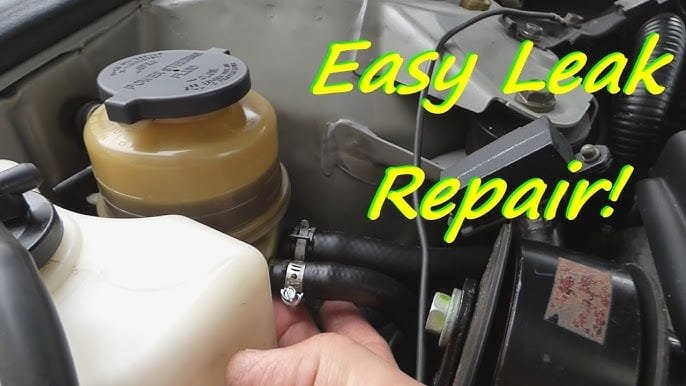
Power steering fluid leakage is one of the most common hydraulic system problems found in passenger cars, commercial vehicles, agricultural equipment, and construction machinery. While many vehicle owners immediately suspect damaged hoses or worn pumps, the root cause often originates from a small but critical component: the power steering oil seal. These seals are responsible for maintaining hydraulic pressure, preventing fluid leakage, protecting internal components from contamination, and ensuring smooth steering performance throughout the vehicle’s service life.
When a power steering oil seal begins to fail, even a minor leak can gradually develop into steering stiffness, pump noise, reduced hydraulic assistance, increased wear, and expensive system repairs. Understanding why power steering fluid leaks occur and how oil seals contribute to system reliability can help engineers, mechanics, and vehicle owners prevent costly failures.
🚗 Technical Insight: Industry service data indicates that more than 60% of power steering fluid leakage cases can be traced to aging elastomer seals, shaft wear, contamination ingress, or improper installation practices rather than pump housing failures.
How a Power Steering System Works
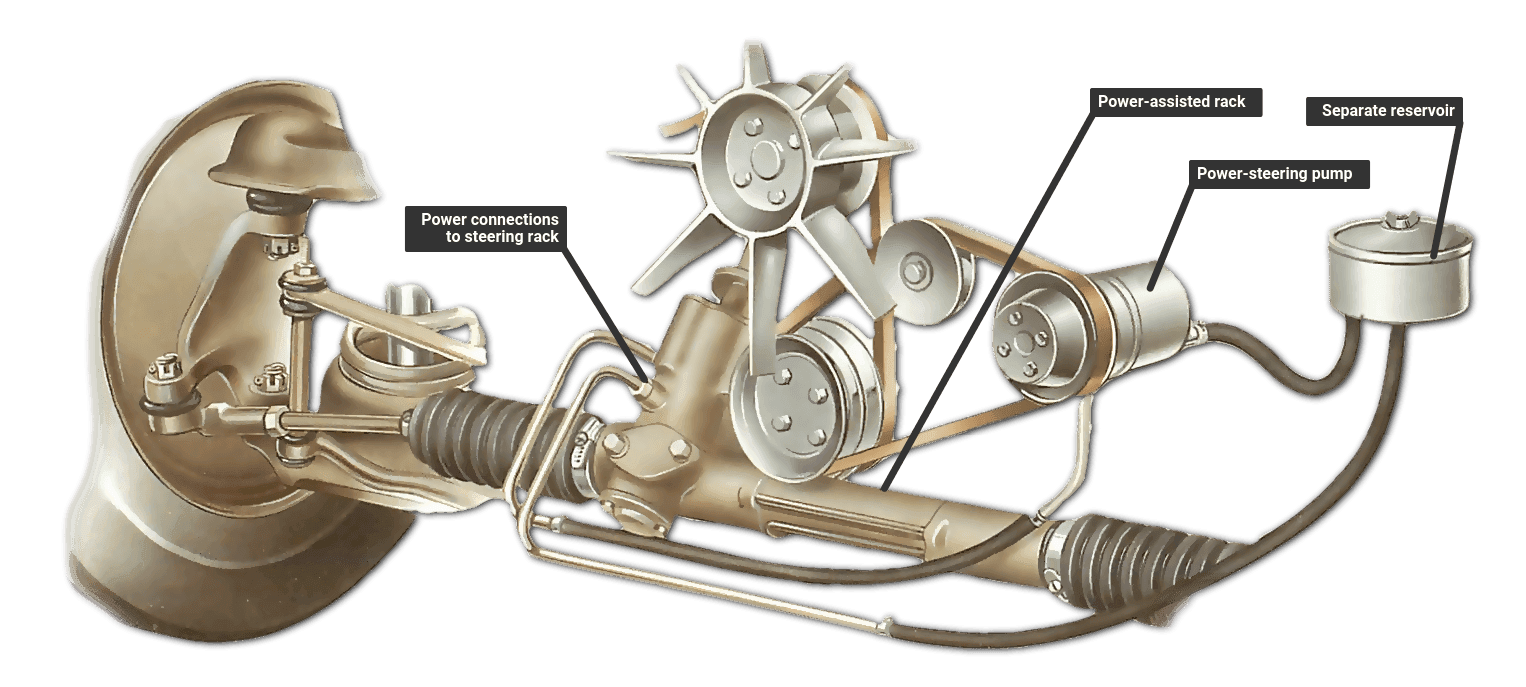
The power steering system uses hydraulic pressure to reduce steering effort. A power steering pump generates fluid pressure, which is directed through hoses and control valves to assist steering movement.
Key system components include:
- Power steering pump
- Hydraulic reservoir
- Pressure hoses
- Return hoses
- Steering rack or steering gearbox
- Hydraulic control valves
- Power steering oil seals
- O-rings and backup seals
The reliability of the entire system depends heavily on high-quality power steering oil seal components that maintain fluid containment under pressure and temperature fluctuations.
What Is a Power Steering Oil Seal?
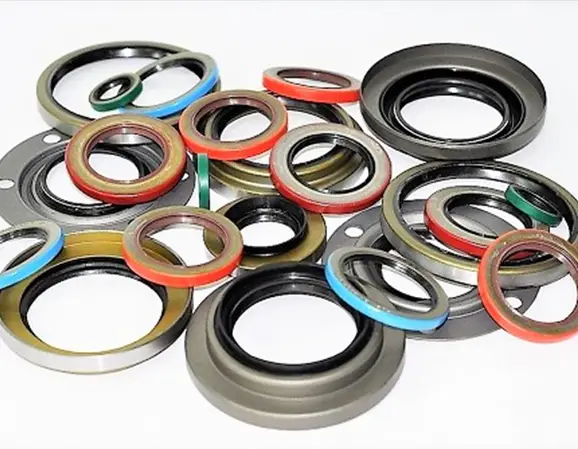
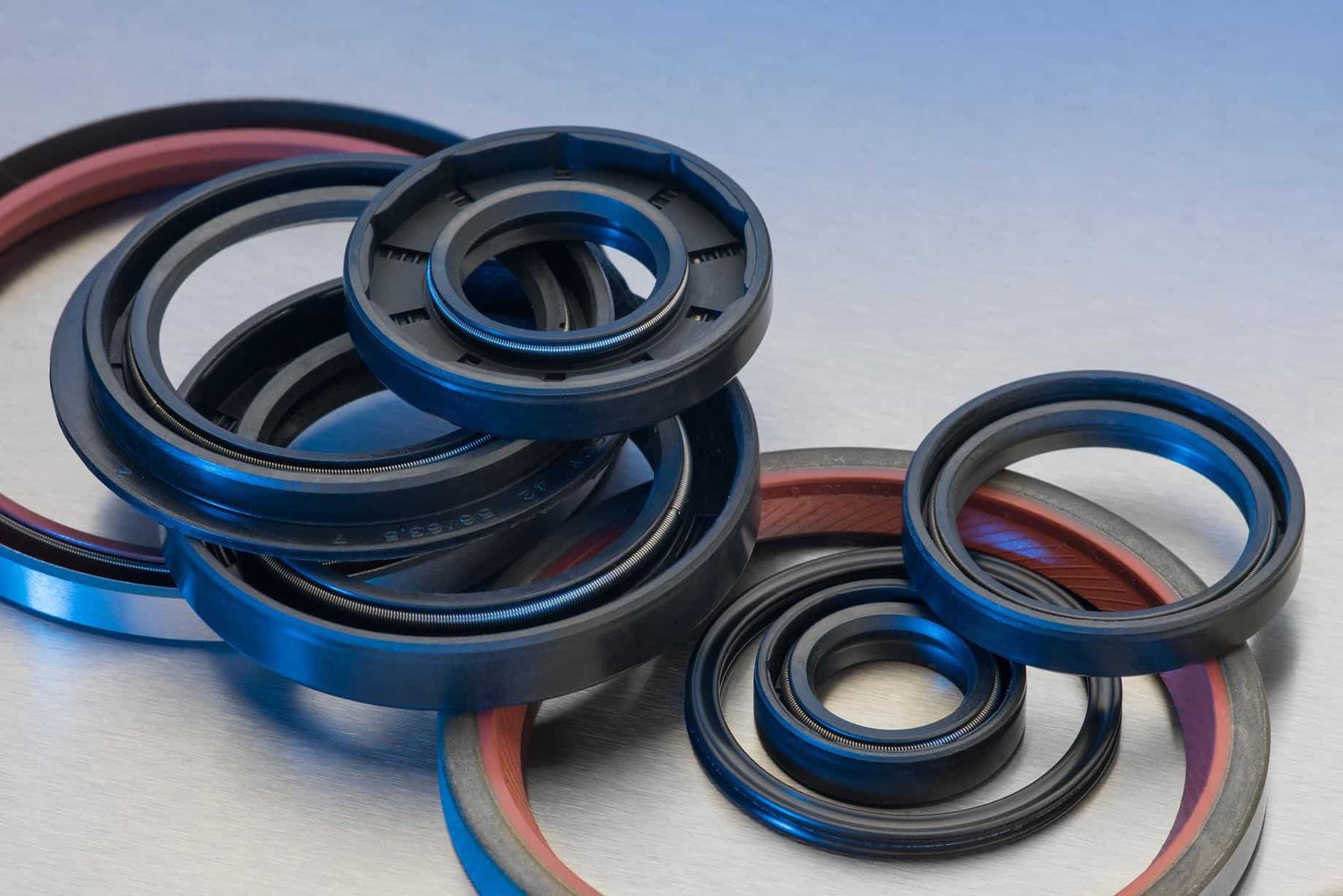
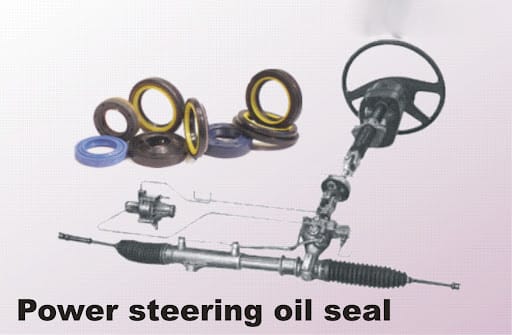
A power steering oil seal is a specialized rotary shaft seal designed to retain hydraulic fluid while preventing contaminants from entering the steering system.
These seals are typically installed in:
- Power steering pumps
- Input shafts
- Output shafts
- Steering racks
- Hydraulic control assemblies
- Steering gearboxes
Most power steering oil seals consist of:
- Elastomer sealing lip
- Metal reinforcement case
- Spring-loaded sealing element
- Dust protection lip
⚙️ Operating Principle: The sealing lip maintains controlled contact with the rotating shaft while retaining a microscopic lubricant film that minimizes wear and heat generation.
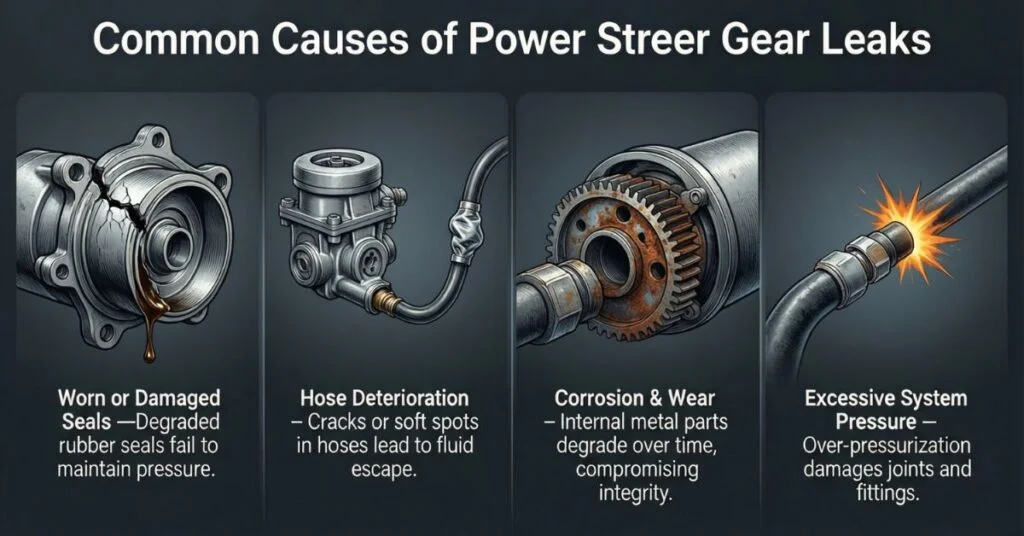
Why Is Power Steering Fluid Leaking?
Power steering fluid leakage can originate from several different failure mechanisms. Identifying the root cause is essential for preventing recurring problems.
Aging and Material Degradation
Over time, elastomer materials gradually lose flexibility due to heat exposure, oxidation, and fluid interaction.
Common symptoms include:
- Seal hardening
- Surface cracking
- Reduced sealing force
- Fluid seepage
Shaft Surface Wear
The rotating shaft continuously contacts the sealing lip. Excessive shaft wear can create grooves that allow fluid to bypass the seal.
Contamination Damage
Dirt, moisture, metal particles, and degraded fluid can accelerate lip wear and damage sealing surfaces.
Excessive Operating Temperature
High temperatures accelerate elastomer aging and reduce seal lifespan.
Improper Installation
Incorrect installation remains one of the leading causes of premature seal failure.
📌 Important: Replacing a leaking seal without addressing shaft wear or contamination often results in repeated leakage shortly after repair.
Common Leakage Locations in Power Steering Systems
Fluid leaks can appear at multiple points throughout the steering system.
| Location | Typical Cause |
| Pump Shaft | Oil seal wear |
| Steering Rack Ends | Internal seal deterioration |
| Pressure Hose Connections | Damaged O-rings |
| Pump Housing | Seal compression loss |
| Steering Gearbox | Shaft seal failure |
High-quality power steering oil seal products significantly reduce leakage risks in these critical areas.
Materials Used for Power Steering Oil Seals
NBR (Nitrile Rubber)
NBR remains one of the most common materials due to its excellent compatibility with hydraulic oils and cost-effectiveness.
Typical temperature range:
- -40°C to +120°C
HNBR
HNBR provides improved heat resistance and mechanical durability.
FKM (Viton®)
FKM is commonly used in premium steering systems operating under elevated temperatures.
Typical temperature range:
- -20°C to +250°C
🔍 Material Selection Rule: The best sealing material depends on operating temperature, hydraulic fluid chemistry, shaft speed, and expected service life requirements.
Factory Testing of Power Steering Oil Seals
Modern steering system seals undergo rigorous validation testing before production approval.
| Test | Purpose |
| Pressure Cycling | Hydraulic fatigue resistance |
| High-Speed Rotation | Lip wear evaluation |
| Thermal Aging | Heat resistance verification |
| Fluid Compatibility | Chemical resistance testing |
| Dust Ingress Testing | Contamination protection |
Factory Test Data: Dynamic Durability Evaluation
A production validation program evaluated FKM power steering oil seals under simulated vehicle operating conditions.
| Parameter | Result |
| Shaft Speed | 5,500 RPM |
| Fluid Temperature | 135°C |
| Test Duration | 2,200 Hours |
| Leakage | 0 ml |
| Lip Wear | 0.03 mm |
The testing demonstrated excellent sealing stability under demanding hydraulic conditions.
Power Steering Oil Seal Service Life Curve
Seal lifespan is strongly affected by operating temperature.
Estimated Service Life of Premium FKM Steering Seals:
- 80°C → 15+ Years
- 100°C → 10-12 Years
- 120°C → 7-9 Years
- 150°C → 4-6 Years
- 180°C → 2-3 Years
The service life curve illustrates why thermal management is critical for hydraulic steering reliability.
Customer Case Study: Steering Pump Leakage Reduction
🏭 Customer: Commercial Fleet Maintenance Company
Issue: Multiple delivery vehicles experienced recurring power steering fluid leakage after approximately 60,000 kilometers.
Symptoms:
- Pump noise
- Fluid loss
- Steering stiffness
- Frequent maintenance interventions
Failure Investigation:
- Original NBR seals hardened prematurely
- Fluid temperatures exceeded design limits
- Shaft surfaces showed minor wear tracks
Corrective Action:
- Upgrade to FKM-based power steering oil seal solutions
- Improve fluid maintenance intervals
- Polish shaft sealing surfaces
Results After 18 Months:
- Leakage incidents reduced by 91%
- Maintenance costs reduced by 43%
- Pump replacement frequency reduced significantly
- Vehicle availability improved substantially
Failure Analysis of Power Steering Oil Seals
Thermal Hardening
Continuous exposure to elevated temperatures causes elastomers to lose elasticity.
Abrasive Wear
Contaminated hydraulic fluid accelerates sealing lip wear.
Chemical Degradation
Incorrect fluid selection may damage seal materials.
Mechanical Damage
Installation errors frequently cause lip cuts and deformation.
🔬 Field Failure Statistics:
- Thermal degradation: 34%
- Contamination wear: 26%
- Installation damage: 19%
- Shaft wear: 13%
- Chemical incompatibility: 8%
How to Prevent Power Steering Fluid Leakage
- Use high-quality sealing materials
- Maintain proper fluid levels
- Replace contaminated hydraulic fluid
- Inspect shaft surfaces during maintenance
- Follow correct installation procedures
- Monitor operating temperatures
- Use premium power steering oil seal products designed for long service life
✅ Engineering Recommendation: Replacing both the seal and the underlying root cause of failure is the most effective way to eliminate recurring steering fluid leaks and maximize system lifespan.
Frequently Asked Questions
1. What causes power steering fluid to leak?
The most common causes include worn oil seals, shaft wear, contaminated fluid, high operating temperatures, and improper installation.
2. Can a leaking power steering oil seal be repaired?
In most cases, the damaged seal should be replaced. The shaft and surrounding components should also be inspected for wear.
3. How long does a power steering oil seal last?
Depending on operating conditions and material selection, service life can range from 5 to over 15 years.
4. Which material is best for power steering oil seals?
NBR is suitable for standard applications, while FKM offers superior heat resistance and extended service life.
5. Can contaminated fluid damage power steering seals?
Yes. Dirt, moisture, metal particles, and degraded fluid can accelerate seal wear and significantly reduce system reliability.