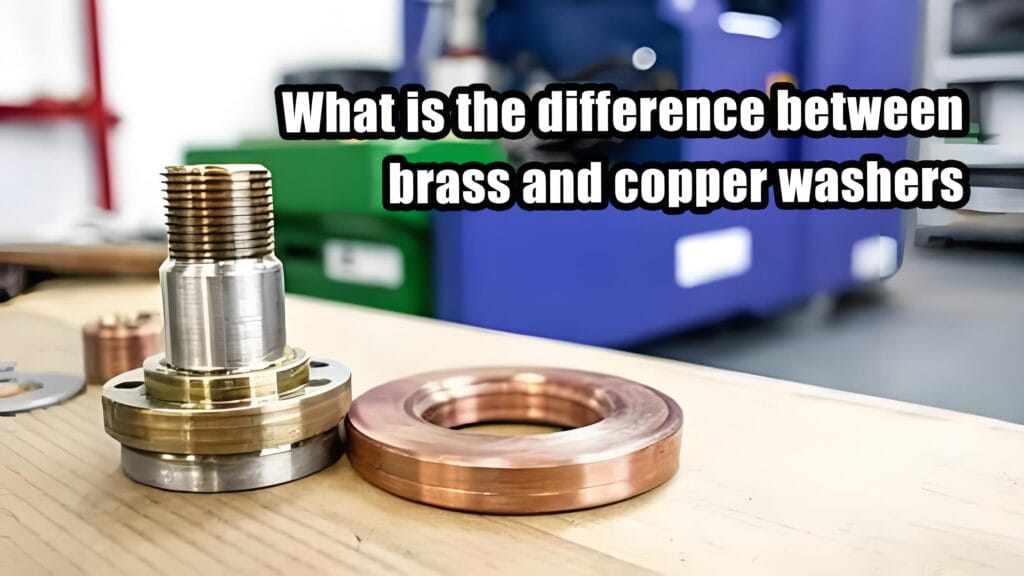
Understanding the Material Differences Between Brass and Copper Washers
Brass and copper washers are among the most commonly specified sealing and load-distribution components in mechanical engineering, hydraulic systems, automotive assemblies, plumbing equipment, compressors, pumps, and industrial machinery. Although they appear similar because of their metallic appearance, their mechanical properties, sealing behavior, corrosion resistance, hardness, thermal conductivity, and long-term reliability differ significantly.
Choosing the wrong washer material can result in leakage, bolt preload loss, galvanic corrosion, permanent deformation, or repeated maintenance. Understanding how each material behaves under compression and temperature helps engineers select the correct sealing solution for demanding applications.
✔ Key Engineering Point: Copper washers are primarily selected for sealing because of their softness and excellent plastic deformation. Brass washers are generally preferred for structural support, wear resistance, electrical applications, and moderate sealing loads where higher mechanical strength is beneficial.
For industrial sealing products, you can also explore high-quality brass washers designed for hydraulic and industrial applications.
What Are Brass Washers?
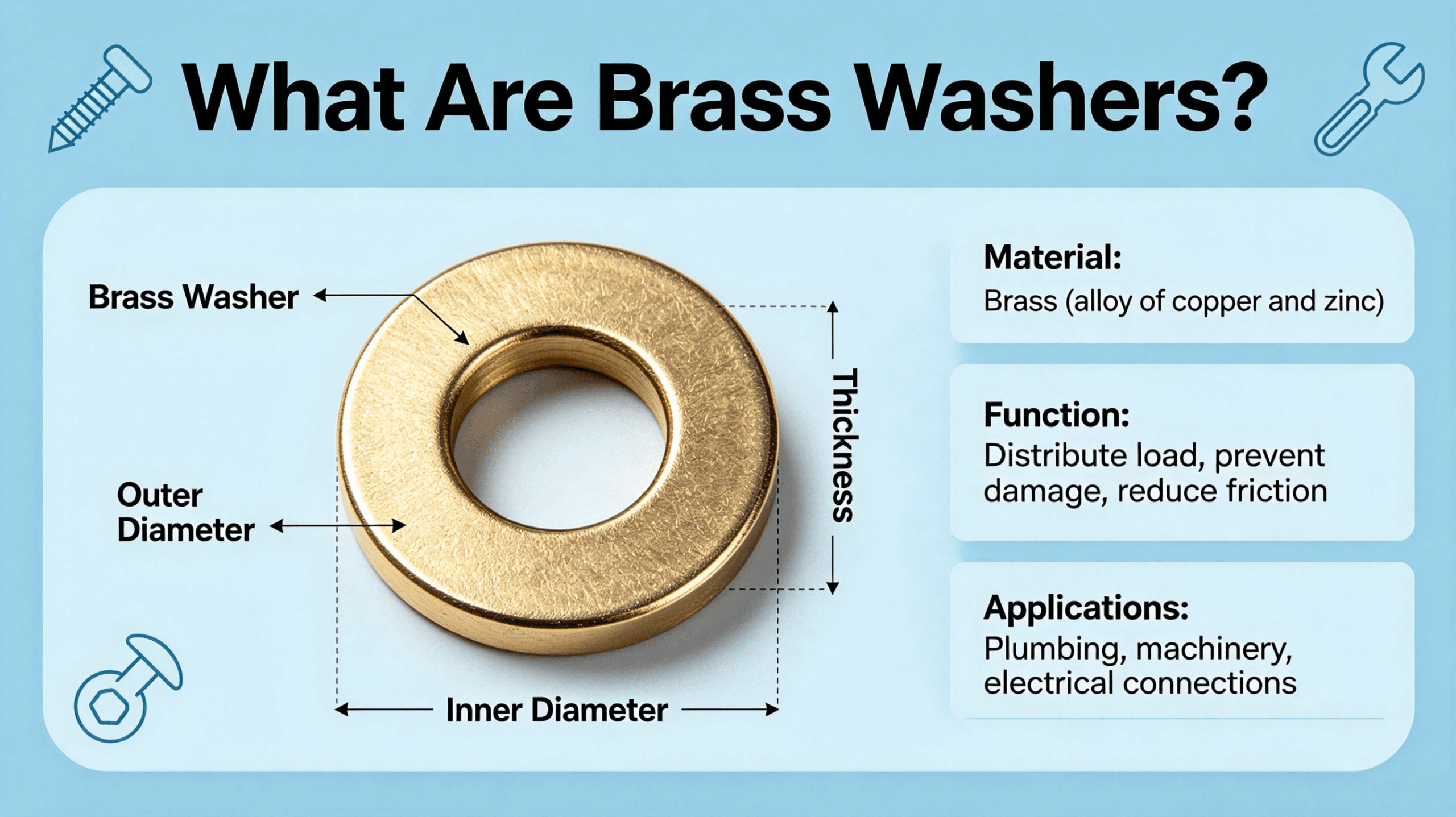
Brass washers are manufactured from copper-zinc alloys. The zinc content usually ranges between 5% and 40%, depending on the alloy grade. Adding zinc significantly increases hardness, strength, wear resistance, and machinability compared with pure copper.
Typical brass grades include:
Brass washers are widely used as spacing washers, electrical contact washers, bearing surfaces, decorative fasteners, corrosion-resistant spacers, and general-purpose mechanical washers.
🔧 Advantages of Brass Washers
- Higher hardness than copper
- Better wear resistance
- Excellent machinability
- Good atmospheric corrosion resistance
- Suitable for electrical conductivity applications
- Long service life under repeated loading
What Are Copper Washers?
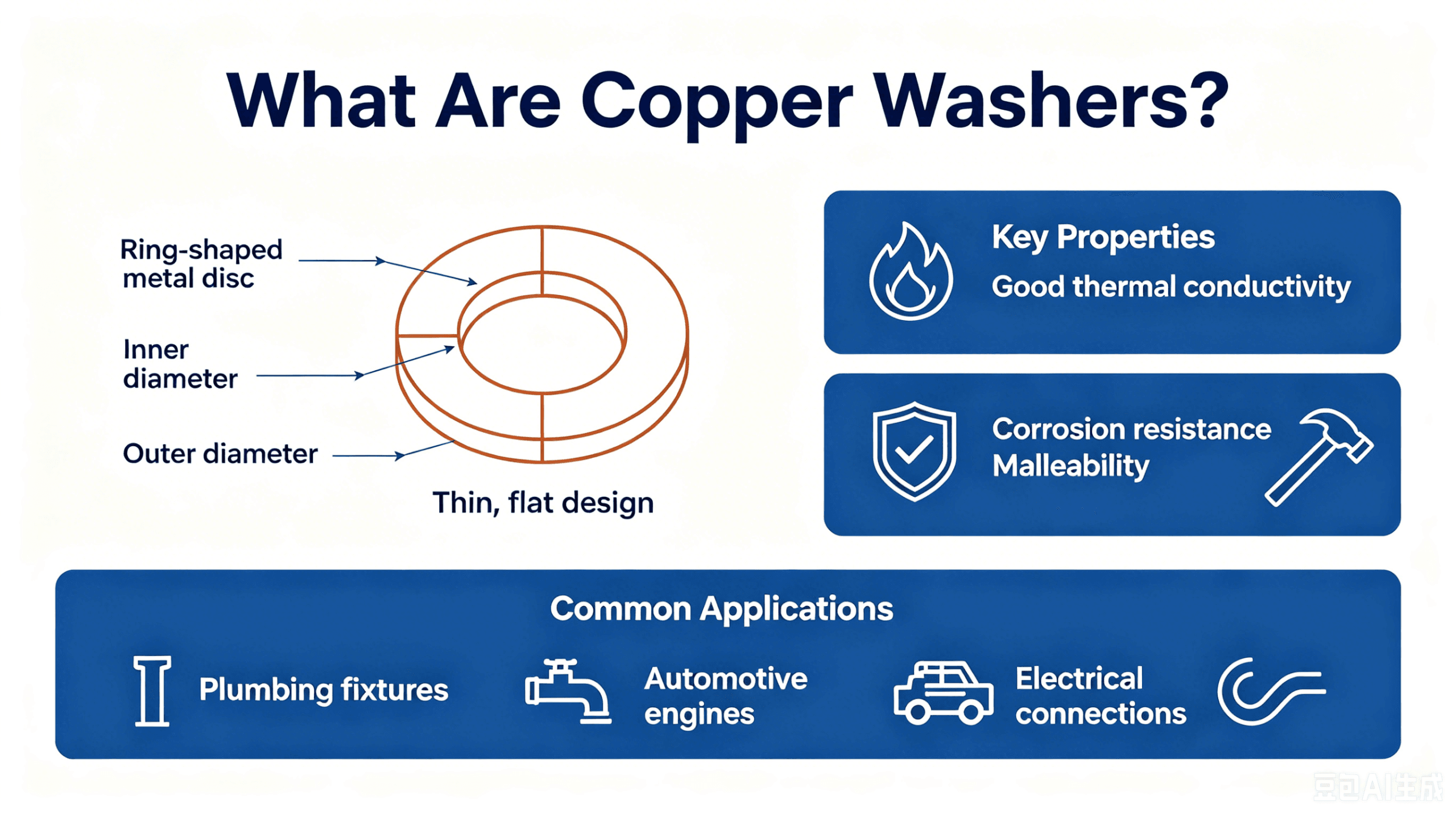
Copper washers are manufactured from nearly pure copper, commonly C101 or C110 oxygen-free or electrolytic tough pitch copper. Their greatest advantage is their ability to plastically deform under bolt preload, creating an extremely reliable metal-to-metal seal.
Unlike elastomer seals, copper washers can withstand very high temperatures while maintaining sealing capability.
🔥 Engineering Insight: Copper washers do not rely on elasticity. Instead, they seal through controlled plastic deformation that fills microscopic machining marks between mating surfaces.
Material Composition Comparison
| Property | Copper Washer | Brass Washer |
|---|---|---|
| Main Element | 99%+ Copper | Copper + Zinc |
| Hardness | Lower | Higher |
| Sealability | Excellent | Moderate |
| Wear Resistance | Good | Very Good |
| Electrical Conductivity | Excellent | Good |
| Thermal Conductivity | Excellent | Moderate |
Mechanical Properties
Typical engineering values vary by alloy and heat treatment.
| Property | Copper | Brass |
|---|---|---|
| Density | 8.96 g/cm³ | 8.4–8.7 g/cm³ |
| Tensile Strength | 210–250 MPa | 300–550 MPa |
| Yield Strength | 70–100 MPa | 150–350 MPa |
| Thermal Conductivity | ≈390 W/m·K | ≈120 W/m·K |
| Electrical Conductivity | 100% IACS | 25–40% IACS |
Hardness Comparison
Copper washers are intentionally softer. Annealed copper commonly measures between 40 HV and 70 HV depending on grade. Brass washers typically range from 80 HV to over 180 HV depending on alloy and temper.
📌 Engineering Rule: Softer materials seal better. Harder materials distribute load better.
Why Annealed Copper Washers Seal Better
Annealing is a controlled heat treatment process that restores ductility after cold working. During manufacturing, copper becomes harder due to strain hardening. Heating it to an appropriate temperature followed by controlled cooling recrystallizes the grain structure and significantly reduces hardness.
An annealed copper washer can conform to microscopic machining imperfections on mating surfaces, dramatically improving leak resistance.
Important: Re-annealing used copper washers is a common maintenance practice in some industrial environments. However, replacement with new washers is generally recommended for critical sealing applications to ensure consistent performance.
Corrosion Resistance
Both materials offer good corrosion resistance, but they behave differently depending on the environment.
- Copper develops a protective oxide layer.
- Brass provides excellent atmospheric resistance.
- Marine environments may cause dezincification in certain brass alloys.
- Copper generally performs better in high-temperature sealing.
- Brass is often preferred in indoor industrial equipment.
Common ASTM and ISO Standards
Although washer specifications vary by manufacturer and application, engineers frequently reference internationally recognized material standards.
- ASTM B152 — Copper Sheet, Strip, Plate and Rolled Bar
- ASTM B36 — Brass Plate, Sheet, Strip and Rolled Bar
- ASTM F844 — Flat Washers
- ISO 7089 — Plain Washers
- ISO 7090 — Chamfered Washers
- ISO 7092 — Small Series Washers
Material selection should always follow the equipment manufacturer’s engineering specifications rather than relying solely on dimensional standards.
Typical Industrial Applications
Copper Washer Applications
- Hydraulic fittings
- Fuel injectors
- Brake systems
- Turbochargers
- Diesel engines
- Oil drain plugs
- High-temperature exhaust connections
Brass Washer Applications
- Electrical terminals
- General machinery
- Decorative hardware
- Valve assemblies
- Pump equipment
- Instrumentation
- Fastener load distribution
Industrial-grade brass washers are also commonly integrated into customized sealing assemblies where corrosion resistance and mechanical strength are required.
Installation Best Practices
⚙ Recommended Installation Procedure
- Inspect sealing surfaces.
- Remove scratches and contamination.
- Use the correct washer dimensions.
- Apply specified tightening torque.
- Avoid overtightening.
- Replace severely deformed washers.
- Verify leakage after pressure testing.
How to Choose Between Brass and Copper Washers
| Application | Recommended Material |
|---|---|
| Hydraulic sealing | Copper |
| Oil drain plug | Copper |
| Electrical terminal | Brass |
| Spacer washer | Brass |
| High-temperature seal | Copper |
| General structural fastening | Brass |
Case Example (Industry Experience)
Example Only — Based on Typical Engineering Experience
A maintenance team servicing hydraulic equipment experienced recurring leakage around a banjo fitting. Initial inspection showed brass sealing washers had been installed during previous maintenance. After replacing them with annealed copper washers of identical dimensions and tightening to the specified torque, leakage was eliminated during subsequent pressure verification. The improved sealing performance resulted from the copper washer’s greater ability to conform to minor surface irregularities.
Laboratory Test Example
Illustrative Laboratory Example — Not Actual Customer Test Data
In a representative compression evaluation, annealed copper and brass washers of identical dimensions were compressed between precision-machined steel plates using identical bolt preload. Surface imprint measurements showed that copper exhibited greater plastic deformation, producing larger contact areas. Brass maintained its geometry with less deformation, demonstrating superior structural rigidity but reduced sealing conformity.
Failure Mode Analysis
Failure Analysis Example — Typical Industry Scenario
- Leakage caused by insufficient bolt preload.
- Surface scratches preventing full contact.
- Work-hardened copper washers reused multiple times.
- Incorrect washer thickness.
- Galvanic corrosion between dissimilar metals.
- Excessive tightening causing permanent distortion.
- Brass selected where soft metal sealing was required.
Maintenance Recommendations
Routine inspection should include checking washer thickness, surface flatness, deformation, corrosion, bolt torque, and sealing surface condition. Copper sealing washers should generally be replaced during scheduled maintenance in critical systems unless maintenance procedures specifically allow controlled re-annealing and inspection.
Many maintenance professionals also source certified brass washers alongside copper sealing washers to support different equipment requirements across hydraulic, plumbing, and industrial assemblies.
Frequently Asked Questions
1. Which washer provides a better seal, brass or copper?
Copper washers generally provide superior sealing because their softer structure plastically deforms to fill microscopic surface irregularities.
2. Can brass washers replace copper washers?
Only in applications where sealing performance is not the primary requirement. For hydraulic or fuel sealing, copper is normally preferred.
3. Why are copper washers annealed?
Annealing restores ductility, allowing the washer to compress more easily and create a more reliable metal seal.
4. Are brass washers more durable?
Yes. Brass offers higher hardness, better wear resistance, and improved mechanical strength for repeated structural loading.
5. How do engineers choose between brass and copper washers?
Selection depends on operating temperature, sealing requirements, pressure, corrosion environment, bolt preload, mating materials, and applicable engineering standards. Copper is usually selected for high-performance sealing, while brass is preferred for strength, durability, and general mechanical support.