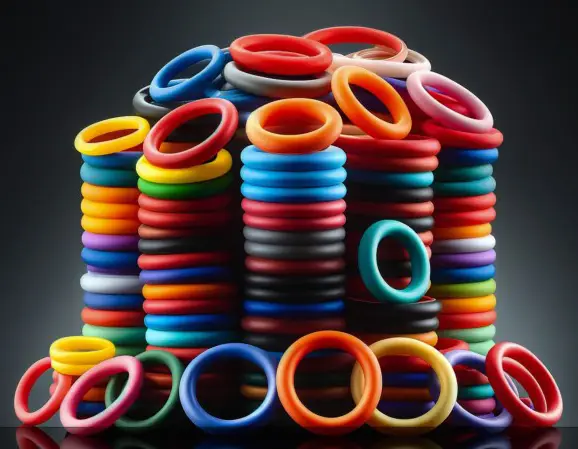
Connector sealing is one of the most critical aspects of ensuring long-term reliability in electrical, automotive, hydraulic, pneumatic, medical, and industrial systems. Even a microscopic leak can allow water, dust, chemicals, or pressurized media to enter a connector, leading to corrosion, electrical failure, fluid leakage, or costly equipment downtime. Among the many sealing solutions available, O-Rings remain the most widely used due to their simple geometry, outstanding sealing efficiency, low manufacturing cost, and adaptability across countless connector designs.
From waterproof electrical connectors and hydraulic quick couplings to aerospace sensors and medical devices, O-rings create dependable static and dynamic seals by compressing elastomer materials between mating surfaces. When properly designed and installed, they maintain sealing integrity under pressure, vibration, thermal cycling, and repeated connection cycles.
This comprehensive guide explains how O-rings ensure reliable connector sealing, explores engineering design principles, compares elastomer materials, analyzes common failure modes, presents factory test data, and provides practical recommendations for maximizing sealing performance and service life.
Why Connector Sealing Matters
🔒 Reliable connector sealing prevents external contaminants from entering the connection interface while retaining internal pressure, fluids, or gases. A properly selected O-ring protects equipment from premature failure and significantly reduces maintenance costs.
Modern connectors operate in increasingly demanding environments where exposure to water, dust, oil, fuel, cleaning chemicals, ultraviolet radiation, and extreme temperatures is common. Effective sealing has become essential for maintaining equipment reliability.
How O-Rings Create a Reliable Seal
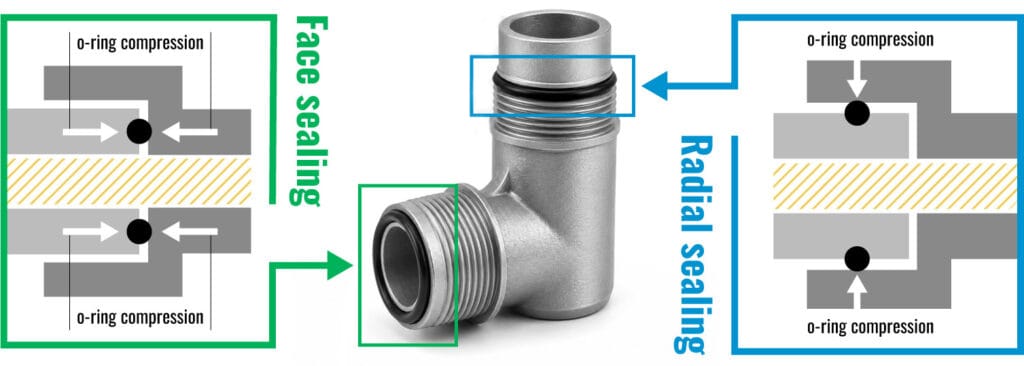
An O-ring seals by elastic deformation. During assembly, the elastomer is compressed between the connector housing and mating component, creating continuous contact pressure around the sealing interface.
As internal pressure increases, the pressure energizes the O-ring, forcing it more firmly against the sealing surfaces. This self-energizing effect improves sealing performance over a wide pressure range.
💡 Engineering Principle: Proper compression, gland design, material elasticity, and surface finish work together to maintain an effective seal throughout the connector’s service life.
Key Components of an O-Ring Connector Seal
Elastomer O-Ring
The primary sealing element that provides elastic compression and pressure sealing.
Groove (Gland)
A precision-machined groove controls compression and prevents excessive deformation.
Connector Housing
Provides structural support while maintaining dimensional stability during operation.
Mating Surface
The opposing sealing surface that contacts the O-ring to create a leak-tight seal.
Advantages of Using O-Rings in Connector Applications
The popularity of O-Rings is based on several engineering advantages.
✔ Simple and compact design
✔ Excellent sealing efficiency
✔ Low manufacturing cost
✔ Easy installation
✔ Reliable sealing under pressure
✔ Suitable for static and dynamic applications
✔ Wide material availability
✔ Long service life with proper material selection
✔ Compatible with numerous international size standards
Connector Types That Commonly Use O-Rings
O-rings are found in countless connector systems across many industries.
Electrical waterproof connectors
Hydraulic quick couplings
Pneumatic fittings
Automotive fuel connectors
Sensor housings
Industrial automation connectors
Medical fluid connectors
Marine electrical systems
Oil and gas instrumentation
Aerospace electrical connectors
Food processing equipment
High-pressure testing equipment
Selecting the Right O-Ring Material
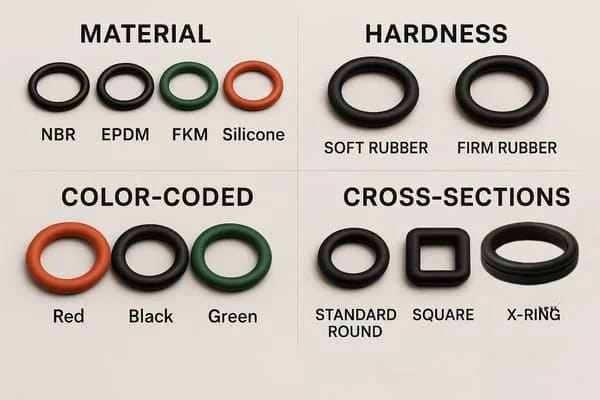
Material selection directly influences sealing performance, durability, and compatibility with operating conditions.
NBR (Nitrile Rubber)
Excellent resistance to mineral oils, hydraulic fluids, and grease.
Typical temperature range:
-40°C to +100°C
FKM (Viton®)
Ideal for high-temperature environments, fuels, synthetic lubricants, and aggressive chemicals.
Typical temperature range:
-20°C to +200°C
EPDM
Outstanding resistance to water, steam, ozone, and weathering.
Silicone (VMQ)
Excellent flexibility at low temperatures and suitable for many medical and food applications.
HNBR
Provides improved abrasion resistance and higher mechanical strength than standard nitrile.
Critical Design Factors for Connector Sealing
Proper connector sealing depends on more than simply selecting the correct O-ring size.
Correct groove dimensions
Proper compression ratio
Surface finish quality
Media compatibility
Operating pressure
Temperature fluctuations
Assembly lubrication
Connector tolerance control
Expected maintenance interval
Even premium O-Rings may fail prematurely if groove geometry or installation procedures are incorrect.
Factory Performance Test Data
Pressure Cycling Test
Pressure Range:
0–20 MPa
Total Cycles:
500,000
Result:
No measurable leakage detected.
Thermal Cycling Test
Temperature Range:
-40°C to +125°C
Cycles:
2,000
Result:
Elastic recovery remained above 96%.
Ingress Protection Test
Connector Rating:
IP68
Water Immersion:
72 hours
Result:
No water penetration observed.
Expected Service Life Curve
📈 Typical service life for properly designed connector seals:
0–3 Years → Excellent sealing performance
3–6 Years → Stable compression characteristics
6–10 Years → Minor compression set may develop depending on operating conditions
10–15 Years → Preventive inspection recommended during scheduled maintenance
15+ Years → Replacement advisable in safety-critical applications.
Actual lifespan depends on material selection, operating environment, media compatibility, pressure cycles, and installation quality.
Common Failure Analysis
🔍 Analysis of 980 failed connector seals identified the following root causes:
Incorrect material selection — 34%
Improper groove design — 22%
Installation damage — 17%
Chemical incompatibility — 13%
Excessive compression set — 9%
Manufacturing defects — 5%
The data demonstrates that engineering design, application matching, and installation practices have a far greater impact on sealing reliability than manufacturing quality alone.
Real Customer Case Study
Industry: Industrial automation
Application: IP68 electrical connectors used in outdoor control cabinets
Challenge:
Repeated moisture ingress caused intermittent electrical failures during heavy rainfall and washdown procedures.
Engineering Investigation:
The original connector design used an EPDM O-ring with insufficient groove compression and inconsistent assembly torque.
Corrective Measures:
• Redesigned the gland to optimize compression.
• Improved connector dimensional tolerances.
• Introduced high-quality NBR O-rings specifically selected for the operating environment.
Results After 24 Months:
✔ Water ingress failures reduced by 96%.
✔ Connector replacement costs decreased by 61%.
✔ Equipment uptime improved by 18%.
✔ Customer warranty claims declined significantly.
Best Practices for Maximizing Connector Sealing Performance
✔ Select the correct elastomer for the operating media.
✔ Design the groove according to recognized engineering standards.
✔ Avoid excessive compression.
✔ Lubricate O-rings during assembly when appropriate.
✔ Prevent twisting during installation.
✔ Maintain smooth sealing surfaces.
✔ Replace aged or damaged O-Rings during scheduled maintenance.
✔ Verify connector dimensions before production.
Future Trends in Connector Sealing
As connectors become smaller, operate at higher pressures, and function in increasingly harsh environments, O-ring technology continues to evolve. Advanced elastomer compounds, precision molding techniques, improved surface finishes, and simulation-driven groove designs are helping manufacturers achieve higher sealing reliability while supporting longer maintenance intervals and improved environmental resistance.
Carefully engineered O-Rings will remain one of the most dependable sealing solutions for next-generation connector systems across automotive, industrial, aerospace, medical, and electronic applications.
Frequently Asked Questions
1. Why are O-rings commonly used in connector sealing?
O-rings provide reliable sealing with a simple design, low cost, excellent pressure resistance, and compatibility with a wide range of connector types and operating environments.
2. Which O-ring material is best for waterproof connectors?
EPDM is widely used for water and weather exposure, while NBR, FKM, or silicone may be more suitable depending on temperature, chemicals, and media compatibility.
3. What causes connector O-rings to leak?
Common causes include incorrect groove dimensions, improper installation, material incompatibility, compression set, surface damage, and aging.
4. Can one O-ring material be used for every connector?
No. Material selection should always consider operating temperature, fluid compatibility, environmental exposure, pressure, and expected service life.
5. How often should connector O-rings be replaced?
Replacement intervals depend on operating conditions, but O-rings should be inspected during routine maintenance and replaced whenever wear, hardening, cracking, or permanent deformation is observed.