In modern manufacturing, sealing reliability depends not only on selecting the correct material and dimensions but also on effective identification and traceability systems. As industries such as aerospace, automotive, medical equipment, food processing, oil & gas, and semiconductor manufacturing demand increasingly stringent quality standards, O-ring color coding, labeling specifications, and batch management have become critical components of quality assurance.
Many organizations focus heavily on O-ring material selection while overlooking the importance of identification systems. However, incorrect material installation, mixed inventory, and poor traceability can lead to costly failures, production downtime, safety risks, and regulatory non-compliance. A well-designed color coding and batch management system helps eliminate these risks while improving efficiency across procurement, warehousing, assembly, and maintenance operations.
📌 Industry Insight: A significant percentage of sealing failures are caused not by product defects but by incorrect material selection, improper storage, or loss of traceability during inventory management.
Why O-Ring Identification Systems Matter
An O-ring may appear to be a simple sealing component, but many materials share nearly identical dimensions and visual characteristics. For example, NBR, FKM, EPDM, Silicone, HNBR, and FFKM O-rings can often look similar to the naked eye.
Without proper identification procedures, technicians may unknowingly install the wrong seal material into critical equipment, resulting in:
- Chemical incompatibility
- Premature seal failure
- Fluid leakage
- Equipment damage
- Regulatory violations
- Safety incidents
This is why many manufacturers implement systematic identification methods using color coding, labeling standards, and batch traceability systems for every O-ring produced and distributed.
Understanding O-Ring Color Coding Systems
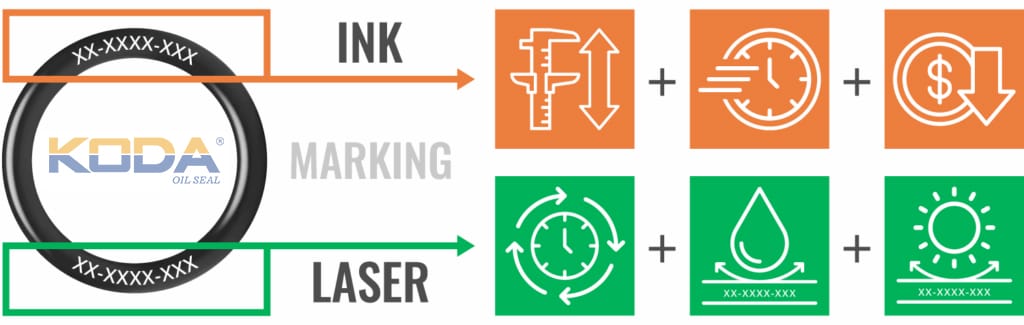
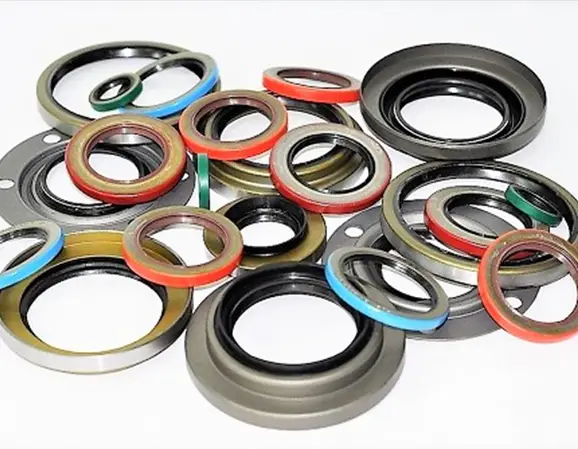
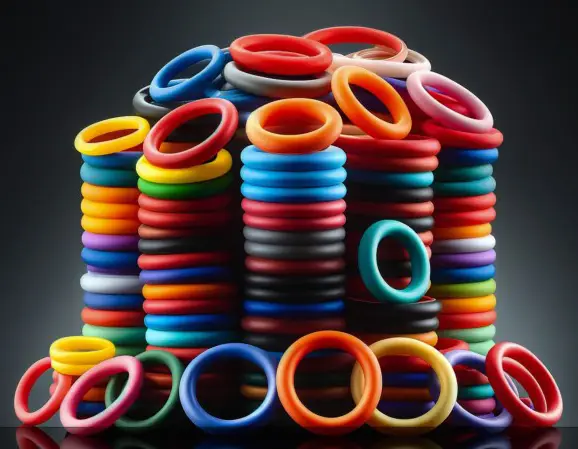
Color coding provides a quick visual method for identifying O-ring materials, hardness levels, application categories, or customer-specific requirements.
Unlike dimensional standards such as AS568 or ISO 3601, there is currently no universal international color standard that applies to all O-rings worldwide. Instead, color systems are generally determined by:
- Manufacturer standards
- Industry specifications
- Customer requirements
- Regulatory compliance needs
- Internal quality management systems
Common Material Color Associations
Although color assignments vary between suppliers, certain conventions are frequently used across industrial sectors:
- Black – NBR (Nitrile Rubber)
- Brown – FKM (Viton®)
- Red – Silicone
- Green – HNBR
- White – PTFE Encapsulated Seals
- Blue – Food Grade Materials
- Yellow – Specialized Chemical Resistance Compounds
- Transparent – Silicone or Medical Grade Elastomers
It is important to understand that color alone should never be used as the sole identification method because color standards vary among manufacturers.
⚠️ Important: Color is an identification aid, not a material certification method. Always verify labels, certificates, and batch records before installation.
How Color Coding Improves Operational Efficiency
Visual identification dramatically reduces the time required to locate, inspect, and install replacement seals.
In maintenance environments where hundreds of sealing products may be stored simultaneously, color coding enables technicians to:
- Identify materials quickly
- Reduce selection errors
- Improve inventory organization
- Accelerate maintenance activities
- Improve warehouse accuracy
- Simplify quality inspections
Facilities utilizing color-coded O-ring inventory systems often report measurable reductions in maintenance-related mistakes.
Industry-Specific Color Coding Practices
Food and Beverage Industry
Food-grade O-rings frequently utilize blue coloration because blue is rarely found naturally in food products, making contamination easier to detect.
This visual advantage supports food safety compliance programs such as:
- FDA regulations
- HACCP systems
- BRC standards
- ISO 22000 requirements
Medical Device Manufacturing
Medical-grade O-rings often use transparent, white, or specific customer-defined colors to support traceability and contamination control.
Aerospace Applications
Aerospace organizations typically rely on strict labeling and documentation systems in addition to color identification because safety-critical applications require complete material traceability.
Oil and Gas Industry
Harsh operating conditions require accurate identification of specialty compounds such as HNBR, FKM, AFLAS®, and FFKM. Color coding provides supplemental support to formal certification systems.
O-Ring Labeling Specifications Explained
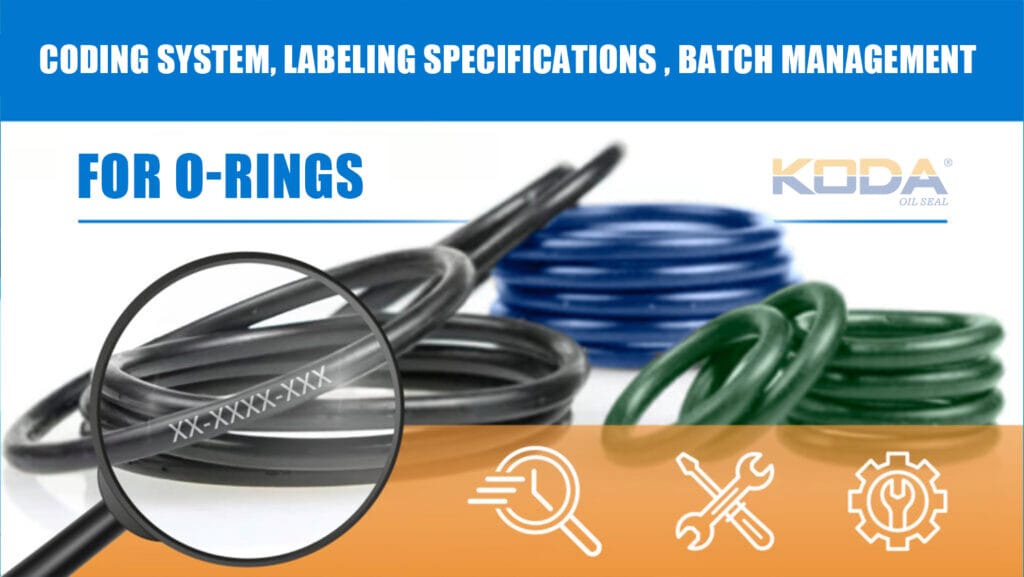
While color coding offers visual identification, labels provide detailed technical information required for quality control and regulatory compliance.
A professional O-ring label should contain:
- Part number
- Material designation
- Size specification
- Hardness rating
- Manufacturing date
- Batch number
- Quantity
- Supplier information
- Compliance certifications
Material Designation Labels
Material abbreviations are commonly displayed using internationally recognized terminology:
- NBR
- FKM
- EPDM
- HNBR
- VMQ
- FFKM
- AFLAS®
This allows maintenance personnel worldwide to identify materials consistently regardless of language differences.
Dimensional Information
Labels should clearly display:
- Inside Diameter (ID)
- Cross Section (CS)
- Standard reference number
- Tolerance specifications
Accurate dimension labeling prevents installation errors and inventory confusion.
The Role of Batch Management in O-Ring Quality Assurance

Batch management is one of the most critical aspects of modern seal manufacturing.
Each production lot receives a unique batch number that links the finished product to:
- Raw materials
- Production records
- Curing parameters
- Inspection reports
- Testing results
- Quality certificates
When implemented correctly, batch management creates complete traceability throughout the product lifecycle.
🔍 Traceability Advantage: Batch management enables manufacturers to identify and isolate quality issues quickly without disrupting unaffected inventory.
Why Traceability Is Essential
Imagine a manufacturer discovers a curing defect affecting a specific production run.
Without batch traceability, every O-ring in inventory may require inspection or replacement.
With proper batch management, affected products can be isolated immediately, minimizing:
- Recall costs
- Production delays
- Customer disruptions
- Financial losses
- Reputation damage
This is particularly important for industries operating under strict quality regulations.
Modern Digital Batch Management Systems
Today’s manufacturers increasingly utilize digital technologies to improve O-ring traceability.
Common solutions include:
- Barcode systems
- QR code tracking
- ERP integration
- MES manufacturing systems
- Cloud-based inventory management
- Blockchain traceability platforms
These technologies enable real-time monitoring of every O-ring throughout procurement, production, warehousing, shipping, and installation processes.
Storage Management and Batch Control
Batch management extends beyond manufacturing into storage and inventory control.
Elastomer products have finite shelf lives that depend on:
- Material type
- Storage temperature
- Humidity levels
- UV exposure
- Ozone exposure
- Packaging conditions
Proper batch tracking supports FIFO (First-In-First-Out) inventory practices and reduces the risk of using expired sealing products.
Best Practices for O-Ring Labeling and Batch Management
Standardize Label Formats
Consistent label layouts improve readability and reduce operational errors.
Combine Color Coding with Documentation
Never rely solely on visual identification methods.
Implement Digital Records
Electronic databases significantly improve traceability and reporting capabilities.
Train Personnel Regularly
Employees should understand both color systems and traceability requirements.
Conduct Periodic Audits
Regular audits help verify inventory accuracy and compliance with quality procedures.
Future Trends in O-Ring Identification Technology
The future of O-ring identification extends beyond simple labels and color markings.
Emerging technologies include:
- Smart packaging
- RFID-enabled inventory tracking
- AI-assisted warehouse management
- Digital material passports
- Automated inspection systems
- Predictive lifecycle management
These innovations will enhance quality assurance while supporting increasingly complex global supply chains.
Organizations investing in advanced identification systems today are positioning themselves for greater operational efficiency, regulatory compliance, and customer confidence tomorrow.
Building a Complete O-Ring Quality Ecosystem
An effective O-ring management strategy combines three key pillars:
- Clear color coding
- Accurate labeling
- Comprehensive batch traceability
When these systems work together, manufacturers gain greater control over product quality, inventory management, maintenance operations, and regulatory compliance.
Whether serving aerospace, medical, food processing, energy, automotive, or industrial markets, robust identification and traceability programs ensure that every O-ring performs exactly as intended throughout its service life.
Frequently Asked Questions
1. Is there a universal color standard for O-rings?
No. While certain color conventions are common, there is currently no globally enforced universal color standard for all O-ring materials and applications.
2. Why is batch management important for O-rings?
Batch management enables complete traceability, helping manufacturers identify production issues, manage recalls, maintain compliance, and improve quality assurance.
3. Can color alone identify O-ring material?
No. Color should only serve as a visual aid. Material verification should always be confirmed through labeling, certifications, and batch records.
4. What information should an O-ring label include?
A professional label should contain material type, dimensions, hardness, batch number, manufacturing date, quantity, and applicable certification details.
5. How do modern manufacturers track O-ring batches?
Many manufacturers utilize barcode systems, QR codes, ERP software, MES platforms, and cloud-based inventory systems to maintain complete product traceability.